
In this answer
Short answer
A home battery typically lasts between 10 and 15 years, according to official guidance from the Parliamentary Office of Science and Technology1. Independent bodies give a similar picture: the Energy Saving Trust puts the typical lifespan of a battery at about 10 to 12 years2, while Home Energy Scotland reports that batteries tend to last between 10 and 15 years3. The range reflects differences in battery chemistry, how hard the battery is worked, and the conditions it operates in.
Most quality batteries come with at least a 10-year manufacturer warranty4, and most manufacturers warrant at least 70% capacity retention over that period5. That means a battery bought today is expected to retain the majority of its usable capacity for a decade, after which performance will have declined enough that replacement becomes a practical question.
For a household, the battery is the shortest-lived major component of a solar and storage system. Solar panels are expected to last 25 to 30 years1, so a battery will typically need replacing at least once during the life of the panels6. Planning for that replacement cost is part of assessing whether battery storage makes financial sense.
How long a home battery lasts: the 10 to 15 year picture
The consensus across official, independent and maker sources places the working life of a home battery at roughly 10 to 15 years. The Parliamentary Office of Science and Technology states that domestic battery storage has a shorter lifetime of around 10 to 15 years when compared to solar panels1. The Energy Saving Trust gives a narrower figure of about 10 to 12 years for a typical battery2, and Home Energy Scotland reports 10 to 15 years3.
Maker sources align with this. Spirit Energy describes a home battery as a 10 to 15 year investment9. Sunamp states that lithium-ion systems typically last between 10 and 15 years6. Fuse Energy reports that these batteries typically last between 10 and 15 years or can endure between 6,000 and 10,000 cycles7. Marley states that lithium-ion batteries typically last 10 to 15 years, and sometimes longer10.
The range exists because lifespan is not a single fixed number. It depends on the battery's chemistry, how often it is charged and discharged, the depth of those discharges, the temperature it operates in, and the charging behaviour of the system4. A battery that is cycled gently and kept at moderate temperatures will sit at the upper end of the range. One that is worked hard in a hot location will sit at the lower end.
For a household, this means the battery is a consumable component within a longer-lived system. It delivers energy independence for a decade or more, but it does not eliminate dependence on the grid or on a manufacturer for eventual replacement. The pillar guide to home battery storage sets out the full picture of how batteries fit into a home energy system.
Lifespan by chemistry and usage: why figures range from 8 to 15 years
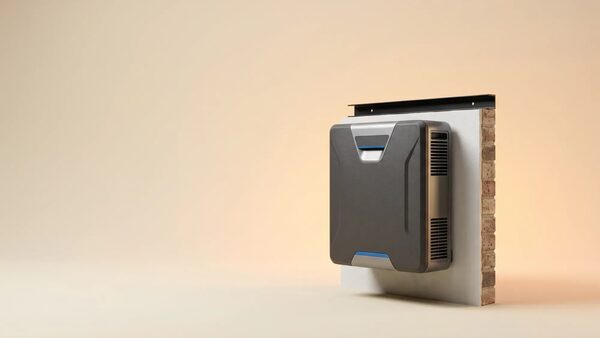
The spread of published figures, from 8 to 12 years at the low end to 10 to 15 years at the high end, reflects real differences in battery chemistry and how the battery is used. The Centre for Sustainable Energy cites a typical battery lifespan of 8 to 12 years11, and notes that payback periods in the region of 8 to 12 years are similar to their reported lifespan11. Better chemistry batteries are expected to give a 10 to 15 year lifespan, and lithium-ion cells, especially LiFePO4, are often quoted at 10 to 15 years or 5,000 to 10,000 cycles11.
Lithium-ion batteries, particularly lithium iron phosphate (LiFePO4) types, are reported to have a longer lifespan of often 10 to 15 years or 5,000 to 10,000 cycles12. Better chemistry costs a little more but usually pays off over a 10 to 15 year lifespan5. SolaX states that long-life batteries such as lithium-ion types last 10 to 15 years13.
Usage patterns shift the figure as much as chemistry. A battery used strictly for emergency backup with infrequent cycling is reported to last 15 to 20 years14. At the other end, a battery that is fully cycled every day will reach its cycle limit sooner. The depth of discharge matters: one maker recommends setting depth of charge and discharge within 80% and avoiding full discharge, which can extend life by 2 to 3 times13. Some batteries should not be drained to 0%, so the usable capacity figure is the one that matters15.
The guide to battery cycle life and degradation explains how cycle ratings and calendar ageing interact. The comparison of home battery chemistries covers how LFP and NMC differ in expected life.
| Chemistry or usage | Reported lifespan | Source type |
|---|---|---|
| Lithium-ion (general) | 10 to 15 years | Maker6 |
| Lithium-ion (LiFePO4) | Often 10 to 15 years, 5,000 to 10,000 cycles | Maker12 |
| Typical battery (independent) | 8 to 12 years | Independent11 |
| Backup only, infrequent cycling | 15 to 20 years | Maker14 |
| Better chemistry batteries | 10 to 15 years | Maker5 |
What the warranty covers: 10 years and 70% capacity
Most manufacturers warrant at least 70% capacity retention over 10 years5. This is the standard warranty term for a home battery in the UK. Warranties typically cover batteries for 10 years or a certain number of cycles16, and battery systems often come with a 10-year warranty9. Most quality batteries come with at least a 10-year manufacturer warranty15.
The warranty is a capacity guarantee, not just a repair promise. If capacity drops below the warranted threshold within the warranty period, the manufacturer will repair or replace the unit17. Some warranties guarantee at least 60 to 70% capacity retention over 10 years18. The exact terms vary by manufacturer and model.
"Most manufacturers warrant at least 70 percent capacity retention over 10 years"
Warranty conditions matter as much as the headline term. Operating the battery at extreme temperatures for extended durations may void the battery warranty coverage19. This means the installation location, ventilation and temperature control are not just performance considerations but warranty conditions. The guide to home battery warranties covers retained capacity, throughput limits and conditions in detail.
For a household, the warranty provides a defined period of protection but does not extend the battery's working life indefinitely. At the end of the warranty period, the battery may still function but with reduced capacity. The question of what happens at that point is covered below.
What shortens or extends a battery's life
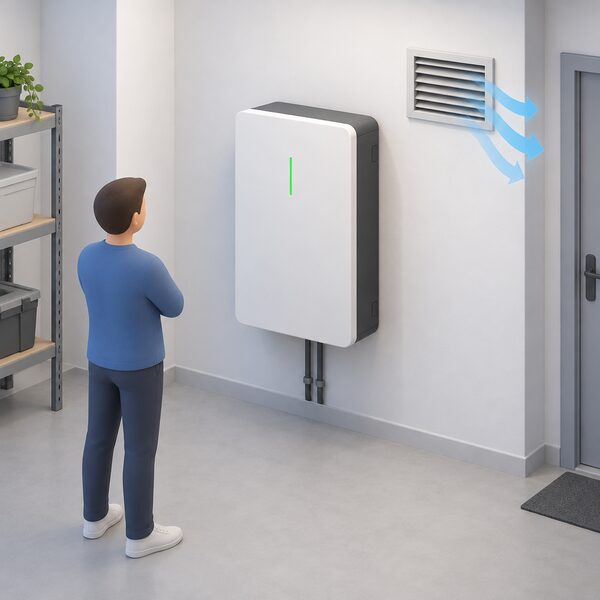
Several factors determine whether a battery sits at the 8-year or the 15-year end of the range. The most significant are cycling behaviour, depth of discharge, temperature and charging rate.
Depth of discharge is a major lever. One maker recommends setting depth of charge and discharge within 80% and avoiding full discharge, which can extend life by 2 to 3 times13. The system should never let the battery discharge to zero, as this can significantly reduce the life of the battery20. When the battery gets down to a set level, maybe 20% of the total storage capacity, the system will stop taking electricity from it2. This reserve protects the battery from the damage of deep discharge.
Temperature is the other major factor. Operating a battery at extreme temperatures for extended durations may void the warranty19. The guide to ventilation and temperature for home batteries covers operating conditions in detail.
Charging behaviour also matters. Slower, more consistent charging can reduce how quickly a battery degrades over time21. Regular use of rapid and ultra-rapid charging can reduce battery longevity over time22. While these findings come from electric vehicle batteries, the underlying chemistry is similar, and the principle applies to home storage: gentler charging is kinder to the cells.
Evidence from real homes supports the value of battery storage for reducing grid consumption. Homes with batteries consistently show lower total daily grid consumption across three seasons, with winter energy consumption seeing an increase attributed to suspected arbitrage patterns23. This means the battery is being used year-round, which is good for the household's energy independence but does mean the battery is cycling regularly.
Battery lifespan vs solar panel lifespan: planning a replacement
The mismatch between battery life and solar panel life is the central planning issue for any household with both. Solar panels are expected to last 25 to 30 years1, and some sources put the figure at 30 years or more24. The battery, at 10 to 15 years1, will need replacing at least once during the life of the solar panel system6.
This means the total cost of a solar and battery system includes not just the initial installation but the cost of at least one battery replacement. Independent guidance advises factoring in the cost of replacing the battery at least once into total costs9. The guide to home battery cost covers current pricing, and the guide to battery payback and savings explains how replacement costs affect the financial case.
Inverters are another component with a shorter life than panels. Inverters are not expected to last as long as the panels themselves25. A household planning for the long term should expect to replace the battery at least once and the inverter at least once over the life of the solar panels.
For energy independence, this means the battery delivers a decade or more of increased self-consumption and reduced grid reliance, but it is not a permanent installation. The household remains dependent on the grid for backup and on the manufacturer or installer for replacement. The guide to home batteries and household energy independence explores what that means in practice.
| Component | Expected lifespan | Replacement expectation |
|---|---|---|
| Solar panels | 25 to 30 years1 | Not typically replaced |
| Home battery | 10 to 15 years1 | At least once6 |
| Inverter | Shorter than panels25 | At least once |
How many cycles can a home battery handle before it degrades?
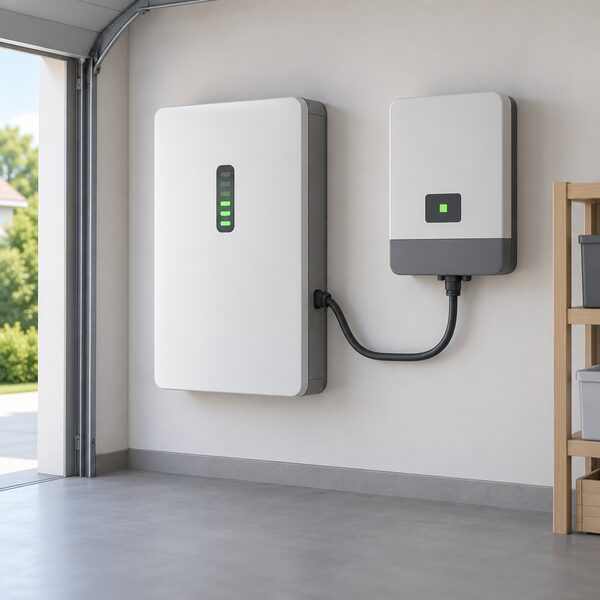
Cycle life is the number of full charge and discharge cycles a battery can complete before its capacity falls to a defined level, usually 70% or 80% of the original. Modern home batteries are rated for 6,000 or more full charge cycles, which works out to roughly 15 to 20 years of daily cycling7. Lithium-ion home solar batteries can endure between 6,000 and 10,000 cycles7. Lithium-ion batteries, especially LiFePO4 types, often last 10 to 15 years or 5,000 to 10,000 cycles12.
A battery lasting 2,000 full cycles represents a lower cycle life, more typical of older or less expensive batteries20. The guide to battery cycle life and degradation explains how cycle ratings are defined and measured.
The relationship between cycles and years is not fixed. A battery rated for 6,000 cycles will last longer if it is cycled less than once a day, and shorter if it is cycled more. Calendar ageing also affects the battery regardless of cycling, which is why a backup-only battery with infrequent cycling is reported to last 15 to 20 years rather than indefinitely14.
Does a home battery degrade even if I barely use it?
Yes. Battery degradation has two components: cycle ageing, which depends on how often the battery is charged and discharged, and calendar ageing, which occurs over time regardless of use. After 10 to 15 years of usage, a battery's real storage capacity usually drops to 70% to 80% of its original capacity8. This figure applies to batteries in normal use, but calendar ageing affects lightly used batteries too.
The system's reserve level provides some protection. When the battery gets down to a set level, maybe 20% of the total storage capacity, the system will stop taking electricity from it2. The system should never let the battery discharge to zero, as this can significantly reduce the life of the battery20. These protections slow degradation but do not stop it.
For a household, this means that even a battery that is barely cycled will eventually need replacement. The timeline may be longer, but the battery is not a permanent asset. The guide to battery maintenance and faults covers how to monitor degradation and what to do when performance declines.
What happens to a home battery at the end of its warranty?
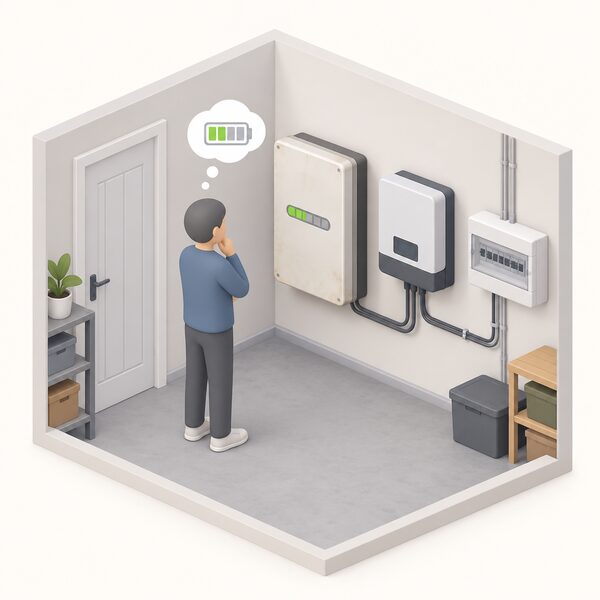
At the end of the warranty period, the battery continues to operate but with reduced capacity and no further manufacturer protection. Most warranties guarantee at least 70% capacity retention over 10 years5. If capacity drops below that threshold within the warranty period, the manufacturer will repair or replace the unit17. After the warranty expires, replacement is the household's responsibility.
The end-of-warranty period is a decision point. The battery may still deliver useful capacity, but its ability to reduce grid import will have declined. The guide to home battery recycling and disposal covers what happens to a battery at the end of its life.
For a household, the practical question is whether the remaining capacity justifies continued use or whether replacement is the better option. The guide to adding more batteries later covers whether a system can be expanded rather than replaced.
What shortens or extends a battery's life: a summary
The factors that determine whether a battery lasts 10 years or 15 years are well established across the sources. Depth of discharge is the most controllable: keeping discharges within 80% and avoiding full discharge can extend life by 2 to 3 times13. Temperature is the next most significant: extreme temperatures can void the warranty19. Charging behaviour matters: slower, more consistent charging reduces degradation21, while rapid charging reduces longevity22.
The battery's chemistry sets the baseline. Lithium-ion, particularly LiFePO4, offers the longest life at 10 to 15 years or 5,000 to 10,000 cycles12. Older or lower-cost chemistries may offer 8 to 12 years11. The guide to home battery chemistries covers the differences in detail.
For a household, the practical implication is that installation location, system settings and usage patterns all affect how long the battery lasts. A battery installed in a moderate location with conservative depth-of-discharge settings will sit at the upper end of the range. One installed in a hot location and cycled hard will sit at the lower end.
Sources25 cited
- Domestic battery storage, Parliamentary Office of Science and Technology, 2026-06-25
- Battery storage, Energy Saving Trust, 2026-08-19
- Battery storage, Home Energy Scotland, 2026-09-20
- How long do solar panels last, Jackery, 2026-06-30
- Solar battery cost, BLUETTI, 2026-08-03
- Battery storage, MCS Certified, 2026-09-17
- Solar battery, Fuse Energy, 2026-06-30
- Home battery storage UK without solar, Jackery, 2026-05-29
- Solar panel battery storage, Which?, 2026-05-14
- How long do solar batteries last, Marley, 2026-09-17
- Battery storage, Centre for Sustainable Energy, 2025-10
- How many batteries does a home need, SAJ, 2026-07-22
- 5kW solar battery price UK, Jackery, 2026-06-04
- How long do solar batteries last, SolaX, 2026-06-25
- Solar battery storage, Fuse Energy, 2026-04-13
- The best solar batteries explained, Good Energy, 2026-07-14
- Electric car battery, Fuse Energy, 2026-05-19
- How long do solar batteries last, Jackery, 2026-05-29
- SolarEdge Home Battery 48V datasheet, SolarEdge, 2026-09-17
- V2GB vehicle-to-grid Britain, Cenex, 2026-09-17
- Making the most of your solar PV panels, Centre for Sustainable Energy, 2026-08
- Make the most of your solar panels, Which?, 2026-08-12
- Solar panels, Home Energy Scotland, 2026-09-20
- Workmanship warranty, OFTEC, 2026-09-20
- Statutory security of supply report 2025, GOV.UK, 2025-12-17
 Home Battery WarrantiesHow long does a home battery warranty really last, and what does it actually promise?
 Cycle Life and DegradationHow long will a home battery actually last, and what decides that?
 Payback and SavingsHow long until a home battery pays for itself, and why do quoted payback times vary so much?
 Solid-State BatteriesAre solid-state batteries on sale yet, and should you wait for one?
 Home Battery CostA home battery usually costs between one and a half and ten thousand pounds fitted, depending on size.
 Capacity and Usable CapacityA battery sold as ten kilowatt hours rarely gives you all ten to use.