
In this guide
A home battery does not simply stop being a battery when it stops being useful. It holds stored chemical energy, and that energy is the reason its end of life is a safety matter before it is a waste matter. Electrical Safety First states plainly that batteries, appliances, or appliances with batteries, even AA or AAA cells, must not go into general waste or normal recycling1. The same charity reports that less than one-third of new electrical items purchased in the UK each year are recycled when they reach the end of their lifecycle1.
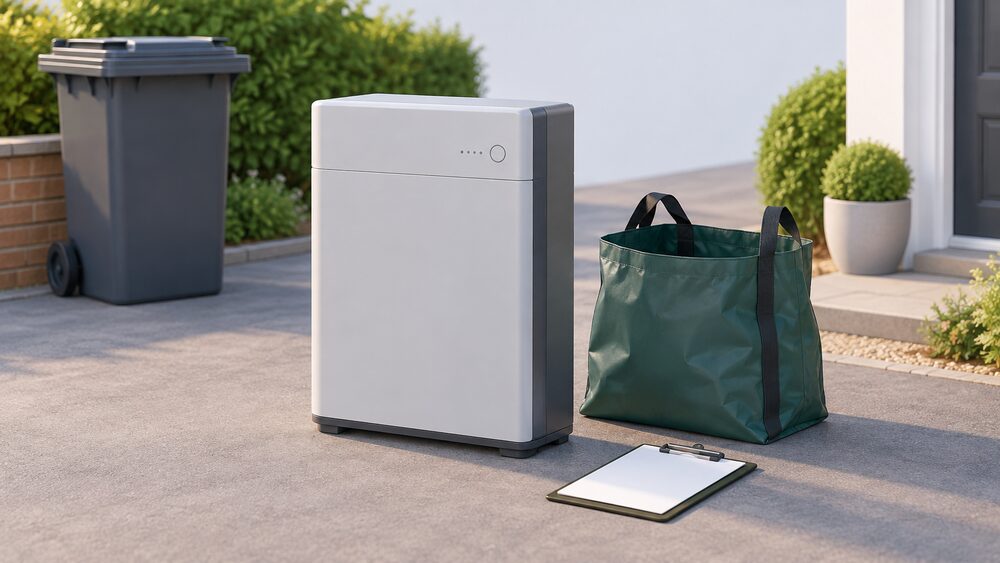
For a domestic storage battery the practical route is narrower than for a phone or a laptop. Rechargeable batteries and cordless appliances with rechargeable batteries go to a local recycling centre, or into a scheme run by the local council1. Many councils collect batteries and appliances fitted with batteries separately from normal recycling, and some offer special collection bags or small item collections1. A home battery is a fixed installation, so removal is normally part of a replacement or decommissioning job rather than a trip to the tip.
The stakes are higher than for small cells. Official guidance is blunt that the larger the battery, the larger the danger, and that some of the largest lithium batteries are found in mobility vehicles2. A domestic storage unit is larger still. The UK's product safety framework identifies the mechanism: non-compliant or incompatible battery components, and the use of batteries outside their safe design parameters, can lead to thermal runaway, causing fires3.
Why battery disposal is a safety issue, not just a waste issue
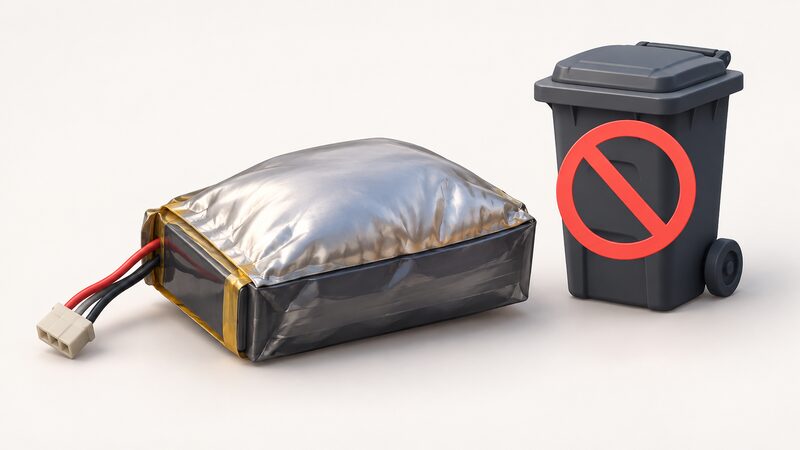
The distinction matters because a battery in a bin is not inert. It is a stored energy device that can be damaged in handling, crushed in a collection vehicle, or shorted by contact with metal, and the result is a fire that starts away from the home and away from anyone watching it.
The legislative intent behind the Lithium-ion Battery Safety Bill is explicit on this point. Its first purpose is to better protect householders and communities from the dangers of lithium-ion batteries, and its second is to increase public confidence in, and acceptance of, Battery Energy Storage Systems7. Disposal sits inside both purposes: a household that cannot safely get rid of a battery at the end of its life is less likely to accept one at the start.
The scale of the underlying problem is set out by Electrical Safety First, which reports that every year half of accidental domestic fires in the UK are caused by electricity, and that this figure is not changing8. It attributes these fires to misuse of appliances, poor regulation of electrical safety checks, particularly in the private rented sector, and faulty appliances8. A battery that has been damaged, stored badly or disposed of incorrectly belongs in the same family of causes.
The charity's Battery Breakdown campaign recommends safety standards for conversion kits and stricter charger regulations to prevent unsafe battery systems and reduce fire risk9. Its wider regulatory ask is for enhanced national regulation for recycling, specifically to reduce the incidence of fires from the incorrect disposal of batteries4. That framing is useful for a householder: the fire risk from a discarded battery is not only a risk to the household that discards it.
What happens when home batteries end their life
A home battery stores energy in the form of chemical energy, which is converted back to electrical energy when the battery is discharged10. That is the whole of its function, and it is why end of life is a staged process rather than a single event.
In normal operation a battery is not run to empty. Energy Saving Trust describes a set level, maybe 20% of total storage capacity, at which the system stops taking electricity out11. It also states that the system should never let the battery discharge to zero, as this can significantly reduce the life of the battery11. A unit that has reached the end of its warranted life has usually degraded in capacity rather than failed outright, which is what opens the door to refurbishment and second-life use rather than immediate recycling.
The wider system context is set out by Solar Energy UK, which describes batteries as a way for homeowners to store excess electricity produced from their solar system, enabling power produced during the day to be stored and used at another time, for example in the evening when demand is higher12. It also notes the combined potential of millions of homes with batteries to help balance supply and demand across the country by releasing stored power onto the grid when needed12. A battery removed from one home and refurbished into another therefore keeps that flexibility in the system rather than removing it.
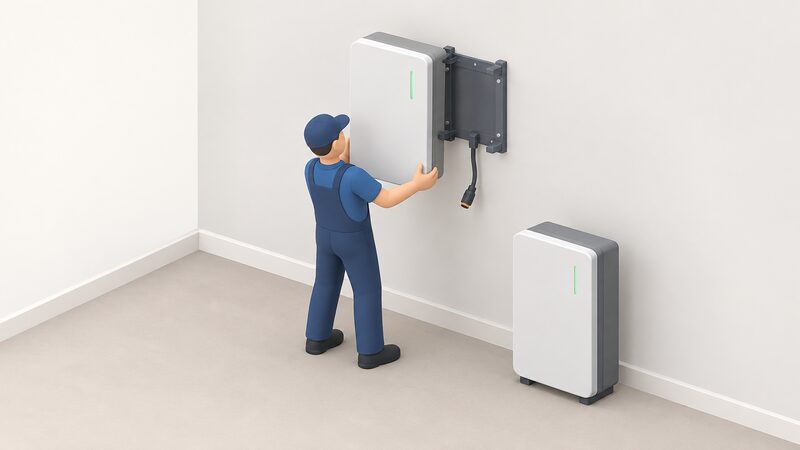
For the household, the practical sequence at end of life is: the unit degrades below the capacity the warranty guarantees, the owner or installer decides whether to replace, add capacity or decommission, and the old unit leaves the property. What happens next depends on its condition. An intact unit can be refurbished or repurposed; a damaged one cannot, and moves into the handling and transport rules that apply to damaged lithium.
Where a home battery can be recycled or disposed of in the UK
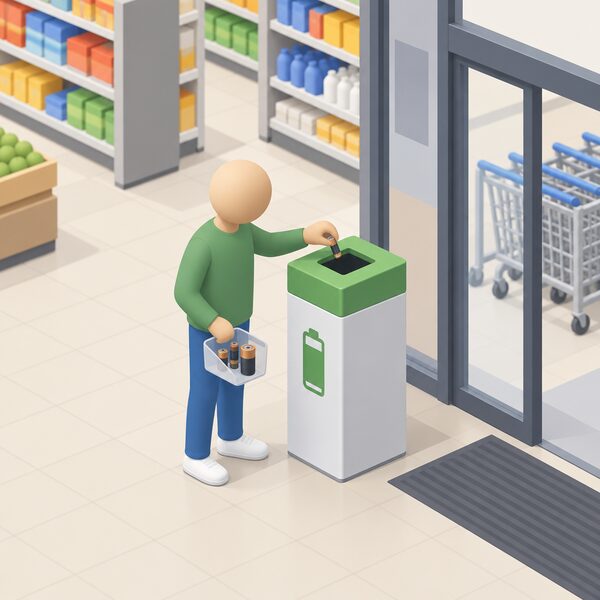
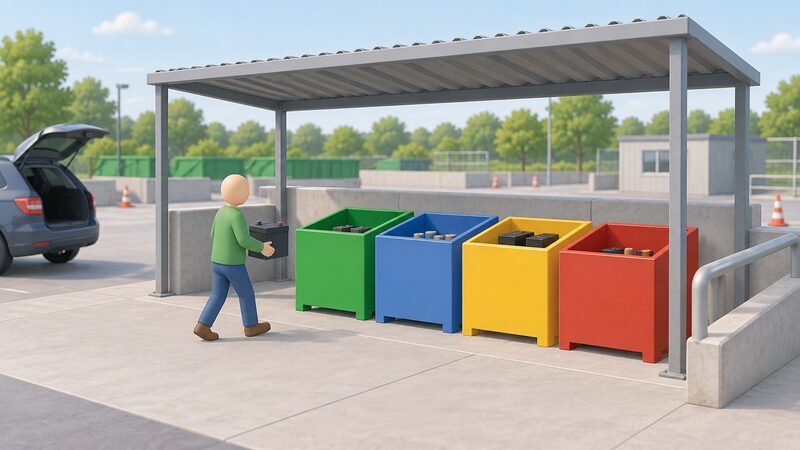
The UK route for a rechargeable battery is a local recycling centre, or a council scheme. Electrical Safety First advises taking rechargeable batteries, or cordless appliances with rechargeable batteries, to a local recycling centre or checking the local council's website1. Many councils run schemes to collect batteries and appliances fitted with batteries separately from normal recycling, and some offer special collection bags for batteries to leave out with regular bins, or small item collections that can be booked1.
For regular household cells the retail route is well established. Most large stores that sell batteries, such as supermarkets and hardware stores, have in-store collection bins for AA, AAA, C and D batteries1. That route does not cover a domestic storage battery, which is a fixed installation with a much larger energy content.
An item qualifies for electrical recycling if it has a plug, uses a charger, uses batteries, or carries the WEEE logo1. A home battery meets several of those tests at once. The gap is not classification but logistics: a wall-mounted unit of tens of kilograms is not something a household can carry to a supermarket collection bin, and the removal is normally handled by whoever installs the replacement.
Where a battery is subject to a safety notice, the disposal advice changes. Government advice on a dangerous e-bike battery model directs owners to dispose of it safely by first checking with their local collection sites to ensure they cater for battery disposal13. The same principle applies to any unit under a recall: confirm the receiving site accepts it before transporting it.
The fire risk from batteries in general waste
Official guidance from North Wales Fire and Rescue is direct: each of the items it lists, which include laptops, mobile phones, e-scooters, e-cigarettes and mobility vehicles, has the potential to cause a serious fire in the home2. It adds that the larger the battery, the larger the danger2. A home storage battery is at the top of that scale.
The disposal survey figure is the clearest evidence that the message is not landing. Electrical Safety First reports that nearly a third, 32%, of e-bike and e-scooter owners have disposed of an old e-bike or e-scooter battery in a general waste bin4. Those packs are smaller than a home battery and the behaviour is still common.
The charity's position is that the labelling itself is part of the problem. It is calling for the introduction of more prominent markings on batteries, to make it clearer they should not be disposed of in the general waste4. Its Battery Safety Campaign sets out a parallel ask: the Government to make regulations ensuring the safe disposal of lithium batteries once their lifecycle ends14.
"We urge the Government to introduce enhanced national regulation for recycling to reduce the incidence of fires from the incorrect disposal of batteries"
The mechanism behind these fires is thermal runaway, which the UK's product safety framework links to non-compliant or incompatible components and to use outside safe design parameters3. A battery crushed in a refuse truck, or punctured in a skip, is outside its design parameters by definition.
Electrical Safety First: the charity behind the safety campaign
Electrical Safety First describes itself as the consumer safety charity dedicated to reducing the number of deaths, injuries and accidents caused by electricity, and as recognised by government and industry as the leading campaigning charity and technical authority on home electrical safety15. Its chief executive is Lesley Rudd15. Its press office lists a mobile contact for media enquiries15.
Its campaigning reach is substantial. The All-Party Parliamentary Group for Electrical Safety, which the charity supports, has secured support for its Battery Breakdown campaign from more than 100 national organisations and 1,000 local councils and councillors9. The Battery Safety Campaign names supporting organisations including Brompton, London Fire Brigade, NFCC, NICEIC, Which? and Zurich14. The charity has also hosted roundtables with the Electrical Contractors Association16.
The campaign's asks are specific and relevant to disposal. On safety assurance, it wants a third-party safety assessment, conducted by a government-approved body, for all e-bikes, e-scooters and their lithium-ion batteries before they enter the UK market14. On fire safety, it wants responsibility assigned to comprehensively addressing fire-related concerns, including standards for conversion kits and charging systems, and consideration of a temporary ban on the sale of universal chargers14. On responsible disposal, it wants regulations ensuring the safe disposal of lithium batteries once their lifecycle ends14.
The charity's broader policy work includes a demand for mandatory five-yearly electrical checks in rented homes8. Its research found 1.7 million private renters reporting electrical concerns that were ignored or acted on too slowly, 1.3 million renters waiting for electrical issues to be resolved, and more than 2 million private tenants concerned about the electrical safety of their home17. Fines for failing to maintain adequate electrical safety have risen from £5,000 to £20,000, and around 300,000 private landlords still believed there were no fines at all17.
For a battery safety concern, the APPG contact address is appg@electricalsafetyfirst.org.uk9. For a suspected faulty e-bike charger or battery, the charity's guidance is to stop using it immediately and report the fault to the manufacturer or retailer, or call the Citizens Advice helpline on 03454 04 05 0618.
Recalls and faulty batteries: what to do if yours is affected
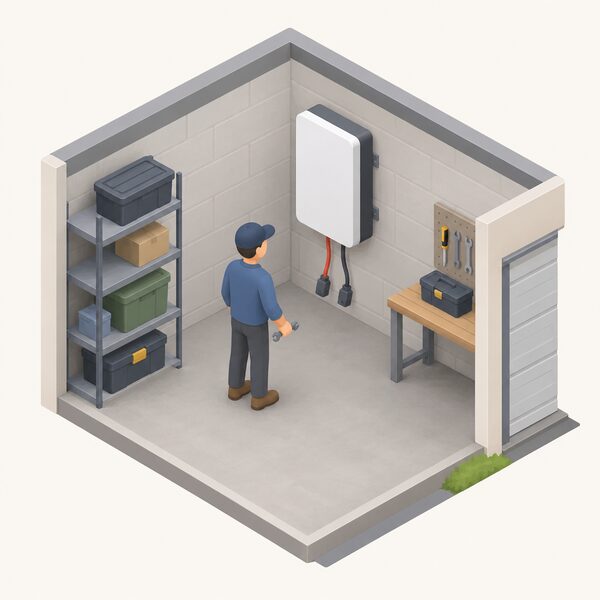
The largest domestic battery recall in the UK market concerns LG ESS Home Batteries. Electrical Safety First's product recall page states that LGESS are replacing all potentially affected ESS Home Batteries5. The affected models named are RESU7H Type C, RESU7H Type R, RESU10H Type C and RESU10H Type R5.
| Affected model | Recall status |
|---|---|
| RESU7H Type C | Subject to replacement of all potentially affected ESS Home Batteries5 |
| RESU7H Type R | Subject to replacement of all potentially affected ESS Home Batteries5 |
| RESU10H Type C | Subject to replacement of all potentially affected ESS Home Batteries5 |
| RESU10H Type R | Subject to replacement of all potentially affected ESS Home Batteries5 |
The general response to a recalled or faulty battery is consistent across sources. For a damaged e-bike battery, the guidance is to stop using and charging the battery immediately and replace it18. For a suspected sub-standard or faulty charger or battery, stop using it immediately and report the fault to the manufacturer or retailer18. For a dangerous model identified in the UK, the owner action is to stop using it immediately, disconnect and keep the battery safely away from the living area19.
Redress follows the seller. Guidance on a dangerous e-bike battery model directs owners to contact the seller for redress, with more information on the Government's website19. A government product safety notice on a recalled electricity saving device required recall of the product from end users, with redress sought from the distributor the product was purchased from20.
Where a battery problem becomes a dispute with an energy supplier rather than a manufacturer, the routes differ. Ofgem lists the issues an energy supplier handles, including late, incorrect or missing bills, back billing, being overcharged, a faulty meter, poor customer service, and refusing to refund credit from an account21. The Citizens Advice consumer service may refer a household to the Extra Help Unit where a complaint is difficult or urgent, the householder cannot deal with the supplier alone due to personal circumstances, is considered vulnerable, or is at risk of being disconnected22.
Recycled content rules and what they mean for future batteries
The direction of regulation is towards requiring recycled material in new batteries and safe disposal at the end of their life. The Lithium-ion Battery Safety Bill sets out what disposal regulations must require of sellers: a prominent warning about the dangers of improper disposal, and information on cell chemistry and safe disposal attached as part of the sale7.
The UK's product safety framework is the wider context for these duties. It identifies non-compliant or incompatible battery components and use outside safe design parameters as routes to thermal runaway3. Recycled content rules and disposal labelling are two ends of the same policy: what goes into a battery, and what happens to it afterwards.
The precedent for this kind of regulation in Great Britain is the Ecodesign and Energy Labelling work. On household tumble dryers, the government confirmed it will proceed with new Ecodesign and Energy Labelling regulations in Great Britain, broadly as consulted upon, with a small number of refinements based on stakeholder feedback23. That is a product standards route rather than a battery-specific one, but it shows the mechanism by which minimum requirements reach the UK market.
For a household, the practical effect of recycled content rules is indirect. They do not change how a battery is removed or where it goes, but they change what a replacement unit contains, and they strengthen the case for taking the old one back into a proper recycling stream rather than losing the material. The Battery Safety Campaign's responsible disposal ask, for regulations ensuring safe disposal of lithium batteries once their lifecycle ends, is the counterpart duty on the disposal side14.
How disposal fits into household energy independence
A home battery is a device for reducing dependence on the grid at the times when electricity is expensive or carbon-heavy, and it does that by storing energy rather than generating it. Solar Energy UK describes the function as storing excess electricity produced from a solar system, and enabling power produced during the day to be used at another time, for example in the evening12. Energy Saving Trust describes the same pattern: storing excess electricity generated by panels, or charging when the tariff is cheap, then using stored energy at night or when prices are high11.
The independence gain is measurable. Great British Energy states that adding a battery to a solar installation increases self-consumption from 30 to 40% to 70 to 80%6. That is the household consuming its own generation rather than exporting it and buying back later.
What remains is dependence on things the household does not control. The battery itself is a manufactured product with a warranty, a manufacturer and, in some cases, a cloud service or app. Its end of life is a manufacturer and waste-infrastructure question, not a household one. The grid remains the backup and the source of top-up charging. And the disposal route depends on a local authority or a retailer, not on the household's own equipment.
The end-of-life position is where independence is weakest. A household that has generated and stored its own electricity for a decade still has to hand the unit into a system it does not own, and the evidence is that the system is not capturing the material: less than one-third of new electrical items purchased in the UK each year are recycled at the end of their lifecycle1. Planning guidance for self-build homes already advises planning for efficient waste separation and recycling within the home24. For battery storage, the equivalent planning is knowing the removal route before the unit is installed.
Sources24 cited
- Recycling electricals and batteries, Electrical Safety First, 2026-09-17
- Lithium-ion batteries, North Wales Fire and Rescue Service, 2026
- The UK's new product safety framework, GOV.UK, 2026-03-31
- Zombie batteries pose fire risk, Electrical Safety First, 2026-09-17
- LG ESS Battery Division RESU ESS Home Batteries, Electrical Safety First, 2026-09-17
- POST note 771: Energy storage, Parliamentary Office of Science and Technology, 2026-06-25
- [Lithium-ion Battery Safety Bill [HL]](https://bills-api.parliament.uk/api/v1/Publications/56005/Documents/4984/Download), UK Parliament, 2024-07-29
- 10 ways to avoid electrical fires in your home, Electrical Safety First, 2026-09-19
- Westminster, Electrical Safety First, 2026-09-17
- VAT energy saving materials and grant funded heating supplies, HM Revenue and Customs, 2026-09-17
- Battery storage, Energy Saving Trust, 2026-08-19
- Batteries in the home, Solar Energy UK, 2026-09-17
- Dangerous product risking fire found for sale across the UK, Electrical Safety First, 2026-09-17
- Battery Safety Campaign, Electrical Safety First, 2026-09-17
- A manifesto for safety in Scotland's homes, Electrical Safety First, 2026-09-20
- The EV charging landscape, Electrical Safety First, 2026-09-19
- Home truths, Electrical Safety First, 2026-09-20
- E-bikes, Electrical Safety First, 2026-09-17
- Is your e-bike battery safe, Electrical Safety First, 2026-09-17
- Product safety report: 2Pcs 90V-250V Electricity Saving Box, GOV.UK, 2022-04-28
- Complain about your energy supplier or network operator, Ofgem, 2026
- Complain about your energy supplier or network operator, Ofgem, 2026
- Raising product standards for household tumble dryers, GOV.UK, 2025-07-17
- Self-build homes: sustainability, Planning Portal, 2026
 Lithium Battery SafetyLithium batteries power phones, e-bikes, scooters and home storage, and any of them can catch fire.
 Recycling Old ElectricalsOld batteries and broken electricals can cause fires in bin lorries and at recycling plants, so where should they actually go?
 Panel RecyclingWhat actually happens to a solar panel when it stops working, and what can a household do with one?
 Cycle Life and DegradationHow long will a home battery actually last, and what decides that?
 Second-Life EV BatteriesUsed electric car batteries can store solar power at home, but can you actually buy one in the UK?
 Round-Trip EfficiencyHow much of the electricity you put into a home battery do you actually get back?