
In this guide
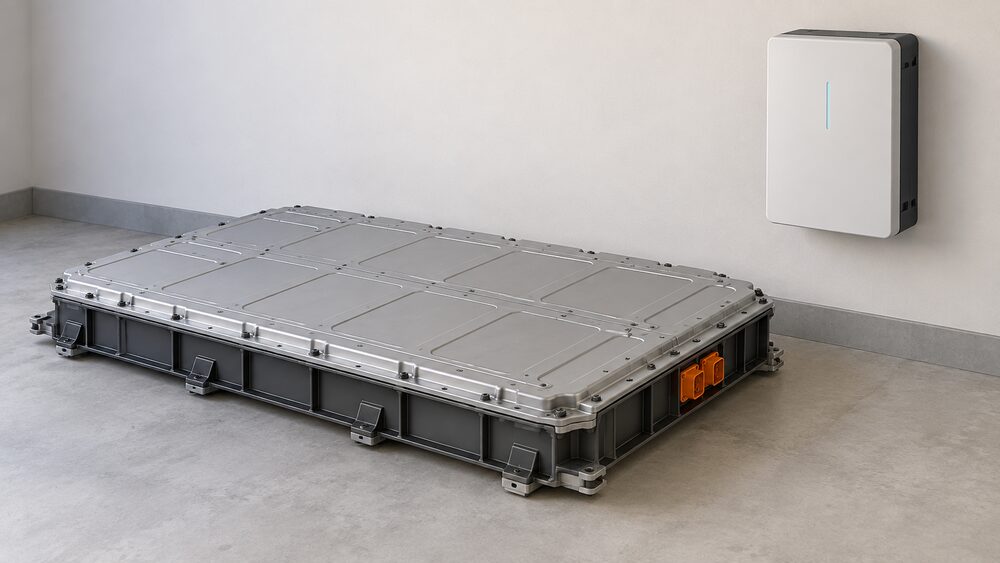
A second-life EV battery is a traction pack retired from an electric car and repurposed, whole or in modules, for stationary storage in a home, a building or a community scheme. The logic is straightforward: EV batteries are expected to last 10 to 20 years1, a car pack holds far more energy than a house needs at once, and a pack that no longer gives acceptable range in a vehicle may still hold enough usable capacity to run a household overnight. A typical home storage system is around 10 kWh2, while car battery capacities are much higher than domestic batteries, about 40 kWh for smaller cars3.
What is far less straightforward is buying one. There is no UK consumer market in certified second-life home batteries comparable to the market in new units, and the safety advice runs the other way. North Wales Fire and Rescue Service states plainly that a household should never be tempted to buy a lithium battery second-hand, because its history, any damage it has suffered and the dangers it could pose are unknown4. The demonstrated UK applications have been project-led: a Welsh Government programme looked at using post-use EV batteries for energy storage at a domestic level or as part of hub-based storage for community heat schemes5, and the wider field is largely occupied by vehicle-to-grid and vehicle-to-home approaches that keep the battery in the car rather than taking it out.
For comparison, new domestic battery storage is a settled product: it costs up to £10,000 depending on size, with a typical 5kWh system around £4,6006, and lasts around 10 to 15 years6. A second-life pack has to beat that on price by enough to compensate for unknown remaining life, an absent manufacturer warranty and the cost of testing, grading and re-enclosing cells. This page sets out what the evidence supports on both sides.
What a second-life EV battery is, and why car packs are attractive
Repurposing rests on a mismatch of duty. A car battery must deliver high power, survive vibration, cold starts and rapid charging, and hold enough energy for a long journey. A house battery sits still in a garage, on an external wall or in a utility room2, cycles gently once or twice a day, and is measured in a handful of kilowatt hours. A pack whose degraded capacity has become a problem in a car is not degraded in a way that necessarily matters in a cupboard.
The scale difference is the point. A typical home system might be 10 kWh2; a smaller car carries about 40 kWh3; and a common worked example in UK charging guidance is a car with a typical range of 300 miles and a 50kWh capacity battery9. One retired pack, in principle, covers several houses' worth of overnight demand.
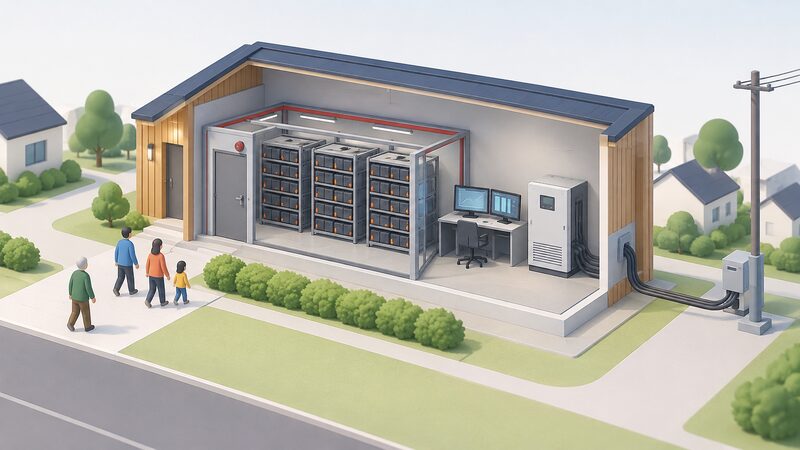
The Welsh Government's Smart Living initiative described exactly this ambition, examining how post-use EV batteries could provide energy storage at a domestic level or as part of hub-based storage for community heat schemes5. The community framing matters: aggregating modules into a shared hub spreads the cost of testing, monitoring and fire-safe housing across many households, which a single home cannot do.
There is a second reason packs become available at all. EV batteries can usually be replaced, but it is complicated and often expensive to do10, so a failed or degraded pack removed under warranty or after an accident enters the waste stream as a large, valuable, awkward object. Reuse is the alternative to recycling it.
Where this sits in the wider field is covered on the emerging technology and household energy independence page and across the emerging home energy technology pillar.
EV battery life: 10 to 20 years, and warranties set well below that
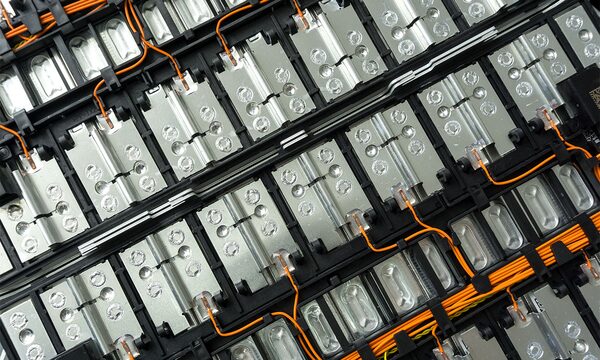
The Energy Saving Trust states that EV batteries are expected to last 10-20 years1. Electric vehicles do not usually need their batteries replaced, because the batteries can last for hundreds of thousands of miles10.
Warranties are set conservatively against that. The Society of Motor Manufacturers and Traders states that manufacturers provide warranties on EV batteries lasting at least eight years or 100,000 miles7, and independent guidance agrees that battery warranties tend to be set at around eight years or around 100,000 miles11 and that most electric car batteries are guaranteed by manufacturers to last for eight years or around 100,000 miles12. A warranty is a floor, not a forecast.
The useful comparison is with stationary batteries, where UK sources cluster but do not agree exactly:
| Source and type | Stated life |
|---|---|
| POST, domestic battery storage (June 2026) | around 10 to 15 years6 |
| Energy Saving Trust, home battery (August 2026) | about 10 to 12 years2 |
| Home Energy Scotland, battery storage (September 2026) | 10 to 15 years13 |
| Centre for Sustainable Energy, domestic storage (October 2025) | 8 to 12 years8 |
The spread reflects different assumptions about cycling depth, chemistry and warranty terms rather than a factual dispute. The practical consequence for second life is blunt: a purpose-built home battery is expected to manage roughly a decade, so a car pack already eight or more years into its life is being asked to deliver its remaining service with no manufacturer standing behind it. MCS notes that the lifespan of a battery will depend on the model, so this information should be looked for before a decision is made14. With a repurposed pack, that model-specific figure usually does not exist.
From car to home: what repurposing actually involves
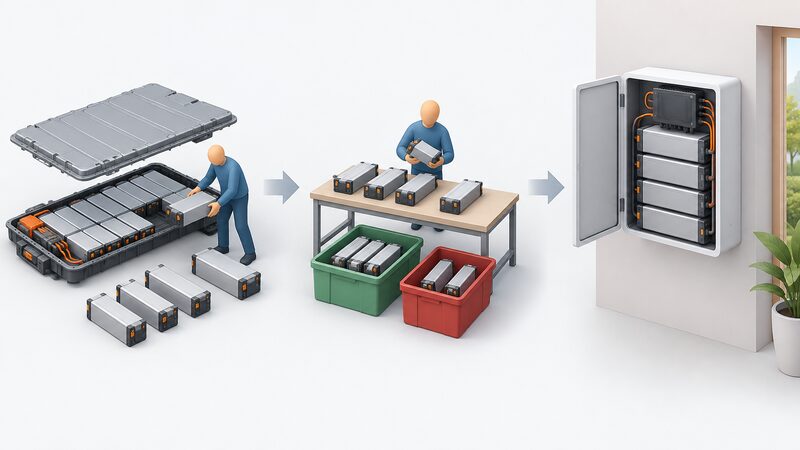
Taking a traction pack out of a vehicle and making it a domestic appliance is not a wiring job. Modules that do not grade well have to be rejected. None of that work is covered by the car maker's warranty, and the resulting product is a new item placed on the market with its own safety obligations.
That difficulty explains why most UK activity has gone in the opposite direction: leaving the battery in the car and drawing on it electrically.
- Vehicle-to-grid (V2G): the use of vehicle batteries as storage to help balance supply and demand on the electricity network, applying at scales from individual batteries up to aggregation of multiple batteries across one or multiple carparks15. It enables energy stored in electric vehicles to be fed back into the electricity network16, and Ofgem has described it as technology that allows stored electricity from electric vehicle batteries to be sent back onto the grid when it is needed17.
- Vehicle-to-home (V2H): using the EV's battery to release power back through the charger either for use in the building it is connected to or back into the grid18. A domestic installation demonstrated by Cenex showed a car could power a house with energy flowing both to and from the vehicle19.
- Fixed battery storage: a separate unit, as at the Etopia homes in Corby, where the householder's use of solar generated electricity is maximised by battery storage and exported to the grid20.
The large caveat on the vehicle routes is availability. The Energy Saving Trust states that generally you cannot use your EV as a battery, and that bidirectional charging is being trialled in some places but is not widely available2. Readers weighing the two approaches may find vehicle-to-grid or a home battery and bidirectional charging explained useful.
What stored energy does in a house: solar, off-peak and grid balancing
Whatever the cells came from, a home battery does three jobs. It stores excess electricity generated by solar panels, or charges up when the tariff is cheap, and then supplies the house at night or when prices are high2. Without a battery, surplus solar electricity is wasted or exported to the grid, often at a relatively low rate; with one, that surplus is captured and held for when it is actually needed, including overnight EV charging21. Home storage batteries store electricity to use later, making the energy system more independent from the National Grid22.
The off-peak case can be sized from charging costs. A full charge at home for a car with a 50kWh battery costs approximately £17 on a standard tariff1, while home charging on an EV tariff or other time-of-use tariff is quoted at £89. The difference between those two figures, £17 and £8, is the value a battery captures by shifting consumption, and it applies to household load as much as to the car.
The third job is collective. Solar Energy UK points to the combined potential of millions of homes with batteries to help balance supply and demand across the country, releasing stored power onto the grid when needed23. CREDS puts the vehicle version more strongly: use of electric vehicle batteries in principle offers a very large potential to contribute to home energy storage and electricity system balancing24. The Energy Saving Trust's model of the energy efficient house of the future assumes the home uses battery storage and an EV battery to store electricity25, and a vehicle-to-grid system could potentially offer a two-way movement of energy, with energy stored in the car battery used in the home or sold back to the grid at times of peak demand26.
Backup is a separate function and not automatic. V2H can provide backup power from an EV to a home during power outages and support off-grid setups, but it is limited to certain EV models and compatible chargers27.
Sizing: what 40 to 100 kWh of car battery means at home

The arithmetic that makes second life appealing also makes it awkward. A typical home system might be 10 kWh2; a smaller car pack is about 40 kWh3. A whole pack is therefore several times the size a house would normally install, which is why repurposing generally means splitting a pack into modules and building a smaller unit, or pooling modules into a community-scale hub of the kind the Welsh programme envisaged5.
Usable capacity is smaller than nameplate capacity in any case. When a home battery gets down to a set level, perhaps 20% of the total storage capacity, the system stops discharging2. A nominal 10 kWh unit therefore delivers appreciably less than 10 kWh in a cycle, and a degraded second-life module starts from a nameplate figure that no longer reflects what the cells hold. Two numbers matter for any repurposed pack: measured remaining capacity at the time of grading, and the reserve the system will not touch. Sources disagree on typical EV pack sizes above the small-car figure, with maker documents variously describing capacities up to 100kWh and exceeding 100kWh, so no single upper figure is reliable here.
Safety: lithium-ion fire risk and what Battery Breakdown recommends
This is the decisive section for most households. Electrical Safety First's Battery Breakdown report looks into the cause of lithium-ion battery fires and gives recommendations for how safety can be improved28. Its focus is e-bike and e-scooter fires, which are rising at record levels, driven by substandard lithium-ion batteries, chargers and conversion kits often sold via online marketplaces28. The parallel with uncertified repurposed car cells sold privately is direct.
"Never be tempted to buy a lithium battery second-hand as you won't know it's history, damage it may have suffered or the dangers it could pose"
The same service notes that the larger the battery, the larger the danger4, which is the whole problem with a car-sized pack in a house. Second-hand e-bike batteries and chargers are described as a serious fire risk29. Government's product safety consultation sets out the mechanism: non-compliant or incompatible battery components and the use of batteries outside of their safe design parameters can lead to thermal runaway, causing fires30. Repurposing is, by definition, using cells outside the parameters their original designer specified unless the rebuild re-establishes them. High temperatures can cause batteries, especially lithium-ion, to overheat and potentially catch fire31, and even where a fire is extinguished it is common for the fire to start again28.
Battery Breakdown's recommendations to government32:
- Immediate regulation of online marketplaces to make them take reasonable steps to prevent or delist unsafe products sold via their platforms.
- A ban on universal chargers, to prevent dangerously compatible charging arrangements and damage, and better regulation of non-proprietary charging systems.
- A British standard for conversion kits for e-bikes, which currently does not exist.
- Mandatory reporting of e-bike and e-scooter fires in Home Office data, in a major overhaul to modernise fire incident reporting across the UK.
- A government-backed nationwide campaign on e-bike and e-scooter safety, including safe charging.
The report suggests that without better regulation, e-bikes and e-scooters could risk an outright ban in the future, and notes measures elsewhere including a ban on rental e-scooters in Paris and train companies across the UK banning e-scooters on services due to safety concerns32.
Households already hold many lithium-ion items, including laptops, mobile phones, e-scooters, e-cigarettes and mobility vehicles4; a repurposed traction pack is in a different class of stored energy again. Certification is covered further under standards and certification for emerging energy products.
Costs, warranties and certification: what a buyer would need to establish
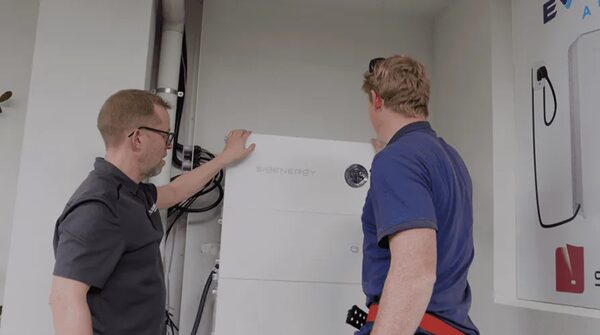
There is no published UK retail price for a certified second-life home battery in the evidence available, so no range can be given; any such system would be quoted by the installer. The benchmark it must beat is new equipment. Domestic battery storage costs can be up to £10,000 depending on size, with a typical 5kWh system around £4,6006, and the Energy Saving Trust gives a range of £1,500 to £10,000 with a 5kWh system around £4,6002. Payback periods are in the region of 8 to 12 years, which is similar to the reported lifespan8, so the economics of new storage are already finely balanced. The Centre for Alternative Technology goes further, noting that adding storage may not be worthwhile in a grid-connected house at present, because batteries are still quite expensive and carry environmental impacts in manufacture and disposal33. Reuse addresses part of that impact argument, which is the strongest case for second life.
What a household would need to establish before any purchase:
- Measured remaining capacity of each module, and who tested it.
- Whether the unit is MCS certified; MCS states that the stated lifespan of the specific model should be checked before deciding14.
- Whether grid-charging is permitted by the intended tariff, and whether emergency power backup is included34.
- Fire separation, siting and smoke detection for the installation location.
Planning is generally not an obstacle: planning permission is not required for domestic battery storage within a residential building39. The relevant hurdles are electrical, safety and insurance, not planning.
Where a second-life pack fits in an energy-independent home
Storage does not generate anything. Home battery storage is usually used in combination with solar panels or a smart time-of-use tariff, or both2, so the independence it delivers is the ability to choose when grid or solar electricity is consumed rather than freedom from supply. Battery energy storage in association with residential buildings allows users to store electricity from local generation39. Electricity from a solar PV system can be used throughout the home, exported to the grid, or stored in a battery for use at another time, such as during peak hours when the supply is expensive40.
For a household weighing routes, the honest position is that second life is currently the least mature of three options. Fixed new storage is a certified, warranted product with known costs. Vehicle-to-home and vehicle-to-grid use a battery the household already owns, but are limited to certain EV models and compatible chargers27 and are not widely available2. Repurposed packs sit outside both: no consumer certification route in evidence, no manufacturer warranty, and explicit fire service advice against buying lithium batteries second-hand4. The realistic UK route for now is the community or project scheme, where testing, monitoring and containment are done by an organisation rather than a homeowner, as the Welsh hub-based concept described5.
Dependencies that remain in every case: the grid connection and the supplier tariff that makes off-peak charging worthwhile; the inverter and battery management electronics, often with app or cloud control; the installer for maintenance; and, for a repurposed pack, the continuing existence of whoever rebuilt it. Related routes are covered under sodium-ion home batteries, solid-state batteries and vehicle-to-home and vehicle-to-load.
Getting more life out of the first use
The cheapest second-life battery is a first-life battery that lasts longer. Guidance on prolonging EV battery life points to only using rapid charging when needed, not fully charging the battery, and not letting the charge get too low10. Charging behaviour reflects this: charging slows significantly after about 80% to protect the battery and prolong its lifespan41, most EVs slow charging after around 80%41, and rapid chargers safeguard battery life by slowing charging once the battery reaches 80 percent7. Charging from 20% to 80% typically takes between 30 and 90 minutes41, or around 40 minutes at a rapid or ultra-rapid station42.
Home charging advice is to charge overnight so each day starts with a full battery, to plan journeys so the charge needed is known, and to use chargepoint finder apps to map chargepoints along a route10. A 7kW home charger costs around £900 to buy and install43. On the used market, the Energy Saving Trust notes that if journeys further than 60 miles are very rare and there is convenient access to a charger, either at home or via nearby public infrastructure, an older EV could suit44. The same degraded packs that make older EVs cheap are the supply from which any second-life home storage market would eventually be built.
Sources44 cited
- Electric vehicles: debunking the myths, Energy Saving Trust, 2025-09-22
- Battery storage advice, Energy Saving Trust, 2026-08-19
- Store and save: home batteries, Centre for Alternative Technology, 2022-10-27
- Lithium-ion batteries at home, North Wales Fire and Rescue Service, 2026
- Smart Living Initiative annual report, Welsh Government, 2019-07
- Domestic battery storage briefing, Parliamentary Office of Science and Technology, 2026-06-25
- EVs: the facts, SMMT, 2025-09-22
- Battery storage advice, Centre for Sustainable Energy, 2025-10
- Smart charging electric vehicles, Energy Saving Trust, 2025-03-25
- Electric vehicle battery basics, Energy Saving Trust, 2025-09-16
- Lifetime cost of an electric vehicle, Uswitch, 2024-11-26
- Electric cars and energy bills, Uswitch, 2026-04-27
- Battery storage, Home Energy Scotland, 2026-09-20
- Battery storage for consumers, MCS, 2026-09-17
- Electric vehicle infrastructure national standards, Welsh Government, 2023-06
- Renewable energy FAQs, Electricity North West, 2023-02-23
- Ofgem proposes system reforms to support the electric vehicle revolution, Ofgem, 2018-07-23
- EV glossary, Uswitch, 2024-11-26
- V2G domestic installation, Cenex, 2017-03-09
- Building for 2050: low cost, low carbon homes, GOV.UK, 2022-12-05
- Can solar panels charge electric cars, The CPA, 2026-04-15
- Solar panel battery storage, Which?, 2026-05-14
- Batteries in the home, Solar Energy UK, 2026-09-17
- Demand flexibility, CREDS, 2026
- House of the future, Energy Saving Trust, 2026-07-15
- Smart homes and lower carbon footprints, Energy Saving Trust, 2026-01-21
- Vehicle-to-grid charging guide, Uswitch, 2025-07-02
- Battery Breakdown report, Electrical Safety First, 2026-09-17
- E-bike battery safety, Electrical Safety First, 2026-09-17
- The UK's new product safety framework, GOV.UK, 2026-03-31
- Be summer ready: battery safety, Electricity North West, 2026-09-19
- Treat e-bike batteries like fireworks, government told, Electrical Safety First, 2026-09-17
- Solar photovoltaic information, Centre for Alternative Technology, 2026-03-10
- Solar battery storage guide, IAA, 2026-09-20
- VAT: energy-saving materials guidance, HMRC, 2026-09-17
- Value Added Tax Act 1994, Schedule 7A, legislation.gov.uk, 2026-09-17
- Response to the Treasury consultation on VAT relief for energy-saving materials, Energy Saving Trust, 2025-10-08
- Balancing investment in clean heat and energy efficiency in Scottish housing retrofit, ClimateXChange, 2026-06-03
- Permitted development rights sustainability appraisal, Scottish Government, 2019-06
- Renewables and electrics for householders, NICEIC, 2026-09-17
- Electric car charging guide, Carwow, 2025-07-16
- Should I buy an electric car?, Which?, 2026-04-16
- Electric car charging at home, Which?, 2026-02-25
- Should you buy a used electric car?, Energy Saving Trust, 2022-06-08
 The Full Home Batteries GuideA home battery stores cheap or solar power for later, but will it really cut your bills enough to be worth it?
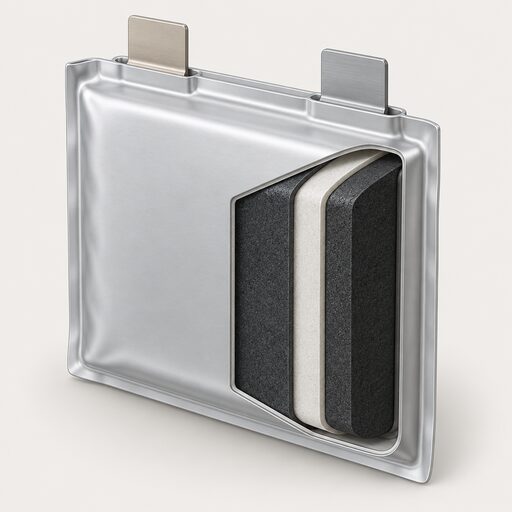 Solid-State BatteriesAre solid-state batteries on sale yet, and should you wait for one?
 Recycling and DisposalWhat happens to a domestic storage battery at end of life, who takes it back, the transport and handling rules for damaged lithium units, and the difference between recycling, refurbishment and second-life reuse.
 Backup Power Safety RulesWho signs off a battery or backup circuit, and can you legally plug in a power station or a plug-in solar panel in the UK?
 Home Battery Install StatisticsHow many homes in the UK actually have a battery, and is that number growing quickly?
 Planning Permission in EnglandWhen a domestic battery or its enclosure falls within permitted development in England, when an application is needed, and how the position differs for outbuildings, listed buildings and conservation areas.