
In this guide
The hydrogen village trials were abandoned before a single home was converted. The Department for Energy Security and Net Zero announced in July 2023 that it was no longer proceeding with support for a village trial in Whitby, Ellesmere Port, and a second proposed trial at Redcar was dropped in December 2023 because hydrogen supply was unavailable1. The government has also said it will not progress work on a hydrogen town pilot until after 20262.
That leaves the hydrogen-for-heat evidence programme far thinner than the plans set out in 2021 and 2022. The Heat and Buildings Strategy had committed to a neighbourhood trial by 2023 and a village scale trial by 2025, with a potential hydrogen-heated town before the end of the decade3. The neighbourhood trial in Fife, originally planned for 2023, was rescheduled to 2024 with around 300 interested participants in domestic properties1. Official statistics state plainly that hydrogen heating technology is not currently available in the UK4.
For a household, the practical position is simple: no hydrogen boiler can be bought, no home can be converted, and no date is fixed. The government's stated intention is to take strategic decisions on the role of hydrogen in heating buildings in 20263. Until those decisions are made, hydrogen is not an option a household can plan around, and the cancelled trials are the reason the evidence base is incomplete.
What the cancelled trials were meant to test
The village trials were the middle rung of a three-stage ladder. The Draft Heat in Buildings Strategy set out UK government commitments to a neighbourhood trial by 2023, a large hydrogen village trial by 2025, and a hydrogen town before the end of the decade5. The Heat and Buildings Strategy repeated the sequence, describing a neighbourhood trial by 2023 and a village scale trial by 20253. The British Energy Security Strategy listed a hydrogen heating village trial beginning by 2025 as a milestone6.
The purpose was not to sell hydrogen to households but to gather evidence. The National Energy Action response to the BEIS consultation argued that the village trial could be used to gather evidence on how to maximise benefits of a hydrogen grid conversion trial for fuel poor and vulnerable households, and that this should feed into a broader distributional analysis of the possible impact of large scale hydrogen conversion on energy bills and thus energy affordability7. That analysis never happened at village scale.
The scale was modest by design. Official guidance described the trial as involving only 1,000 to 2,000 properties8. The campaign group Fuel Poverty Action described hydrogen village trials that would force up to 2,000 homes in the trial area to convert their home heating and their appliances to hydrogen9. Cadent, the gas distribution network behind the Whitby proposal, wrote to all 2,000 residents living in the proposed location offering them the choice to participate10.
"DESNZ announced in July 2023 that it was no longer proceeding with supporting a village trial in Whitby"
The evidence gap matters because hydrogen for heating is not a small question. The government's own impact assessment work suggested heating deployment in buildings could save up to 9.0 million tonnes of CO2 equivalent a year in the mid-2030s, against 7.6 million tonnes from industrial fuel switching11. Those figures rest on assumptions that the cancelled trials were meant to test in real homes.
What the figures show

The numbers behind the programme describe a technology at demonstration scale, not a market. The village trial was to cover 1,000 to 2,000 properties8. Cadent reported 1,100 in-home assessments, 600 visitors to its Hydrogen Experience Centre, and hundreds of interactions with locals, after 10 months of in-person and virtual consultation10. Those are engagement figures, not conversion figures.
| Item | Figure | Source |
|---|---|---|
| Properties in the proposed village trial | 1,000 to 2,000 | 8 |
| Residents written to in Whitby | 2,000 | 10 |
| In-home assessments carried out | 1,100 | 10 |
| Visitors to the Hydrogen Experience Centre | 600 | 10 |
| Consultation period | 10 months | 10 |
| Fife neighbourhood trial participants | around 300 | 1 |
| Winlaton hydrogen trial homes | 668 | 12 |
| Keele University hydrogen trial homes | around 140 | 12 |
The wider hydrogen strategy figures are larger but further off. The UK Hydrogen Strategy set a target of five gigawatts of annual low-carbon hydrogen production capacity by 2030, with a government aspiration to see 1GW production capacity by 2025, and potential hydrogen demand of up to 38 terawatt-hours by 2030, rising to 55 to 165TWh by 203513. Demand for low-carbon hydrogen for heating was expected to be relatively low, under 1TWh by 2030, rising to up to 45TWh by 203513. At the time the strategy was published, low-carbon hydrogen production capacity stood at virtually zero13.
The efficiency arithmetic is the part that bears most directly on a household. Independent analysis states that via hydrogen, 1 unit of electricity might give only 0.6 units of heat, assuming hydrogen generation is 70% efficient and the boiler 90% efficient14. The same analysis notes that at the moment only grey hydrogen is produced, from the steam reformation of natural gas14. Official consultation material states that if using blue and grey hydrogen methods, heating UK homes would require 45% more fossil gas than today15.
What drives the cost and the case
Three forces shaped the trials and their cancellation: the cost of conversion, the source of the hydrogen, and the alternative uses for the gas.
Conversion was never a like-for-like swap. Cadent proposed to lay a parallel gas main in Whitby so that opt-out properties would receive natural gas while the existing main carried hydrogen to the properties that opted in10. That is duplicate infrastructure for the duration of a trial. Participating residents were offered brand new hydrogen appliances, installed and maintained for free, and price matching of hydrogen to natural gas for the entire programme duration10. At the end of the timeframe, Cadent stated it would convert all residents back to natural gas, removing hydrogen appliances and installing new natural gas appliances free of charge10. A trial that ends by reinstating the previous system is an evidence exercise, not a transition.
The source of the hydrogen determines whether it helps at all. The UK Hydrogen Strategy committed to a twin track approach including production of both green and blue hydrogen, with industry as a lead option for early hydrogen use starting in the mid-2020s13. Independent consultation material notes that 13% of hydrogen in 2050 would be imported17. Imported hydrogen, or hydrogen made from fossil gas, does not deliver the energy independence that domestically generated electricity can.
The competition for the molecules is real. The strategy expected overall demand for low-carbon hydrogen for heating to be relatively low by 2030, under 1TWh, against up to 45TWh by 203513. Industry, shipping and power generation were all competing for the same production. The Public Accounts Committee concluded that DESNZ's work to test hydrogen for heating has been beset by problems, with key trials cancelled2.
How the position differs across the UK nations
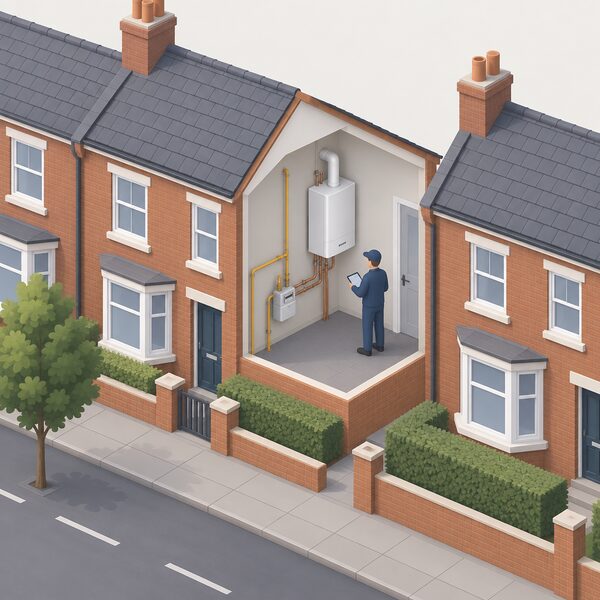
The hydrogen trials were UK government programmes, funded and directed from Westminster, so the cancellations apply across Great Britain. The differences lie in what each nation is doing instead.
Scotland has its own heat strategy and its own trial. The Draft Heat in Buildings Strategy set out support for industry to begin a neighbourhood trial by 2023 and a large hydrogen village trial by 20255. The Fife neighbourhood trial, run by a gas distribution company, was originally planned for 2023 and rescheduled to 2024 with around 300 interested participants in domestic properties1. Scotland's new build heat standard consultation considered the direct emissions of 100% hydrogen and found the findings inconclusive due to a lack of available real-life data, with independent laboratory testing of hydrogen appliances to be commissioned19. That is a direct consequence of the missing village-scale evidence.
Wales has a demonstration rather than a trial. The Cartrefi Hydrogen Homes project is described as a test and learn project, an evidence gathering project to test how hydrogen works in a real life home, and explicitly not part of a wider plan to convert local homes to hydrogen20. The project was designed with minimal disruption to the local community and no change to their gas supply20. That is a smaller claim than the village trials made.
England hosted both cancelled village trials, at Whitby in Ellesmere Port and at Redcar. The government is considering Redcar, Teeside as a potential location for the hydrogen heating trial, according to research briefing material21. Northern Ireland has no hydrogen village trial in the programme; its homes are covered by separate energy policy, and no trial site there appears in the official record.
The rules that governed participation
The trials were designed around consent, not compulsion, and the rules are worth stating because they set the template for any future programme.
Cadent and British Gas confirmed that all residents would be offered the choice to decide on their participation10. This opt-in and opt-out offer came after 10 months of in-person and virtual consultation10. The parallel main was the mechanism that made opting out physically possible: the existing gas main would transport hydrogen to the properties that opted in, while the new main served the rest10.
What participants would have received was set out in the same terms: brand new hydrogen appliances, installed and maintained for free, and price matching of hydrogen to natural gas for the entire programme duration10. The reversion terms were equally explicit: all residents converted back to natural gas at the end of the timeframe, with hydrogen appliances removed and new natural gas appliances installed free of charge10.
Data handling in home energy trials follows a common pattern. The Smart Flex Heat Pump Trial and the Deddington and Duns Tew Heat Pump Trial both state that all data will be stored in accordance with GDPR regulation and removed when the trial concludes22. Any future hydrogen trial would be expected to meet the same standard.
"Cadent and British Gas have confirmed that all residents will be offered the choice to decide on their participation."
The consultation that preceded the trials is now closed24. The legal basis for blending hydrogen into the gas network at scale is not yet in place: independent analysis states that the transition to blending at scale will require legislative amendments, likely delaying commercial implementation25. Blending up to 20% hydrogen into the gas network was to be examined by late 2022 with a final decision aimed for late 202313.
What it means for household energy independence
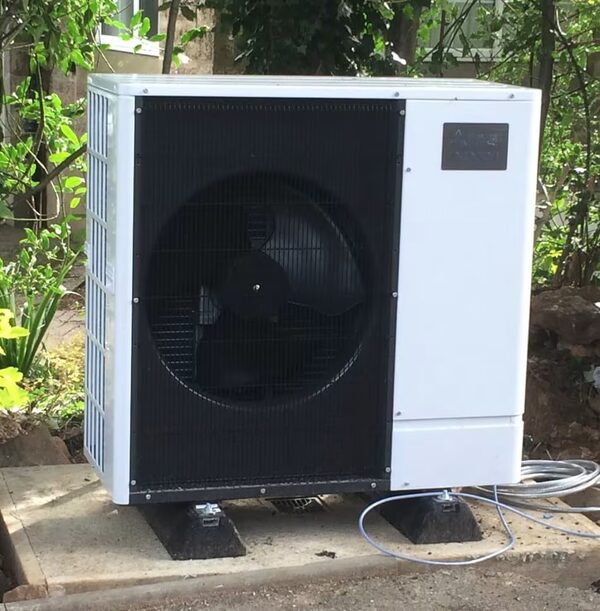
The cancelled trials leave a household with no hydrogen option and no near-term prospect of one. Official statistics state that hydrogen heating technology is not currently available in the UK4. The strategic decisions on the role of hydrogen in heating buildings are not due until 20263. A household deciding how to heat its home today is choosing between technologies that exist, not waiting for one that does not.
The dependence question is sharper than the technology question. Only grey hydrogen is produced at present, from the steam reformation of natural gas14. Heating UK homes using blue and grey hydrogen methods would require 45% more fossil gas than today15. A hydrogen-heated home connected to a network supplied by grey or blue hydrogen would therefore depend on more imported fossil gas, not less, and would remain dependent on a gas distribution network and a supplier in the same way a natural gas home is today.
Green hydrogen changes that arithmetic only if it is made domestically from renewable electricity. The UK Hydrogen Strategy set a target of 5GW of low-carbon hydrogen production capacity by 203017, against a starting point of virtually zero13. Independent consultation material notes that 13% of hydrogen in 2050 would be imported17. The strategy also expected hydrogen to make up between 20 and 35% of the nation's total energy supply by 2050, and to meet up to a third of the nation's energy needs by 205013.
The efficiency comparison is the constraint that no production target removes. Via hydrogen, 1 unit of electricity might give only 0.6 units of heat, assuming 70% generation efficiency and 90% boiler efficiency14. A heat pump using the same unit of electricity delivers more heat into the home. That is why the cancelled trials matter beyond hydrogen: they were the test that would have shown whether the conversion cost, the disruption and the supply chain could ever justify the efficiency loss. Without them, the case rests on modelling rather than measured homes.
What the cancelled trials left behind
The evidence programme is thinner than planned but not empty. The Fife neighbourhood trial proceeded at a smaller scale and later date than intended, with around 300 interested participants1. The Winlaton trial in Gateshead covered 668 homes, and the Keele University trial covered around 140 homes12. The Cartrefi demonstration home in Wales continues as an evidence gathering project20.
Some data was lost for reasons unrelated to the cancellations. Project Sciurus, a separate trial, abandoned its household demand data because the data collected during the trial for household demand was not of sufficient quality to be used in the modelling27. That is a reminder that trial data is not automatically usable evidence.
The policy record shows a pattern of abandoned home energy programmes. The Zero Carbon Homes regulation was scrapped in 2015 along with the Code for Sustainable Homes28, just a few months before implementation, despite the building industry having had nearly a decade to prepare29. The Code for Sustainable Homes was withdrawn by government aside from the management of legacy cases30. The Green Homes Grant was scrapped due to mismanagement10. The hydrogen village trials join that list.
For a household, the practical conclusion is that hydrogen for home heating is a research question, not a purchasing decision. The trials that would have answered it were cancelled, the town pilot is paused until after 2026, and the strategic decision is not due until 20262. Any household weighing its heating options is choosing among technologies that are available now, and the evidence for hydrogen remains modelled rather than measured in UK homes.
Sources30 cited
- Public Accounts Committee: DESNZ hydrogen heating trials, UK Parliament, 2024-05-26
- Public Accounts Committee summary: hydrogen heating trials, UK Parliament, 2024-05-26
- Heat and Buildings Strategy, Department for Energy Security and Net Zero, 2021-10
- DESNZ public attitudes tracker: heat and energy use in the home, winter 2025, Department for Energy Security and Net Zero, 2026-03-12
- Draft Heat in Buildings Strategy, Scottish Government, 2021-02
- British Energy Security Strategy, UK Government, 2022-05-17
- NEA response to BEIS consultation: hydrogen for heat, National Energy Action, 2021-10-18
- Hydrogen heating village trial guidance, UK Parliament, 2022-07
- Lords back campaigners' call for changes to hydrogen trials, End Fuel Poverty Coalition, 2023-05-04
- Whitby revised offer for hydrogen village trial, Cadent, 2023-03-29
- Hydrogen heating impact assessment, UK Parliament, 2023
- What are the main barriers to decarbonisation of heat, BESA, 2023-09-05
- In-depth Q&A: how will the UK's hydrogen strategy help achieve net zero, Carbon Brief, 2021-08-17
- Low carbon heating choices, CAT, 2022-01-26
- Hydrogen heating consultation, UK Parliament, 2023-05-24
- UK puts brakes on £120 hydrogen household levy, IGEM, 2023-08
- UK Hydrogen Strategy, CIBSE, 2026-09-17
- HPA urges government to firm up commitment to phasing out fossil fuel boilers, Heat Pump Association, 2023-09-21
- New build heat standard consultation part 2, Scottish Government, 2022-07
- Cartrefi Hydrogen Homes project, Wales and West Utilities, 2026-09-20
- Research briefing: hydrogen heating trial, House of Commons Library, 2026-09-20
- Smart Flex Heat Pump Trial, Low Carbon Hub, 2025-12-19
- Deddington and Duns Tew Heat Pump Trial, Low Carbon Hub, 2025-12-19
- MCS responds to consultation on improving visibility of distributed energy assets, MCS Certified, 2025-09-24
- UK urged to approve hydrogen blending in domestic gas network, IGEM, 2023-03
- Solar Energy Scotland manifesto, Solar Energy UK, 2026-09-17
- Project Sciurus trial insights report, Cenex, 2021-05
- UK homes shockingly unprepared for climate change says CCC, Carbon Brief, 2015
- Zero carbon homes, ECIU, 2019-02-11
- Code for Sustainable Homes technical guide, UK Government, 2015-04-22
 Hydrogen Home Heating TrialsHydrogen home heating is still being tested, not sold.
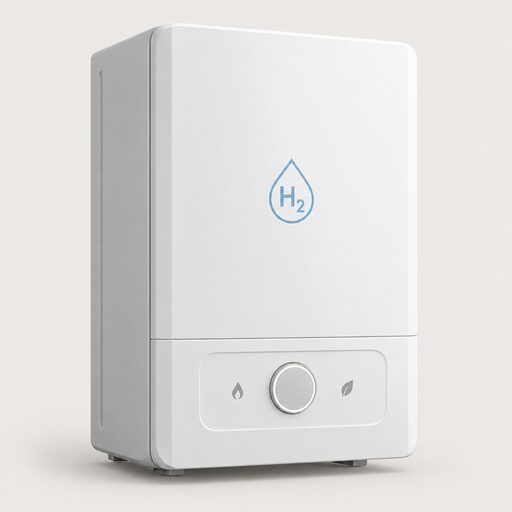 Hydrogen Heating PolicyWill hydrogen ever heat your home, and when will the government decide?
 Demonstration and Test HomesBefore new heating systems reach your home, they get tested in real houses with real people living in them.
 Hydrogen Safety in the HomeCan hydrogen actually be used to heat UK homes, and is it safe?
 Hydrogen-Ready BoilersWhat manufacturers mean by hydrogen-ready and hydrogen-blend-capable, what conversion would require, and the state of UK hydrogen heating trials and decisions.
 Hydrogen in the Gas GridHydrogen might be mixed into the gas you already use, but what would that actually mean for your bills, your boiler and your safety?