
In this guide
A bidirectional charge point is not treated as a consumer appliance. It is treated as a small-scale embedded generator, and that single classification decides everything that follows: who must be asked, what the unit must prove, and how much power it is allowed to push back into the network. Vehicle-to-grid technology allows an electric vehicle charger to not only charge a vehicle, but also take energy from the vehicle1, and once energy flows outward the local distribution network operator has a legitimate interest in the connection.
The practical consequence is that permission comes before installation, not after. Where a V2G chargepoint is being installed, it needs to be installed and commissioned in accordance with the Energy Networks Association's EREC G98 or G99 depending on the capacity2. Because a V2G connection is likely to exceed 16 A per phase, G98 is not applicable and G99 should be used3. The device owner is responsible for ensuring the DNO has granted authorisation before the work is carried out2.
What a household gets in return is a car that can earn. Average UK revenue generation from V2G is estimated at £150 to £200 per year4, with other modelling putting the figure higher. What it gives up is a degree of independence: the car becomes a network asset under someone else's protection settings, and the export it can deliver is capped by the network it sits on.
What vehicle-to-grid actually does: a two-way flow of power
V2G is a technology that allows electric vehicles to not only draw power from the grid to charge their batteries but also to send electricity back to the grid when needed, generating cash for the EV owner7. The same capability is described by the network operators themselves: vehicle to grid technology enables energy stored in EVs to be fed back into the electricity network, and this also helps reduce peak demand on the electricity network8.
The wider family of technologies is grouped as V2X, which allows for electric vehicles to operate bidirectionally, charging from the electricity grid but also discharging to the grid, building or home as needed9. The distinction between the variants matters for connection rules, because only one of them involves the network at all. Vehicle-to-home utilises the energy to power a home rather than being delivered back to the grid7, so a V2H installation never exports and never triggers a generation connection application in the same way.
Manufacturers are building the capability into their energy plans. Toyota has stated that its integration work will allow EVs to not only draw energy from the grid but also return it when needed10, and the company plans to expand its energy collaborations to additional countries and introduce more advanced solutions, including vehicle-to-grid10.
For a household, the significance is that the largest battery most homes will ever own stops being a one-way cost. A typical EV battery holds several times the capacity of a domestic storage unit, and V2G is the mechanism that lets some of that capacity be traded rather than merely consumed. The dependence that remains is structural: the car can only export when the network accepts it, under settings the network operator specifies, and only for as long as the vehicle is plugged in.
Why a bidirectional charger needs permission to connect
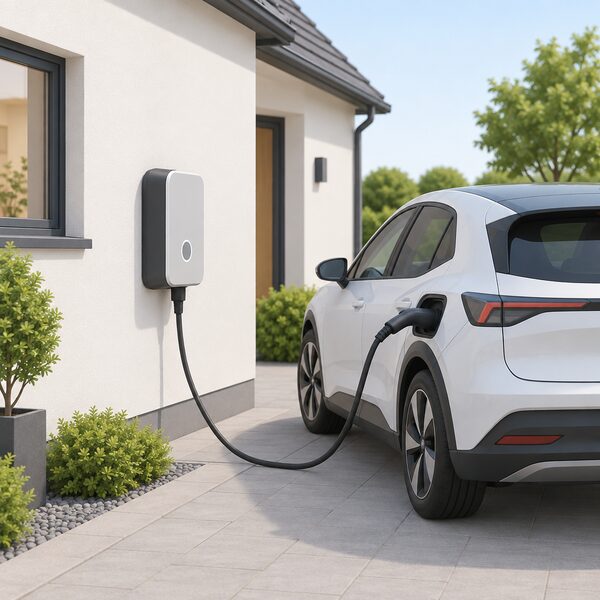
The permission requirement is not bureaucratic caution. A distribution network operator needs to check whether the grid is able to take the extra electricity load before the system is up and running11. That check is the whole point of the application: the network was designed around consumption at a particular point, and a generator changes the direction of flow at that point.
The same principle applies to any embedded generation. Electrical grid connection requires approval from the distribution network operator12, a rule stated for solar installations in Wales and equally applicable to a vehicle that exports. The device owner's obligation is explicit: ensure the DNO has granted authorisation before the work is carried out for apply to connect devices2.
Two standards govern the technical content of that application. G98 and G99 are technical standards for the protection settings required for generators or storage assets to connect to electricity networks13, and they refer to different kinds of protection settings regulations that generator or storage assets must comply with to connect to the network, protecting both the network and the asset from potential faults13. The threshold between them is capacity. Installations up to 50 kW follow the simpler route, while installations above 50 kW follow the fuller application13.
A V2G unit sits above the simple threshold. It is likely that V2G will be greater than 16 A per phase and therefore G98 is not applicable and G99 should be used3. Where the total of all generation, fixed storage and the power export capacity of the V2G is greater than 50 kW three-phase, the connection moves into a different application category again3.
The connection rules for small-scale generators: what your charger must pass
The G99 application is a technical submission as much as a form. It sets out the protection settings the unit will use, the maximum export it will make, and the evidence that the equipment meets the standard. The DNO then issues a connection offer, sometimes with conditions attached, and those conditions bind the installation.
The equipment side has its own requirements. A vehicle-to-grid enabled EV chargepoint requires a bi-directional chargepoint and for the car to be V2G compatible2, and the chargepoint must be installed and commissioned in accordance with the Energy Networks Association's EREC G98 or G99 depending on the capacity2. Compatibility is therefore a chain with three links: the car, the charger and the connection permission.
Connector type narrows the field further. Most V2G systems use a specific type of charger connector called CHAdeMO, but some models can also use CCS14. That is a hardware constraint that no amount of network permission can overcome, and it explains why the list of cars able to participate remains short.
For households considering the route, the sequence is fixed:
- Confirm the car supports bidirectional operation and identify its connector type.
- Confirm a compatible charge point is available for that car.
- Have the installer prepare the G99 application, including protection settings and export capacity.
- Obtain the DNO connection offer and any conditions attached to it.
- Commission the charge point in accordance with the offer.
The independence question sits awkwardly here. A household that installs V2G has added a generation asset, but it has also accepted a set of externally imposed limits on when and how much that asset may export. The car is more useful than before, and less autonomous than a standalone home battery that never exports.
Protection and disconnection: how the unit keeps the network safe
Protection settings exist to disconnect the generator when the network is in a state it was not designed for. The purpose is stated plainly: the protection settings protect both the network and the asset from potential faults13. A generator that keeps pushing power into a faulted network endangers the people working on it.
The voltage envelope is the clearest example of how this works in practice. For a single-phase EV charging protective device, the permitted voltage range is 207 to 253 V rms between line and neutral conductors15. Outside that band, disconnection must occur within 5 s in the event of the utilisation voltage at the charging point, between the line and neutral conductors, being outside the range15. Those two numbers, the band and the five seconds, are the operational definition of a safe connection.
The legal scaffolding behind the terms is worth knowing because it fixes what "network" means. In the relevant regulations, "consumer's installation", "distributor", "low voltage" and "network" have the same meaning as in the Electricity Safety, Quality and Continuity Regulations 200216. That continuity of definition is what allows a connection offer to be enforced consistently across different operators.
For a household, protection settings are the least visible and most consequential part of the installation. They determine whether the car keeps exporting during a disturbance or drops off, and they are set by the installer to the DNO's specification rather than chosen by the owner. A unit that trips frequently is not faulty; it is doing what the settings require.
Operating ranges: voltage and frequency limits the charger must tolerate
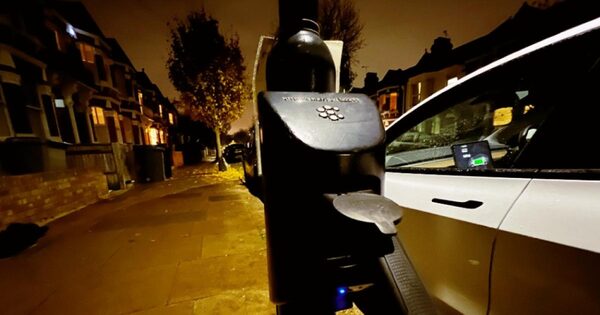
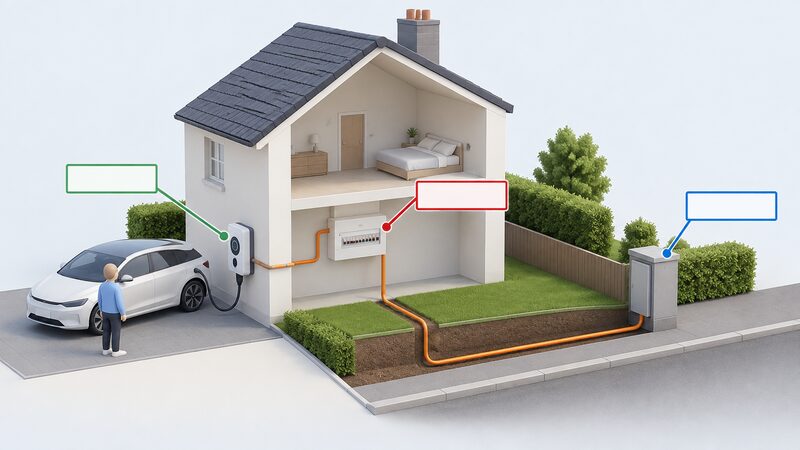
The voltage band of 207 to 253 V rms and the five-second disconnection time are the headline tolerances, but they sit inside a broader set of operating conditions that a compliant unit must survive. The charger is expected to ride through ordinary network variation and to disconnect on the abnormal events that protection settings are designed to catch.
The reason the tolerances matter to a household is that they define the conditions under which export actually happens. A car plugged in on a street where voltage runs high will spend more time disconnected than a car on a network with more headroom. That is not a fault in the equipment; it is the protection doing its job, and it is one of the reasons two identical installations can earn different amounts.
Export limitation schemes add a second layer. The amount of exported power required to cause the voltage at any customer's point of supply to exceed the statutory voltage limit by 1% is one of the rules used to set a permitted generation limit13. In plain terms, the network operator can cap export at the level that would begin to push a neighbour's voltage out of range, and that cap applies to the installation regardless of what the hardware could deliver.
There is an important boundary in the rules that catches people out. Guidance on connection questions states that it refers to import only, meaning an EV or heat pump acting as demand only, and is not applicable to V2G or grid export limitation18. A household that has read the demand-side guidance and assumed it covers a bidirectional charger has read the wrong document.
The practical expectation is therefore modest and variable. Export capacity is a negotiated figure, not a nameplate figure, and it can be lower than the charger's rating. For energy independence, this is the clearest limit in the whole subject: the household owns the hardware, but the network decides how much of its output can leave the property.
Who runs the grid you connect to: the role of National Grid ESO
Above the distribution network operators sits the system operator. National Grid ESO is the electricity system operator for Great Britain and is responsible for the management of the GB electricity grid19, and the abbreviation stands for Electricity System Operator20. In England and Wales the system operator is National Grid21.
The role is balancing rather than billing. The system operator is responsible for ensuring there is enough power to meet demand, and could instruct regional network operators to reduce demand through emergency power cuts22. If required, National Grid ESO would legally instruct distribution network operators to disconnect power supplies20. Before reaching that point, it takes several steps to protect customers: encouraging additional generation through the supply market, asking heavy industrial users to limit their demand during peak periods, and reducing domestic power demand, including paying customers to change appliance use or reducing voltage across the country by a small percentage23.
The institutional picture has shifted. NESO is the whole system planner, the operator of the electricity system and expert advisor to government and Ofgem24. The system operator also runs the markets that V2G participants ultimately sell into: Firm Frequency Response is the monthly tendered market used by National Grid ESO to commercially procure frequency response services25.
The scale of the flexibility being sought is significant. Assuming a dynamic response requirement of 650 MW, it would take 780,000 charge points to fulfil it25, and modelling shows that excess electricity could rise to around 6% of total annual output after 204026. That is the context in which a household's car becomes interesting to the system: individually trivial, collectively material.
What V2G earns: revenue of £150 to £400 a year against hardware cost
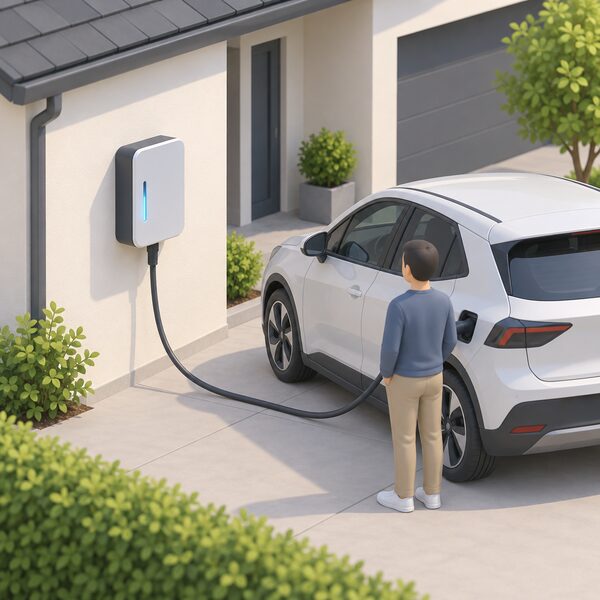
The revenue figures span a wide range, and the spread is explained by what is being counted. Average UK revenue generation from V2G is estimated at £150 to £200 per year4. Modelling of trial data put V2G at around £410 per year when compared with unmanaged charging27, and the simulated annual revenue from V2G using tariff optimisation was £34028. Including Firm Frequency Response provision from V2G, that figure rises to £513, an increase of £29/kW28, and including Dynamic Containment it rises to £725, an increase of £64/kW28.
One analysis reports a total of £414 in annual revenue from grid services, almost all of which comes from FFR25, while another scenario reports total grid services income of £59 compared to £106 in the base case25. The difference turns on assumptions about market prices and participation, and neither figure should be treated as a forecast for a particular household.
Against that, the hardware cost is the dominant number. Early estimates put the premium for a V2G charger above a smart charger at around £4,000, with typical single-phase V2G units costing £4,000 to £6,00027. By the end of one official trial, the V2G hardware and installation cost was around £3,700 higher than a smart monodirectional charge point5. Projections for 2030 put the premium at between £656 and £1,164 over an equivalent smart charger6, with charger cost falling to £1,000 by 20304.
| Figure | Value | Date and basis |
|---|---|---|
| Average UK V2G revenue | £150 to £200 per year | Cenex estimate4 |
| V2G against unmanaged charging | around £410 per year | Cenex modelling of Sciurus data, 202127 |
| With Firm Frequency Response | £513 per year | Sciurus trial insights, 202128 |
| With Dynamic Containment | £725 per year | Sciurus trial insights, 202128 |
| Charger premium over smart charger | around £4,000 | 2021 estimate27 |
| Trial hardware and installation premium | around £3,700 | Ofgem case study, 20215 |
| Projected 2030 premium | £656 to £1,164 | V2G Britain report6 |
The system-level case is stronger than the household case at present. V2G could defer network upgrades of £5bn, or £180 per household4, and could help to save £200m of cumulative distribution network investment by 203029. V2G operation could generate a net saving of between £40M and £90M per annum depending on limits to V2G energy throughput25, and V2G could save an additional £40 to £90M annually in GB by 203029.
For a household, the honest reading is that early adoption carries a hardware premium larger than several years of revenue, and that the projections assume costs fall substantially. The independence gained is real but partial: the car earns, and the earnings depend on markets and tariffs the household does not control.
Battery health: around 10% life extension with intelligent cycling
The assumption that exporting from a car battery must shorten its life is not supported by the trial evidence. EV-elocity found that V2G could extend the life of an EV battery by about 10%, around one extra year of use6. Separate analysis reports that this could extend useable battery life by 10%4, and that capacity fade can be reduced by 9.1% over a year through battery management4.
The mechanism is the shape of the cycling rather than the quantity. Managed charging and discharging keeps the battery in a narrower state of charge band than uncontrolled charging does, and the modelling assumes a battery lasting 2,000 full cycles25. Against that baseline, intelligent cycling spreads the same energy throughput over gentler conditions.
The caveats are stated in the modelling itself. The analysis has not taken account of additional cost of equipment required to enable V2G nor the impact on battery degradation25. That is a significant omission: the degradation effect is modelled separately from the economics, so the revenue figures and the battery-life figures are not drawn from a single integrated calculation.
Warranty terms sit outside all of this. The evidence on degradation is independent research, not a manufacturer's commitment, and the vehicle's own warranty documentation is what governs a claim. A household weighing V2G should treat the 10% figure as a research finding about battery behaviour, not as a warranty assurance.
"EV-elocity found that V2G could extend the life of an EV battery by about 10% (around one extra year of use)."
V2G, V2H, V2B and V2L: which export route fits which home
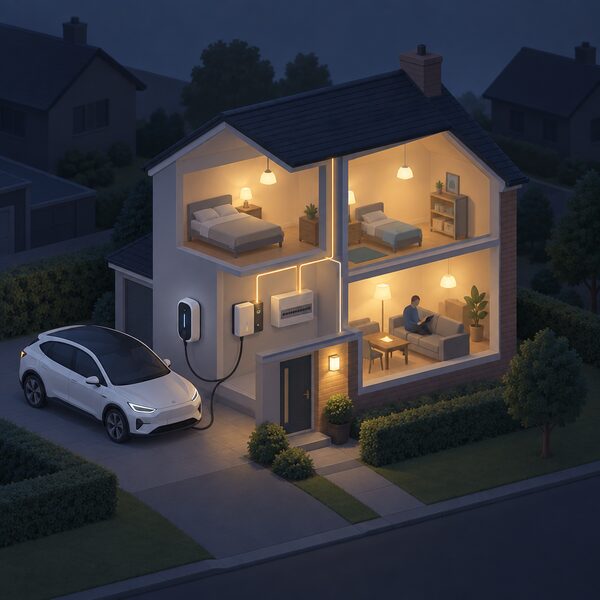
The four variants differ in where the power goes, and that difference determines the connection rules that apply.
V2G sends energy to the electricity network, with exports triggered by a control unit that communicates with the grid30. It is the only variant that requires a generation connection application, and the only one that earns from grid services and export tariffs.
V2H uses the energy to power a home rather than delivering it back to the grid7. It can provide backup power from your EV to your home during power outages and support off-grid setups, though V2H is limited to certain EV models and compatible chargers14. Because nothing leaves the property, the network interest is different.
V2X is the umbrella term, allowing electric vehicles to operate bidirectionally, charging from the electricity grid but also discharging to the grid, building or home as needed9. When a building or home also has the functionality to operate independently from the grid, known as islanding, V2X can enable the vehicle to act as a backup power source in a power cut9.
The export route also determines the payment route. Exported solar power goes back to the National Grid31, and the Smart Export Guarantee requires licensed electricity suppliers to offer export tariffs to anaerobic digestion, hydro, onshore wind and other eligible technologies32. Suppliers list export products including EDF's Export Exclusive 12m V3 and Export 12m, and E.ON Next's Next Export Exclusive v333.
| Route | Where the power goes | Connection implication |
|---|---|---|
| V2G | Electricity network | Generation connection application required30 |
| V2H | The home | No network export; backup capability where islanding exists9 |
| V2B | A building | Discharge to the building rather than the grid9 |
| V2L | An appliance or tool | No network involvement |
For a household, the choice is between earning and resilience. V2G trades some autonomy for revenue and requires the most paperwork. V2H keeps the energy on site and offers backup, at the cost of the export income. Neither is available without a compatible car and charger, and V2G is still not widely available, with eligibility requirements such as a compatible car, charger and smart meter14.
Where V2G stands in the UK today: pilots, availability and what to check locally
Availability remains the binding constraint. V2G is still not widely available, with eligibility requirements such as having a compatible car, charger and smart meter14, and at the time of the earlier guidance, a V2G charger could only be obtained through an approved trial30. The trial route has produced the evidence base: Project Sciurus installed over 320 V2G units in homes across the UK28, and 330 V2G devices have been installed across the UK under the V2G competition5.
The application process for trials is not a simple purchase. These trials often require specific EV models, compatible chargers and may involve a selection process, with application processes involving online registration, eligibility verification and coordination with installers and energy suppliers14. A household wanting to take part is applying to a research programme, not ordering a product.
The value analysis behind the trials is substantial. Cenex has identified 24 potential value streams for V2G25, and the V2GB feasibility study is part of the Vehicle-to-Grid competition25. When including grid services, Smart Charging captures 40% of the total value of V2G for low plug-in scenarios, or merely 10% for high plug-in cases25. Excluding grid services to the system operator and DNO, Smart Charging is able to capture 80% of the value of V2G25. That comparison is the strongest argument for the connection rules existing at all: much of the value being contested sits in services that only a connected, approved generator can provide.
The scale of what is being planned is large. If 50% of the UK's EVs were V2G enabled, they could provide around 16 GW of daily flexible capacity to the grid by 20305. Whether that materialises depends on connection processes that can handle volume, and on households deciding the hardware premium is worth paying.
For a household checking locally, the useful starting points are the distribution network operator's generation connection pages, which set out the G98 and G99 routes and the export limitation rules13, and the operator's own innovation pages, which describe the flexibility work underway on their network8. Trial participation is advertised through the trial operators rather than through suppliers, and eligibility is verified before any hardware is ordered14.
Sources33 cited
- Vehicle-to-Grid Best Practice Guide, Energy Saving Trust, 2026-05-05
- Register Energy Devices in Homes or Small Businesses, GOV.UK, 2021-03-31
- G98 Single Premises, Energy Networks Association, 2026-09-17
- More Than Money: Finding the True Power of V2G, Cenex, 2026-09-17
- Case Study: UK Electric Vehicle Grid (V2G) Charging, Ofgem, 2021-07-06
- An Introduction to Vehicle-to-Grid Charging for Electric Vehicles, Cenex, 2022-08
- LCT Strategy, Energy Networks Association, 2026-09-17
- Renewable Energy and Storage, Electricity North West, 2026-09-19
- Well-adapted Energy System, Climate Change Committee, 2026-09-19
- Toyota to Expand EV Charging Ecosystem Across the UK, SMMT, 2025-12-04
- Building Regulations Renewables Guidance, Bedford Borough Council, 2026-09-17
- Generating Your Own Energy: Solar Electricity, Welsh Government, 2026-09-17
- Installations Above 3.68kW per Phase but 50kW or Less, SSEN, 2026-09-17
- Vehicle-to-Grid Charging Guide, Uswitch, 2025-07-02
- Electrical Installation Guidance, NICEIC, 2018-07-01
- The Electricity and Gas (Energy Company Obligation) Regulations 2026, legislation.gov.uk, 2026
- Installations up to 3.68kW per Phase at a Single Premises, SSEN, 2026-09-17
- Frequently Asked Questions About Connecting to the Networks, Energy Networks Association, 2026-09-17
- Electricity Supply Emergency Code, SSEN, 2026-09-19
- What Happens in an Energy Shortage, Energy Networks Association, 2026-09-17
- Rota Load Disconnections, National Grid, 2026-09-17
- Emergency Power Cuts, Electricity North West, 2026-09-19
- Energy Committee Report, UK Parliament, 2026-09-17
- Electricity Distribution Networks Study: Government Response, GOV.UK, 2025-07-07
- V2GB: Vehicle to Grid Britain, Cenex, 2026-09-17
- Batteries, Wheels and Smart Charging, NESO, 2040
- Commercial Viability of V2G, Cenex, 2021-01
- Project Sciurus Trial Insights Report, Cenex, 2021-05
- Case Study: UK Hydrogen Heated Homes Future, Ofgem, 2030
- Store and Save, Centre for Alternative Technology, 2022-10-27
- Solar Panels, East Hertfordshire District Council, 2026-09-17
- Smart Export Guarantee Guidance for Generators, Ofgem, 2019-12-12
- Smart Export Guarantee, Solar Energy UK, 2026-05-12
 Bidirectional Chargers and CostsA bidirectional charger lets your electric car send power back to your home or the grid, not just take it in.
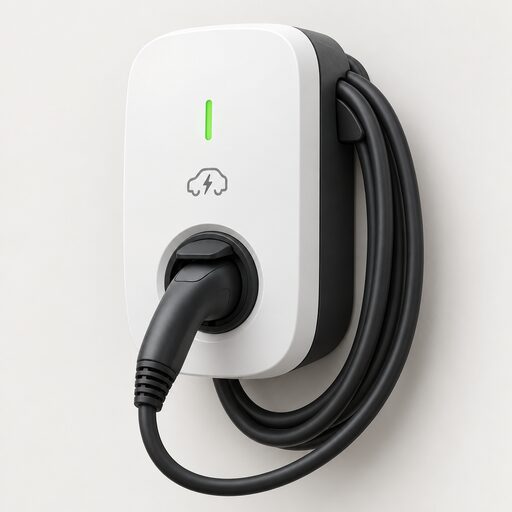 Bidirectional Charging ExplainedCan your electric car actually earn you money by sending power back to the grid?
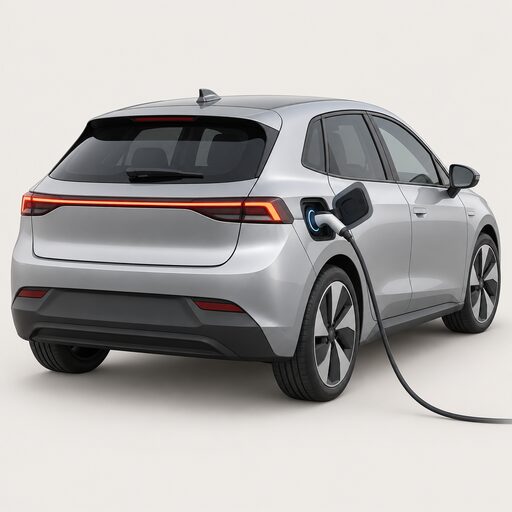 V2G and V2H ChargingCan your electric car earn money by sending power back to your home or the grid?
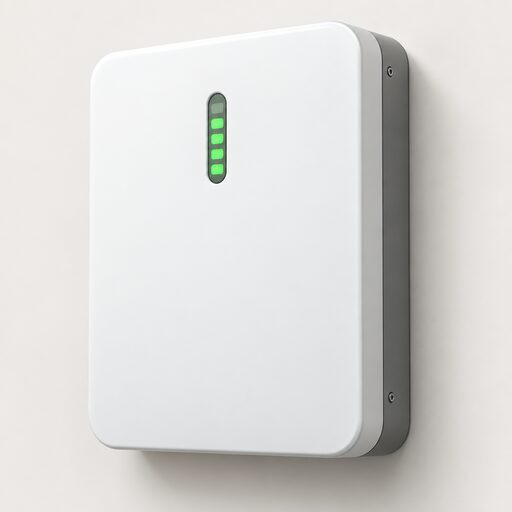 Exporting From a Home BatteryCan you actually get paid for electricity your home battery sends to the grid?
 Bidirectional Charging StandardsDoes your electric car and charger actually support sending power back to your home or the grid?
 Energy Smart AppliancesCan your washing machine or car charger be told when to use power, and who gets to decide?