
In this comparison
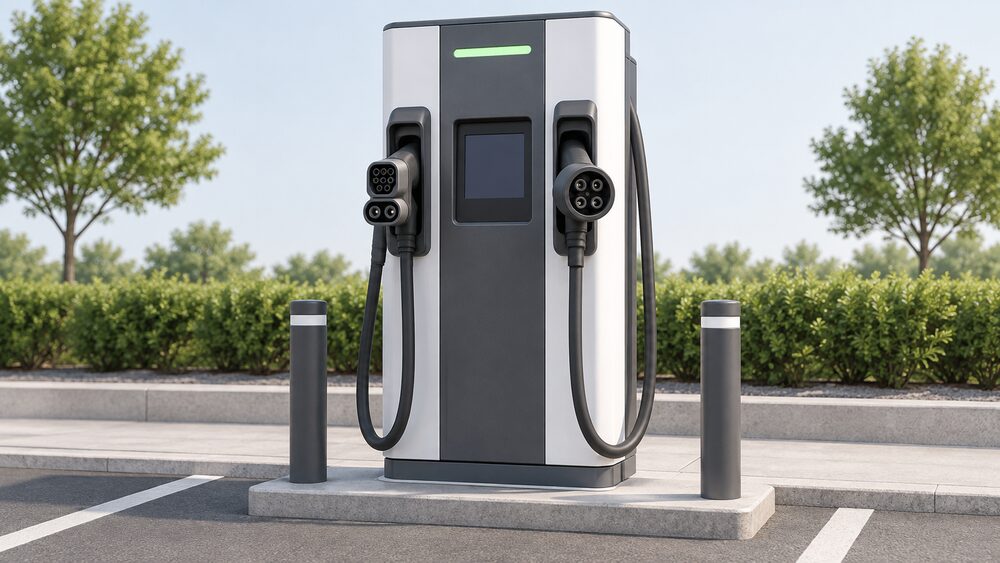
CHAdeMO and CCS are the two direct current (DC) plugs used for rapid charging, and they are not interchangeable. CCS is the standard for rapid DC charging in the UK and Europe, and public DC chargers, both rapid and ultra-rapid, feature a CCS connector that is the universal standard for almost all new EVs sold here1. CHAdeMO is the older of the two, a round four-pin plug used only at rapid charging points and usually found on Asian-brand EVs2.
The practical consequence for a household is simple. A car with a CHAdeMO socket can only rapid charge where a CHAdeMO cable is fitted, and in the UK there are few CHAdeMO chargers powered at more than 100kW1. A CCS car can use the fastest equipment on the network, up to 400kW and beyond1. Adapters between the two do not exist for public rapid charging, so the connector on the car decides which chargers are usable3.
Both standards share one thing: neither is used for home charging. Home and slower chargers around 7kW use Type 2 connectors, while rapid chargers almost always use CCS plugs3. A CCS car therefore carries a Type 2 inlet for AC charging with the extra DC pins built in below, and a CHAdeMO car needs a separate Type 2 inlet alongside its DC socket4.
CHAdeMO and CCS: what the two connectors are for
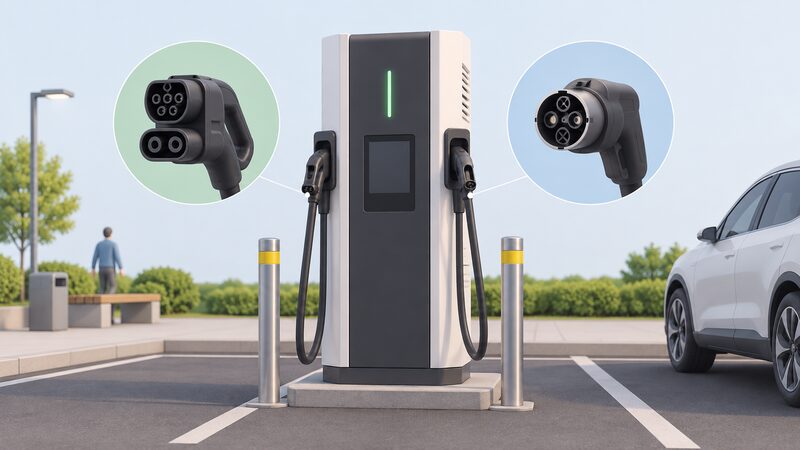
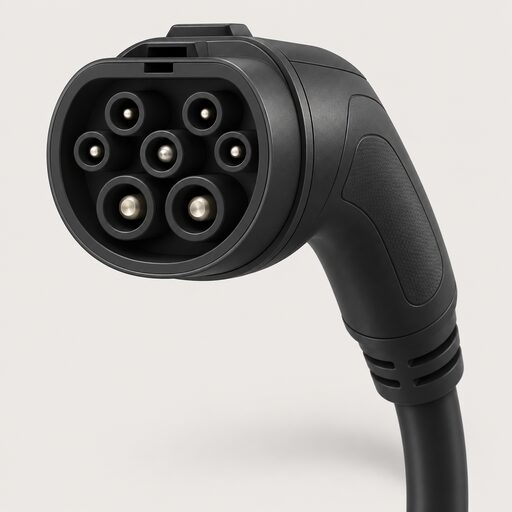
Both connectors exist to move direct current into the battery at speeds an AC home supply cannot match. CCS, the Combined Charging System, is the main connector type for higher-powered DC charging5. It combines two Direct Current pins arranged below the Type 2 AC connector and uses three Type 2 pins, an EU-standardised layout2. That design is why a CCS car needs only one physical inlet for both slow and fast charging.
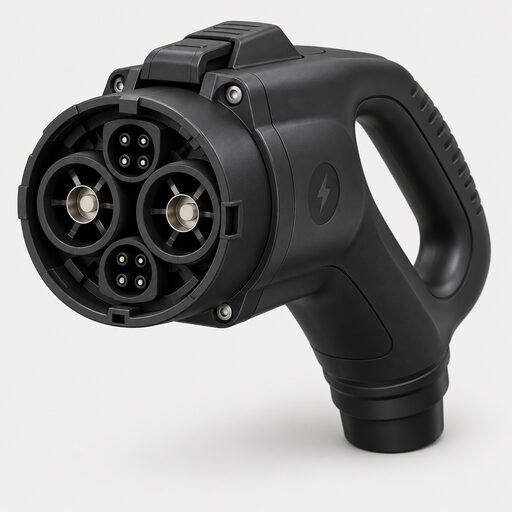
CHAdeMO is a different architecture entirely. It is a round plug with four pins, used only for rapid charging points and usually compatible with Asian-brand EVs2. It carries DC only, so a CHAdeMO car needs a second inlet for AC charging. The two systems were developed in parallel and neither was designed to accept the other.
The split matters most at the charger, not at home. Public DC chargers in the UK present a CCS connector as standard, and CHAdeMO appears as an additional cable on some units rather than the default. A council network in Wales, for example, lists its public sockets as CHAdeMO at 50kW, CCS at 50kW and Type 2 at 22kW, which is a fair picture of a mixed rapid site6. Where a site offers only CCS, a CHAdeMO car cannot use it at all.
For a household, the connector question is really a question about which public infrastructure the car can reach. A CCS car draws on the whole rapid network. A CHAdeMO car draws on the subset of sites that still fit the older cable, and that subset is not growing.
Power and speed: CCS charges faster than CHAdeMO
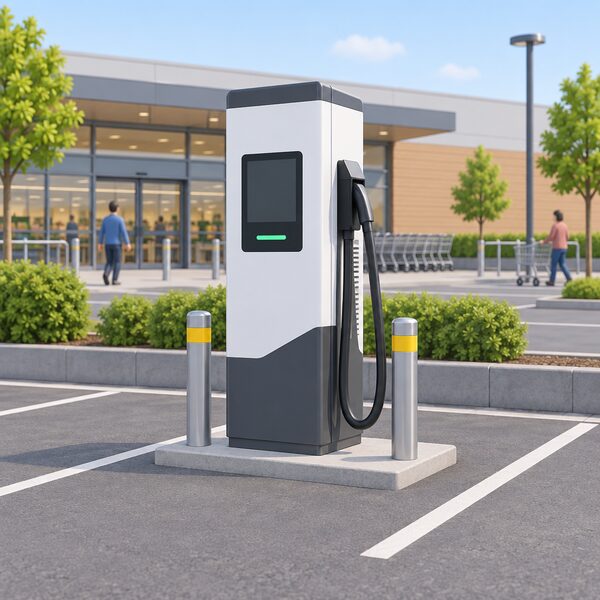
CCS has the higher ceiling, and the gap widens at the top of the range. CCS connectors support rapid and ultra-rapid charging from 25kW to 400kW and beyond1. CHAdeMO is quoted at 25kW up to 400kW, but with 50kW the most common rating in practice1. The headline figures look similar; the installed base does not.
That difference shows up in what is actually built. In the UK there are few CHAdeMO chargers powered at more than 100kW1. Older Zapmap guidance put DC rapid charging at 50kW for both CCS and CHAdeMO connectors, with AC rapid charging using a Type 2 43kW connector, which shows how recently the two were treated as equals7. The CCS standard has since moved well past that, while CHAdeMO installations have largely stayed at the 50kW mark.
Speed at the charger is not only about the plug. A 50kW device is a 50kW device whatever cable hangs from it, and many supermarket sites run DC units at 50kW, with some networks installing 25kW DC chargers fitted with CCS or CHAdeMO connectors8. A CHAdeMO car plugged into a 50kW unit will charge at roughly the same rate as a CCS car on the same unit. The disadvantage appears when the car is capable of more and the network offers more: a CCS car can take it, a CHAdeMO car cannot.
"They support Rapid and Ultra-rapid charging with power levels from 25kW up to 400kW although the most common is 50kW"
For a household weighing a used EV, the honest reading is that a CHAdeMO car is not slow in absolute terms. It is capped by the equipment it can reach, and that equipment is the older, slower part of the network.
One connector or two: how AC charging differs between the standards
This is the structural difference that catches people out. CCS integrates AC and DC charging into a single inlet: a CCS inlet on a car is actually a Type 2 inlet with the extra DC pins built in below4. The driver uses a Type 2 cable at home and a CCS cable at a rapid charger, and both plug into the same port.
CHAdeMO does not work that way. Unlike CCS, CHAdeMO does not integrate AC charging into the same connector4. The car therefore carries two inlets: a Type 2 socket for AC charging and a separate four-pin CHAdeMO socket for DC rapid charging. The CCS socket is described by Which? as the most common DC rapid charging plug, with a Combo 2 plug that fits over a Type 2 plug9.
In day-to-day use the difference is small. Home and slower chargers around 7kW use Type 2 connectors, while rapid chargers almost always use CCS plugs3. A CHAdeMO car charges at home through its Type 2 inlet exactly as a CCS car does, at the same 7kW. The second socket only comes into play on a rapid charger.
Where it does matter is on the forecourt. A CCS driver has one cable to think about and a single port to find. A CHAdeMO driver has to open the correct flap for the cable on offer, and the two sockets are not interchangeable. The extra inlet is also one more thing to keep clean and undamaged, though it adds no cost to home charging.
Which cars still use CHAdeMO, and why it is being phased out
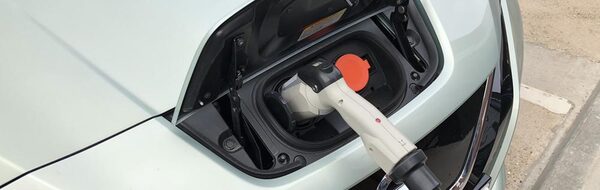
CHAdeMO survives in the UK on a small group of vehicles. It is limited to a few EV brands, mostly Japanese or Korean in origin10. The clearest examples are the Nissan Leaf and the Mitsubishi Outlander PHEV, both generations of which have a CHAdeMO socket11. Older Nissan Leaf models are the vehicles most often named as still using the standard for rapid charging3.
That picture is changing at the maker level. The next-generation Leaf, expected around 2026, is confirmed to be ditching CHAdeMO for CCS4. Nissan's Ariya SUV already uses a CCS connector, which was widely read as a signal of CHAdeMO's decline11. CHAdeMO is described as declining in the UK and Europe, and CCS has largely replaced it4.
The reasons are structural rather than technical. CCS is the standard for rapid DC charging in the UK and Europe and is found on all new EVs sold here1. A connector that appears on every new car attracts charger investment; a connector that appears on a shrinking pool of older cars does not. The result is a slow squeeze: existing CHAdeMO chargers keep running, but few new high-power ones are added.
For a household, this is a used-car consideration rather than a new-car one. A CHAdeMO vehicle remains usable, particularly for home charging and for the rapid sites that still carry the cable. What it cannot do is benefit from the fastest end of a network that is being built around CCS.
Adapters between CCS and CHAdeMO: why they don't exist
The obvious question is why a simple adapter cannot bridge the two. The answer is that none is on sale for public rapid charging. Adapters between CCS and CHAdeMO do not exist3. A widely available CCS-to-CHAdeMO adapter for public rapid charging remains elusive for UK drivers4.
The physical plugs are only part of the problem. A rapid charger and a car negotiate the charge over a communication protocol before any current flows, and the two standards speak differently. An adapter would have to translate between them while handling high-voltage DC, which is a different proposition from a passive plug converter.
What does exist is the ordinary cable arrangement at a mixed site. Public rapid chargers over 50kW typically have tethered CCS cables and may also offer CHAdeMO, so the adapter question often does not arise: the cable is already attached to the charger3. Networks including MFG EV Power, Osprey Charging and InstaVolt provide charging with tethered devices via both CHAdeMO and CCS connectors12.
The practical rule is that a driver checks the connector type before arriving, not after. A CHAdeMO car needs a site with a CHAdeMO cable fitted; a CCS car needs a CCS cable. No accessory changes that.
What this means at a UK rapid charger
At a UK rapid charger, the CCS plug is the default and the CHAdeMO cable is the exception. Public DC chargers, rapid and ultra-rapid, feature a CCS connector that is the universal standard for almost all new EVs in the UK and Europe1. CCS is the standard for rapid DC charging in the UK and Europe1.
The UK network was not always this settled. The issue, as described in 2021, was that there were two entirely different DC plugs, CCS or CHAdeMO, both of which required their own socket11. That dual-socket era produced the mixed sites still in service today, where a single unit carries both cables. It also produced the confusion that persists among drivers of older cars.
| Charger type | Typical connector | Typical power |
|---|---|---|
| Home and slower chargers | Type 2 | around 7kW3 |
| Rapid DC | CCS, sometimes CHAdeMO | 50kW7 |
| Ultra-rapid DC | CCS | 25kW to 400kW+1 |
| Council public site example | CHAdeMO, CCS, Type 2 | 50kW, 50kW, 22kW6 |
In practice, a CCS driver can arrive at almost any rapid site and expect a compatible cable. A CHAdeMO driver has to plan around the sites that still fit the older plug, and accept that the fastest chargers are unlikely to be among them. The tethered cable arrangement means there is nothing to carry and nothing to connect beyond the plug itself3.
CHAdeMO, V2G and what it means for household energy independence
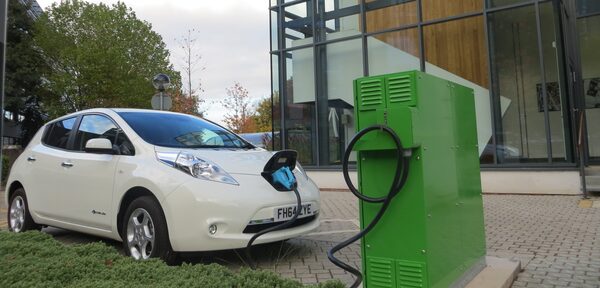
Here the older standard holds an unexpected advantage. Only CHAdeMO currently has a valid protocol for V2G charging to feed electricity into the public grid13. The CCS standard, widespread in Europe, is yet to master this13. The Nissan LEAF and e-NV200 are the only battery electric vehicles that support V2G, and they do so via the CHAdeMO standard14.
That matters for a household trying to reduce what it imports. A net zero household with an EPC C rating, a heat pump and an EV would use almost 85% less imported energy than a home without upgrades, at 3.4MWh a year against more than 20MWh15. A car that can send power back to the grid or the house is one route to that kind of reduction, and at present it runs through CHAdeMO.
The route has been slow. Delays were experienced in getting V2G hardware through the necessary CHAdeMO certification16. The advantage is also time-limited: as CHAdeMO declines in the UK and Europe and the next Leaf moves to CCS, the V2G capability that currently depends on it will need to migrate to the newer standard4.
The dependence that remains is worth stating plainly. A CHAdeMO car depends on a shrinking set of public chargers, on a manufacturer's continued support for an older standard, and on a V2G ecosystem that is still proving itself. A CCS car depends on the grid and a supplier like any other, but it can reach the whole rapid network and the fastest chargers on it. Neither connector removes the household's reliance on imported electricity; what they change is how much of the network a car can use, and, in CHAdeMO's case, whether the car can give power back at all.
Sources17 cited
- EV connector types, Zapmap, 2026-05-20
- EV glossary, Uswitch, 2024-11-26
- Electric car charging guide, Carwow, 2025-07-16
- CCS vs CHAdeMO vs Type 2 connector types explained, Electroverse, 2026-06
- Guide to EV charging, Zapmap, 2026-09-04
- Electric vehicle charging, Isle of Anglesey County Council, 2026-09-20
- EV connector types, Uswitch, 2022-02-03
- How long does it take to charge an electric car, Zapmap, 2026-04-15
- How to use electric car charging points, Which?, 2026-05-20
- Guide to electric vehicle infrastructure, BEAMA, 2024-09
- 5 problems with electric car charging, Which?, 2021-03-19
- Tethered vs untethered, Zapmap, 2026-02-23
- What is bidirectional charging, Carwow, 2025-05-30
- Commercial viability of V2G, Cenex, 2021-01
- Household energy security in 2030, Energy and Climate Intelligence Unit, 2030
- Case study: UK electric vehicle grid V2G charging, Ofgem, 2021-07-06
- Scottish building regulations: proposed changes to energy standards, Scottish Government, 2026-09-17
 EV Connectors and CablesWhich cable fits your car, and will it work at every charge point you pull up to?
 Bidirectional Charging StandardsDoes your electric car and charger actually support sending power back to your home or the grid?
 EV Charging Speeds and TimesHow long an electric car takes to charge depends on the charger and the car together, so a faster charge point will not always speed things up.
 Accessible Charging and PAS 1899You are disabled or find charge points hard to use.
 Types of Home EV ChargerWhich home charger suits your car and your driveway?
 EV Charger Safety and StandardsHow do you know a home charge point is safe to use?