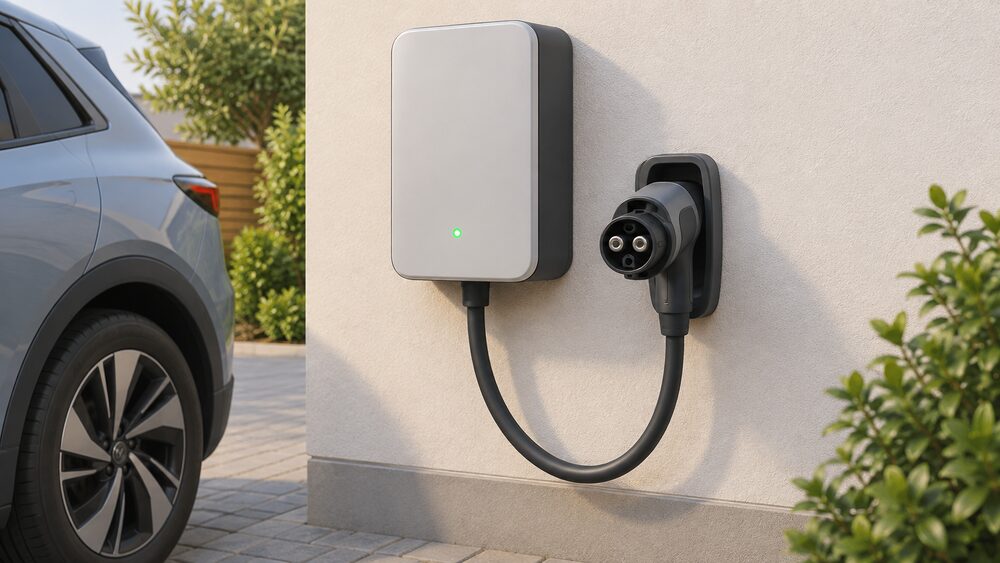
In this guide
Bidirectional charging is the smart charging and discharging of an electric vehicle1. Whether a particular car and a particular charger can actually do it is decided by standards: the physical connector, the communication protocol that runs over it, the back-office protocol behind the charger, and the grid-connection rules the charger must satisfy. Get any one of those wrong and the power will not flow backwards, however large the battery.
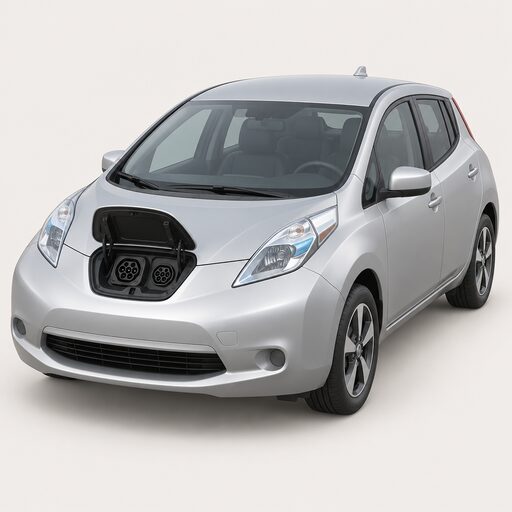
In the UK the practical answer has been narrow for years. CHAdeMO is currently the only protocol that supports vehicle-to-grid, according to Cenex2, and guidance published in May 2025 stated that only that connection has a valid protocol for feeding electricity into the public grid, with the CCS standard widespread in Europe yet to master it3. Most V2G systems therefore use a CHAdeMO connector, though some models can also use CCS4. That is why early British V2G was built around the Nissan LEAF, which carries Type 2 and CHAdeMO inlets5.
The direction of travel is away from that. ISO 15118-20 defines vehicle-to-grid communication for bidirectional charging and discharging of electric vehicles and charging infrastructure, and from version OCPP 2.1 onwards bidirectional use cases are supported between charging infrastructure and management systems1. Products designed to those documents already exist: Enphase states that its IQ Bidirectional EV Charger is designed for ISO 15118-2, 15118-20 and EN 50549, and supports OCPP 2.1, V2H and V2G6. For a household, none of this yet amounts to an off-the-shelf purchase. Energy Saving Trust records bidirectional charging as being trialled in some places but not widely available7.
What bidirectional charging means: V2G, V2H, V2B and V2L
The umbrella term used by the Climate Change Committee is V2X, which allows electric vehicles to operate bidirectionally, charging from the electricity grid but also discharging to the grid, building or home as needed10. Energy Saving Trust describes the same function more plainly: it lets an EV either draw or supply power to the home or the grid7. Cenex frames the consequence: energy flows both to and from the vehicle, turning it into a portable battery store11.
The subdivisions matter because they carry different obligations. Vehicle-to-grid exports to the network, which means grid-connection compliance, a metering arrangement and a commercial counterparty. Vehicle-to-home and vehicle-to-building keep the electricity behind the meter. Vehicle-to-load powers appliances directly from the car. Vehicle-to-vehicle allows one electric car to charge another directly using energy from its own high-voltage battery12.
V2V illustrates how far ahead the concept runs of the standards. It currently exists more as a concept than as a commonly available real-world solution, especially in Europe, is not supported by most series-production vehicles and lacks standardised implementation12. There is no specific regulation prohibiting or permitting V2V in the UK, but manufacturers currently do not enable the feature in Europe12. What Europe would need, according to the same explainer, is a clear legal definition separating V2V from grid-interactive technologies like V2G, plus shared communication protocols allowing vehicles to safely exchange DC power12. AC V2V requires either V2L or a bidirectional onboard charger12. The disadvantage listed is blunt: it is not officially supported or warranted by most manufacturers12.
A related point for households with low-carbon heat: there is potential for a household to use an EV as a supplementary energy source to power a heat pump, aiding grid flexibility and resilience13. See also vehicle-to-home and vehicle-to-load and vehicle-to-grid vs vehicle-to-home.
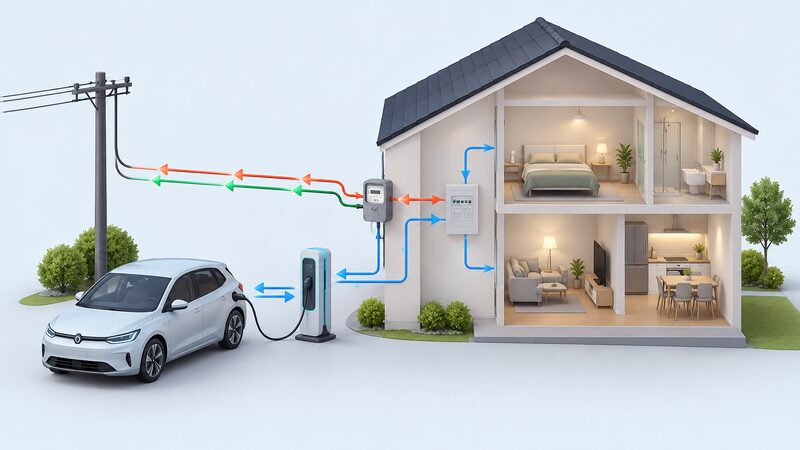
Why the standard matters: what has to agree before power can flow backwards
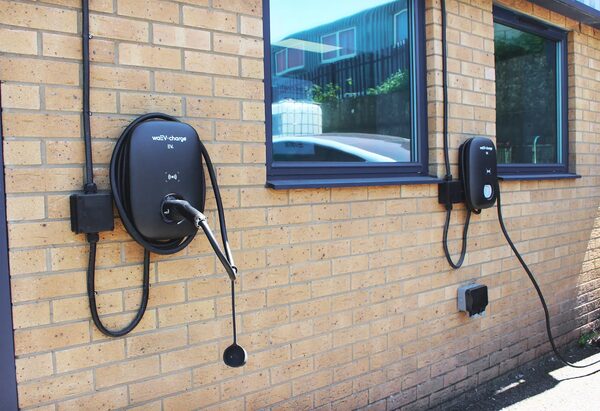
Four separate agreements are needed. The connector and its DC protocol must support reverse power transfer. The vehicle and charger must speak a common high-level communication language. The charger must satisfy the network operator's connection requirements. And a back office must be able to instruct the whole chain.
One guide reduces the household-level version to three conditions: an electric car, suitable charging infrastructure in the form of public chargers and wallboxes that support bidirectional charging, and a uniform software language3. The software language is the part most often underestimated. Enphase states that its charger is compatible only with EVs that are ISO 15118-compliant and support bidirectional power flow6. Two of the company's own product statements differ on how broadly that compatibility extends, and no ruling resolves them, so the narrower claim is the safer reading.
The standards themselves are still filling in. IEC 61851-23:2023 records that requirements for reverse power transfer and bidirectional power transfer for system B and system C are under consideration and are not specified in that document14. ISO/IEC 63110 covers terminology, use cases and architecture for managing bidirectional charging infrastructure, including communication between e-mobility stakeholders and data exchange with the electricity grid1. On the network side, RfG 2.0 sets the EU minimum standard for connecting bidirectional charging infrastructure to distribution networks, with national requirements in member states able to go further1.
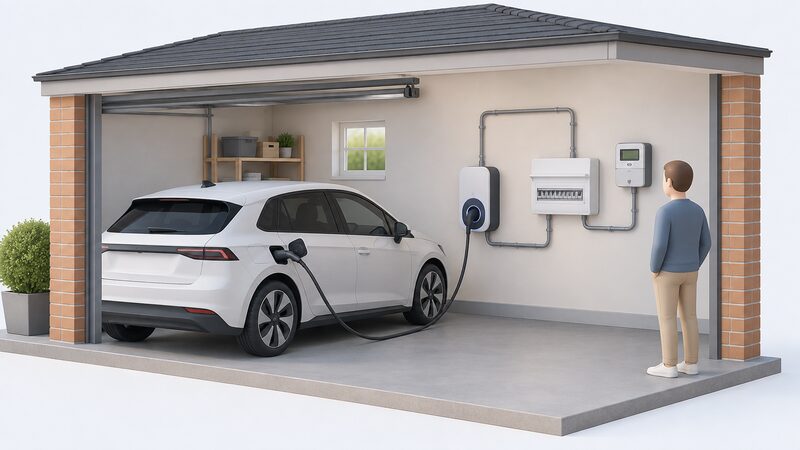
Inside the house, the wiring rules have caught up faster than the vehicle standards. The wiring regulations require that selection and erection of equipment for protection, isolation, switching, control and monitoring takes account of all possible directions of power flow, and that where bidirectional power flow is possible, only a device suitable for bidirectional power flow shall be used15. Amendment 4 (2026) to BS 7671:2018 sets out requirements relating to system design, power conversion equipment, bidirectional or hybrid inverters and the suitability of protective devices for two-way energy flow16.
"Selection and erection of equipment for protection, isolation, switching, control and monitoring shall take account of all possible directions of power flow. Where bidirectional power flow is possible, only a device suitable for bidirectional power flow shall be used"
Requirements are also not uniform across the country. Charging requirements differ between regions, determined by local parking arrangements, commuting distances, expected use of chargers and existing electricity grid capacity17. That means the connection conditions a household meets in one distribution area are not automatically those it would meet in another. More on that in grid connection rules for bidirectional charging.
CHAdeMO: the protocol that has carried UK V2G so far
CHAdeMO is a DC fast-charging protocol that, uniquely among those deployed in Britain, has been able to run in reverse into the public network. Cenex stated flatly that CHAdeMO is currently the only protocol that supports V2G, and that the Nissan LEAF and e-NV200 were the only battery electric vehicles supporting it, doing so via CHAdeMO2. Guidance from May 2025 repeated that only that connection has a valid protocol for feeding electricity into the public grid3. Most V2G systems use a CHAdeMO connector, though some models can also use CCS4.
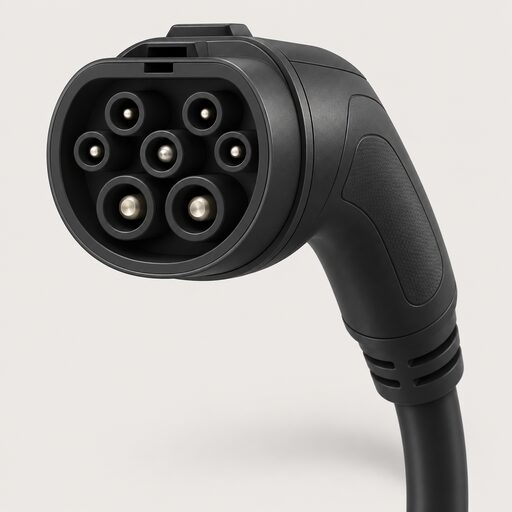
The consequence for households is a small candidate pool. The LEAF uses two charging standards for its inlets, Type 2 and CHAdeMO5, and has been able to charge bidirectionally for several years, described as the pioneer of the technology3. Type 2 connectors are the standard for EVs in the UK and Europe for home and public AC charging18, and almost all electric cars come from the manufacturer with a cable carrying a charger-side Type 2 connector18. But a Type 2 AC connection on its own does not create an export path to the grid.
The awkwardness is that CHAdeMO is receding from new UK models while CCS becomes the DC norm. CCS connectors are the standard for rapid DC charging in the UK and Europe18, and the Kia EV6 uses the CCS charging standard, a combined AC and DC inlet port19. So the protocol with proven V2G capability sits mostly on older cars, and the protocol on new cars is the one still catching up. Households looking at a CHAdeMO-based V2G unit are therefore making a bet on a connector that is not being fitted to most new vehicles, which is a real constraint on how long the equipment stays useful. Further detail in which cars support bidirectional charging in the UK and the Nissan LEAF and vehicle-to-grid.
CCS and ISO 15118: where the mainstream standard is heading
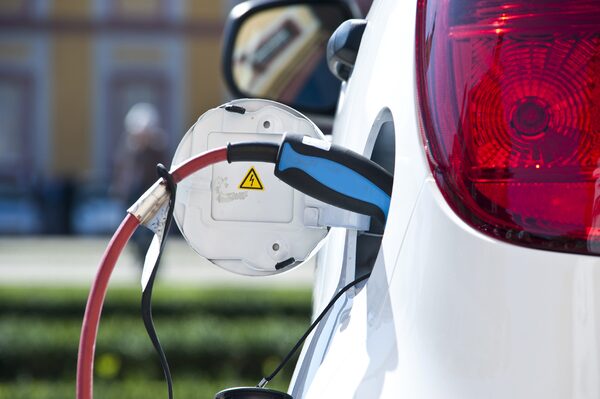
The CCS standard is yet to master feeding electricity into the public grid, and while it is catching up it has a lot of catching up to do3. The route by which it catches up is ISO 15118-20, an international communication standard which, among other things, defines V2G communication for the bidirectional charging and discharging of electric vehicles and charging infrastructure1.
That is the layer that carries the negotiation: what the vehicle will allow, at what power, in which direction, for how long, and under what state-of-charge floor. Without it, a DC connector is only a physical coupling. With it, the same CCS inlet that takes a rapid charge can in principle export. The commercial evidence that this is where the industry is heading is that products are being specified against it before the market exists: the Enphase IQ Bidirectional EV Charger is designed for ISO 15118-2, 15118-20 and EN 50549 and supports OCPP 2.1, V2H and V2G6, and Enphase states it will support both AC and DC bidirectional charging6.
Standardisation across charging equipment has been tracked for some years, including through an international overview of progress towards standardising charging equipment for pure-electric and plug-in hybrid vehicles20. The practical reading for a household is that the CCS route is the one likely to widen the pool of compatible cars, but it is a forward-looking specification rather than a present-day capability in Britain. Claims that a car or charger is "ISO 15118 ready" are worth reading against the guidance on reading energy product claims.
OCPP: how the charger talks to the back office
OCPP 2.1 is the latest version of the international communication standard for connecting charging infrastructure to charge point management systems, and from version 2.1 onwards bidirectional use cases are supported, ensuring communication between charging infrastructure and the systems that manage it1.
This protocol is invisible to the householder but decides whether the money arrives. A bidirectional charger left to itself has no way of knowing when the system needs power. The back office holds the tariff, the dispatch instruction and the settlement. ISO 15118-20 governs the conversation between car and charger; OCPP 2.1 governs the conversation between charger and operator; and between them they determine whether an export event can be commanded, measured and paid for.
It also defines a dependency. A household running V2G is dependent not only on a car manufacturer and a charger manufacturer, but on a platform operator whose service must keep running for the export capability to have value. BEAMA estimates, from publicly available data, that around 20% of EVs on UK roads today are registered to direct-to-vehicle load control services, a part of the market likely to grow21. Citizens Advice has argued in its response on smart and secure electricity systems that accountability across manufacturers and importers must translate into clear routes to redress when things go wrong22. Where that platform dependency has ended badly before, see energy technology company failures.
What a household needs for V2G
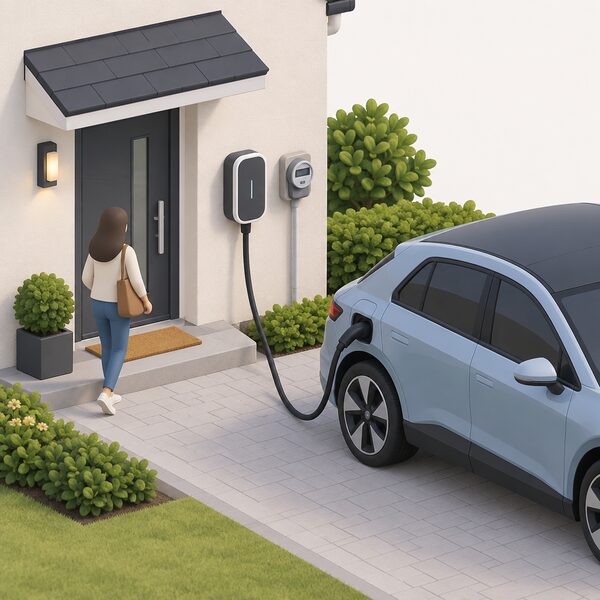
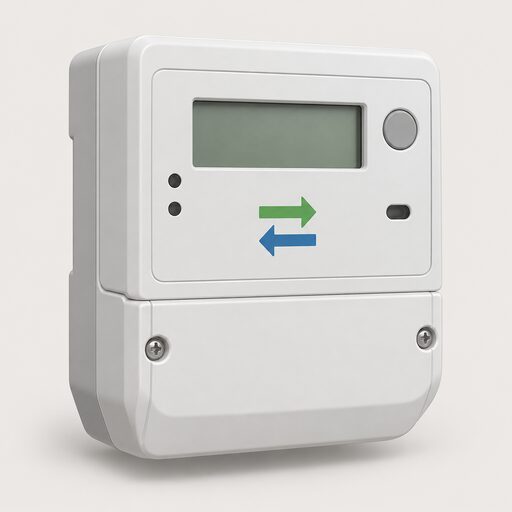
Government guidance is specific: a vehicle-to-grid enabled EV chargepoint is able to draw power to charge the vehicle and export electricity from the car battery back to the home or the grid, and this requires a bi-directional chargepoint and for the car to be V2G compatible23. Uswitch adds the metering element: to use V2G, a household needs a smart meter, a compatible V2G charger and a car that supports the technology4. The Centre for Sustainable Energy puts the same condition on the home side, noting that both the EV and the EV charger need to be bidirectional charging compatible24.
| Element | Requirement | Source |
|---|---|---|
| Vehicle | Must be V2G compatible; CHAdeMO has been the enabling protocol | 23 |
| Chargepoint | Bi-directional unit, not a standard smart charger | 23 |
| Metering | Smart meter | 4 |
| Communication | Uniform software language between car and charger | 3 |
| Commercial route | Energy supplier or trial operator; access has been via approved trials | 25 |
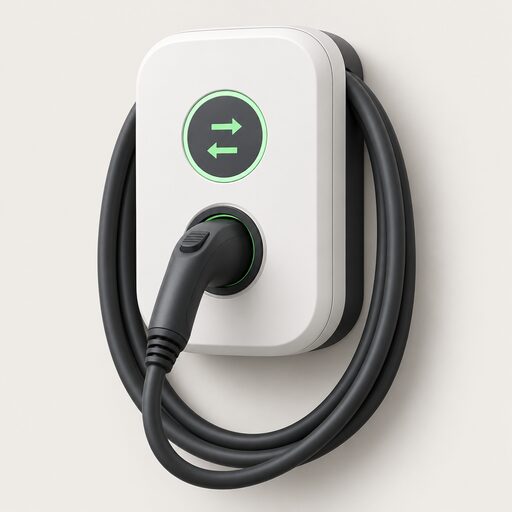
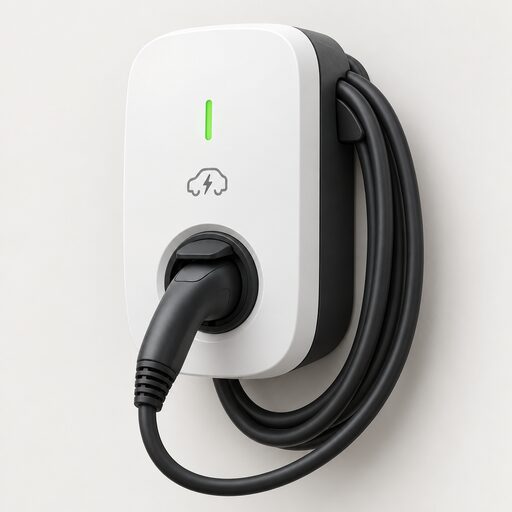
Physically the equipment is unremarkable: a V2G unit acts and looks very similar to a standard charging point11. Home chargers generally come either with a tethered Type 1 or Type 2 cable that plugs straight into the car, or with a Type 2 socket for use with the vehicle's own cable26. Vehicle-to-grid technology allows an EV charger not only to charge a vehicle but also to take energy from it27.
Access is the binding constraint. V2G is still not widely available, with eligibility requirements such as having a compatible car, charger and smart meter4. Trials often require specific EV models and compatible chargers and may involve a selection process, with application typically by online registration, eligibility verification and coordination with installers and energy suppliers4. The Centre for Alternative Technology recorded that a V2G charger could only be obtained through an approved trial25. Cenex noted four V2G charger models available in the UK through different suppliers, with new suppliers entering the market regularly2; examples cited include the Wallbox Quasar 1 and Indra V2G units, which enable bidirectional energy flow allowing an EV to both charge and discharge to the grid4. See bidirectional chargers: the equipment and what it costs and taking part in a home energy technology trial.
What V2G is worth: household revenue and system value
Figures vary widely, and the variation is mostly driven by how often the car is plugged in. Cenex estimates average UK revenue generation from V2G at £150 to £200 per year9. Its modelling of Sciurus trial data put V2G at around £410 per year compared with unmanaged charging, from the first two revenue streams2. The V2G Britain study found that a 7kW V2G charger could capture annual revenues of around £436 above smart charging for a high plug-in rate archetype, defined as plugged in 75% of the time, four times that achieved with the average plug-in rate8. These are modelled and trial-derived figures from different periods and different assumptions, not guaranteed earnings.
Against that sits the hardware premium. Cenex estimated the premium for a V2G charger above a smart charger at around £4,000 in January 20212, predicted hardware prices to fall below the £3,000 to £5,000 level by 20259, and predicts V2G charger cost to fall to £1000 by 20309. The V2G Britain projections put the 2030 premium over an equivalent smart charger at approximately £650 to £11508, with the same report elsewhere expressing it as between £656 and £1,164 by 203028.
| Measure | Figure | Basis |
|---|---|---|
| Average UK annual V2G revenue | £150 to £2009 | Cenex estimate |
| Annual revenue vs unmanaged charging | around £4102 | Cenex modelling, Sciurus data, Jan 2021 |
| 7kW charger, 75% plug-in rate | around £436 above smart charging8 | V2G Britain |
| Commercial users, EV-elocity | £400 per vehicle per year28 | EV-elocity project |
| Charger premium over smart charger | around £4,000 (2021)2; £656 to £1,164 by 203028 | Cenex |
The most important caveat in the evidence is that much of the value can be had without bidirectional hardware at all. V2G Britain found smart charging can capture around 80% of the savings compared to V2G where grid services are excluded, and more precisely 80% of the value for low plug-in scenarios or 24% for high plug-in cases8. In other words, the bidirectional premium only pays where the car is plugged in a great deal and grid services revenue is accessible. That comparison is developed in bidirectional charging vs smart charging and V2G earnings and the tariffs behind them.
There is also non-cash value. Cenex reports that battery capacity fade can be reduced by 9.1% over a year through battery management, which could extend useable battery life by 10% and give an annual depreciation saving of £2309; EV-elocity separately found V2G could extend the life of an EV battery by about 10%, around one extra year of use28. Storing generation from a 4 kWp domestic solar PV system with an EV battery over a weekend with six hours of sun per day is modelled to save over 600 kgCO₂e per year9. Vehicle warranty terms, which are set by carmakers rather than by these studies, are covered in V2G, battery degradation and vehicle warranties. Household storage more generally carries its own commercial catches: Which? notes that having a storage battery may render a household ineligible for some Smart Export Guarantee tariffs29.
The system case: why networks and government are pushing it
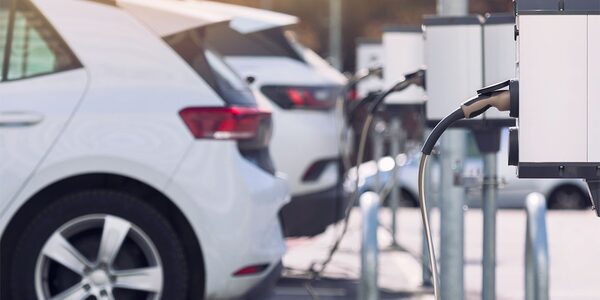
At national scale the numbers are larger than any household's. Ofgem's case study on UK V2G states that if 50% of the UK's EVs were V2G enabled they could provide around 16GW of daily flexible capacity to the grid30. NESO estimates that in 2050 vehicle-to-grid, effectively batteries on wheels, could offset as much as 85% of the residual EV demand that remains in peak periods after smart charging has shifted the majority of EV demand outside peak hours31.
Cenex's V2G Britain case study puts the network figures at £200m of cumulative distribution network investment saved by 2030 and an additional £40 to £90 million annually in Great Britain by 203032. A separate Cenex assessment puts deferred network upgrades at £5bn, or £180 per household, with reduced renewable curtailment amounting to a saving of 6 MtCO₂e per year9. Distributed storage in vehicles makes it easier to connect ever more renewable energy sources to the grid, and users benefit from payments for V2G services1. Energy network operators describe V2G as enabling energy stored in EVs to be fed back into the electricity network33.
Energy Systems Catapult adds two technical qualifications that are easy to miss in the optimism: V2G lacks inertia and power system stabilisers, and V2G will offset low frequency demand disconnection operation34. It also observes that the focus of EV charging and V2G technology design is customer needs and cost, and that it will do "just enough" to meet grid-related regulations such as fault ride-through and high or low voltage withstand34. Exploiting the full capability of smart EV charging demand side response flexibility and V2G can support decarbonisation targets, reducing operating costs and enhancing system resilience34.
Where V2G stands in the UK today
V2G is in pilot and early commercial projects in select countries12. The UK is one of the leaders: as of 2019 assessment, the UK and France were the lead markets for V2G, with strong emerging opportunities in Germany and elsewhere28. British pilot activity has been supported by funding from the Office for Low Emission Vehicles, now OZEV, and the Department for Business, Energy and Industrial Strategy30. The V2G Britain feasibility study formed part of the Vehicle-to-Grid competition8. Cenex has been involved in V2G research projects since 201635, and the EV-elocity project deployed V2G chargers in a range of locations across England as part of large-scale trials36. UK Power Networks has publicised a first-of-its-kind approach to fast-tracking V2G technology, describing V2G as allowing electric cars to do more than just charge by sending electricity back to the grid when needed37. Energy Saving Trust maintains a vehicle-to-grid best practice guide, last updated in May 202627, and has listed V2G among innovations to watch, allowing energy stored in a vehicle's battery to be exported to the grid during periods of high demand38. On the vehicle side, Toyota Motor Europe plans to expand its energy collaborations to additional countries and introduce more advanced solutions including V2G integration, allowing EVs not only to draw energy from the grid but also return it when needed39.
What it means for household energy independence
Bidirectional charging offers the largest battery most households will ever own without buying one twice. Its uses are demand shifting to reduce electricity costs, supplying energy to energy markets, and increasing the use of localised renewables11. Where backup is wanted, some products claim it without a separate home battery: Enphase states its bidirectional charger can provide backup and export functions, without a home battery, when used with the IQ Grid Switch, and can export from the EV to the grid when rates are high6.
The dependencies, though, are unusually numerous. A V2G household depends on the car manufacturer continuing to permit export, on the charger manufacturer and its firmware, on a back-office platform speaking OCPP 2.1 or later, on a smart meter and a supplier willing to settle exports, and on the distribution network operator's connection terms. It also depends on a protocol choice: CHAdeMO today2, CCS with ISO 15118-20 in prospect1. That is more counterparties than a fixed home battery involves, and the comparison with a home battery turns largely on how many of them a household is willing to rely on. The wider context sits in the emerging home energy technology guide.
Sources39 cited
- Bidirectional charging infohub, Compleo Charging, 2026-09-17
- Commercial viability of V2G, Cenex, 2021-01
- What is bidirectional charging, Carwow, 2025-05-30
- Vehicle-to-grid charging guide, Uswitch, 2025-07-02
- Nissan Leaf charging guide, Zapmap, 2026
- IQ Bidirectional EV Charger, Enphase, 2026-09-17
- Battery storage advice, Energy Saving Trust, 2026-08-19
- V2GB Vehicle to Grid Britain, Cenex
- More than money: the true power of V2G, Cenex
- Well-adapted energy system monitoring framework, Climate Change Committee, 2026-09-19
- Vehicle-to-grid, Cenex, 2021-08-23
- V2V bidirectional charging explained, go-e, 2025-12-17
- Parallels between heat pumps and electric vehicles, Cenex, 2024-01-30
- IEC 61851-23:2023, IEC, 2023-12-13
- Have your views heard on BS 7671 Amendment, Electrical Safety First, 2026-09-19
- Amendment 4 (2026) to BS 7671:2018 published, IET, 2026-04-15
- Electric vehicles: driving the transition, UK Parliament, 2026-09-20
- EV connector types, Zapmap, 2026-05-20
- Kia EV6 charging guide, Zapmap, 2026
- EV charger standardisation report, SMMT, 2016-06-10
- Response to Energy Smart Appliances Regulations consultation, BEAMA, 2026-02-05
- Response to DESNZ Smart Secure Electricity Systems, Citizens Advice, 2026-02-05
- Register energy devices in homes or small businesses, GOV.UK, 2021-03-31
- Battery storage advice, Centre for Sustainable Energy, 2025-10
- Store and save, Centre for Alternative Technology, 2022-10-27
- Home charging guide, Zapmap, 2025-06-19
- Vehicle-to-grid best practice guide, Energy Saving Trust, 2026-05-05
- An introduction to vehicle-to-grid charging, Cenex, 2022-08
- Solar panel battery storage, Which?, 2026-05-14
- Case study: UK electric vehicle to grid V2G charging, Ofgem, 2021-07-06
- Batteries on wheels and smart charging, NESO
- V2G Britain case study, Cenex
- Storage and renewable energy, Electricity North West, 2026-09-19
- Resilient electric vehicle charging, Energy Systems Catapult, 2022-02-21
- Nearly everything you need to know about vehicle-to-grid, Cenex, 2022-02-21
- V2G mitigating future winter blackouts, Cenex, 2022-12-14
- UK-first approach to fast-track vehicle-to-grid technology, UK Power Networks, 2026-03-12
- Five electric vehicle innovations to watch, Energy Saving Trust, 2026-09-20
- Toyota to expand EV charging ecosystem across the UK, SMMT, 2025-12-04
 EV Connectors and CablesWhich cable fits your car, and will it work at every charge point you pull up to?
 Cars That Support BidirectionalWhich electric cars in the UK can actually send power back to your home or the grid, and which ones only promise it for later?
 Bidirectional Chargers and CostsA bidirectional charger lets your electric car send power back to your home or the grid, not just take it in.
 V2G and V2H ChargingCan your electric car earn money by sending power back to your home or the grid?
 Grid Connection Rules for V2GCan your charger send power back to the grid?
 Bidirectional Charging ExplainedCan your electric car actually earn you money by sending power back to the grid?