
In this answer
Short answer
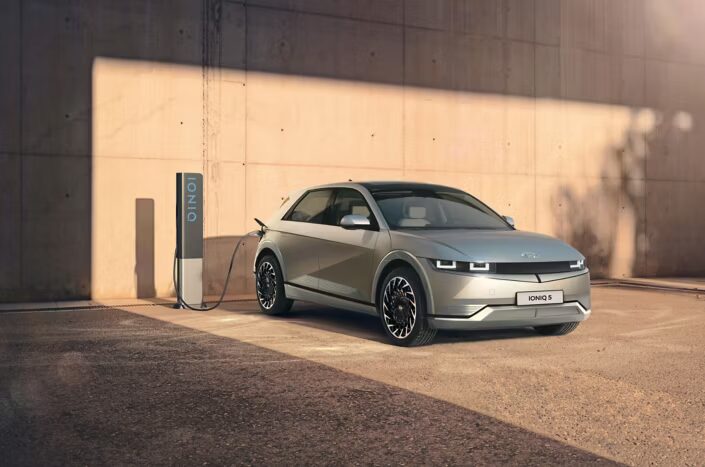
Hyundai's plan for vehicle-to-grid is, in the company's own words, still "coming soon"1. What the brand sells today is Vehicle-to-Load: the IONIQ 5 N is equipped with Vehicle-to-Load technology that lets customers use or charge any 230V electrical equipment, and the IONIQ 6 offers up to 3.6 kW output for electrical equipment1. That runs a kettle, a laptop or a power tool from the car. It does not run the house.
Vehicle-to-grid is a different proposition. It allows an electric vehicle charger to not only charge a vehicle, but also take energy from it, so stored energy can be exported to the network at times of high demand3. For a household, that is the difference between a car that is a load on the grid and a car that is an asset to it.
The gap between the two is not Hyundai's alone. Bidirectional charging is currently being trialled in some places but is not widely available, and only CHAdeMO currently has a valid protocol for V2G charging that feeds electricity into the public grid5. Hyundai's own guidance states that vehicle-to-grid pilot programmes are active and wider infrastructure is developing, with full access depending on the local energy provider and compatible hardware1.
What vehicle-to-grid means for a Hyundai owner
For a Hyundai owner, vehicle-to-grid describes a future in which the car's battery does three jobs rather than one. It charges from the grid when electricity is cheap or abundant. It powers the home instead of exporting, which is vehicle-to-home. Or it sends energy back to the network, which is vehicle-to-grid proper9.
The distinction matters because the three capabilities need different hardware and carry different value. Vehicle-to-home utilises the energy to power a home rather than delivering it back to the grid10. Vehicle-to-grid, by contrast, allows electric vehicles to not only draw power from the grid to charge their batteries but also to send electricity back to the grid when needed, generating cash for the EV owner10. Hyundai's own product page lists Vehicle-to-Grid as coming soon, alongside the Vehicle-to-Load function the cars already carry1.
There is a third layer that households often miss: the charger. Vehicle-to-grid technology allows an EV charger to not only charge a vehicle, but also take energy from the vehicle, so the wall unit is as much a part of the system as the car3. A household that buys a Hyundai today and an ordinary chargepoint alongside it has no upgrade path to V2G without replacing the chargepoint.
The independence question is therefore split. A Hyundai with Vehicle-to-Load already reduces dependence on mains power for small loads, and can run equipment during an outage without any grid connection at all. Full energy independence, in the sense of running the house from the car, depends on a charger, a protocol and a supplier arrangement that are not yet standard in the UK.
Bidirectional charging: what the car can do
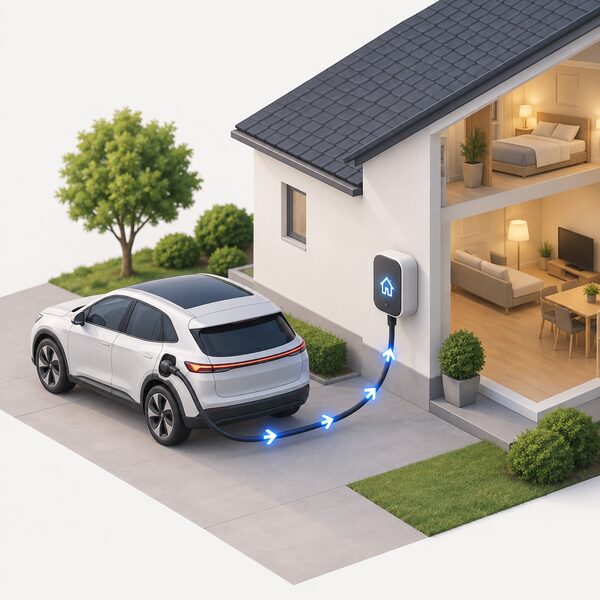
Bidirectional charging refers to the smart charging and discharging of electric vehicles11. In practice it turns the car into an ultra-powerful battery, with the ability to send energy to a home or the grid12. Official guidance describes the same idea as V2X, which allows electric vehicles to operate bidirectionally, charging from the electricity grid but also discharging to the grid, building or home as needed13.
The capability splits into three named functions, and Hyundai's range touches only the first today.
| Function | What it does | Hyundai position |
|---|---|---|
| Vehicle-to-Load (V2L) | Runs 230V equipment from the car | Fitted to IONIQ 5 N; up to 3.6 kW on IONIQ 61 |
| Vehicle-to-Home (V2H) | Powers the home from the car battery | Limited to certain EV models and compatible chargers4 |
| Vehicle-to-Grid (V2G) | Exports battery energy to the network | Listed by Hyundai as coming soon1 |
Vehicle-to-home allows you to power your home using energy from your EV, which can be especially useful during power outages9. Independent guidance is more cautious, noting that it can provide backup power from your EV to your home during power outages and support off-grid setups, but that V2H is limited to certain EV models and compatible chargers4. Both statements point the same way: the function exists, the equipment list is short.
Plug-in hybrids complicate the picture. They can do bidirectional charging too, but the benefits are slight, because they only have a small battery that can store only a limited amount of energy6. A household weighing a plug-in Hyundai against a full electric one should treat bidirectional capability as a full-electric feature in practice.
Is V2G legal in the UK?
Bidirectional charging is allowed and encouraged by the UK government, and the constraint is technical rather than legal6. The work has been publicly funded for years. The V2GB feasibility study, Vehicle to Grid Britain, was part of the Vehicle-to-Grid competition, funded by the Office for Low Emission Vehicles and the Department for Business, Energy and Industrial Strategy in partnership with Innovate UK8.
The network operators treat it as part of the plan rather than an exception. Vehicle-to-grid technology enables energy stored in EVs to be fed back into the electricity network, and the same description appears in network operator guidance going back to 202315. An official case study recorded over three million free miles made available to customers who exported energy back to the grid during peak times7.
The economics of that export are contested. One assessment found that smart charging can capture 80% of the value of V2G for low plug-in scenarios, or 24% for high plug-in cases, with grid services excluded8. A separate assessment puts the same figures at 40% for low plug-in scenarios and merely 10% for high plug-in cases8. The two documents disagree, and the disagreement matters: it is the difference between V2G being a meaningful household income and a marginal one.
The protocol problem: CHAdeMO, CCS and what works today
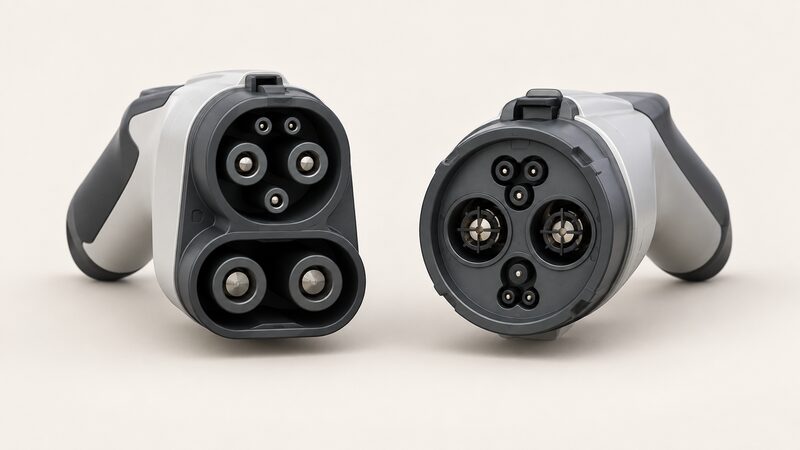
The reason a Hyundai cannot export to the grid today is a standards question, not a hardware one. Only CHAdeMO currently has a valid protocol for V2G charging in order to feed electricity into the public grid6. CHAdeMO is primarily used for rapid DC charging on older Nissan Leaf models, and a few older models still use it for rapid charging, but CCS has largely replaced it17.
That leaves the UK with an awkward position: the connector that can export is being phased out, and the connector that dominates cannot yet export. CHAdeMO is less common now and is being phased out in favour of CCS19. The more common CCS standard used in most modern European EVs is rapidly gaining bidirectional capability through the ISO 15118 protocol20.
Hyundai's cars sit on the CCS side of that divide. The IONIQ 6 architecture supports both 400 and 800 volt charging infrastructures, which is a charging-speed advantage rather than a bidirectional one2. For a household, the practical consequence is that the car is ready for the direction the standard is moving in, and not ready for the direction that works today.
What V2G could save households and the grid
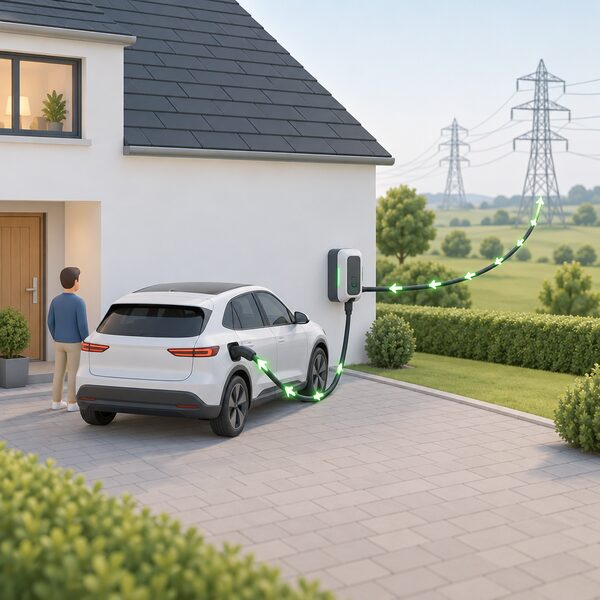
The household case rests on two numbers, and both are modelled rather than measured. The first is battery life. Vehicle-to-grid use could extend useable battery life by 10%, according to an independent assessment21. That runs against the common assumption that cycling a car battery harder shortens its life.
The second is grid capacity. If 50% of the UK's EVs were V2G enabled, they could provide around 16GW of daily flexible capacity to the grid by 2030, according to an official case study7. That is a system-level figure, not a household one, but it explains why network operators and government have funded the trials.
The wider argument is about renewable energy. Having electric vehicles as battery storage will allow us to better manage the UK's energy, and vehicle-to-grid could be one of the best ways of storing excess renewable energy3. A vehicle-to-grid system could potentially offer a two-way movement of energy, with energy stored in the car battery used in the home or sold back to the grid at times of peak demand22. Decentralised storage in EVs also makes it easier to connect more renewable energy sources to the grid, with users benefiting from payments for V2G services11.
For a household, the honest reading is that the savings depend on a tariff, a charger and a protocol that are still developing. No published UK price exists for a bidirectional chargepoint, so costs are installer-quoted. What can be said is that the value of export is disputed between assessments, and that the battery-life effect is reported as positive rather than negative: one assessment puts the extension of useable battery life at 10%1. The wider case rests on decentralised storage in EVs making it easier to connect more renewable energy sources to the grid, with users paid for V2G services2.
Hyundai's reliability record and what it means for energy use
A car used as a home battery has to be dependable for a decade, so reliability is part of the energy case rather than a separate motoring question. Hyundai's recent record is strong on the survey evidence. The Hyundai i10 and SANTA FE both achieved a flawless 100% score in the 2025 What Car? Reliability Survey, and the Santa Fe was rated among the UK's most reliable cars in that survey23. Hyundai also reports two accolades at the 2026 What Car? Awards, and three titles at the 2026 What Car? Electric Car Awards, including Best Electric Performance Car for the IONIQ 6 N25.
Efficiency figures for the electric range are published by the maker. The IONIQ 6 is listed at 13.4 kWh per 100 km on 18 inch wheels in one configuration, and 13.5 kWh per 100 km on 18 inch wheels in another2. Those are consumption figures for driving, not for home supply, and they set the context for how much energy a household would be moving in and out of the car. The same model offers V2L bi-directional charging at up to 3.6 kW output2.
The dependence that remains is worth stating plainly. A Hyundai owner using the car for home energy depends on the grid for recharging, on a supplier for any export payment, on a charger manufacturer for bidirectional hardware, and on Hyundai for the vehicle and its warranty. Vehicle-to-load reduces that dependence for small loads and during outages. Vehicle-to-grid, when it arrives, would deepen the relationship with the grid rather than remove it.
Where the plan stands
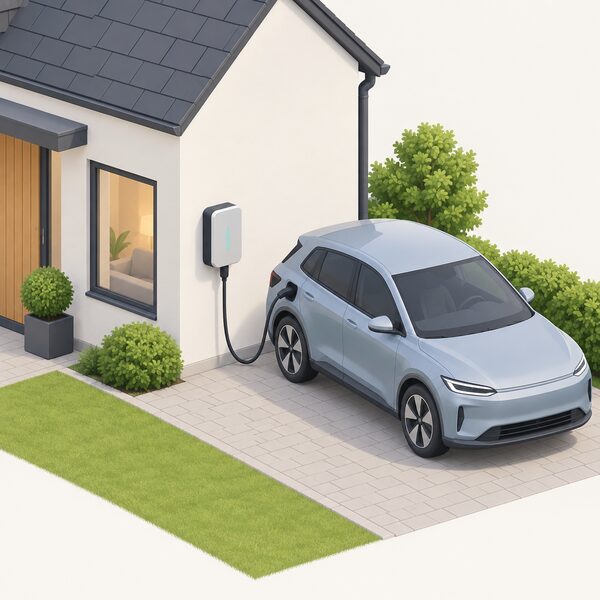
Hyundai's position is a staged one. Vehicle-to-load is shipping. Vehicle-to-home is limited to certain models and chargers. Vehicle-to-grid is listed as coming soon, with pilot programmes active and wider infrastructure developing, and full access depending on the local energy provider and compatible hardware1. The protocol that would carry it, ISO 15118 over CCS, is gaining capability but is not yet the route to public grid export in the UK6.
For a household, that means the car can already do something useful and cannot yet do the thing the marketing implies. The related questions of which cars support the function, what the equipment costs, and how export earnings work are covered in which cars support bidirectional charging, bidirectional chargers and V2G earnings and tariffs. The standards themselves are set out in bidirectional charging standards, and the wider picture sits in the emerging home energy technology guide.
Sources26 cited
- Hyundai IONIQ 5 N press information, Hyundai, 2024-03-25
- The new Hyundai IONIQ 6, Hyundai, 2025-11-24
- Vehicle-to-grid best practice guide, Energy Saving Trust, 2026-05-05
- Battery storage advice, Energy Saving Trust, 2026-08-19
- Battery storage, Centre for Sustainable Energy, 2025-10
- What is bidirectional charging, Carwow, 2025-05-30
- Case study: UK electric vehicle grid V2G charging, Ofgem, 2021-07-06
- V2GB vehicle-to-grid Britain, Cenex, 2026-09-17
- What is bi-directional charging, Kia UK, 2026-09-17
- Connecting to the networks: LCT strategy, Energy Networks Association, 2026-09-17
- Bidirectional charging, Compleo Charging Solutions, 2026-09-17
- Home energy management, Wallbox, 2026-09-20
- Well-adapted energy system, Climate Change Committee, 2026-09-19
- V2G Britain case study, Cenex, 2022-11-11
- Storage and renewable energy, Electricity North West, 2026-09-19
- Renewable energy FAQs, Electricity North West, 2023-02-23
- EV connector types, Zapmap, 2026-05-20
- Electric car charging guide, Carwow, 2025-07-16
- How do you charge an electric car, So Energy, 2025-09
- Bi-directional charging, Electroverse, 2026
- More than money: finding the true power of V2G, Cenex, 2026-09-17
- Smart homes, lower carbon footprint, Energy Saving Trust, 2026-01-21
- All-new Santa Fe press kit, Hyundai, 2025-10-02
- The new Hyundai Santa Fe, Hyundai, 2025-10-02
- Hyundai IONIQ 6 N press information, Hyundai, 2026-09-02
- EV charging connector types, E.ON Next, 2026-09-17
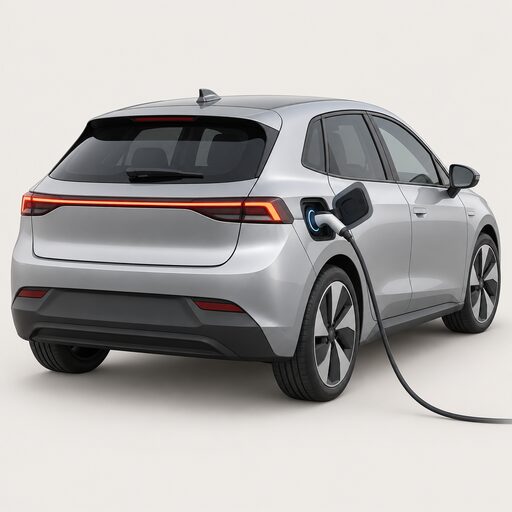 V2G and V2H ChargingCan your electric car earn money by sending power back to your home or the grid?
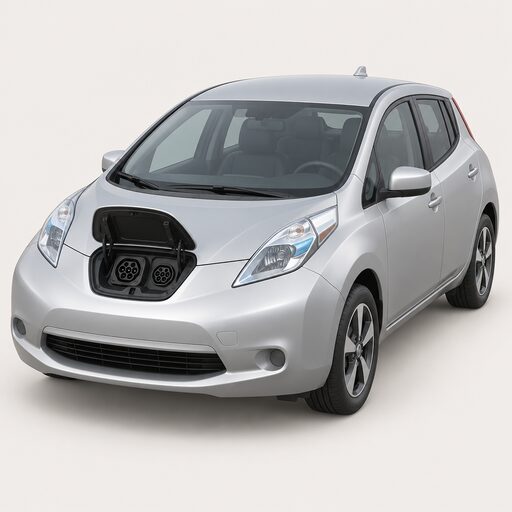 Cars That Support BidirectionalWhich electric cars in the UK can actually send power back to your home or the grid, and which ones only promise it for later?
 V2G Battery DegradationDoes letting your electric car send power back to the grid wear the battery out faster?
 The Full New Technology GuideWhich new home energy ideas can you actually buy in the UK right now, and which are still stuck in trials?
 Fuel Cell Cars as Home PowerCan you really run your home from a hydrogen car?
 V2G Earnings and TariffsExplains how households are paid under vehicle-to-grid arrangements, whether through export payments, a flat monthly credit or a time-of-use tariff.