
In this guide
The short answer is that the evidence does not show V2G wrecking a traction battery. Independent guidance from Uswitch states that while there are concerns that frequent charging and discharging could shorten EV battery life, the impact should be relatively minimal within recommended guidelines1. The UK's largest domestic trial went further: Cenex found that V2G could extend the life of an EV battery by about 10%, around one extra year of use2.
What drives that result is not the number of cycles in isolation but how they are managed. Shallow, slow, well-timed cycling with the battery held in a comfortable state of charge is a different proposition from deep discharge at high power. Cenex reports that capacity fade can be reduced by 9.1% over a year through battery management3.
The warranty position is the part most households actually worry about, and it is thinner than the degradation evidence. Manufacturers provide warranties on EV batteries lasting at least eight years or 100,000 miles4, and those guarantees cover repair or replacement if performance falls below a set level5. No source records a manufacturer voiding a traction battery warranty specifically because of V2G, but the terms are set by each maker and the technology is still not widely available1.
Does V2G degrade the battery? What the evidence shows
The concern is reasonable and the sources do not dismiss it. Uswitch notes that frequent charging and discharging could shorten EV battery life, but concludes the impact should be relatively minimal within recommended guidelines1. That qualifier carries the weight: the outcome depends on staying inside the operating envelope the battery was designed for, not on whether the car exports at all.
The strongest UK evidence comes from trials rather than modelling. EV-elocity found that V2G could extend the life of an EV battery by about 10%, around one extra year of use2. Cenex's own analysis reports that capacity fade can be reduced by 9.1% over a year through battery management, and that this could extend usable battery life by 10%3. Those two findings point the same way: managed bidirectional cycling can be gentler on a pack than the pattern of charging many drivers already use.
The mechanism is worth understanding. A battery that sits at a high state of charge for long periods, or is repeatedly pushed to full and run low, ages faster than one held in the middle of its range. Cenex's modelling assumed a battery lasting 2,000 full cycles as its baseline2.
There is a scale question underneath the household one. Ofgem's case study records that if 50% of 2030 EVs were V2G enabled, this would open up 22 TWh of flexible EV discharging capacity per year8. That is the system-level prize, and it depends on millions of packs absorbing extra cycles without unacceptable wear. The trial evidence so far supports the view that they can, within limits.
"There are concerns that frequent charging and discharging could shorten EV battery life. However, the impact should be relatively minimal within recommended guidelines."
How EV batteries age: 10 to 20 years of service life
Before judging what V2G adds, it helps to know what a battery loses anyway. Energy Saving Trust states that EV batteries are expected to last 10 to 20 years9. Energy Saving Trust also notes that EV batteries can usually be replaced, but that it is complicated and often expensive to do, and that EVs do not usually need replacement because the batteries can last for hundreds of thousands of miles10.
Ageing is not a single process. Charging slows significantly after about 80% to protect the battery and prolong its lifespan, which is why charging to 80% is common practice11. That behaviour is the battery management system defending the cells, and it applies whether the car is charging from the grid or discharging to it.
Habits matter as much as chemistry. Guidance on extending battery life is to use rapid charging only when needed, not to fully charge the battery, and not to let it get too low10. A good rule of thumb is to avoid letting the charge get to the 20% mark12. Charging overnight so the car starts each day with a full battery, planning journeys so the charge needed is known in advance, and using chargepoint finder apps to map the route are the practical routines that sit alongside those limits10.
For a household weighing V2G, the useful framing is that some capacity loss is normal and expected over a decade, and the question is whether bidirectional cycling adds materially to it. The trial evidence in the next section suggests the answer is no, provided the car is not run hard and the management system is doing its job.

What V2G actually does to a battery: extra cycles and depth of discharge

V2G chargepoints provide bi-directional flows of energy and data between a plug-in electric vehicle and the grid, enabling EV batteries to charge, store and discharge electricity when prompted13. The technology enables EV batteries to charge, store and discharge electricity when required14. The Welsh Government's national standards describe vehicle to grid as the use of vehicle batteries as storage to help balance supply and demand on the electricity network, applying at scales from individual batteries up to aggregation of multiple batteries across one or multiple carparks15.
Two variables decide how much wear that adds. The second is how often it happens. A car that exports a shallow slice of its capacity several times a week is doing something quite different from one that is drained deeply every day.
The trial data suggests real households do not cycle as hard as the theory implies. In Project Sciurus, 75% of participants said they plugged in their EV after every trip, against most EV users who typically plug in to a home chargepoint about once every three days16. Frequent plugging in is what makes V2G possible at all, because the car has to be connected to be dispatched.
The system-level figures show why the cycling is worth having. V2G operation could generate a net saving of between £40M and £90M a year across Great Britain by 2030, depending on limits to V2G energy throughput2. Those throughput limits are, in effect, a cap on how much cycling the fleet is asked to absorb, which is a recognition that battery wear is a real constraint on the technology rather than a solved problem.
Project Sciurus: what the UK's largest domestic V2G trial found
Project Sciurus is the reference point for domestic V2G in Britain. It ran between 2018 and 20216, started in April 2018 with OVO Energy, Cenex, Nissan and Indra2, and was funded by the Department for Business, Energy and Industrial Strategy and the Office for Zero Emission Vehicles, in partnership with Innovate UK7. Cenex describes it as delivering the largest domestic V2G demonstrator in the world14, and it installed 320 V2G units into homes across the UK6.
The original target was 1,000 domestic V2G units, later reduced to between 300 and 4002. The trial offset more than 750MWh of energy through V2G2. Data was analysed over twelve months, between January 2020 and December 20202.
On the question this page exists to answer, the trial's finding on perception is as important as its finding on hardware. Before the trial, participants had concerns around reliability, battery degradation or their car not being charged. By the end, after using the charger for several months, the vast majority had their concerns alleviated17. Cenex's case study records that use of the V2G technology during the trial alleviated most of the participants' concerns16.
The trial also produced the money figures that later sections use, and a clear conclusion on cost. It found that the cost of hardware needs to reduce further to be a more attractive proposition6. That is the honest summary of domestic V2G in the UK: the battery evidence is reassuring, and the equipment is still expensive.
Warranties: around eight years or 100,000 miles, and what they cover
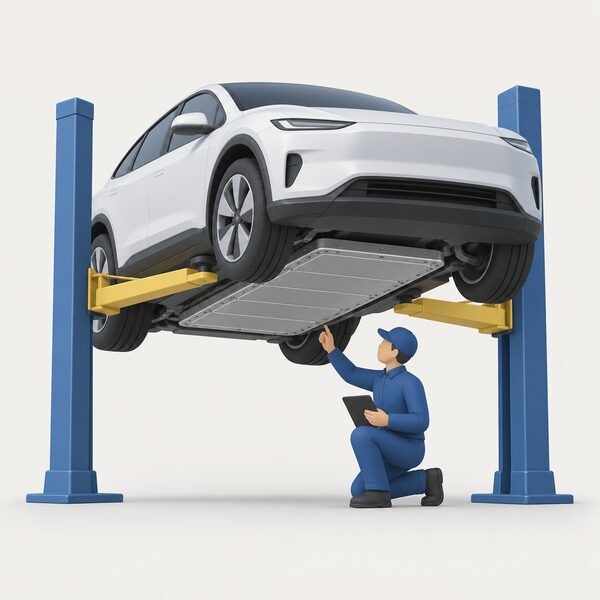
Traction battery warranties are the practical backstop, and their terms are consistent across sources. The Society of Motor Manufacturers and Traders states that manufacturers provide warranties on EV batteries lasting at least eight years or 100,000 miles4. Uswitch puts battery warranties at around eight years or around 100,000 miles18, and notes that most manufacturers offer battery warranties of seven or eight years19. Which? reports that EV battery warranties usually last eight years and that there is no evidence yet that this is the ultimate lifespan of a battery20.
Coverage is the part that matters when something goes wrong. Most manufacturers offer an eight-year or ten-year guarantee on electric cars, or 100,000 to 150,000 miles, which will cover repair or replacement of the battery if its performance falls below a certain level5.
| Warranty element | Typical position | Source |
|---|---|---|
| Duration | At least eight years, or seven to eight years for most manufacturers | 4 |
| Mileage cap | Around 100,000 miles, up to 100,000 to 150,000 miles | 18 |
| What it covers | Repair or replacement if performance falls below a set level | 5 |
| Longer terms seen | Eight or ten years | 5 |
Nothing in the sources records a manufacturer voiding a traction battery warranty because of V2G. The one warranty warning in the material concerns a different function: vehicle-to-load is designed for powering appliances, not charging another car, so the manufacturer might deny warranty coverage if something goes wrong21. That is a caution about using a car as a power source for another vehicle, not about grid export.
The gap is that V2G is still not widely available, with eligibility requirements such as a compatible car, charger and smart meter1. Where a maker has not published a position on bidirectional use, the warranty terms as written are what a household has to work from, and those terms are set per manufacturer.
How V2G compares with ordinary smart charging for battery wear
Smart charging is the benchmark, and it is a strong one. Cenex's analysis finds that if grid services to the system operator and distribution network operator are excluded, smart charging is able to capture 80% of the value of V2G2. A separate Cenex press release makes the same point from the other direction: if V2G is unable to access grid services, then smart charging gives you the upper range of that value22.
It shifts when the car charges, and stops there. V2G adds discharge events on top, which is where the extra wear, and the extra revenue, both come from. A household that cannot access grid services is taking on bidirectional cycling for a small share of the benefit.
On the wear itself, the maker guidance is reassuring. Go-e states that most experts agree slow charging and discharging for V2H has only a minor impact on battery health23. The same logic applies to V2G, where the export is typically at low power over a long window rather than at rapid-charging rates.
There is a design caveat worth knowing. The Catapult report on resilient EV charging notes that the focus of EV charging and V2G technology design is customer needs and cost, and that it will do just enough to meet grid-related regulations such as fault ride-through and high and low voltage withstand24.
What V2G is worth: savings of £120 to £725 a year
The revenue figures span a wide range, and the spread is explained by what the charger is allowed to do. Project Sciurus found that V2G technology could save customers £340 compared with £120 when using one-way smart charging, and that by enabling the V2G chargers to provide grid services this figure rises to £7256. The trial's units were able to create between £230 and £300 of value per year through the spot electricity market via the Kaluza platform, growing to £500 per year when combined with flexibility services16.
Cenex's earlier modelling put V2G at around £410 per year compared with unmanaged charging, from the first two revenue streams7. Its statistics give an incremental value of V2G above smart charging of £220 per year, and a maximum annual revenue of £725 including Dynamic Containment, an increase of £64 per kW2. A simulated figure for optimised V2G under post-TCR revised tariffs was £1732.
Against those numbers sit the costs. Ofgem's case study records that by the end of the trial, the V2G hardware and installation cost was around £3,700 higher than a smart, monodirectional charge point8. Cenex estimated the premium for a V2G charger above a smart charger at around £4,0007. Projections for 2030 put the premium for a V2G charger at around £650 to £1,1502.
Payback depends entirely on which of those figures applies. Cenex's modelling found that if the incremental capital cost of V2G hardware could be reduced to around £1,000, the payback period could come below five years2. At current incremental hardware cost, the same modelling gave payback periods of more than 30 years for optimised V2G, 14 years with frequency response, and eight years with Dynamic Containment2.
Where EV batteries fit in home energy independence
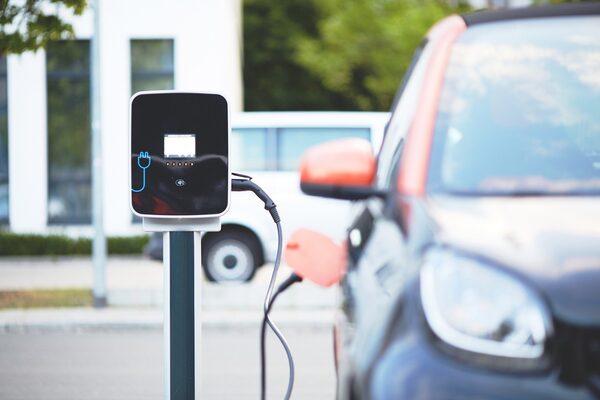
A car battery is the largest energy store most households will ever own, and V2G is what turns it into a household asset rather than a cost. The technology enables EV batteries to charge, store and discharge electricity when required14, and a V2G enabled chargepoint is able to draw power to charge the vehicle and export the electricity from the car battery back to the home or the grid25. The Welsh Government's standards describe the same function as using vehicle batteries as storage to help balance supply and demand on the electricity network15.
The independence it buys is partial and conditional. A V2G chargepoint requires a bidirectional chargepoint and a car that is V2G compatible25, and V2G is still not widely available, with eligibility requirements such as a compatible car, charger and smart meter1. On connectors, only CHAdeMO currently has a valid protocol for V2G charging that feeds electricity into the public grid26, which is why the list of supporting cars is short. The household remains dependent on a chargepoint maker, a car maker, an energy supplier and the network itself.
Vehicle-to-home is the closer fit for self-sufficiency. V2H is a technology that allows an electric vehicle to power a home using the energy stored in its battery23, and it can provide backup power from your EV to your home during power outages and support off-grid setups, though it is limited to certain EV models and compatible chargers1. When the public power grid goes down, the V2H system automatically disconnects your home from the grid, creating an electrical island so the home runs on EV battery power and prevents feedback into the grid23.
The wider system view supports the direction of travel. The Climate Change Committee notes that at household level, further innovation in home battery technology, vehicle-to-everything and solar can provide households with additional backup options during power outages27. Ofgem's case study records that research has shown V2G has the potential to save £3.5bn per year in areas such as grid infrastructure reinforcement, storage and generation8, and Cenex reports that V2G could defer network upgrades of £5bn, or £180 per household3. Exploiting the full capability of smart EV charging demand side response flexibility and V2G can support decarbonisation targets, reducing operating costs and enhancing system resilience24.
What remains is the honest limit. The car has to be plugged in, the charger has to be compatible, the tariff has to reward export, and the battery has to be managed within guidelines for the wear figures above to hold. Independence here is a share of the household's energy, not all of it.
Sources27 cited
- Vehicle-to-grid charging guide, Uswitch, 2025-07-02
- Project Sciurus trial insights report, Cenex, 2021-05
- More than money: finding the true power of V2G, Cenex, 2026-09-17
- EVs: the facts, SMMT, 2025-09-22
- Should you buy a used electric car, Energy Saving Trust, 2022-06-08
- 4 pioneering V2G projects, Cenex, 2023-03-22
- Commercial viability of V2G, Cenex, 2021-01
- Case study: UK electric vehicle to grid (V2G) charging, Ofgem, 2030
- Electric vehicles: debunking myths, Energy Saving Trust, 2025-09-22
- Electric vehicle battery basics, Energy Saving Trust, 2025-09-16
- Electric car charging guide, Carwow, 2025-07-16
- Electric cars and energy bills, Uswitch, 2026-04-27
- Changing perceptions: the importance of V2G, Cenex, 2021-06-29
- Vehicle-to-grid, Cenex, 2022-12-09
- Electric vehicle infrastructure national standards, Welsh Government, 2023-06
- Project Sciurus case study, Cenex, 2022-12-15
- World's largest domestic vehicle-to-grid trial reveals customers could recover the majority of their household energy costs, Cenex, 2021-06-03
- What is the lifetime cost of an electric vehicle, Uswitch, 2024-11-26
- Electric car myths busted, Uswitch, 2024-11-26
- Should I buy an electric car, Which?, 2026-04-16
- V2V bidirectional charging, go-e, 2025-12-17
- New research finds V2G charging delivers greater value than standard electric vehicle smart charging, Cenex, 2019-05-14
- Vehicle-to-home, go-e, 2026-07-15
- Resilient electric vehicle charging, Energy Systems Catapult, 2022-02-21
- Register energy devices in homes or small businesses: guidance for device owners and installation contractors, GOV.UK, 2021-03-31
- What is bidirectional charging, Carwow, 2025-05-30
- Well-adapted energy system, Climate Change Committee, 2026-09-19
 EV Batteries and DegradationDoes fast charging really wear an electric car battery out, and does keeping it between certain levels make it last longer?
 V2G and V2H ChargingCan your electric car earn money by sending power back to your home or the grid?
 Home Battery WarrantiesHow long does a home battery warranty really last, and what does it actually promise?
 Charging and Energy IndependenceCharging an electric car at home can cut your fuel costs, but how much does it really free you from the grid?
 Exporting From a Home BatteryCan you actually get paid for electricity your home battery sends to the grid?
 Warranties and DegradationHow long do solar panels actually last, and what do the warranties really cover?