In this guide
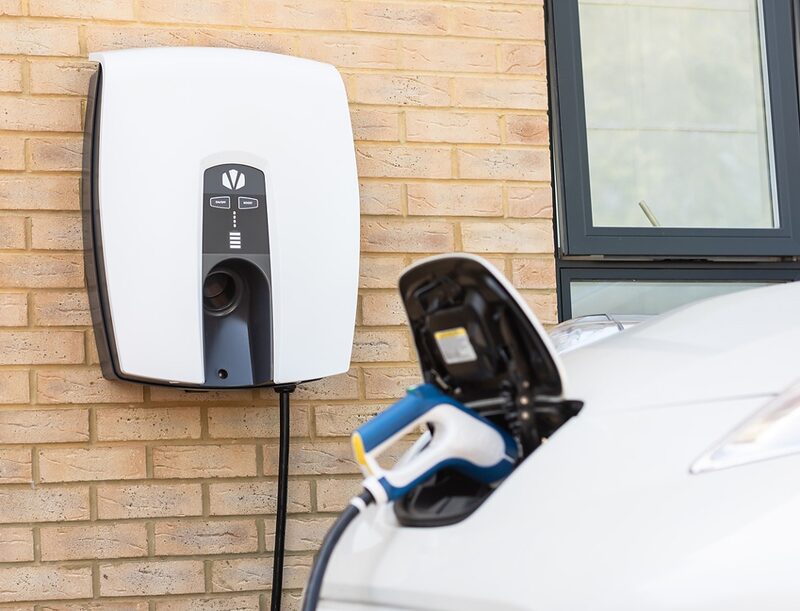
Indra Renewable Technologies designs and builds bidirectional chargers in Malvern, Worcestershire, and its V2G hardware has been the unit used in several of the UK's domestic vehicle-to-grid trials. The company says it developed the first domestic bidirectional V2G charger and was the first to demonstrate large-scale domestic V2G technology in a real-world project1. Its chargers are Nissan Approved and CHAdeMO certified, and the V2G unit can charge and discharge at up to 6 kW3.
The catch is availability. Indra states plainly that its V2G and V2H units are not commercially available and that only those on the trial, now closed to new applicants, can currently purchase one3. Independent guidance agrees that V2G is still not widely available and carries eligibility requirements such as a compatible car, charger and smart meter5. Indra also states that it does not support second-hand Indra bidirectional chargers and advises against purchasing them, and that it can only support units acquired via its official trial projects3.
For a household, that means the Indra bidirectional charger is currently a trial product rather than a purchasable one. The company's one-way chargers are a different matter: the Smart LUX is listed at £1,025 fully installed, carries a three-year warranty, and works with any new EV sold in the UK1. What follows covers the bidirectional hardware, its specifications, the savings evidence behind it, and the company that makes it.
Indra: the UK bidirectional charger maker in brief
Indra has been designing and manufacturing intelligent home-charging technology in the UK for more than a decade, and says it designs and builds every product in the UK1. Its design, research, engineering and manufacturing operations are based in Malvern, Worcestershire, and the company was founded in 20138. The registered address is Unit 1, Sentinel House, Sparrowhawk Close, Malvern, WR14 1GL10.
The company's place in the market rests on being early. It launched what it describes as the world's first domestic V2G charger in 2018, and its bidirectional hardware and software have been used in the first viable V2G trials4. In the OVO V2G trial, 320 bidirectional EV chargers were installed, manufactured in the UK by Indra Renewable Technologies and connected to Kaluza, an intelligent software platform that enables EV smart charging11. Indra's V2G chargers are described by the company as the first to provide grid flexibility in the UK, supporting grid balancing as more renewable energy comes onto the system8.
That record matters for a household weighing energy independence, because it establishes that the hardware works in live homes rather than only on a test bench. It does not establish that a householder can buy one. The distinction between a demonstrated product and a purchasable product runs through everything below.
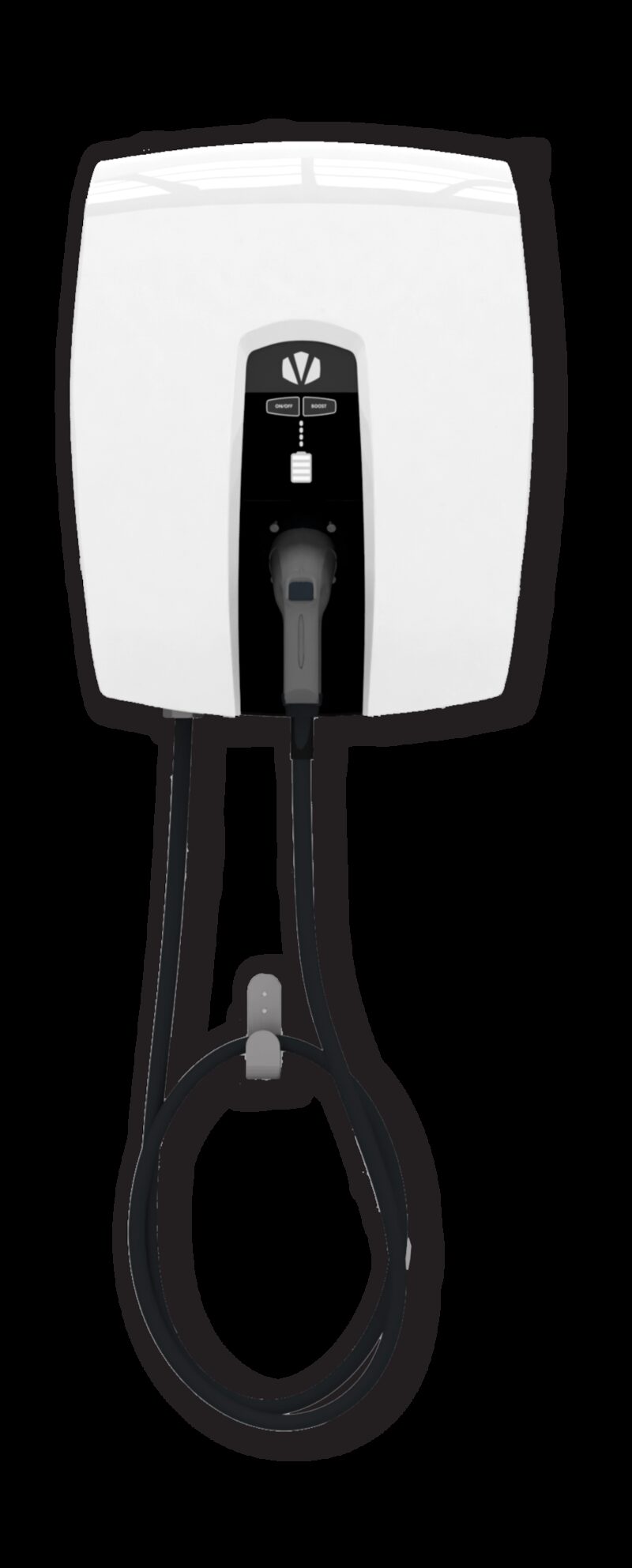
The Indra V2G charger: what the hardware does
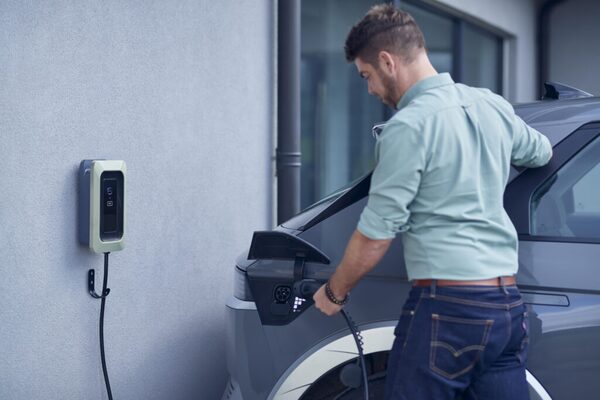
The unit is described by Indra as an intelligent charging unit that channels energy in both directions between the grid, the home or place of work, and the vehicle2. In practice that means the car battery can be charged when electricity is cheap or when solar generation is surplus, and discharged later to the house or the grid. Independent guidance describes the same principle: V2G enables EV batteries to charge, store and discharge electricity when required12.
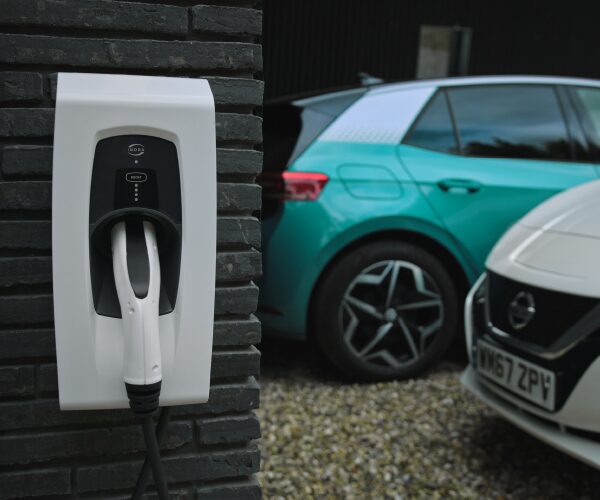
The connector is the constraint. Most V2G systems use CHAdeMO, though some models can also use CCS5. Indra's bidirectional chargers are Nissan Approved and CHAdeMO certified, which ties them to cars using that standard3. That is a narrower field than one-way charging, where Indra states that all its chargers will work with any new EV sold in the UK currently, regardless of make or model7. The company notes that some older cars with CHAdeMO connectors are unlikely to work with its one-way chargers, which shows how connector generations cut both ways6.
The charger also takes over-the-air updates, which Indra says add the latest features and improvements7. That is convenient while the product is supported and a dependency if it is not. For a fuller account of the standards involved, see bidirectional charging standards and bidirectional chargers.
Power, certifications and solar integration: the specifications that matter
The headline specification is modest by comparison with one-way charging. The Indra V2G charger can charge and discharge at a rate of up to 6 kW, and the V2H unit carries the same figure3. Indra's one-way Smart LUX and Smart PRO combine 7.4 kW home charging with app control, dynamic load management, solar compatibility and support for leading smart EV tariffs1. The bidirectional unit therefore moves energy more slowly in both directions than the one-way unit moves it in one.
Solar integration is built in. Indra states that the V2G charger will allow the EV battery to be charged with any surplus power generated by solar panels, and that its V2H charger is solar compatible, allowing those with domestic solar panels to incorporate and fully exploit that energy source3. On the one-way side, Indra chargers are solar compatible out of the box, with the hardware required to enable surplus-solar charging included as standard1.
| Specification | Indra V2G charger | Indra one-way (Smart LUX) |
|---|---|---|
| Power | Up to 6 kW charge and discharge3 | 7.4 kW charging1 |
| Certification | Nissan Approved, CHAdeMO certified3 | Works with any new UK EV6 |
| Solar | Surplus solar charging3 | Solar compatible out of the box1 |
| Status | Beta trials, trial-only purchase3 | On sale, £1,025 installed6 |
| Warranty | Not stated for the V2G unit | Three years1 |
One independent note on design philosophy is worth carrying: the focus of EV charging and V2G technology design is customer needs and cost, doing what one report calls "just enough" to meet grid-related regulations such as fault ride-through and high and low voltage withstand14. That is a description of the sector rather than of Indra specifically, but it explains why bidirectional hardware tends to arrive with the minimum regulatory compliance rather than a full domestic power-management feature set.
How much a V2G charger could save you: up to £200 a month in the right home
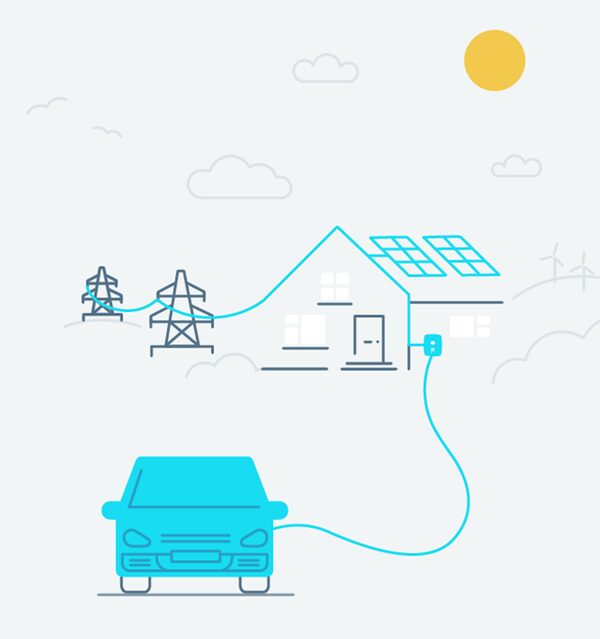
The savings case comes with a large caveat about who is doing the saving. Indra states that, based on early real-world findings for a household with high electricity usage, meaning two EVs, solar panels and a heat pump, savings of up to £200 per month are achievable3. The same company's earlier V2H announcement put average savings at up to £200 per month on a household energy bill, with higher energy users able to save more13. That is a specific household profile, not a typical one.
Independent modelling is more conservative and mostly older. Cenex calculated that V2G technology could save customers £340 compared with £120 when using one-way smart charging, and separately that V2G could make around £410 per year when compared with unmanaged charging15. The Project Sciurus insights report put the incremental value of V2G above smart charging at £220 per year17. Indra's own product page also cites an extra £269 a year with a smart EV tariff3.
At system level, the numbers are larger but not household figures. V2G could save an additional £40 to £90 million annually in Great Britain by 2030, additional to smart charging savings, and V2G operation could generate a net saving of between £40 million and £90 million per annum depending on limits to V2G energy throughput18. The documents agree on the direction and disagree on the scale, which is what would be expected when one figure is a modelled national total and another is a single home's bill.
Where to buy one: trial-only availability and the second-hand warning
There is no retail route. Indra states that its V2G unit is not commercially available and that only those on the trial, now closed to new applicants, can currently purchase one, and the V2H page carries the same wording3. Independent guidance from 2022 was blunter still: at that point a V2G charger could only be obtained through an approved trial19. Trials typically involve online registration, eligibility verification and coordination with installers and energy suppliers, and may require specific EV models and compatible chargers with a selection process5.
The second-hand market is the trap. Indra states that it does not support second-hand Indra bidirectional chargers and advises against purchasing them, and that it can only support units which have been acquired via Indra's official trial projects3. A buyer who acquires one of the trial units on the used market therefore holds hardware the maker will not stand behind.
There is also a grid connection condition. Chargers must be type tested to EREC G98 specifications to be eligible for connect and notify, which is the route by which a domestic installation is notified to the distribution network operator20. For the wider picture on equipment and costs, see bidirectional chargers and grid connection rules for bidirectional charging.
Project Sciurus and the V2X Innovation Programme: how Indra's bidirectional tech developed
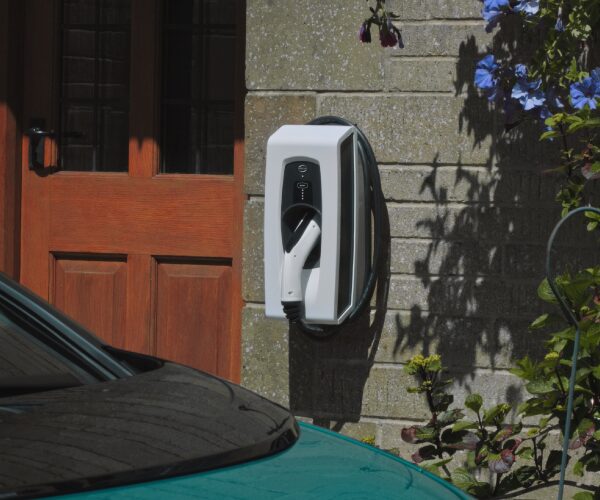
Indra's bidirectional technology was built through publicly backed trials. The company says it was the first to successfully demonstrate large-scale domestic vehicle-to-grid technology in the ground-breaking Project Sciurus V2G trial2. Project Sciurus set out to develop, build and install 1,000 domestic V2G units17. Indra was also the first company to successfully demonstrate large-scale domestic V2G technology in a real-world project, and announced plans for what it described as the world's largest V2H technology trial13.
Government funding followed. Indra was awarded government-backed funding from the V2X Innovation Programme, and said it would further develop its bidirectional charging technology as part of the Next Generation V2X Power Module project, making it more efficient, powerful and cost-effective9. Through Project INFLEXION, described as a world-first trial, Indra said it would spearhead development of V2X technology with CCS charging compatibility9. An independent report from January 2021 noted Indra working on building a CCS V2G unit through the CCS V2X project16.
The most recent development is a platform claim rather than a hardware one. In February 2026 Indra said it had successfully transitioned V2G trial participants onto a fully integrated, production-ready V2G platform, and that it had proven interoperability between vehicles, chargers and energy platforms in live customer environments without locking users into proprietary or single-provider ecosystems21. The same announcement said Indra is in the final stages of developing a bidirectional AC charger21. For the trial itself, see Project Sciurus, and for the funding landscape, UK innovation funding behind home energy technology.
The company behind the charger: Malvern manufacturing, ownership and investment
Indra Renewable Technologies Limited designs, manufactures and supports V2G chargers from its headquarters in Malvern, Worcestershire, and the same wording appears on its V2H page3. Its design, research and development, engineering and manufacturing operations are all based there8. The company was founded in 20138.
Ownership is shared. In January 2022 Indra announced that Clean Growth Fund and Gulf would each become shareholders in Indra, alongside OVO Group, which had provided seed capital and technical support8. That mix, an energy supplier plus two investment parties, explains the trial-heavy route to market: the hardware was developed inside supplier-led projects rather than through retail distribution.
The company's award record includes the 2025 E-Mobility Award and the 2024 EVIE Special Recognition Award7. Awards are not a warranty, but they indicate the technology has been assessed by people outside the company. For a household, the relevant point is that Indra is an established UK manufacturer with a decade of trading and named institutional shareholders, not a startup that has appeared for a single trial. The risk here is product availability, not company existence. For how that risk compares across the sector, see energy technology company failures and buying pre-production and crowdfunded energy products.
Owning an Indra charger: installation, warranty and support
For the one-way chargers that can actually be bought, the terms are clear. Indra home chargers come with a three-year product warranty, and the company's site states a 3-year warranty1. The warranty requires the owner to adopt the product within the Indra app10. Indra does not guarantee compatibility with all EV models, charging according to all schedules, or the availability or compatibility of future software updates with older products10.
Installation now runs through the company itself. Indra states that it installs its chargers directly with no third-party installers needed, offering what it describes as a seamless, professional service from the team who built the charger22. Earlier documentation described installation by a qualified electrician from one of its carefully selected installation partners, and noted that a certified electrician must manage the installation because the charger is wired into the house's electrical supply23. Standard installation requires a suitable connection where the charger can be hardwired, a parking space nearby and an internet connection7. Work outside the standard scope includes more than 10 metres of cabling between the electricity supply and the charger, installation on a detached garage, carport or mounting post, a complex cable route through a loft or beneath floors, a consumer unit upgrade, earthing work, and gas and water bonding installation or upgrading23.
After purchase, Indra states that the only ongoing charges are for the use of power to the EV7. Support is by email at support@indra.co.uk, and the company's phone number is 01684 770 631, staffed Monday to Thursday 8:30 to 16:30 and Friday 8:00 to 16:001. After an order, a guided installation survey is sent to the phone by SMS, asking for information and photographs of the property and the proposed charger location23.
What the charger does for energy independence, and what it does not
The independence case for a bidirectional charger is real but conditional. A car battery is typically several times the size of a home battery, and V2G lets that capacity earn money and shift household demand away from peak prices. Indra's own figures put the best case at up to £200 per month for a high-usage home with two EVs, solar and a heat pump3. Independent modelling puts the incremental value above smart charging at £220 per year, and V2G against unmanaged charging at around £410 per year17.
The dependencies are equally clear. The household remains connected to the grid and to an electricity supplier, because the value comes from trading energy across time rather than from disconnection. The charger is tied to a CHAdeMO-equipped car, which limits which vehicles can take part3. It is tied to a manufacturer that supports the unit, and Indra will not support second-hand units at all3. It is tied to a trial or a future commercial launch that has not yet happened3.
Backup power is not part of the offer. Indra states that, in accordance with technical regulations, the charger will disconnect in a power outage and will not be capable of supplying power to the house3. Vehicle-to-home systems generally can provide backup power during outages and support off-grid setups, but that is limited to certain EV models and compatible chargers5. Home batteries are not universally suitable for power cuts either, and the Climate Change Committee notes that further innovation in home battery technology, V2X and solar can provide households with additional backup options24. For the alternatives, see vehicle-to-home and vehicle-to-load and v2g vs home battery.
Sources25 cited
- Indra homepage, Indra
- Indra innovation, Indra, 2026-09-17
- Indra V2G, Indra, 2024-11-18
- Indra V2H, Indra, 2025-01-17
- Vehicle-to-grid charging guide, Uswitch, 2025-07-02
- Indra Smart LUX, Indra, 2026-09-07
- Book your home survey, Indra, 2026-09-07
- Indra secures Clean Growth Fund investment, Indra, 2022-01-05
- Indra wins government funding to develop pioneering V2X charging technology, Indra, 2023-01-17
- Indra warranty, Indra, 2026-09-17
- Vehicle-to-grid technology, OVO Energy, 2023-11-30
- Vehicle-to-grid, Cenex, 2022-12-09
- Indra announces plans for the world's largest V2H technology trial, Indra, 2022-04-29
- An introduction to vehicle-to-grid charging for electric vehicles, Cenex, 2022-02-21
- World's largest domestic vehicle-to-grid trial reveals customers could recover the majority of their household energy costs, Cenex, 2021-06-03
- Commercial viability of V2G, Cenex, 2021-01
- Project Sciurus trial insights report, Cenex, 2021-05
- V2G Britain, Cenex
- Store and save, Centre for Alternative Technology, 2022-10-27
- Electric vehicles, Electricity North West, 2026-09-19
- Ready when OEMs are: Indra activates end-to-end vehicle-to-grid, Indra, 2026-02-03
- Find a local installer, Indra, 2026-09-17
- Installation FAQs, Indra, 2026-09-17
- Well-adapted energy system, Climate Change Committee, 2026-09-19
- Home EV chargers, Carwow, 2026-01-09
 Indra smart EV chargersCan an Indra charger use your solar panels to cut costs, and does it work with cheap overnight tariffs like Intelligent Octopus Go?
 Indra Smart PROThe Indra Smart PRO is a 7.4kW British-built smart charger with a 5-year warranty, solar charging and a £1,149 starting installation price.