In this guide
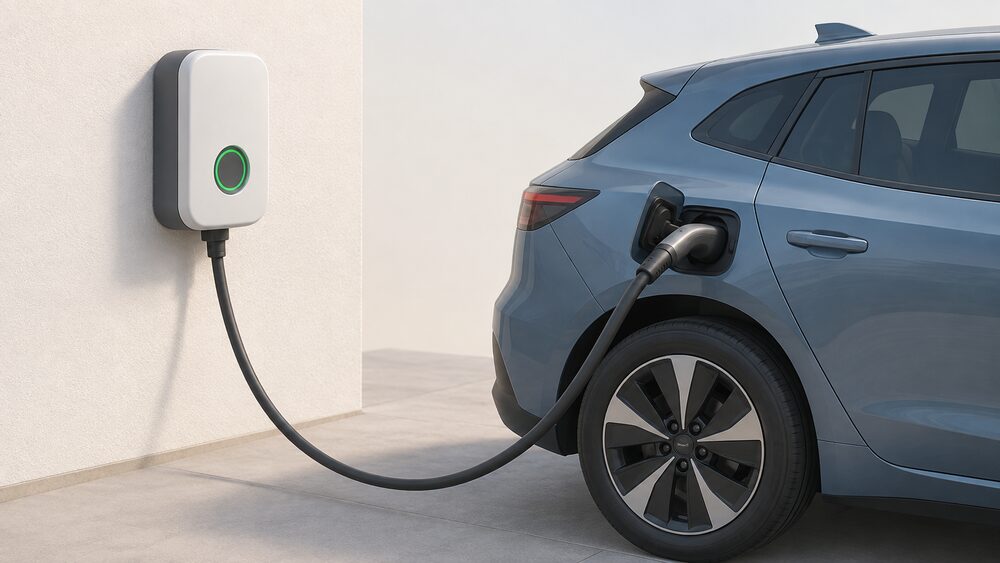
A bidirectional charger is a charge point that lets an electric vehicle either draw power or supply it back to the home or the grid1. The hardware is the easy part to describe and the hard part to buy: bidirectional charging is being trialled in some places in the UK but is not widely available1, and the protocol that actually works for exporting to the public grid still, in practice, means the CHAdeMO connector, which in the UK is limited to a few EV brands, mostly Japanese or Korean in origin2.
On price, there is no reliable published UK retail figure for a domestic bidirectional unit: installation is quoted by installers, usually as part of a supplier or trial bundle, and the equipment is not a generally stocked consumer product. What the evidence does offer is direction of travel. Cenex predicted vehicle-to-grid hardware prices would fall below the £3,000 to £5,000 level by 2025, and charger cost to fall to £1,000 by 20303. Separate modelling for the V2GB study projected a price premium over an ordinary smart charger of roughly £650 to £1,150 in 2030 for a 7kW vehicle-to-grid unit4.
Against that, the earnings are modest and highly dependent on behaviour. Average UK revenue generation from vehicle-to-grid has been estimated at £150 to £200 per year3, while a driver plugged in 75 per cent of the time was modelled as capturing around £436 a year from a 7kW charger, above what smart charging alone would return4.
Power that flows both ways, not just into the car
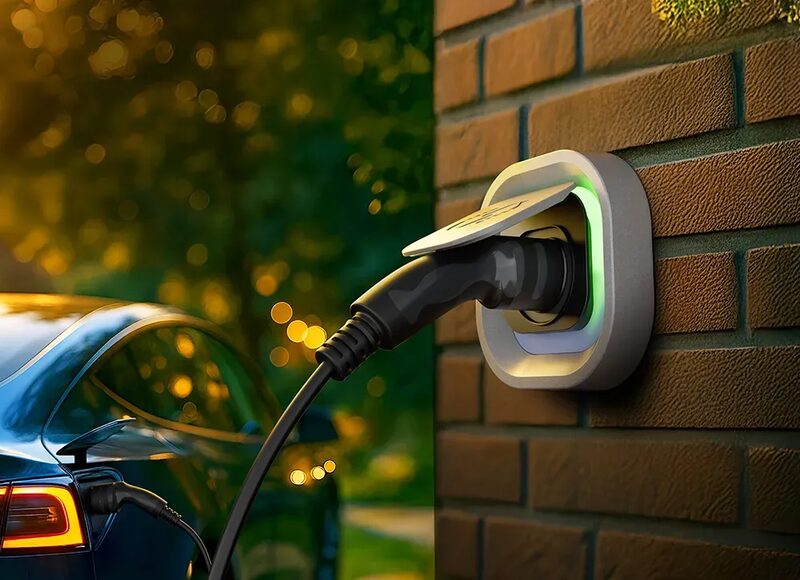
An ordinary charge point is a controlled tap. A bidirectional charge point is a valve with a pump behind it. Vehicle-to-grid technology allows an EV charger not only to charge a vehicle but also to take energy from it5, providing bi-directional flows of energy and data between a plug-in electric vehicle and the grid, so that EV batteries can charge, store and discharge electricity when prompted6.
The electrical consequence matters as much as the energy one. A bidirectional protective device is defined as one where a power supply may be connected to either set of connection terminals, and power flow may be in either direction7. That distinction is now embedded in the wiring rules: Amendment 4 to BS 7671:2018, published on 15 April 2026, sets out requirements relating to system design, power conversion equipment, bidirectional or hybrid inverters, and the suitability of protective devices for two-way energy flow8. The same logic appears elsewhere in domestic electrics, where at least a Type A bidirectional RCD is recommended for circuits intended for use with plug-in solar panels, and homes with Type AC RCDs are advised not to use such systems without upgrading first9.
For a household, this is the practical point behind the shopping question. A bidirectional charger is not a smart charger with a software switch flipped. It is an inverter on the wall, subject to the same design scrutiny as a battery system, and the installation has to be assessed as a two-way circuit rather than a load.
V2G, V2H, V2B and V2L: the family of vehicle-to-everything
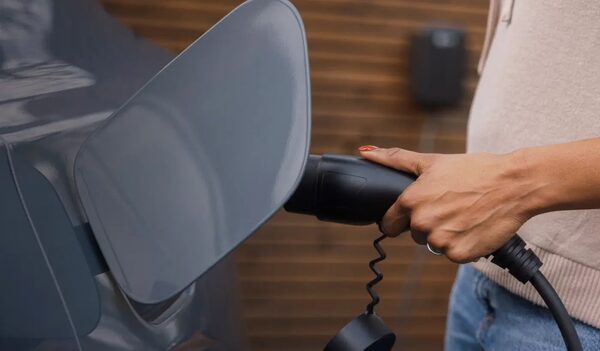
Vehicle-to-everything is the umbrella. It allows electric vehicles to operate bidirectionally, charging from the electricity grid but also discharging to the grid, building or home as needed10. The variants differ only in where the exported power lands.
| Term | Where the power goes | Source |
|---|---|---|
| V2G, vehicle-to-grid | Back into the public electricity network11 | Energy stored in EVs fed back into the electricity network12 |
| V2H, vehicle-to-home | Into the building the charger is connected to13 | Uswitch glossary13 |
| V2B, vehicle-to-building | A building rather than a dwelling10 | CCC framework10 |
| Backup | Powering the home during an outage14 | Uswitch solar and EV guide14 |
In equipment terms the three are the same box. Vehicle-to-grid chargers such as the Wallbox Quasar 1 and Indra units enable bidirectional energy flow, allowing the EV to both charge and discharge to the grid15. What separates grid export from home supply is the commercial and metering arrangement behind it, not a different appliance. Bidirectional charging also provides backup power during outages14, which is the function with the clearest independence value and the one least dependent on a supplier's tariff design.
Deeper treatment of each mode sits on the vehicle-to-home and vehicle-to-load page, and the split between exporting and self-supply is compared in vehicle-to-grid vs vehicle-to-home.
What a working installation actually requires
Three conditions have to be met: an electric car, charging infrastructure that supports bidirectional charging, and a uniform software language between them16. Official guidance puts it more briefly: a vehicle-to-grid enabled chargepoint is able to draw power to charge the vehicle and export electricity from the car battery back to the home or the grid, and this requires a bi-directional chargepoint and for the car to be V2G compatible17. Both the EV and the charger must be bidirectional-compatible18.
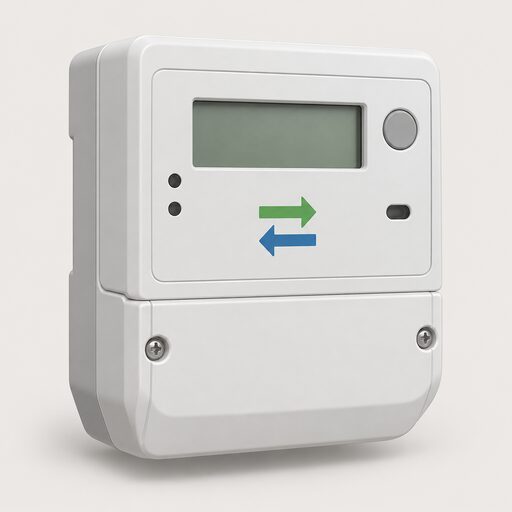
For a tariff, a smart meter is also needed alongside the compatible charger and car15.
The physical constraint is ordinary but decisive. Home charge points need a driveway or garage to install one19, which excludes households reliant on on-street parking, a large group given there are 41,054 public EV chargers in the UK counted under on-street use as of August 202620. None of those are bidirectional domestic units.
- Car: must support bidirectional discharge, not merely smart charging17
- Charger: bidirectional hardware, with protective devices rated for two-way flow7
- Software: a common language between vehicle and charge point16
- Meter: a smart meter for a vehicle-to-grid tariff15
- Site: off-street parking, a driveway or garage19
Certification is worth checking. BSI Kitemark testing and certification covers charge points both for home and commercial use21. Domestic smart charge points sold for cars or vans fall under the Electric Vehicles (Smart Charge Points) Regulations 2021, which exclude non-smart cables, public charge points and rapid charge points from scope22. Plug-in hybrids can charge bidirectionally, but the benefits are slight because they have only a small battery16.
Cost today and where prices are heading
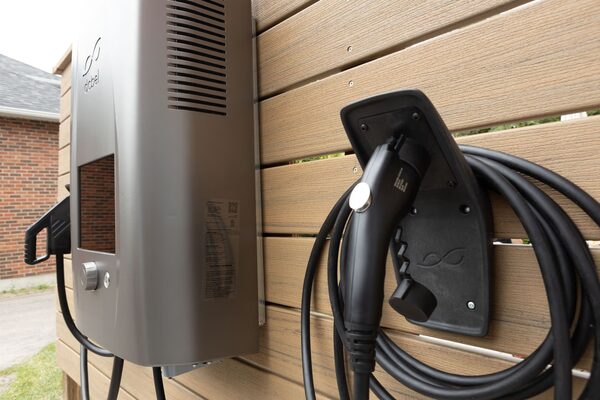
There is no settled consumer price for a domestic bidirectional charger in the UK, and any figure quoted for a full installation is installer-quoted and scheme-specific. The published evidence is forecast rather than retail. Cenex predicted vehicle-to-grid hardware prices to fall below the £3,000 to £5,000 level by 2025, and charger cost to fall to £1,000 by 20303. The V2GB study reconciled top-down learning-rate projections with bottom-up component-based ones and both pointed to a premium of about £650 to £1,150 in 2030 for a 7kW vehicle-to-grid charger over a conventional one4.
| Cost or forecast | Figure | Period | Source |
|---|---|---|---|
| Hardware price forecast | below £3,000 to £5,000 | by 2025 | Cenex3 |
| Charger cost forecast | £1,000 | by 2030 | Cenex3 |
| Premium over smart charger, 7kW | about £650 to £1,150 | 2030 | V2GB4 |
| Electricity standing charge cap | 60.97p per day | read 20 Sep 2026 | independent guidance23 |
The running-cost backdrop is not helping the payback arithmetic. Prices to charge on the public network continued to increase during 2025, and some charging prices are expected to continue increasing through to the start of 202624. That cuts both ways for a bidirectional household: expensive public charging strengthens the case for shifting as much energy as possible through a home charger, but it also raises the cost of the energy the car stores. The daily electricity standing charge cap stood at 60.97p on 20 September 202623, a fixed cost that no amount of exporting removes. Broader context on early-adopter pricing sits on the cost of early-adopter energy technology page.
What the earnings and savings look like
Vehicle-to-grid allows electric vehicles not only to draw power from the grid to charge their batteries but also to send electricity back when needed, generating cash for the EV owner25. Average UK revenue generation from vehicle-to-grid is estimated at £150 to £200 per year3. That is the honest central figure for a household.
The spread around it is driven almost entirely by plug-in behaviour. A 7kW vehicle-to-grid charger used by a high plug-in rate driver, plugged in 75 per cent of the time, was modelled as capable of annual revenues of around £436 above smart charging, four times that achieved at the average plug-in rate4. A car that is away from its charger, or plugged in only overnight for a few hours, cannot be dispatched and cannot earn.
System-level gains are larger than household ones. Vehicle-to-grid could save an additional £40 to £90 million annually in Great Britain by 2030 on top of smart charging savings26, help save £200 million of cumulative distribution network investment by 203027, and defer network upgrades of £5 billion, equivalent to £180 per household3. Reduced renewable curtailment could amount to a saving of 6 MtCO2e per year3. If half of 2030's electric vehicles were vehicle-to-grid enabled, that would open up 22 TWh of flexible EV discharging capacity per year11.
Commercial evidence points the same way: the E-Flex project found that vehicle-to-grid chargers could reduce costs for commercial fleet operators on dual electricity tariffs28, and exploiting the full capability of smart EV charging demand-side response and vehicle-to-grid can support decarbonisation targets while reducing operating costs and enhancing system resilience29. A domestic trial reported that customers could recover the majority of their household energy costs, with drivers given the option to discharge and sell surplus electricity from their vehicle batteries back to the grid6. Tariff mechanics are covered in vehicle-to-grid earnings and the tariffs behind them.
Battery health: does cycling the car battery cost more than it earns
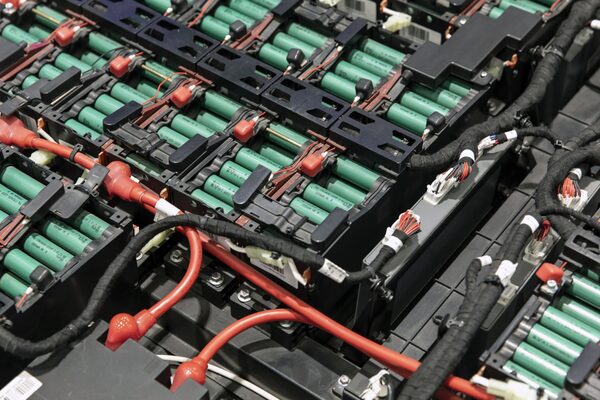
This is the question that decides whether the economics hold. There are concerns that frequent charging and discharging could shorten EV battery life, but the impact should be relatively minimal within recommended guidelines15.
Modelling has gone further and suggested a net benefit is possible where the charger manages the battery well. Capacity fade can be reduced by 9.1 per cent over a year through battery management, which could extend useable battery life by 10 per cent and give an annual depreciation saving of £2303. That £230 figure, if realised, is larger than the £150 to £200 central revenue estimate3, which reframes vehicle-to-grid as a battery-management proposition as much as an income one.
Plug-in hybrids illustrate the limit from the other direction: they can charge bidirectionally, but the benefit is slight because the battery is small16. The usable energy, not the connector, sets the ceiling.
The CHAdeMO bottleneck and UK availability
The single biggest practical restriction is protocol. Only CHAdeMO currently has a valid protocol for vehicle-to-grid charging in order to feed electricity into the public grid16. Most vehicle-to-grid systems use CHAdeMO, though some models can also use CCS15.
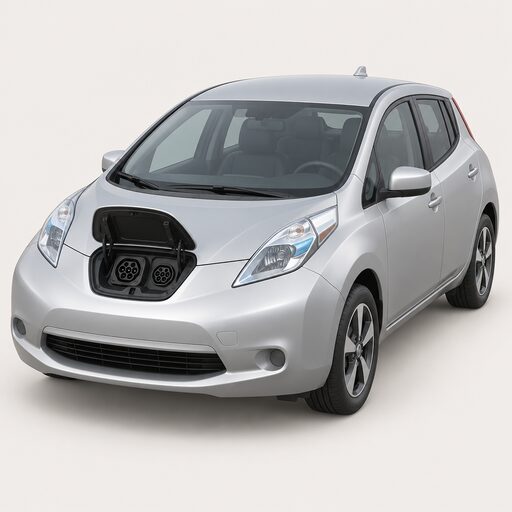
CHAdeMO is in retreat elsewhere in the charging world. In the UK it is limited to a few EV brands, mostly Japanese or Korean in origin2, and there are few CHAdeMO chargers powered at more than 100kW in the UK30. Adapters between CCS and CHAdeMO do not exist31. Public networks still list it: council charge points include CHAdeMO at 50kW, CCS at 50kW and Type 2 at 22kW32. The Nissan Leaf, whose rapid charging uses a CHAdeMO connector tethered to the charging unit33, has been able to charge bidirectionally for several years and is described as the pioneer of the technology16.
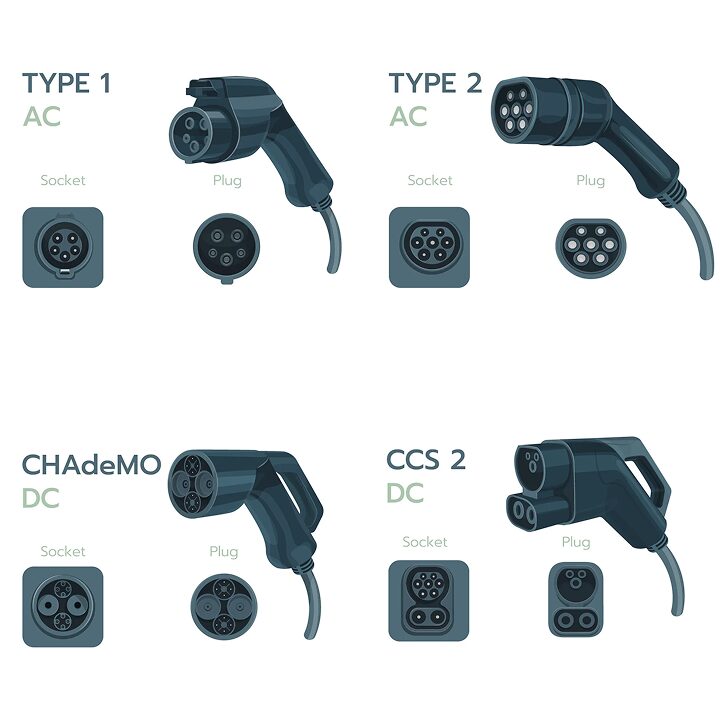
Meanwhile almost all electric cars come from the manufacturer with a cable carrying a charger-side Type 2 connector [7 note: see connector guidance], and Type 2 is by far the most common public standard. The mismatch between the dominant connector and the only working export protocol is why a household with a modern CCS car may find bidirectional charging unavailable despite the hardware existing. The standards picture is set out on the bidirectional charging standards page, and model-by-model compatibility on which cars support bidirectional charging in the UK.
Vehicle availability is improving generally, with more than a hundred plug-in models now on sale in the UK, though infrastructure lags at one standard charger for every 35 plug-in cars on the road34. Bidirectional-capable models remain a subset of that list, published as at May 202516.
Trials, pilots and who is building the market
Vehicle-to-grid has reached the UK household mainly through projects rather than shops. UK Power Networks has set out a UK-first approach to fast-track the technology, describing vehicle-to-grid as allowing electric cars to do more than just charge by sending electricity back to the grid when needed35. Electricity North West describes vehicle-to-grid as enabling energy stored in EVs to be fed back into the electricity network12. The V2GB feasibility study formed part of the Vehicle-to-Grid competition4, and the world's largest domestic vehicle-to-grid trial reported that customers could recover the majority of their household energy costs6.
Manufacturers are moving too, though not always to a UK timetable. Toyota Motor Europe plans to expand its energy collaborations to additional countries and introduce more advanced solutions including vehicle-to-grid integration, allowing EVs not only to draw energy from the grid but also to return it when needed36.
For households, the consequence is that participation usually means joining a scheme rather than buying a product, with hardware, tariff and vehicle bundled together. That is examined in taking part in a home energy technology trial and in the record of closed home energy technology trials. Grant routes for chargepoints exist in adjacent areas: for residential landlords, the process is to contact an authorised installer for a quote, then create an account and apply with details of the property and vehicle37.
What a bidirectional charger does, and does not, do for independence

The gain is real and specific. A car battery is typically far larger than a domestic storage battery, and a bidirectional charger turns it into a household asset: releasing power back through the charger either for use in the building it is connected to or into the grid13, and providing backup power during outages14. Paired with generation, it stores what the roof makes: storing output from a 4 kWp domestic solar system with an EV battery over a weekend with six hours of sun per day could save over 600 kgCO2e per year3. Solar itself requires only daylight, not direct sunlight38.
The dependencies that remain are substantial and should be stated as plainly:
- The vehicle. No compatible car, no system, and compatibility currently narrows to CHAdeMO for grid export16.
- The supplier. Earnings come through a tariff, which requires a smart meter15 and ties the household to a specific commercial arrangement.
- The grid. Export income depends on network and market signals; the car is a flexibility asset for the system as much as a battery for the home6.
- Availability. The technology is trialled in some places but is not widely available1.
- The car being there. Revenue scales with plug-in rate: 75 per cent plug-in was modelled at around £436 a year, four times the average rate4.
A bidirectional charger does not remove the daily standing charge of 60.97p23, and it cannot serve a household without off-street parking19. What it can do is convert a vehicle that would otherwise sit idle into stored energy the home can call on, at a hardware premium that is forecast to fall from the £3,000 to £5,000 range towards £1,000 by 20303. Whether that is worth doing today rests on the vehicle a household already owns. The comparison with a fixed home battery is drawn out on the vehicle-to-grid or a home battery page, and the wider technology context on the emerging home energy technology pillar.
Sources38 cited
- Battery storage advice, Energy Saving Trust, 2026-08-19
- Guide to electric vehicle infrastructure, BEAMA, 2024-09
- More than money: the true power of V2G, Cenex, 2026-09-17
- V2GB: Vehicle to Grid Britain, Cenex, 2026-09-17
- Vehicle-to-grid best practice guide, Energy Saving Trust, 2026-05-05
- World's largest domestic V2G trial results, Cenex, 2021-06-03
- BS 7671:2018 amendment consultation, Electrical Safety First, 2026-09-19
- Amendment 4:2026 to BS 7671:2018 published, IET, 2026-04-15
- Plug-in solar panels safety advice, Electrical Safety First, 2026-09-17
- Well-adapted energy system monitoring framework, Climate Change Committee, 2026-09-19
- Case study: UK hydrogen heated homes of the future, Ofgem
- Storage and renewable energy, Electricity North West, 2026-09-19
- EV glossary, Uswitch, 2024-11-26
- Integrating solar panels with EV charging, Uswitch, 2025-07-02
- Vehicle-to-grid charging guide, Uswitch, 2025-07-02
- What is bidirectional charging, Carwow, 2025-05-30
- Register energy devices in homes or small businesses, GOV.UK, 2021-03-31
- Battery storage advice, Centre for Sustainable Energy, 2025-10
- Charging electric vehicles, Energy Saving Trust, 2026-04-23
- EV charging statistics, Zapmap, 2026-08
- Kitemark certification for EV charging, BSI, 2026-09-17
- Electric Vehicles (Smart Charge Points) Regulations 2021, legislation.gov.uk, 2021-12-15
- Guide to standing charge energy tariffs, Energy Helpline, 2026-09-20
- Electric car charging costs, Zapmap, 2026-09-04
- Low carbon technology strategy, Energy Networks Association, 2026-09-17
- Vehicle to Grid Britain report, Energy Systems Catapult
- V2G Britain case study, Cenex
- Four pioneering V2G projects, Cenex, 2023-03-22
- Resilient electric vehicle charging, Energy Systems Catapult, 2022-02-21
- EV connector types, Zapmap, 2026-05-20
- Electric car charging guide, Carwow, 2025-07-16
- Electric vehicle charging, Isle of Anglesey County Council, 2026-09-20
- Nissan Leaf charging guide, Zapmap, 2026
- More than a hundred EV models now available, SMMT, 2024-05-23
- UK-first approach to fast-track vehicle-to-grid technology, UK Power Networks, 2026-03-12
- Toyota to expand EV charging ecosystem across the UK, SMMT, 2025-12-04
- Chargepoint and infrastructure grants for landlords, Find a Grant, 2026-09-18
- Generating your own energy: solar electricity, Welsh Government, 2026-09-17
 Bidirectional Charging ExplainedCan your electric car actually earn you money by sending power back to the grid?
 V2G and V2H ChargingCan your electric car earn money by sending power back to your home or the grid?
 Grid Connection Rules for V2GCan your charger send power back to the grid?
 Bidirectional Charging StandardsDoes your electric car and charger actually support sending power back to your home or the grid?
 Cars That Support BidirectionalWhich electric cars in the UK can actually send power back to your home or the grid, and which ones only promise it for later?
 The Full EV Charging GuideCharging an electric car at home usually means a wallbox, but do you need one, and what will it cost to fit and run?