
In this guide
The cost of new energy technology in a home is not one price but three: the hardware, the installation, and the running cost over the years that follow. The first generation of any product carries all three at their highest, and the household that buys first absorbs the difference. The clearest long-run evidence of what happens next is global rather than domestic: the Climate Change Committee records that the global average cost for new electricity generation has fallen by 88% for solar PV and 60% for wind since 20101.
For a household today, the premium shows up in specific places. Heat pump installation costs are higher than gas boilers, in part due to the need for additional retrofitting2. Battery storage is estimated at up to £10,000 depending on size, with a typical 5kWh system around £4,6003. And the running cost, not the purchase price, is where most of the money sits: upfront, running and installation cost make up approximately 15-20%, 55-65% and 20% respectively of the total cost of a heat pump over its lifetime4.
That split matters for anyone weighing whether to buy early. A product that is cheap to install but expensive to run is a different proposition from one that is expensive to install and cheap to run, and first-generation equipment often manages to be both expensive to install and uncertain to run. The sections below set out what the published figures actually say, where they come from, and what remains unresolved.
What early adopter means for a household, and who pays first
An early adopter, in the energy market's own segmentation, is not simply someone who buys a new gadget. Ofgem's archetype work identifies a household type in which 99% are early adopters, while 60% have never switched energy tariff7. That combination is the defining feature of the group: willing to take on new equipment, but not necessarily active in the market that would reward them for it.
The financial context is tighter than the technology enthusiasm suggests. Domestic energy costs form 6% of total household expenditure on average, but 10% for the lowest income decile6. A household spending a tenth of its income on energy has the least room to absorb a first-generation premium and the most to gain from anything that reduces a bill, which is precisely the tension that early adoption creates.
Who pays first is therefore not a single type of household. It is the one that buys at launch, before installer networks are deep, before spares are stocked, and before the running cost is known from field data rather than modelling. The premium is not a markup anyone sets deliberately; it is the sum of small inefficiencies that disappear as volume rises.
The price premium: why new storage and heating tech costs more at launch
The premium on first-generation equipment comes from three sources, and only one of them is the hardware itself.
The first is retrofitting. Heat pump installation costs are higher than gas boilers, in part due to the need for additional retrofitting2. A gas boiler swap is largely a like-for-like replacement; a heat pump often requires radiator changes, pipework work and sometimes insulation, none of which is optional if the system is to perform. That work is labour, and labour does not fall in price the way manufactured components do.
The second is the running cost, which is a policy artefact as much as a technical one. In Scotland, the Heat in Buildings progress report notes that savings are constrained by the higher cost of electricity relative to gas9. The same constraint applies across Great Britain. A heat pump can be more efficient than a boiler and still cost more to run, because the price of the electricity it uses is set higher relative to gas than the efficiency gap compensates for.
The third is the cost of getting the standards right. The government's options assessment for raising minimum standards for heat pumps puts the policy cost at -£1,366m associated with upgrading heat pumps to meet new efficiency standards5. That figure is a net policy cost across the programme, not a household price, but it indicates the scale of the transition being priced in.
"Heat pump installation costs are higher than gas boilers, in part due to the need for additional retrofitting."

Payback times: what the analysis found for PV and heat pump running costs
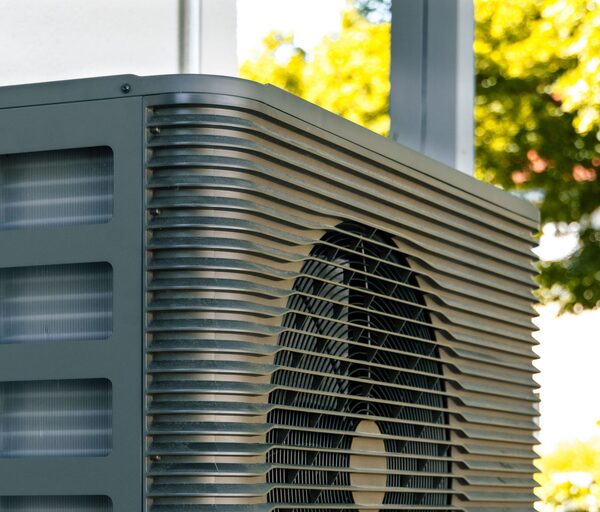
Payback is where the early-adopter calculation either works or does not, and the published figures are more encouraging than the headline prices suggest, provided the household is the right one.
For a dual fuel household buying an air source heat pump after tier 2 regulations, the expectation is to pay back the increased cost of the unit within six years5. That is a specific case, not a general promise, and it depends on the regulations being in force and the household having both fuels to compare.
The lifetime cost structure explains why payback is dominated by running cost rather than purchase price. Upfront, running and installation cost make up approximately 15-20%, 55-65% and 20% respectively of the total cost of a heat pump over its lifetime4. More than half the money is spent after installation, which means a cheap installation with poor running performance is a worse deal than an expensive one that runs well.
There is a counter-case that has to be stated plainly. If your home is not well-insulated, installing a heat pump may increase your energy bills instead, because electricity is more expensive than gas10. That is not a reason to avoid the technology; it is a statement that the technology's economics depend on the building it is installed in.
Research on able-to-pay households found heat pumps and solar PV considered as potential measures to install within 3-5 years11. That timescale is a useful reality check: for many households the decision is not this year or never, but a staged plan in which insulation comes first and generation or heating follows.
| Measure | Cost basis | Source |
|---|---|---|
| Battery storage | Up to £10,000 depending on size; typical 5kWh around £4,600 | 3 |
| Heat pump lifetime split | 15-20% upfront, 55-65% running, 20% installation | 4 |
| Heat pump payback | Within six years, dual fuel household after tier 2 regulations | 5 |
| Policy cost of raising heat pump standards | -£1,366m | 5 |
Subscriptions and heat-as-a-service: paying monthly instead of buying the kit
Heat-as-a-Service is a subscription model proposed as a way to make heat pumps more affordable12. The appeal is obvious: it converts a large upfront capital cost into a predictable monthly payment, and it places the maintenance and performance risk with the provider rather than the household.
What it does not change is the running cost of the heat itself. Since running cost is 55-65% of the lifetime total4, a subscription that covers the hardware and installation but leaves the household paying for electricity has moved the smaller part of the bill, not the larger one. The subscription is a financing structure, not an efficiency measure.
Which? reports Heat-as-a-Service as one of the reasons homeowners give for not buying a heat pump12. That is a notable finding: the model is presented as a way to make heat pumps more affordable, and it also appears in the evidence on why people hold back. The likely explanation is that a subscription adds a long-term commitment to a technology the household is not yet sure about, which is a different kind of risk from a one-off purchase.
For a household weighing independence, the distinction matters. Buying equipment outright leaves the household owning an asset that continues to work after the payment ends. A subscription leaves the household dependent on a provider for as long as the agreement runs, and the terms of that agreement, not the physics of the heat pump, determine what happens if the provider changes hands or the service is withdrawn.
Sodium-ion home batteries: the newest storage option and what it changes

Sodium-ion is the most recent chemistry to reach the domestic storage market, and its significance for early adopters is about supply rather than a demonstrated price.
The Energy Saving Trust estimate for battery storage is up to £10,000 depending on size, with a typical 5kWh system around £4,6003. That figure is not split by cell chemistry, so there is no published UK price that separates sodium-ion from lithium-ion for a home battery. Anyone quoting a sodium-ion discount is going beyond what the published estimates support.
What sodium-ion does change is the material question. Sodium is abundant and not concentrated in the same supply chains as lithium, which matters for a household concerned about where its equipment comes from and whether spares will be available in ten years. The technology is at an earlier stage of deployment than lithium-ion, which cuts both ways: less field data on degradation, but also a supply chain being built rather than inherited.
The wider direction of travel is toward more household options rather than fewer. At household level, further innovation in home battery technology, vehicle-to-everything (V2X), and solar can provide households with additional backup options during power outages13. Storage is also appearing in grant-funded schemes: solar photovoltaic (PV) systems and electrical energy (battery) storage will be offered to households, subject to the Home Assessment, under the Warm Healthy Homes Fund14.
For a household in Northern Ireland, that last point is directly relevant, since the Warm Healthy Homes Fund is a Northern Ireland consultation. For households elsewhere, the equivalent support comes through different routes, covered below.
Vehicle-to-Grid: the extra hardware a household takes on
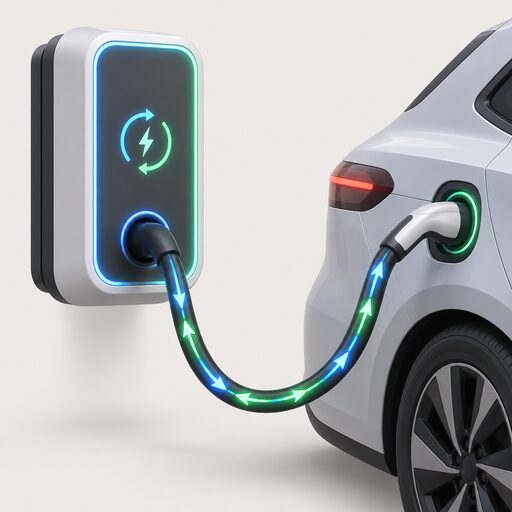
Vehicle-to-Grid is the clearest example of a technology where the household's cost is not the headline product. The car is the visible purchase; the equipment and connection behind it are where the early-adopter premium sits.
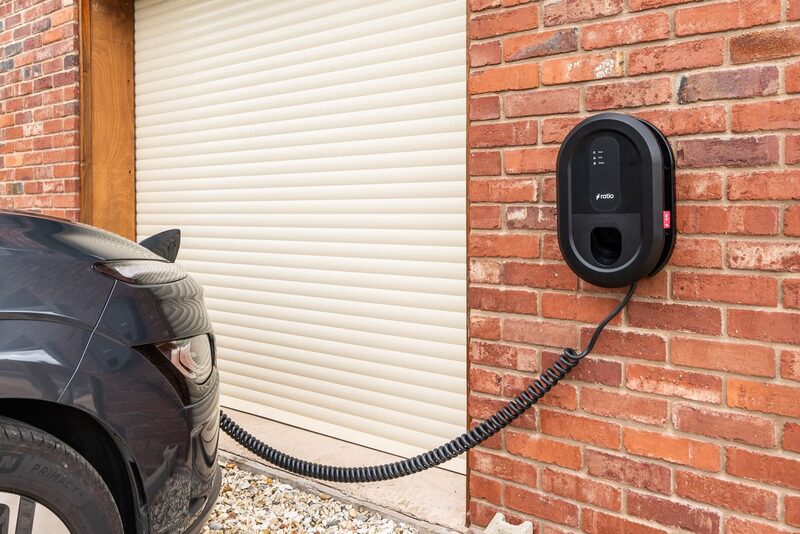
The function is straightforward: V2G systems allow EVs to not only draw energy from the grid but also return it when needed15. Delivering that requires a bidirectional charger, and the charger requires a grid connection that a standard home charge point does not.
That connection is the expensive part. One consultation found that the additional cost of connecting each EV charge point to the electricity grid is greater than £2,00016. That figure is a threshold used in a consultation on building standards, not a quoted installation price, but it establishes the order of magnitude for the connection work alone, before the charger itself is counted.
The rules around charge point provision are being formalised. The Scottish Building Standards Technical Handbook covers charge point provision to new dwellings, provision to domestic buildings undergoing major renovation works, mixed development, location, specification, enabling infrastructure and information on installation and operation17. Scotland has also consulted on proposed changes to energy standards and associated topics16.
The best practice guidance has been updated. The Energy Saving Trust's Vehicle-to-Grid best practice guide was last updated on 5 May 202618. For a household considering V2G, that guide is the current reference point for what the setup involves.
Phase-change material batteries: what the market scan found
Phase-change materials store heat rather than electricity, and the published evidence on them is thinner than for batteries or heat pumps. The market scan material available does not give a household price for a phase-change storage unit, and no figure should be inferred.
What the official statistics do show is where the measurement effort is going. The Household Energy Efficiency Statistics headline release includes further analysis and geographical breakdowns of ECO measures, ECO delivery costs, estimated carbon and energy savings from measures installed and the supply chain19. That is a statistical infrastructure being built around efficiency measures generally, and it is the kind of data that eventually allows running costs to be stated with confidence rather than modelled.
For a household, the practical position on phase-change storage is that it is a technology to watch rather than one with a published domestic price. The same caution applies to any first-generation storage product: without field data on how it performs over years, the running cost is an estimate, and the estimate is the part of the calculation that most affects whether the purchase was worth it.
Grants and funds that offset the early-adopter premium
Support for early adoption comes through a patchwork of schemes, and the eligibility rules differ enough that a household needs to check its own nation and circumstances rather than assume a national scheme applies.
Under ECO4, obligated energy suppliers are legally required to help reduce heating costs for low income and vulnerable households by delivering energy efficiency and heating measures20. That obligation falls on suppliers, not households, and it is the main route by which low-income homes receive measures at reduced or no cost.
The Warm Homes: Local Grant funds insulation, energy-efficient heating systems, and renewable energy installations21. Energy supplier schemes and grants fund making energy-saving improvements to your home22. Warm Homes: Social Housing Fund Wave 3 includes an additional cost cap uplift of £7,500 grant funding for Grant Recipients installing low carbon heating measures in homes off the gas grid23. In Northern Ireland, there are grants for householders to make their homes more energy efficient by installing loft, cavity wall insulation and a new boiler or heating system24.
The historical precedent is worth noting for scale. The Green Homes Grant scheme covered up to two-thirds of the cost of works to improve the energy efficiency of homes25. Home Upgrade Grants Phase 1 allocated £218 million to improve energy efficiency in low-income homes off the gas grid3. The Warm Homes Plan provides funding, grants and loans for domestic PV installations, and for low carbon technologies such as solar panels, batteries and heat pumps3.
| Scheme | What it funds | Nation |
|---|---|---|
| ECO4 | Energy efficiency and heating measures for low income and vulnerable households | Great Britain |
| Warm Homes: Local Grant | Insulation, energy-efficient heating, renewable installations | England |
| Warm Homes: Social Housing Fund Wave 3 | Low carbon heating, with £7,500 uplift off the gas grid | England |
| Warm Healthy Homes Fund | Solar PV and battery storage, subject to Home Assessment | Northern Ireland |
| Home Upgrade Grants Phase 1 | Energy efficiency, low-income homes off the gas grid | England |
Who represents storage buyers, and where policy is heading
Storage buyers have had no single representative body for most of the technology's domestic history. That changed with the formation of the Energy Storage Association (UK), chaired by Baroness Luciana Berger as its inaugural Chair26. The association's stated scope is to bring together the full range of storage technologies: electrical, thermal, hydro, and hydrogen-based26. Its founding members include GivEnergy, Octopus Energy, Powervault, Sunsynk, and academic partners like Durham and Keele Universities26.
That membership list is itself informative. It spans battery manufacturers, an energy supplier and academic institutions, which suggests the association is intended to cover the whole chain rather than one segment. For a household, the practical value is that storage now has a body making the case for it in policy terms, which is the mechanism by which standards, installer competence and consumer protection tend to improve.
On the policy timetable, one dated milestone is worth separating from the storage question. The UK Government's intention is for the new Home Energy Model and new cloud calculation-based EPC Register to be ready as the basis for issuing the new EPCs by October 202627. That is an EPC infrastructure date, not a storage roadmap date, and no publication date for a storage roadmap appears in the available material.
The Committee on Climate Change has published work summarising the research undertaken to inform its recommendations on new build standards28, and a separate review of best practice in energy and carbon standards, alongside detailed modelling of a range of tighter standards for selected housing and non-domestic buildings in tandem with technologies for space heating and hot water28. Those documents shape the standards that future equipment will be measured against.
The most recent policy signal is a call for evidence. The Department for Energy Security and Net Zero published the Vision for an AI-enabled clean energy system call for evidence on 8 September 202629. Calls for evidence of this kind are how the department tests whether a technology area is ready for policy support, and they are open to responses from organisations and individuals through the government consultation portal.
For a household, the direction of travel matters less than the timing. Standards tighten, grant schemes open and close, and the equipment that carries a premium today is the equipment that will be standard in a decade. The early adopter pays for being first; the question is whether the running cost and the support available make that payment worthwhile in the particular home.
Sources29 cited
- Scotland's Carbon Budgets, Climate Change Committee, 2025-05-21
- Heat pump installation costs, Parliamentary Office of Science and Technology, 2026-09-19
- Warm Homes Plan and battery storage costs, House of Commons Library, 2026-06-25
- Heat and Buildings, Department for Energy Security and Net Zero, 2025-06
- Raising minimum standards for heat pumps: options assessment, Department for Energy Security and Net Zero, 2024-11-27
- Electricity prices in Great Britain, House of Lords Library, 2026-06
- Ofgem archetypes update 2024, Ofgem, 2024-02
- Energy efficiency characteristics of new dwellings, Department for Energy Security and Net Zero, 2026-02-04
- Heat in Buildings: progress report 2025, Scottish Government, 2025-10-02
- Air and ground source heat pumps, London Borough of Croydon, 2026-09-17
- Able to Pay retrofit research executive summary, Bristol City Council, 2022-07
- Reasons why homeowners aren't buying heat pumps, Which?, 2026-07-09
- Well-adapted energy system, Climate Change Committee, 2026-09-19
- Warm Healthy Homes Fund consultation, Department for Communities, 2026-05
- Toyota to expand EV charging ecosystem across the UK, Society of Motor Manufacturers and Traders, 2025-12-04
- Scottish Building Regulations: proposed changes to energy standards, Scottish Government, 2021-07-23
- Building Standards Technical Handbook: Domestic (April 2026), Scottish Government, 2026-03
- Vehicle-to-Grid best practice guide, Energy Saving Trust, 2026-05-05
- Household Energy Efficiency Statistics, headline release June 2026, Department for Energy Security and Net Zero, 2026-06-25
- ECO4 Flex and GBIS Flex information document, Ceredigion County Council, 2025-11
- Home and business grants, schemes and advice, East Hertfordshire District Council, 2026-09-17
- Get help with your energy bills, Ofgem, 2026-09-17
- Warm Homes: Social Housing Fund Wave 3 scheme guidance addendum, Department for Energy Security and Net Zero, 2026-06
- Home heating, Belfast City Council, 2026-09-20
- Spray foam insulation and mortgages, House of Commons Library, 2026-09-20
- Why the UK needs a storage revolution, Energy Storage Association (UK), 2025-07-07
- Energy Performance of Buildings Scotland regulations 2025 update, Scottish Government, 2025-10-10
- The costs and benefits of tighter standards for new buildings, Climate Change Committee, 2026-09-19
- Vision for an AI-enabled clean energy system call for evidence, Department for Energy Security and Net Zero, 2026-09-08
 Installation Cost TrendsTracks the published median and average installed costs of domestic solar, heat pumps and batteries and how they have moved.
 Tech and Energy IndependenceAssesses which technologies in development would genuinely increase a household's control over its own energy, and which deepen dependence on suppliers, networks or cloud services.
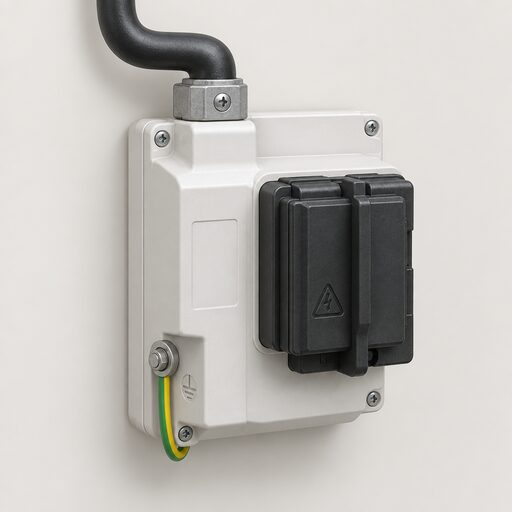 New Electricity ConnectionWho do you contact for a new or upgraded electricity connection, and what will it cost?
 Air Conditioning CostPublished UK equipment prices and the parts of an installed price for portable, single split, multi-split and whole-house air conditioning.
 Technology by Home TypeWhich new energy technologies actually work in a flat, a terrace or a rural home?
 The Full New Technology GuideWhich new home energy ideas can you actually buy in the UK right now, and which are still stuck in trials?