In this guide
Sunsynk designs and develops solar storage systems trusted by installers in over 40 countries, and its hybrid inverter range covers single-phase, three-phase and high-voltage options from 1kW to 80kW1. For a UK household the practical part of that range is narrower: single-phase systems from 3.6kW to 8kW for residential use, three-phase systems from 8kW to 12kW for larger homes and light commercial premises, and high-voltage commercial inverters from 20kW to 50kW2.
A Sunsynk hybrid inverter manages energy flow between solar panels, a battery bank, the grid and household loads simultaneously, with built-in support for both low-voltage and high-voltage battery packs, time-of-use optimisation and backup switching3. The company also sells all-in-one units that combine a hybrid inverter and a LiFePO4 battery in a single wall-mounted enclosure, using the same chemistry and inverter architecture as the standalone ranges4.
What that buys a household is control over when grid electricity is bought and when stored solar is used, plus a degree of independence during a power cut. What it does not remove is the grid itself: the inverter is certified for grid connection, its monitoring runs through a manufacturer's app and cloud platform, and its settings are constrained by the engineering recommendations that govern UK connection. This page sets out the range, the battery position, the compliance rules and the installation details that decide whether a system performs as specified.
What Sunsynk makes: hybrid inverters, batteries and all-in-one storage
Sunsynk draws on over 20 years of engineering experience to develop hybrid inverters and battery storage systems, and describes its products as designed for residential and commercial energy management1. Three product families carry that work in the UK.
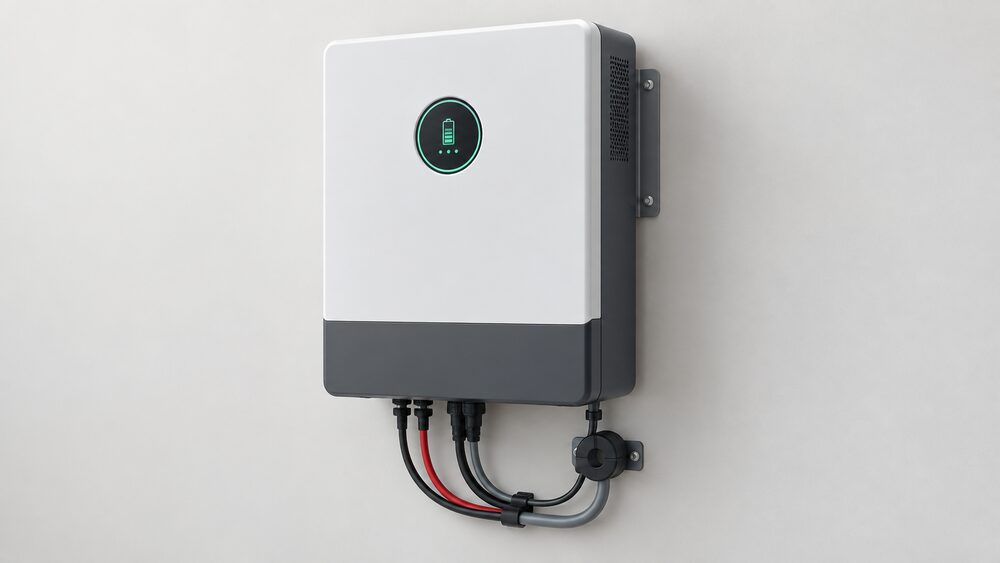
The first is the hybrid inverter itself, sold as a standalone unit in single-phase, three-phase and high-voltage forms. The single-phase models are available from 3.6kW to 8kW in white (C1) and black (C2) finishes, and every unit ships with full remote monitoring via the Sunsynk Connect app and over-the-air firmware updates3. The three-phase models balance load across all three phases and support multi-unit parallel operation6.
The second is battery storage. Sunsynk's battery range is built exclusively on lithium iron phosphate (LiFePO4) chemistry, in low and high voltage configurations5. The L Series battery is a LiFePO4 energy storage solution, and the Sunsynk-W 5.1kWh HV is a rack-mounted LiFePO4 unit7. The LP range, in 3.6kW, 6kW and 8kW IP65 variants, is listed with flexible battery compatibility9.
The third is the all-in-one, which integrates a hybrid inverter and LiFePO4 battery into a single wall-mounted unit4. Sunsynk positions these as combined hybrid inverter and battery storage in a single unit, and the range covers 3.6kW / 5.1kWh up to 8kW / 15.3kWh, spanning typical UK residential loads1.
For a household, the significance is that the inverter is the component that decides how much of the day's solar is used at home, how much is stored, and how much is exported. The battery is the component that decides how long that stored energy lasts into the evening. Buying them as one unit removes a compatibility question but ties the two together for their working lives.
The range: 1kW to 80kW, single-phase, three-phase and high-voltage
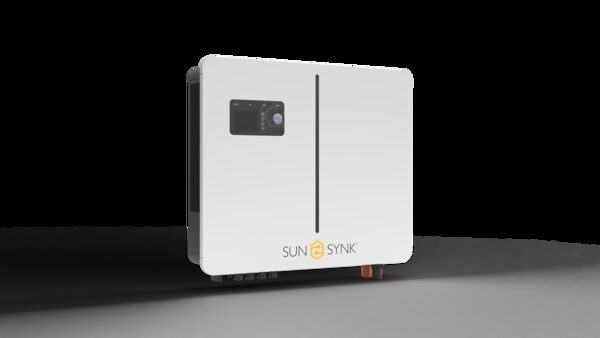
The headline span is wide, and the UK-relevant part of it is much narrower. Sunsynk lists single-phase, three-phase and high-voltage options from 1kW to 80kW, designed for residential and commercial energy management1. The UK market view published by the maker is more specific: single-phase systems from 3.6kW to 8kW for residential use, three-phase systems from 8kW to 12kW for larger homes and light commercial premises, and high-voltage commercial inverters from 20kW to 50kW2.
The three-phase range is described in two places with different upper figures. One page states that the three-phase range covers 8kW to 12kW and balances loads across all phases to maximise solar utilisation; another states that the models are available from 8kW to 30kW and support multi-unit parallel operation6. Both figures come from the maker, and the difference reflects the distinction between the domestic span and the full three-phase line.
The high-voltage collection lists hybrid inverters at 20kW, 25kW, 29.9kW, 30kW, 50kW and 80kW, all three-phase except the 30kW HV10. Commercial and industrial-grade three-phase inverters are described as running from 20kW to 50kW11.
| Family | Stated power range | Phase | Source |
|---|---|---|---|
| Single-phase hybrid | 3.6kW to 8kW | Single | 2 |
| Three-phase hybrid | 8kW to 12kW (domestic span) | Three | 6 |
| Three-phase hybrid | 8kW to 30kW (full line) | Three | 6 |
| High-voltage collection | 20kW to 80kW | Three, plus one 30kW HV | 10 |
| High-voltage commercial | 20kW to 50kW | Three | 11 |
For a typical UK house the single-phase band is the one that matters, and 3.6kW to 8kW covers the ordinary spread of domestic arrays and loads. The larger three-phase and high-voltage units are aimed at premises with three-phase supply, which most homes do not have. The range also extends beyond the domestic market: Sunsynk describes its complete inverter range as designed for residential, commercial and utility-scale applications2.
Fusion all-in-one units: 2.1, 3.8 and 5.2 kWh with matched inverters
The Fusion line pairs an inverter and a battery in one enclosure, with the battery capacity fixed to the inverter size. Sunsynk's Fusion documentation lists a 2.5kW inverter with a 2.1kWh battery, a 3.6kW inverter with a 3.8kWh battery, and a 5.5kW inverter with a 5.2kWh battery, and describes the smallest inverter array as 2.5 single phase12. The Fusion style documentation repeats the same three pairings13.
The Fusion unit is documented as hybrid inverter and LiFePO4 battery all in one, with an earth bond relay built in, a plug-and-play UPS connection, an export limiter included, and a 50% overload surge rating12. It can be paralleled, mixed and matched in parallel, retrofitted, and AC coupled, and it is supplied with a CT coil, a battery isolator and fuse, and prewired connections12. Installation is described as a mount bracket fixed to the wall, with no other parts required12.
The Elite all-in-one line takes a different approach to capacity. The All-In-One Elite 1Ph Hybrid Inverter is a single-phase hybrid inverter with 2MPPT, and the Elite battery module supports 5.12 to 30.72kWh of storage per inverter14. The 3.6kW All-In-One Elite 1Ph Hybrid Inverter is a single-phase unit that supports up to 6 Elite battery modules per stack15. Both are listed with grid connection standards covering G98, G99 and G10014.
The practical difference between the two approaches is expansion. A Fusion unit carries a fixed battery capacity matched to its inverter, so additional storage means additional units. An Elite system starts at a single module and scales within the stated 5.12 to 30.72kWh per inverter envelope, which suits a household that expects its evening demand to grow, for example with an electric vehicle.
Battery compatibility: Sunsynk LiFePO4 and third-party packs
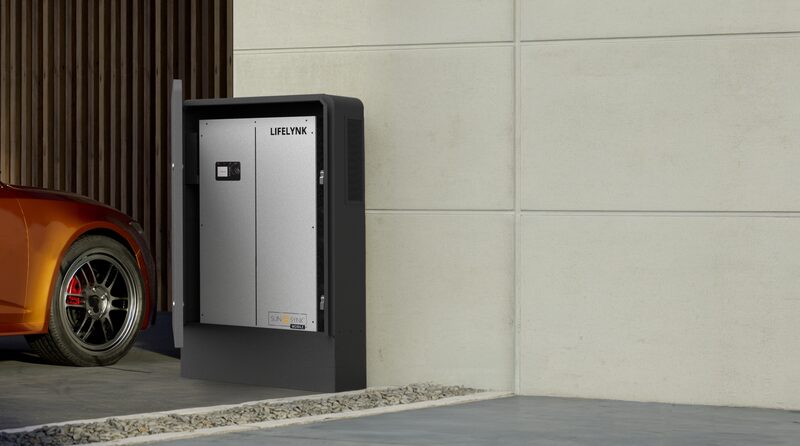
Sunsynk states that its inverters are optimised for use with Sunsynk LiFePO4 batteries and are guaranteed compatible across the entire Sunsynk battery range, and that many models also support third-party batteries via CAN bus or RS485, subject to the specific inverter datasheet for confirmation2. That is the maker's compatibility position, and it is the one to work from.
The chemistry is consistent across the range. Sunsynk's battery range is built exclusively on lithium iron phosphate (LiFePO4) chemistry5. The L Series battery is described as a LiFePO4 energy storage solution, the Sunsynk-W 5.1kWh HV as a rack-mounted LiFePO4 battery, and the Verlinkt Home Battery Storage System as combining a 2.048kWh lithium iron phosphate battery with a hybrid inverter and 2kW power output7. The Fusion unit uses the same chemistry12.
Compatibility is not only about the battery. The single-phase hybrid inverters are listed as compatible with Sunsynk LV batteries, and the 2&4 Light Kit is specified for use with a compatible Sunsynk low-voltage battery3. The LP range is listed with flexible battery compatibility across its 3.6kW, 6kW and 8kW IP65 variants9.
For a household, the battery decision is the one that most affects how much of the evening runs on stored solar rather than imported electricity, and it is also the component most likely to be replaced or extended during the life of the system. A maker-guaranteed pairing removes one risk. A third-party pack may widen choice on capacity and price, but the confirmation sits with the datasheet, and the guarantee of compatibility is stated for Sunsynk's own batteries.
Monitoring, time-of-use optimisation and backup switching
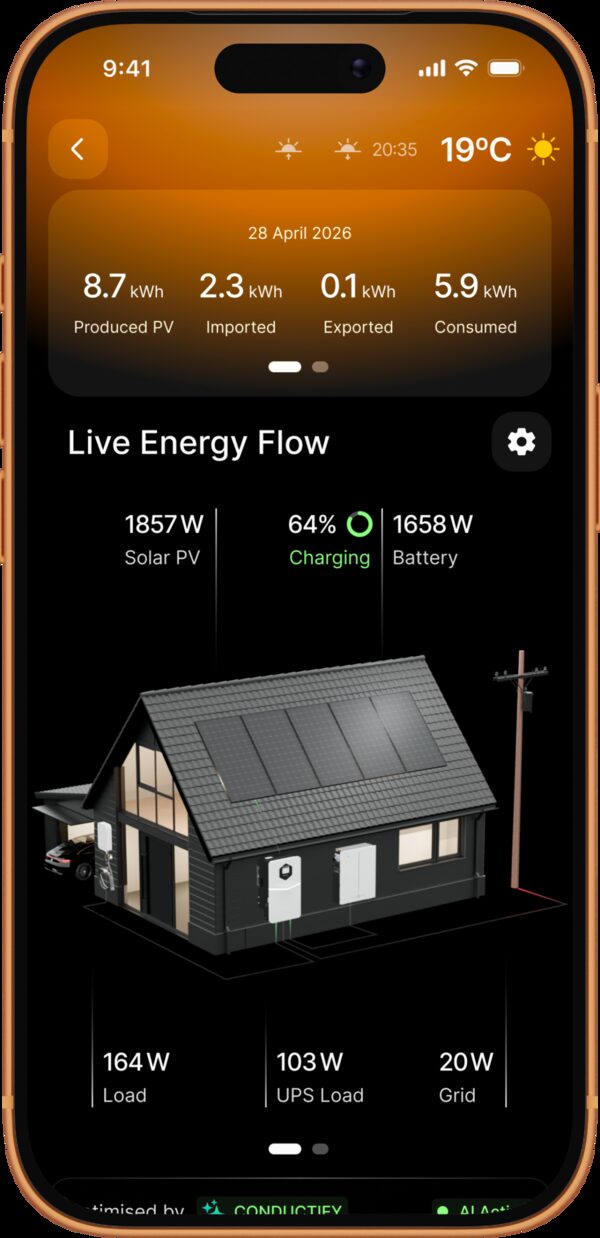
Sunsynk's monitoring runs through the Sunsynk Connect app, which provides real-time monitoring of all energy flows and remote system control on hybrid inverters18. Every single-phase unit ships with full remote monitoring via the app and over-the-air firmware updates3. The three-phase models feature real-time monitoring through the Sunsynk app, flexible time-of-use scheduling and grid-protection functions6. Across the range, the maker lists live data, fault alerts and remote installer access2.
Time-of-use optimisation is built into the single-phase hybrid inverters, alongside support for low-voltage and high-voltage battery packs and seamless backup switching3. On Classic, Acure and Elite models, the solar export setting allows excess power to go back to the grid once the batteries are full or already charging at maximum set current, and the inverter prioritises excess solar for battery storage while pulling its own self-consumption from the grid19. Where priority load is selected, the batteries charge automatically from excess solar once the load has been covered, without a timer setting19.
Monitoring can also be extended. The Sunsynk data logger connects an inverter to the SolarmanV5 cloud platform, accessible via a mobile app for iOS and Android and a web portal20. The GM Series is designed to bridge inverter data with cloud platforms, third-party home automation systems and energy management software21. The Sunsynk Saver app allows a household to monitor and manage its energy system remotely22.
This is where the dependence sits. Local operation continues without a connection, but scheduling from away, energy monitoring and remote diagnostics depend on home broadband, the manufacturer's cloud platform and a manufacturer's app. Firmware updates are occasionally required to keep an inverter or battery on the latest features, improvements and compatibility updates23. A household that wants the system to run without any of that can do so, but it gives up the visibility and the remote control that the app provides.
Grid settings and G98/G99 compliance
All UK grid-connected solar inverters must comply with G98 or G99 engineering recommendations, which govern how distributed generation connects to the network18. Sunsynk states that its inverter range is G98 or G99 compliant depending on the model, and the all-in-one units are described as MCS-eligible and G98/G99 certified for UK grid connection2. The All-In-One Elite units are listed with grid connection standards covering G98, G99 and G10014.
The settings themselves carry a warning. Sunsynk states that G98/G99 should be enabled instead of G98/G99_NI, and that grid settings must not be taken outside G98/G99 because doing so affects the inverter's compliance with UK grid regulations24. That is a compliance condition, not a preference: the settings are what the network operator's approval rests on.
Northern Ireland runs a separate framework. Under the NI arrangements, G98/NI type-tested inverters and G99/NI Type A type-tested inverters are permitted for installations up to 16 amps per phase25. A household in Northern Ireland is therefore working to a different set of type-testing categories from one in Great Britain, and the G98_NI setting exists for that reason.
Grid voltage is the other compliance-adjacent issue that households notice. Sunsynk states that if grid voltage falls outside specification the inverter will disconnect from the grid as a safety precaution, with a Sunsynk Connect notification, and that after 60 seconds it will try to reconnect, triggering a second notification24. If the voltage is still too high the grid relay disconnects again, causing persistent notifications to both the installer and the end user24. Grid voltage mismatch is recognised as a cause of solar inverter faults27, and voltage changes in a property are a matter the distribution network operator handles28.
CT installation: placement, orientation and spacing
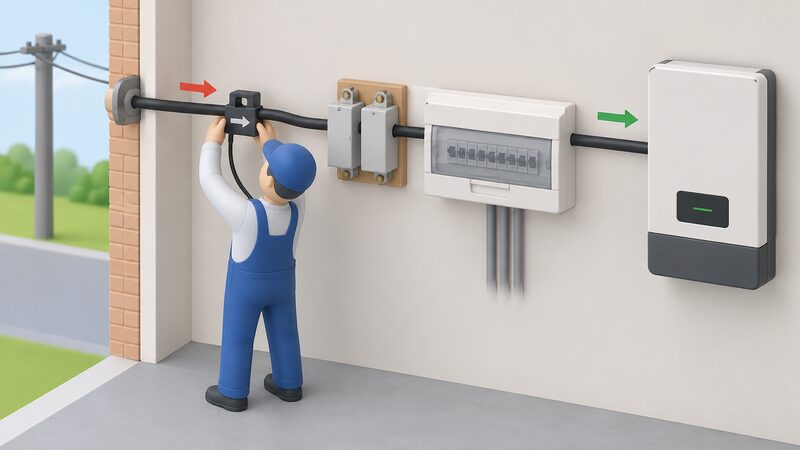
The current transformer clamp is the component that tells the inverter what the house is importing or exporting, and its installation is specified precisely. Sunsynk states that the CT should always be placed on the live incomer of the property, before any henley blocks or distribution boards, so that the inverter can read the full load demand as well as import and export29. The arrow on the CT coil should be pointing away from the grid towards the inverter29.
Spacing matters where more than one CT is fitted. Sunsynk states that CTs should be placed 12 inches apart from each other to avoid interference, which applies to other CTs sited nearby such as those for EV chargers or solar diverters29. A household adding an EV charger with its own CT after the inverter is installed is the common case where this arises.
Getting the CT wrong produces a specific symptom. Sunsynk's guidance on grid-side load readings refers to the W04 Meter Comms fail fault, which points to a communication problem between the inverter and its meter29. The checks that follow from the maker's own instructions are the position on the incomer, the direction of the arrow, and the distance from any other clamp.
The Fusion unit is supplied with its CT coil included, along with a battery isolator and fuse, and prewired connections12. The inverter range is suitable for indoor and sheltered outdoor installation, and the string inverters use intelligent air cooling2. None of this is work for a householder: the CT sits on the incoming supply, and the installation and the grid settings are the installer's responsibility.
Where Sunsynk is based and how it operates worldwide

Sunsynk's UK office is at Unit 8, Total Park, Bennetts Lane, Shell Green, Widnes WA8 0GW, and the UK telephone number is +44 151 832 43006. The same number is given as the route to the UK technical support team, and it appears as the company's UK contact number across its product and support pages1. Support articles and firmware requests run through the Sunsynk support portal23.
The company describes itself as designing and developing high-performance solar storage systems trusted by installers in over 40 countries, and states that its inverter range has 500,000+ systems installed globally in residential and commercial applications2. It draws on over 20 years of engineering experience22.
The UK presence is a sales, support and technical operation rather than a manufacturing one. Nothing in the maker's published material describes UK production of inverters or batteries, so a household buying a Sunsynk system is buying an imported product supported from a Widnes office. That matters for two reasons: spares and service run through that office and its support portal, and the firmware that keeps the unit current is issued by the manufacturer rather than by anyone in the UK.
For energy independence, the position is mixed and worth stating plainly. A Sunsynk hybrid inverter with a battery lets a household store its own solar generation and discharge it in the evening, run selected circuits during a power cut through backup switching, and shift import to cheaper periods using time-of-use scheduling3. It does not take the house off the grid: the unit is certified for grid connection, its settings are bound by G98 or G99, and its monitoring and remote control depend on broadband and the manufacturer's cloud platform2. The battery is LiFePO4 and guaranteed compatible across Sunsynk's own range, with third-party support confirmed model by model2. The dependence that remains is the grid, the network operator's settings, and the manufacturer's app and firmware.
Sources29 cited
- Sunsynk, Sunsynk, 2026-09-17
- Sunsynk inverters, Sunsynk, 2026-09-17
- Single-phase hybrid inverters, Sunsynk, 2026-09-17
- All-in-one storage, Sunsynk, 2026-09-17
- Sunsynk battery range, Sunsynk, 2026-09-17
- Three-phase hybrid inverters, Sunsynk, 2026-09-17
- L Series battery, Sunsynk, 2026-09-17
- Sunsynk-W 5.1kWh HV, Sunsynk, 2026-09-17
- LP range, Sunsynk, 2026-09-17
- High-voltage collection, Sunsynk, 2026-09-17
- Sunsynk products, Sunsynk, 2026-09-17
- Sunsynk Fusion inverter, Sunsynk, 2023-09-23
- Sunsynk Fusion style inverter, Sunsynk, 2023-08-27
- All-In-One Elite hybrid inverter, Alternergy, 2026-09-17
- 3.6kW All-In-One Elite hybrid inverter, Alternergy, 2026-09-17
- Verlinkt home battery storage system, Sunsynk, 2026-09-17
- 2&4 Light Kit, Sunsynk, 2026-09-17
- How does a solar inverter work, Sunsynk, 2026-06-18
- Classic, Acure and Elite system mode settings, Sunsynk, 2026-09-17
- Sunsynk data logger, Sunsynk, 2026-09-17
- GM Series, Sunsynk, 2026-09-17
- Sunsynk UK, Sunsynk, 2026-09-17
- Sunsynk support, Sunsynk, 2026-09-17
- UK grid voltage, Sunsynk, 2026-09-17
- G99/NI compliant equipment, NIE Networks, 2026-09-19
- G99/NI fast track installations, NIE Networks, 2026-09-19
- Solar inverter fault codes, SolaX Power, 2026-08-12
- Managing voltage changes in your property, Electricity North West, 2026-09-19
- No grid-side load readings, Sunsynk, 2026-09-17
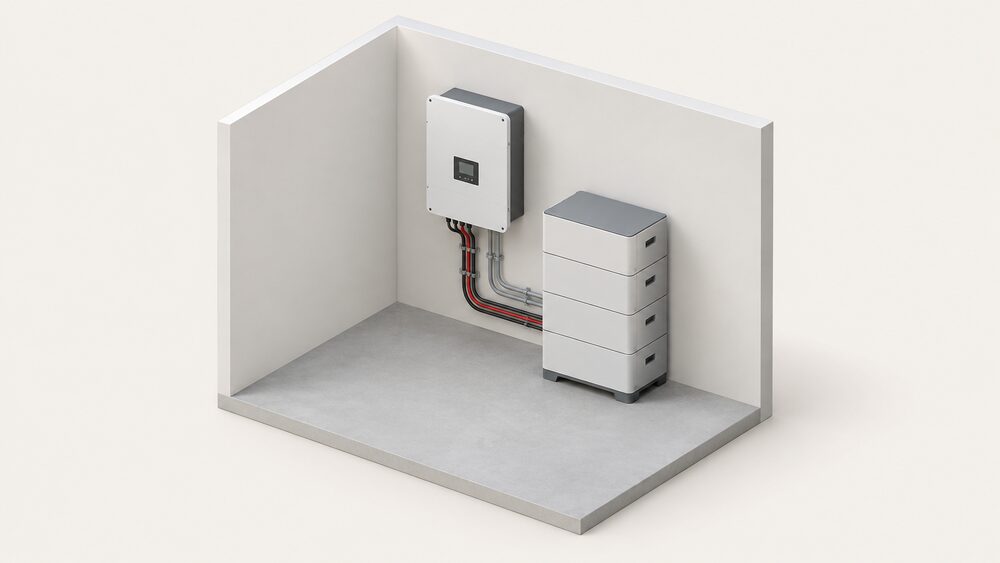 Sunsynk ECCOA Sunsynk ECCO package pairs a hybrid inverter with a battery to store solar power at home.
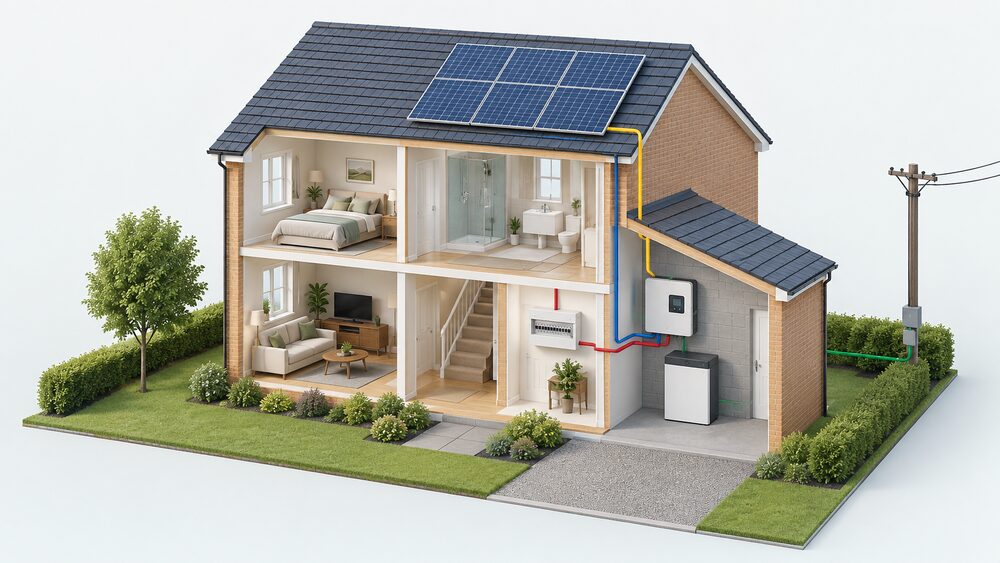 Sunsynk Hybrid Inverters and Home Battery StorageSunsynk hybrid inverters let your home store the solar power it makes and use cheap overnight electricity instead of buying at peak times.
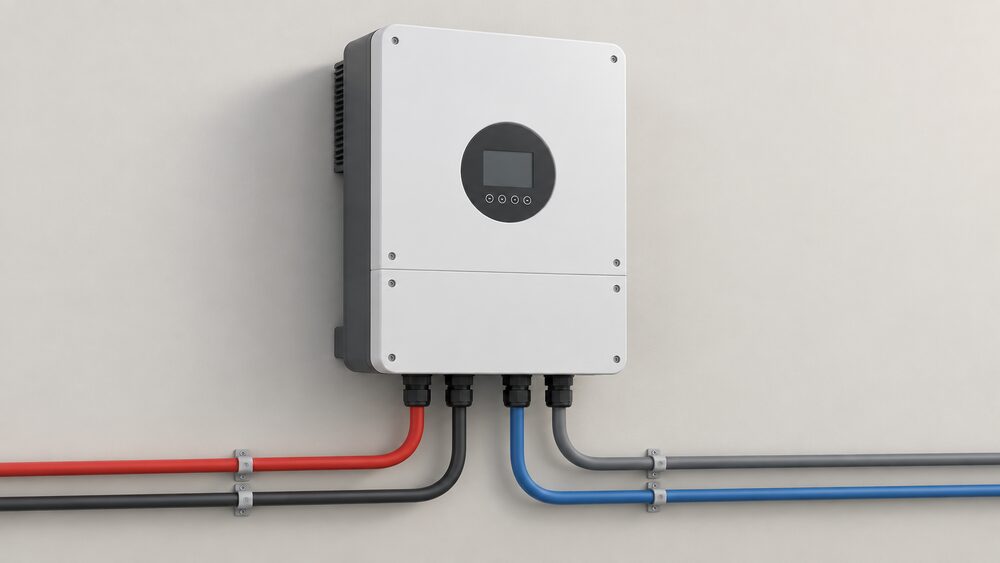 Sunsynk hybrid invertersWhich Sunsynk inverter suits your home, and what does it cost to fit?