In this guide
SMA is a German inverter manufacturer whose Sunny Boy name has been on British roofs for decades. The current single-phase line is the Sunny Boy 3.0 to 6.0 range, sold as 3.0 kW, 3.6 kW, 4.0 kW, 5.0 kW and 6.0 kW models, and the Sunny Boy Smart Energy, a single-phase hybrid that combines the PV inverter and the battery inverter in one unit1. SMA describes the Smart Energy as "the two-in-one solution for the generation and flexible use of solar power at home"4.
For a household, the distinction that matters is between a plain string inverter and a hybrid. A Sunny Boy 3.0 to 6.0 converts panel DC output to mains AC and nothing more; a battery, if fitted, needs its own inverter. The Sunny Boy Smart Energy does both jobs, and can be run as a pure PV inverter with a battery retrofitted later, or as a pure battery inverter5. That is the version most UK buyers asking about SMA storage are actually considering.
Prices are quoted rather than listed. Where a UK distributor publishes figures, the Sunny Boy Smart Energy 3.6 is £1,278.93, the 4.0 is £1,340.80, the 5.0 is £1,438.93 and the 6.0 is £1,526.40, all stated excluding tax6. Those are equipment prices before installation, mounting, wiring, commissioning and any battery.
What a Sunny Boy inverter is and who makes it
SMA Solar Technology is a German manufacturer, and the Sunny Boy is its long-running domestic string inverter family. The name is not new to the UK: a 700W SMA SWR-700 Sunny Boy inverter installed in a West Wales Eco Centre PV system was described in 2016 as the oldest operating domestic PV inverter in the country, which is a useful marker of how long these units have been in service here9. SMA's involvement in small-scale generation goes back further still, since it developed the Windy Boy inverter to allow easy grid connection of small wind turbines10.
The current range is narrower than it once was. The single-phase Sunny Boy line runs from 3.0 kW to 6.0 kW, and SMA's UK product overview lists the Sunny Boy Smart Energy as its single-phase hybrid for homes1. Above that, the three-phase Sunny Tripower takes over, with 5.0 and 6.0 kW models and 8.0 kW to 10.0 kW models, and the Sunny Tripower Smart Energy hybrid in versions from 5.0 kW to 10.0 kW11. Off-grid and backup duties sit with the Sunny Island 6.0H and 8.0H, rated at 6 kW or 8 kW for 30 minutes, scalable to systems up to 300 kW14.
For a household, the practical point is that SMA covers the whole domestic span, single-phase string, single-phase hybrid, three-phase string and three-phase hybrid, so a system can be specified without leaving the brand. What it does not offer in the current UK line is a very small inverter for a two or three panel installation.
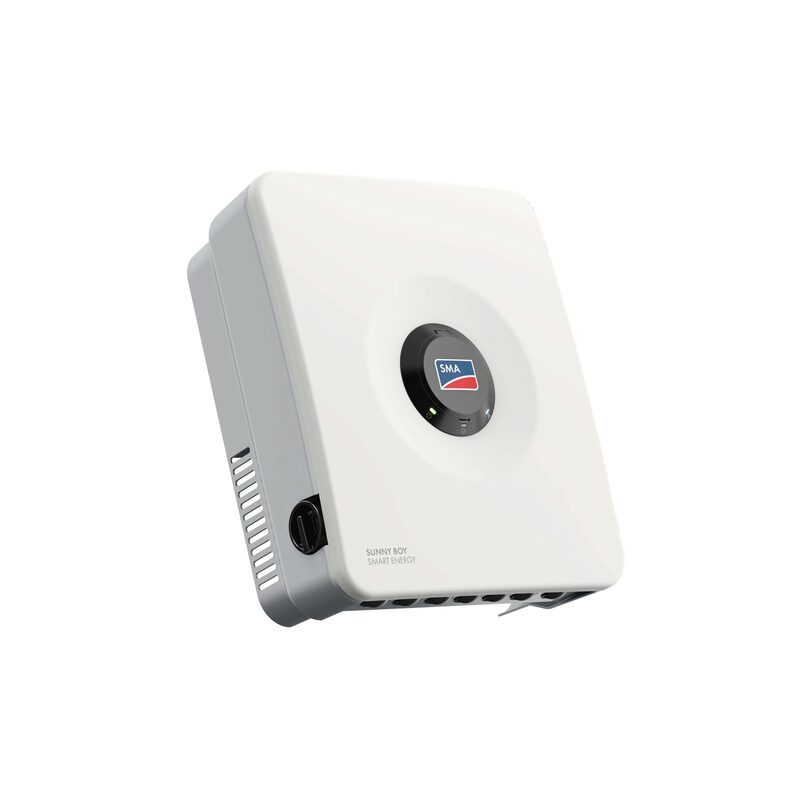
The range: single-phase from 3.0 to 6.0 kW
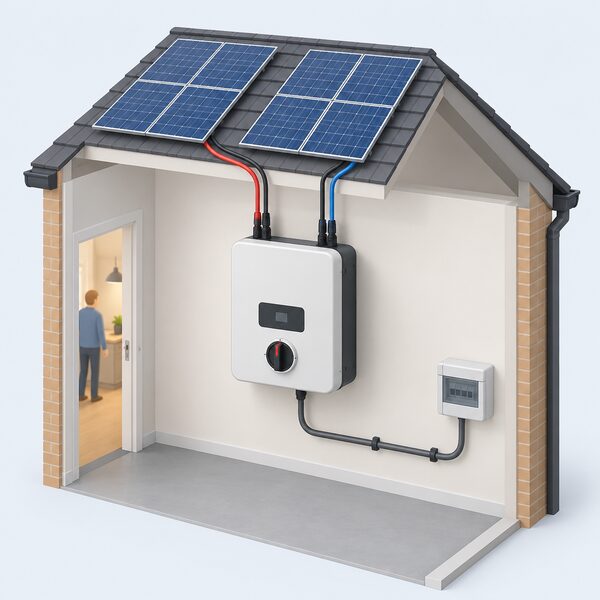
The Sunny Boy 3.0 to 6.0 family is a transformerless string inverter range with two MPPT inputs, sold in 3.0 kW, 3.6 kW, 4.0 kW, 5.0 kW and 6.0 kW ratings2. Two maximum power point trackers matter on a UK roof because they allow panels facing different directions, or split across two roof pitches, to be tracked separately rather than averaged together.
SMA builds in two features that would otherwise be separate purchases. The first is an integrated DC isolator, which SMA says gives savings in both installation time and cost compared with other brands, because no additional DC isolator switch is required3. The second is SMA Smart Connected, an automatic monitoring service in which SMA analyses inverter operation and immediately informs the installer of any irregularities2. That second feature is worth understanding clearly: the monitoring runs through the installer, not directly to the householder, so a fault may be picked up by the installation company rather than by the occupant.
| Model | Rating | MPPT inputs | Warranty |
|---|---|---|---|
| Sunny Boy 3.0 | 3.0 kW | 2 | 5 years, 10 after registration, to 152 |
| Sunny Boy 3.6 | 3.6 kW | 2 | 5 years, 10 after registration, to 152 |
| Sunny Boy 4.0 | 4.0 kW | 2 | 5 years, 10 after registration, to 152 |
| Sunny Boy 5.0 | 5.0 kW | 2 | 5 years, 10 after registration, to 152 |
| Sunny Boy 6.0 | 6.0 kW | 2 | 5 years, 10 after registration, to 152 |
The output voltage range is listed at 207 to 264 Vac, which sits inside normal UK single-phase supply tolerances3. The DC input uses SunClix polarised plug-in connectors and the grid connection uses an AC connector, with no special tools required3.
Sunny Boy Smart Energy: a two-in-one solar and battery hybrid
The Sunny Boy Smart Energy is a single-phase hybrid inverter, described by SMA as a PV and battery inverter in one that ensures a reliable and sustainable supply of energy3. It is sold in four models in the UK, in power classes of 3.6 kW, 4.0 kW, 5.0 kW and 6.0 kW, with SMA's wider product listing also showing 8 kW and 9.9 kW classes marked with an asterisk1.
The flexibility is in how it can be deployed. SMA states the hybrid can be operated as a pure PV inverter, as a pure battery inverter, or with the battery retrofitted later, and notes that without a battery, backup power lasts only while the sun is shining5. That last point is the honest limit of a hybrid without storage: it is still a grid-tied system, and it stops when the grid stops unless a battery and changeover switch are present.
Key electrical figures are a maximum VOC of 600 volts, a maximum DC current of 30 amps, and a low startup voltage of 60 VDC7. The related three-phase Sunny Tripower Smart Energy hybrid is listed with a battery DC voltage range of 150 VDC to 600 VDC and a maximum battery DC current of 30 A15. The 600 volt ceiling is the figure a string design has to respect, particularly in cold conditions when panel open-circuit voltage rises.
The Smart Energy can also be combined with the SMA EV Charger through the Sunny Home Manager 2.05. There is a constraint worth knowing: multiple Sunny Boy Smart Energy inverters can operate in one system, but not together with the Sunny Home Manager, and with Sunny Home Manager 2.0 no additional battery inverter may be installed5.
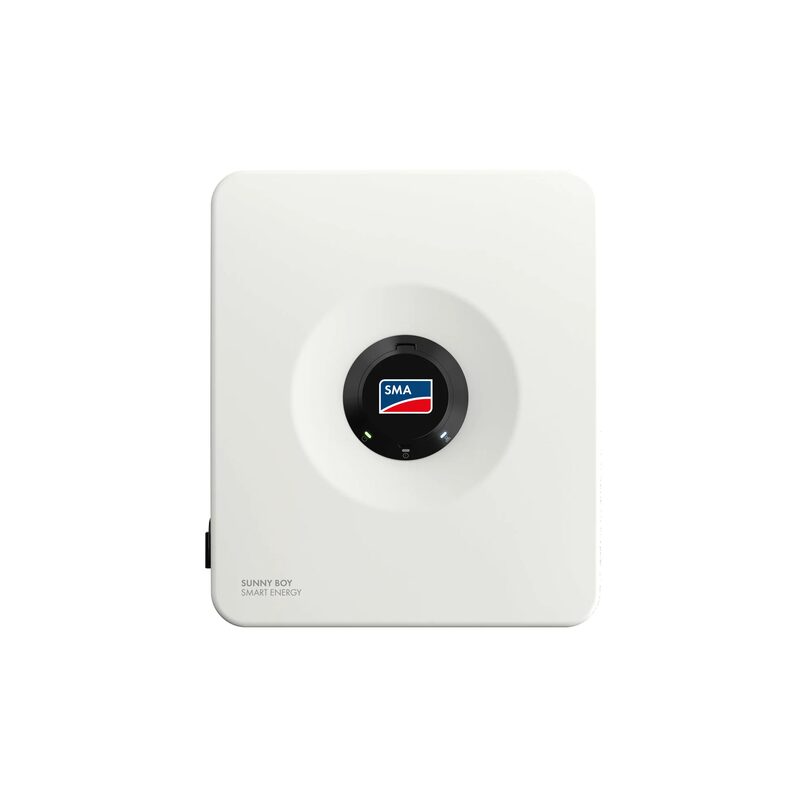
The Smart Energy package: inverter, 6.56 kWh battery and Home Manager
SMA's UK storage package bundles the pieces a household needs for a working battery system. It contains the Sunny Boy Smart Energy inverter, an SMA Home Storage 6.56 kWh lithium battery, and the SMA Home Manager with a CT clamp8. The package is described as a high efficiency DC-coupled battery solution and a German-made inverter8. A larger configuration is also listed, a multiple inverter and battery package at 18kW and 49.2kWh16.
Capacity scales with firmware. With firmware 3.14.x.R, SMA states the Sunny Boy Smart Energy supports connection of up to five SMA Home Storage modules with a total capacity of 16.4 kWh5. The same firmware release adds two capabilities: additional Sunny Boy inverters can support the household in backup mode during power outages when combined with the Smart Energy and SMA Backup, and PV inputs can now be connected in parallel5. A household buying on the strength of a particular capacity or backup behaviour is therefore buying a firmware state as much as a box.
The SMA Home Storage battery is described as perfectly complementing SMA's hybrid inverters, and the Storage M module is listed as compatible with them17. An optional top cover is available for the Home Storage battery17.
Battery compatibility and backup: high-voltage batteries and SMA Backup 1P
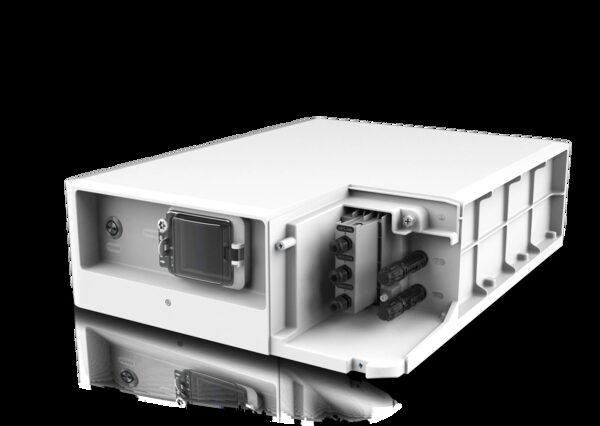
The Sunny Boy Smart Energy is a high-voltage, DC-coupled hybrid, and SMA states it is compatible with high-voltage batteries from major manufacturers, naming the SMA Home Storage battery and BYD HVS and HVM batteries7. The three-phase Sunny Tripower Smart Energy hybrid lists the same two options, the SMA Home Storage battery and BYD HVS and HVM batteries15. Battery choice is therefore not locked to one maker, though it is locked to the high-voltage class.
Backup is a separate purchase. The SMA Backup 1P is a single-phase automatic changeover switch, compatible with the Sunny Boy Smart Energy hybrid inverters, that enables a smooth transition between grid and battery-backup operation11. It contains an integrated backup fuse for the inverter on line and neutral11. The Sunny Boy Smart Energy is listed with backup compatibility, and the Sunny Tripower Smart Energy hybrid likewise7. Support for the SMA Backup 1P in single-phase markets arrived with a firmware release5.
The SMA Storage M battery carries an integrated black start function for backup supply when combined with an SMA hybrid inverter18. That is a different route to the same end: the battery can start a supply without the grid, provided the matching inverter is present.
What this means for independence is specific. A Sunny Boy Smart Energy with a battery and a Backup 1P can carry selected single-phase loads during an outage, up to 3.68 kW7. It does not make the house independent of the grid, the distribution network or an electricity supplier, and the changeover switch is what separates backup operation from ordinary self-consumption.
Built-in features: ShadeFix, ArcFix and the integrated DC isolator
SMA ShadeFix is the feature most often asked about, and it is software rather than hardware. SMA describes it as a patented, integrated inverter capability that optimises PV system energy production in every situation, even when shading occurs, and states plainly that it is a software-based solution, unlike conventional power optimisers13. It is integrated into all current series SMA Sunny Boy and Sunny Tripower inverters, activated automatically during commissioning, and activated by default in current models13. It is included at no extra cost and forms an integral part of the inverter's operation management13.
The practical consequence is that a shaded roof does not automatically require panel-level power optimisers. ShadeFix is integrated yield optimisation on the Sunny Boy Smart Energy and integrated shade management on the Sunny Boy 3.0 to 6.0 range3. It is not a substitute for good array design, and it does not recover the output of a panel that is fully covered.
Arc fault protection is built in as SMA ArcFix, which SMA confirms is integrated in the Sunny Boy Smart Energy5. The integrated DC isolator is present across the Sunny Boy range, removing the separate DC isolator enclosure that many installations otherwise need3. On the Sunny Tripower side, SMA notes integrated DC disconnect switches mean the inverters can be used without an additional DC isolator switch19.
Grid compliance: G98 and G99 certification
Connection to the UK distribution network requires an inverter certified to the relevant engineering recommendation. SMA states that its Sunny Boy inverters conform with G98 and G993. The Sunny Boy Smart Energy is listed with G98, G99 and G100 certification, with the 3.6 model carrying all three and the 4.0, 5.0 and 6.0 models listed with G99 and G1007. The three-phase Sunny Tripower Smart Energy hybrid is listed with G98, and the Sunny Tripower 8.0 and 10.0 models with G9815.
The distinction between the two standards is about scale and connection type. G98 covers smaller, typically single-phase generation, while G99 covers larger or three-phase connections. Network guidance is explicit that all small generation installation categories require generating units to be connected via either EREC G99 or G98 type tested inverters21. In Northern Ireland, a G99 fast track connection application requires a compliance certificate with test results22.
G100 is a separate standard covering export limitation and active network management, which matters where a network operator caps export. A household whose connection is export-limited needs an inverter that supports the control, not merely one that generates.
The certification position is what allows an installation to be connected lawfully, and it is checked at application stage. It is worth keeping the certificate with the system documentation, because a future connection application or a change of inverter may require it again.
Buying in the UK: distributors, availability and what owners can expect

SMA does not sell the Sunny Boy Smart Energy to householders directly. Its guidance is that an installer can order the Sunny Boy Smart Energy from a local distributor of SMA solutions in countries where it is available, and that private customers should enquire with a local installer5. In practice, a UK household buys the inverter as part of a quoted installation, and the installer holds the distributor relationship.
Availability is real but not universal. Four Sunny Boy Smart Energy models are listed as available, and four Sunny Tripower Smart Energy hybrid models18. The Sunny Tripower 5.0 and 6.0 kW models are listed as two models available, and the 8.0 and 10.0 kW models as a further pair19. Where a distributor publishes prices, they are equipment prices excluding tax: £1,278.93 for the 3.6, £1,340.80 for the 4.0, £1,438.93 for the 5.0 and £1,526.40 for the 6.06. Installation, mounting, cabling, commissioning and any battery are additional, and are installer-quoted.
Warranty terms vary by page and model. The Sunny Boy 3.0 to 6.0 range is listed at 5 years, 10 years after registration, with options to extend up to 15 years2. The Sunny Boy Smart Energy is listed at 10 years on one page and 5 years on another, with 5 extra years available by registering the inverter in the SMA Online Service Centre and further extension up to 20 years7. Registration is what converts the shorter term into the longer one, so the paperwork matters as much as the hardware.
For a household weighing energy independence, the position is mixed. A Sunny Boy string inverter keeps the home on the grid and on a supplier, with no storage and no backup. A Sunny Boy Smart Energy with a battery and a Backup 1P adds self-consumption and a limited outage supply of up to 3.68 kW, but the grid remains the backbone, the battery is a high-voltage unit from a short list of makers, and monitoring and firmware support run through SMA and the installer. The brand's long UK service history is an argument for repairability; it is not a claim of independence.
Sources22 cited
- SMA product overview, SMA Solar Technology
- SMA Sunny Boy 3.0 to 6.0, Wind & Sun
- SMA Sunny Boy inverters, Wind & Sun
- SMA hybrid inverters, SMA Solar Technology
- Sunny Boy Smart Energy, SMA Solar Technology
- SMA Sunny Boy Smart Energy, Wind & Sun
- SMA Sunny Boy Smart Energy specifications, Wind & Sun
- SMA Home Storage battery, Wind & Sun
- SMA Storage M battery, Wind & Sun
- SMA Backup 1P, Wind & Sun
- Backup switchgear, Wind & Sun
- SMA ShadeFix, SMA Solar Technology
- UK's smallest power station, Wind & Sun
- Self-consumption battery storage packages, Wind & Sun
- SMA Sunny Tripower Smart Energy hybrid inverters, Wind & Sun
- SMA collection, Wind & Sun
- SMA Sunny Tripower 8.0 and 10.0, Wind & Sun
- SMA Sunny Tripower inverters, Wind & Sun
- SMA Sunny Island 6.0H and 8.0H, Wind & Sun
- G99 NI fast track applications, NIE Networks
- G99 fast track process and SGIS, UK Power Networks
- Wind and Sun, Wind & Sun
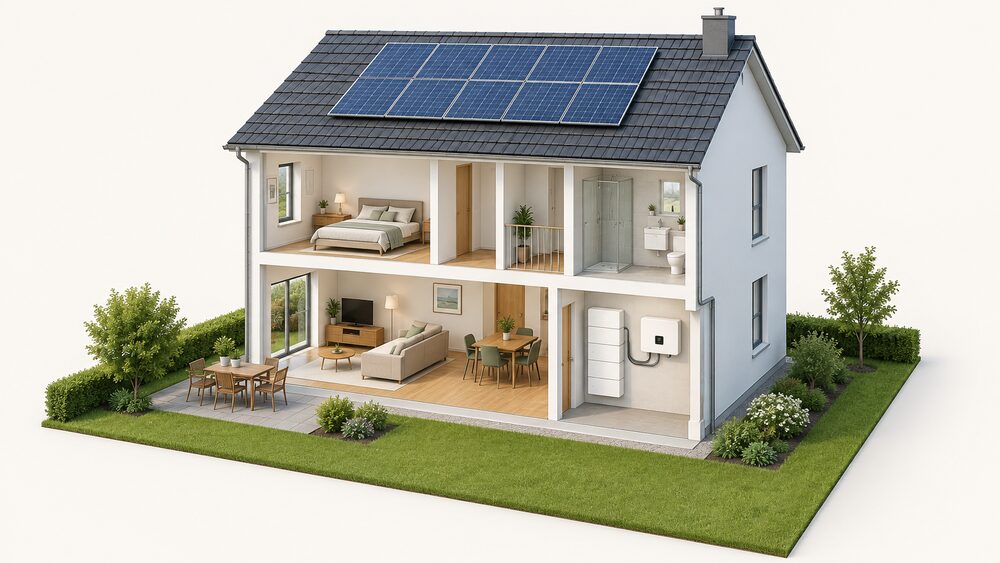 SMA Home Battery Storage and InvertersSMA home batteries only work with SMA's own hybrid inverters, so you cannot add one to a system you already have.
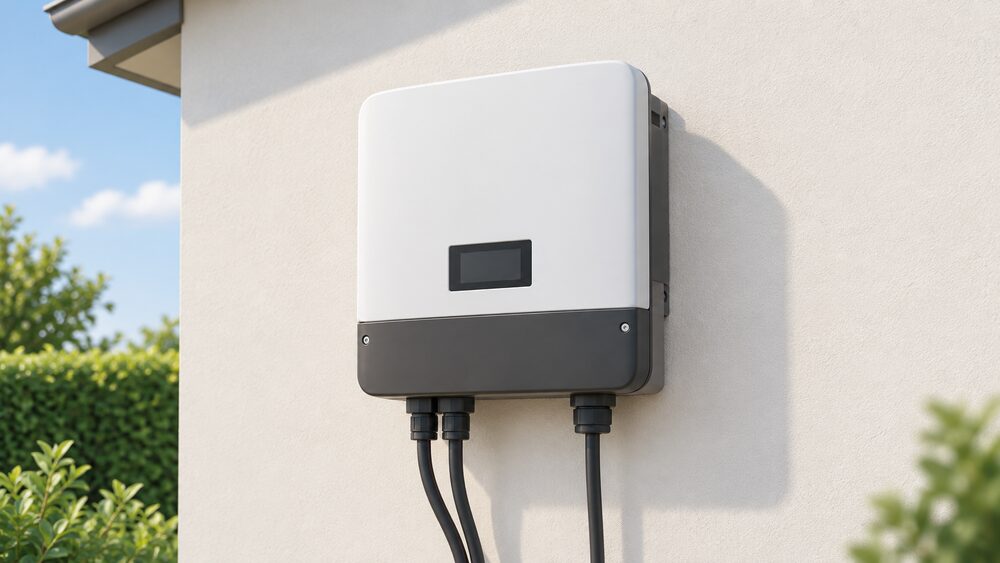 SMA solar invertersSMA is a German brand, and Sunny Boy is the inverter name most UK homes know.