In this guide
Sungrow is a Chinese power electronics manufacturer founded in 1997 by the university professor Cao Renxian, and it now describes itself as the world's number one in PV inverter shipments, a position it retained in S&P Global's 2025 rankings1. For a UK household, that matters less as a boast than as a signal about scale: the company has a 26 year track record in the PV industry, products in more than 150 countries, and a residential line built around hybrid inverters and high voltage LFP batteries3.
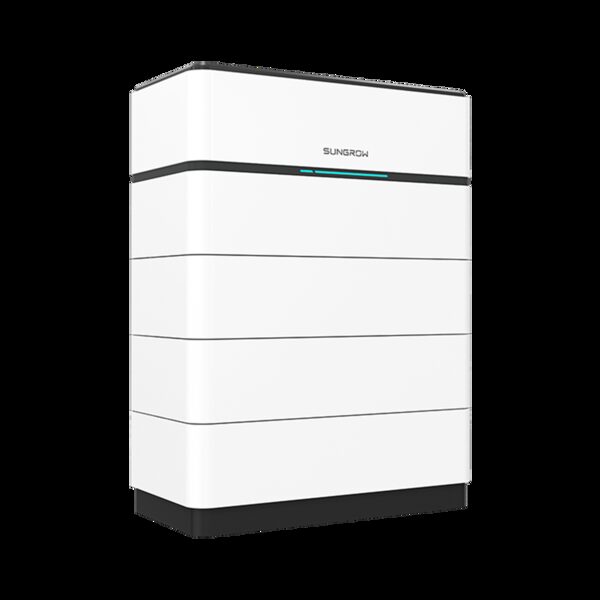
The residential offer is a hybrid inverter plus a battery stack. The SBH series is built from 5 kWh modules and spans 10 to 40 kWh, sold as the SBH100 through SBH400, with LFP chemistry throughout4. Sungrow's hybrid inverters are rated at over 99% efficiency in PV conversion, and the SBH series is listed as fully compatible with the SHT, SHRS and SHRS-20 inverter families5.
What follows is what the maker publishes about its own products, what UK distributors list, and where the limits of a Sungrow system lie for a household trying to reduce its reliance on the grid.
Who Sungrow is, and why shipment rankings matter
Sungrow Power Supply Co., Ltd. was established in 1997 by Cao Renxian, then a university professor, and the company has since built what it calls the largest dedicated research and development team in the sector2. Its product range covers PV inverters and energy storage for utility-scale, commercial and residential applications, alongside floating PV, EV charging and renewable hydrogen production10.
The ranking claim is specific. Sungrow states it is the world's number one in PV inverter shipments, and in August 2026 it announced it had retained the number one position in S&P Global's 2025 PV inverter shipments rankings5. It also cites a number one global PV inverter bankability rating1. Bankability is a measure used in project finance: it reflects whether lenders and insurers are willing to back a project using that maker's equipment. For a household, the practical translation is that the company is unlikely to disappear mid-warranty, which is the risk that matters most with a battery that carries a ten year term.
Scale cuts both ways. Sungrow's recent announcements are dominated by grid-scale and overseas work: a 722 MWp European PV project with a 1 GWh storage pipeline signed in August 2026, a 606 MWh storage system for a project in Chile, a 1 GWh storage milestone across South East Asia, and a new MGTL Series for homes and businesses announced in September 202611. A residential customer in the UK is a very small part of that business, and the residential range is not the company's centre of gravity.
What the residential range covers
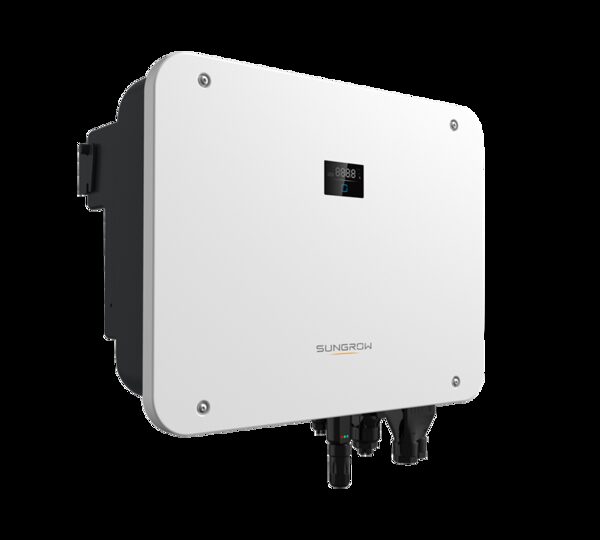
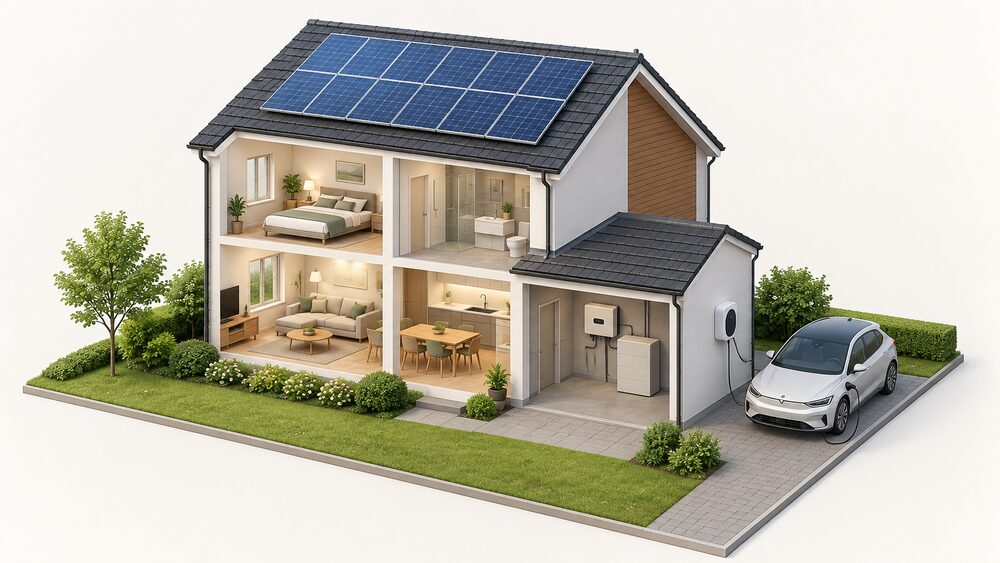
Sungrow describes the core components of its residential energy storage systems as the hybrid inverter, the batteries and an energy management system12. That is the whole architecture in one line: the inverter is the hub, the battery is the store, and the energy management layer decides when power moves where.
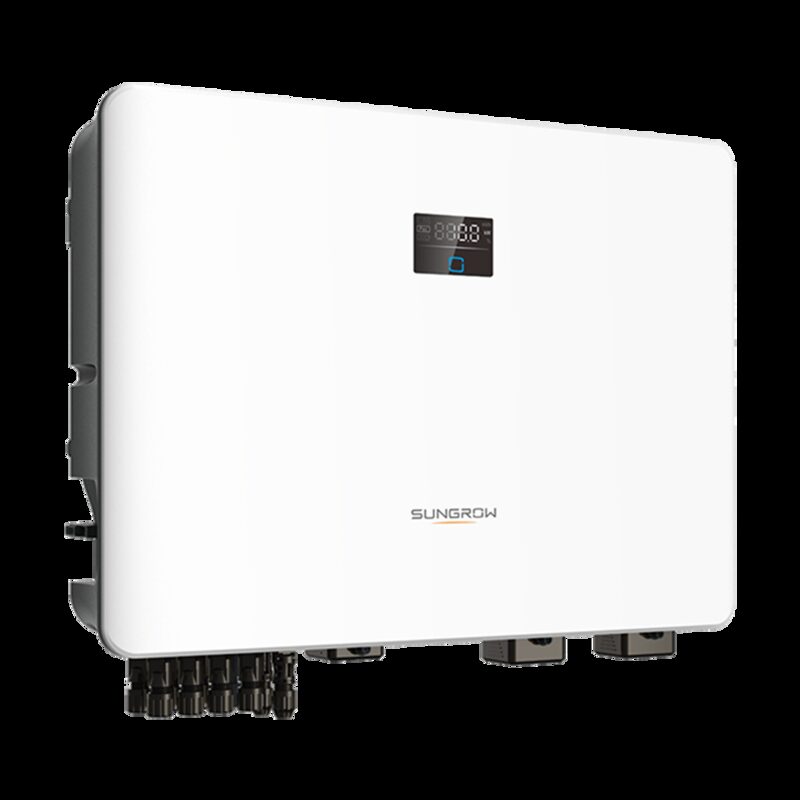
The inverter side splits into string inverters and hybrid inverters. The SG5.0RS and SG6.0RS are single phase string inverters with dual trackers, and both carry a 10 year warranty period7. The SG6.0RS is listed with a European efficiency of 97.5%6. These are grid-tied units: they convert panel output for the house and the grid, and they do not manage a battery.
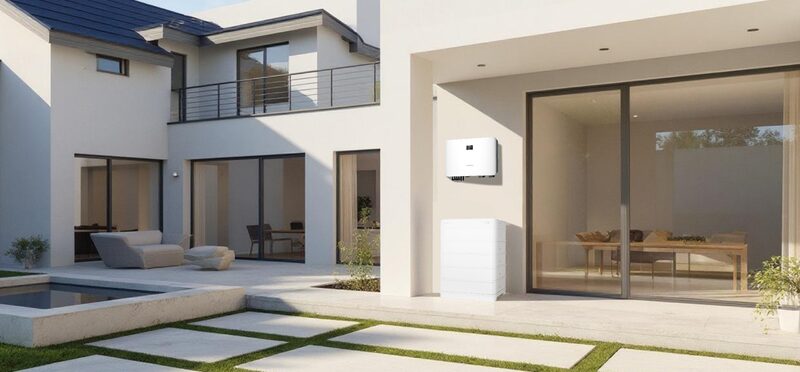
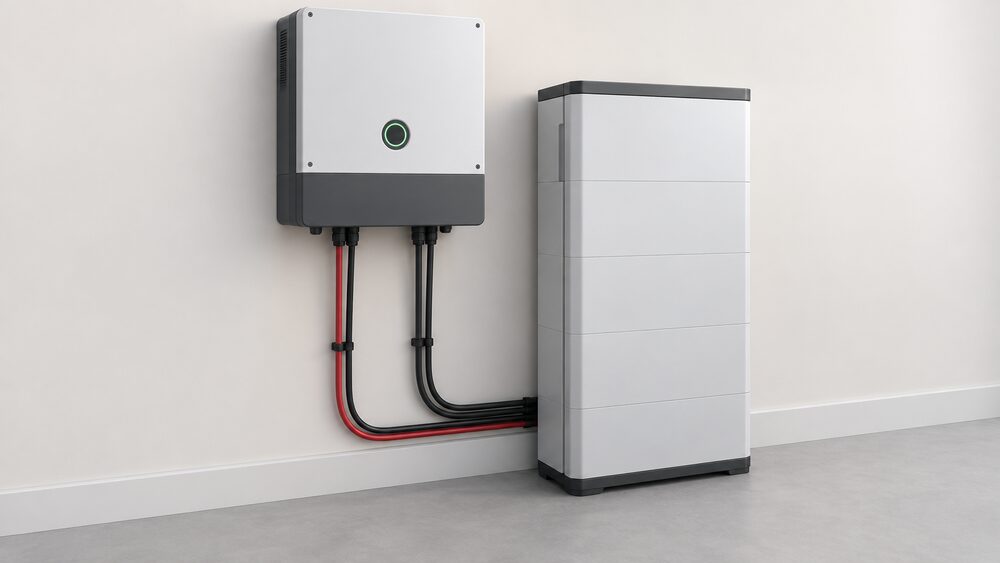
The hybrid inverters are the ones that matter for storage. Sungrow's SBH stacks are described as fully compatible with hybrid inverters including the SHT series, the SHRS series and the SHRS-20 series, and the stacks are sold in the UK in bundles pairing them with single phase and three phase hybrid models13. A 5 kW hybrid inverter is listed for residential use, and Sungrow describes the core components of a residential storage system as a hybrid inverter, batteries and an energy management system16.
Sungrow also makes a stand-alone residential AC charging solution for electric vehicles, described as a compact, safe and intelligent way to charge EVs at home17. That sits alongside the storage system rather than inside it, but it points to the same idea: keeping as much of a household's energy throughput as possible behind the meter.
| Product | Type | Key published figure |
|---|---|---|
| SG5.0RS | Single phase string inverter | 10 year warranty7 |
| SG6.0RS | Single phase string inverter, dual tracker | 97.5% European efficiency, 10 year warranty6 |
| SH3.6RS, SH5.0RS | Single phase hybrid inverter | Bundled with SBH stacks, residential application13 |
| SH15T, SH20T, SH25T | Three phase hybrid inverter | Bundled with SBH stacks of four 5.0 kWh modules15 |
| SBH100 to SBH400 | High voltage LFP battery | 10 to 40 kWh, 5 kWh modules4 |
Battery chemistry and capacity: LFP from 10 to 40 kWh
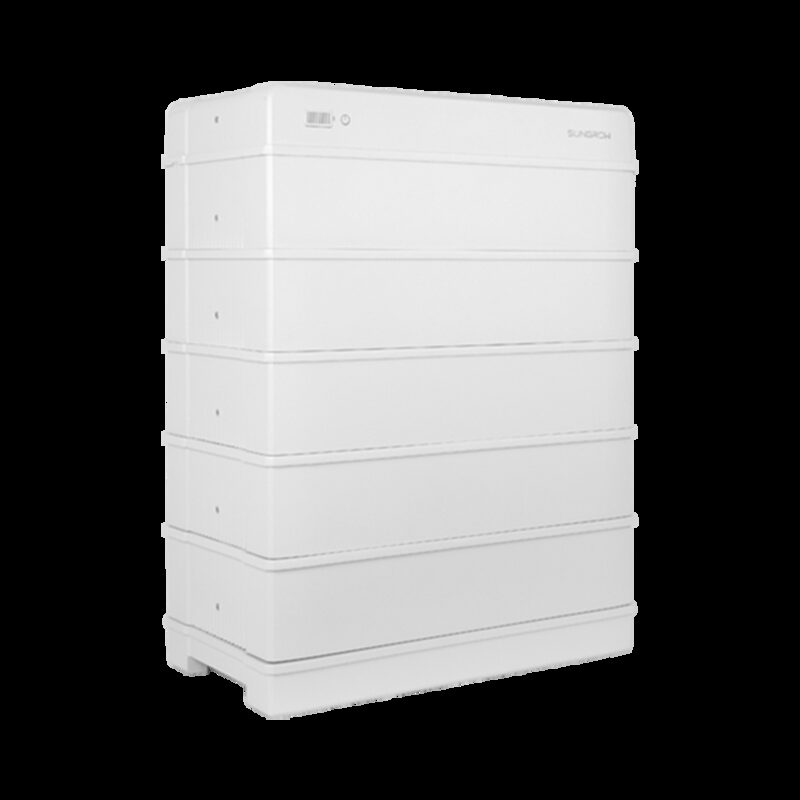
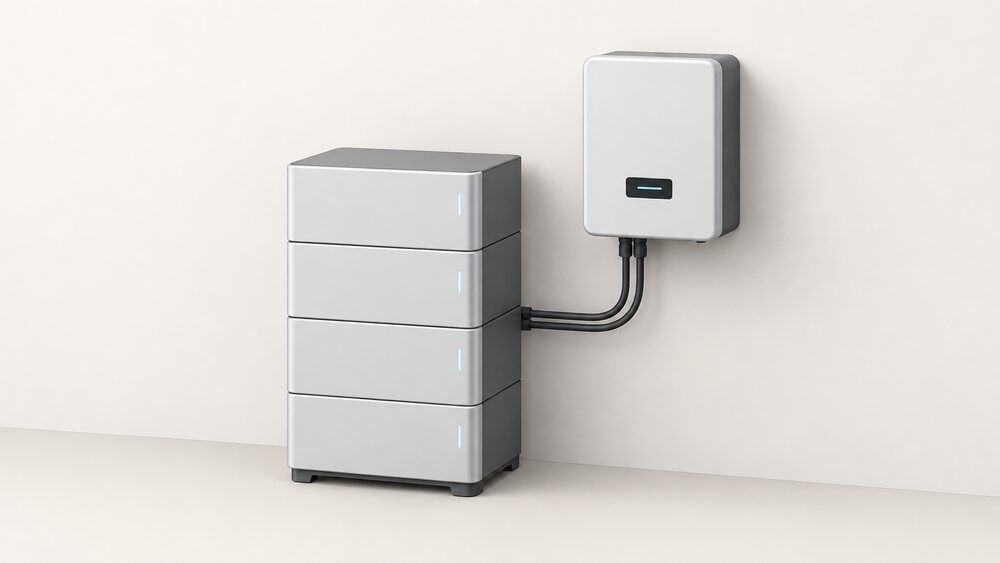
The SBH series is a high voltage LFP battery, and Sungrow lists the range as 10 to 40 kWh across the SBH100, 150, 200, 250, 300, 350 and 400 models, built from 5 kWh modules4. Distributor listings confirm the chemistry at model level: the SBH HV battery stacks are given as LFP or LiFePO4 prismatic cells, and the stack supplied with the SH15T three phase hybrid inverter lists its cell type as LiFePO413.
LFP, lithium iron phosphate, is the chemistry most home storage makers have settled on for stationary applications. It trades some energy density for thermal stability and cycle life, which suits a unit bolted to a garage or utility wall rather than a vehicle. Sungrow states that its high voltage LFP battery series offers up to 100% usable energy, and quotes a capacity range of 9 to 100 kWh across the wider series19.
The modular build is the practical detail. An SBH stack supplied with a three phase hybrid inverter contains four 5.0 kWh battery modules, and the stack can be expanded with additional compatible SBH modules, subject to the inverter's supported battery voltage range, Sungrow's compatibility limits and the final system design18. That last qualification is doing real work: adding capacity later is not simply a matter of buying another module, because the inverter has to accept the resulting voltage.
Physical and environmental figures are published for the stacks. SBH HV battery stacks carry an IP55 protection rating, and the SH25T three phase hybrid inverter is listed with a battery voltage range of 100 to 700 V15. One SBH stack is listed with a charge and discharge rate of 0.7P18. A further figure is unresolved: the SBH HV battery stack's rated DC power appears as 28.16 kW in one listing and 7.04 kW in another, and the two listings disagree, so neither should be treated as settled15.
Efficiency: over 99% in PV conversion
Sungrow states that its PV solar power converters are over 99% efficient, and that they handle capacities from 450 W to 8.8 MW5. That figure describes conversion inside the power electronics, not the round trip through a battery, and it is a maker's headline rather than a tested system result.
The model-level figure published for a residential string inverter is lower and more specific: the SG6.0RS is listed at 97.5% European efficiency6. European efficiency is a weighted average across part-load conditions, which is why it sits below a peak conversion claim. The two numbers are not in conflict; they measure different things, and the weighted figure is the one that reflects how an inverter behaves across a real day.
For a household, the efficiency question that matters most is not the inverter at all. It is how much of the generated electricity is used on site rather than exported. Sungrow's own framing is that the system feeds unused energy back into the grid, helping to offset the electricity bill2. That is a description of export, not of independence: every kilowatt hour sent to the grid is a kilowatt hour the household did not store. A battery changes that arithmetic by holding daytime generation for evening use, which is the point of pairing an SBH stack with a hybrid inverter.
Sungrow also describes its inverters as helping users maximise the efficiency of their solar power systems and as producing high quality energy output3. Those are general claims without a published test basis, and they should be read as marketing rather than as measured performance.
AC and DC coupling: how panels and batteries connect
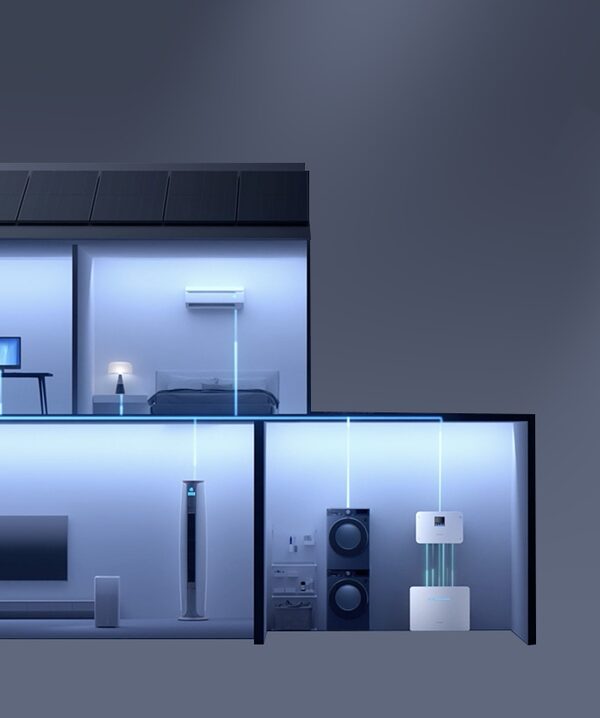
Sungrow states that its hybrid inverters offer AC and DC coupling for flexible solar panel and battery connections and PV system integration5. The distinction matters when a household is adding storage to an existing solar array rather than installing both at once.
DC coupling connects panels and battery on the same side of the inverter, so the battery charges directly from the array. AC coupling connects the battery through the alternating current side, which suits retrofits where an existing grid-tied inverter stays in place. A hybrid inverter that supports both gives an installer more than one route to the same outcome.
The operating rules are set out plainly. A Sungrow hybrid inverter can run without a battery, but it must be connected to energy-generating components such as PV panels and to the grid5. Battery integration is advised to capitalise on the advantages, including energy storage for backup electricity and peak shaving5. Sungrow also states that its hybrid inverters offer flexible switching between grid-tied and off-grid modes based on energy needs21.
That switching is the closest the range comes to off-grid operation, and it is worth being exact about what it is not. Sungrow's off-grid inverters are a separate product line, supplied with robust battery management systems designed to maximise energy storage22. A hybrid inverter with a battery can carry selected circuits through a grid outage, but it is not the same as an off-grid system sized to run a house indefinitely without a connection.
"Our Sungrow hybrid inverter can run without a battery, but it must be connected to energy-generating components (like PV panels) and the grid."
What a Sungrow system means for household energy independence
A Sungrow system does three things for a household's independence, and leaves three dependencies in place.
It stores generation on site. Sungrow's residential energy storage system enables clean solar energy to be transferred and stored for later use, and the 5 kW hybrid inverter allows excess solar energy to be stored in batteries12. It manages the flow. Sungrow states that its hybrid inverters offer advanced energy management, allowing users to optimise energy flow between solar panels, batteries and the grid22. And it can keep selected circuits live when the grid fails, through the flexible switching between grid-tied and off-grid modes that Sungrow describes21.
The dependencies are equally clear. The system is grid-connected by design: a hybrid inverter must be connected to the grid, and unused energy is fed back into it5. Export depends on a connection, a metering arrangement and a supplier's payment terms, none of which the manufacturer controls. The battery is a single maker's product, and the SBH series is listed as fully compatible with Sungrow's own SHT, SHRS and SHRS-20 hybrid inverters, so the pairing is a closed loop rather than an open one4. And the energy management layer is Sungrow's own, which means monitoring and control run through the maker's platform.
Sungrow does state that its hybrid inverters are compatible with top-tier battery brands, ensuring seamless integration21. That is a maker's claim about third-party pairing, and it does not remove the need to confirm compatibility for the exact inverter and battery proposed. For a household, the honest summary is that a Sungrow battery reduces reliance on a supplier for evening electricity, and does not reduce reliance on the grid, a supplier or the manufacturer.
Cost and price position
Sungrow's own published position on price is a claim rather than a figure: it describes its home solar inverter systems as incredibly affordable3. No manufacturer list price for a supplied and fitted Sungrow battery appears in the material available, and UK prices for a complete system are installer-quoted after a survey.
What exists instead is trade pricing through distributors, which is not the same as a household price. Sungrow battery storage systems are sold through Midsummer Wholesale, which describes the company as offering high quality products in residential, commercial and battery storage systems at competitive prices9. SBH stacks and hybrid inverter bundles appear in UK distributor catalogues, paired with both single phase and three phase inverters across the range, but the listed figures are trade specifications rather than installed household prices13.
Three things move the installed cost of a Sungrow system: the battery capacity chosen, since the range runs from 10 to 40 kWh and the stack is built from 5 kWh modules; the inverter type, with the three phase SH15T, SH20T and SH25T models sitting above the single phase range; and whether the installation is a retrofit to an existing array or a new build, which determines whether AC or DC coupling is used4. Accessory kits are part of the bill as well: bundles include a battery accessory kit, and that kit covers the battery base unit, top cover, switchgear, mounting hardware, cables and connectors and a COM terminator23.
Buying in the UK: distributors and availability
Sungrow does not sell direct to households in the UK. The route is through trade distributors and the installers who buy from them. Midsummer Wholesale lists Sungrow battery storage systems, and Alternergy carries SBH stacks, hybrid inverter bundles, string inverters and accessory kits9.
Availability is not uniform across the range. The SBS050, a separate high voltage LFP battery, is listed for the EU, Middle East and Africa and South East Asia regions rather than the UK, and is stated as fully compatible with the SHRS and SHRS-20 hybrid inverters25. The SBH series is the range that appears in UK distributor catalogues, and even within it, individual capacities and inverter pairings come in and out of stock.
The accessory position is worth understanding before ordering. The SBH battery accessory kit is a required part of a stack rather than an optional extra, and it is listed as a battery storage product with a 10 year standard warranty24. A separate SBR accessory kit exists for the SBR battery modules, and it is not interchangeable with the SBH kit26. Bundles typically include one accessory kit per stack23.
For a household, the practical consequence is that the buying decision runs through an installer, and so does the warranty relationship. The installer commissions the system, registers it, and is normally the first point of contact for a fault. Sungrow's own support pages list an email address and an online chat channel described as one-to-one support with its experts, and state that you can self-check the warranty information for your product27. The published warranty terms vary by product: 10 years on the SG5.0RS and SG6.0RS inverters, and 10 years standard on the SBH accessory kit7.
Sources27 cited
- PV inverter range, Sungrow
- Benefits of choosing Sungrow for your home, Sungrow
- The top reasons to choose Sungrow, Sungrow
- SBH100 to SBH400 residential battery, Sungrow
- Hybrid inverter FAQs, Sungrow
- SG6.0RS 6kW single phase string inverter, Alternergy
- SG5.0RS 5kW single phase string inverter, Alternergy
- Sungrow warranty terms and conditions, Sungrow
- Sungrow battery storage systems, Midsummer Wholesale
- Residential energy storage system, Sungrow
- Sungrow retains No.1 position in 2025 S&P Global rankings, Sungrow
- Residential energy storage system, Sungrow
- SBH 10kWh storage system with SH3.0RS inverter, Alternergy
- SBH 10kWh storage system with SH5.0RS inverter, Alternergy
- SBH 40kWh storage system with SH15T inverter, Alternergy
- Sungrow 5kW hybrid inverter, Sungrow
- Stand-alone home charging solution, Sungrow
- SBH 20kWh storage system with SH25T inverter, Alternergy
- High voltage LFP battery, Sungrow
- SBH 15kWh storage system with SH4.0RS inverter, Alternergy
- Optimal configurations for a hybrid inverter, Sungrow
- Off-grid, on-grid and hybrid systems compared, Sungrow
- SBH 15kWh storage system with SH6.0RS inverter, Alternergy
- Sungrow SBH battery accessory kit, Alternergy
- SBS050 high voltage LFP battery, Sungrow
- Sungrow SBR accessory kit, Alternergy
- Sungrow SBH 5.0kWh battery module, Alternergy
 Sungrow EV chargersWill a Sungrow charger use your spare solar electricity to fill the car?
 Sungrow Home Battery StorageHow much power can a Sungrow home battery store, and will it fit your house?
 Sungrow solar invertersSungrow inverters are used in many UK home solar setups, so which models suit a typical house, how long do they last, and what warranty do you get?