In this guide
Sungrow is a Chinese solar inverter manufacturer, established in 1997 by the university professor Cao Renxian, which describes itself as the world's number one in PV inverter shipments1. Its EV charging line grew out of that inverter business rather than out of a car or charging network background, and the domestic products are AC wallboxes: the AC007E-01 at 7 kW single phase, and a 22 kW three-phase unit listed as the AC22E-01 and AC22E-G22.
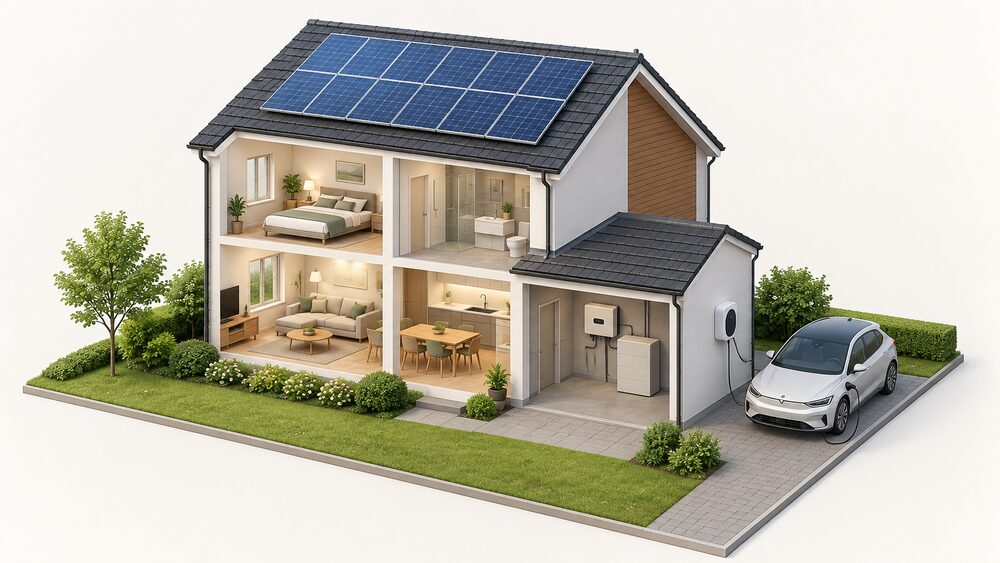
For a UK household the appeal is specific. Sungrow states that its chargers can run either as stand-alone units or integrated with PV and energy storage, and that its comprehensive DC and AC portfolio is integrated with PV and ESS4. Where a home already has Sungrow solar, the charger is designed to work inside that system rather than beside it. Where it does not, the charger is an ordinary grid-fed wallbox with a Type 2 plug6.
The dependence picture is mixed. A Sungrow charger keeps a household on the grid and on an electricity supplier, and the solar benefit depends on a Sungrow inverter or hybrid system being present. Sungrow's own hybrid inverters can run without a battery but must be connected to energy-generating components such as PV panels and the grid7. There is no published UK list price for the chargers, so a fitted cost is installer-quoted.
What Sungrow makes: inverters first, chargers second
Sungrow's product range covers PV inverter solutions and energy storage systems for utility-scale, business and industrial, and residential applications, alongside floating PV plant solutions, NEV driving solutions, EV charging solutions and renewable hydrogen production1. The inverter side is the deep end of the business: micro-inverters, residential inverters, string inverters, central inverters and modular inverters10. Sungrow also states that it offers solutions across all three system categories, on-grid, off-grid and hybrid11.
The charging business sits on top of that. Sungrow Charging delivers DC and AC chargers, and the company describes its portfolio as integrated with PV and energy storage, with projects deployed in more than 50 countries4. The company's own framing is that chargers operate either as stand-alone units or seamlessly integrated with PV and ESS4.
That matters for how the product should be read. Sungrow is not a charging specialist that added solar; it is a solar specialist that added charging. The consequence is that the charger's distinctive features are about how it behaves inside a Sungrow energy system, and its generic features, a Type 2 plug and a wall-mounted AC box, are the same as any other wallbox. For a household with no Sungrow equipment, the brand's relevance rests on the hardware and the support arrangements rather than on integration.
Sungrow's hybrid inverters offer advanced energy management, allowing users to optimise energy flow between solar panels, batteries and the grid, and the company states they are compatible with top-tier battery brands11. That is the layer a charger plugs into. A household weighing a Sungrow charger against another brand is really weighing whether it wants the whole system from one maker, with the integration that implies, or a charger chosen on its own terms. The wider picture of how solar-aware charging works is at charging an EV from solar panels.
The EV charger range: 7 kW AC to 180 kW DC
Sungrow's charging portfolio spans AC and DC. The AC side covers the domestic and workplace products: the 7/11 kW AC Charger for Electric Vehicles, which Sungrow describes as suitable for residential and workplace charging, and the 22 kW AC charger2. The DC side is commercial, and Sungrow's project list gives a sense of scale: a 180 kW solar-powered fast public charging project in France dated February 2025, and a 480 kW DC ultra-fast public charging project in Rhede, Germany dated April 202513.
The company also offers the iEnergyCharge big data platform alongside its AC and DC chargers14. That is a management layer for charging operations rather than a domestic product, and it points to where Sungrow's charging business is aimed: fleets, workplaces and public sites, with the home wallbox as the smallest unit in a much larger range.
| Product | Type | Power | Connector |
|---|---|---|---|
| AC007E-01 L1 | AC wallbox, single phase | 7 kW | Type 26 |
| AC011E-01 L1 | AC wallbox | 11 kW max charge power | Type 26 |
| AC22E-01 / AC22E-G2 | AC wallbox, three phase | 22 kW | Type 23 |
| DC chargers | Commercial | Project examples at 180 kW and 480 kW | Not stated13 |
For a UK home, the relevant rows are the first and third. The 11 kW unit sits between them and depends on a three-phase supply to deliver its rating. The DC products are not domestic equipment and are not sold for driveway installation.
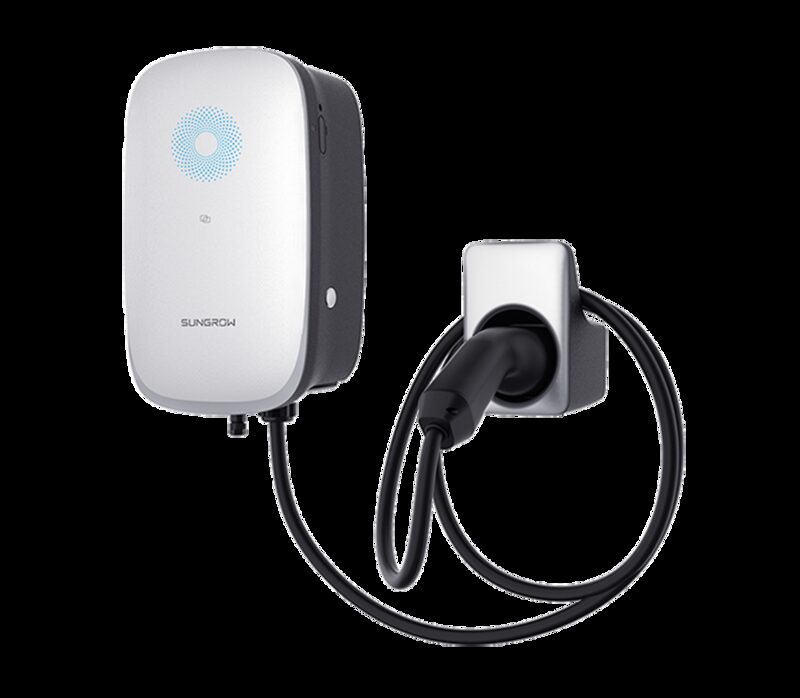
AC007E-01: the 7 kW single-phase home charger
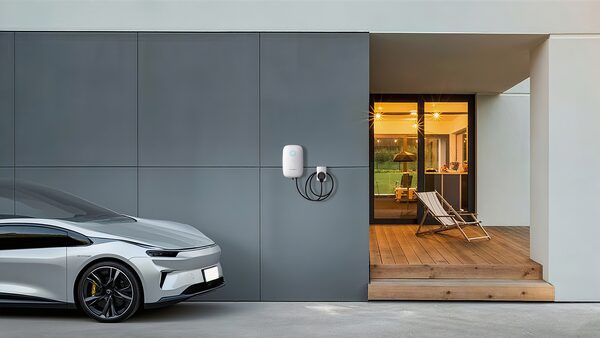
The AC007E-01 is the unit most UK households would be offered. A distributor listing gives its output as 7 kW, single phase, AC charger type, and describes it as compatible with electric vehicles by AC Type 2 plug15. Sungrow's own product page for the AC007E-01 L1 and AC011E-01 L1 lists a maximum charge power of 11 kW across that pair, which is the three-phase variant's figure rather than the single-phase one6.
The 7 kW rating is the UK domestic norm. The Society of Motor Manufacturers and Traders classifies slow and fast chargers as 7 to 22 kW, and independent guidance describes fast chargers between 7 kW and 22 kW as charging an EV in up to four hours16. A 7 kW single-phase unit is the standard fit for a home with a single-phase supply, which is most of the UK.
Sungrow's own description of the AC007E-01 L1 goes beyond charging: the page states it is for maximum usage of solar energy together with the Sungrow one or three-phase solution6. That is the integration claim in its plainest form. The charger is positioned as the point at which surplus solar generation is diverted into a car rather than exported.
What a household should expect in practice is a wallbox that behaves like any other 7 kW charger when there is no solar, and that can absorb surplus generation when there is. The difference between the two modes is a matter of control logic in the Sungrow system, not of the charger's hardware. Charging speeds and what 7 kW means in practice are set out at EV charging speeds and times.
The 22 kW AC charger: Type 2 plug and AC22E-G2 specifications
The 22 kW unit is Sungrow's higher-power domestic and light commercial charger. Sungrow describes it as a multi-functional 22 kW AC charger with a Type 2 charging plug for compatibility with most EVs3. The AC22E-G2 designation appears in Sungrow's article on AC chargers in EV charging infrastructure, which covers the 22 kW charger and its place in the wider charging picture14.
The practical limit on a 22 kW charger is the car, not the wallbox. A 22 kW AC supply only delivers 22 kW to a vehicle whose onboard charger accepts three-phase AC at that rate; many cars accept single-phase only, or accept three-phase at a lower rate. The charger also needs a three-phase supply at the property to reach its rating at all. Independent guidance groups 7 kW single-phase and 22 kW three-phase together as the two domestic options, which is the choice a household actually faces17.
Sungrow's 22 kW charger is described in its home charging guidance as reliable performance with a Type 2 plug for compatibility with most EVs, and the same description appears across Sungrow's regional versions of that guide3. The company's residential charging material also covers the AC22E-01 as a residential charging station14.
For a UK household, the decision between the two comes down to the supply and the car. A single-phase home with a car that charges at 7 kW single phase gains nothing from the 22 kW unit. A three-phase property with a car that accepts three-phase charging can use the higher rate. The comparison is worked through at 7kW vs 22kW home EV charger.
Charging with solar: PV, storage and EV integration
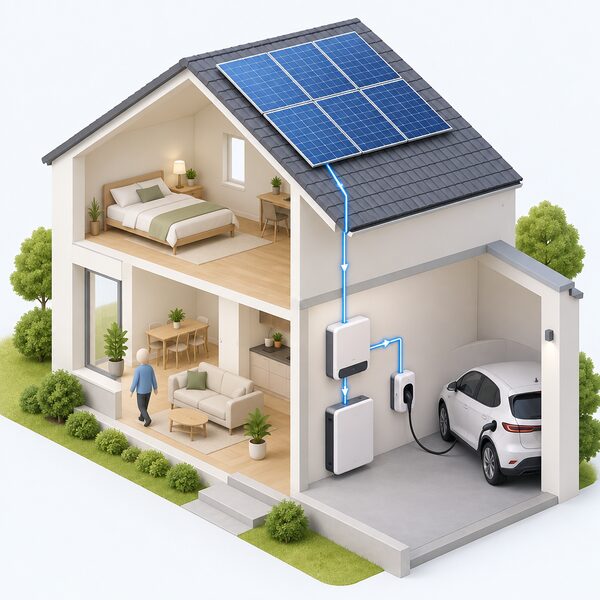
This is where Sungrow's charger differs from a generic wallbox. Sungrow states that its chargers operate either as stand-alone units or seamlessly integrated with PV and ESS, and that its comprehensive DC and AC portfolio integrated with PV and ESS serves customers across Europe, Asia-Pacific and beyond4. The company published an explainer on how PV, ESS and EV charging stations work together in April 202513.
The architecture is straightforward. Solar panels generate, an inverter converts, a battery stores what is not used immediately, and the charger draws from the battery or from live generation rather than from the grid. Sungrow's hybrid inverters offer advanced energy management, allowing users to optimise energy flow between solar panels, batteries and the grid11. The charger is the load at the end of that chain.
The iEnergyCharge platform sits alongside the AC and DC chargers as a data layer14. For a household, the meaningful integration is at the inverter and battery level rather than the platform level: whether the system can decide, moment to moment, whether power goes to the car, the battery or the grid.
"operating either as stand-alone units or seamlessly integrated with PV and ESS"
What this means for independence is bounded. A Sungrow charger with a Sungrow solar and battery system lets a household put its own generation into its own car, which reduces the electricity bought from a supplier. It does not remove the grid connection, and it does not remove the supplier: at night, in winter and on high-mileage days the car still charges from the grid. The solar benefit is real but seasonal and weather-dependent. The general case is at EV charging and household energy independence.
Compatibility with Sungrow home batteries
Sungrow's three-phase residential hybrid inverter, the SH15/20/25T, is the battery-side product most relevant to a home charging setup. Sungrow states that the smart energy management inverter works well with AC EV chargers, and repeats the point across its regional pages8. The same material describes the SH15/20/25T's push-in connections and smartphone-based commissioning as making setup simple and fast, and cites 50A fast charge and discharge as a plus feature8.
Sungrow also states that the SH15/20/25T supports 100% unbalanced output and a fast 50A charge and discharge current, which it describes as making the unit highly adaptable12. Unbalanced output matters in a three-phase home because it allows the inverter to serve a heavy single-phase load, such as a 7 kW charger, without needing balanced demand across all three phases.
| Feature | SH15/20/25T |
|---|---|
| EV charger compatibility | Works well with AC EV chargers8 |
| Charge and discharge current | 50A8 |
| Output balance | 100% unbalanced output12 |
| Coupling | AC and DC coupling for flexible solar panel and battery connections8 |
| Installation | Push-in connections, smartphone-based commissioning8 |
The pairing is not exclusive. Sungrow states that its hybrid inverters are compatible with top-tier battery brands, so a Sungrow inverter does not require a Sungrow battery12. Equally, a Sungrow charger does not require a Sungrow inverter. The integration benefit is greatest when the pieces come from the same maker, because the energy management logic is designed around them. The wider question of pairing storage with a car is at EV charging alongside a home battery.
UK availability and where the chargers are sold
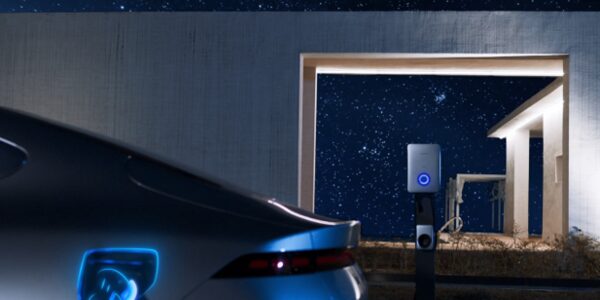
Sungrow does not run a direct UK retail operation for these chargers. They reach households through wholesale and distribution channels, and Sungrow describes the 7/11 kW AC charger as suitable for residential and workplace charging9. A UK distributor lists the AC007E-01 as a 7 kW single-phase hybrid charging unit, which is the clearest sign of the product being stocked in the UK trade rather than sold consumer-direct15.
There is no published Sungrow list price for a fitted charger. Northern Ireland's government guidance puts an EV charger at up to £1,000, which is a general figure for the hardware rather than a Sungrow price18. As with any home charge point, the fitted cost depends on the cable run, the consumer unit, whether the supply needs work and whether the installation is single or three phase. Prices are installer-quoted.
Installation itself is not a purely private matter. SSEN advises speaking to an electrician or installer first to check whether the home or business wiring can support an EV charger, and directs enquiries to its connections team19. UK Power Networks takes the same line on voltage questions, directing householders to their installer or electrician in the first instance21. The notification and connection process is set out at telling the network operator about a home EV charger.
Who Sungrow is, and what that means for a buyer
Sungrow Power Supply was established in 1997 by the university professor Cao Renxian, and the company states that more than 150 nations are powered by its products1. It describes itself as the world's number one in PV inverter shipments and cites a number one global ranking in PV inverter bankability1. Its inverter range covers micro, residential, string, central and modular types10.
Those are the company's own claims about its position, and they are the kind of claim a buyer can weigh against the company's scale rather than treat as independent verification. What is verifiable from the product side is the breadth: on-grid, off-grid and hybrid systems, off-grid inverters with battery management systems, and hybrid inverters with energy management across panels, batteries and the grid11.
For a household, the relevant question is not the shipment ranking but the support chain. Sungrow publishes warranty terms and conditions by country, including a UK page, and states that a customer can self-check warranty information for a product9. It also publishes a global support email address and an online chat channel described as one-to-one support9. Warranty and aftercare arrangements for charge points generally are covered at EV charge point warranties and aftercare.
The dependence to note is that support, warranty administration and any firmware or app functions run through the manufacturer. A Sungrow charger bought for its solar integration ties the household to Sungrow's inverter ecosystem for the full benefit, and to Sungrow's support operation for the hardware. That is a normal arrangement for a wallbox, but it is a dependence worth naming alongside the grid and supplier dependence that any home charger carries.
Sources22 cited
- Sungrow EV charger range, Sungrow, 2026
- Unlock the future: the power of AC chargers, Sungrow, 2024
- The comprehensive guide to Sungrow EV charger for home, Sungrow, 2025
- AC007E-01 L1 and AC011E-01 L1 product page, Sungrow, 2026
- Sungrow AC007E-01 EV charger 7kW, Alternergy, 2026
- Stand-alone home charging solution, Sungrow, 2026
- Is a hybrid inverter better than a normal inverter, Sungrow, 2024
- Optimal configurations for a hybrid inverter, Sungrow, 2025
- Sungrow warranty terms and conditions by country, Sungrow, 2026
- Sungrow PV inverter range, Sungrow, 2026
- Benefits of choosing a Sungrow solar inverter, Sungrow, 2026
- Inverter technologies compared: off-grid, on-grid and hybrid, Sungrow, 2025
- How to choose smart EV car chargers, Sungrow, 2024
- How does a PV, ESS and EV charging station work, Sungrow, 2025
- Sungrow UK EV charger page, Sungrow, 2025
- EVs: the facts, SMMT, 2025
- Electric vehicles for home charging, Electricity North West, 2026
- Electric vehicles, nidirect, 2026
- Existing electricity supplies, SSEN, 2026
- EV connections, SSEN, 2026
- Voltage changes in your home or business, UK Power Networks, 2026
- EV charging cable SEVA-24016P recall, Electrical Safety First, 2026
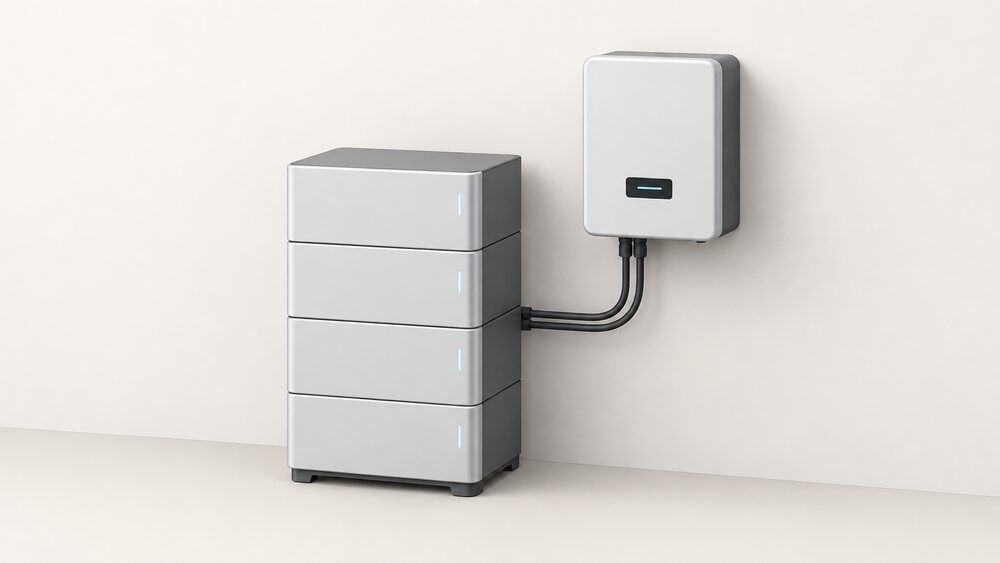 Sungrow Home Battery StorageHow much power can a Sungrow home battery store, and will it fit your house?
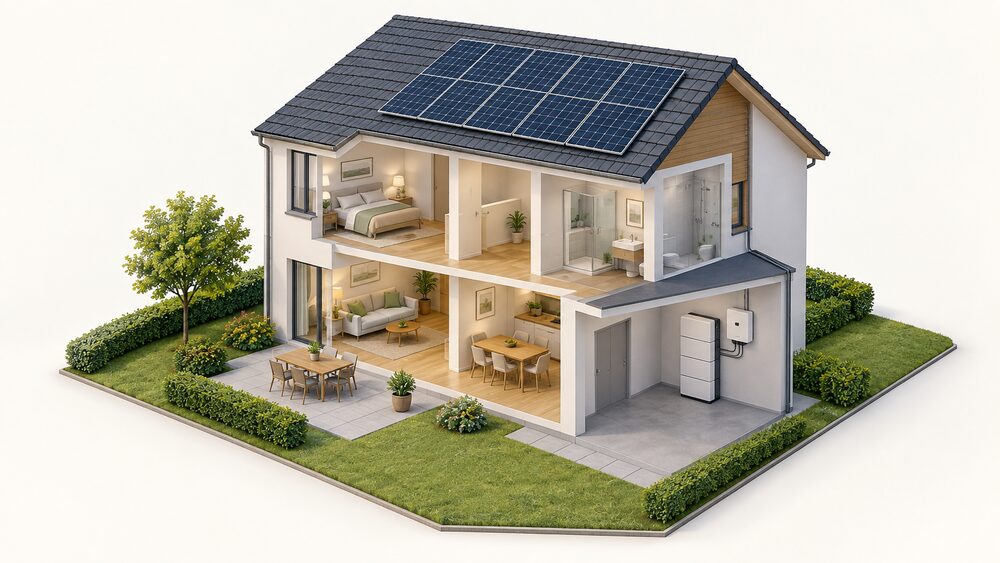 Sungrow home batteries and solar invertersSungrow makes solar inverters and home batteries, and it is one of the biggest names in the world at it.
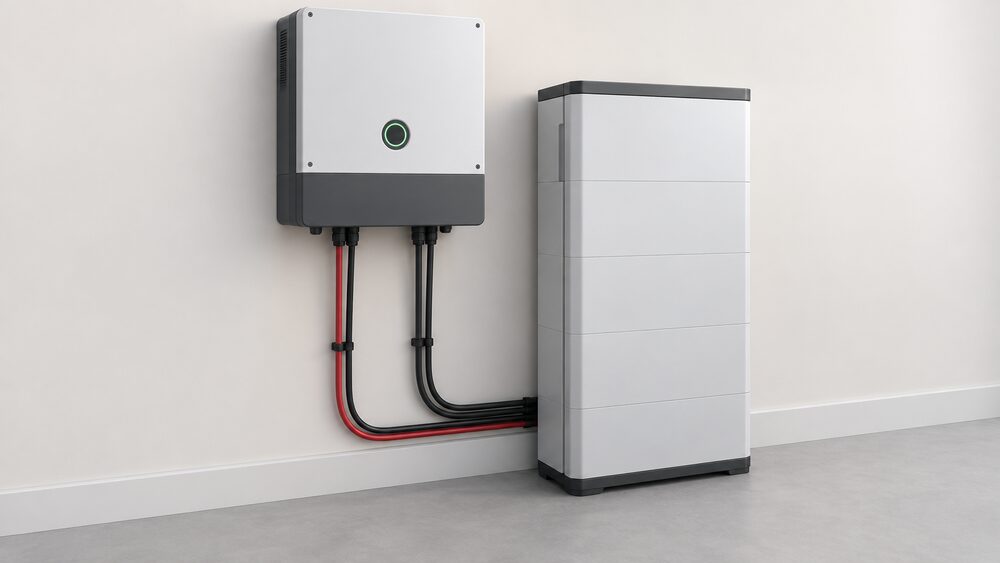 Sungrow solar invertersSungrow inverters are used in many UK home solar setups, so which models suit a typical house, how long do they last, and what warranty do you get?