In this guide
Sungrow is a Chinese power electronics manufacturer, established in 1997 by the university professor Cao Renxian, whose products now reach more than 150 nations1. For a UK household the relevant part of that catalogue is the high-voltage LFP battery range: the SBH series, built from 5kWh modules and scalable to a 160kWh maximum system capacity, and the SBS050, a separate high-voltage LFP unit1. Sungrow states a capacity range of 9 to 100 kWh across its high-voltage LFP battery series, with up to 100% usable energy and up to 30A continuous charging and discharging current1.
The chemistry is lithium iron phosphate throughout. Sungrow describes the SBH and SBS050 ranges as high-voltage LFP batteries, and the SBH stacks are listed with LFP or LiFePO4 prismatic cells1. The maker states that these batteries offer excellent thermal stability and are less prone to thermal runaway, and that the design uses a multi-staged protection approach1.
What this buys a household is storage that pairs with a hybrid inverter, so that solar generation can be held and used later rather than exported at the moment it is made. What it does not remove is the grid connection, the electricity supplier, or the dependence on the installer and distributor who supplied and registered the system. Sungrow's own warranty route is a self-check rather than a household call centre4.
Sungrow at a glance: founded 1997, sold in over 150 countries
Sungrow Power Supply Co., Ltd. was established in 1997 by Cao Renxian, a university professor, and the company states that more than 150 nations are powered by its products2. Its own account of the business describes the largest dedicated R&D team in the sector, with 40% of that team made up of experienced R&D talents2. Sungrow also claims the number one position in global PV inverter bankability, and describes a 26 year track record in the PV industry1.
The company's product portfolio is wider than batteries. It covers string inverters, hybrid inverters, residential energy storage, EV charging and cloud software, and Sungrow states that it is engaged in cloud computing, big data, artificial intelligence and the Internet of Things7. Its charging division alone reports projects deployed in more than 50 countries worldwide8.
For a household, the scale matters in two directions. A maker of this size has the engineering depth and the supply chain to support a battery over a long service life, and the SBH series is compatible with a spread of Sungrow hybrid inverters rather than a single model1. The same scale means the UK arm is a sales and support operation for a global product line, so the practical service relationship runs through the distributor and the installer who supplied the system, not through a national field team. Sungrow's UK presence is a product and warranty site rather than a service depot network4.
The home battery range: SBH and SBS050 high-voltage LFP batteries
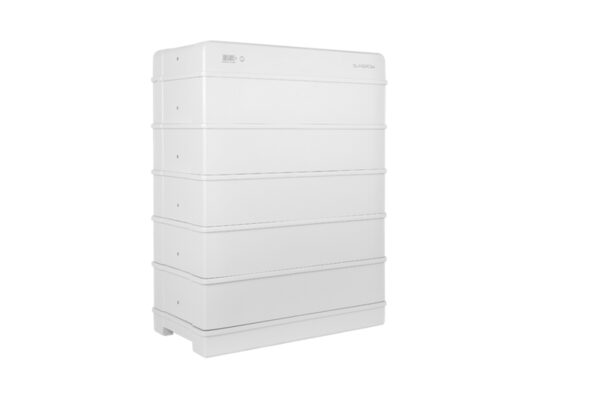
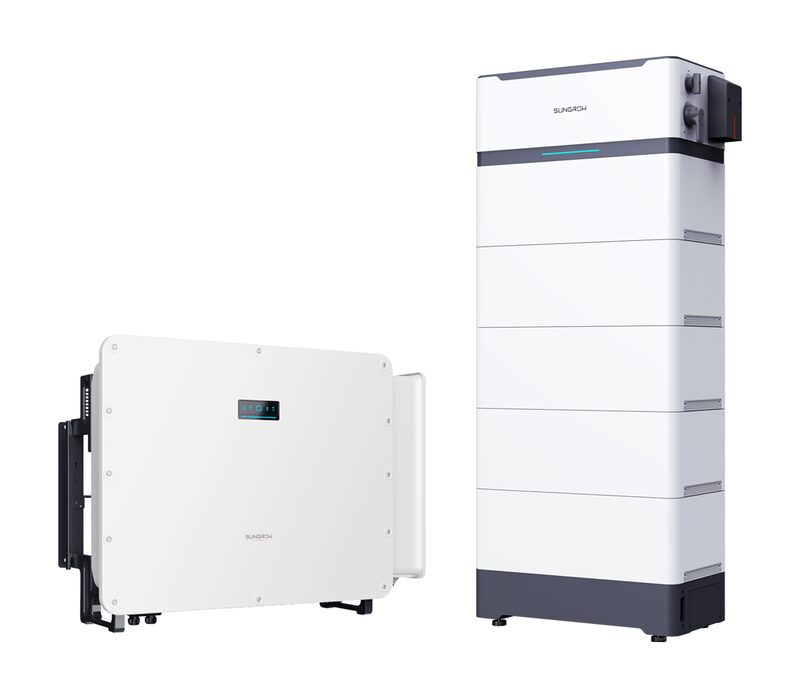
Sungrow sells two high-voltage LFP battery families that a UK household is likely to meet. The SBH series is the stackable range, built from 5kWh modules and scalable to a 160kWh maximum system capacity1. The SBS050 is a separate high-voltage LFP battery, listed by Sungrow for the EU, Middle East, Africa and South East Asia regions, and named as a compatible battery for the SHRS series of inverters1.
The SBH series is the one that appears in UK bundles. Distributor listings pair an SBH 10kWh high-voltage storage system with SH3.0RS, SH4.0RS and SH5.0RS single-phase hybrid inverters, and an SBH 15kWh system with the SH6.0RS9. Each of those bundles is listed as a high-voltage battery with LiFePO4 (LFP) cells, and the 10kWh stack is listed with a 10 kWh usable capacity9.
| Product | Type | Chemistry | Listed capacity |
|---|---|---|---|
| SBH SMR050 module | Stackable module | LiFePO4 (LFP)12 | 5kWh per module1 |
| SBH 10kWh stack | High-voltage battery | LFP / LiFePO4 prismatic cells3 | 10 kWh usable9 |
| SBH 15kWh stack | High-voltage battery | LiFePO4 (LFP)11 | 15kWh system11 |
| SBH series maximum | Stackable system | LFP1 | 160kWh1 |
| SBS050 | High-voltage battery | High Voltage LFP1 | Not stated |
The distinction between the two families is one of scale and region rather than chemistry. Both are LFP, both are high voltage, and both are designed to work with Sungrow hybrid inverters. The SBH series is the range with published UK bundle listings and a stated 160kWh ceiling; the SBS050 is listed for other regions and named as compatible with the SHRS series1. For a household sizing a system, the SBH module count is the variable that sets capacity, and the modular and stackable approach is what allows capacity to be added later.
Capacity and chemistry: 9 to 100 kWh of usable LFP storage
Sungrow states a capacity range of 9 to 100 kWh for its high-voltage LFP battery series, describing it as a customizable and scalable solution1. Within that, the SBH series is built from 5kWh modules and reaches a maximum system capacity of 160kWh1. The two figures describe different things: the 9 to 100 kWh range is the maker's headline for the series, while the 160kWh ceiling is the SBH series limit when modules are paralleled.
Usable energy is the figure that matters for sizing. Sungrow states that the series offers up to 100% usable energy, and the SBH 10kWh stack is listed with a 10 kWh usable capacity, which is consistent with that claim at the stack level1. The series also supports up to 30A continuous charging and discharging current, which sets how quickly the battery can absorb surplus generation or discharge into the house1.
Chemistry is lithium iron phosphate across the range. The SBH SMR050 module is listed as LiFePO4 (LFP), the SBH 10kWh and 15kWh stacks as LFP or LiFePO4 prismatic cells, and the SBS050 as a high-voltage LFP battery1. LFP is one of the main chemistries sold for home storage in the UK, and the chemistry comparison sets out how it differs from nickel manganese cobalt cells.
For a household, the practical reading is that capacity is chosen at installation and can be extended by adding modules, and that the usable figure is close to the nominal figure rather than a fraction of it. The capacity and usable capacity distinction still applies to the paperwork, and the sizing guide covers how to match a figure to a household's consumption.
LFP chemistry and multi-staged protection design
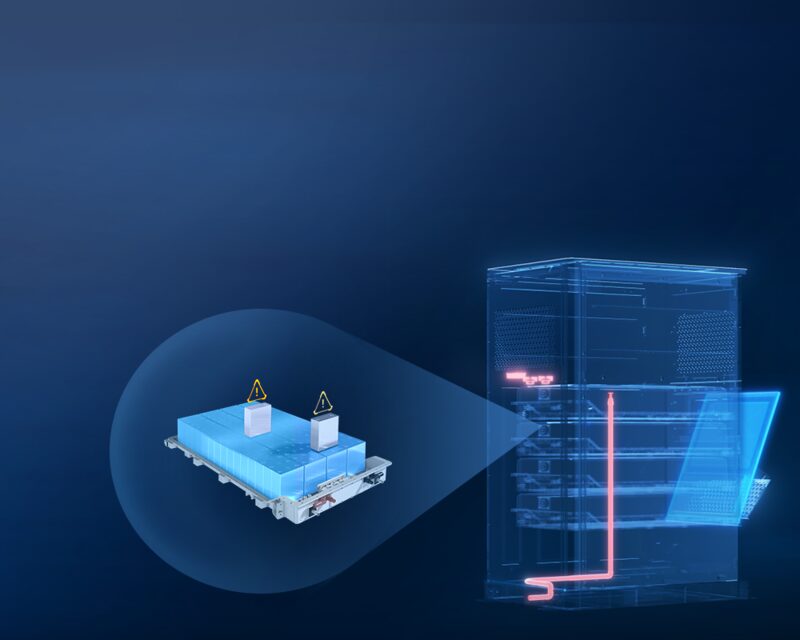
Sungrow's safety case for the range rests on two things: the chemistry and the protection architecture. The maker states that its high-voltage LFP batteries offer excellent thermal stability and are less prone to thermal runaway, and that the design uses a multi-staged protection approach1. LFP cells are the chemistry Sungrow uses across the SBH and SBS050 families1.
On the system side, Sungrow describes an N+1 protection arrangement that combines rack-level battery management on the batteries, a total energy management system on the inverter, and real-time monitoring of system status1. That is a layered design: the battery management system watches the cells, the inverter's energy management system coordinates the whole installation, and monitoring reports what the system is doing.
"Sungrow N+1 protection offers rack-level BMS on batteries, a total EMS on the inverter and real-time monitoring on system status"
The SBH series also passed a large-scale fire test. Sungrow announced on 25 November 2025 that its SBH Residential ESS passed the UL 9540B large-scale fire test conducted by UL Solutions, describing it as the world's first such residential test13. That is a test result reported by the maker, and it is a US standard rather than a UK one, so it speaks to the cell and enclosure design rather than to UK installation rules. The UK requirements that govern siting, ventilation and fire separation are covered in fire safety and ventilation and temperature.
Installation: single-person fitting and plug-and-play connections
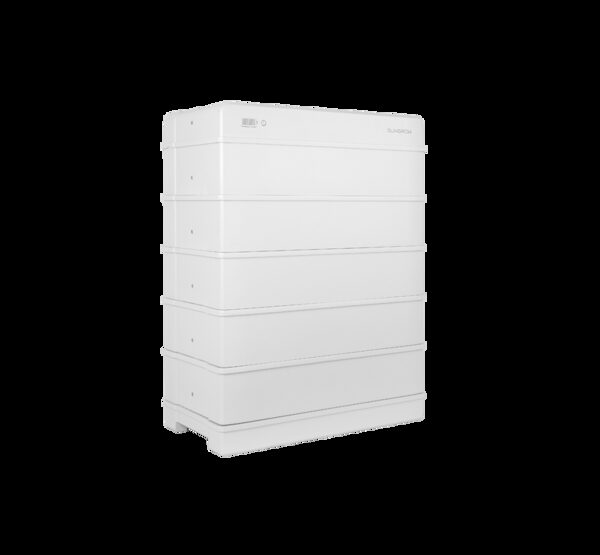
Sungrow states that its high-voltage LFP batteries are compact and lightweight enough to be installed by a single person, saving both time and labour cost, and that the modules connect with a plug-and-play feature using wiring-less connections between modules1. The same plug-and-play description is applied to the SH15, SH20 and SH25T hybrid inverters, which Sungrow lists with plug-and-play installation and 50A fast charge and discharge14.
The accessory kit that accompanies an SBH installation contains the battery base unit, the top cover or lid, the switchgear that houses the battery management system, mounting hardware, cables and connectors, and a COM terminator5. A separate Y connector set is sold for paralleling SBH and SBR batteries, and that connector carries a 2 year Sungrow manufacturer warranty15.
For a household, the installation claim affects cost and scheduling rather than the electrical design. A battery that one person can handle reduces the labour element of a quote, and wiring-less module connections reduce the time on site. The wider process, from survey to handover, is set out in the installation process, and the standards that apply to the work are covered in installation standards. Notification to the network operator under G98 or G99 is a separate obligation, explained in grid connection.
UK availability: sold as battery storage systems through distributors
Sungrow's UK battery presence runs through distribution rather than direct sale. Alternergy lists SBH high-voltage storage systems as bundles with Sungrow hybrid inverters: an SBH 10kWh system with the SH3.0RS, the SH4.0RS and the SH5.0RS single-phase hybrid inverters, and an SBH 15kWh system with the SH6.0RS9. The SBH 5.0kWh battery module is listed separately as a residential and small commercial product12.
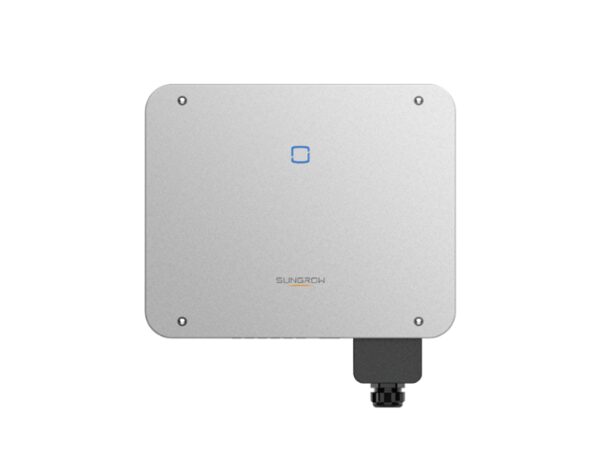
The SBH series is fully compatible with hybrid inverters including the SHT series, the SHRS series and the SHRS-20 series, so the battery is not tied to one inverter model1. Sungrow also sells string inverters in the UK, such as the SG6.0RS single-phase unit, which is listed with a 10 year warranty period and names the Sungrow SBR HV as its battery system model16.
| UK listing | Battery | Inverter | Battery voltage |
|---|---|---|---|
| SBH 10kWh bundle | SBH 10kWh | SH3.0RS, 1-phase9 | High voltage9 |
| SBH 10kWh bundle | SBH 10kWh | SH4.0RS, 1-phase10 | High voltage10 |
| SBH 10kWh bundle | SBH 10kWh | SH5.0RS, 1-phase3 | High voltage3 |
| SBH 15kWh bundle | SBH 15kWh | SH6.0RS, 1-phase11 | High voltage11 |
Prices for these systems are installer-quoted, and no published UK price is given for the bundles above. A household buying through this route deals with the distributor and the installer, and the warranty registration runs through the product rather than the point of sale. The cost guide covers how quotes are built up, and the VAT position is a separate question from the hardware price.
The company behind the batteries: R&D, patents and global track record
Sungrow's own account of itself is of a research-led manufacturer. The company states that it has the largest dedicated R&D team in the sector, with 40% of that team made up of experienced R&D talents, and it claims the number one position in global PV inverter bankability2. It describes a 26 year track record in the PV industry and more than 20 years of experience in clean power conversion1.
The company was established in 1997 by Cao Renxian, a university professor, and its products now reach more than 150 nations2. Sungrow's technology interests extend beyond hardware into cloud computing, big data, artificial intelligence and the Internet of Things, which is the basis for its monitoring and software products7.
Recent activity shows the direction of travel. Sungrow introduced the PowerHarbor residential all-in-one energy storage system at Intersolar Europe 2026, held in Munich in June 202614. In March 2026, TÜV Rheinland awarded its SHT series residential hybrid inverter the VDE-AR-N 4105:2026 certification, which Sungrow describes as the first product to meet the German low-voltage grid connection standard14. In September 2026, Sungrow and ERS Energy announced that their energy storage projects across Malaysia and the Philippines had reached nearly 1 GWh14.
For a household, the track record is a durability signal rather than a guarantee. A maker with a long history in power conversion is more likely to be able to honour a long warranty, and the SHT certification shows the inverter side of the range is being kept current with European grid standards. The dependence that remains is on the company's continued presence in the UK market and on the distributor chain that supplies it.
Support, warranty self-check and service network
Sungrow's warranty terms and conditions page carries a warranty claim route that lets an owner self-check the warranty information for their product, alongside an email address and an online chat channel for support4. The terms themselves differ by product. The SBH battery accessory kit is listed with a 10 year standard warranty, the SG6.0RS string inverter with a 10 year warranty period, and the Y connector set for paralleling SBH and SBR batteries with a 2 year Sungrow manufacturer warranty5.
The service network is global rather than local. Sungrow states that its products power more than 150 nations, and that its charging portfolio alone has projects deployed in more than 50 countries worldwide2. That reach is not the same as a UK field service team, and in practice the first point of contact for a fault is the installer or distributor who supplied the system.
For a household weighing independence, the position is this. A Sungrow battery stores generation on site and reduces the volume of electricity bought at peak times, and the SBH series can be extended by adding modules rather than replacing the system1. What remains is a grid connection, an electricity supplier, a dependence on the hybrid inverter that manages the battery, and a warranty relationship that runs through the maker's registration process and the company that installed it. The energy independence page sets out where those lines fall, and the warranty guide covers how retained capacity and throughput conditions work across brands.
Sources16 cited
- Sungrow High Voltage LFP Battery, Sungrow, 2026-09-17
- Benefits of Choosing Sungrow, Sungrow, 2026-09-17
- SBH 10kWh with SH5.0RS Hybrid Inverter, Alternergy, 2026-09-17
- Warranty Terms and Conditions, Sungrow, 2026-09-19
- Sungrow SBH Battery Accessory Kit, Alternergy, 2026-09-17
- Sungrow PV Inverter, Sungrow, 2026-09-17
- Sungrow Cloud Software, Sungrow, 2026-09-17
- Stand-alone Home Charging Solution, Sungrow, 2026-09-17
- SBH 10kWh with SH3.0RS Hybrid Inverter, Alternergy, 2026-09-17
- SBH 10kWh with SH4.0RS Hybrid Inverter, Alternergy, 2026-09-17
- SBH 15kWh with SH6.0RS Hybrid Inverter, Alternergy, 2026-09-17
- Sungrow SBH 5.0kWh Battery Module, Alternergy, 2026-09-17
- SBH Series Passes UL 9540B Fire Test, Sungrow, 2025-11-25
- Sungrow Debuts New High-Powered Residential Single-Phase Hybrid Inverters, Sungrow, 2026-09-17
- Sungrow Y Connector for SBH and SBR Batteries, Alternergy, 2026-09-17
- Sungrow SG6.0RS String Inverter, Alternergy, 2026-09-17
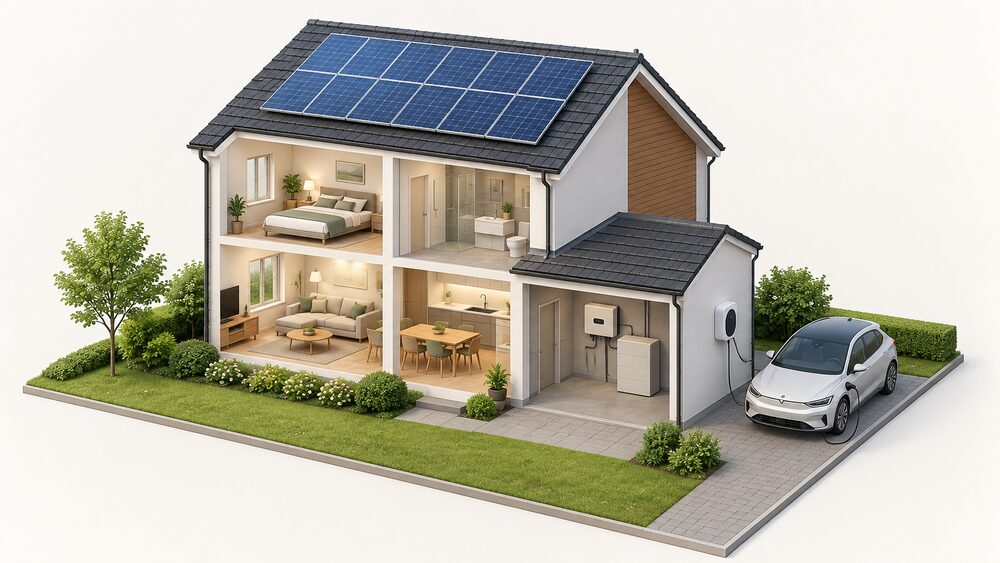 Sungrow EV chargersWill a Sungrow charger use your spare solar electricity to fill the car?
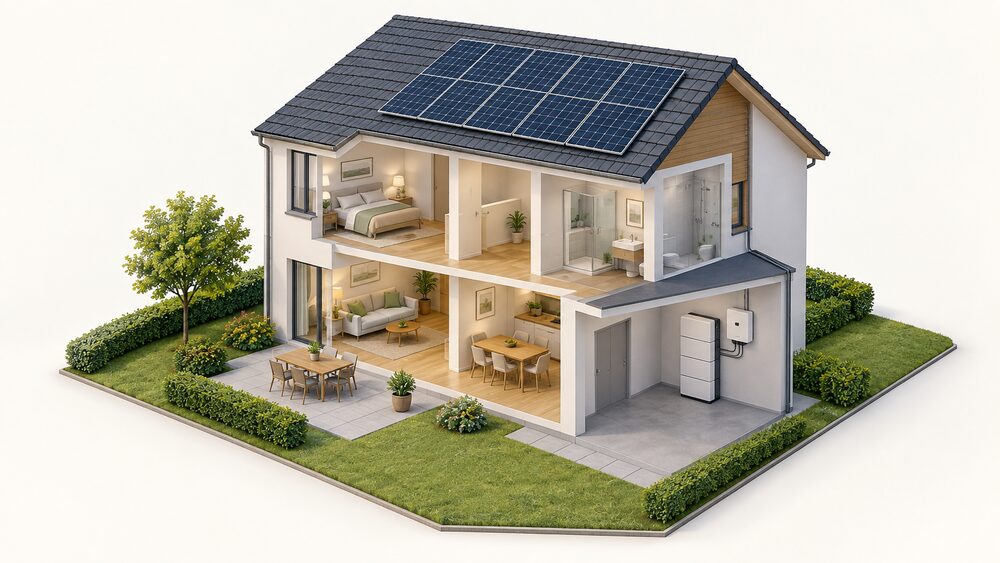 Sungrow home batteries and solar invertersSungrow makes solar inverters and home batteries, and it is one of the biggest names in the world at it.
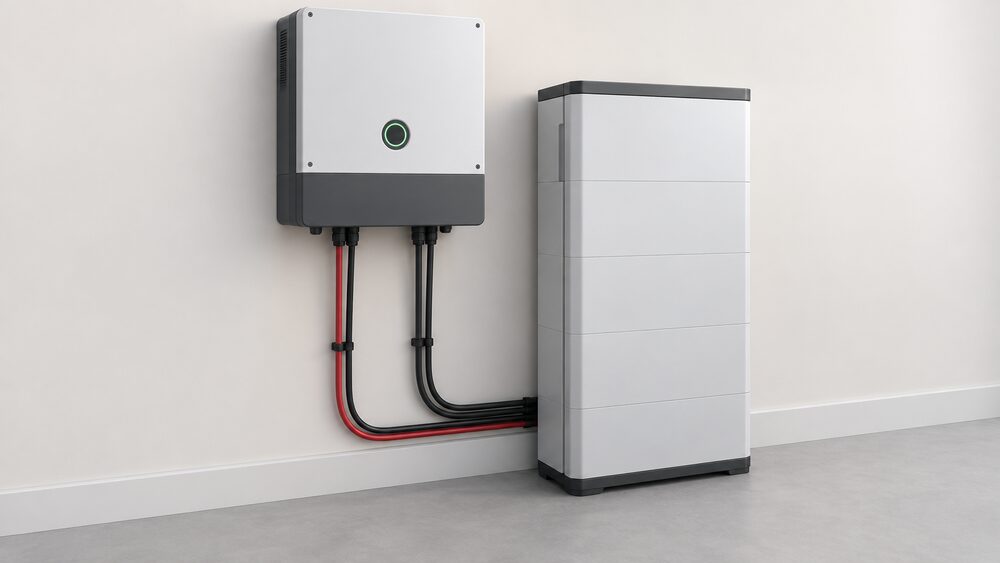 Sungrow solar invertersSungrow inverters are used in many UK home solar setups, so which models suit a typical house, how long do they last, and what warranty do you get?