
In this guide
GivEnergy Ltd, the company behind one of the best known home battery ranges in the UK, went into administration on 9 April 2026, with Chris Brooksbank of CB Business Recovery appointed as administrator1. The company ceased to trade and all its employees were made redundant2. If you already own a GivEnergy battery, the practical news is better than the corporate news: the Energy Storage Association states that your battery should continue to work as normal, and that the app and web portal are run by a different company in the group that is not in administration, so monitoring and control carry on as before1.
What has gone is the support structure around the hardware. GivEnergy closed its support lines, and the administrator's notice states that no further hardware warranties and no ongoing user and software support will be honoured by GivEnergy Ltd1. The Energy Storage Association advises consumers to revert to their installer in the first instance2.
What the administration means for owners
The distinction that matters is between the hardware in your house and the company that made it. A battery is a physical asset with its own local management electronics, and the Energy Storage Association states that the built in local management capabilities of the system will continue to monitor battery cells and shut down if there is an issue3. That is the safety layer, and it does not depend on GivEnergy Ltd existing.
The cloud layer is separate again. GivEnergy's online systems, including the app and portal, are operated by GivEnergy Software Ltd, which is not in administration, so owners can still monitor and control the battery as before1. The Energy Storage Association notes that cloud premium access became paid from May 2026, so some features that were free may now carry a charge3.
The warranty position is the hard part. The administrator's notice of 15 April 2026 states plainly that no further hardware warranties will be honoured by GivEnergy Ltd, and that ongoing user and software support will not be honoured either2. The Energy Storage Association's own reading is that GivEnergy warranties can only be enforced against GivEnergy itself, and that the closure likely means owners will be unable to claim in future3. Which.co.uk puts it more bluntly: if your battery is faulty, you are unlikely to be able to claim against GivEnergy warranties1.
For a household, this is the clearest form of manufacturer dependence there is: the equipment keeps working, but the commercial relationship behind it has ended. The wider pattern is covered in when an energy equipment manufacturer fails.
What GivEnergy was, and where it sat in the UK market
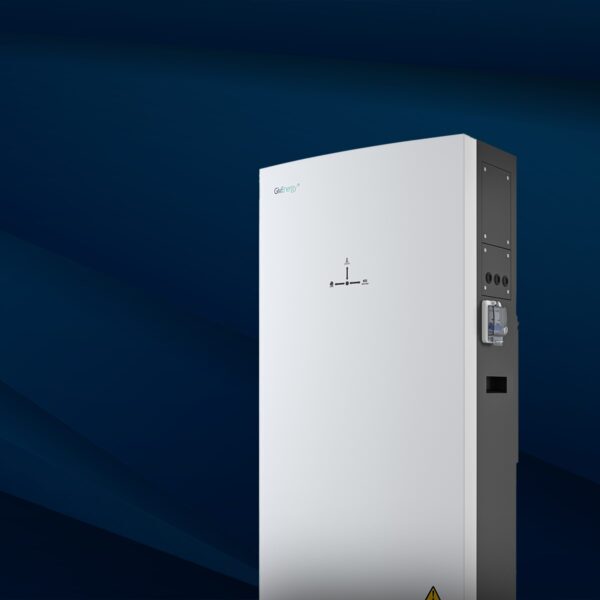
GivEnergy described itself as one of the largest manufacturers of battery storage systems in the UK, operating on an international scale, with a stated mission to accelerate the global transition to clean energy4. Its product line covered inverters, a range of differently sized batteries, single and three phase systems, EV chargers and smart plugs, sold to homeowners, businesses and installers6. The company reported 14,300 new installations in 20257.
It was a UK company with a UK support operation, including a contact centre that at one point employed around 30 in-house staff, and it marketed its home storage as designed, engineered and supported in the UK6. That domestic support promise is precisely what the administration removed.
The Energy Storage Association describes GivEnergy as the largest domestic battery manufacturer to stop trading to date3. That is a market-level statement rather than a comment on any individual installation, but it explains why the administration attracted the attention it did.
The corporate structure matters for anyone trying to work out what is still running. GivEnergy Commercial Limited continues to trade and is currently unaffected, selling commercial battery storage for sites from SMEs to large industrial premises3. GivEnergy Software Limited, which runs the app and portal, is also outside the administration3. GivEnergy Group Ltd is not in administration either, and other subsidiary companies are currently trading3. The administration applies to GivEnergy Ltd.
The range: batteries, inverters and the All in One
GivEnergy built its range around a choice of two architectures. The first is separate components: an inverter and one or more batteries installed as distinct units. The second is the All in One, which the company describes as a battery and an inverter in one integrated product, removing the need to install the two separately4. The All in One is a single unit comprising the battery and inverter components together8.
The inverter side splits by job. A hybrid inverter is a solar and battery inverter in one unit, typically used for new solar projects and for standalone battery installations4. An AC coupled inverter is a standalone battery inverter, for homes adding storage to an existing solar system or to no solar at all4. Pairing rules differ by generation: the AC coupled inverter 3.0 pairs with any low voltage battery, while the three phase hybrid inverter pairs with any high voltage stackable GivEnergy battery8.
The battery line spans a wide capacity range. The All in One carries 13.5kWh, and the high voltage stackable range is listed at 10.2kWh, 13.6kWh, 17.0kWh and 20.4kWh8. The Giv-Bat 9.5 Gen 3 is a 9.5kWh unit, and the Giv-Bat 5.12 is a 5.12kWh unit10. A 13.5kWh expansion battery is also listed12.
| Product | Type | Capacity or key figure |
|---|---|---|
| All in One | Battery and inverter in one unit | 13.5kWh6 |
| All in One 2 | Integrated unit | 13.5kWh7 |
| High voltage stackable | Stackable battery range | 10.2, 13.6, 17.0, 20.4kWh8 |
| Giv-Bat 9.5 Gen 3 | Single phase battery pack | 9.5kWh10 |
| Giv-Bat 5.12 | Battery | 5.12kWh11 |
| Expansion battery | Battery | 13.5kWh12 |
| AC coupled inverter | Standalone battery inverter | 45V to 58V battery range13 |
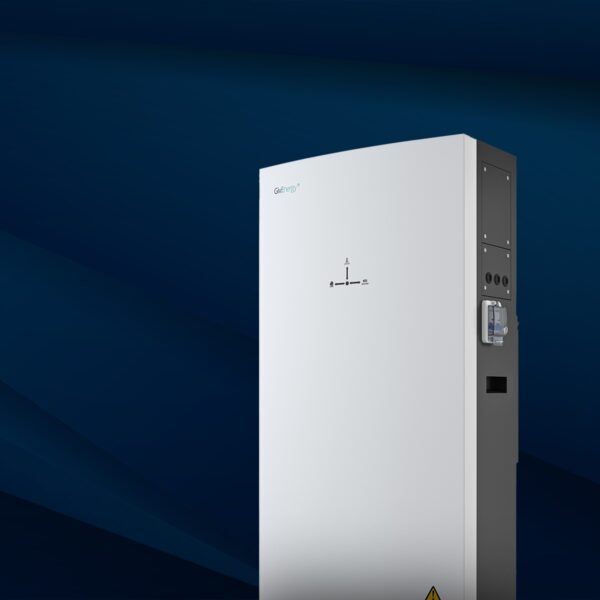
Battery specifications: capacity, chemistry and operating limits
Every GivEnergy battery uses lithium iron phosphate chemistry, written LiFePO₄, which the company describes as the chemistry at the heart of each unit and as durable and long-life5. The AC coupled inverter datasheet lists LiFePO4 as the compatible battery type13. The maker's description is what stands: no independent comparison of fire risk across chemistries is available here.
The All in One datasheet gives a battery voltage range of 260 to 346V and an AC voltage range of 180 to 270V, with connectivity over WiFi, LAN and 4G6. The All in One 2 shares the 260 to 346V battery range and the 180 to 270V grid range, uses CAN communication interfaces, and is built with a modular design of four removable battery packs7.
Temperature limits vary by product and are worth reading against where the unit will sit. GivEnergy guidance states a battery will operate normally from 0°C to 50°C, and between 0°C and minus 10°C it will function with reduced operation4. The high voltage stackable range is listed with a charging temperature of 0°C to 55°C, discharging from minus 10°C to 55°C, storage from minus 30°C to 60°C and an operating voltage range of 200 to 600 VDC9. The All in One 2 is listed at minus 10°C to 50°C operating7. The AC coupled inverter is listed at minus 25°C to 60°C with derating above 45°C13. The Smart Plug is rated minus 10 to 60°C ambient and the Gen 3 string inverter minus 25°C to 60°C15.
A garage, outbuilding or north-facing wall changes which of those figures applies. Reduced operation is not a fault; it is the unit protecting itself.
Cost: battery price, price per kWh and installation
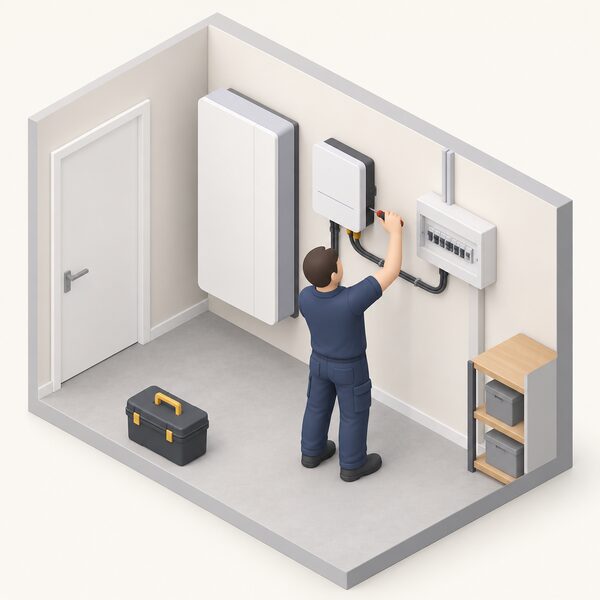
There is no manufacturer list price for a GivEnergy battery, and the company's own quote route ran through installers17. The figures that exist are indicative. A distributor comparison published in June 2026 puts a GivEnergy battery at £5,200 supply, £385 per kWh, with installation at £1,600, a stated 12 year life and a score of 7.1 out of 1018. Those are quoted figures rather than confirmed VAT-inclusive prices, and the VAT position is not stated.
Installation time is short. GivEnergy states that most home battery installations are completed in one day17. Weight matters for siting: a roughly 5kWh system from GivEnergy is 42kg and about the size of a slim kitchen cupboard19.
Three things move a quote: the capacity chosen, whether the home already has solar, and the electrical work needed at the consumer unit and for the inverter position. A grid-only installation, with no solar at all, is a supported configuration: GivEnergy describes charging the battery overnight when costs are low and switching to battery power when costs are high17. The company also states its battery storage is compatible with solar, wind and hydro generation4.
For wider context on what storage costs across brands, see home battery storage manufacturers.
Warranty and software support after administration
The published warranty terms were generous on paper. GivEnergy described product warranties spanning 12 years, with a 12 year standard warranty on inverters and 5 years on accessories such as the EV charger, voltage optimiser and PV protect4. The single phase battery pack warranty document states 12 years or 5,000 cycles from the date of installation, when installed and commissioned by an approved installer and a certified technician20. The high voltage stackable range is listed with a 12 year unlimited-cycle warranty9. The three phase inverter warranty is transferrable to subsequent owners, subject to conditions including a continuous outage of no longer than 14 days and a claim made within one month of the problem being detected21.
Two conditions sat underneath those terms. Non-compliance with the approved installer requirement defaulted the warranty to 12 months instead of the full 12 years, and call outs became chargeable7. The single phase warranty document also states that the warranty may revert to a 12 month standard warranty from the date of commission if the system exceeds the offline threshold20.
"no further hardware warranties will be honoured by Givenergy Ltd"
That notice, and the Energy Storage Association's statement that a GivEnergy warranty can only be enforced against GivEnergy itself, is what owners are left with2. The Energy Storage Association suggests consulting the energy company, installer or wholesaler you bought from in the first instance, and notes that credit card purchases may be claimable through the card provider3. The administrator's office can be reached at info@cb-br.co.uk for consumer enquiries2.
Software support is a separate question from warranty. The app and portal continue under GivEnergy Software Ltd, but the Energy Storage Association reported serious doubts about GivEnergy Ltd providing ongoing technical support and firmware updates1. Firmware is the part of the system most exposed to a manufacturer's disappearance; the general position is set out in firmware updates, app support and product lifespan.
Buying and installing now: installers, wholesalers and availability
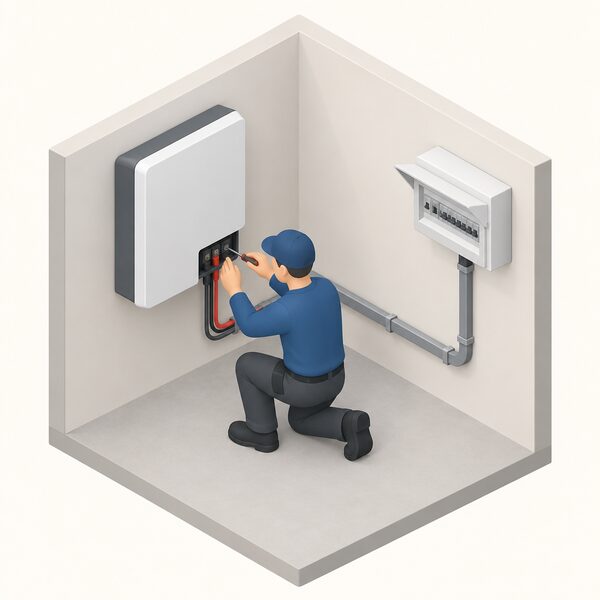
GivEnergy hardware is still in the supply chain. The company described a wide network of wholesalers stocking the full range of certified products, and a nationwide network of trained installers23. Approved installers had completed a certification process and detailed battery installation training direct from the manufacturer6. Those installers still exist and still hold the training, even though the manufacturer behind the scheme does not.
That makes the installer the centre of gravity for anyone buying or maintaining a GivEnergy system now. The Energy Storage Association's advice to revert to the installer applies equally to a fault, a query or a decision about replacement2. Whether a given installer still supports the brand, and on what terms, is a question for that installer rather than something the manufacturer can now answer.
Availability is uneven. GivEnergy noted that some products may only be available in specific regions, and at least one accessory has been discontinued: the GIV-EV-7.2 EV charger product page states the charger has been discontinued7. The company also stated that any electrician can fit a GivEnergy EV charger whether or not they have done approved installer training, as it is a plug-and-play accessory set up through the customer app7.
For a household weighing a purchase, the honest position is that the hardware specification is unchanged and the commercial backing is not. A buyer is choosing a system whose maker has ceased to trade, with an installer as the only practical support route. How that compares with brands still trading is covered in GivEnergy vs Tesla Powerwall and Fox ESS vs GivEnergy.
What ownership means for energy independence
A battery's contribution to independence is real but bounded. GivEnergy describes its batteries as a way to store renewable energy and reduce reliance on the grid, and the 13.5kWh expansion battery as ideal for medium to large homes seeking enhanced energy independence12. The system can automatically charge and discharge based on the times that save money, and a grid-only setup can charge overnight when costs are low and switch to battery power when costs are high6. The home storage range is described as compatible with existing solar or able to operate independently, and scalable as needs grow24.
What remains is a set of dependencies. The battery still draws from the grid when it charges, so a supplier and a tariff sit underneath it. The app and portal run on a manufacturer's cloud, so remote monitoring and control depend on broadband and on GivEnergy Software Ltd continuing to operate them1. Local management continues without any of that, and the system will shut down if it detects an issue3. The warranty, which was the longest-running promise in the package, now has no company behind it2.
For a household, the practical reading is that the hardware delivers what it always did, and the support and warranty layer does not. That is the shape of manufacturer dependence in its starkest form, and it is the same question covered across manufacturers and household energy independence.
Sources24 cited
- Solar panel battery storage, Which?, 14 May 2026
- GivEnergy updates, Energy Storage Association, 15 April 2026
- GivEnergy FAQs, Energy Storage Association, 17 April 2026
- UK Welcome Pack, GivEnergy, 2026
- Solar battery storage, GivEnergy, 17 February 2026
- Installer media pack, GivEnergy, 2026
- GivEnergy news feed, GivEnergy, 2026
- What comprises a typical GivEnergy system, GivEnergy, 2026
- High voltage stackable batteries, GivEnergy, 2026
- Giv-Bat 9.5 Gen 3 datasheet, GivEnergy, 2026
- Giv-Bat 5.12 datasheet, GivEnergy, 2026
- Expansion battery, GivEnergy, 2026
- UK datasheet AC coupled, GivEnergy, February 2024
- Products, GivEnergy, 2026
- UK datasheet Smart Plug, GivEnergy, 2026
- UK datasheet Gen 3 string inverter 5.0, GivEnergy, 2026
- GivEnergy quote, GivEnergy, 2026
- Battery storage costs, Heatable, 9 June 2026
- POST note 771, Parliamentary Office of Science and Technology, 25 June 2026
- Single phase battery warranty document, GivEnergy, 2026
- 3 phase inverter warranty document, GivEnergy, 2026
- GivEnergy file administration, Energy Storage Association, 11 April 2026
- GivEnergy, GivEnergy, 2026
- Home battery storage without solar, GivEnergy, 20 January 2026
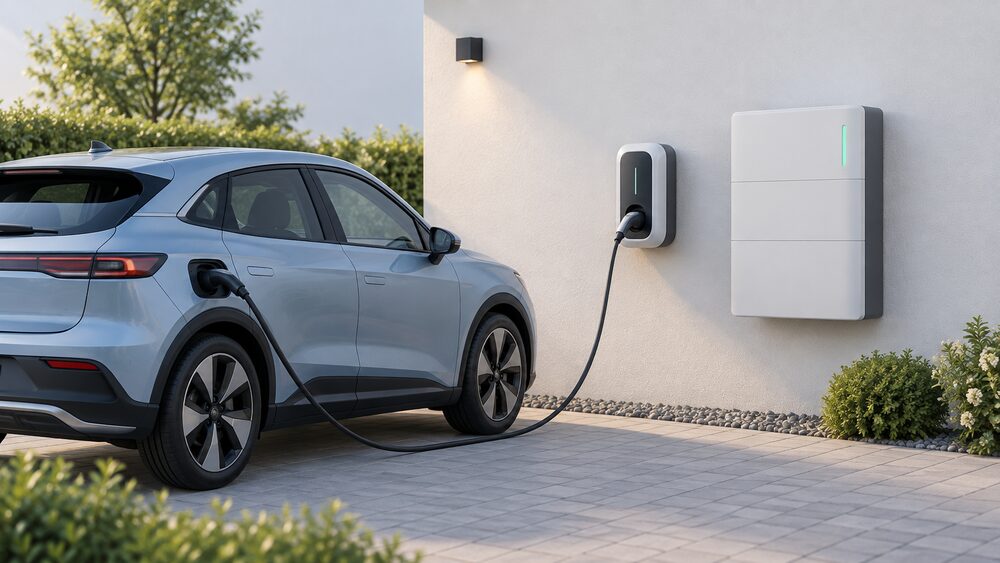 GivEnergy EV chargersGivEnergy went into administration, so what happens if you already own one of their EV chargers, or were about to buy one?
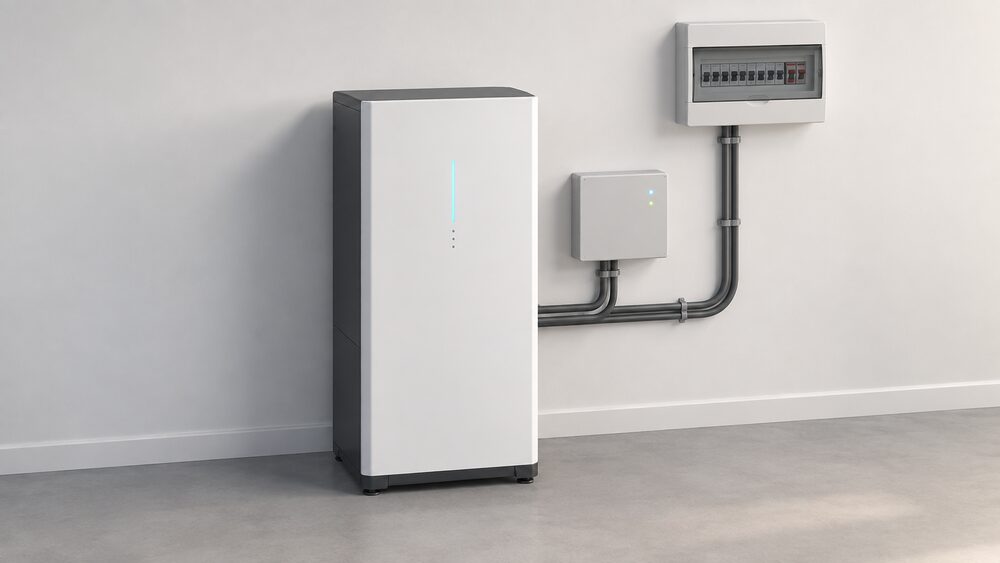 GivEnergy All in OneCan the GivEnergy All in One really keep your lights on in a power cut, and how much can it store?
 GivEnergy Batteries and All-in-One Systems for the HomeGivEnergy made some of the best known home batteries in the UK, and then the company went into administration in April 2026.