
In this guide
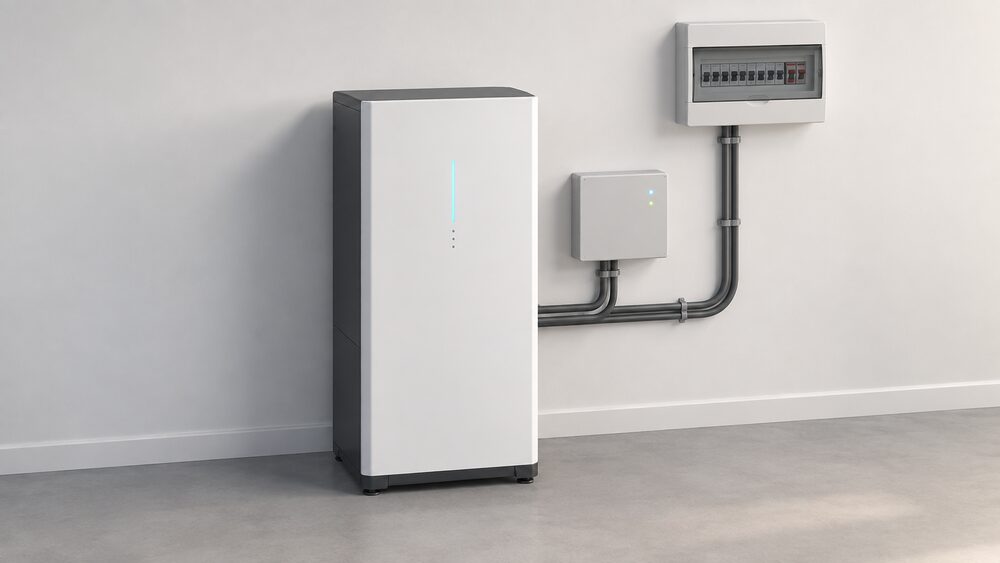
The GivEnergy All in One is a single unit that combines a 13.5kWh battery with an inverter, sold in the UK as a whole-home storage and backup product. Paired with a Giv-Gateway it is designed to keep the house supplied during a grid outage, switching between grid and battery automatically. The headline specification is a 13.5kWh usable capacity, 7.2kW peak and 6.0kW continuous output, and a stated 93% electricity round-trip efficiency1.
The most important fact about the product is not in its specification. GivEnergy Ltd entered Administration on 9 April 2026, with Chris Brooksbank of CB Business Recovery appointed as Administrator1. On 15 April 2026 the Administrator confirmed that the company has ceased to trade, that all its employees have been made redundant, and that no further hardware warranties will be honoured by GivEnergy Ltd1. The 12-year warranty published on the All in One datasheet is therefore not a term a buyer can rely on, whatever the document says3.
That does not make the hardware disappear. Units already installed continue to operate, and the app and portal are managed by GivEnergy Software Ltd, which is not in administration3. But the manufacturer's support, spares and firmware route has changed, and the cloud service that the app depends on moved to a paid tier in 20263. What follows sets out what the All in One is, what it does, what it costs, and what a household is actually buying into now.
GivEnergy has entered administration: what it means for owners and buyers
The sequence matters, because it determines what any household can still enforce. GivEnergy Ltd filed a notice of intention to appoint an Administrator on 11 April 2026, a formal step in the UK insolvency process that typically precedes entry into administration2. The appointment itself is dated 9 April 2026, and the Administrator is Chris Brooksbank of CB Business Recovery1. On 15 April 2026 the Administrator confirmed the company had ceased to trade, all employees had been made redundant, and no further goods or services should be provided1.
The warranty consequence is explicit. The Administrator confirmed that neither hardware warranties nor ongoing user and software support will be honoured, with consumers directed to their installer1. The published 12-year terms on the All in One and All in One 3.6 datasheets remain on the maker's website, but they describe an obligation of a company that has ceased trading3. A household holding such a warranty has a claim in the administration, not a service contract.
The Australian entity followed six days later, with GivEnergy Australia Pty Ltd entering voluntary administration on 15 April 20261. GivEnergy Software Limited, which manages the app and portal, is not in administration3. That split is the practical dividing line for an owner: the software layer continues under a separate company, while the hardware maker does not.
For a household weighing energy independence, this is the central fact of the page. A battery is a long-lived asset, and the maker's ability to honour a 12-year term is part of what is being bought. Where that ability has gone, the remaining support is the installer, the distributor and whatever the software company chooses to provide. Our page on home battery warranties sets out how warranty terms are normally structured and what to check.
What the All in One is: a 13.5kWh battery and inverter in one unit
The All in One is a single unit comprising the battery and inverter components together, described by the maker as a battery and an inverter in one integrated product that removes the need to install the two separately4. It is AC coupled, which means it connects to the existing consumer unit and measures import and export at the supply rather than at a solar inverter3. That makes it suitable for retrofitting to an existing solar installation as well as for a home with no solar at all.
The capacity is 13.5kWh, stated as usable on the datasheet and repeated across the maker's guidance3. The unit also comes with an inbuilt DC isolator4. The All in One 2 is a later arrangement of the same idea: the unit itself is listed at 13.5kWh capacity, AC and solar compatible, and a separate GivEnergy MPPT Unit enables it to operate as a true hybrid inverter when paired with the All in One 27. With expansion batteries the All in One 2 is stated to reach up to 40.5kWh of capacity10.
| Specification | All in One | All in One 3.6 |
|---|---|---|
| Battery capacity | 13.5kWh3 | 13.5kWh6 |
| Coupling | AC coupled3 | AC coupled6 |
| Depth of discharge | 100%3 | 100%6 |
| Warranty stated | 12 years3 | 12 years6 |
| Certification | Not stated | G9812 |
The chemistry is LiFePO4 on the All in One 2 and its expansion battery, described as lithium-ion with no cobalt, non-flammable and 99% recyclable7. The earlier All in One datasheet does not state a chemistry3. LiFePO4 is the dominant chemistry in current UK home batteries, and the differences between it and the alternatives are set out on our page on home battery chemistries.
Specifications: 13.5kWh usable, 7.2kW peak, 93% round-trip efficiency
The electrical figures are the ones a household will be quoted. Nominal AC power is 6000W, with peak power of 7.2kW and 6.0kW continuous3. Nominal AC current is 26A and maximum AC current is 32A, at a rated grid voltage of 230V with an AC voltage range of 180 to 270V and a rated grid frequency of 50/60±5Hz3. Displacement power factor is 0.8 leading to 0.8 lagging, and total harmonic distortion is under 3% at rated power3. Nominal battery voltage is 307V and the topology is transformerless3.
The efficiency figure is 93% electricity round trip, stated in the maker's welcome pack4. That is the proportion of energy put into the battery that comes back out, and it is the figure that determines how much of a cheap overnight tariff actually reaches the house. Round-trip efficiency is not a fixed property: it varies with charge and discharge rate, temperature and how long the battery sits full. Our page on round-trip efficiency explains what drives the losses.
The physical figures matter for siting. The unit is 1100mm high, 600mm wide and 280mm deep excluding feet, and weighs 173.7kg3. It carries an IP65 ingress protection rating and an operating temperature range of -10°C to 50°C3. Typical noise emission is under 30dB, and the All in One 3.6 datasheet gives the same figure3. The All in One 2 product page lists 50dB for the unit, while its expansion battery is listed at under 30dB7. The expansion battery has no power electronics of its own, which is why it is quieter.
Whole-home backup: how the Giv-Gateway keeps the house running
Backup is the feature that separates the All in One from a plain storage battery, and it depends on a second box. The Giv-Gateway is described as a companion gateway to the All in One, providing a backup power supply during outages5. Paired with the relevant Giv-Gateway, the maker states the system guarantees uninterrupted power by seamlessly switching between the grid and battery storage11. The Gateway 2 is stated to enable full whole-home backup and advanced load control when paired with the All in One 2 system, with instantaneous switchover during grid outages11.
The mechanism is an off-grid mode. In the event of a grid failure, the system will continue to provide power into the home and operate off-grid until grid supply is restored, when used with the Gateway3. The All in One 3.6 datasheet describes the same behaviour and lists whole house backup when used with the GivEnergy Gateway6. The All in One 2 delivers seamless switchover for backup power during blackouts when paired with a Gateway 211.
Two limits are worth stating plainly. First, the backup is conditional on the gateway being fitted; the battery alone does not island the house. Second, whole-home backup is limited by the inverter's output. At 6.0kW continuous, a house running an electric shower, an oven and a heat pump simultaneously will exceed what the unit can supply, and the gateway's load control exists to manage that. What actually stays running in an outage, and how changeover is wired, is covered on our page on battery backup power and EPS.
Cost: £6,900 to £7,550 and what the 12-year warranty requires
The published price position comes from a comparison article rather than a manufacturer list price: £7,550 for the All in One without solar or as a retrofit, and £6,900 with solar5. Those figures are indicative and dated August 2024, and they should be read as quoted rather than as confirmed VAT-inclusive prices. Distributor listings for the same product have shown £6,658.51 and £5,548.76 for the All in One Battery System, and the two documents disagree, so neither can be treated as the price5. In practice, prices are installer-quoted after a survey.
The warranty terms attached to that price are now the difficult part. The All in One datasheet states a 12-year warranty, and the All in One 3.6 datasheet states the same3. The maker's installer guidance describes product warranties spanning 12 years14. The conditions attached to the single-phase battery warranty include a service requirement, and the warranty may revert to a 12-month standard warranty from the date of commission where the system is offline for more than 10% of the time or for more than 14 consecutive days from installation15. Installation, use and maintenance must comply with applicable laws, regulations, safety standards and the product and installation manuals, and failure may void the warranty15.
"the warranty may revert to a 12-month standard warranty from the date of commission."
The warranty is stated to be transferrable to subsequent owners, subject to the stated transfer conditions, and a continuous outage must last no longer than 14 days16. None of this changes the position set out above: the Administrator confirmed on 15 April 2026 that no further hardware warranties will be honoured by GivEnergy Ltd1. The terms are worth understanding because they show what the product was sold with, and because an installer offering their own workmanship guarantee is now the practical route. Cost context across the market is on our page on home battery cost.
Installation, DNO permission and sizing limits in the UK
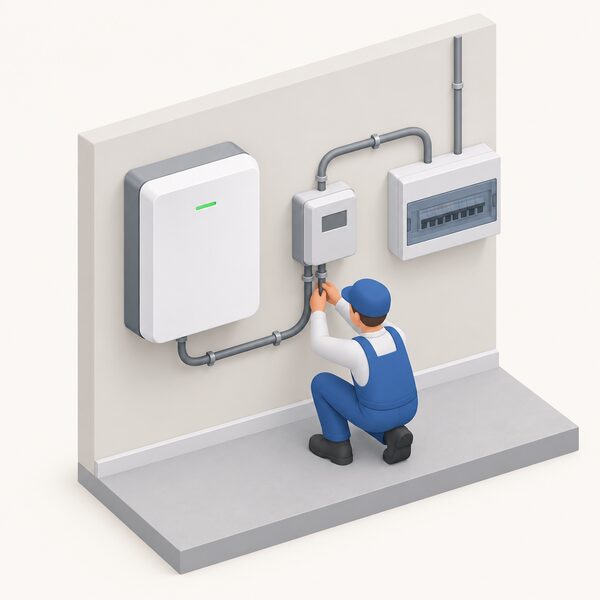
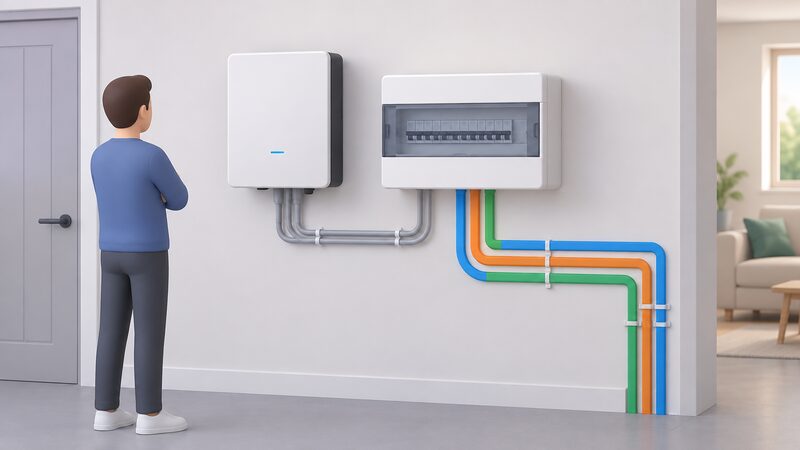
The All in One is an AC-coupled battery, so the connection question is about the inverter's output rather than about solar. Larger systems over 3.68kW will usually need the DNO's approval before they can be connected to the grid17. G99 applications cover installations over 3.68kWp which require prior approval from the DNO18. The maker's own note is that the All in One 3.6 requires G98 certification, while the 6.0 requires G9912. A 6.0kW unit therefore sits above the 3.68kW threshold and needs prior approval, while the 3.6kW variant can be notified under G98.
The metering requirement is separate. GivEnergy's guidance describes selling the unit together with a GEM120 meter4. Where metering is used for payment under an official scheme, onboard metering is not sufficient and a standalone electricity meter is required19. The Smart Export Guarantee supports solar photovoltaics, wind, micro-combined heat and power, hydropower and anaerobic digestion, and installations must be located in Great Britain20. Northern Ireland sits outside the SEG, and the connection process there runs through the G98/NI route, a standard used across all UK installers and manufacturers, not just NI21.
Sizing is the other constraint. A 13.5kWh battery covers a typical household's overnight demand and absorbs a day's solar generation in summer, but it will not carry a house through a winter week. The All in One 2 addresses this with expansion batteries taking capacity to up to 40.5kWh, and the maker states that multiple units can be installed in parallel10. The All in One 3.6 datasheet lists three units in parallel, the earlier All in One datasheet lists six as coming soon, and the All in One 2 product page lists two3. Those figures differ between documents and between generations. How to work out the right size is set out on our page on home battery sizing, and the connection rules in more detail on G98 and G99.
Monitoring, connectivity and the shift to a paid cloud tier
The All in One carries built-in Wi-Fi and LAN, providing real-time monitoring, remote diagnostics and over-the-air software updates11. The datasheet lists connectivity as WiFi, LAN and 4G, with an LED and app display3. The All in One 2 product page repeats the built-in Wi-Fi and LAN arrangement and the over-the-air update route11. The hybrid inverter range is described as supporting remote monitoring, diagnostics and firmware updates13.
The cloud service behind that has changed. GivEnergy's own news post states that the cloud platform had been provided free of charge to date, funded by ongoing hardware sales, and that it is moving to a paid single monthly fee for cloud access12. A single monthly fee will cover remote access, historical data, automation and API usage including third party remote access12. Independent support material states that cloud premium access will become paid from May 2026, charged by GivEnergy Software22.
This is the clearest ongoing dependence the product creates, and it is now a commercial one. Local control at the unit continues without an internet connection, but scheduling from away, historical data, automation and third party integration depend on a home broadband connection, the software company's servers and a subscription. For a household whose reason for buying storage is independence, that is a real qualification: the energy is self-generated, the visibility into it is rented. Our page on monitoring a home battery covers what local access looks like across systems.
The wider GivEnergy range and how the All in One compares
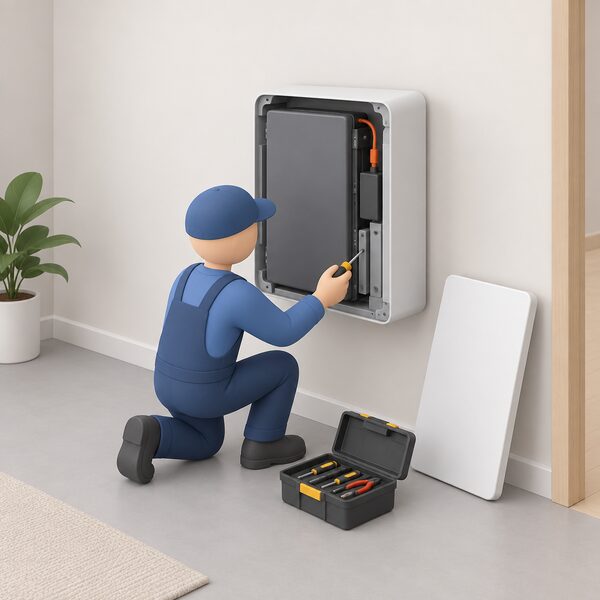
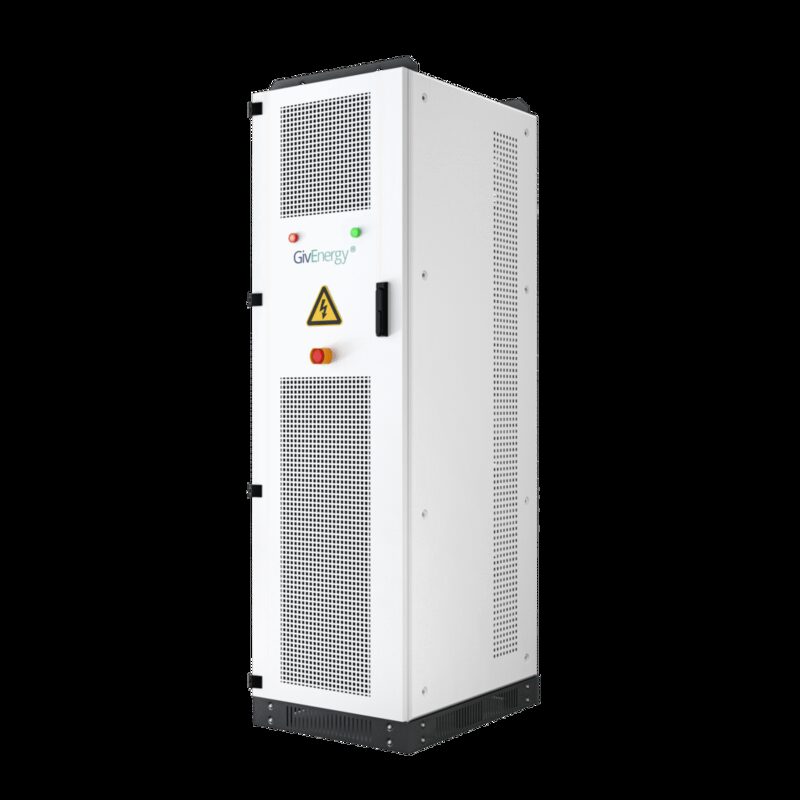
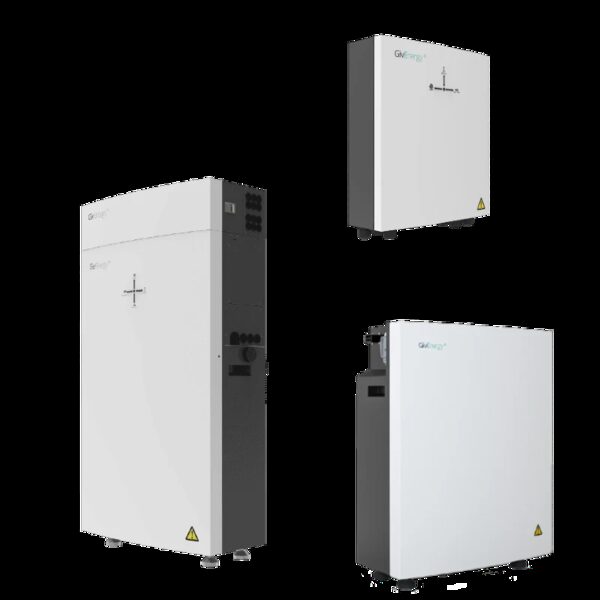
GivEnergy's battery line-up listed by the maker runs from the All in One 13.5kWh through HV stackable units at 10.2kWh, 13.6kWh, 17.0kWh and 20.4kWh4. The 13.5kWh Expansion Battery is designed to increase the storage of an existing system13. The All in One 2 is described as handling heavy energy loads while remaining one of the more affordable battery storage systems in the market, a claim made by the maker about its own product13. The Commercial All-in-One is a separate product: a fully integrated commercial energy storage system combining PCS, battery, controls and safety equipment in a single cabinet11.
For comparison, the BYD Battery-Box HVS range lists usable capacities of 5.12kWh, 10.24kWh and 12.8kWh across its modules23. That is a modular stack rather than a single integrated cabinet, and the two approaches suit different installations. The trade-offs between an integrated unit and a stack are set out on our page on all-in-one battery systems, and the modular alternative on modular and stackable battery systems.
The GivEnergy installer network is described as offering consultancy, quality installation, aftercare, maintenance and support14. With the manufacturer in administration, that installer relationship is now the main route for service, spares and any workmanship guarantee. A household considering a used or remaining-stock All in One is buying hardware with no manufacturer warranty behind it, and should establish in writing what the installer will cover and for how long. The wider brand picture is on our page on GivEnergy batteries and All-in-One systems.
Sources23 cited
- GivEnergy updates, Electricity Storage Association UK, 2026
- GivEnergy file administration, Electricity Storage Association UK, 2026
- UK Datasheet All in One, GivEnergy, 2025
- What comprises a typical GivEnergy system, GivEnergy, 2026
- All in One vs Tesla Powerwall 3, Spirit Energy, 2024
- UK Datasheet All in One 3.6, GivEnergy, 2025
- All in One 2, GivEnergy, 2026
- All in One 2 standalone, GivEnergy, 2026
- Expansion battery, GivEnergy, 2026
- All in One, GivEnergy, 2026
- All in One, GivEnergy, 2026
- GivEnergy news feed, GivEnergy, 2026
- GivEnergy products, GivEnergy, 2026
- Installer media pack, GivEnergy, 2026
- Single-phase battery warranty document, GivEnergy, 2026
- Three-phase inverter warranty document, GivEnergy, 2026
- Behind-meter energy systems guidance, Welsh Government, 2026
- G99 connection notice, Sell2Wales, 2026
- Domestic RHI guide to metering, Ofgem, 2022
- Smart Export Guarantee, Ofgem, 2026
- G98/NI installations FAQ, NIE Networks, 2026
- GivEnergy FAQs, Electricity Storage Association UK, 2026
- Battery-Box HVS datasheet, BYD, 2024
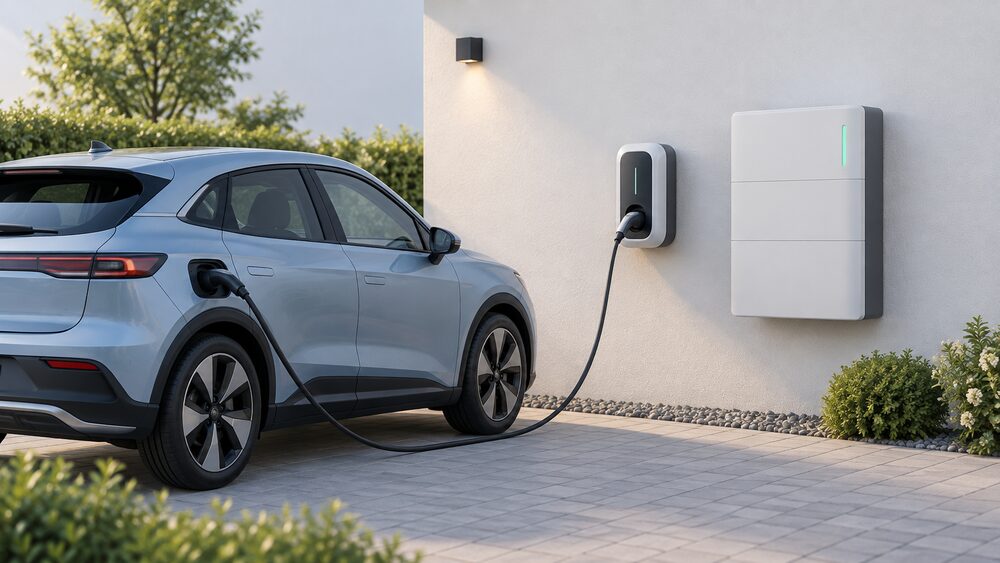 GivEnergy EV chargersGivEnergy went into administration, so what happens if you already own one of their EV chargers, or were about to buy one?
 GivEnergy Batteries and All-in-One Systems for the HomeGivEnergy made some of the best known home batteries in the UK, and then the company went into administration in April 2026.
 GivEnergy home batteries and invertersIf you own a GivEnergy battery, or are being quoted for one, the company behind it went into administration in April 2026.