In this guide
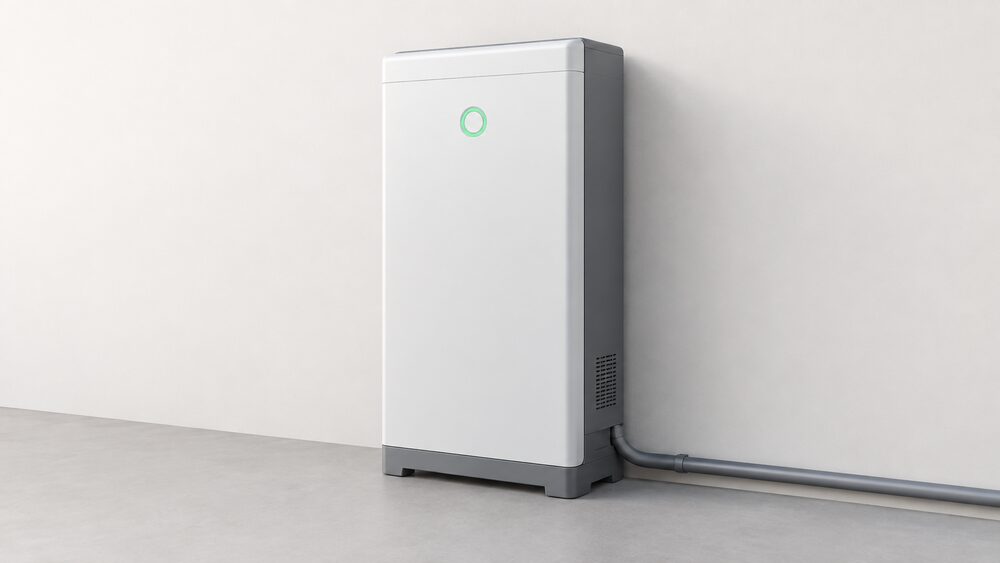
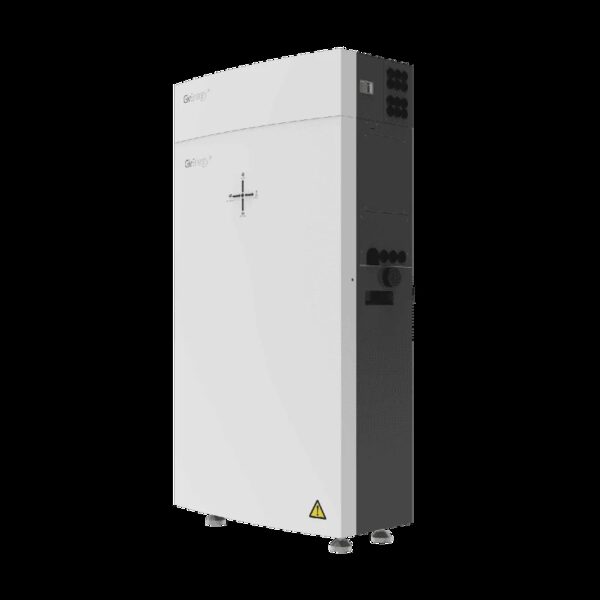
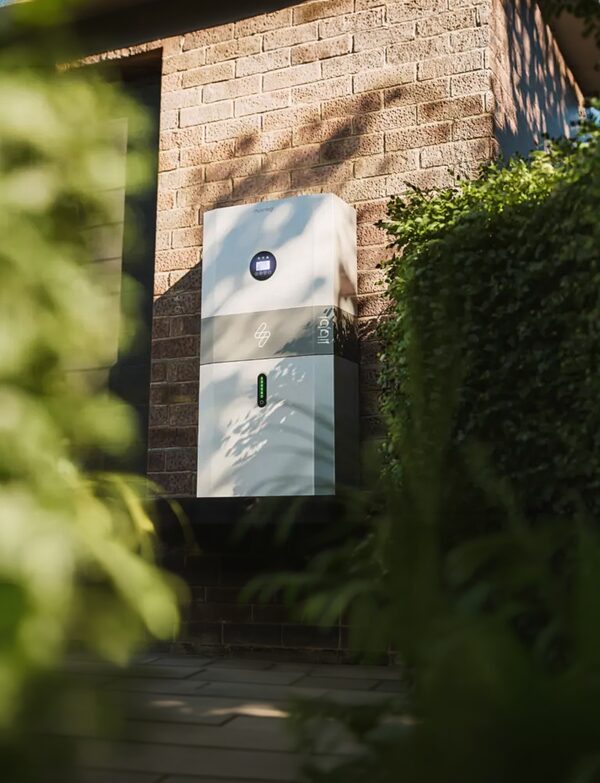
An all-in-one home battery system is a single enclosure that holds the battery cells, the inverter or power conversion system, the battery management system and, in most designs, the controls that decide when to charge and discharge. SolaX describes its all-in-one energy storage system as integrating all essential components, including batteries, an inverter and a control system, into a single compact unit1. SAJ describes its HS2 series as integrating the PCS, BMS and battery into a modular, IP65-rated design, and its AS3 series as going further still, combining an EV DC charger, battery PCS, battery pack, backup system and energy management system in one unit2. GivEnergy puts the point plainly: a battery and an inverter in one integrated product, removing the need to install the two separately4.
The practical consequence is that most of the system architecture is fixed at the moment of purchase. The inverter's power rating, the chemistry, the ingress rating that determines whether the unit can go outside, and the number of expansion modules the enclosure will accept are all decided by the model chosen rather than by mixing and matching later. GivEnergy's All In One 2 starts at 13.5kWh and accepts up to two expansion batteries, reaching up to 40.5kWh5. Sungrow's residential SBH range covers 10 to 40kWh per battery unit. A typical home system, in the Energy Saving Trust's description, might be 10 kWh.
For household energy independence, an integrated unit shifts when a home buys electricity and, with the right changeover hardware, keeps some or all of the house running in an outage. It does not remove the grid connection, the supplier relationship or the dependence on the manufacturer's firmware, cloud service and app. Domestic battery storage has a lifetime of around 10 to 15 years according to a POSTnote published for Parliament, shorter than the solar panels it often sits beside7.
What sits inside a single enclosure
The defining feature is integration rather than any particular capacity. SolaX's AEGIS is described as an all-in-one design including inverter, battery and BMS11. Sunsynk's All in One ESS Elite combines a high-performance hybrid inverter, advanced battery technology and intelligent energy management into a single wall-mounted enclosure12. Fox ESS lists a whole home backup gateway as part of its Evo All-in-One13. At the smaller end, Robinsun describes all-in-one battery systems that combine a battery, controller and micro inverter into a single device, connected to solar panels on one side and a power plug on the other, a pattern closer to plug-in battery storage than to a fixed installation14.
Two things follow. First, the unit performs both the functions that a split build would separate: DC storage and AC conversion. GivEnergy describes its hybrid inverter as a battery plus solar inverter in one unit15. Second, the enclosure has to be rated for where it will live. GivEnergy's All In One 2 expansion battery carries an IP65-rated enclosure for indoor or outdoor installation, and SAJ's HS2 and AS2 series are also IP65-rated9. Where a unit is not rated for outdoor use, siting is constrained from the outset, which bears on where a home battery can be installed.
The term is not unique to electricity storage. Panasonic uses "All-in-One" for a heat pump indoor unit that houses both the hot water tank and the hydraulic unit, and the Energy Saving Trust describes a monobloc air source heat pump as combining all components in one unit16. The logic is the same: fewer separate boxes, fewer interconnections, less installer decision-making on site.
All-in-one versus separate battery and inverter: which fits which home
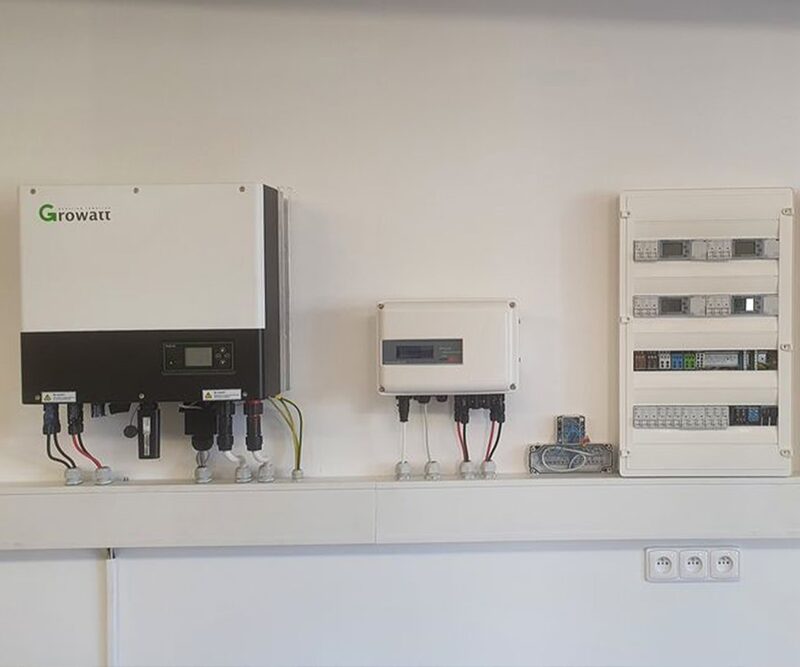
A separate build pairs a battery of one maker's choosing with an inverter of another's, or with a different generation of the same maker's inverter. GivEnergy's system documentation shows how that works in practice: its AC coupled inverter pairs with any low-voltage battery, while its three-phase hybrid inverter pairs with any high-voltage stackable GivEnergy battery15. That flexibility is the main argument for splitting the two. It also means the installer must get the pairing, the cabling and the DC isolation right. GivEnergy notes its newest batteries come with an inbuilt DC isolator15.
The integrated route trades that flexibility for fewer variables. Sunsynk describes a unified warranty across the All in One ESS Elite, which removes the question of whether a fault sits on the battery side or the inverter side12. Sunsynk's Elite range is sold as an all-in-one hybrid inverter and LiFePO4 battery system, floor-mounted and stackable with minimal wiring for faster installation18.
| Consideration | Integrated unit | Separate battery and inverter |
|---|---|---|
| Inverter choice | Fixed at purchase4 | Chosen and changeable independently15 |
| Warranty routing | Single, unified warranty on the Sunsynk Elite12 | Two warranties, two makers |
| Expansion | Limited to the enclosure's modules, two on the All In One 29 | Battery stack sized to the inverter |
| Installation | Minimal wiring, faster fit, per Sunsynk18 | More on-site interconnection4 |
Which fits which home depends less on the technology than on what already exists. A property with solar panels and a working string inverter may be better served by an AC-coupled addition, a distinction set out in AC-coupled and DC-coupled home batteries. A property with no solar at all can still take a battery: Duracell Energy notes that with a standalone battery system, solar panels can be added later19. Birmingham City Council's group-buying scheme likewise allows battery storage to be added to existing solar panels20. Third-party control software is broadly agnostic: Homey states it does not fundamentally matter which system is chosen, as long as there is a way to exchange data or a suitable integration.
Capacity and power: from 10kWh to 40kWh
Capacity across the integrated category clusters between 10 and 40kWh. Sungrow's SBH100 to SBH400 residential range is specified at 10 to 40kWh per battery unit21. GivEnergy's All In One 2 starts at 13.5kWh and reaches up to 40.5kWh with expansion batteries6. myenergi's libbi 10kWh system is built from two 5kWh battery modules22. Smaller GivEnergy batteries in the wider range include a 5.12kWh unit, and high-voltage stackable options at 10.2kWh, 13.6kWh, 17.0kWh and 20.4kWh15.
Independent sources put typical household need lower than the top of that band. The Energy Saving Trust states that a typical home system might be 10 kWh8. Solar Energy UK, writing in April 2026, describes residential battery energy storage systems as typically in excess of 10kWh, which it frames as well over five average washing machine cycles23. GivEnergy's own stackable high-voltage range runs from 10.2 kWh to 20.4 kWh, so whole-house cover through a winter evening usually means stacking modules rather than fitting a single unit24.
| System | Capacity | Source type |
|---|---|---|
| GivEnergy All In One 2 | 13.5kWh, up to 40.5kWh with two expansions6 | Maker |
| Sungrow SBH100 to SBH400 | 10 to 40kWh per battery unit21 | Maker |
| myenergi libbi 10kWh | 2 x 5kWh modules22 | Maker |
| GivEnergy HV stackable | 10.2, 13.6, 17.0, 20.4 kWh15 | Maker |
| Typical UK home system | 10 kWh8 | Independent |
Nameplate capacity is not usable capacity. Systems hold a reserve: the Energy Saving Trust describes a set floor of perhaps 20% of total storage capacity at which discharge stops, and states the system should never let the battery discharge to zero, as that can significantly reduce battery life8. The difference between the two figures is set out in battery capacity and usable capacity, and sizing against actual household consumption in what size home battery do you need.
Single-phase or three-phase: matching the system to your supply
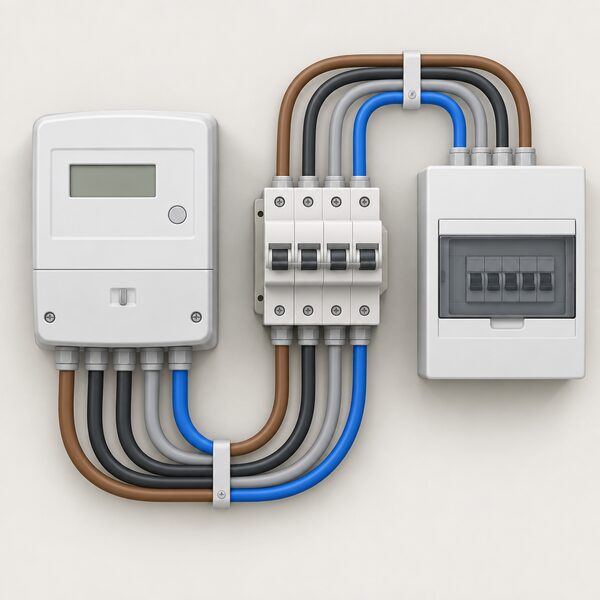
Most British homes are single-phase, and most residential all-in-one units are built for single-phase supplies. Northern Ireland Electricity Networks states that above 17kW on a single-phase supply, a three-phase supply is required10. That threshold sits well above what a domestic battery inverter draws or exports, so the phase question is usually settled by what the property already has rather than by the battery itself.
Identifying a three-phase supply is a visual matter. OpenEnergyMonitor describes the tell: eight reasonably thick cables at the meter, four of which go to the consumer unit or fuse board, together with a three-pole or four-pole linked circuit breaker25. Larger and older properties, converted buildings and homes with heavy electric loads are the likelier candidates.
Where a property is three-phase, the hardware differs. GivEnergy lists a three-phase hybrid inverter, described as a battery plus solar inverter in one unit, which pairs with any high-voltage stackable GivEnergy battery and uses plug-to-plug cabling15. That is a split architecture rather than a single-enclosure product, which illustrates a general point: the integrated single-box category is thinner at three-phase than at single-phase, and a three-phase home may find the choice narrows to separate components.
Either way, the network operator has to be told. The process for that is covered in G98 and G99 notification, and the installation standards that apply in PAS 63100, BS 7671 and MIS 3012.
LiFePO4 chemistry and what it means for safety
Lithium iron phosphate is the dominant chemistry in this category. GivEnergy states that at the heart of every GivEnergy battery is Lithium Iron Phosphate (LiFePO4) chemistry, and lists the All In One 2 and its expansion battery as LiFePO426. Sunsynk's Elite units are described as all-in-one hybrid inverter and LiFePO4 battery systems18. ZEDpods, a BRE Science Park development, uses a LIPO4 battery store27.
The claimed advantages come from the makers and should be read as such. GivEnergy states:
"LiFePO₄ batteries are cobalt-free, offering enhanced thermal stability, longer lifespan, and improved safety"
GivEnergy further describes the All In One 2 expansion battery as non-flammable and 99% recyclable, and states 100% recyclability for its batteries more broadly9. Those two recyclability figures differ between documents.
Chemistry alone does not make an installation safe. The battery management system governs cell balancing, temperature and cut-outs, which is why an integrated unit's BMS is listed alongside the inverter as a core component11. Siting, ventilation and operating temperature all bear on real-world risk, and the wider picture is set out in home battery fire safety, what is thermal runaway and the comparison of chemistries in home battery chemistries.
Backup power depends on a changeover device, not the battery
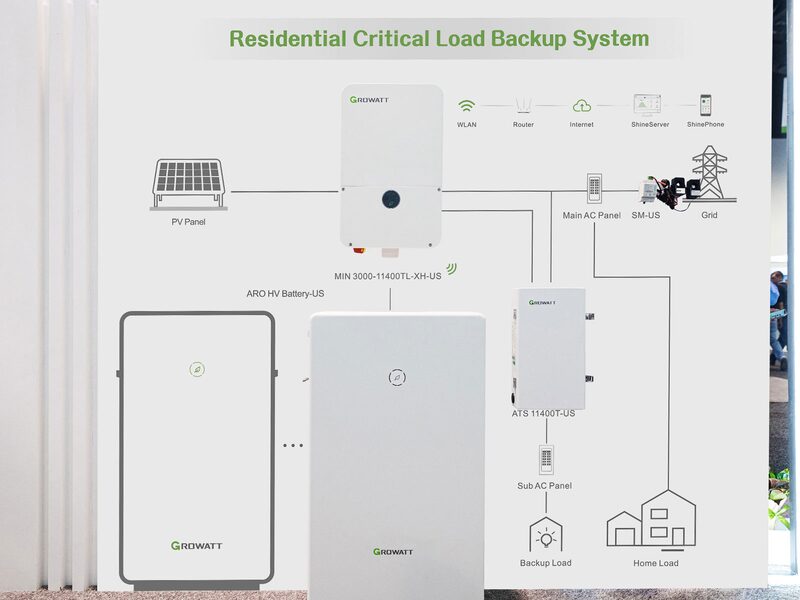
This is the point most often misunderstood. A battery on its own does not keep the lights on in a power cut. GivEnergy states that the All In One 2 delivers seamless switchover for backup power during blackouts when paired with a Gateway 2, and that the Gateway 2 enables full whole-home backup and advanced load control when paired with the All-in-One 2 system6. The gateway is a separate purchase and a separate piece of wiring. AlphaESS describes its systems as serving as an emergency power supply thanks to a built-in UPS function, and says that in some cases it is possible to power an entire house from surplus solar energy previously stored in the battery29. Fox ESS lists a whole home backup gateway with its Evo All-in-One13.
Which? is blunt about the gap between expectation and product:
"If you're looking to protect yourself against power cuts with a home battery, not all systems are suitable."
Which? advises asking the installer whether a given battery will work in a power outage and for how long30. Both questions matter: a unit that backs up only a handful of essential circuits behaves very differently from one wired for whole-home backup, and duration is a function of usable capacity against the loads left running.
The Climate Change Committee, looking at household resilience, notes that further innovation in home battery technology, vehicle-to-everything and solar can provide households with additional backup options during power outages31. That is a direction of travel, not a present guarantee. For the wiring and the terminology, see battery backup in a power cut and do I need a backup interface.
Smart tariffs and automated charging
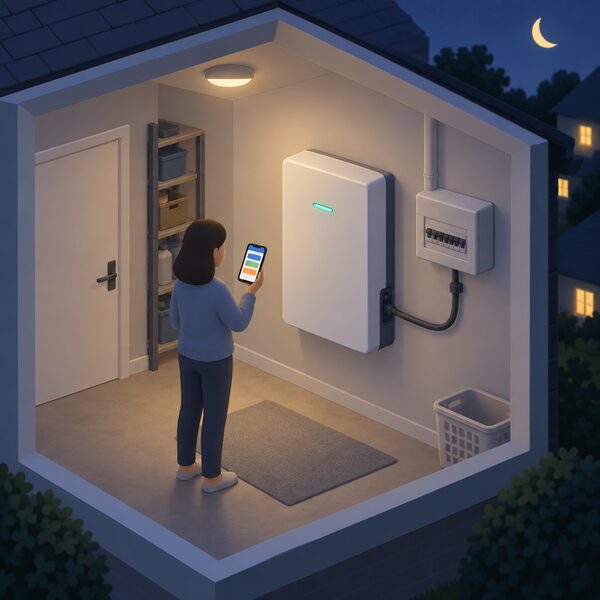
An integrated unit earns most of its return by buying electricity cheaply and using it when electricity is dear. GivEnergy describes the pattern directly: charge when energy is free or cheap, discharge when energy is expensive, with the system automatically charging and discharging based on the times that will save money32. It also states the All In One 2 maximises solar energy and can charge from the grid5. Growatt lists AI dynamic tariff optimisation and smart self-consumption on its VETA 2200 plug-in all-in-one battery33.
The tariff is not optional if the saving is the point. The Energy Saving Trust states that to benefit properly from smart appliances, electric vehicles and home batteries, a smart tariff is needed, and that an EV, heat pump or home battery makes smart tariffs much more valuable34.
Compatibility is the catch. Which? asks whether the tariff is compatible with the battery, noting that some only work with specific systems36. GivEnergy states its batteries work seamlessly with any smart tariff32; Duracell Energy states its systems integrate with all dynamic tariffs19. Those are manufacturer claims about their own products, and a household considering a particular tariff would check the pairing before committing. The same pattern is visible in EV charging, where Which?-style product comparison found the Ohme Home Pro to be one of the only chargers able to integrate with both Octopus and OVO smart tariffs, and the Wallbox Pulsar Max compatible with Octopus Intelligent but not with OVO's equivalent37. Smart tariff control typically runs through an app, which is a dependence on the maker's cloud service as much as on the supplier. The economics are set out in stacking a home battery with smart tariffs.
Cost: what the published figures show
There is no single price for an all-in-one system, and installers quote per property. The published independent figures give a frame. The Energy Saving Trust puts home battery storage at £1,500 to £10,000, with a 5kWh battery system around £4,6008. A ClimateXchange study for Scotland modelled a single 8kWh battery system at £4,350 across all house types38. For a combined installation, Hive published a price of £8,485 for a full system and install through Effective Home in May 2026, based on a ten-panel system with 400W premium panels and a 5.32kWh solar battery39. At the upper end, Jackery estimates £12,000 and above for a whole-house backup plus EV charging system, with a payback period of 10 years or more24.
| Configuration | Cost | Source and date |
|---|---|---|
| 5kWh battery system | around £4,6008 | Energy Saving Trust, Aug 2026 |
| Home battery storage, general range | £1,500 to £10,0008 | Energy Saving Trust, Aug 2026 |
| 8kWh battery, modelled | £4,35038 | ClimateXchange, Jun 2026 |
| 10 panels plus 5.32kWh battery, installed | £8,48539 | Hive, May 2026 |
| Whole-house backup plus EV charging | £12,000+24 | Jackery, Jun 2026 |
| Solar and battery, average full cost | £9,000 to £12,00040 | UK Government, Jan 2026 |
Whether that pays back is contested. The Centre for Sustainable Energy is direct: domestic battery systems may save on imported electricity costs, but they are currently very expensive and do not make financial sense for every household41. NICEIC cites Octopus Energy calculations that a medium-use household with a ten-panel system and a 5kWh battery will save between £822 and £1,069 per year depending on tariff42.
Public support changes the arithmetic in some cases. The UK Government's Warm Homes Plan, announced in January 2026, covers the full average cost of solar panels and battery installations for low-income households, which it puts at £9,000 to £12,00040. Figures are stated as published and VAT treatment varies by scheme and installation; the VAT rate on home battery storage covers that separately, alongside home battery cost and payback and savings.
Warranty and expected lifespan
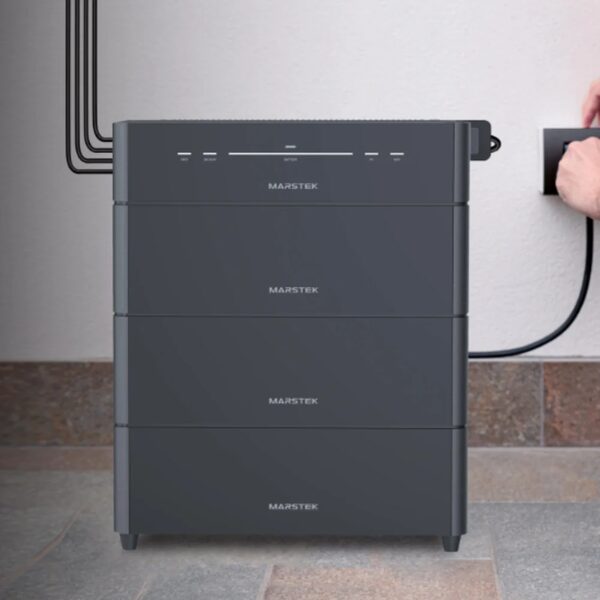
Warranty terms on integrated units are long by the standards of household electrical goods. GivEnergy lists 15 years on both the All In One 2 and its expansion battery, and 12 years across its product warranties more broadly5. Fox ESS lists a 12 year warranty on the Evo All-in-One13. Sunsynk offers a unified warranty across the All in One ESS Elite, meaning one claim route rather than two12.
Expected life is a separate question, and the independent figures run shorter than the warranty terms:
- POSTnote for Parliament: domestic battery storage has a lifetime of around 10 to 15 years, shorter than solar panels7
- Energy Saving Trust: typical lifespan about 10 to 12 years8
- Centre for Sustainable Energy: typical battery lifespan 8 to 12 years43
Those three sources disagree at the edges, and the spread across them is 8 to 15 years. GivEnergy states its high voltage batteries offer 100% depth of discharge over a 10-year lifespan26.
For an integrated unit the warranty question carries extra weight, because the inverter and the battery fail on different timescales in a split system and can be replaced separately. In a single enclosure, a converter fault and a cell fault both route to the same manufacturer, which is convenient while that company is solvent and a single point of failure if it is not. Degradation behaviour over a decade is covered in cycle life and degradation.
Expanding capacity later, and where the limit sits
Expansion in an all-in-one unit is bounded by the enclosure. GivEnergy states that up to two expansion batteries can be added per All In One 2 system, with a 13.5kWh expansion battery designed to increase the storage capacity of the All-in-One 29. Starting at 13.5kWh and adding two expansions gives the stated 40.5kWh ceiling6. Once that limit is reached, more capacity means a second system, not a third module.
This is the structural difference from a stackable battery paired with a separately sized inverter, where the stack can grow within the inverter's rating. Modular and stackable battery systems and can I add more batteries later cover that route. Adding solar afterwards is generally straightforward: Duracell Energy states that solar panels can be added later to a standalone battery system19, and Birmingham City Council's scheme allows battery storage to be registered against existing panels20.
Availability in the UK and models that have been withdrawn
Products in this category come and go, and a model researched online may no longer be sold. Which? lists the Samsung SDI All-in-one as available in the UK and the Enphase AC Battery as available via UK installers30. On 17 September 2026, the Livoltek iPower AC Coupled all-in-one was marked as discontinued on a UK trade listing, and the GivEnergy Wi-Fi Dongle was likewise listed as discontinued.
Software support is its own dependency. Wondrwall states that full app reporting is currently available for its V.1 battery systems, with V.2 All-in-One compatibility expected in Q4 202645, which is a reminder that the intelligence in an integrated unit is delivered over time and can lag the hardware. Corporate ownership shifts too: on 11 August 2026, Iemcs Limited was notified as a person with significant control of a GivEnergy-related company and Givenergy Group Limited ceased to be a person with significant control.
Manufacturers also use the same product names across market segments. The GivEnergy Commercial All-in-One is a fully integrated commercial energy storage system combining PCS, battery, controls and safety equipment in a single cabinet6, which is not a domestic product despite sharing the label.
What it does for independence, and what it does not
GivEnergy describes the purpose of its batteries as storing renewable energy and reducing reliance on the grid44. That is accurate as far as it goes. A 10kWh to 40kWh integrated unit lets a household buy electricity at one time and use it at another, self-consume more of its own generation, and, with a gateway, ride through outages.
The dependencies that remain are worth stating as firmly. The grid connection stays, because the unit charges from it when solar is short. The supplier relationship stays, and deepens, because the saving depends on a time-of-use tariff and that tariff's continued availability34. The manufacturer's cloud service and app carry the scheduling. The chemistry, the inverter rating and the expansion ceiling are all fixed by the model chosen. And the hardware itself has a working life of 8 to 15 years across the independent estimates7, after which it is a replacement purchase, not a permanent asset. How far the picture can be pushed towards autonomy is set out in home batteries and household energy independence and, for the whole subject, the guide to home battery storage.
Sources45 cited
- What is a battery storage system, SolaX Power, 2024-12-13
- HS2 Series residential all-in-one solution, SAJ Electric, 2026
- AS2 and AS3 residential AC coupling solutions, SAJ Electric, 2026
- UK Welcome Pack, GivEnergy, 2026-09-17
- All In One 2 hardware specification, GivEnergy, 2026-09-17
- All In One product page, GivEnergy, 2026-09-17
- POSTnote 771: domestic energy storage, UK Parliament POST, 2026-06-25
- Battery storage advice, Energy Saving Trust, 2026-08-19
- All In One 2 Expansion Battery, GivEnergy, 2026-09-17
- Maximum capacity of machine to connect to a single phase supply, NIE Networks, 2026-09-20
- AEGIS all-in-one residential ESS, SolaX Power, 2026-09-17
- All in One ESS Elite, Sunsynk, 2026-09-17
- Evo All-in-One, Fox ESS UK, 2026-05-28
- All-in-one battery systems, Robinsun, 2026-09-20
- What comprises a typical GivEnergy system, GivEnergy, 2026-09-17
- Green living couple embrace sustainability with an R290 heat pump installation, Panasonic, 2026-09-17
- Stephen, Dina and Layla's air source heat pump, Energy Saving Trust, 2024-03-11
- Elite 5.1kWh Battery All-In-One, Sunsynk, 2026-09-17
- Home battery storage explained, Duracell Energy, 2026-09-17
- Switch Together Birmingham: solar panels and battery storage, Birmingham City Council, 2026-01-27
- SBH100 to SBH400 residential energy storage system, Sungrow, 2026-09-17
- libbi battery storage, myenergi, 2026-09-17
- Waste not want not: homes with batteries to cash in from free power offer, Solar Energy UK, 2026-04-14
- Home battery storage and energy independence, Jackery UK, 2026-06-25
- Three phase power, OpenEnergyMonitor, 2026-09-17
- GivEnergy batteries, GivEnergy, 2026-09-17
- ZEDpods at the BRE Science Park, BRE Group, 2026-09-17
- Solar battery storage, GivEnergy, 2026-02-17
- Residential FAQ, AlphaESS, 2026-09-17
- Solar panel battery storage, Which?, 2026-05-14
- A well-adapted energy system: monitoring framework, Climate Change Committee, 2026-09-19
- Installer media pack article, GivEnergy, 2026-09-17
- VETA 2200 plug-in all-in-one battery, Growatt, 2026-09-17
- Smart homes and a lower carbon footprint, Energy Saving Trust, 2026-01-21
- Should I switch to a time of use tariff, Energy Saving Trust, 2026-01-23
- Time of use tariffs explained, Which?, 2026-04-23
- Home electric vehicle chargers, Carwow, 2026-01-09
- Balancing investment in clean heat and energy efficiency in Scottish housing retrofit, ClimateXchange, 2026-06-03
- How much do solar panels cost, Hive, 2026-05-27
- Families to save in biggest home upgrade plan in British history, GOV.UK, 2026-01-20
- Making the most of your solar PV panels, Centre for Sustainable Energy, 2026-08
- Solar panel installation, maintenance and repair, NICEIC, 2026-09-17
- Battery storage advice, Centre for Sustainable Energy, 2025-10
- GivEnergy products, GivEnergy, 2026-09-17
- Solar PV and All-In-One Battery, Wondrwall, 2025-10-28
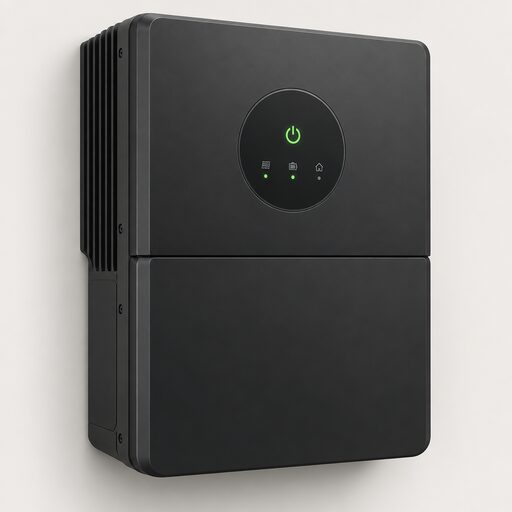 Hybrid InvertersA hybrid inverter lets you store solar power in a battery and use it later, all through one unit instead of two separate boxes.
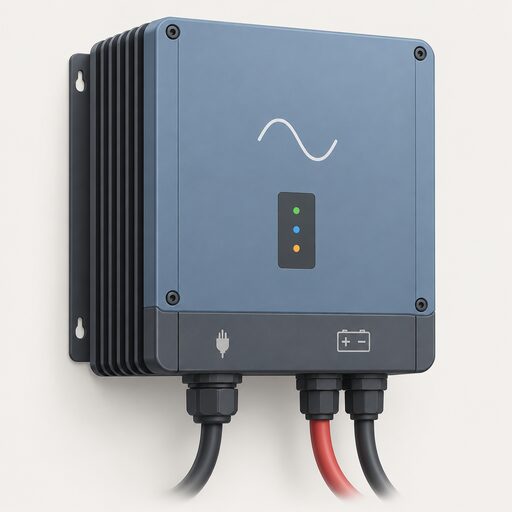 Inverters and Inverter-ChargersIf the power goes off, what actually keeps your fridge and boiler running?
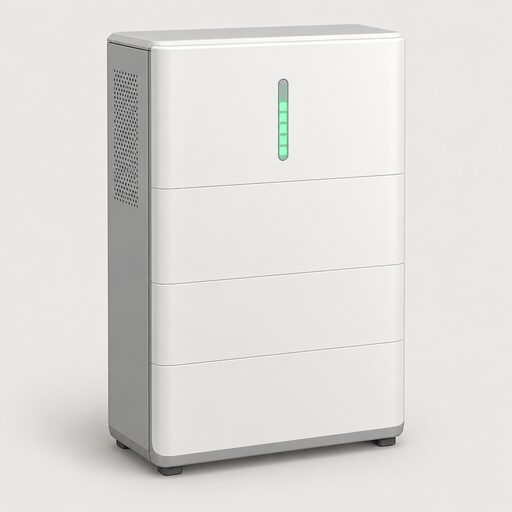 AC-Coupled vs DC-CoupledCan you add a battery to your existing solar panels without swapping the inverter, and does one kind waste more of your solar power than the other?
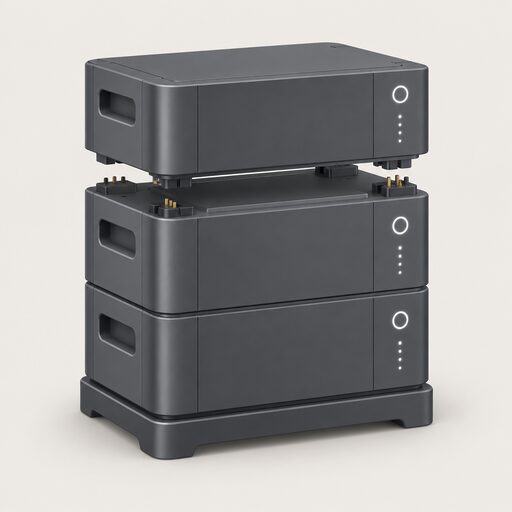 Modular and Stackable BatteriesCan you buy a small home battery now and add more storage later?
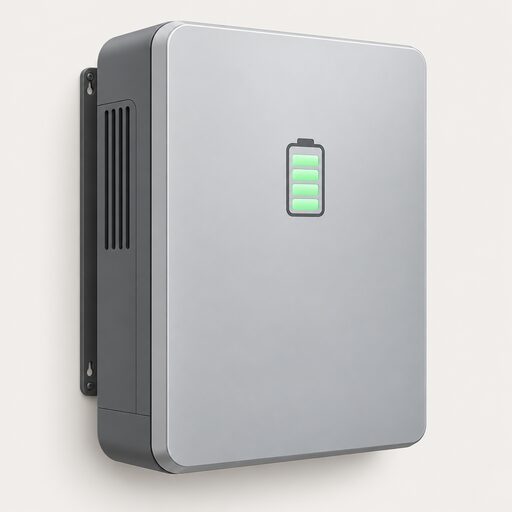 The Full Home Batteries GuideA home battery stores cheap or solar power for later, but will it really cut your bills enough to be worth it?
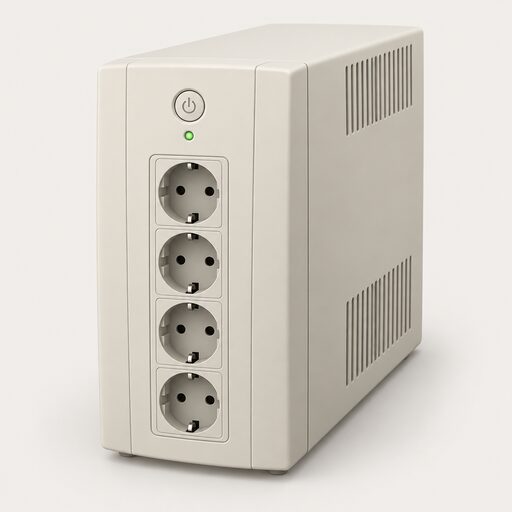 Maintaining Backup PowerWill your generator actually start when the power goes off?