
In this guide
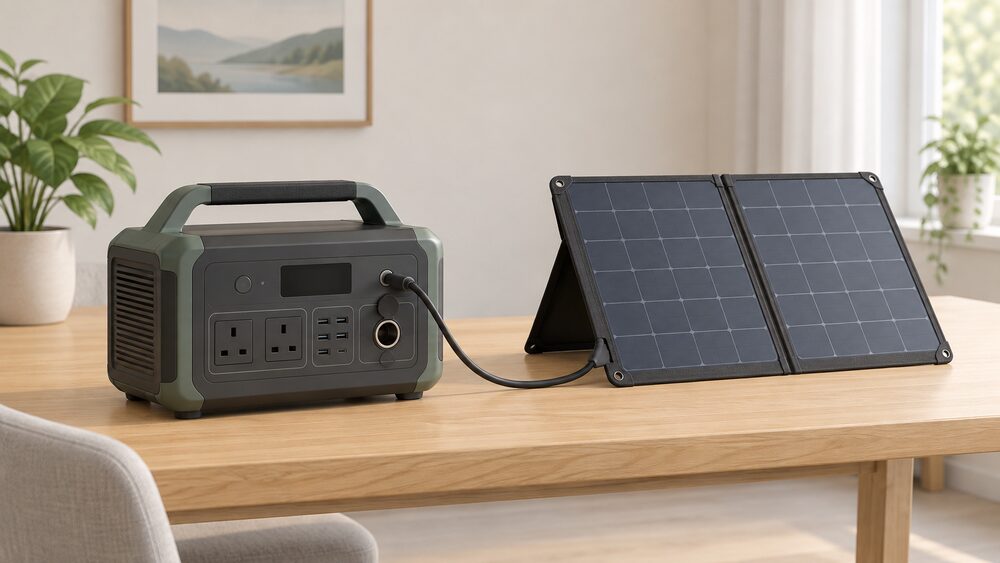
A Jackery power station is a portable battery with ordinary 230V sockets on the front. You charge it from a wall socket, a solar panel or a car socket, then plug appliances into it when the grid goes down. It is not wired into your house, and it is not a fitted home battery. Jackery states its portable stations can power 99% of household appliances1, and describes the Explorer 2000 v2 as covering 95% of them2.
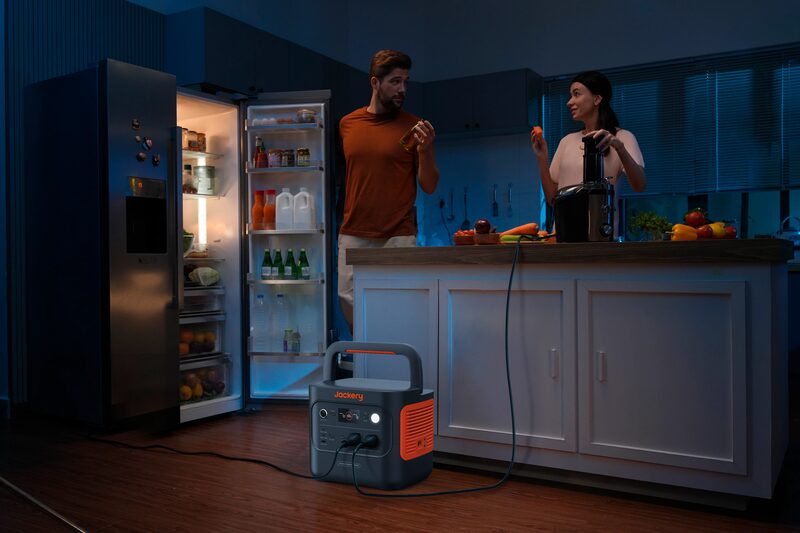
The practical case is narrow and real: a fridge-freezer, a router, lights, a phone charger, a kettle. Jackery states the Explorer 2000 v2, at 2042Wh, can keep a modern fridge-freezer running for about 15 to 18 hours, or run a full-size kettle, a microwave or a 1500W space heater3. That is a household riding out an outage, not a household running normally.
The trade-off is that nothing is wired in. A fitted home battery can run circuits automatically; a Jackery runs what you plug into it, and only that. Jackery states its portable stations need no installation process or setup cost, and that this makes them more affordable than traditional home battery backup systems4. The company was founded in 2012 and states it has sold more than 7 million units5.
What Jackery offers in the UK
Jackery sells direct in the UK through its own site, with free delivery, a 30 day money back period and a 3+2 year warranty stated on the Explorer 2000 v2 listing1. The range is a ladder of capacities rather than a single product: small units for camping and phones, mid-sized units for a few appliances, and larger ones intended for home backup during outages.
Charging inputs are deliberately varied. Jackery states its portable power stations support AC charging, solar panel charging, car charging and USB-C fast charging on selected models8. That matters for independence: mains charging keeps you tied to the grid, solar charging does not, and car charging ties you to a vehicle. The outputs are the familiar set of AC outlets, DC carports and USB ports4.
The maker positions the range for outages explicitly, stating that expandable capacity supports longer runtimes during multi-day outages and that add-on battery packs help prepare for prolonged storm-related outages9. Jackery also publishes UK-facing material on remote cabins and off-grid homes10, which is the use case where a portable unit makes most sense: a building with no grid connection at all, or one where running a cable is impractical.
One caveat on availability. Jackery's own pages show several older models sold out, including the Explorer 500, which the site lists as sold out with newer models recommended instead11. Model lines turn over quickly, so the unit on a comparison page may not be the unit on sale.
Specifications across the range
The figures below are the maker's own published specifications. Where two pages give different numbers for the same model, both are shown.
| Model | Capacity | Power | Price | Warranty |
|---|---|---|---|---|
| Explorer 300D | Not stated | Not stated | £149 (from £219)12 | 3 years plus 2 extra12 |
| Explorer 500 | Not stated | Not stated | £556.99 unit only11 | 2 years plus 111 |
| Explorer 1000 v2 | 1070Wh6 | 1500W rated6 | £419 (from £899)6 | 3+2 years13 |
| Explorer 2000 v2 | 2042Wh1 | 2200W rated, 4400W surge1 | £807 (from £1,399)6 | 3+2 years1 |
| Explorer 2000 Pro | 2160Wh10 | 2200W, 4400W peak10 | Not stated | Not stated |
| Explorer 2000 Plus | 2042Wh14 | Not stated | £1,9996 | 3+2 years13 |
| Explorer 3000 v2 | 3027Wh7 | 3600W, 7200W surge7 | £1,499 (from £2,299)6 | 3+2 years13 |
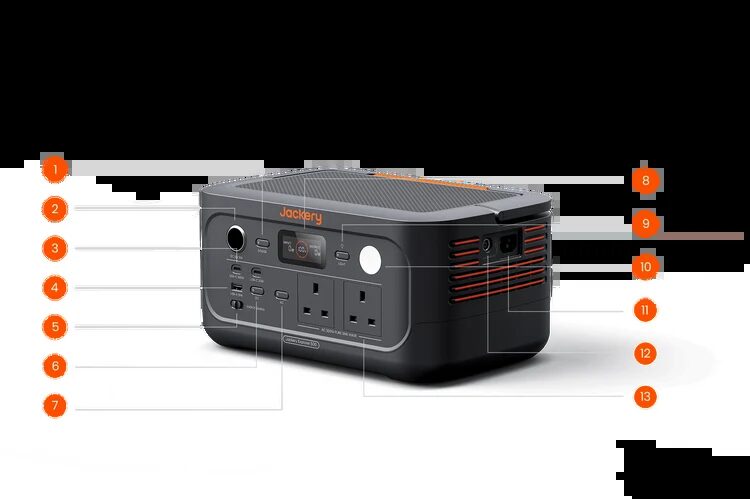
The Explorer 2000 v2 is the model Jackery pushes hardest for UK home backup. It measures 13.2 by 10.4 by 11.5 inches, which the maker compares to a medium-sized printer, and weighs 38.6 lbs13. Jackery states it is 41% smaller and 35.6% lighter than its predecessors and competitors in the 2kWh class3. It carries two 230V AC outlets rated at 2200W with a 4400W surge peak, plus a 30W and a 100W USB-C port14.
Two figures are worth treating carefully. Jackery states the unit runs at 42dB on AC and 30dB on DC15, while another page describes it as 30dB quiet power16; the AC figure is the one that applies when the inverter is working. Jackery also states a 10 year design life with a battery system built for repeated charging5, and a LiFePO4 cell supporting up to 4000 charge cycles13.
What the warranty covers, and what it does not
Jackery's warranty terms are spread across several pages and do not agree with each other, so the model page is the safest guide for a specific unit. The general warranty page states a 24 month period for Jackery power products17. The Explorer 2000 v2 page states 3 years standard plus 2 years extended1, and Jackery states that its 3+2 and 5+2 year terms apply only to purchases made at its own website8. The Explorer 300D carries 3 years plus an extra 212, while the Explorer 500 carries 2 years plus 111.
The remedy is replacement rather than repair. Jackery states it will replace, at its own expense, any product that fails to operate during the warranty period due to a defect in workmanship or material17. Two conditions narrow that considerably.
The warranty is also limited to the original purchaser and is not transferable to a subsequent owner17, so a second-hand unit carries nothing. Accessories sit outside the main terms: the solar panel series connector carries a 1 year warranty18.
The charging condition is the one that catches people out, because a backup battery is by definition a device that sits idle. Jackery's own guidance is that the power station must be switched on for solar charging to begin, and that it will not start automatically at sunrise if it is off19. Between the two conditions, a unit that is stored rather than cycled needs deliberate attention.
What a Jackery costs in the UK
Jackery publishes prices on its UK site, and they move with promotions. At the time of writing the Explorer 300D is £149, reduced from £21912; the Explorer 1000 v2 is £419, reduced from £8996; the Explorer 2000 v2 is £807, reduced from £1,3996; and the Explorer 3000 v2 is £1,499, reduced from £2,2996. The Explorer 2000 Plus is listed at £1,9996. Jackery states tax is included on its UK listings11.
Bundles with solar panels cost more. Jackery lists the Explorer 500 with a SolarSaga 40W Mini panel and adapter at £713, and the same unit with a SolarSaga 100W panel at £787.9911. The Explorer 500 itself is listed as sold out11.
Two things are worth separating. The first is that these are retail prices for a box you carry home, with no installation cost, which Jackery states plainly4. The second is that the comparison with a fitted home battery is not like for like. Jackery states its portable stations have over 12kWh of capacity compared with home solar batteries20, but that figure describes a stack of units or an expanded system, not a single box, and a fitted battery is wired into the house in a way a portable unit is not. For the cost of a fitted system, see home battery cost.
The company and its status
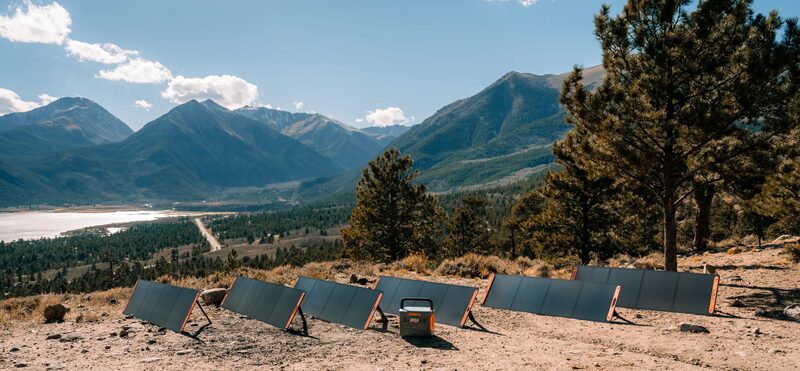
Jackery was founded in 2012 and focuses on portable battery technology21. The company states it has sold more than 7 million units9 and that 761 million kWh of renewable energy has been generated cumulatively through its products22. It also states it has been recognised by The New York Times, Wall Street Journal, Forbes and over 200 media and organisations globally13. These are the maker's own figures about itself.
There is no indication in the material reviewed that Jackery has failed, entered administration or stopped trading. It sells direct in the UK, offers free delivery on qualifying orders13, a 30 day price guarantee and price match, and buy now pay later as a payment option21. The UK site is live and stocked, though several older models show as sold out11.
On safety, Jackery states its power stations are built with UL94-5VA fire-resistant and Level-9 shock-resistant materials22, and separately describes a best 94V-0 fire rating16. The Explorer 2000 v2 is stated to have passed FCC, SGS and TÜV certifications15 and an IEC60068-3-3 seismic test5. These are the maker's claims about its own products, not independent test results, and they describe the unit itself rather than the installation.
The company also states that its units are emissions-free in operation with a battery management system23, and that they produce no fumes and are indoor safe16. That is the meaningful difference from a petrol generator, which cannot be run indoors.
The SolarVault 3 home battery and Solar Energy UK
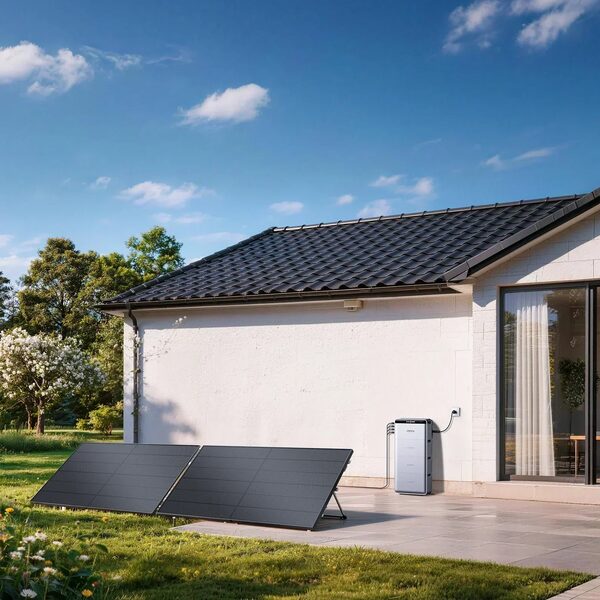
Jackery made its first UK trade show appearance at Solar & Storage Live UK in Birmingham, which ran from 22 to 24 September 2026, and used the event to debut the SolarVault 3 Series home battery24. The company also announced that it had joined Solar Energy UK, the trade body for the UK solar industry24.
The SolarVault 3 Series is a residential solar battery platform. Jackery states it supports up to 4,000W of PV input across four MPPTs, with modular storage expandable to 15.12 kWh and up to 2,500W of on-grid output24. It is managed by the Jackery Ark AI Energy Management System, which Jackery states optimises solar self-consumption and tariff management24. The stated build includes long-life LFP cells rated at 6,000 cycles to 70%, IP65 protection, built-in aerosol fire suppression and a 10-year warranty24.
This is a fitted home battery rather than a portable power station, and it sits in a different part of the market from the Explorer range. No UK pricing or on-sale date was stated in the announcement24.
What it means for household energy independence
A Jackery power station buys a household time, not autonomy. It runs a fridge-freezer for 15 to 18 hours3, keeps a router and a few lights going, and does it without fumes or a fuel can. Jackery states the Explorer 2000 v2 will detect a power cut and switch to battery in under 20 milliseconds25, which is fast enough that a router, computer or NAS stays online through a blackout26.
What remains is dependence, and it is worth being exact about it. The unit depends on the grid for most of its charging, because mains charging is far quicker than solar: Jackery states a full AC charge in around 1.7 hours, or 1.33 hours in Emergency Super Charge mode15, against around 5.5 hours for a full solar charge in suitable conditions7. Solar charging also requires the unit to be switched on19, and depends on daylight and panel siting. There is no gas, no supplier and no standing charge attached to the battery itself, but there is a manufacturer, a warranty that depends on buying from the right place and charging on schedule, and an app for monitoring1.
For a household already considering fixed storage, the comparison is set out in plug-in and balcony battery storage and battery backup in a power cut. A Jackery sits at the portable end of that spectrum: no installer, no wiring, no automatic whole-house backup, and no dependence on a network operator. For a flat, a rented home or a cabin, that is the whole point. For a house wanting the lights to stay on without plugging anything in, it is not the same product.
Sources26 cited
- Explorer 2000 v2 Portable Power Station, Jackery UK, 2026-09-20
- Cornwall Power Outage Guide, Jackery UK, 2026-04-29
- Power Outage in York Guide, Jackery UK, 2026-04-29
- Comparing Jackery's Portable Power Stations to Traditional Home Battery Backup Systems, Jackery UK, 2026-04-29
- How Long Do Solar Batteries Last, Jackery UK, 2026-05-29
- Power Station 2000W, Jackery UK, 2026-09-20
- Average Electricity Bill Per Month UK, Jackery UK, 2026-06-02
- Jackery Buying Guide, Jackery UK, 2026-09-19
- Winter Storm Power Outages Home Backup Power, Jackery, 2026-09-19
- Powering UK's Remote Cabins and Off-Grid Homes, Jackery UK, 2026-04-29
- Explorer 500 Portable Power Station, Jackery UK, 2026-09-20
- Explorer 300D Portable Power Station, Jackery UK, 2026-09-20
- Solar Generator 2000 v2, Jackery UK, 2026-09-20
- Introducing Jackery 2000 v2 with Compact Size, Jackery UK, 2026-04-29
- Home Battery Storage UK Without Solar, Jackery UK, 2026-05-29
- Portable Chargers, Jackery, 2026-09-19
- Warranty and Return, Jackery UK, 2026-09-20
- Solar Panel Series Connector, Jackery UK, 2026-09-20
- SolarSaga 100 Air, Jackery, 2026-09-19
- Solar Battery Cost, Jackery UK, 2026-04-29
- Jackery UK Homepage, Jackery UK, 2026-09-20
- Essential Home Backup Power, Jackery, 2026-09-19
- Solar Power Bank with AC Output, Jackery UK, 2026-04-29
- Jackery Debuts at Solar & Storage Live UK 2026, Unveiling SolarVault 3 Home Battery and Joining Solar Energy UK, prnewswire.co.uk
- Solar Generator for House, Jackery, 2026-09-19
- Jackery Explorer 2000 v2 Portable Power Station, Jackery, 2026-09-19
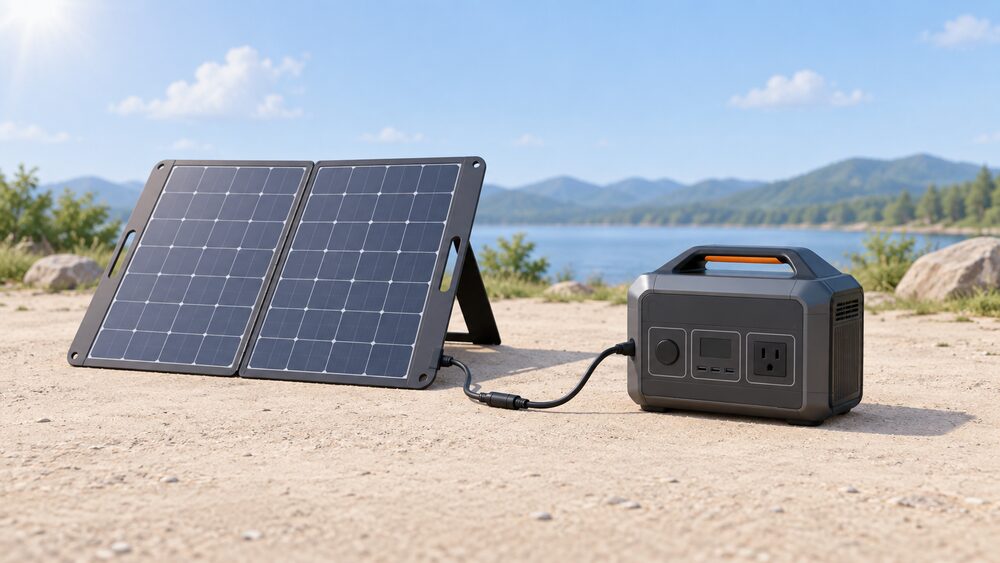 Jackery portable power stations and solar generatorsWhich Jackery power station suits a weekend camping trip, and which one could keep a fridge and freezer running at home in a power cut?
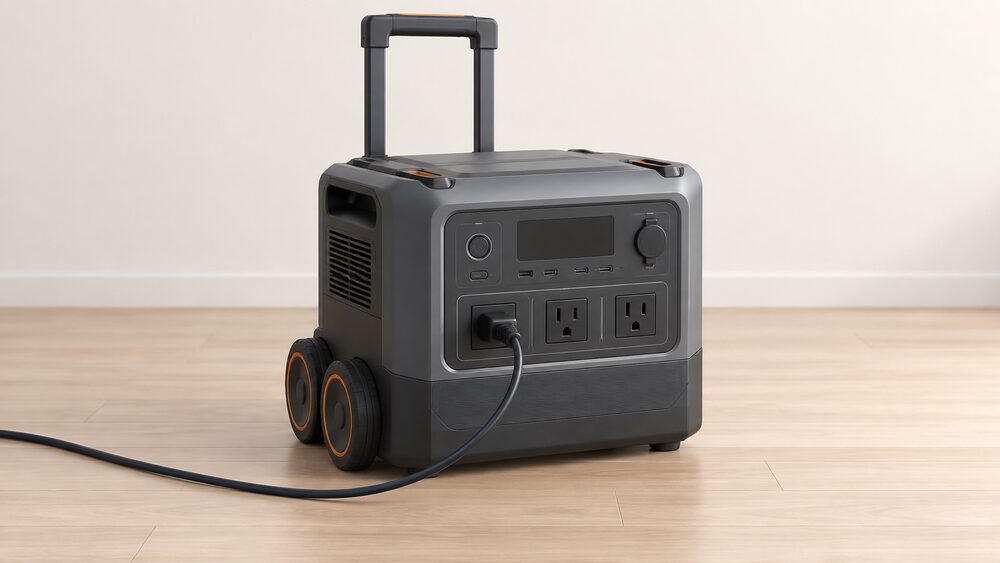 Jackery Explorer 2000 Plus portable power stationThe Jackery Explorer 2000 Plus is sold out and discontinued in the UK, with a replacement due late 2026.