

In this answer
Short answer
A power bank recall in the UK is issued by the maker or retailer of a specific model, published as a product safety notice, and acted on by the owner rather than by any regulator visiting the home. The pattern is consistent: a batch of lithium cells or a charger fails a safety test, the notice names the exact model or part number, and the instruction is to stop using the item immediately. Electrical Safety First, the UK charity that hosts the recall listings, states plainly that anyone who discovers they have a recalled electrical item should stop using it until it has been checked by the manufacturer1.
The scale of the problem is not small. The response rate to a recall is often worryingly low, which means there are potentially millions of recalled electrical items still in UK homes2. Counterfeit electrical goods are described as the leading cause of serious electrical shocks and the cause of thousands of fires in the UK every year3. For a household, the practical consequence is that a power bank bought cheaply online can be a live hazard sitting in a drawer or on a bedside table, and the only way to know is to check the model against the published notices.
This page sets out what a recall means, which charger and standby-device recalls exist, how to check a unit, why unsafe products reach UK homes through online marketplaces, what Electrical Safety First does, and how to charge safely while a check is pending.
What a recall means and what to do first
A product recall is a formal notice that a specific item should not be used. It is not a general warning about a category of product; it names a model, a batch or a part number, and it is issued because a safety risk has been identified in that unit. The SavePower Universal Standby Saver, for example, was recalled for all units after reports of units catching fire during use6. The USB Charger YXT-030 for 3G, 3Gs and 4G handsets is listed as a recalled product7. Two types of E.ON power adaptors were recalled with immediate effect8.
The first action is to stop using the item and stop charging it. Electrical Safety First's guidance for recalled products is that the owner should stop using it until it has been checked by the manufacturer1. Where a product is suspected of being faulty rather than formally recalled, the advice for e-bike chargers and batteries is to stop using it immediately and report the fault to the manufacturer or retailer, or to call the Citizens Advice helpline on 03454 04 05 069.
The second action is to contact the seller. The standard complaints process begins with contacting the business and explaining the concern10. That is the route that establishes the remedy, whether a refund, a replacement or a repair, and it creates a record. Where the seller is a marketplace trader rather than a UK high-street retailer, that first step can be harder to complete, which is one reason the charity has campaigned for a clear and enforceable duty on online marketplaces11.
Recalls and safety notices affecting chargers and standby devices
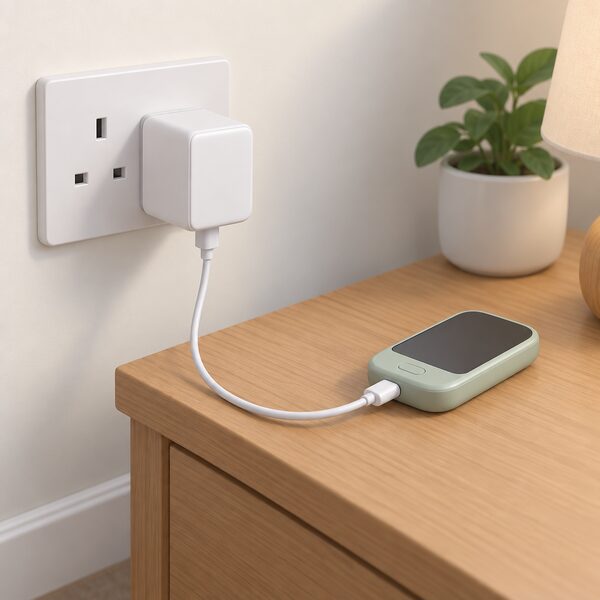
The published notices cover a wider range of equipment than power banks alone, and the pattern is worth understanding because the same failure modes recur. Chargers, adaptors and standby-saving devices all sit between the mains supply and a battery or an appliance, and all of them can fail in ways that produce fire or shock.
| Product | Detail | Risk or action | Source |
|---|---|---|---|
| Black wall plugging charger for electrical vehicles | Sold via eBay | Electric shock; stop using immediately and contact the retailer | 12 |
| EV charging cable SEVA-24016P | Sold via Amazon | Stop using until checked by the manufacturer | 13 |
| E.ON Power Adaptors | Two types | Recalled with immediate effect | 8 |
| USB Charger YXT-030 for 3G/3Gs/4G | Recalled product listing | Recalled product | 7 |
| SavePower Universal Standby Saver | All units | Units reported catching fire during use | 6 |
The charger recalls share a common thread: the units were sold through online marketplaces, and the risk identified is electric shock12. The standby saver is a different category of device, a plug-in unit intended to cut power to appliances when they are not in use, and it was recalled across all units after fire reports6. For a household running backup power equipment, the lesson is that anything left plugged in continuously, whether a charger, an adaptor or a standby device, is a candidate for a recall check.
How to check whether your power bank or charger has been recalled
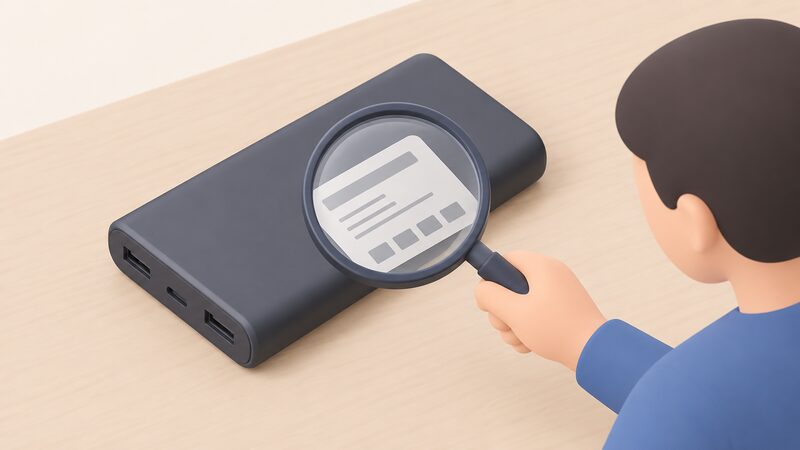
Checking is a matter of matching the unit in hand against the published notice. The model and batch details are printed on the rating plate or label on the body of the device, and often repeated on the packaging. Recall notices name the exact model, batch or part number, so the check is a character-by-character comparison rather than a judgement about whether the product looks safe.
Electrical Safety First publishes an online product checker that can be searched to see whether an appliance has been recalled14. That is the single most useful tool for a household, because it covers the charity's own recall listings in one place. Where a product is not listed but is suspected of being unsafe, supporting documentation and images can be sent to enquiries@electricalsafetyfirst.org.uk for objective safety review5.
Registration is the preventive step. Electrical Safety First recommends registering all electrical appliances so that, in the event of a problem, the manufacturer can contact the owner4. Its guidance for e-bikes, batteries and chargers repeats the point: register so you can be contacted easily if there is a safety recall9. The same advice appears for e-scooters, batteries and chargers15. Registration is free and is normally completed at the point of purchase or on the maker's website.
"Register your e-bike, battery and charger so you can be contacted easily if there is a safety recall."
Why unsafe chargers reach UK homes: the online marketplace problem
The route by which a sub-standard charger reaches a UK home is now well documented. Electrical Safety First states that there is not enough regulation to prevent people from using online marketplaces to sell counterfeit and sub-standard electrical products, as well as those that are subject to a product recall due to a serious safety risk16. That is a regulatory gap, not a consumer failing, and it explains why recalled items continue to circulate after a notice is published.
The charity's Battery Safety Campaign calls for a clear and enforceable duty on online marketplaces, and an extension of liability for defective products to online marketplaces, particularly those sold by third-party sellers11. The practical effect of the current position is that a recalled unit can remain on sale under a different listing, and a buyer has no reliable way to know before purchase.
The UPP U004 e-bike battery illustrates how long a dangerous product can persist. Electrical Safety First identified dangerous UPP (Unit Pack Power) e-bike batteries still being sold privately across the UK despite a Government withdrawal notice16. Counterfeit electrical goods more broadly are described as the leading cause of serious electrical shocks and the cause of thousands of fires in the UK every year3.
For a household, the implication is that provenance matters as much as specification. A charger bought from a marketplace seller with no UK presence is harder to trace, harder to recall effectively and harder to obtain a remedy from. That is a statement about the evidence, not a recommendation about where to shop.
Electrical Safety First: the charity behind UK recall guidance

Electrical Safety First is the only UK charity dedicated to reducing deaths, injuries and fires caused by domestic electrical accidents, and is a registered charity in England and Wales (No. 257376) and in Scotland (No. SC039990)17. It is also described as the leading UK charity dedicated to reducing deaths and injuries caused by electricity in UK homes18. Its recall listings, product checker and safety guidance are the reference point for UK households on this subject.
The charity's work covers more than recalls. It publishes guidance on smart homes, on running appliances at cheaper times, on saving money safely, and on the electrical risks in home improvement projects5. It also operates a media and enquiries function, with supporting documentation and images relating to a suspect product sent to enquiries@electricalsafetyfirst.org.uk for objective safety review5.
For a household, the charity's value is that it aggregates recall information that would otherwise be scattered across individual manufacturers and retailers. A single search of its product checker covers the notices it hosts, and its guidance pages set out what to do when a product is found to be affected. The charity does not enforce recalls; it publishes and explains them.
Charging safely at home while a check or recall is pending
While a unit is awaiting a check, the sensible posture is to reduce the exposure. Electrical Safety First's guidance on saving money safely is explicit that a heater should never be powered from an extension lead, because leads can easily be overloaded and cause fires16. A power bank draws far less current than a heater, but the principle is the same: the lead, its rating and its condition set the limit, and charging directly from a wall socket removes one variable.
Alarm coverage is the other half of the picture. Electrical Safety First advises at least one smoke or heat alarm per floor in a property5, and separately advises working smoke alarms on every floor, tested regularly and ideally weekly14. Lithium battery fires can develop quickly, so early warning matters more than the size of the device being charged.
Disposal, when a unit is confirmed as recalled or is damaged, follows a specific route. Electrical Safety First's guidance on the UPP U004 e-bike battery is not to dispose of the battery in the general waste or normal recycling, because this could put other people at risk, and instead to find a suitable local recycling point or seek advice on how to safely dispose of the battery16. For rechargeable batteries and cordless appliances with rechargeable batteries, the route is a local recycling centre or the local council's website4. A swollen or damaged power bank should not be put in a household bin.
Where the household's independence ends
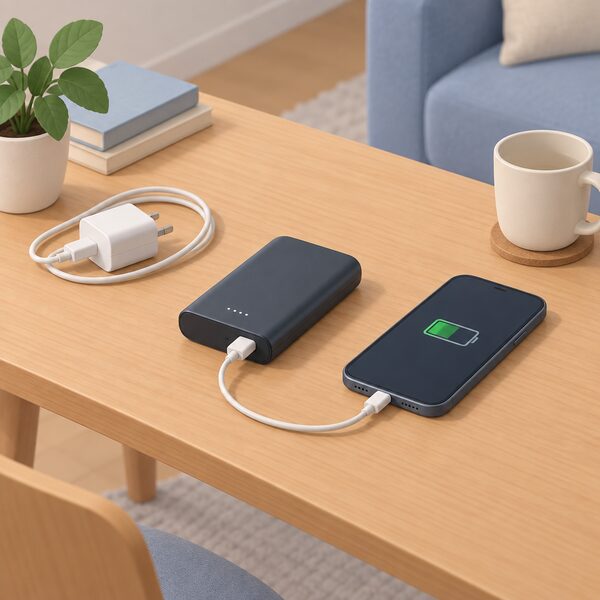
A power bank is a small piece of energy independence: it stores energy locally and delivers it without the grid. That independence is real but bounded. The unit depends on a mains charger, on a manufacturer's cell quality, on a supply chain the owner cannot inspect, and on a recall system that relies on the owner noticing a notice. The response rate to a recall is often worryingly low, which means the system's weakest link is the household's own awareness2.
The dependence that remains is therefore informational as much as electrical. A household that registers its appliances, checks the model against the published notices and disposes of affected units correctly has closed most of the gap. A household that does not is relying on a product it cannot verify. For wider context on storing and using backup energy safely at home, see lithium battery safety and recalls and backup power safety and standards.
Sources18 cited
- Lithium Battery Charger szYB-100W-42V2A, Electrical Safety First, 2026-09-17
- Saving money safely, Electrical Safety First, 2026-09-19
- Electricity safety guide, Uswitch, 2025-05-07
- Recycling electricals and batteries, Electrical Safety First, 2026-09-17
- Smart homes, Electrical Safety First, 2026-09-19
- SavePower Universal Standby Saver, Electrical Safety First
- USB Charger YXT-030 for 3G/3Gs/4G, Electrical Safety First
- E.ON Power Adaptors, Electrical Safety First, 2026-09-17
- E-bikes, Electrical Safety First, 2026-09-17
- Complaints process, TrustMark, 2026-04-07
- Battery Safety Campaign, Electrical Safety First, 2026-09-17
- Electric vehicle charging cable sold via eBay, Electrical Safety First, 2026-09-17
- EV charging cable SEVA-24016P sold via Amazon, Electrical Safety First, 2026-09-17
- Demand flexibility service: running appliances at cheaper times, Electrical Safety First, 2026-09-19
- E-scooters, Electrical Safety First, 2026-09-17
- Is your e-bike battery safe, Electrical Safety First, 2026-09-17
- Plug-in solar consumer guide, Electrical Safety First, 2026-08
- The home improvement projects that could land you in trouble, Electrical Safety First, 2026-09-17
 Product RecallsHow recalls and safety notices work for energy equipment in UK homes, who issues them, how to check a product, and what replacement, repair and refund routes exist.
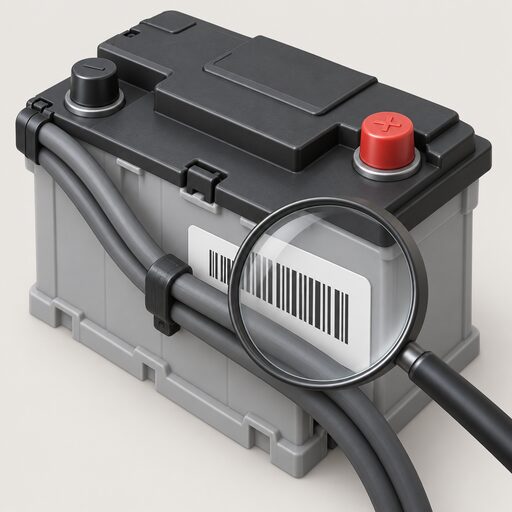 Recalls and Safety NoticesWhich LG RESU home batteries have been recalled, and how can you tell if yours is one of them?
 Backup Power Safety RulesWho signs off a battery or backup circuit, and can you legally plug in a power station or a plug-in solar panel in the UK?
 Challenger and Small SuppliersSmall energy suppliers can be cheaper, but are they safe to switch to?
 The Full Installers GuideHow do you find an installer you can trust, and what should you check before signing anything?
 Landlord Electrical ChecksWho is responsible for checking the electrics are safe in your rented home, and how often should it happen?