
In this answer
Short answer
A safety recall is running on LG Energy Solution ESS home batteries in the UK, covering the RESU range sold into homes, and it has grown rather than closed. The recall pages state that the recalls have expanded to include additional models and batteries, and ask owners to check again1. Affected units include the RESU3.3, RESU6.5, RESU10, RESU13, RESU7H Type C and Type R, RESU10H Type C and Type R, and RESU10M1. Electrical Safety First lists the RESU7H Type C, RESU10H Type C, RESU7H Type R and RESU10H Type R as affected models subject to replacement of all potentially affected batteries2.
The hazard is a manufacturing one, not a wear-and-tear one. Electrical Safety First links the recall to specific electrode manufacturing issues that could potentially result in thermal instability leading to an overheating incident2. LG Energy Solution's own notice states that incidents have occurred and caused damage to property1. The remedy is free: replacement of affected batteries, removal from the property at no cost, a diagnostic software update intended to identify and shut down batteries at risk of overheating, and compensation for extra electricity costs after a shutdown1.
For a household, this is the sharpest version of a wider point about energy independence. A home battery reduces reliance on the grid and on a supplier, but it adds a new dependency on a manufacturer's safety programme, its remote update channel and its willingness to stand behind a product years after installation. This page sets out which units are caught, how to check, what the remedies are, and what remains unresolved.
A live safety recall, and why it keeps widening
The defining feature of this recall is that it is not a closed list. LG Energy Solution's serial number checker carries the instruction to check again because the recalls have expanded to include additional models and batteries4. The same wording appears on the UK recall notice and the registration page1. A battery that cleared a check when the recall was first announced may now be caught, and an owner who checked once has no assurance that the answer still holds.
That pattern is not unusual for cell-level defects. The trigger here is a manufacturing issue in the electrode, which is a property of a production batch rather than of a model line, so the affected population is defined by serial number and build, not by the name on the datasheet. Electrical Safety First describes the recall as covering RESU ESS home batteries and lists the affected models as subject to replacement of all potentially affected batteries2.
The wider regulatory backdrop matters for how seriously to take it. The government's product safety consultation notes that non-compliant or incompatible battery components and the use of batteries outside their safe design parameters can lead to thermal runaway, causing fires6. An official report on domestic battery energy storage systems, published in 2020, put the position bluntly: even though few incidents with domestic battery energy storage systems are known in the public domain, the use of large batteries in the domestic environment represents a safety hazard7. A recall of this kind is the system working, but it is also a reminder that a home battery is a large lithium installation sitting inside a dwelling.
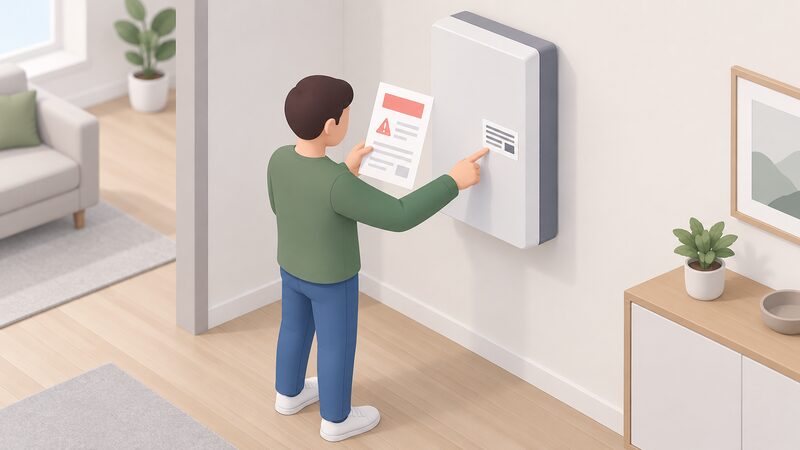
For the household, the practical consequence is that the recall is an ongoing obligation to check, not a one-off notice. The maker's own guidance says each affected ESS home battery is marked with a unique serial number, which can be used to identify affected batteries4. That serial number is the only reliable identifier, and it is the thing to keep a record of.
Which models are affected
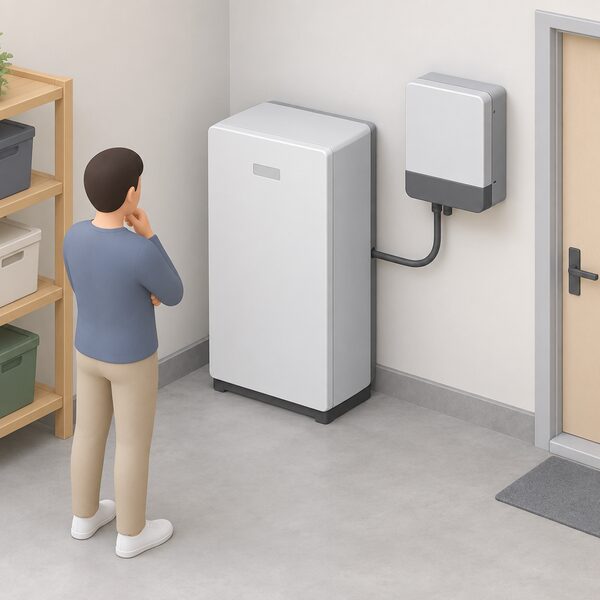
The affected list spans the low-voltage RESU range and the high-voltage RESU H series. LG Energy Solution's recall notice names the models and their model numbers together1.
| Model | Model number(s) | Notes |
|---|---|---|
| RESU3.3 | R4863P3SBMA | Low-voltage range1 |
| RESU6.5 | R48126P3SBMA | Low-voltage range1 |
| RESU10 | R48189P3SBMA | Low-voltage range1 |
| RESU13 | EH048252P3S1BMA | Low-voltage range1 |
| RESU7H Type C, Type R | R11163P3SSEG1, EH111063P3S31, EH111063P3S3DLT1 | High-voltage range1 |
| RESU10H Type C, Type R | R15563P3SDLT1, R15563P3SSEG1, R15563P3SSEG2 | High-voltage range1 |
| RESU10M | EH155063P3S7BMA | Listed on the recall notice1 |
Electrical Safety First independently lists the RESU7H Type C, RESU10H Type C, RESU7H Type R and RESU10H Type R as affected models subject to replacement of all potentially affected batteries2. The two lists overlap on the H series; the maker's notice is the fuller list and includes the low-voltage models and the RESU10M.
The recall notice describes the affected RESU batteries as LG branded systems1. That description sits alongside a warning that matters more than the branding: affected batteries may be inside an energy storage system even if it is not LG-branded4. A rebadged cabinet, an installer-branded enclosure or a system sold under another name can still contain a recalled RESU module. The badge on the outside is not the test; the serial number on the battery is.
The hazard, and the incidents behind it
The failure mode is thermal. Electrical Safety First attributes the recall to specific electrode manufacturing issues that could potentially result in thermal instability leading to an overheating incident2. That is a defect introduced in manufacture, present from new, and not something an owner can detect by watching the battery behave normally.
LG Energy Solution's notice confirms the consequence: incidents have occurred and caused damage to property1. The notice does not quantify them, and no figure for the number of UK incidents appears in the recall material.
The general risk picture is well documented. The government's product safety consultation states that non-compliant or incompatible battery components and the use of batteries outside of their safe design parameters can lead to thermal runaway, causing fires6. The 2020 official report on domestic battery energy storage systems recorded that few incidents were known in the public domain at that time, while still concluding that large batteries in the domestic environment represent a safety hazard7. A recall of this scale is what happens when a batch-level defect is identified after installation, and it is the mechanism that keeps a known manufacturing fault from becoming a household fire.
For a household weighing what a battery does for its independence, this is the honest counterweight. The battery reduces dependence on the grid and on a supplier's tariff, but it introduces a dependence on the maker's safety monitoring, on a remote update path, and on the maker still being there to honour a replacement. That is a real exposure, and it is the reason registration matters.
How to check a battery, and where the serial number is
The check itself is simple. LG Energy Solution's guidance is to enter the serial number of the battery in the serial number checker to see if the battery is affected, or to register in consumer registration1. The support article repeats the instruction: enter the serial number of your battery in the serial number checker to see if your battery is affected5. The European checker is also live4.
Finding the serial number depends on the model, and the maker gives two different locations.
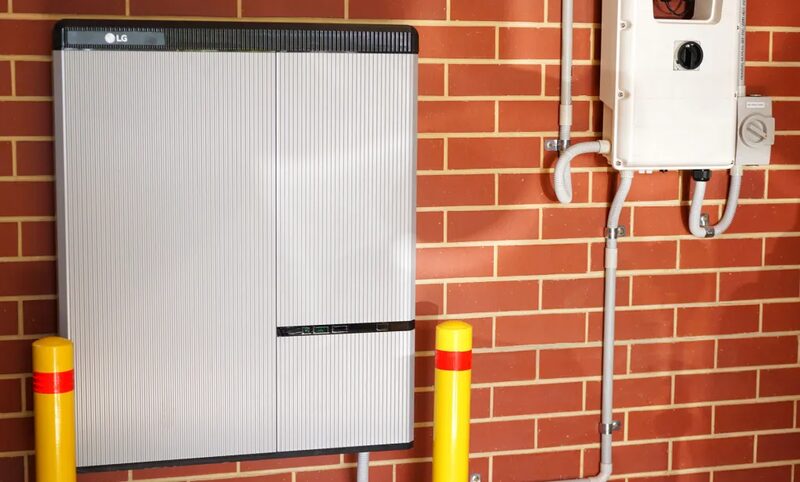
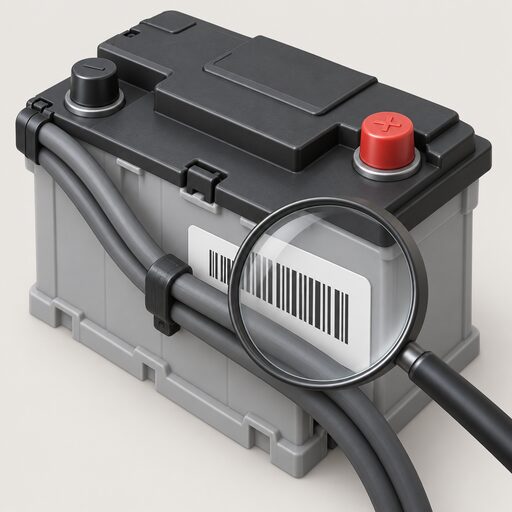
- RESU3.3, RESU6.5, RESU10 and RESU13: look to the right-hand side of the battery. The serial number label may be partially obscured by battery cables or conduit4.
- RESU7H and RESU10H Type C, Type R and Type R (Secondary): there are two places. Underneath the battery, adjacent to the cable entry, and behind the access cover at the bottom right of the battery4.
That warning is the maker's own and it is the one instruction on this page that carries a direct physical risk if ignored. A partly obscured label on the right-hand side of a low-voltage unit can be read without moving anything; if it cannot, the check can be done through the registration route instead.
Registration is not optional in the maker's framing. The recall notice states that owners must register an affected battery by going to the serial number checker page and entering the requested details, or by contacting LGESEG by telephone or web1. Registration is also how a recall reaches an owner at all, which is why consumer bodies recommend registering all electrical appliances so the manufacturer can make contact if a problem arises8.
The remedies: replacement, diagnostic update and shutdown
There are two distinct tracks, and which one applies depends on the individual battery.
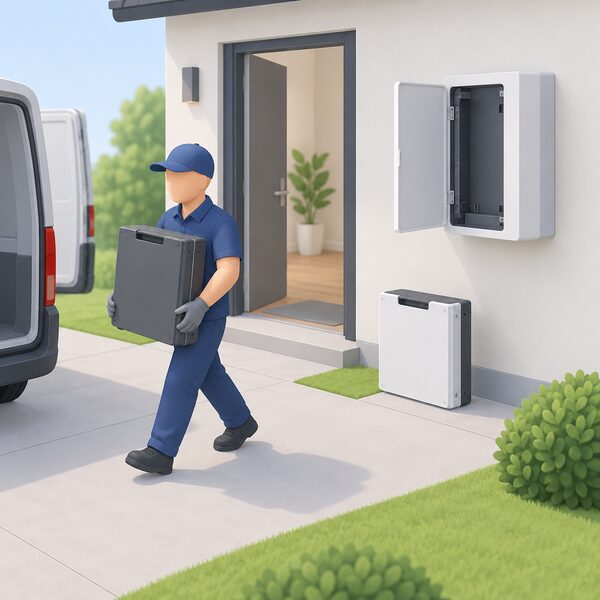
The first is outright replacement. LG Energy Solution states that it will replace all affected batteries for free or provide a new module and remove the battery from the premises1. The general remedy wording is that LGESEG will replace the battery for free and remove the affected battery from the property at no cost to the owner4.
The second is a diagnostic software update. The maker states that a battery may be subject to voluntary corrective action in the form of a diagnostic software update, and that LGESEG is rolling out a free diagnostic software update which is intended to identify and shut down batteries at risk of overheating4. The support article carries the same wording5. The update is delivered remotely: LGESEG will be implementing the diagnostic software update through the remote software update function provided by the inverter company4. That is a dependency worth naming. The update travels over the inverter's communications link, so a system that is offline, unmonitored or no longer connected to its original platform may not receive it until that link is restored.
Where the diagnostic software shuts a battery down, the replacement track takes over. LGESEG will replace batteries diagnosed by the diagnostic software and remove those batteries from the property at no cost to the owner4. The same commitment appears in the support article5. A shutdown is therefore not a dead end: it is the trigger for a free replacement and removal.
| Situation | What the maker states happens |
|---|---|
| Battery caught by the replacement recall | Free replacement, or a new module, and removal from the premises1 |
| Battery subject to the diagnostic update | Free remote diagnostic software update intended to identify and shut down batteries at risk of overheating4 |
| Battery shut down by the diagnostic software | Free replacement and removal from the property at no cost4 |
Remote update capability is a normal feature of modern storage hardware, not a peculiarity of this recall; makers advertise remote firmware upgrades as a standard function of their systems9. What the recall shows is the other side of that capability: a remote channel is also the route by which a safety shutdown arrives.
What to do while a battery is affected
The recall material does not instruct owners to switch off an affected battery themselves as a blanket measure. The maker's route is the diagnostic update and, where it triggers, a shutdown and replacement. What the recall does establish is that incidents have occurred and caused damage to property, and that the defect is a manufacturing one present from new1.
General lithium safety guidance is consistent on what to do if a battery shows signs of damage. Electrical Safety First's e-bike guidance states that if you notice any damage, stop using and charging the battery immediately and replace it10, and the same wording appears in its e-scooter guidance11. North Wales Fire and Rescue Service advises that in the event of a fire, don't try and tackle it yourself, leave and call 99912. Those are general rules for lithium batteries in the home rather than recall-specific instructions, but they are the right frame if an affected unit shows any sign of distress.
Storage advice is also relevant for a battery that has been shut down and is awaiting collection. North Wales Fire and Rescue Service states that if a device or equipment is stored without being used for any length of time, the battery should be removed12. For a home battery that is not a do-it-yourself task, and the recall route is removal by the maker.
The independence point is uncomfortable here. A home battery is meant to keep the lights on when the grid fails, and a recalled unit may instead be shut down and removed, leaving the household back on the grid with no storage at all. That is the trade a recall makes: safety first, and a period of reduced self-sufficiency while the replacement is arranged. Households that want to understand what backup normally looks like, and what a shutdown removes, can read battery backup in a power cut and home battery fire safety.
Compensation, and what former residents should do
LG Energy Solution states that LGESEG is providing compensation to affected consumers to cover any additional expenses incurred due to increased electricity bills or costs associated with using alternate energy sources after the shutdown of the affected batteries4. The same commitment appears in the support article5. The compensation is tied to the shutdown, so it applies to households whose battery has been taken out of service by the diagnostic software rather than to every registered owner.
The mechanism is a claim against the maker, not a credit on an energy bill. Households dealing with a supplier dispute at the same time should keep the two separate: Ofgem's back billing rules limit what a supplier can recover for energy used more than 12 months ago, with an exception where the customer has acted unreasonably, for example by stealing electricity or gas13. That is a supplier rule and has nothing to do with recall compensation, but the two can arrive in the same post.
Former residents have a specific route. LG Energy Solution asks that if you used to live at a property that has one of these products but no longer live there, you get in contact with LGESEG by completing the form1, and the support article repeats the instruction to complete the form or otherwise contact LGESEG using the published details5. A former resident may be the only person who knows the battery is in the property, particularly if the current occupier bought the house without a handover pack.
Contact details published for the recall include a European number, +49 (0) 6196 5719 660, and an Italian number, +39 02 3859 44204. On data, LG Energy Solution states that any data collected in the registration form will not be used for sales advertising purposes and will only be used for product support, campaign and recall purposes4.
Where the recall leaves a household's independence
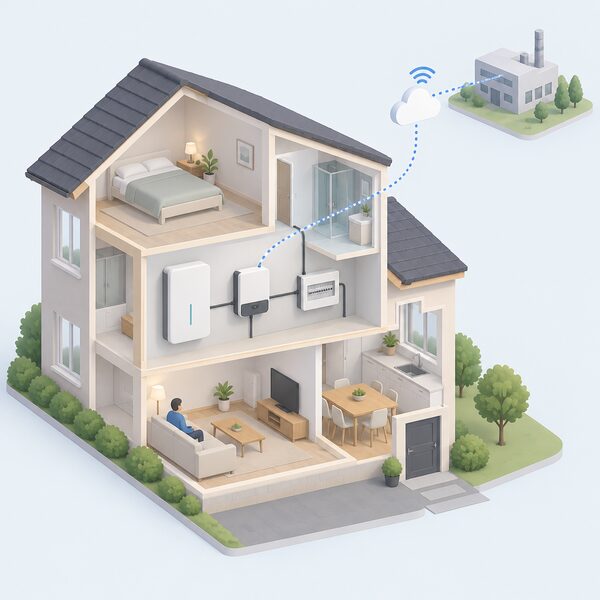
A home battery is bought for independence: less grid import, less exposure to a supplier's peak rates, and some resilience when the power fails. A recall of this kind shows the limits of that independence clearly. The household still depends on the manufacturer for the safety of the unit, on the inverter's communications link for the diagnostic update, and on the maker's willingness and ability to replace and remove a faulty battery at no cost. None of those dependencies can be managed by the household itself.
The recall also shows why registration and record-keeping are part of energy independence rather than an administrative afterthought. A serial number recorded at installation, and a registration lodged with the maker, are what allow a recall to reach the right door. Consumer guidance to register all electrical appliances so the manufacturer can contact you about a problem is the general version of the same advice8.
What remains unresolved is the scale. The recall notice confirms that incidents have occurred and caused damage to property but gives no count1, and the affected model list has grown since the recall began4. Owners who checked once should check again, and owners who have never checked should treat the serial number as the starting point. For the wider picture of how recalls and safety notices work in this market, and how the RESU range sits among the alternatives, see home battery recalls and safety notices and LG home batteries.
Sources13 cited
- LG ESS Home Battery Recall Notice, LG Energy Solution, 2026
- LG ESS Battery Division RESU ESS Home Batteries recall, Electrical Safety First, 2026-09-17
- LG ESS Battery Serial Number Checker (UK), LG Energy Solution, 2026
- LG ESS Battery Serial Number Checker (EU), LG Energy Solution, 2026
- LG ESS Home Battery Recall and Voluntary Corrective Action: registration, LG Energy Solution, 2026
- The UK's new product safety framework, GOV.UK, 2026-03-31
- Domestic battery energy storage systems, GOV.UK, 2020-10-02
- Recycling electricals and batteries, Electrical Safety First, 2026-09-17
- Sungrow S450S-L, S1000S-L and S2000S-L, Sungrow, 2026-09-17
- E-bike battery safety, Electrical Safety First, 2026-09-17
- E-scooter battery safety, Electrical Safety First, 2026-09-17
- Lithium-ion batteries at home, North Wales Fire and Rescue Service, 2026
- What to do if you get a back bill, Ofgem, 2026
 Recalls and Safety NoticesWhich LG RESU home batteries have been recalled, and how can you tell if yours is one of them?
 Product RecallsHow recalls and safety notices work for energy equipment in UK homes, who issues them, how to check a product, and what replacement, repair and refund routes exist.
 Lithium Battery SafetyLithium batteries power phones, e-bikes, scooters and home storage, and any of them can catch fire.
 Home Battery Fire SafetyHow likely is a home battery to catch fire, and what keeps it safe if it does?
 Second-Life EV BatteriesUsed electric car batteries can store solar power at home, but can you actually buy one in the UK?
 Maintenance and FaultsWhat does it mean when your home battery starts beeping or showing a warning, and can you fix it yourself?