
In this answer
Short answer
A home battery is a permanent electrical installation with a lithium chemistry, and that makes it a fact about the property that a home insurer prices into the risk. There is no single statute that says "tell your insurer about a battery", but a home policy is a contract built on the description the householder gives, and the public guidance around lithium-ion batteries treats them as a hazard class of their own.
The practical position is straightforward. Notify before installation, keep the paperwork, and expect the insurer to ask about the chemistry, the location and who fitted it. Domestic battery storage is principally lithium, the most common material used for domestic batteries, but also cobalt and nickel1. Domestic battery storage has a shorter lifetime of around 10 to 15 years, when compared to solar panels, so the disclosure is not a one-off event: it recurs at replacement2.
What follows sets out why the disclosure matters, what to send and when, how terms can move, what to do if the insurer declines or attaches conditions, and which documents support the record. It also covers what buildings cover typically reaches, and where it stops.
Why a battery is a disclosure matter, not just an installation
The legal frame for a home battery is narrow and specific. An electrical storage battery qualifies under the legislation where it is intended for use solely for storing energy converted from electricity supplied to the residential accommodation or building in question, or generated by a microgeneration system5. That is a definition of what the battery is for, not a rule about insurance. It matters here because it confirms the battery is part of the dwelling's energy system rather than a portable appliance, and insurers assess fixed plant differently from contents.
The hazard side is where disclosure bites. Official fire research into PV systems records that, if combined with battery storage, they pose chemical or explosion hazards3. That is the sentence an insurer's risk wording is built around. A battery is not a boiler and not a consumer unit: it stores energy chemically, in a unit that may sit in a garage, an outbuilding or against an external wall, and it can fail in ways that produce heat, gas and fire rather than a simple electrical fault.
Public confidence is the stated reason the law has moved at all. The Lithium-ion Battery Safety Bill was introduced with a second purpose, to increase public confidence in, and acceptance of, Battery Energy Storage Systems6. That framing is useful for a householder: the regulatory direction is toward more disclosure and clearer labelling, not less.
There is also a practical gap in what households know. Official tracking of consumer take-up found low awareness a significant obstacle to adopting home battery storage4. A householder who has not been told the battery is a disclosable change is not being careless; the information simply has not reached them. The benefit side is well understood by those who have installed: a household battery stores free electricity generated by solar panels during the day so it can be used by the household at night7.
For energy independence, the battery shifts evening consumption off the grid and, where the system supports it, keeps selected circuits running in an outage. The dependence that remains is real: the battery is charged from solar or from the grid, it is managed by a manufacturer's app and firmware, and not all batteries can deliver electricity during a power cut1. Insurance disclosure is part of acknowledging that the household now operates a piece of energy infrastructure.
What to tell your insurer, and when
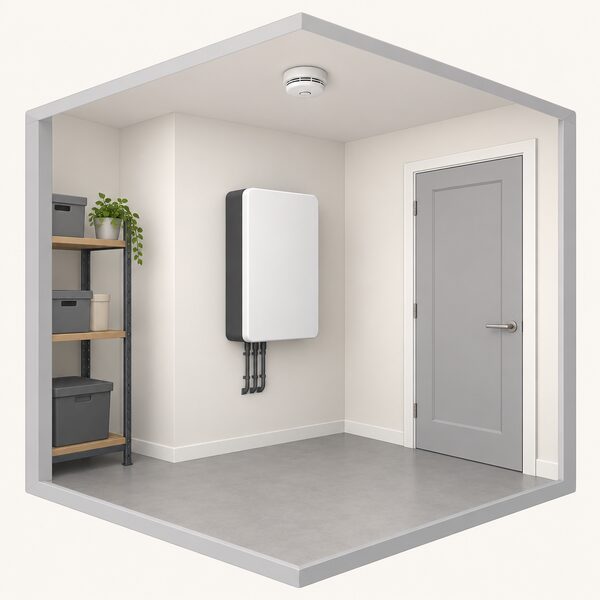
The disclosure should describe the installation, not just announce it. The facts an insurer will want are the chemistry, the capacity, where the unit sits, who fitted it, whether it works alongside solar, and whether it provides backup power. The chemistry answer is documented: principally lithium, the most common material used for domestic batteries, but also cobalt and nickel1. The backup answer is not always yes, because not all batteries can deliver electricity during a power cut1.
Timing follows the same logic as any other material change to a property. The closest documented parallel is a thatched property, where homeowners should initially speak with their insurance provider before installing an appliance8. That is the sequence to copy: ask before the work, not after. A battery is fixed plant and, once commissioned, is part of the property whether or not the insurer has been told.
Where the battery is installed under a government scheme, the timing is tighter still. Domestic batteries can only be installed under the Warm Homes schemes where they complement existing or new solar PV9. That constraint shapes what there is to disclose: a scheme-funded battery is always paired with generation, which is itself a change to the property that insurers ask about.
Safety guidance from fire services is worth passing to the insurer as evidence of how the unit is used. The advice is to charge the device in a room that has a working smoke alarm, which does not compromise an escape route, keeping the door closed while it is charging and away from any heat source10. For a fixed home battery the siting decision is made at installation, and the equivalent evidence is the installer's commissioning record and the location plan.
How notification can change your premium or terms
No published UK figure sets out what a home battery does to a home insurance premium, and none is quoted here. What is documented is the shape of the market. A standard home insurance policy will not usually cover the cost of replacing or repairing a broken boiler, but many providers add it as an extra called home emergency cover11. Cover for a boiler is generally included in house insurance as a home emergency cover add-on, with exclusions for boiler age, service history and boiler type12. A standard policy is unlikely to cover the cost of repair to wherever a leak is, and home emergency cover is needed for that13.
That pattern is the useful comparison. Insurers handle fixed energy equipment by carving it into an add-on with conditions, rather than folding it into the base policy. A battery is likely to be treated the same way: either named on the policy with conditions attached, or excluded and left to the manufacturer's warranty and any insurance-backed guarantee.
Where a scheme or lender is involved, notification deadlines are explicit and short. Under the Green Homes Wales loan terms, any change to information previously provided to the Development Bank of Wales must be reported within 7 days of becoming aware of it, and a borrower must tell the bank as soon as possible if they change address14. The Domestic RHI required accredited participants to inform the scheme within 28 days of becoming aware of a change to the property affecting eligibility15. Energy suppliers operate on a different clock: if a gas or electricity supplier increases its prices, it must notify the consumer at least 30 days in advance of the date the increase takes effect16, and independent guidance puts it as telling you in a reasonable amount of time before the change17.
The lesson for insurance is that notification windows in UK energy schemes are measured in days, not months. Treating an insurer the same way, with a call before the installation date, avoids the argument about when the household knew.
If your insurer declines or imposes conditions

A decline is not the end of the options, and the fallback positions are documented. Where a household does not meet the criteria for ECO4 and the Great British Insulation Scheme Flex, the Warm Homes Essex route exists for those who do not meet the criteria18. That is a scheme example rather than an insurance remedy, but it shows the pattern: where one route closes, another eligibility test opens.
The more relevant protection for a battery owner is the guarantee structure around the installation itself. An Insurance Backed Guarantee provides protection in the event the installer ceases to trade and cannot honour the terms of their written guarantee19. In the unlikely event an installer ceases to trade and cannot complete or rectify an installation, the householder is protected under a robust insurance policy20. That is a different product from home insurance, and it covers the installer's failure, not fire or theft.
Guarantees come with their own conditions, and they can be lost. Claims may be rejected where the homeowner has allowed the problem to worsen by preventing the guarantee provider from engaging and investigating21. Proof of ownership is required to query any guarantee information: two documents, one of which must be a current utility bill22. The same requirement is stated in the guarantee scheme's own rules23.
Where a scheme grant is involved, the funder can withdraw. The grant administrator may cancel an offer letter or instruct payment to be withheld where the validity period has expired, eligibility requirements were not met, the installer has ceased to be registered, false statements or fraud were made, there was inappropriate collusion, or it is necessary to comply with relevant laws14.
Documentation that supports your disclosure
The evidence pack for an insurer is the same pack a scheme or a lender asks for, which makes it worth assembling once. Scheme guidance on acceptable evidence for self-build cases, described as indicative and non-exhaustive, lists proof of property ownership such as a copy of title deeds or a contract of sale, funding documents, construction invoices, self-build insurance, bank statements, trader and builder invoices, and planning permission or building control documents24.
For owner-occupiers, the Nest scheme requires one of a mortgage statement, a buildings insurance policy or property deeds as evidence of ownership25. Independent guidance on moving home notes that this information can also be required to validate home insurance26. That is the clearest statement in the public guidance that the ownership and installation paperwork serves both purposes.
A current utility bill is the standard proof of address. The guarantee scheme asks for two documents as proof of ownership when querying any guarantee information, and one of them must be a current utility bill22.
On the installation side, the handover pack matters. Approved Document L Volume 1: Dwellings was updated to clarify requirements relating to the provision of maintenance and operation information to owners of dwellings with mechanical ventilation, and to make clear that Home User Guides should be provided27. The direction of travel is toward a documented handover, and a battery installation should produce the same: commissioning records, the installer's registration details, and the manufacturer's warranty terms.
Battery storage and buildings cover: what is typically in scope
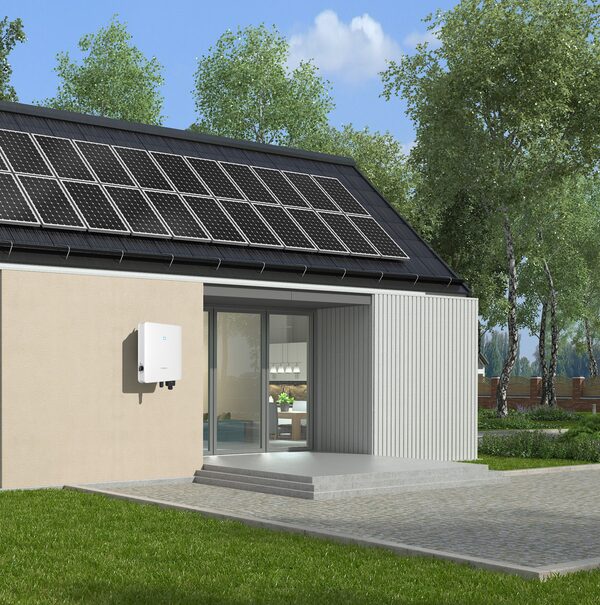
A home battery is fixed plant, so it sits with buildings cover rather than contents. What that cover reaches depends on the policy wording, and the public guidance gives the boundaries rather than a schedule.
On the scheme side, battery storage has been formally recognised as an energy measure. Battery storage installations are covered by added guidance under ECO428. PV batteries, described as a type of battery storage installed to work alongside solar PV panels, have been integrated into RdSAP 10 and are an eligible measure for installation under the Warm Homes: Social Housing Fund9. That matters for insurance because it confirms the battery is treated as a permanent improvement to the dwelling, in the same category as insulation or a heating upgrade.
The hazard wording is the part an insurer will match to the installation. Official fire research records that PV systems combined with battery storage pose chemical or explosion hazards3. A policy that names the battery, or excludes it, is doing so on that basis.
The lifetime figure shapes the cover conversation too. Domestic battery storage has a shorter lifetime of around 10 to 15 years, when compared to solar panels2. A battery will typically need replacing within the life of a mortgage, and the replacement is a fresh disclosure.
Where the battery is part of a wider retrofit, the cost basis for the installation is documented separately. MCS domestic battery installation statistics exclude the cost of any additional device installed with the battery, such as solar panels, and also exclude any extended warranty or other material or works on the battery equipment29. That exclusion matters when a householder is trying to establish what the battery itself cost, for a claim or for a replacement valuation.
For energy independence, the battery reduces evening grid draw and, where the system supports it, provides some backup. The dependence that remains is the grid connection, the supplier, the manufacturer's app and firmware, and the installer's ongoing role. Insurance is the mechanism that prices the residual risk of the hardware itself, and it works best when the insurer has been told what is in the property before the first claim, not after.
Sources29 cited
- Battery storage advice, Centre for Sustainable Energy, October 2025
- Domestic battery storage, Parliamentary Office of Science and Technology, 25 June 2026
- Fire safety of solar photovoltaic panels, GOV.UK, February 2026
- Tracking energy consumers' use of low carbon and flexible products and services 2025, Ofgem, June 2025
- Electricity Act 1989, Schedule 7A, Part 2, Chapter 2, legislation.gov.uk, 17 September 2026
- [Lithium-ion Battery Safety Bill [HL]](https://bills-api.parliament.uk/api/v1/Publications/56005/Documents/4984/Download), UK Parliament, 29 July 2024
- Getting smarter with energy, Centre for Sustainable Energy, July 2026
- Installations in thatched properties, HETAS, 2026
- Warm Homes: Social Housing Fund wave 3 scheme guidance addendum, GOV.UK, June 2026
- Lithium-ion batteries, North Wales Fire and Rescue Service, 2026
- How to choose the best boiler cover, Which?, 30 September 2025
- Boiler servicing guide, Confused.com, 23 July 2025
- What to do if you smell gas, Confused.com, 8 September 2025
- Green Homes Wales loan standard terms and conditions, Development Bank of Wales, 17 September 2026
- Domestic Renewable Heat Incentive essential guide, Ofgem, June 2024
- Energy terms explained, Ofgem, 2026
- Your gas or electricity supplier has put up its prices, Citizens Advice, 17 September 2026
- Energy Company Obligation ECO4 and GBIS Flex, Essex County Council, 17 September 2026
- Insurance backed guarantees, Flexi-Orb, 25 February 2026
- Consumer protection, EPVS, 17 September 2026
- Advice and help in reporting a concern, CIGA, 20 September 2026
- The CIGA guarantee, CIGA, 20 September 2026
- Cold callers and claims companies, CIGA, 20 September 2026
- Boiler Upgrade Scheme guidance for property owners, Ofgem, 25 March 2026
- Nest eligibility, Welsh Government, 17 September 2026
- Moving home, HETAS, 2026
- Approved Document L Volume 1: Dwellings, GOV.UK, March 2026
- Summary of updates to ECO4 delivery guidance and measures table, Ofgem, 7 August 2025
- MCS domestic retrofit battery installations 2025 to 2026, GOV.UK, 28 May 2026
 Home Battery Fire SafetyHow likely is a home battery to catch fire, and what keeps it safe if it does?
 Home Battery Install StatisticsHow many homes in the UK actually have a battery, and is that number growing quickly?
 Siting and LocationWhere can a home battery actually go?
 Maintenance and FaultsWhat does it mean when your home battery starts beeping or showing a warning, and can you fix it yourself?
 DIY Home Battery BuildsBuilding your own home battery?
 The Full Home Batteries GuideA home battery stores cheap or solar power for later, but will it really cut your bills enough to be worth it?