
In this guide
A home battery does not go wherever there is a spare wall. The three locations UK guidance names are garages, external walls and utility rooms, and the choice between them is settled by fire safety, ventilation, temperature and access rather than by convenience1. Anyone with a home can potentially install a battery system, but not every part of that home is a permitted position2.
The rules that decide this are recent and still bedding in. PAS 63100:2024, published by BSI on 20 March 2024, is the fast-track standard for protecting electrical battery energy storage systems against fire when they are installed in dwellings, and it covers requirements such as battery and fault management and installation locations3. From 15 April 2026, Amendment 4 (2026) to BS 7671:2018 introduced a new chapter covering stationary secondary batteries, placing strong emphasis on appropriate battery location, ventilation and fire-risk mitigation5.
The practical effect is that siting is an installer's judgement made against a standard, not a householder's preference. Certified battery installations in the UK reached roughly 82,000 as of April 2026, and monthly installations doubled between 2024 and 2025, so a large and growing number of homes have already had this decision made for them6.
What the figures show
The numbers that shape siting are mostly about scale and about how the standard is written. PAS 63100:2024 is a fast-track standard, published by BSI on 20 March 2024, carrying the ISBN 978 0 539 28917 6 and sitting under committee ZZ/34. It is listed as current, and its scope is the protection against fire of battery energy storage systems installed in dwellings3. It covers the physical requirements for battery units and the installation location in respect of safety and external influences that affect fire safety4.
Its intended users are suitably competent designers and installers of battery energy storage systems that form part of electrical installations, for dwellings and similar simple electrical installations4. It excludes battery systems with nominal voltages on the AC or DC side exceeding low voltage as defined in BS 7671, which keeps domestic units inside its remit and commercial-scale equipment outside it4.
Two limits on the standard matter for anyone reading it as a rulebook. PAS 63100 has no current standing in any UK regulations, such as Building Regulations, and it is not directly referenced in the Battery Storage Installation Standard (MIS 3012)8. It is a specification that competent installers work to, not a statutory requirement: since PAS 63100 is not a standard or regulation, there is no legal requirement to follow its recommendations9. BSI lists it under ICS 13.220.01, protection against fire in general, and the standard is published as a Fast-track Standard4.
The installation figures give the context. Certified battery installations in the UK stood at roughly 82,000 as of April 20266. Monthly installations doubled between 2024 and 2025 as recorded in the Microgeneration Certification Scheme database7. Official statistics on domestic battery installations round costs and capacities to the nearest 10, and group capacity into bands chosen to cover distinct groupings: batteries approximately smaller than 6kWh, approximately larger than 11kWh, and a grouping in between8.
| Figure | Value | Date | Source |
|---|---|---|---|
| PAS 63100:2024 published | 20 March 2024 | 2024 | BSI4 |
| Amendment 4 (2026) to BS 7671:2018 published | 15 April 2026 | 2026 | IET5 |
| Certified UK battery installations | about 82,000 | April 2026 | POST6 |
| Monthly installations | doubled between 2024 and 2025 | 2025 | Ember7 |
| Capacity bands in official statistics | under 6kWh, over 11kWh, and between | 2026 | DESNZ8 |
What drives the choice of location
Four things decide where a unit can go: fire behaviour, ventilation, temperature and access for maintenance and emergency services. Each pulls in the same direction, away from the parts of a house people occupy and sleep in.
Fire behaviour comes first because lithium-ion is the main chemistry for domestic use10. Fire service guidance for lithium-ion batteries in household devices is written for smaller products, but its logic transfers: charge the device in a room that has a working smoke alarm, which does not compromise the escape route, keeping the door closed while it is charging and away from any heat source9. A fixed battery is not a phone or a scooter, and the guidance is aimed at devices rather than installed storage, but the principle of keeping a charging battery out of the exit path and away from heat is the same one PAS 63100 applies to installation location4.
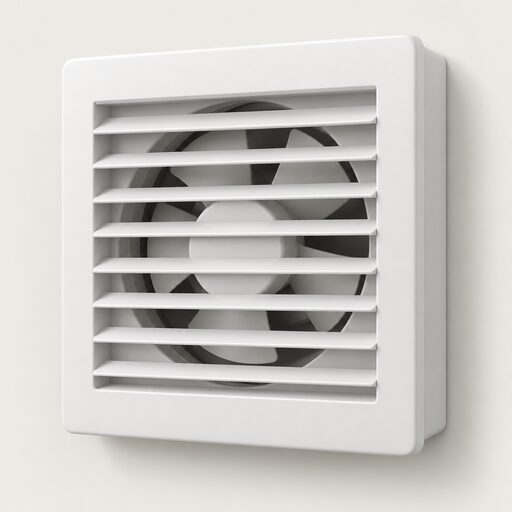
Ventilation and temperature follow. Amendment 4 (2026) to BS 7671:2018 places strong emphasis on appropriate battery location, ventilation and fire-risk mitigation5. A loft can be covered by the standard, which includes the location of battery storage products in a loft space, but coverage is not approval: a loft that overheats in summer and freezes in winter has to be judged against the same requirements as any other position4.
Access matters for a different reason. A unit that cannot be reached for inspection, isolation or replacement creates problems later, and the installer has to assess the adequacy of the supply capacity and the earthing before the work begins11. The same installer notifies the electricity Distribution Network Operator once the equipment is in place11.
Garages, utility rooms and external walls
These are the three positions UK guidance names, and each carries its own conditions1.
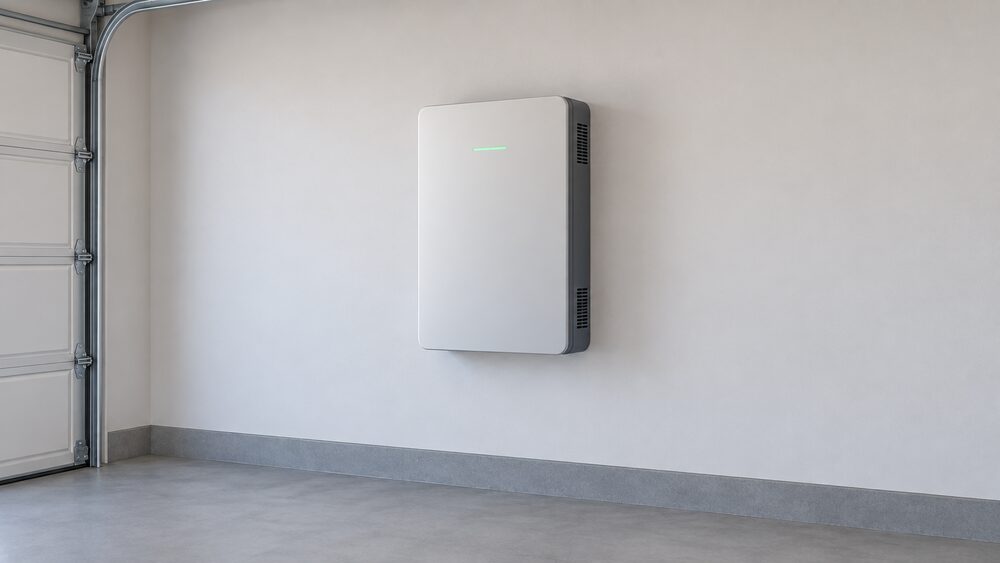
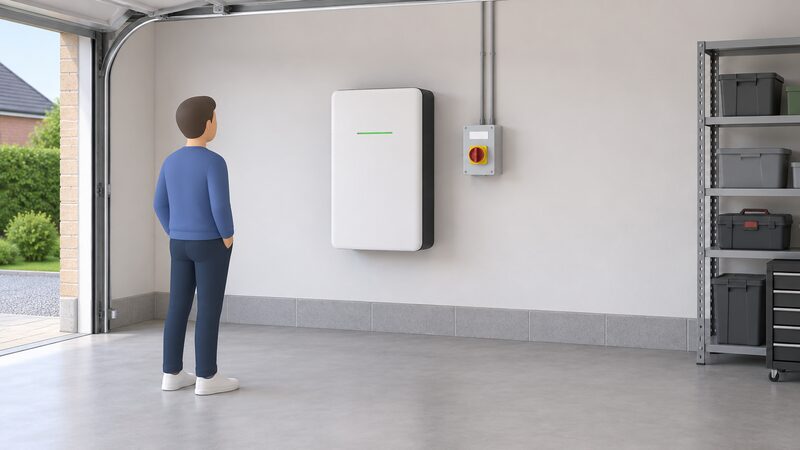
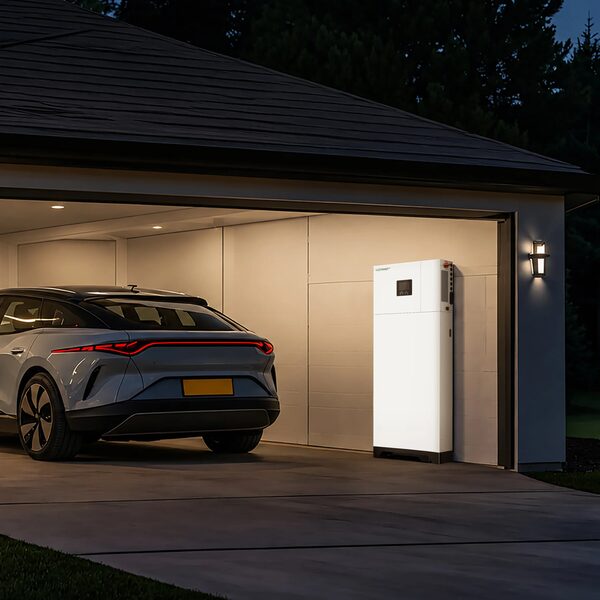
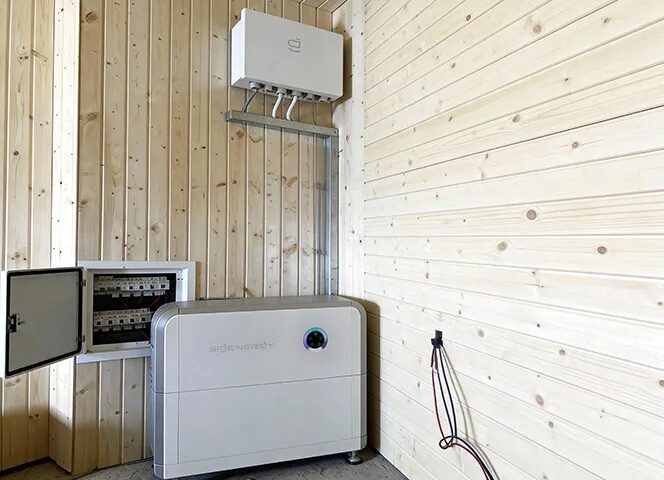
A garage keeps the unit out of the house and away from bedrooms and escape routes. It is unheated, which cuts both ways: it avoids the heat a loft can build up, but it exposes the unit to winter cold, and the standard's requirements on external influences apply4. A garage that is integral to the house is a different proposition from a detached one, because fire separation between the two becomes part of the assessment.
A utility room keeps the unit inside the thermal envelope and close to the consumer unit and inverter, which shortens cable runs. The trade-off is that it is a room in the house, so the escape route question applies directly, and the fire service advice on keeping a charging battery out of the way of the exit path is the relevant principle9.
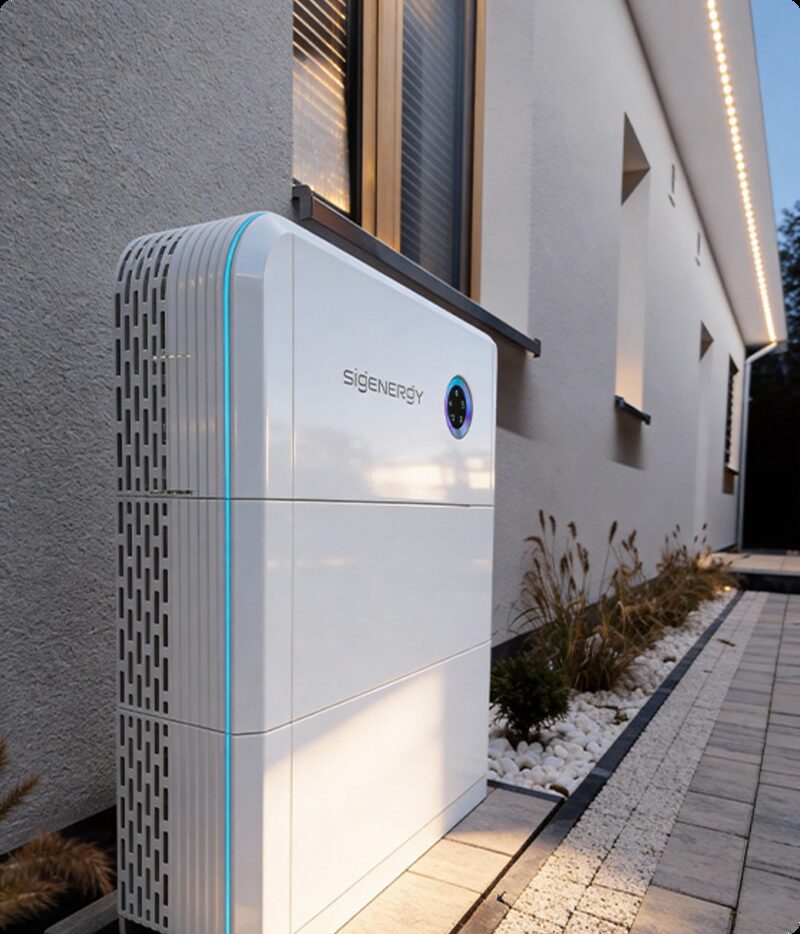
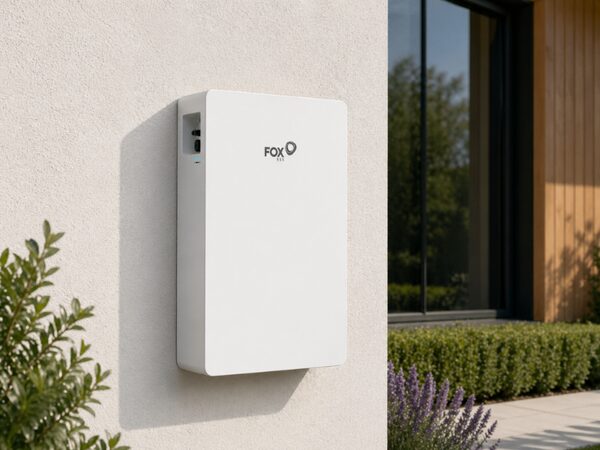
An external wall is the third named option1. One UK development installed its batteries outside of the plots specifically to mitigate fire risks, which shows the approach in practice at development scale12. An outdoor position needs an enclosure suited to weather and a spot clear of windows, doors, vents and combustible material, and it needs the same clearance for access as an indoor one.
| Location | Main advantage | Main constraint |
|---|---|---|
| Garage | Keeps the unit out of habitable rooms and escape routes1 | Unheated, so external influences apply4 |
| Utility room | Inside the thermal envelope, close to consumer unit and inverter1 | Inside the house, so escape route principle applies9 |
| External wall | Fire risk moved outside the dwelling12 | Needs weather-rated enclosure and clear ground4 |
Where a battery should not go
The clearest prohibition in UK consumer guidance concerns plug-in units rather than fixed ones. Electrical Safety First states plainly:
"Our advice is: DON'T INSTALL PLUG-IN BATTERY SYSTEMS IN YOUR HOME."
That advice dates from August 2026 and sits alongside the separate question of whether a plug-in battery can be connected without an installer, which the wiring regulations answer by requiring any device feeding electricity into a home to be on a dedicated circuit5.
For fixed batteries, the restrictions are less a list of banned rooms than a set of conditions that rule positions out. A position that compromises the escape route fails the fire service principle9. A position exposed to heat sources fails the same test9. A position that cannot be ventilated fails the Amendment 4 emphasis on ventilation5. A position the installer cannot assess for supply capacity and earthing fails the pre-installation checks11.
Habitable rooms and escape routes are the areas where these conditions bite hardest. A bedroom, a hallway or a stairwell combines occupancy with the exit path, and the fire service advice on smoke alarms, closed doors and escape routes points away from all three9. A loft is not automatically excluded, because the standard covers loft locations, but it has to satisfy the same requirements as anywhere else4.
Clearances, mounting and ingress protection
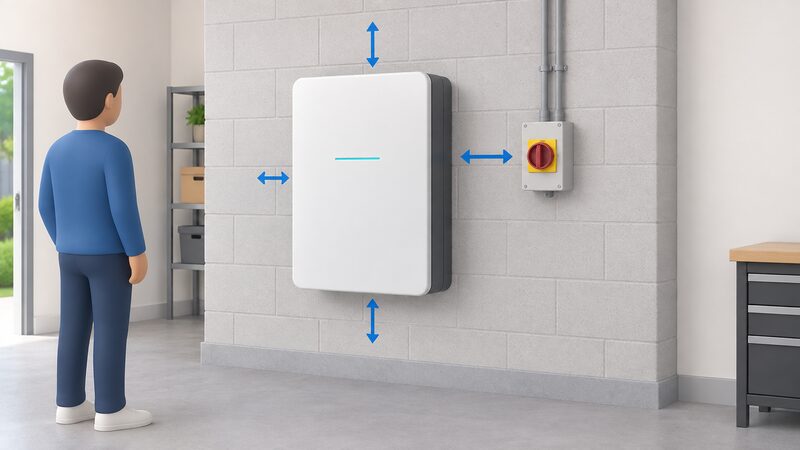
Clearance and mounting are set by the manufacturer for each model and confirmed by the installer against the standard, which covers the physical requirements for battery units and the installation location in respect of safety and external influences4. The standard does not publish a single universal gap; it requires the designer to match the unit to the position.
Ingress protection works the same way. An outdoor unit needs an enclosure rated for weather, and PAS 63100 covers external influences that affect fire safety, which is where weather exposure and water ingress enter the assessment4. The specific IP figure belongs to the individual product, and the installer matches it to the position rather than the other way round.
Mounting follows the same logic. A wall-mounted unit needs a substrate that takes the weight, and a floor-standing unit needs a base that keeps it clear of standing water in a garage or outbuilding. The Tomorrow Home development placed its batteries outside the plots to mitigate fire risks, which is a mounting and siting decision taken at the design stage rather than a product specification12.
The pre-installation checks sit alongside all of this. The installer assesses the adequacy of the supply capacity for the new load plus any existing demand, assesses the adequacy of the earthing, and notifies the Distribution Network Operator once the equipment is installed11. None of those steps depends on which room the unit ends up in, but all of them constrain where it can go.
Planning permission and building regulations
Siting has a permissions dimension as well as a technical one, and the two are handled by different bodies.
Installing a home charger is classified as development, and it is up to the householder to ensure the correct permissions are in place13. Building regulations approval is always required when installing an electric vehicle home charger, and a competent and reputable installer should be used, with specific processes for notifying the local building control authority14. A home battery is installed as part of the electrical installation and is covered by the wiring regulations, which from 15 April 2026 include the new chapter on stationary secondary batteries5.
Where a planning application is needed, the guidance on visual impact is instructive for batteries as well as chargers: the development should minimise impact on the visual context of the local area, which can be done by placing the equipment around the side of the house, on a porch, or disguising it with bushes and plants15. That is the same set of positions a battery would occupy on an external wall.
The wiring rules themselves are in transition. BS 7671:2018+A2:2022+A3:2024 is scheduled to be withdrawn on 15 October 2026, after which Amendment 4 becomes the definitive British Standard5. Installations designed and fitted before that date sit under the earlier version, and those after it sit under the new chapter on stationary secondary batteries5.
How the nations differ
The technical standard is UK-wide, but the planning framework is not, and the four nations diverge on permitted development and on related building rules.
Scotland has run its own programme of work reviewing and extending permitted development rights, which is the mechanism that decides whether external equipment needs an application16. Wales has moved further on new build: an amendment to Part L of the Building Regulations in Wales makes solar a functional requirement for new homes and non-domestic buildings where construction has not started, from 4 March 202717. That is a solar requirement rather than a battery one, but it changes what a new Welsh home is built with, and therefore where storage is planned in.
England's position is captured in its housing statistics. Households living in flats were more likely to have access to an electric vehicle charge point, at 11%, compared with houses and bungalows at 6%, in 202318. That is a charge point figure rather than a battery figure, but it shows how dwelling type shapes what can be installed where, and a flat with no external wall of its own has fewer options than a house.
Northern Ireland operates its own building control and planning regime, and no separate battery siting rule applies there, so the position rests on the same UK-wide standard and the local planning authority's view of the individual site. PAS 63100 has no current standing in any UK regulations, such as Building Regulations, and is not directly referenced in the Battery Storage Installation Standard (MIS 3012)4. It is expected to be adopted by councils and local authorities as best practice, which leaves the siting decision with the installer and the enforcing authority rather than with a single national rule5.
What siting means for energy independence
A battery's contribution to a household's energy independence is measured by self-sufficiency, defined as the percentage of electricity consumed in the property over a year which is met by either behind the meter solar or electrical energy storage19. The same source gives a second definition: the fraction of electricity consumed in the property which is met by self-consumed electricity19.
Where the battery sits does not change that percentage directly, but it changes whether the system can be installed at all, and therefore whether the household gets any of it. Combining solar panels with a home battery lets a household store free, renewable electricity to power a heat pump, making it less reliant on grid electricity20. Batteries are a way for homeowners to store excess electricity produced from their solar system, and the combined potential of millions of homes with batteries is to help balance supply and demand across the country by releasing stored power onto the grid when needed2.
The dependence that remains is unchanged by siting. A battery still draws from the grid when its own generation is short, and one case study describes a household using power from its home battery during the daytime, topped up by solar panels, and charging the battery at night on a cheaper off-peak tariff, with excess energy exported to the grid22. That is a household still connected to a supplier, a tariff and a network, using storage to shift when it buys rather than to stop buying.
Siting also carries a safety dimension that bears on independence in a practical sense. PAS 63100 helps ensure the fire safety of domestic battery energy storage systems, and its use helps to increase the fire-safety of such installations3. A well-sited unit is one that can be reached, isolated and maintained, which is what keeps a household's storage working over its life rather than becoming a liability in the one place it cannot be serviced.
Sources22 cited
- Battery storage, Energy Saving Trust, 2026-08-19
- Batteries in the home, Solar Energy UK, 2026-09-17
- PAS 63100: Protection against fire of battery energy storage systems, BSI, 2026-09-17
- Electrical installations: Protection against fire of battery energy storage systems for use in dwellings, BSI, 2024-03-20
- IET and BSI officially publish Amendment 4 (2026) to BS 7671:2018, IET, 2026-04-15
- POSTnote 771, Parliamentary Office of Science and Technology, 2026
- UK solar homes power equivalent of five hours of daily air con use during heatwave, Ember, 2024
- MCS domestic retrofit battery installations 2025 to 2026, Department for Energy Security and Net Zero, 2026-05-28
- Lithium-ion batteries, North Wales Fire and Rescue Service, 2026
- Electrical energy storage systems, Flexi-Orb, 2025-04-22
- Single EV connection, Electricity North West, 2026-09-20
- Tomorrow Home, Future Homes, 2024-08-16
- Electric vehicle charging: planning permission, Planning Portal, 2026
- EV charger home installation process, Uswitch, 2022-02-03
- Electric vehicle charging, Planning Portal, 2026
- Extending permitted development rights in Scotland: sustainability appraisal, Scottish Government, 2019-06
- Wales leads the UK: rooftop solar now mandatory for new buildings, Naked Solar, 2027-03-04
- English Housing Survey 2023 to 2024: low carbon technologies, Ministry of Housing, Communities and Local Government, 2023
- MCS 032, MCS Certified, 2025-01-01
- How to ensure a heat pump runs efficiently, Energy Saving Trust, 2026-05-19
- Solar energy, Solar Energy UK, 2026-09-17
- Beth Martin story: solar panels and electric vehicle, Energy Saving Trust, 2025-03-03
 Home Battery Fire SafetyHow likely is a home battery to catch fire, and what keeps it safe if it does?
 Ventilation and TemperatureWhere can you put a home battery so it stays warm enough in winter and cool enough in summer?
 Home Battery Install StatisticsHow many homes in the UK actually have a battery, and is that number growing quickly?
 Planning Permission in WalesDo you need planning permission for a home battery in Wales?
 Planning Permission in EnglandWhen a domestic battery or its enclosure falls within permitted development in England, when an application is needed, and how the position differs for outbuildings, listed buildings and conservation areas.
 Batteries by Home TypeLooks at how house type, occupancy pattern, electrical supply and available space change what storage can achieve, from flats and terraces to rural and off-grid properties.