In this guide
Almost every home battery sold in the United Kingdom today uses lithium iron phosphate cells, written LFP or LiFePO4. One maker states that most residential batteries use LFP technology, chosen for long lifespan and high safety standards1. The competing lithium-ion chemistry, nickel manganese cobalt or NMC, still appears in a minority of wall-mounted domestic units and dominates electric vehicles, where weight and volume matter far more than they do on a garage wall.
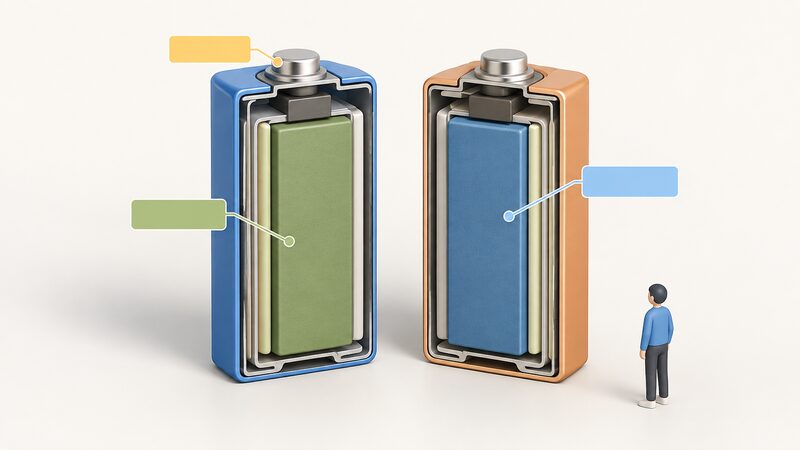
The difference is in the cathode. A lithium-ion battery with LFP chemistry consists primarily of lithium, iron and phosphate, while a lithium-ion battery with NMC chemistry consists mainly of nickel, manganese and cobalt2. That single substitution changes almost everything a household cares about: NMC offers higher energy density3, and LFP is described as slightly less energy-dense4, but for residential storage LFP is reported to offer around 10,000 lifecycles against roughly 4,000 for older lithium manganese nickel cobalt chemistries, with no cobalt in the cell5. LFP is also credited with longer cycle life, enhanced safety, and often lower cost compared to NMC or NCA chemistries6.
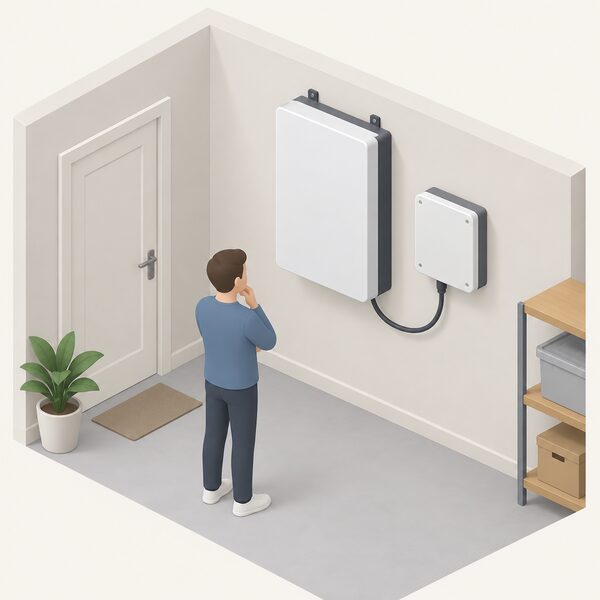
For a household, the practical reading is straightforward. A fixed battery bolted to a wall is not carried anywhere, so the density penalty costs a little extra cabinet size and nothing else. That is why LFP is often preferred for stationary battery storage for home where volume is less constrained7. Chemistry, though, is not a safety certificate on its own, and the sections below set out what it does and does not settle.
LFP and NMC side by side
The two chemistries are not graded as better and worse; they are optimised for different constraints. The table sets out what the documentation states about each.
| Attribute | LFP (lithium iron phosphate) | NMC (nickel manganese cobalt) |
|---|---|---|
| Cathode materials | Lithium, iron, phosphate2 | Nickel, manganese, cobalt2 |
| Energy density | Slightly less energy-dense4 | Higher energy density3 |
| Reported cycle life (residential) | Around 10,000 lifecycles5 | Around 4,000 lifecycles for older LMNC chemistries5 |
| Cobalt content | None5 | Contains cobalt2 |
| Nominal cell voltage | Typically 3.2 V per cell8 | Not stated |
| Cost | Often lower cost than NMC or NCA6 | Higher, on the same comparison6 |
| Typical home role | Daily cycling, high-efficiency home backup11 | Historically common in EVs and home batteries for lightness12 |
A third lithium chemistry, NCA, sits alongside NMC in the same comparison: NMC and NCA batteries typically offer higher energy density, which translates to longer driving ranges6. That phrasing is the clue. The density advantage is framed in terms of vehicles, because that is where it pays. Moved indoors, into a cabinet that will sit against the same wall for a decade or more, density buys the household very little.
The counterpart claims for LFP are longevity and stability. It is described as offering a longer lifespan, strong safety performance, slower degradation over time and stable performance in everyday home use13. Lithium-ion batteries, especially LFP, are described as often lasting over ten years in home energy storage14, and LFP cells are separately described as non-toxic15. Those are makers' characterisations of their own chemistry rather than independent test results, and they belong with the warranty document, not instead of it. What a household is actually promised is set out in the warranty terms and measured against cycle life and degradation.
What drives the difference
Energy density is a materials property. Packing nickel and cobalt into the cathode raises the voltage and the charge each kilogram of active material can hold, which is why NMC took the early lead in both vehicles and home batteries: it was historically common in both EVs and home batteries due to its lightweight nature12. Most current EVs use lithium ion or lithium polymer batteries because of the high energy density that can be achieved16.
LFP gives up some of that. Its cells have a lower nominal voltage, typically 3.2 V per cell, than other lithium-ion chemistries8, which means more cells in series to reach the same pack voltage and a physically larger unit for the same stored kilowatt hours. In exchange the iron-phosphate cathode is more thermally and structurally stable, which is the basis for the safety claims makers attach to it, and it removes cobalt from the bill of materials altogether5, with consequences for both cost and supply chain exposure.
Cycle life follows from the same stability. Charging and discharging a cell strains the cathode lattice; the more robust the lattice, the more cycles before capacity falls away. For a household on a time-of-use tariff that fills the battery overnight and empties it each evening, cycle count is the binding constraint, not weight, because the battery may complete a full cycle or more every day. LFP is characterised as suited to daily cycling and high-efficiency home backup11. Alpha ESS states that its batteries use LFP chemistry, known for its long cycle life and reliability17.
Control is handled in software regardless of chemistry: the battery automatically switches between charging and discharging cycles based on the solar generation profile and household energy demand18, a function of the battery management system rather than the cells themselves.
What is actually sold in the UK
The chemistry listed on residential datasheets is remarkably uniform. The table draws each entry from the maker's own documentation for that product.
| Product | Chemistry stated |
|---|---|
| Enphase IQ Battery 10 | Lithium iron phosphate (LFP)19 |
| SolarEdge Home Battery 48V | Li-Ion, LFP20 |
| Pylontech US5000 | 48V LFP battery21 |
| Marley Lynx Home U Series | LFP (LiFePO4)22 |
| GoodWe Lynx F G2 Series | Lithium iron phosphate (LFP)23 |
| Livoltek BHF-E10 to E60 high-voltage system | Lithium iron phosphate (LFP)24 |
| Tigo EI Battery | Lithium Iron Phosphate (LFP)25 |
| Alpha ESS SMILE5 | LFP (LiFePO4)26 |
| SolaX HS25 and LD51 / LD51C | LFP27 |
| Sungrow MBL050/120/160 and MGL060 | LFP battery30 |
| Growatt battery-ready PV solution | Ultra-safe LFP chemistry32 |
| Hoymiles residential storage | 314Ah LFP cells33 |
| myenergi libbi module | LFP (LiFePO4)34 |
| Powervault home battery | Lithium iron phosphate (LFP)10 |
| Duracell Energy home batteries | Lithium Iron Phosphate35 |
| Eaton xStorage Compact pack | NMC, lithium nickel manganese cobalt oxide36 |
Portable and plug-in units follow the same pattern: the Jackery HomePower 3600 Pro Max uses EV-grade LFP cells37, Anker SOLIX 2000W portable power stations feature long-life LFP battery chemistry38, and EcoFlow's Smart Extra Battery uses the same LFP chemistry as the unit it extends39. Guidance aimed at tenants considering plug-in storage advises looking for lithium iron phosphate batteries over NMC for safety and near-zero thermal runaway risk40.
Eaton's xStorage Compact is the visible NMC exception in the list, and its datasheet names the cell chemistry plainly36. Its presence matters: it shows the chemistry is not obsolete for home use, and that a buyer has to read the specification rather than assume. Brand-level detail sits on the Eaton and Enphase pages.
Supplier-facing material reaches the same conclusion from the other end: modern home batteries use a chemistry called lithium iron phosphate, which is described as lasting longer and being safer for indoor use41, and E.ON Next states it uses LFP battery chemistry, calling it one of the safest types of lithium ion battery42.
Everything other than lithium
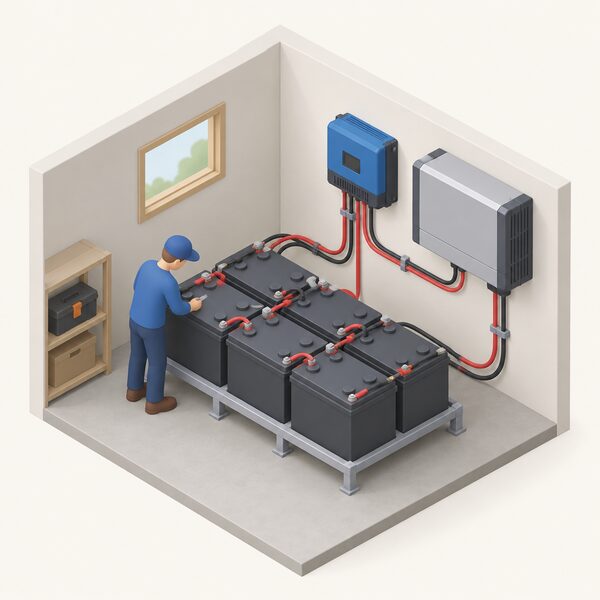
Lithium is not the only thing a household can store energy in, but the alternatives occupy narrow niches. Lead-acid, AGM and gel cells persist mainly in off-grid installations, where robustness and low cost per kilowatt hour outweigh weight and cycle life.
Heat storage is treated separately in policy. An industry call for a VAT cut covered domestic energy storage such as lithium ion batteries, and including electrically charged heat batteries43, recognising that a household can bank cheap electricity as heat rather than as charge. Phase-change material batteries are one route, but an independent analysis found a limited range of products available on the market for use in the heating market44, which constrains what a household can actually buy.
On the vehicle side, lithium remains the default: the Nissan LEAF, one of the longest-running mass-market EVs, has been described from launch as using a laminated lithium-ion battery16. Where a household is considering second-life or vehicle-derived cells, the chemistry is likely to be density-optimised rather than cycle-optimised, which is the opposite of what a wall-mounted daily-cycling pack wants.
The standards a cell is tested against
Chemistry alone certifies nothing. Two international standards, both from IEC subcommittee TC 21/SC 21A and both classed as safety standards, govern the cells inside a domestic battery.
IEC 63056:2020 specifies requirements and tests for the product safety of secondary lithium cells and batteries used in electrical energy storage systems, with a maximum DC voltage of 1 500 V (nominal). It provides additional or specific requirements for electrical energy storage systems and includes those requirements which are common and minimum to them. It covers applications including telecommunications and applies to cells and batteries for uninterruptible power supplies. It does not apply to portable systems of 500 Wh or below. Edition 1.0 was published on 27 March 2020, runs to 37 pages, carries a stability date of 2026, and the contents of the corrigendum of June 2021 have been included9.
IEC 62133-2:2017 specifies requirements and tests for the safe operation of portable sealed secondary lithium cells and batteries containing non-acid electrolyte, under intended use and reasonably foreseeable misuse. Edition 1.0 was published on 7 February 2017, runs to 94 pages, and carries a stability date of 2026. This first edition cancels and replaces the second edition of IEC 62133 published in 2012, one significant change being the separation of nickel systems into a separate Part 145.
These are cell and system standards. The rules governing how a battery is fixed, wired and sited in a British home are separate, and are covered under installation standards.
Where chemistry stops answering the safety question
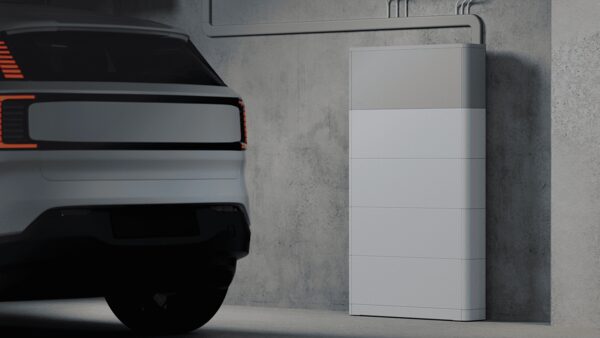
The most important caveat comes from a maker of LFP products. Asked whether LFP is safe indoors, the answer given is unambiguous:
"No, an LFP solar battery is not automatically safe for indoor installation just because it uses LFP chemistry"
Safety depends on the system listing, the enclosure rating, clearances and the chosen location7. Chemistry narrows the hazard; it does not remove the need for a proper siting decision and the containment measures set out in fire safety guidance.
Temperature is the other limit that chemistry imposes directly. Powervault states that LFP battery chemistry cannot charge when the cell temperature is below zero degrees centigrade10. In an unheated garage, an outbuilding or on an exposed north wall during a cold spell, that can suspend charging exactly when a household most wants stored electricity, and it is why ventilation and operating temperature belong in the survey.
End of life is now a live legislative question. The Lithium-ion Battery Safety Bill [HL], introduced on 29 July 2024, proposes that disposal regulations must require sellers of such batteries to display a prominent warning about the dangers of improper disposal and to attach information on cell chemistry and safe disposal as part of the sale46. The National Fire Chiefs Council and Electrical Safety First have stated jointly that regulations are also needed to address the incorrect disposal of these batteries, which can then go on to cause serious fires for the waste industry47. Chemistry labelling at the point of sale is the mechanism both point to, and it connects to recycling and disposal.
Differences across the four nations
Cell chemistry is a product characteristic, not a devolved matter: an LFP cell behaves identically in Aberdeen and in Truro, and the IEC standards apply UK-wide9. Where the nations diverge is in what surrounds the battery, not what is inside it: planning rules, grant schemes and consumer protection arrangements differ, and separate pages cover planning in England, Scotland, Wales and Northern Ireland.
Climate is the one genuine geographic variable that chemistry reacts to. The zero-degree charging limit10 bites more often, and for longer, in colder and more exposed parts of the country, which is a siting question rather than a chemistry choice.
Official statistics on what households are installing come through MCS, whose domestic retrofit battery installation figures on costs and capacities are rounded to the nearest 1048. Those data record capacity and cost rather than cell chemistry, so there is no official UK count of LFP against NMC installations; the evidence for LFP's dominance is the makers' own datasheets.
What chemistry means for a household's independence

Grid independence has a defined meaning in UK domestic renewables. MCS 032 defines self-sufficiency as the percentage of electricity consumed in the property over a year which is met by either behind the meter solar or electrical energy storage, and grid electricity independence as the fraction of electricity consumed in the property which is met by self-consumed electricity49. Chemistry affects that fraction only indirectly, through how many cycles the battery will tolerate and how much of its rated capacity remains after a decade.
That indirect effect is real. A chemistry reported at around 10,000 lifecycles rather than 4,0005 supports daily cycling for far longer before capacity loss erodes the share of demand the household can cover from its own store. Combining solar panels with a home battery lets a household store renewable electricity to power a heat pump, making it less reliant on grid electricity50. In one documented case, a household uses power from its home battery during the daytime, topped up by the solar panels, and charges the battery and the EV at night on a cheaper off-peak tariff51. The energy is still bought from a supplier in that pattern; what shifts is when, and at what price.
The broader framing is the same. More homegrown energy means greater energy independence52, and insulating homes and running heat pumps and cars on wind and solar would boost energy independence53. A battery is an enabler of that, not a substitute for it.
The dependencies that chemistry does not remove are worth stating plainly:
- The grid. Unless the system is fully off-grid, the battery shifts consumption in time; it does not end the supply relationship. Whether anything runs in an outage depends on EPS and backup provision, not on the cells.
- The manufacturer. Firmware, the battery management system and often the app come from the maker. The chemistry claims quoted above are the maker's own.
- The supply chain. LFP removes cobalt from the cathode5 but not lithium; NMC depends on nickel, manganese and cobalt2.
- The weather. Below zero degrees centigrade, an LFP pack may not charge at all10.
Chemistry, in short, decides how long the asset lasts and how it behaves when stressed. It does not by itself decide how independent a home is. That depends on sizing, tariff, generation and use, which are set out across the rest of home battery storage.
Sources53 cited
- Home battery guide: residential battery chemistry, SunPower, 2026-04-07
- How do solar batteries work and store energy, So Energy, 2024-06
- Battery storage in Scotland, Fuse Energy, 2026-08-14
- Energy storage: real risk or fake news, FuturaSun, 2025-02-12
- Residential solar energy storage overview, Spirit Energy, 2026
- Electric car battery chemistries, Fuse Energy, 2026-05-19
- LFP vs NMC home batteries: which is safer, SolaX, 2026-03-30
- Things you should know about LFP batteries, EcoFlow, 2025-06-16
- IEC 63056:2020 safety requirements for secondary lithium cells in energy storage systems, IEC, 2020-03-27
- Powervault home battery storage, Powervault, 2026-09-19
- How long do solar batteries last, SolaX, 2026-06-25
- Types of solar batteries, SolaX, 2026-01-29
- Adding a battery to existing solar panels, Aira, 2026-04-03
- Battery life 101: key metrics and influencing factors, Alpha ESS, 2025-04-08
- Are LFP batteries good for a house solar system, Sungrow, 2025-04-23
- An introduction to battery electric vehicles, Cenex, 2021-05
- Ask Alpha: questions answered about home energy storage, Alpha ESS, 2024-10-18
- Are LFP batteries good for a house solar system, Sungrow, 2025-04-23
- Enphase IQ Battery 10 datasheet, Enphase, 2021-10-27
- SolarEdge Home Battery 48V datasheet, SolarEdge, 2026-09-17
- Pylontech US5000, Pylontech, 2026-09-17
- Lynx Home U Series battery, Marley, 2026-09-17
- GoodWe Lynx F G2 Series datasheet, GoodWe, 2026-09-17
- Livoltek BHF high-voltage battery system, Livoltek, 2026-09-18
- Tigo EI Battery, Tigo Energy, 2026-09-17
- Alpha ESS SMILE5 datasheet, Alpha ESS, 2026-09-17
- SolaX T-BAT SYS HV S2.5 battery, SolaX, 2026-09-17
- SolaX LD51C, SolaX, 2026-09-17
- SolaX LD51, SolaX, 2026-09-17
- Sungrow MBL050/120/160 residential storage, Sungrow, 2026-09-17
- Sungrow MGL060 low-voltage LFP battery, Sungrow, 2026-09-17
- Growatt residential storage system, Growatt, 2026-09-17
- Hoymiles HIS hybrid inverter and storage, Hoymiles, 2026-09-17
- myenergi libbi datasheet, myenergi, 2026-09-17
- Home battery storage explained, Duracell Energy, 2026-09-17
- Eaton xStorage Compact technical datasheet, Eaton, 2025-12
- Jackery HomePower 3600 Pro Max, Jackery, 2026-09-19
- Anker SOLIX 2000W portable power stations, Anker SOLIX, 2026-09-19
- Power cuts in Hartlepool and backup storage, EcoFlow, 2025-11-26
- Solar battery options for tenants, Jackery, 2026-07-28
- Solar battery cost guide, BLUETTI, 2026-08-03
- How home battery storage keeps your lights on, E.ON Next, 2025-12-11
- REA and industry call for domestic energy storage VAT cut, REA, 2020-12-22
- Product analysis of phase change material batteries, LCP, 2024
- IEC 62133-2:2017 safety requirements for portable sealed secondary lithium cells, IEC, 2017-02-07
- [Lithium-ion Battery Safety Bill [HL]](https://bills-api.parliament.uk/api/v1/Publications/56005/Documents/4984/Download), UK Parliament, 2024-07-29
- Joint statement with the National Fire Chiefs Council on battery-related fires, Electrical Safety First, 2026-09-19
- MCS domestic retrofit battery installations 2025 to 2026, GOV.UK, 2026-05-28
- MCS 032: self-consumption and grid independence definitions, MCS, 2025-01-01
- How to ensure a heat pump runs efficiently, Energy Saving Trust, 2026-05-19
- Beth Martin's story: solar panels and an electric vehicle, Energy Saving Trust, 2025-03-03
- Solar Energy Scotland manifesto, Solar Energy UK, 2026-09-17
- Household energy: buying British, ECIU, 2024-04-15
 Power Station BatteriesWhat kind of battery is inside a portable power station, and does it matter?
 Cycle Life and DegradationHow long will a home battery actually last, and what decides that?
 Sodium-Ion Home BatteriesSodium-ion cells are being offered for home storage in the UK, but almost all published performance data still comes from makers.
 The Full Home Batteries GuideA home battery stores cheap or solar power for later, but will it really cut your bills enough to be worth it?
 Home Battery Install StatisticsHow many homes in the UK actually have a battery, and is that number growing quickly?
 Lead-Acid, AGM and Gel BatteriesAre lead-acid batteries still worth using for solar or an off-grid home?