In this guide
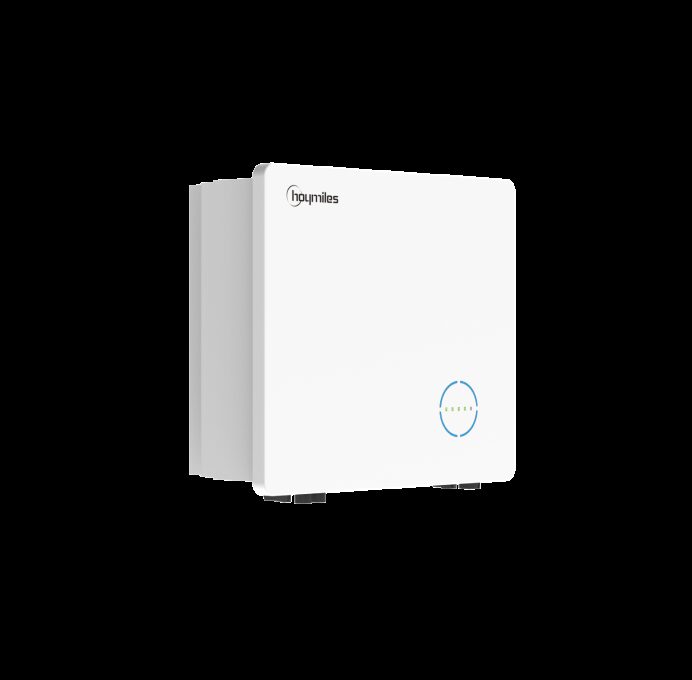
Hoymiles sells two distinct kinds of home battery in the UK market. The first is a low-voltage stackable range built around 5.12 kWh battery packs, spanning 5.12 to 102.4 kWh, designed to work with the company's own microinverters and energy storage inverters1. The second is the HiBattery 4020 series, a plug-in product launched in June 2026 with 4.02 kWh modules that expand to 16.08 kWh when paired with a Hoymiles smart meter2.
The headline numbers are straightforward. A single low-voltage pack is rated at 5.12 kWh, a single rack delivers up to 10 kW of output, and the second-generation system supports up to four battery packs in parallel and up to five battery racks in parallel, which is how the range reaches 102.4 kWh1. Cycle life is quoted at 6,000+ charge-discharge cycles for the low-voltage battery and 8,000+ life cycles for the residential energy storage battery1. The low-voltage battery carries a warranty period of up to 10 years1.
What matters for a household is what the battery changes and what it does not. A Hoymiles battery stores electricity so that solar generation can be used after dark rather than exported, and it can be charged from grid power1. It does not remove the grid connection, the electricity supplier, or the need for an inverter and, in most cases, an installer. The plug-in HiBattery range reduces the installation barrier but still depends on the S-Miles app and cloud platform for monitoring and remote management5.
The range at a glance: 5.12 to 102.4 kWh of low-voltage storage
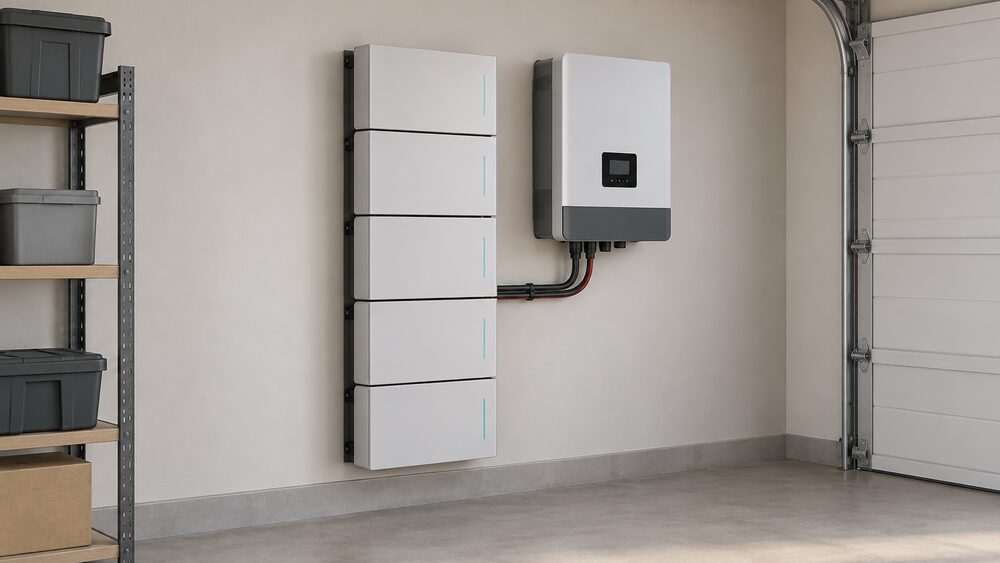
The low-voltage range is built from a single repeating unit. Each battery pack has a rated capacity of 5.12 kWh, and the smallest system is one pack1. From there the architecture scales in two directions: packs within a rack, and racks in parallel. The second-generation low-voltage system supports up to four battery packs in parallel and up to five battery racks in parallel, expanding total capacity to 102.4 kWh1. The first-generation system topped out at 20.48 kWh1.
Output scales with the stack rather than with the number of battery modules alone. A single rack delivers up to 10 kW, and the maximum output power is 10.24 kW per 20 kWh stack1. Multiple battery modules can be paralleled to increase output power, so a household adding capacity for a heat pump or an EV charger is also adding discharge capability1.
For context, the Energy Saving Trust describes a typical home system as around 10 kWh7. That places the entry point of the Hoymiles range at roughly half a typical system and the ceiling at ten times it. The range is therefore aimed at two different buyers: a household wanting modest storage from a single rack, and a larger property or small commercial site wanting three-phase capacity. The 145 mm ultra-thin design depth is a siting consideration where wall space is tight1.
| Configuration | Capacity | Output |
|---|---|---|
| Single pack | 5.12 kWh rated1 | Part of rack output |
| Single rack | Up to 4 packs1 | Up to 10 kW1 |
| Second-generation system | Up to 102.4 kWh1 | 10.24 kW per 20 kWh stack1 |
| First-generation system | Up to 20.48 kWh1 | Not stated |
The comparison with other low-voltage products sold into the UK is worth noting. One competing low-voltage storage range is listed at 5.12 to 81.92 kWh, and another at 5 to 20 kW with one to four batteries8. The Hoymiles ceiling of 102.4 kWh sits above the first of those. Capacity alone does not determine suitability, since usable capacity, depth of discharge and round-trip efficiency all bear on what a household actually gets, and those are covered in battery capacity and usable capacity and round-trip efficiency.
Battery series: LB-G2, HIT-G3 and the HiBattery 4020 plug-in range
Hoymiles sells three battery lines that matter to a UK household, and they differ in how they connect rather than only in size.
The LB-G2 is the low-voltage stackable series, launched in October 20242. It uses LFP (lithium iron phosphate) chemistry and is described as deep cycle, high-capacity and stackable2. It works with Hoymiles microinverters in the HMS series and with the HYS-LV-EUG1, HYS-LV-EUG2 and HAS-LV-EUG1 energy storage inverters, and can sit in the same system as the VAS-7-G2 EV charger2. The LB-G2 supports five racks in parallel, reaching 102.4 kWh2.
The HIT series is the inverter side of the pairing. Hoymiles describes HIT series hybrid inverters paired with LB series batteries, and the HIT-(5-20)L-G3 is a three-phase hybrid inverter with 100% unbalanced output and DC/AC oversizing up to 200%4. The HIS G3 series hybrid inverter covers 3.0 to 6.0 kW single-phase low-voltage hybrid operation, with 2x overload capacity for 10 seconds and seamless off-grid switching4.
The HiBattery 4020 series is the newest line and the most different. Launched on 1 June 2026 as the third generation of Hoymiles' plug-in home battery system, it comes in a hybrid model, the 4020 X, and an AC-coupled model, the 4020 AC, available across Europe from June 202610. Both models have a 4 kWh battery capacity, expandable up to 16 kWh with extra modular battery stacks, and use automotive-grade LiFePO4 cells10. Pack-level DC/DC balancing allows new and existing battery modules to be mixed10. The 4020 X is listed at 4 to 16 kWh capacity with a 314Ah large-format cell design11.
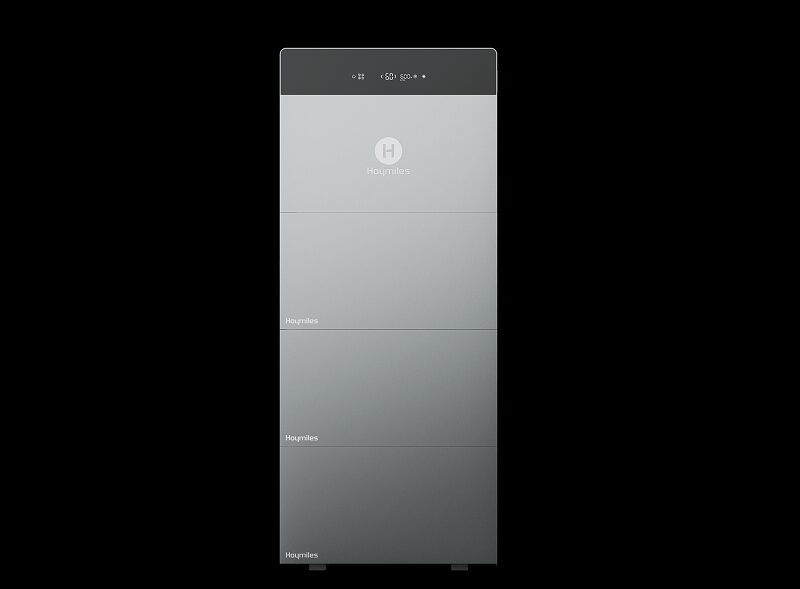
The plug-in nature of the HiBattery range places it in a different regulatory and installation category from the hard-wired low-voltage range. The site covers that distinction in plug-in and balcony battery storage and AC-coupled and DC-coupled systems.
Cycle life: 6,000 to 8,000+ cycles and what that means in years of use
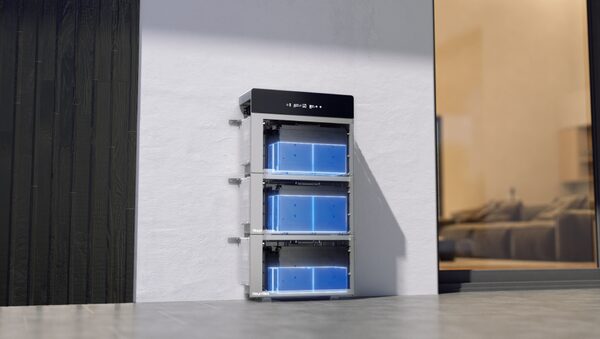
Cycle life is the number of full charge and discharge cycles a battery is expected to complete before its capacity falls to a defined threshold. One industry glossary defines 8,000 cycles as indicating how many times a battery can be fully charged and discharged during its expected lifespan12.
Hoymiles gives two figures for its own products. The low-voltage battery is listed at 6,000+ charge-discharge cycles, and the residential energy storage battery at 8,000+ life cycles1. The HiBattery 4020 X is listed at 8,000 cycles, and the 4020 module at 8,000 or more cycles to 70% state of health11. That 70% figure is the retention threshold: the cycle count is measured to the point where the battery holds 70% of its original capacity, not to complete failure.
Those numbers sit at the upper end of what is published for home storage. Independent and trade guidance puts LFP batteries at often 6,000+ cycles, lasting 10 to 15 years, and modern home storage LFP at 4,000 to 8,000+ cycles13. Broader figures for lithium-ion run from 6,000 to 10,000 cycles, while some sources give LFP at 6,000 to 12,000 cycles over 15 to 20 years, and others at 4,000 to 6,000+ cycles15. For comparison, lead-acid AGM batteries are generally quoted at 600 to 1,500 cycles18.
The spread across sources reflects different test conditions, depths of discharge and end-of-life thresholds rather than a disagreement about the chemistry. A household should read a cycle figure as a modelled expectation under specified conditions, not a guarantee. Calendar ageing, average depth of discharge, temperature and how hard the battery is worked all affect real service life, and the site covers those in cycle life and degradation and how long a home battery lasts.
Charging speed is a related figure. Hoymiles states that the low-voltage battery takes about two hours to fully charge at a 0.5 C charge rate from 0%, and that connecting to an inverter takes about three to five minutes1.
Self-heating and winter-proofing for UK garages and outbuildings
Cold is the practical constraint on siting a battery in a UK garage, outbuilding or unheated utility room. Lithium batteries accept charge more slowly at low temperature, and charging below freezing can damage cells.
Hoymiles addresses this directly. The low-voltage battery has an operating temperature range of -20°C to 50°C, and when temperatures drop below 0°C the battery automatically activates its heating function1. The charging temperature range is narrower, 0°C to 50°C, while the discharging range is -20°C to 50°C1. The LB-G2 is described as having a self-heating module that activates at 0°C and can heat the battery to 10°C within half an hour2. The residential energy storage battery is marketed as self-heating and winter-proof, with an operating range of -20°C to 55°C4.
Independent guidance on cold-climate lithium batteries recommends an integrated self-heating function and low-temperature charge protection as the features to look for19. The Hoymiles specification covers both, with the BMS providing protection against over-temperature, over-voltage and over-current1.
There is a second thermal limit at the top of the range. The low-voltage battery can withstand temperatures as high as 50°C, and the LB-G2 pack stops charging when it reaches 50°C and stops discharging at 55°C, with aerosol fire protection activated at 170°C1. A UK garage in summer is unlikely to reach those figures, but a south-facing plant room or a cupboard housing other heat-generating equipment could. Siting and ventilation are covered in ventilation and temperature and where a home battery can be installed.
Time-of-use scheduling: the 8×24h schedule on the HIT-(5-20)L-G3
A home battery earns its keep by moving electricity from cheap hours to expensive ones. That requires a schedule, and the granularity of the schedule determines how precisely a household can match a tariff.
The HIT-(5-20)L-G3 is listed with an 8×24h time-of-use schedule3. In practice that means eight switching periods across each 24-hour day, which is enough to separate an overnight cheap window, a morning peak, a solar-charging midday period and an evening peak without the periods colliding. The inverter is a three-phase hybrid unit with 100% unbalanced output, meaning it can supply uneven loads across the three phases, and DC/AC oversizing up to 200%3. A built-in meter solution with up to 50 A bypass is also listed20.
The scheduling capability only matters if the household is on a tariff with time-varying prices. The site covers how batteries and tariffs combine in batteries and smart tariffs and how the underlying savings arithmetic works in battery payback and savings.
Two related capabilities sit alongside scheduling. The low-voltage battery can be charged using grid power, which is what makes overnight cheap-rate charging possible at all1. And the HIS G3 series hybrid inverter offers seamless off-grid switching, which is the mechanism by which a backed-up circuit keeps running when the grid fails4. Backup is not automatic on every configuration, and the site explains the hardware involved in battery backup and EPS.
The wider Hoymiles ecosystem extends beyond the battery. The company launched a V2X DC Charger on 7 September 2026, which it states can provide backup power when the grid is unavailable through Vehicle-to-Home, and which delivers approximately 110 km of driving range in one hour, with green power and fast charging modes21. That is a separate product from the storage range, but it shares the household energy platform.
S-miles Cloud monitoring and remote upgrades
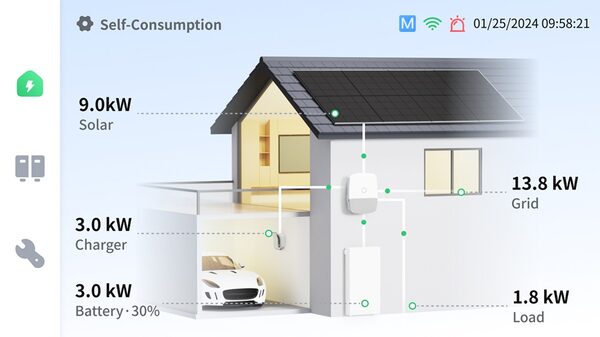
Every Hoymiles storage product is monitored through S-Miles Cloud, the company's monitoring platform. The low-voltage battery can be remotely upgraded for system management via S-Miles Cloud and supports remote monitoring of charge-discharge data1. The HIT-(5-20)L-G3 lists monitoring management through S-Miles Cloud, as does the HYS-(3-6)LV-EUG1 inverter3.
The platform itself is described as enabling real-time data monitoring and remote fault diagnosis, with the ability to manage and control a system remotely in real time, adjust settings and upgrade firmware4. At module level it tracks voltage, current, power and temperature for each panel5. The DTU-Lite-S data transfer unit sends data to S-Miles Cloud and provides module-level monitoring and data storage, while the DTU-Pro-S supports remote operation and maintenance including remote upgrading and parameter setting6. The HiBattery 4020 X and the 4020 module are monitored through the S-Miles app11.
The LB-G2 monitoring app automatically detects Hoymiles inverters and batteries without additional configuration, and reports pack-level charging, discharging and fault statuses2. A three-phase Hoymiles smart meter provides real-time energy data in the S-Miles Home App when connected to a compatible system, and carries a 2-year warranty from Hoymiles22.
This is the clearest dependence the range creates, and it is common to most modern home storage. The site covers the trade-offs in monitoring a home battery.
What a Hoymiles battery means for household energy independence
A home battery changes when a household uses electricity, not where it comes from. The Energy Saving Trust puts it plainly: combining solar panels with a home battery lets a household store free, renewable electricity to power a heat pump, making it less reliant on grid electricity23. That is the benefit, and it is real but bounded.
What a Hoymiles battery delivers on that front is storage capacity from 5.12 kWh in a single pack upward, the ability to charge from grid power at cheap times, and a schedule granular enough to separate tariff periods1. The HiBattery range adds a further option: the HiBattery alone can serve as a power bank to sustain appliances, and the system can be used on-grid and off-grid14. The LB-G2 is described as providing stable solar power backup for residential use and for commercial projects such as hotels and restaurants2.
What remains is a list of dependencies. The household stays connected to the grid and to an electricity supplier for the periods the battery cannot cover, which in a UK winter is most of them. The battery needs an inverter, and in the low-voltage range that means a Hoymiles inverter or a compatible unit, since the battery is compatible with the Hoymiles protocol1. The plug-in HiBattery range is AC-coupled, which reduces the wiring work but does not remove the need for a competent installation and a suitable circuit14. Monitoring and remote upgrades depend on broadband and on Hoymiles' cloud. And the hardware itself is manufactured by a Chinese company: Hoymiles Converter Technology Co., Ltd. is registered at No.18 Kangjing road, HangZhou, Zhejiang Province, P.R. China24. The HiBattery 4020 is described as designed and manufactured in Hoymiles self-owned production facilities2.
For a household weighing independence, the honest position is that a Hoymiles battery increases self-consumption of solar generation and allows load shifting against a time-of-use tariff. It does not make a home self-sufficient, and it does not remove the gas or electricity supply. The site sets out the wider picture in home batteries and household energy independence and the full technology background in the home battery storage guide.
Sources24 cited
- Low Voltage Battery, Hoymiles, 2026-09-17
- Solar Battery Storage Guide, Hoymiles, 2024-10-14
- HIT-(5-20)L-G3, Hoymiles, 2026-09-17
- HIT Series, Hoymiles, 2026-09-17
- S-Miles Cloud, Hoymiles, 2026-09-17
- DTU-Lite-S, Hoymiles, 2026-09-17
- DTU-Pro-S, Hoymiles, 2026-09-17
- HYS-LV-EUG1 Series, Hoymiles, 2026-09-17
- HIS Hybrid Inverter, Hoymiles, 2026-09-17
- HiBattery 4020 Series Launch, Hoymiles, 2026-06-01
- HiBattery 4020 X, Hoymiles, 2026-09-17
- Home Energy Jargon Buster, Duracell Energy, 2026-01-26
- Best Solar Batteries, SolaX Power, 2026-05-12
- DC-Coupled vs AC-Coupled vs Hybrid, Hoymiles, 2025-09-23
- Solar Battery Price in the UK, Jackery UK, 2026-06-04
- Solar Battery Storage: The Complete Guide, Zendure, 2025-11-05
- Types of Solar Batteries, SolaX Power, 2026-01-29
- How Long Do Solar Batteries Last, Jackery UK, 2026-05-29
- Ingress Protection Rating Guide, SolaX Power, 2026-06-15
- HIT-(5-20)L-G3 India, Hoymiles, 2026-09-17
- V2X DC Charger Launch, Hoymiles, 2026-09-07
- Hoymiles Smart Meter Three Phase, Hoymiles, 2026-09-17
- Battery Storage, Energy Saving Trust, 2026-08-19
- Hoymiles Converter Technology Filing, ENA, 2026-09-17
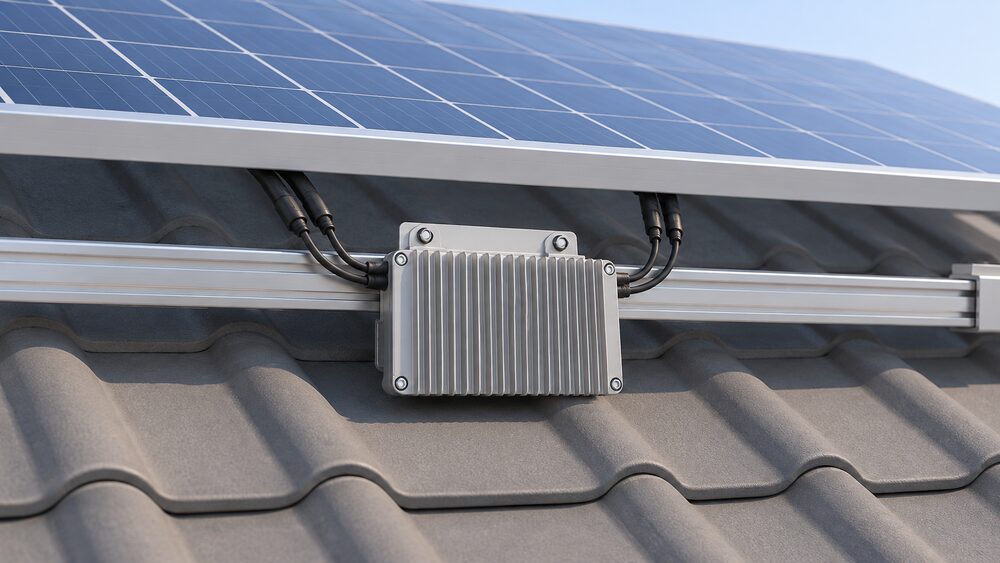 Hoymiles microinvertersMicroinverter specialist present in the UK residential market.