In this guide
Trina Solar is a Shanghai-based manufacturer that makes and sells solar PV panels for homes and businesses, as well as energy storage for large commercial customers1. Its panels are among the modules sold and installed in the UK, and around 80% of panels available in the UK are made in China, including those from Trina Solar1. The company says it spans more than 180 countries and regions globally1.
The residential end of the range is the Vertex S+ family, sold in a 425W to 450W power band, with the 450W module delivering 450W output power and 22.5% module efficiency2. That 450W at 22.5% is the most efficient Trina panel recently tested by Which?, whose testing programme models results to daylight conditions across a number of UK cities1. The storage side of the business is a different scale of product entirely: Trina Storage's Elementa 2 Pro platform is a commercial and utility-scale system, not a home battery1.
For a household, the practical position is that Trina supplies the generating half of a solar system and leaves the battery, inverter and controls to other makers. That keeps a home dependent on the grid for everything it does not generate and store itself, and on an installer for the model actually fitted.
What Trina Solar makes: panels for homes, storage for bigger projects
Trina Solar's product split is straightforward and worth understanding before any quote. The company makes and sells solar PV panels for homes and businesses, as well as energy storage for large commercial customers1. Panels are the household-facing product. Storage is aimed at projects of a size no domestic property reaches.
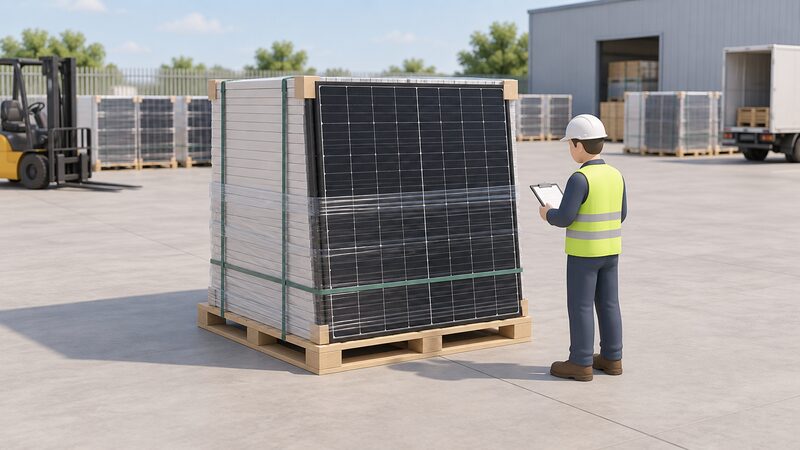
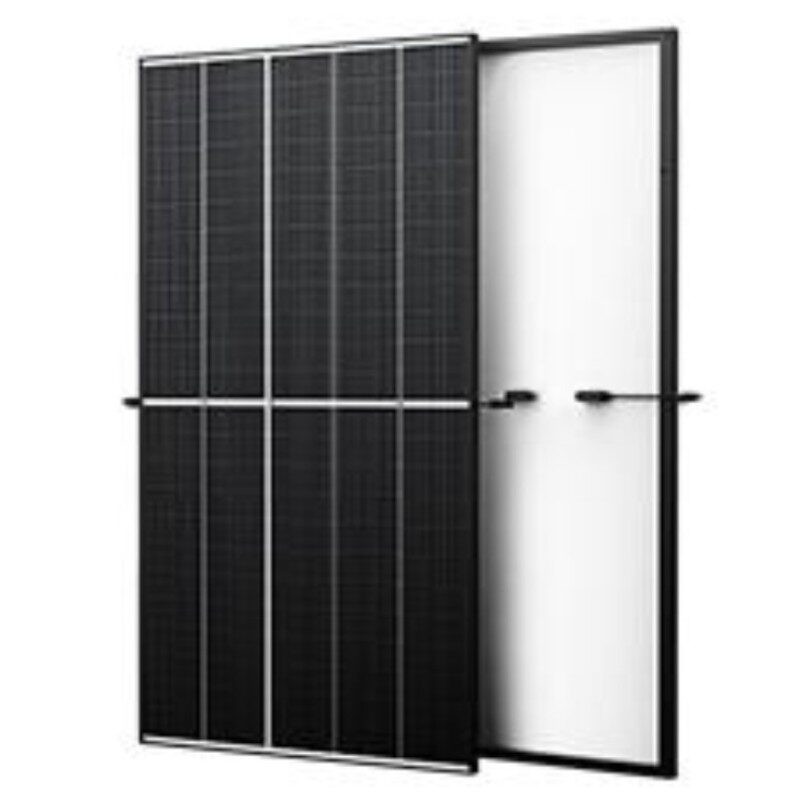
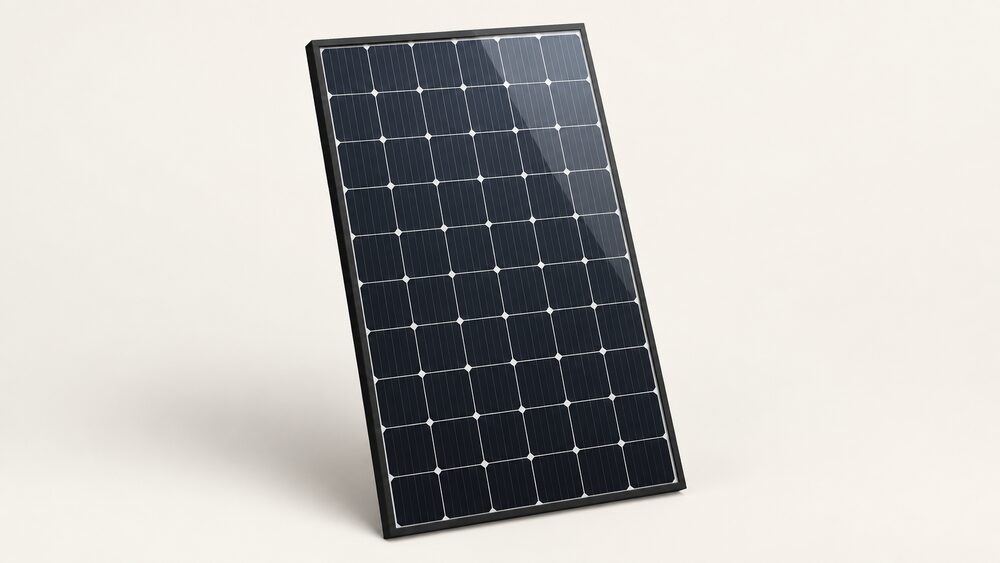
The Vertex S+ 450W is described by the maker as a stylish solar panel designed for commercial or residential applications, which places it in the domestic market as well as on commercial roofs2. It is a monofacial dual-glass module with a black frame and a white backsheet, sold in the 425W to 450W power range2. Panels ship 36 to a pallet and 936 to a container, which is a reminder that the module itself is a commodity item bought in volume by installers rather than a consumer product2.
Solar panels in general capture sunlight and convert it into electricity you can use at home, and solar electricity panels take the sun's energy and convert it into electricity that you can use in your home5. That is the function Trina's modules perform. What they do not do is store anything: a panel without a battery or a grid connection has nowhere to put what it makes. The storage products Trina builds sit at the commercial end, so a household wanting to keep its own generation for evening use is looking at a separate home battery maker, covered in home battery storage manufacturers.
The scale of the UK market Trina is selling into is substantial. More than a million UK homes now have solar panels, with nearly 1.7 million installations on homes across the UK7. At the start of 2026, domestic solar comprised 30% of UK solar capacity and 84% of total UK solar installations5. Home installations were responsible for nearly three-tenths (29%) of the UK's total solar capacity9.
The panel range: 425W to 450W residential modules
The residential range in the material reviewed here is the Vertex S+ family, with a panel power range of 425W to 450W2. The headline module is the 450W unit at 22.5% efficiency2. Beyond that, the range extends into larger formats: Trina supplied 184,328 Vertex N 695W modules to the 126 MW Sarimay Solar PV power plant in Uzbekistan, described as fully commissioned on 9 September 202610. That is a utility-scale deployment, not a domestic one, but it shows the same maker's module families running well above domestic wattages.
The plan's reference to a 720W N-type series is borne out by the company's own quality page, which states that Trinasolar won a Top Performer title with performance represented by the Supreme N-type 720W series modules, in May 20251. Those are commercial and utility modules. A UK roof is far more likely to carry a 425W to 450W Vertex S+ panel.
| Product | Type | Key figure | Source |
|---|---|---|---|
| Vertex S+ 450W | Residential and commercial module | 450W, 22.5% efficiency | 2 |
| Vertex S+ range | Residential module family | 425W to 450W power range | 2 |
| Supreme N-type 720W series | Commercial and utility module | Top Performer title, May 2025 | 1 |
| Vertex N 695W | Utility-scale module | 184,328 supplied to Sarimay project | 10 |
For comparison, other makers' most efficient panels recently tested by Which? include REC Solar at 460W and 22.1%, and JA Solar at 600W and 23.2%11. Those are different products for different roof areas, and the figures are not like for like across module formats. What they show is that Trina's 450W at 22.5% sits in the same band as the mainstream residential competition rather than above it.
Efficiency and performance: what the record panel and Top Performer title show
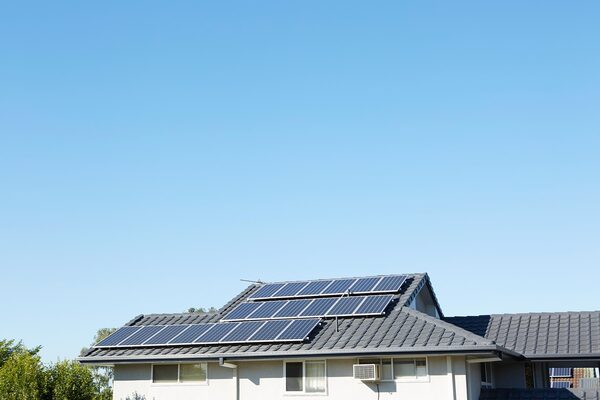
Trina Solar announced a 30.6% efficient panel in June 2025, a record-breaking figure reported at the time14. That number needs context before it is read as a product specification. Tandem solar cells have recorded commercial efficiencies above the levels possible to achieve with current silicon panels, according to parliamentary research briefing material5. A 30.6% record sits in that tandem and laboratory-adjacent territory, not in the 22.5% band of a module a household can buy and have fitted.
The Top Performer title is a separate matter. Trina states that it won the title in May 2025 with performance represented by the Supreme N-type 720W series modules1. That is a commercial module line, and the award relates to that series rather than to the residential Vertex S+ range.
For a household, the efficiency figure that matters is the one on the datasheet of the model being quoted, tested on a stated basis. Which? models its solar panel results to daylight conditions across a number of UK cities to see how they would perform, which is a more useful guide to UK output than a laboratory peak3. Monocrystalline panels reach up to 25% module efficiency and thin film up to 13%, so a 22.5% module is a strong but not exceptional figure within the mainstream crystalline category4.
The wider efficiency question is what happens to the electricity once it is generated. Most PV panels only absorb up to 70% of the solar energy available, and coatings exist that aim to raise that share15. Generation is only half of a household's independence calculation; the other half is whether the power is used on site or exported. A household with solar and a 10kWh battery reaches a 70% self-consumption rate, according to Uswitch data16. Without storage, generation and household demand rarely line up.
Trina Storage: Elementa 2 Pro and the 98% capacity retention figure
Trina Storage is the company's storage arm, and its flagship platform is Elementa 2 Pro. The platform launched in North America on 26 August 2025, announced by Trina Storage Solutions U.S., and was scheduled to be featured at the company's booth at RE+ 2025 from 9 to 11 September 202517. Trina Storage published an interview with Shawn Deng, Head of Product System Solution, about the Elementa 2 Pro and the company's technology roadmap on 21 May 202518.
The performance figures come from independently verified field results published on 17 July 2025. Trina Storage released operational data from a 150MW utility-scale agrivoltaics and storage project, reporting 95.2% DC-side efficiency and 87.1% system-level round-trip efficiency19. UL Solutions conducted a performance evaluation after the project had operated continuously for over a year, and the system was reported to retain 98% of usable capacity after more than a year in operation19.
Those are strong numbers, and they are also the numbers of a grid-scale asset. A 150MW project is roughly a hundred thousand times the size of a domestic battery. The 98% usable capacity retention figure describes a commercial installation under commercial operating conditions, and it does not transfer to a home battery, which cycles differently, sits in a different thermal environment and is measured over a different period.
Trina Storage's commercial pipeline continued through 2026. On 14 September 2026, Trina Storage was selected to supply the battery energy storage system for Stage One of Frontier Energy's Waroona Renewable Energy Project in Western Australia, and signed a memorandum of understanding with AMP-lify to supply approximately 1 GWh of grid-connected battery energy storage system equipment for AMP-lify's projects10. None of this is a domestic product line.
Independent testing and tier-list standing: BNEF, UL Solutions and CNAS
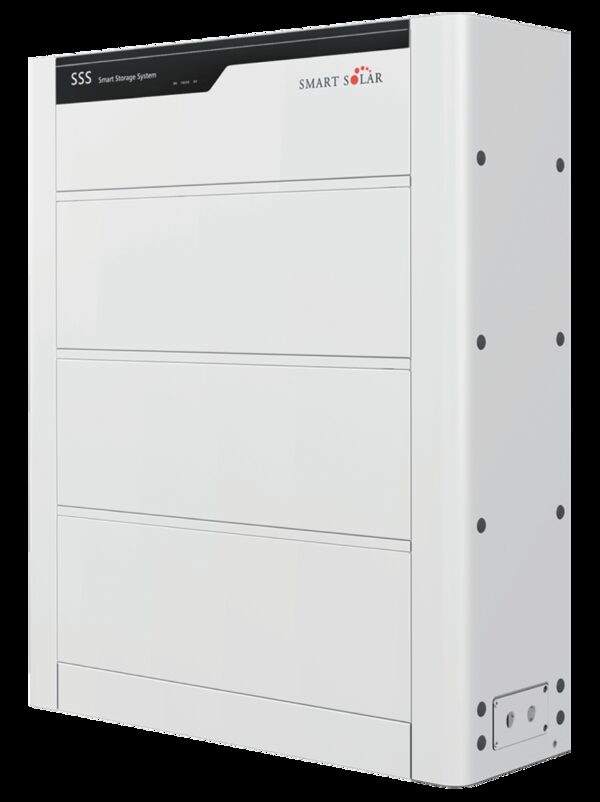
Trina Storage appeared on the BNEF Energy Storage Tier 1 List in the second quarter of 2025, the sixth consecutive quarter it had received that listing1. Tier listings of this kind are used by buyers and financiers as a rough screen for bankability, and they are awarded on shipment and project criteria rather than on product quality alone. More on how these ratings work is at Tier 1 solar manufacturers and bankability ratings.
The company's testing infrastructure is accredited. In May 2025, the Trina Storage Product Testing Centre passed review by the China National Accreditation Service for Conformity Assessment and obtained its accreditation certificate1. CNAS accreditation means the laboratory is recognised to test to defined standards, which is a different claim from a third party having tested the product.
The UL Solutions evaluation is the third-party element. UL Solutions conducted a performance evaluation of the storage project after it had operated continuously for over a year, which is the basis for the 98% usable capacity retention figure19. Independent verification of field performance over time is more informative than a datasheet, because it captures degradation and real operating conditions.
On the module side, the safety picture for solar generally is well established. The legal changes allowing plug-in solar in the UK followed rigorous, independent safety testing covering all key electrical elements, which shows that compliant panels are safe and compatible with UK wiring, according to the government announcement20. That statement concerns compliant panels as a class rather than Trina specifically, but it is the relevant safety context for any module sold into the UK market.
Where Trina sits in the UK market and what it means for household independence
Trina Solar is based in Shanghai, China, and around 80% of panels available in the UK are made in China, including those from Trina Solar1. That is the starting point for any independence assessment: the module is an imported manufactured good, and the household's relationship with the maker is indirect, running through an installer and a distributor.
The UK market Trina sells into is growing and changing shape. Plug-in solar panels are now available to buy and use across Great Britain, helping households generate some of their own electricity21. Major retailers have worked with the UK government on the rollout and the panels are now available to buy in stores and online22. The government stated in May 2026 that plug-in solar would be available in shops within months and save people money on their bills23, and in March 2026 that it would make plug-in solar available for the first time in Britain so that families could buy a low-cost panel straight from a supermarket and set it up on a balcony or in a garden24. Policy has also moved on new build: the government has set out ensuring solar panels are fitted on new homes in England as standard23.
For a household, a Trina panel delivers the same independence and the same dependence as any grid-tied module. It reduces the electricity bought from a supplier during daylight hours. It does not remove the connection to the grid, the supplier or the gas network, and it does not store anything on its own. The storage that would raise self-consumption sits with other manufacturers, and 92% of battery installations so far in 2026 went onto properties with solar panels, which shows how tightly the two are bought together6.
The dependence that remains is concrete: an imported module, an installer who chooses the brand, a grid connection for export and import, and a separate maker for any battery. Half of Trina Solar owners in a Which? survey said they chose Trina Solar because it was the only solar panel brand their installer fitted, which is a reminder that brand choice in this market is often the installer's rather than the household's1. Wider context on how makers fit into household energy decisions is at manufacturers and household energy independence.
Discontinued models: the TSM-450W NEG9R.28 and how to check current datasheets
The Trina TSM-450W NEG9R.28 N-Type Solar Panel Black Frame 450W is listed as discontinued4. That is a specific model in the 450W band, and its discontinuation matters for two reasons: a household quoted that model is being offered old stock or a substitute, and a household that already has it installed will find matching replacements harder later.
Discontinuation is normal in this market. Polycrystalline panels are being phased out in the UK, and few installers still offer them, which shows how quickly module lines turn over4. The practical defence is to check the datasheet version. Trina Solar issued datasheet version TSM_EN_2025_B in 2025, and the document identifies itself as version TSM_EN_2025_B and states that specifications may change without notice25. A datasheet that carries a version identifier and a change-without-notice clause is a document that gets revised, so the version matching the model on the roof is the one that applies.
For plug-in solar specifically, the check is different. The specific model must be on the list of devices that meet UK standards, checkable on the ENA Connect Direct LCT device register26. That register is the reference for whether a particular plug-in model is approved for connection, and it is maintained by the Energy Networks Association26.
On installation and removal, local authority guidance is that any solar panels no longer needed for micro-generation are removed as soon as is reasonably practicable27. That is a condition attached to installations rather than a product rule, and it is worth knowing when a system is replaced or a roof is re-covered.
Sources27 cited
- Trina Solar solar panels review, Which?, 12 August 2026
- Trina Solar Vertex S+ 450W, Alternergy, 19 September 2026
- Trina Solar panels, Which?, 12 August 2026
- Are solar panels worth it?, Which?, 15 May 2026
- POST Note 771: Solar power, UK Parliament, 2026
- Low Carbon Landscape 2026, MCS Certified, 2026
- Solar power facts, Energy Saving Trust, 13 August 2026
- Solar panel installation guide, IAA, 20 September 2026
- Green energy statistics, Uswitch, 12 November 2024
- Residential products, Trina Solar, 14 September 2026
- REC Solar panels review, Which?, 12 August 2026
- REC Solar panels, Which?, 12 August 2026
- JA Solar panels review, Which?, 12 August 2026
- Most powerful solar panels, Sunsave, June 2025
- Coating to increase the efficiency of photovoltaic cells, UKGBC, May 2024
- Britain's homes with solar panels reap £40 million during the heatwave, Uswitch, 28 June 2026
- Trina Storage launches Elementa 2 Pro in North America, Trina Solar, 26 August 2025
- An interview with Shawn Deng, Trina Solar, 21 May 2025
- Trina Storage demonstrates high efficiency and long-term reliability, Trina Solar, 17 July 2025
- Households can save as plug-in solar panels come to market, GOV.UK, 26 August 2026
- Support for people in rural homes, Home Energy Scotland, September 2026
- What to know about plug solar panels, Home Energy Scotland, September 2026
- Britain continues to break clean power records, GOV.UK, 28 May 2026
- Heating oil support, Hansard, 16 March 2026
- Trina Solar Vertex NEG19RC.20 datasheet, Trina Solar, 2025
- Plug-in solar, Electricity North West, 20 September 2026
- Solar panels, City of York Council, 17 September 2026
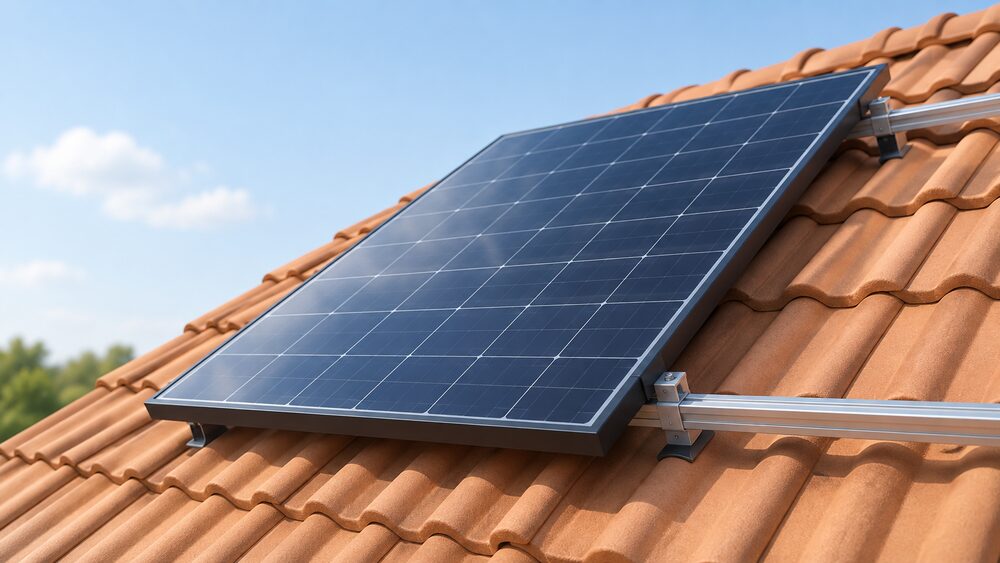 Trina Solar panelsMajor panel maker whose Vertex series is common in UK homes.
 Trina Vertex S+ panelsThinking about a Trina Vertex S+ panel for your roof?