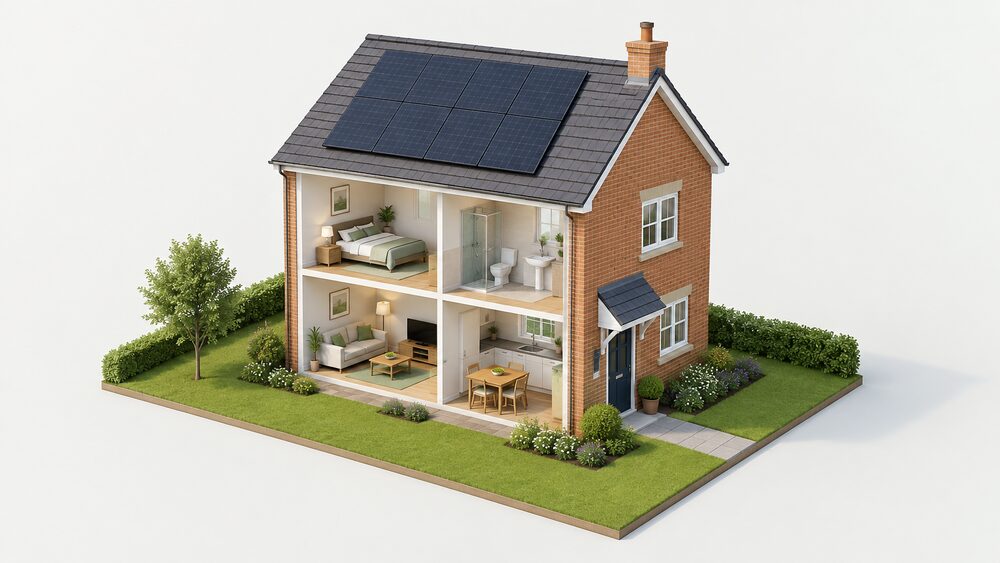
In this guide
JinkoSolar is one of the largest module manufacturers in the world, and its panels reach UK roofs through installers rather than shop shelves. The company is headquartered in Shanghai, China, and has manufacturing facilities in China, Malaysia, Vietnam and the United States1. It sells monofacial and bifacial panels, the latter generating electricity on both sides1.
The headline numbers a household will meet in a quote are a product warranty of 25 years and a power output warranty of 30 years at 87.04%1. JinkoSolar states its panels are over 23% efficient, which it attributes to half cell technology1. Those are maker figures. The independent picture is thinner: Which? states that it has not tested any JinkoSolar panels yet1.
JinkoSolar: the company behind the panels
JinkoSolar's headquarters are in Shanghai, China, and it has manufacturing facilities in China, Malaysia, Vietnam and the United States1. That geographic spread is worth understanding, because it means a single model name can be produced in more than one plant, and the module delivered to a UK roof is not necessarily from the same line as the one in a review photograph.
The company sits inside a market pattern rather than outside it. Around 80% of the panels available in the UK are made in China, including those from Trina Solar2, and the same figure is given for the UK market as a whole3. JA Solar products are mainly produced in China, with other facilities around the world4. REC is the outlier among the brands commonly compared, with panels made in Singapore5.
For a household, the practical consequence of a Chinese manufacturing base is not quality but supply chain. Spare modules of the same model may be harder to source several years after installation if a range is discontinued, and matching a replacement visually is not guaranteed. That is a general feature of the module market rather than a JinkoSolar problem, and it is one reason the serial number and datasheet matter at the point of installation.
JinkoSolar also sells bifacial panels, which can generate electricity on both sides1. Bifacial modules are usually mounted where the rear face can see reflected light, which on a pitched domestic roof is limited, so the second face contributes less than the name suggests in most UK installations.
Panel technology: half cell design and efficiency claims
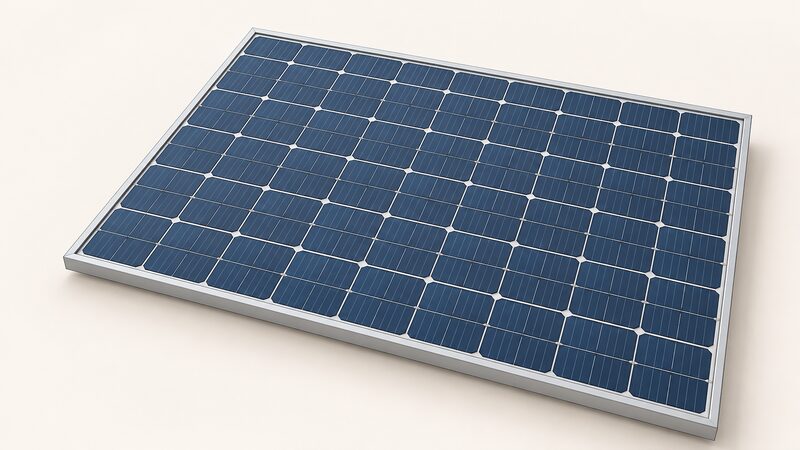
JinkoSolar prides itself on using half cell technology, which it says makes its solar panels more efficient1. Half cell design splits a conventional cell into two, which reduces the current carried by each internal ribbon and limits the losses caused by resistance. The maker's claim is that this raises efficiency, and the company states its panels are over 23% efficient1.
That figure should be read as a maker claim. The independent comparison points available are from Which? test results for other brands: a JA Solar panel at 600W and 23.2%, described as the most efficient panel recently tested4, and an AIKO panel at 640W and 23.7%, described as the most efficient domestic monofacial panel from test results3. AIKO separately states its panels are over 22.8% efficient6. So JinkoSolar's stated figure sits in the same band as its competitors, and the differences between brands at this level are small enough that roof orientation, shading and inverter choice will matter more to annual generation than the module badge.
Efficiency also is not the same as output. A higher efficiency module produces more watts from the same roof area, which matters on a small or awkward roof and matters much less on a large unshaded one. Where space is not constrained, a slightly lower efficiency module at a lower price can produce the same annual yield.
The Tiger Neo range and what is available in the UK
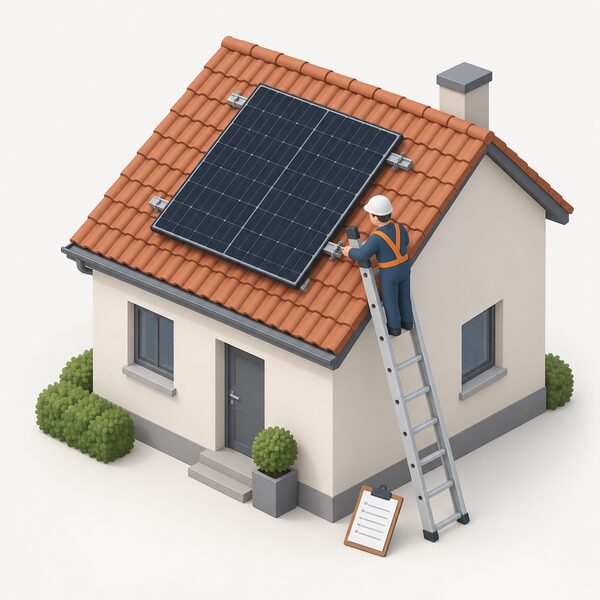
JinkoSolar launched the Tiger Neo 3.0 in October 20247. The Tiger Neo family is the company's mainstream high-efficiency line, and it is the range most likely to appear in a UK installer's quote under the JinkoSolar name.
Availability in the UK is not published as a stock list. Solar panels in the UK are sold via installers rather than direct to consumers, which is the reason Which? gives for not naming individual Best Buy solar panels8. That single fact explains most of what a household will experience: there is no shop price, no online basket, and no way to confirm that a specific model number is in stock nationally. What exists is an installer quoting for a particular roof, with a datasheet attached.
The same pattern holds across the brands. JA Solar panels are sold and installed in the UK by a number of installers4. Good Energy lists AIKO panels with a 25 year product warranty and a 30 year performance warranty, and an in-roof option6. Those are the terms a household can compare, and they are broadly the terms JinkoSolar offers.
For a specific model number, such as one beginning JKM, the only reliable check is the datasheet supplied with the quote and the MCS certified product listing for that exact variant. A model number quoted verbally in a sales conversation carries no weight on its own.
| Brand | Stated efficiency | Product warranty | Where made |
|---|---|---|---|
| JinkoSolar | Over 23%1 | 25 years1 | China, Malaysia, Vietnam, US1 |
| AIKO | Over 22.8%6 | 25 years6 | Not stated |
| JA Solar | 600W at 23.2% (tested)4 | Not stated | Mainly China4 |
| Trina Solar | Not stated | Not stated | China2 |
| REC | Not stated | Not stated | Singapore5 |
Warranty: 25 years product, 30 years performance
JinkoSolar's published terms are a 25 year product warranty and a 30 year power output warranty at 87.04%1. The two cover different things. The product warranty covers the physical module, including manufacturing defects and, in most policies, cracking and delamination. The performance warranty covers the decline in output over time, and 87.04% at 30 years is the floor the maker commits to.
The dates on the warranty documents matter, because JinkoSolar has revised its terms more than once. A revision applies to modules sold under purchase agreements signed on or after 14 December 20209, and a later revision, marked REV.EN20240521-LINEAR, applies to purchase agreements signed on or after 21 May 202410. A household buying today falls under the newer document, but a system installed earlier sits under whichever revision was current at the time.
What a warranty does not cover is as important as what it does. On cracked panel claims, the cost of labour for replacing the panel and any scaffolding may not be covered, the replacement panel may look different from the originals, and some manufacturers require independent testing to prove underperformance11. On a roof array, scaffolding is often the largest single cost in a replacement, so a warranty that covers the module but not the access can still leave a substantial bill.
Where the serial number is and how registration works
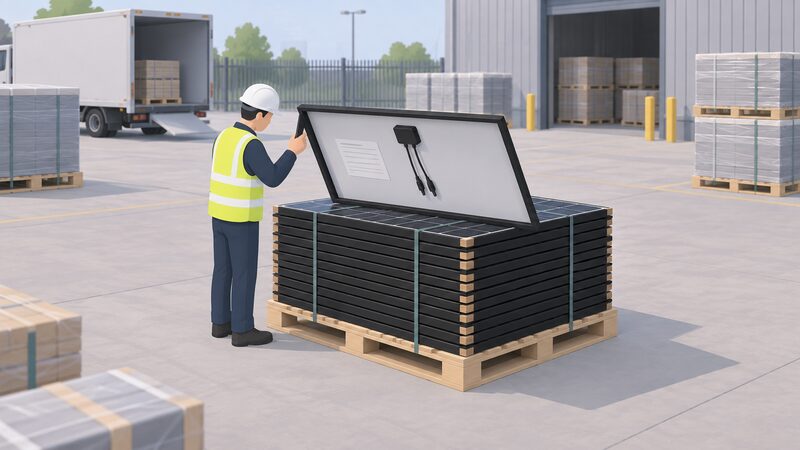
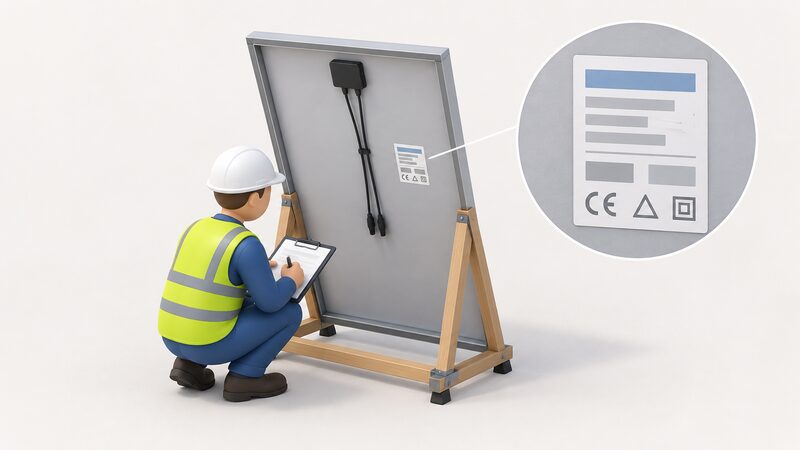
The model and serial number are printed on the product label, normally on the rear of a solar module or on the relevant equipment enclosure, and the label should not be removed, covered or altered14. On a roof-mounted array the rear label becomes unreachable once the panels are fixed, so the practical step is to record it during installation.
Registration itself runs through the installer in most cases. The general guidance for solar equipment is that the product should be registered with the manufacturer to activate any warranty and to be contacted regarding any problem or safety recall12. Alongside that, the installer registers the solar panel system and any battery storage with your District Network Operator as an important safety process13. In some local authority areas the same registration duty is stated directly to the householder: you must register it with UK Power Networks, usually done by your installer15.
Some schemes impose a deadline. Under the Barcud Solar Panel Installation Scheme specification, inverter product registrations to activate guarantees and warranties are to be completed within 48 hours of commissioning16. That is a scheme rule rather than a JinkoSolar rule, but it shows how tight the window can be, and it is a reason to have the serial numbers and commissioning paperwork in hand on the day.
Independent testing: what is and is not known
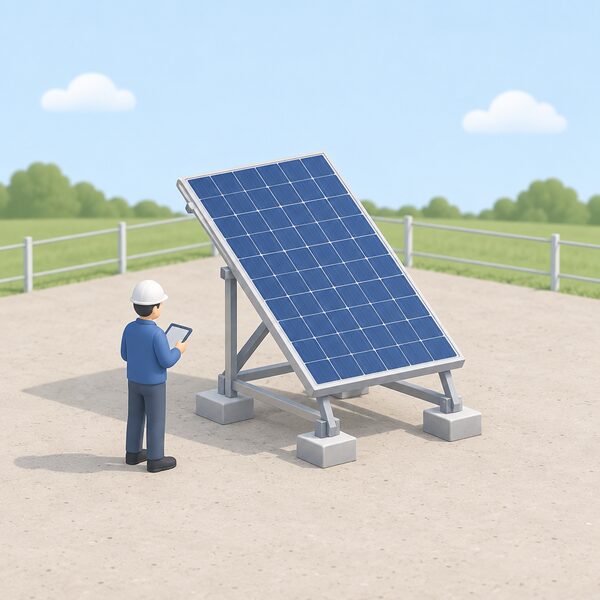
Which? states plainly that it has not tested any JinkoSolar panels yet1. That is the single most important limitation on this page. Everything about JinkoSolar's efficiency and durability comes from the maker or from certification data, not from a UK laboratory comparison.
The Which? programme that would produce such a result is well documented. Which? buys every solar panel it tests and does not accept free samples for any of its full lab tests8. The tests include an initial solar radiation exposure, a maximum power determination test, an outdoor exposure test, current leakage in wet conditions, defect and crack imaging, and repeat tests for degradation17. Those are the measures that would let a household compare JinkoSolar against a tested rival on the same basis.
What does exist for other brands shows the value of the programme. JA Solar's most efficient tested panel came out at 600W and 23.2%4, and AIKO's at 640W and 23.7%3. Without an equivalent figure for JinkoSolar, the maker's over 23% claim cannot be placed on the same scale.
There is also a fire safety dimension that applies to all rooftop arrays rather than to one brand. Many installations do not have an automatic fire detection system, so a fire may spread before being discovered18. Government fire-spread testing over pitched roofs has included a control test of the plastic roof tiles used on one sample without the PV panels fitted, to allow comparison of how much the solar panels affect flame spread over those tiles19. That work is about roof construction and mounting as much as about modules.
"But we haven't tested solar batteries, nor do we have enough owners in our survey to rate the brands."
What Jinko panels mean for household energy independence
A JinkoSolar array does the same thing for a household as any other module: it generates clean energy for the home, which can cut down on energy bills20. More precisely, solar panels lower electric bills by providing an additional source of electricity, which can be used to power appliances without taking electricity from the grid21. Where the household also has a battery, more of that generation is used on site rather than exported.
The dependence that remains is structural. A rooftop array stays connected to the grid, needs a District Network Operator connection and registration13, and relies on an inverter to convert direct current to mains alternating current. The modules themselves are passive, but the system around them is not. Panels also do not need direct sunlight to work22, so generation continues on overcast days, at reduced output.
On the manufacturer side, the dependence is on a company headquartered in Shanghai with plants in four countries1, and on a warranty that has been revised at least twice, in December 2020 and May 20249. A household buying today is relying on a 25 year product and 30 year performance commitment from a maker whose modules have not been through UK independent testing1. That is not a reason to avoid the brand, but it is the honest shape of the risk.
There is a planning dimension too. Most homes do not need planning permission, because solar panels are permitted developments13. Where permission is needed, evidence of an assessment of alternative locations, alternative technologies considered, and mitigation of impact such as non-reflective panels or solar shingles may be required23. Roof load also has to be checked, including the additional wind, snow and static load imposed by the panels and compliance with Part A: Structure24. Only the first stand-alone solar installation is permitted development25, and freestanding panels are subject to additional restrictions26.
For a household weighing independence, the position is that a JinkoSolar array reduces the amount of electricity drawn from the grid and improves the home's Energy Performance Certificate21, while leaving the grid connection, the inverter, the installer relationship and the manufacturer's warranty terms as the remaining dependencies. The wider market context, including how module makers compare on certification and bankability, is covered in solar panel manufacturers and tier 1 solar manufacturers and bankability ratings.
Sources26 cited
- Jinko Solar solar panels review, Which?, 12 August 2026
- Trina Solar solar panels review, Which?, 12 August 2026
- AIKO solar panels review, Which?, 12 August 2026
- JA Solar solar panels review, Which?, 12 August 2026
- REC Solar panels review, Which?, 12 August 2026
- Our solar and battery products, Good Energy, 25 March 2026
- Most efficient solar panels, SunSave, October 2024
- How we test solar panels, Which?, 12 August 2026
- VAT Energy Saving Materials manual VENSAV3010, HM Revenue and Customs, 30 September 2019
- Solar calculator, ivie, 17 March 2026
- Solar panel problems and how to solve them, Which?, 26 March 2026
- Plug-in solar consumer guide, Electrical Safety First, August 2026
- Solar panel installation, Energy Saving Trust, 7 September 2026
- Customer care, UKSOL, 17 September 2026
- Solar panels, London Borough of Hammersmith and Fulham, 17 September 2026
- Barcud Solar Panel Installation Scheme specification, Sell2Wales, 15 June 2026
- SolarEdge solar panels review, Which?, 12 August 2026
- Solar panels safety advice, Electrical Safety First, 17 September 2026
- Fire spread over pitched roofs fitted with solar panels: summary, GOV.UK, 22 December 2025
- What is global warming and what can I do about it, Smart Energy GB, 16 March 2026
- How do solar panels work, Smart Energy GB, 16 March 2026
- Generating renewable electricity, Energy Saving Trust, 11 December 2025
- Solar panels planning permission, Bath and North East Somerset Council, 17 September 2026
- Solar panels planning guidance, East Hertfordshire District Council, 17 September 2026
- Solar panels guidance, Islington Council, 17 September 2026
- Solar panels guidance, City of York Council, 17 September 2026