In this guide
JinkoSolar's Tiger Neo is the panel line UK buyers most often search for by name, and the reason is the cell technology underneath it. These are N-type TOPCon modules, sold in the UK in all-black and dual-glass finishes, with distributor listings running from 425W upwards and one 450W all-black variant showing more than 100 units available to dispatch immediately1.
The commercial case rests on three numbers. A single Tiger Neo 3.0 all-black dual-glass panel is listed at £73.00 plus VAT, which one retailer expresses as 14.6p per watt, with a £25.00 UK delivery charge on that order4. Warranty cover runs to 30 years on power output across the models named in Jinko's European limited warranty, with product cover of 12, 15 or 25 years depending on the variant7.
What follows is what the line offers a UK household, what the warranty actually covers, what a panel costs, and where the manufacturer sits. The short version for energy independence: a Tiger Neo module is a commodity DC component. It generates nothing on its own, it needs an inverter, a mounting system and a grid connection or battery to be useful, and its 30 year performance promise is only as good as the company behind it.
What the Tiger Neo offers a UK household
The Tiger Neo is JinkoSolar's N-type line, and the company's own UK distribution page describes the N-type Tiger panels as offering "some of the best efficiency ratings around"1. That is a maker's claim rather than a measured figure, and it is worth separating from the model-level numbers. The Tiger Neo 3.0 residential panel was launched in October 2024 with a 24.8% efficiency rating, which is the one dated efficiency figure attached to the line9.
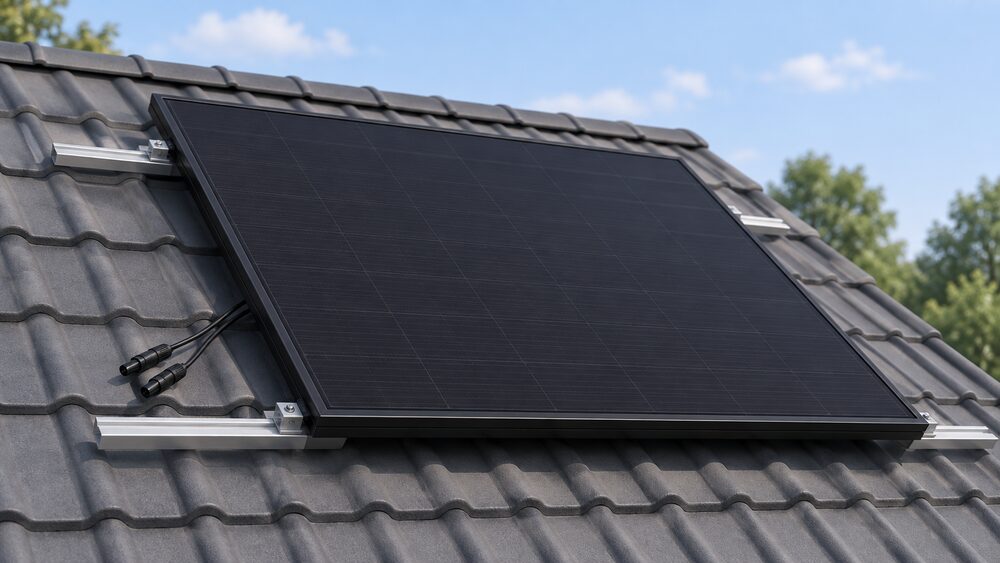
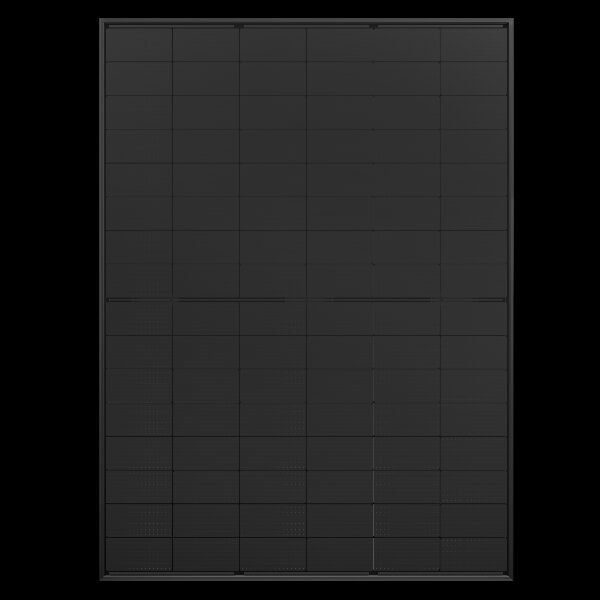
The practical UK offer is a high-output module in a small footprint. An all-black dual-glass format is the current headline variant, and dual-glass construction is a different proposition from a standard backsheet panel: two sheets of glass, no polymer backing, and a longer expected service life under the same conditions. The trade-offs are weight and cost, both of which matter on a domestic roof. The glass-glass versus standard panel comparison sets out where that trade sits.
Availability is real rather than nominal. UK distributors list the N-type Tiger panels as stocked, one 450W all-black Tiger Neo shows more than 100 units available to dispatch immediately, and a Tiger Neo 3.0 all-black dual-glass panel is offered for supply only or with professional installation1. Wattage and finish availability moves with stock, so the exact variant quoted is the one to check.
For a household, the panel is one line in a system. Output depends on roof orientation, pitch and shading far more than on the badge, and the roof suitability guide explains how those factors interact. The Tiger Neo's contribution to independence is the same as any module's: it converts daylight into DC electricity, and everything after that point is a system decision.
Warranty: 12, 15 or 25 years of product cover, 30 on output

The warranty is the part of a panel purchase that outlasts everything else, and on the Tiger Neo it is not a single number. Jinko's European limited warranty for linear bifacial modules sets out product cover by model family, and the spread is wide7.
| Model family | Product warranty | Power warranty |
|---|---|---|
| JKMxxxN-48HL4M-BDV | 15 years | 30 years |
| JKMxxxN-54HL4M-BDV | 15 years | 30 years |
| JKMxxxN-54HL4R-BDV | 15 years | 30 years |
| JKMxxxN-54HL4R-BDB | 25 years | 30 years |
| JKMxxxN-66HL4M-BDV | 12 years | 30 years |
| JKMxxxN-66HL4M-BDX | 12 years | 30 years |
| JKMxxxN-66HL5-BDV | 12 years | 30 years |
| JKMxxxN-66QL6-BDV | 12 years | 30 years |
The pattern is that the 48 and 54 cell residential formats carry 15 years of product cover, the 66 cell formats carry 12, and one variant, the 54HL4R-BDB, carries 257. Jinko's own product page states a 25 year product warranty on the all-black versions and a 30 year performance warranty guaranteeing 87% efficiency10. Independent review coverage records Jinko Solar at 25 years of product warranty and 30 years at 87.04% on power output11.
The documents differ on the headline product term, and the reason is model scope: the 25 year figure applies to specific variants, while the 12 and 15 year terms apply to others. A buyer reading a single "25 year warranty" claim should check which model it attaches to. The panel warranty and degradation guide explains how performance warranties are structured and what degradation curves mean in practice.
What a Tiger Neo panel costs in the UK
Panel prices are quoted per module, excluding VAT in most trade listings, and excluding installation in every case. The figures below are what UK distributors and price guides publish, read on the dates shown.
| Item | Price | Date |
|---|---|---|
| Tiger Neo 3.0 All Black | £73.00 plus VAT | 19 September 20264 |
| Tiger Neo 3.0 All Black Dual Glass | £73.00 plus VAT | 19 September 20265 |
| Tiger Neo 3.0 dual glass all black, 48 cell | £142.37, or 14.6p per watt | 20 September 20266 |
| UK delivery on that order | £25.00 | 20 September 20266 |
| Tiger Neo N-type 72HL4, cost per panel | £200 to £250 | 11 August 20269 |
The spread between £73.00 and £142.37 for what reads as a similar module is the single most useful thing to understand about panel pricing. Trade listings often quote a unit price that assumes a pallet quantity or a trade account, while a retail single-panel listing carries the full margin and delivery. The £200 to £250 figure is broader guidance for a 72-cell N-type panel and sits well above both distributor listings9.
Three things move the price of a finished installation: the number of panels, the inverter and mounting hardware, and the labour and scaffolding. Panel cost is the smallest of those on a typical domestic job. The solar panel cost guide covers the full installed picture, and the sizing guide explains how many modules a roof needs.
Where the Tiger Neo sits among UK panel brands
JinkoSolar is one of the largest module manufacturers in the world, and the Tiger Neo is its flagship residential line. The UK market it sells into is crowded with comparable N-type products, and the honest position is that the differences between tier-one N-type panels are smaller than the differences between installations.
The clearest comparison point in the same technology class is AIKO's Neostar range, which is described by its maker as coming from a BloombergNEF Tier1 PV module manufacturer12. Tier 1 status is a bankability measure rather than a performance one, and it speaks to whether a manufacturer is likely to be around to honour a 30 year performance warranty. That question matters more on a 30 year promise than on any efficiency figure.
For households weighing the line against alternatives, the useful comparisons are LONGi versus JinkoSolar on the panel side, and the N-type versus P-type cell explainer for what TOPCon actually changes. The solar cell technology guide covers PERC, TOPCon and heterojunction in more depth.
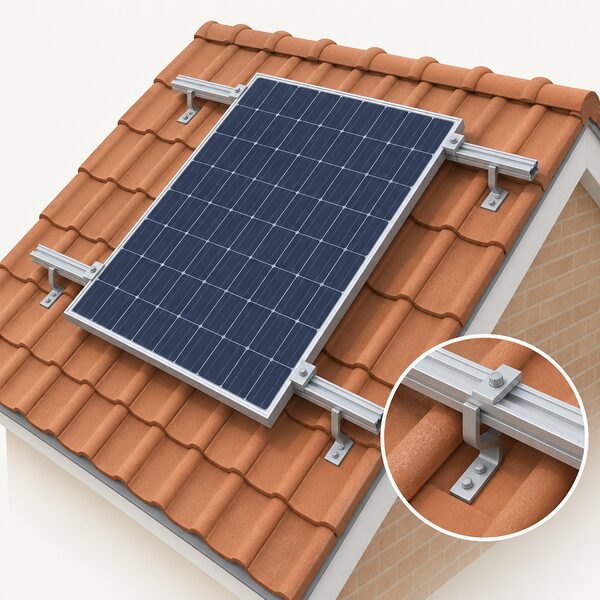
On mounting, a Tiger Neo module is a standard framed panel and fits conventional rail systems, covered in the mounting systems guide. On the electrical side, the DC cabling and connector guide explains the MC4 connectors these panels ship with. Neither is brand-specific, which is the point: the panel is the interchangeable part of a solar system, and the inverter, battery and monitoring choices are where a household's independence is won or lost.
Company status and what the warranty depends on
JinkoSolar is an active, large-scale manufacturer, and the Tiger Neo line is in current UK distribution rather than being wound down1. That is the relevant status question for a buyer, because a 30 year performance warranty is a promise from a company, not a physical property of the panel.
The dependence this creates is worth stating plainly. A household buying Tiger Neo panels is relying on JinkoSolar remaining able to honour a warranty that runs to the 2050s, on the distributor or installer who supplied the modules remaining contactable, and on the documentation being kept. Panel warranties are typically claimed through the supply chain rather than directly, and proof of purchase and the original datasheet are what a claim rests on. The warranty and degradation guide covers how claims are made and what records matter.
Beyond the warranty, the panel itself adds no ongoing dependence. It has no app, no cloud account, no subscription and no firmware. That is a genuine advantage over the inverter and battery in the same system, which may carry all four. The monitoring guide explains where that dependence sits, and the energy independence overview sets out what a household can and cannot disconnect from.
The remaining dependence is the grid itself. A Tiger Neo array without a battery exports when the sun shines and imports when it does not, so the household stays on a supplier and on the network. Adding storage changes that balance, as the battery storage guide explains. The panel is the first step, not the whole answer.
Sources12 cited
- Jinko solar panels, Midsummer Wholesale, 2026
- Jinko panels collection, ITS Technologies, 2026
- Jinko JKM450N-48HL4M-DB 450W All Black Tiger Neo, TradeSparky, 2026
- 460W panels collection, ITS Technologies, 2026
- Single solar panel order, ITS Technologies, 2026
- Jinko solar panels, Select Solar, 2026
- Limited warranty, linear bifacial module for EU, JinkoSolar, 21 August 2025
- High efficiency solar panel, JoJu Solar, 30 December 2025
- Most efficient solar panels, Heatable, 11 August 2026
- Solar panels, So Energy, 2026
- Jinko Solar solar panels review, Which?, 12 August 2026
- Stellar 2N+78 dual glass, AIKO, 17 September 2026