
In this comparison
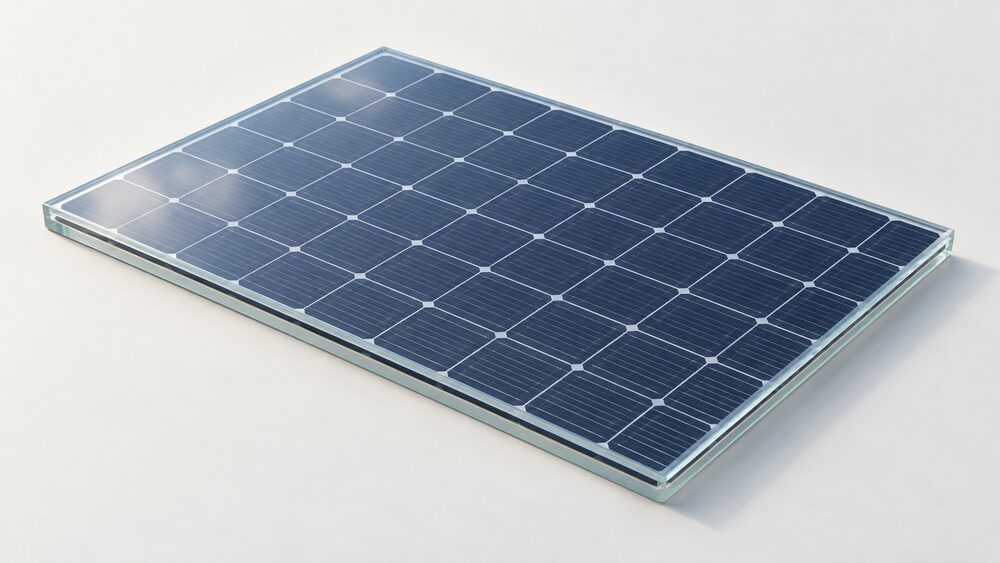
A glass-glass solar panel seals its cells between two panes of glass instead of the usual glass front and plastic backsheet. That single change in construction is what the term describes, and it is the reason these modules are sold on durability rather than on output. The cells themselves are the same silicon cells found in any other panel, gridded together and encased in glass or plastic1.
The trade is straightforward. A second pane of glass removes the polymer backsheet that is the usual route for moisture ingress and long-term degradation, and makers respond by extending product cover. Standard panels usually carry a 25-year performance warranty and a five to 10-year product warranty; glass-glass modules typically stretch the product term towards 20 years while holding 25 years on power output2. REC Solar, for example, states 25 years at 92% for its power output warranty3.
What a household gives up is weight and money. A typical 400W panel measures around 1.8 by 1.2 metres and can weigh as much as 20kg, and a whole installation usually weighs around 20kg per square metre once everything is included4. Building regulations require the roof to be checked and proven able to carry that load6. On cost, installation runs from around £4,600 to £8,000 depending on panel quality and system size, with an average of around £6,1002.
What a glass-glass panel is, and what the second pane replaces
A solar panel is made up of small, semiconductive cells, usually silicon, gridded together to form a larger unit and encased in glass or plastic1. In the standard build the front is tempered glass and the back is a polymer sheet. Panels from MCS-registered brands use tempered glass that will shatter rather than crack, in the way a car windscreen behaves8.
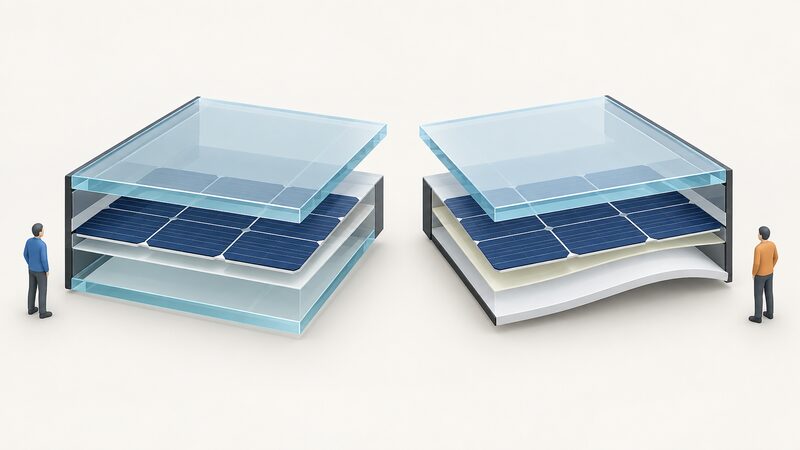
Glass-glass construction replaces that polymer backsheet with a second pane of glass, so the cells sit in a sealed glass sandwich. The principle is familiar from building products: double glazed windows feature two layers of glass with a layer of gas sealed in the gap between them, and the sealed cavity is what does the insulating work10. The parallel is not exact, because a solar module is not trying to insulate anything, but the mechanism that matters is the same one: a sealed glass envelope keeps moisture out and keeps the internal materials stable.
That matters because the backsheet is the part of a conventional panel most exposed to weather, ultraviolet light and thermal cycling over decades. Removing it removes a known failure route. It does not change how the panel generates electricity. The panels are designed to capture diffused light filtered through cloud cover as well as direct light, and they only produce electricity during daylight hours, so a glass-glass module has the same daily and seasonal rhythm as any other11.
For a household, the practical meaning is that glass-glass is a packaging choice, not a performance technology. It sits alongside bifacial and glass-glass solar panels as a construction category, and it can be combined with cell technologies such as TOPCon or heterojunction covered in solar cell technology.
Glass-glass vs standard construction: what actually differs

The differences between the two builds are few, and they are all physical rather than electrical.
| Glass-glass | Standard (glass and backsheet) | |
|---|---|---|
| Front | Tempered glass8 | Tempered glass8 |
| Rear | Second glass pane | Polymer backsheet |
| Encapsulation | Sealed glass sandwich | Glass front, polymer rear |
| Typical product warranty | Around 20 years2 | Five to 10 years2 |
| Typical performance warranty | 25 years2 | 25 years2 |
| Weight | Higher, from the second pane4 | Lower |
| Bifacial option | Possible, but not automatic13 | Possible, but not automatic13 |
The table shows where the two converge. Both use tempered glass at the front, both carry the same 25-year performance warranty in the ordinary case, and both can be made in bifacial form. The divergence is at the back of the module and in the product warranty term.
That convergence is worth stating plainly, because glass-glass is sometimes marketed as though it were a different class of product. It is not. The cells are the same cells, the front glass is the same tempered glass, and the electricity produced per watt of rated capacity is governed by the cell technology rather than the encapsulation. What the second pane changes is how long the module is expected to hold its rated output, and how much the maker is willing to put behind that expectation in writing.
The warranty gap is the clearest evidence. Most panels carry product cover of around 12 to 25 years, and well-known manufacturers offer 25 to 30 years on performance11. Glass-glass modules sit at the top of the product range because the maker's exposure to backsheet claims is removed. That is a commercial judgement as much as an engineering one, but it is a judgement made by the party carrying the risk.
Durability and degradation: why the double-glass build should last longer
Independent guidance puts the average lifespan of solar panels at about 25 years before they show significant degradation14. Other sources are more generous: panels will last 25 years or more according to one, and 30 years or more according to another15.
Degradation is gradual rather than sudden. Solar panels degrade over time, so after a decade of ownership a system might produce slightly less power than when new9. That is normal behaviour for any module, glass-glass included. The double-glass build is aimed at the tail of the curve, the point at which a conventional backsheet has spent two or three decades being rained on, frozen and baked.
The failure modes that shorten a panel's life are well documented. Moisture ingress, cracked glass and connection faults are among the common problems reported on UK arrays9. Tempered glass shatters rather than cracks, which limits the damage from impact, but it does not eliminate it8. A glass-glass module has two tempered panes rather than one, and no polymer sheet to embrittle.
"Solar panels also degrade gradually over time. So, after a decade of ownership, your panels might produce slightly less power than when new."
The honest limit is that no independent UK source in this comparison gives a measured degradation rate for glass-glass modules specifically against standard ones over a full service life. The case rests on the removal of a known failure route and on the warranty terms makers are prepared to offer, not on a head-to-head field trial. Households should treat the durability advantage as well founded in principle and reflected in contract terms, rather than as a measured number.
Weight, handling and roof loading: the trade-off of a second glass pane
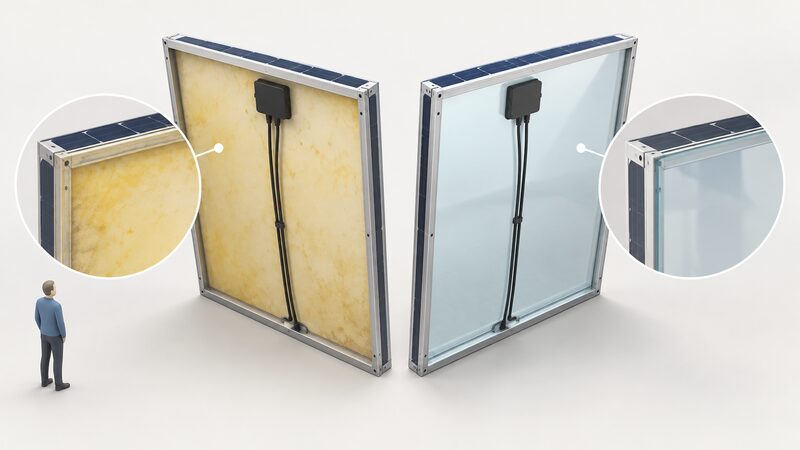
Solar panels are not light, and the roof must be strong enough to take their weight, especially where a panel is placed on a structure not designed for it15. A typical 400W panel measures around 1.8 by 1.2 metres and can weigh as much as 20kg, and a whole system usually weighs around 20kg per square metre when everything is included4.
Glass-glass modules sit above that figure because of the second pane. The exact penalty depends on the model, and no figure for the additional mass of a glass-glass module over a standard one appears in the sources behind this page, so the difference has to be read from the datasheet of the specific panel being quoted.
What is not optional is the structural check. Building regulations apply to solar installations because of the additional loading on the roof structure and the associated electrical works16. The ability of the existing roof to carry the load of the panel will need to be checked and proven6. Installers must check that the roof can support the additional wind, snow and static load imposed by the panels, and that it complies with Part A: Structure17.
That threshold is the one to watch on an older or lightweight roof. A heavier module brings a heavier array closer to the point at which structural verification is triggered, and on some roofs that means additional strengthening work before any panel is fitted. The full process is set out in building regulations and roof loading for solar panels.
Handling is the other practical consequence. Two panes of glass make a module more awkward to carry up a ladder and across a roof, which matters on a retrofit where access is tight. It does not affect the finished installation, but it can affect how long the job takes and how many people are needed on site.
Efficiency: 23.5% at the top of current testing, with tandem records pointing higher
Module efficiency is set by the cell technology, not by the encapsulation, so glass-glass modules are sold across the same efficiency bands as standard ones. The current best performance silicon panels are around 25% efficient and are approaching their theoretical performance limit19.
Independent testing of the panels sold in the UK puts the leading products in the low twenties. Trina Solar's most efficient panel recently tested came in at 450W and 22.5%, and REC Solar's at 460W and 22.1%20. Hybrid panels sit around 20%7. Those are module-level figures for specific products, and they are the numbers a household should compare when reading quotes.
Beyond silicon, the records point higher. LONGi announced a 30.1% world record for commercial M6 size wafer-level silicon-perovskite tandem solar cells in June 2024, a 25.4% world record for crystalline silicon module efficiency in October 2024, and a single perovskite-silicon cell efficiency of 35.5% in 2026. A small perovskite and silicon tandem model reached 31.6% in 2026. These are laboratory and record-setting results rather than products on a UK roof, and they are reported as such.
The practical reading is that a household buying a glass-glass panel today is buying a module in the low twenties for efficiency, the same as a standard panel of comparable cell type. The second pane buys durability, not watts. Anyone comparing quotes should look at the module efficiency and the temperature coefficient on the datasheet, which is what reading a solar panel datasheet covers.
Warranty terms: 20-year product and 25-year power output cover at 92%
Warranty is where glass-glass modules separate themselves from the rest. Most solar panels come with a 25-year performance guarantee2, and solar panels usually come with a 25-year performance warranty and a five to 10-year product warranty10. Glass-glass modules typically extend the product term to around 20 years while keeping the performance term at 25.
The performance figure is a promise about output, not about the panel still working. REC Solar states 25 years at 92%, meaning the module is warranted to produce at least 92% of its rated power at the end of the term3. That is the number to compare across quotes, because a 25-year warranty at 80% and a 25-year warranty at 92% are very different commitments.
Product warranties across the market range from around 12 to 25 years, and well-known manufacturers offer 25 to 30 years on performance11. Solar panels can have warranties of up to 20 or 25 years, though inverters are not expected to last as long9. That last point matters for the system as a whole: the panel may be covered for 25 years while the inverter, which is the component most likely to need replacing, is not.
For a household, the warranty term is the clearest financial expression of the durability claim. A 20-year product warranty on a glass-glass module is a longer commitment than the five to 10 years typical of standard panels, and it is the maker, not the installer, who carries it. The wider picture, including degradation rates and what voids cover, is in solar panel warranties and degradation.
Cost and availability in the UK: what glass-glass adds to a quote
There is no published UK price for a glass-glass module in the sources behind this page, so the added cost has to be read from installer quotes rather than from a list price. What the market data does show is the band a whole installation falls into.
Solar panel prices vary based on panel quality and system size but currently range from around £4,600 to £8,0002. The average cost to install solar panels is around £6,1007. A worked example of a 4.6kWp ten-panel system on an east-facing 35-degree pitched roof with modest shading came in at £7,400 as of 1 June 202521. In Scotland, installation costs are given as £1,500 to £10,00012.
Glass-glass modules sit at the upper end of those bands, because the second pane costs more to make and the module weighs more to handle. The premium is not published as a fixed figure, so any quote should be read as installer-quoted and compared on the module specification rather than on the headline system price alone.
| Cost item | Figure | Date |
|---|---|---|
| Installation range | around £4,600 to £8,0002 | 2026-09-09 |
| Average installation | around £6,1007 | 2026-05-05 |
| Worked 4.6kWp example | £7,40021 | 2025-06-01 |
| Scotland range | £1,500 to £10,00012 | 2026-09-20 |
| Battery addition | around £2,000 to £6,00011 | 2026-06-17 |
Availability is not a constraint. Around 80% of panels available in the UK are made in China, including those from Trina Solar20. Solarwatt is a European maker with a dedicated glass-glass range, the Panel vision M and XS, covered by warranty conditions issued on 23 July 2026. REC Solar and Trina Solar both appear in independent testing of the most efficient panels sold here3. For a wider view of what is on the market, see types of solar panel sold in the UK and Trina Solar panels.
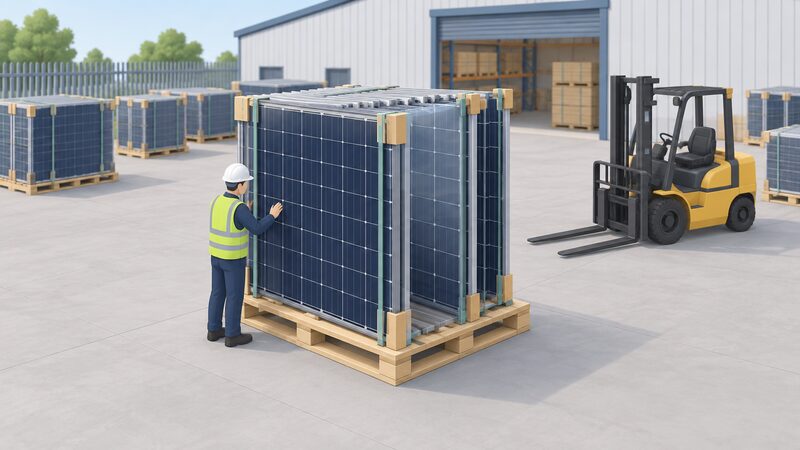
Which should you choose: when the extra glass earns its place
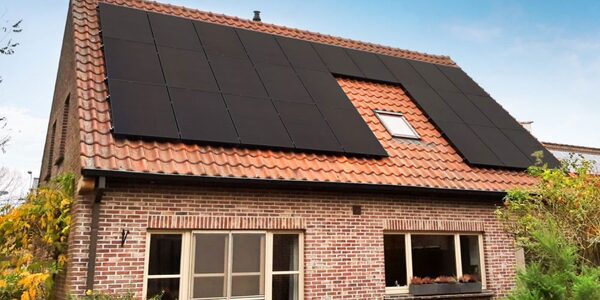
The decision turns on how long the array will stay on the roof and how hard the site is on a panel. Glass-glass earns its place where the module is expected to serve its full 25 years or more, where the roof is exposed, and where the household intends to stay put. It earns less where the array may be removed within a decade, or where the roof structure is marginal and the extra weight triggers strengthening work.
Roof type does not decide it. Solar panels can be installed on both pitched and flat roofs, and on a flat roof the panels need to be tilted and spaced to avoid shading15. On a pitched roof, panels should not be installed above the highest part of the roof, excluding the chimney, and should match the colour of the existing roof covering as closely as possible22. Anti-glare coatings are applied where necessary22. None of those rules distinguishes glass-glass from standard modules.
What does bear on the choice is the rest of the system. Battery storage is worth considering where the system does not already have it, so that surplus electricity is stored rather than exported10. Adding a battery increases the upfront cost by around £2,000 to £6,000 for sufficient capacity for typical UK rooftop systems11. A household weighing a glass-glass premium against a battery is comparing a durability upgrade with a self-consumption upgrade, and the two do different jobs.
The independence question is the same for both builds. A glass-glass array generates on the roof and reduces what the household draws from the grid, but it remains connected, dependent on a supplier for the times it does not generate, and dependent on the inverter and monitoring equipment that sit between the panels and the consumer unit. The second pane extends the life of the generating asset. It does not change the relationship with the grid. For the wider picture, see solar panels and household energy independence and how much do solar panels cost in the UK.
Sources23 cited
- Solar panel installation, maintenance and repair, NICEIC, 2026-09-17
- Solar panels, Uswitch, 2026-09-09
- REC Solar panels review, Which?, 2026-08-12
- Plug-in solar panels, Which?, 2026-04-27
- Building regulations renewables guidance, Bedford Borough Council, 2026-09-17
- Building regulations: solar panels, Welsh Government, 2026-09-17
- Energy saving upgrades for home renovation, Energy Saving Trust, 2026-05-05
- Most common solar panel problems, Which?, 2026-09-20
- Solar panel problems and how to solve them, Which?, 2026-03-26
- Buying a house with solar panels, Energy Saving Trust, 2026-08-13
- Could solar panels save you £500 a year?, Which?, 2026-06-17
- Solar panels, Home Energy Scotland, 2026-09-20
- Jinko Solar solar panels review, Which?, 2026-08-12
- How long do solar panels last?, Uswitch, 2026-07-13
- Solar panels, London Borough of Hammersmith and Fulham, 2026-09-17
- Energy efficiency advice and assessment: solar photovoltaic panels, London Borough of Bromley, 2026-09-17
- Planning and building: solar panels, East Hertfordshire District Council, 2026-09-17
- Solar equipment on residential buildings: technical advice note, Hart District Council, 2025-01
- POST note 771: solar photovoltaics, Parliamentary Office of Science and Technology, 2026-06-25
- Trina Solar solar panels review, Which?, 2026-08-12
- Are solar panels worth it?, Which?, 2025
- Solar panels planning permission checklist, Islington Council, 2026-09-17
- Planning permission: solar equipment mounted on a house or a block of flats, Planning Portal, 2026-09-17
 Warranties and DegradationHow long do solar panels actually last, and what do the warranties really cover?
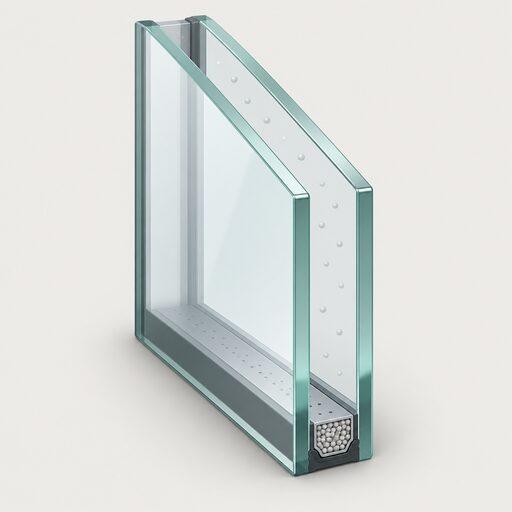 Double GlazingMisted up panes, noisy streets, rooms that never feel warm: is new double glazing worth the money, and how much could it cut your bills?
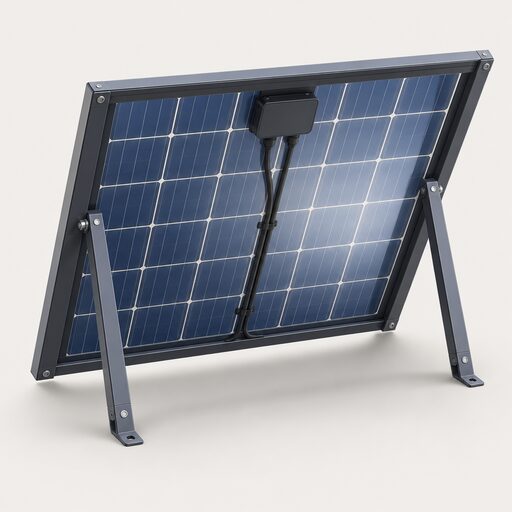 Bifacial and Glass-Glass PanelsBifacial panels make electricity from both sides, but the extra comes from light bouncing back off what is behind them.
 Solar InvertersWhat does the box on the wall next to your solar panels do, and how long will it last?
 Standards and TestingWhat do the certificates on a solar panel datasheet actually prove, and which ones should you look for in the UK?
 Roof-Integrated SolarSolar tiles replace your roof covering instead of sitting on top of it, so the finished roof looks like a roof.