In this guide
LONGi is one of the largest solar manufacturers in the world, and its modules are a common sight on UK roofs. The company specialises in high-efficiency photovoltaic products and renewable energy solutions across all market segments, and its panels are sold here through installers rather than direct to households1. Independent testing has measured a LONGi panel at 480W and 23.5% efficiency, and a UK installer comparison ranked a LONGi Hi-MO X10 485W module best overall at 23.8%2.
The range is built on back-contact cell technology. LONGi's latest-generation residential module uses HPBC 2.0, a Hybrid Passivated Back Contact design, and the maker describes its wider portfolio as including HPBC and BC cells4. Warranty terms vary by model: the maker's support pages describe a 12-year product warranty and a 25 to 30-year linear performance warranty, while the latest-generation residential module is listed with a 12-year materials and product warranty and a 30-year linear power output warranty1.
For a household, the appeal is straightforward: a high-output module means fewer panels for a given array size, and a long performance warranty means the output is contractually protected for decades. What it does not change is the underlying dependence. A LONGi panel still needs an inverter, a grid connection and, in most UK homes, an electricity supplier to buy what the roof does not generate.
Who LONGi is: scale, focus and the UK route to market
LONGi describes itself as specialising in high-efficiency photovoltaic products and renewable energy solutions for all market segments, and its support material sets out commitments to green manufacturing, low-carbon innovation and social responsibility, aligned with the UN Sustainable Development Goals1. The company is based in Yunnan, China, and its main manufacturing facilities are across China, with additional factories in Kuching, Malaysia and in Vietnam2.
That scale matters to a UK buyer for one practical reason: availability and continuity. LONGi sells standard panel setups for flat and pitched roofs as well as custom solutions for more complex roofs, and it appears in independent UK testing and in installer guides to the panels available here2. The route to market is indirect. In the UK, solar panels are sold via installers rather than direct to consumers, which is why independent testers do not name individual Best Buy panels in the way they do for appliances5.
The wider supply picture is worth stating plainly. The overwhelming majority of panels installed in the UK are imported, and around 80% of panels available in the UK are made in China6. LONGi sits inside that norm rather than outside it. For a household weighing energy independence, this is the first dependence to note: the module is a globally traded import, and its availability, price and lead time follow international supply chains rather than UK ones.
The Hi-MO and Spectra HPBC panel range
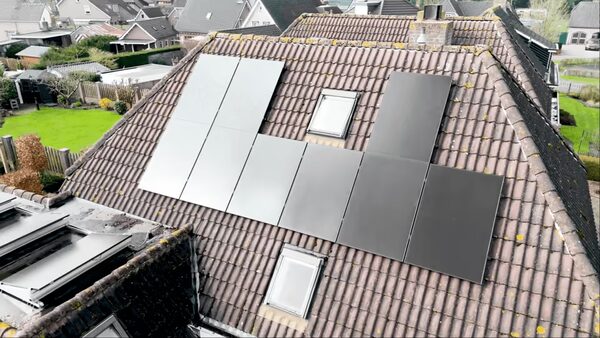
The Hi-MO S10 is built on Hybrid Passivated Back Contact Cell Technology, which LONGi abbreviates to HPBC4. Back-contact cells move the electrical contacts to the rear so the front face carries no busbars, which is the architectural reason the modules look uniformly dark and why the maker can claim efficiency gains from a larger active area.
The latest-generation residential module in the range carries HPBC 2.0 back contact technology and a TaiRay wafer type4. LONGi's support material describes its cell technologies as including both HPBC and BC, and lists the performance features it claims across the range: higher efficiency, better performance in low light, and long-term durability1. The maker also states that its modules are bifacial, capturing sunlight from both sides, and that its products hold IEC, TÜV and CE certifications1.
A Spectra HPBC range also appears in UK distribution listings, added in April 20268. For a household, the practical distinction between the families is less about the marketing name than about the datasheet: output, efficiency, dimensions and warranty term all vary by model, and those are the numbers that determine how many panels fit a roof and what the array produces. The wider landscape of cell architectures is set out in solar cell technology, and the reading of datasheet figures in solar panel specifications and efficiency.
Latest-generation residential panel: specs at a glance
The figures below are the maker's published specification for the latest-generation residential module, dated 17 September 20264. They describe one module, not the whole range, and other LONGi models carry different numbers.
| Specification | Value |
|---|---|
| Product series | Latest Generation4 |
| Cell technology | HPBC 2.0 back contact4 |
| Bifacial or monofacial | Bifacial4 |
| Max power | 760W4 |
| Max module efficiency | 24.47%4 |
| Number of cells | 664 |
| Dimensions | 2384 x 1303 x 33mm4 |
| Glass and framework | Dual glass, 2.0+2.0mm semi-tempered glass4 |
| Frame | Anodised aluminium alloy, silver4 |
| Wafer type | TaiRay4 |
| Shading optimisation technology | Yes4 |
| Materials and product warranty | 12 years4 |
| Linear power output warranty | 30 years4 |
The 760W figure is a large-format module, and the dimensions show why: at 2384mm by 1303mm it is a substantial panel, so roof area and mounting layout matter as much as headline output. The dual glass construction places it in the glass-glass category, which is covered in bifacial and glass-glass solar panels. Shading optimisation technology is listed as present, though the module-level electronics that usually deliver it are a separate purchase, explained in power optimisers.
Efficiency: 23.5% in tested panels, up to 31.1% tandem modules
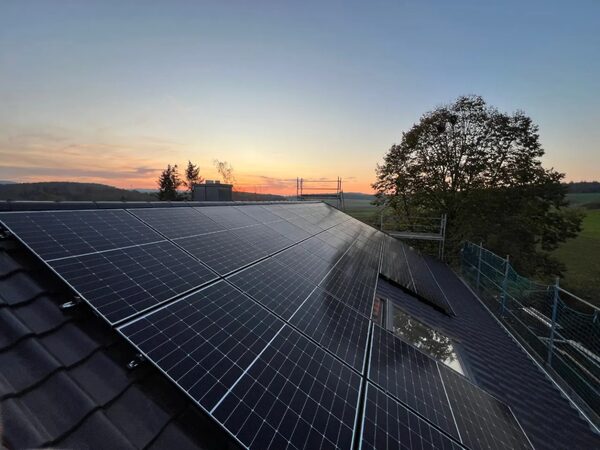
Two different efficiency numbers circulate for LONGi, and they measure different things. Independent testing of a LONGi panel recorded 480W at 23.5%2. A UK installer comparison updated in August 2026 ranked the LONGi Hi-MO X10 485W as best overall at 23.8%3. The maker's own figure for the latest-generation residential module is a maximum module efficiency of 24.47%4. These sit close together, and the small gaps reflect different modules and different test conditions rather than a disagreement about the technology.
Research cells are a separate matter. LONGi has demonstrated 31.1% for a small tandem module, against 26.9% for a large tandem module from Oxford PV, both reported in a parliamentary briefing note9. For context, hybrid solar panels are put at around 20% module efficiency in independent guidance10. Tandem figures are laboratory results on small areas, not products on sale for a UK roof, and the gap between a demonstrated cell and a warrantied module is where most of the commercial work sits.
What drives real-world efficiency is not the badge but the installation. Orientation, pitch, shading and inverter choice all shape what an array delivers, and those are covered in roof orientation, pitch and shading and solar inverters. A high-efficiency module helps most where roof area is tight; where space is plentiful, a cheaper lower-efficiency panel can produce the same annual yield.
Warranty: 25-year product and 25-year 92% performance cover
Warranty terms for LONGi panels differ between the maker's own pages and independent summaries, and the differences are worth reading carefully rather than averaging.
Independent testing records LONGi as offering a 20-year product warranty and a power output warranty of 25 years at 92%2. The maker's support pages describe a 12-year product warranty and a 25 to 30-year linear performance warranty, depending on the model1. The latest-generation residential module is listed with a 12-year materials and product warranty and a 30-year linear power output warranty4.
For comparison, REC Solar is recorded at 25 years at 92% for power output11. Independent guidance puts well-known manufacturers at warranties of 25 to 30 years, and describes most solar panels as coming with a 25-year performance guarantee12. Energy Saving Trust guidance states that solar panels usually come with a 25-year performance warranty and a five to 10-year product warranty14. The pattern across the market is a long performance term and a shorter product term, and LONGi follows it.
Registration is the step that makes a claim straightforward. As with any electrical appliance, a plug-in solar system should be registered with the manufacturer to activate any warranty and to be contacted about a problem or a safety recall15. The same principle applies to a roof-mounted array: the installer normally handles registration at commissioning, and the household should keep the paperwork. Degradation rates and how performance warranties are calculated are covered in solar panel warranties and degradation.
Where LONGi panels are made and how they reach the UK
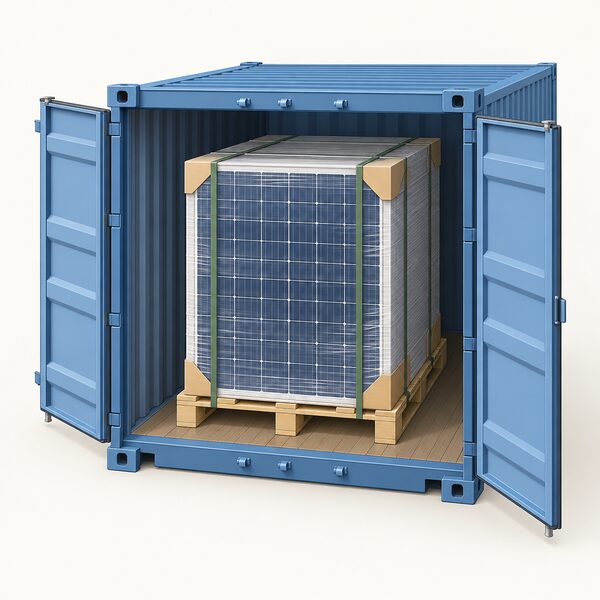
LONGi's main manufacturing facilities are based across China, with factories in Kuching, Malaysia and in Vietnam2. The maker's own support material describes products manufactured across state-of-the-art facilities in China and internationally1. That is a multi-country supply chain rather than a single plant.
The UK context is that the overwhelming majority of panels installed here are imported, and around 80% of panels available in the UK are made in China6. The same figure is repeated across independent brand reviews, including those covering Trina Solar and SolarEdge, which confirms it as a market-wide characteristic rather than a LONGi-specific one16. REC Solar panels, by contrast, are made in Singapore11.
For a household, the practical consequences are lead time, price and spares. A module manufactured outside the UK is subject to shipping schedules and import arrangements, and a replacement panel for a warranty claim may come from a different production batch. The UK market's reliance on imports is documented in government consultation material, which notes that the overwhelming majority of panels installed in the UK are imported6. Manufacturing origin does not by itself determine quality, but it does determine how quickly a replacement arrives and what happens if supply chains tighten. The broader picture of what is sold here is in types of solar panel sold in the UK.
Record-breaking cell research: 21 world records and counting
LONGi's research programme has produced a series of announced records, and the dates matter because they show how quickly the numbers move. In June 2024 the company announced a world efficiency record of 34.6% for silicon-perovskite tandem solar cells, followed days later by a 30.1% record for commercial M6 size wafer-level silicon-perovskite tandem cells19. In October 2024 it announced a crystalline silicon module efficiency record of 25.4%19.
The pace continued. LONGi announced a single perovskite-silicon cell efficiency of 35.5% in July 2026, and a 2026 record for a small perovskite and silicon tandem module at 31.6%20. A parliamentary briefing note records the 31.1% small tandem module demonstration alongside Oxford PV's 26.9% large module9.
These are research results, not products. A record cell measured in a laboratory does not carry a 30-year performance warranty, and the efficiency figures quoted for commercial modules are lower for exactly that reason. The value to a household is indirect: research records tend to appear in commercial modules a few years later, so the direction of travel is towards more output per square metre. The technology families behind those records are explained in solar cell technology and n-type vs p-type solar cells.
What LONGi panels mean for household energy independence
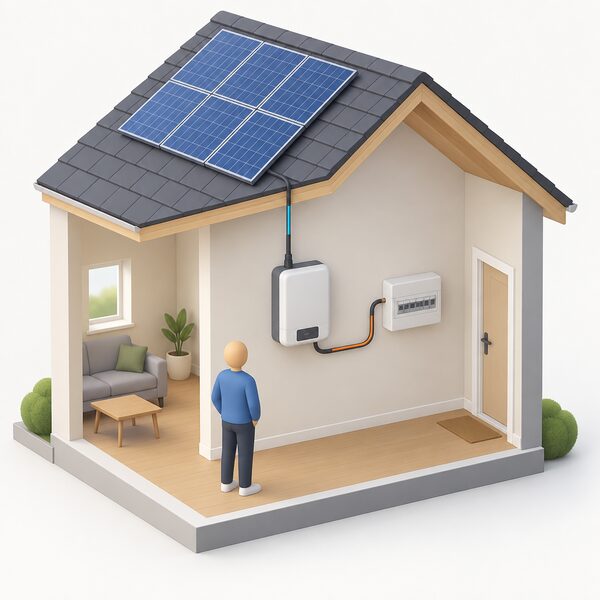
A LONGi module does one thing for independence: it generates electricity on the roof instead of buying it from a supplier. Everything else in the chain remains a dependence. The panel needs an inverter to convert DC to AC, a grid connection to export surplus or draw power at night, and an electricity supplier for whatever the array does not cover. The inverter and connection arrangements are covered in grid connection for solar G98 and G99 and solar inverters.
The dependence on the manufacturer is real but limited. LONGi's support pages direct enquiries through its Contact Us page, which is also the route for partner applications and onboarding information1. Independent testing of another brand found that many owners reported trouble contacting the manufacturer when they had a problem, which is a reminder that after-sales access varies by brand and should be checked before purchase17. LONGi's own commercial support offer covers technical consulting, simulation tools, logistics planning and after-sales service for commercial and utility projects1.
There is also an end-of-life question. LONGi states that it supports industry programmes enabling responsible end-of-life handling1, and the UK routes for disposal are set out in solar panel recycling. On the demand side, the UK context is strong: solar panels are suitable for anywhere in the UK, and certified installations have been running at record levels22. Households seeking independent advice on solar and other measures can approach the NI Energy Advice service, which funds independent advice on solar panels, heat pumps and other energy efficiency measures24. The wider question of what a system does and does not deliver is covered in solar panels and household energy independence.
Sources24 cited
- LONGi support and frequently asked questions, LONGi, 2026-09-17
- LONGi solar panels review, Which?, 2026-08-12
- LONGi solar panels, Which?, 2026-08-12
- LONGi Hi-MO S10, LONGi, 2026-09-17
- How we test solar panels, Which?, 2026-08-12
- Solar carparks and EV charging call for evidence, UK Government, 2025-05
- AIKO solar panels review, Which?, 2026-08-12
- Solar panels product category, Marlec, 2026-04
- Research briefing on solar technologies, Parliamentary Office of Science and Technology, 2026-06-25
- Are solar panels worth it, Which?, 2026-05-15
- REC Solar panels review, Which?, 2026-08-12
- How long do solar panels last, Uswitch, 2026-07-13
- Solar panels guide, Uswitch, 2026-09-16
- Buying a house with solar panels, Energy Saving Trust, 2026-08-13
- Plug-in solar consumer guide, Electrical Safety First, 2026-08
- Trina Solar panels review, Which?, 2026-08-12
- SolarEdge solar panels review, Which?, 2026-08-12
- Trina Solar panels, Which?, 2026-08-12
- World record for solar cell efficiency, LONGi, 2024-10-23
- Improving solar technology, Sunsave, 2026-07
- Most efficient solar panels, Sunsave, 2026
- UK solar panel hotspots, Energy Saving Trust, 2026-08-13
- UK rooftop solar installations hit record high, MCS Certified, 2025-11-13
- Support to generate your own electricity, nidirect, 2025-09-22