
In this comparison
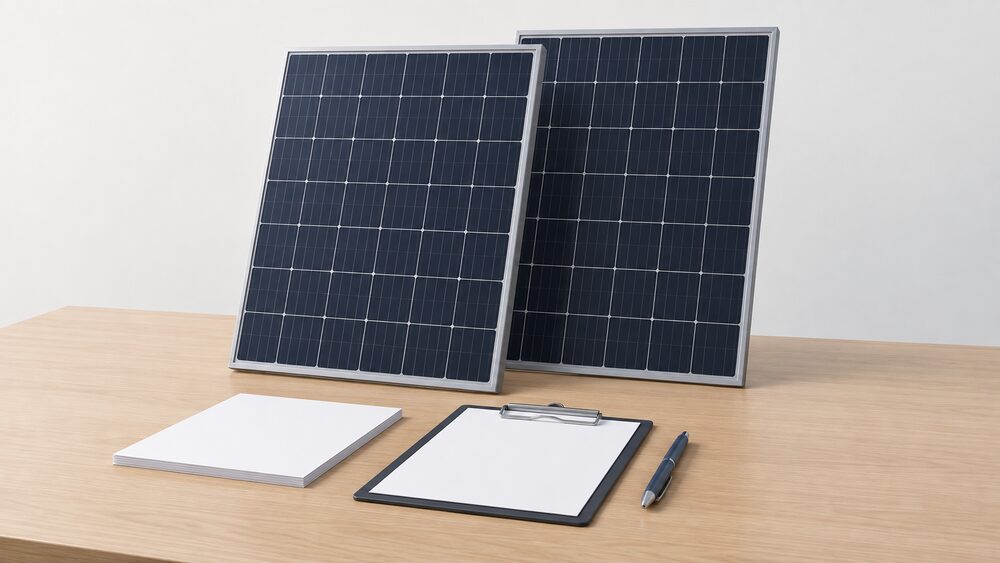
LONGi and JinkoSolar are the two module names that turn up most often in UK solar quotes, and the comparison is usually settled on three numbers: efficiency, warranty length and who stands behind the panel. On the independent evidence, Which? has tested a LONGi panel at 480W and 23.5% efficiency, and records a 20-year product warranty with 25 years at 92% power output on the panels it has reviewed1. JinkoSolar's own European limited warranty runs to a 25-year product term and 30 years at 87.04% output on the modules it covers, but only for modules sold or delivered to European countries under purchase agreements signed on or after 21 August 20253.
That last condition matters more than it looks. A JinkoSolar panel on a UK roof is covered only if it was bought through the qualifying route, and claims go through the maker's after-sales online platform rather than through the installer4. LONGi's cover is not uniform either: the maker's own support pages state a 12-year product warranty on some models, while the EcoLife residential series is stated as carrying a 30-year product and materials warranty5.
Neither brand is sold direct to UK householders. Which? notes that in the UK solar panels are sold via installers rather than direct to consumers, which is why its testing programme does not name individual Best Buys1. The practical comparison therefore happens inside an installer's quote, and the figures below are the ones worth checking on the datasheet before signing.
LONGi: the world's largest solar manufacturer in numbers
LONGi is described in UK installer guidance as the world's largest solar manufacturer, a position it holds on volume rather than on any single specification8. The company states that it provided more than 80GW of solar globally in 2024, and that its panels are trusted by more than 1.3 million homeowners7. Its business is concentrated on solar technology, high-efficiency photovoltaic products and renewable energy solutions across all market segments5.
The wider manufacturing picture is Chinese. A government consultation published in 2025 states plainly that China dominates solar PV manufacturing globally9. LONGi sits inside that, and is named alongside AIKO and Maxeon as one of the three leading back-contact manufacturers8. That grouping is worth understanding, because back-contact is the technology family LONGi has built its residential range around, and it is the main technical difference between a LONGi panel and a conventional module.
For a household, the scale of the maker is a proxy for two things: the likelihood that the company is still trading when a warranty claim is made in 2045, and the likelihood that replacement modules of a similar size and output remain available if one fails. Neither is guaranteed by size, but both are more plausible with a manufacturer shipping at this volume than with a small brand. What scale does not do is shorten the payback period or reduce the household's reliance on the grid, which is covered later.
Efficiency: 23.5% tested panels and record-breaking cells
Efficiency is where the two brands are most often compared, and it is also where the evidence is least symmetrical. Which? has tested a LONGi panel at 480W and 23.5% efficiency, describing it as the most efficient panel it had recently tested2. That is an independent figure from a testing programme, and it is the strongest single number in this comparison.
LONGi's own product pages go higher. The latest-generation residential panel is quoted at 24.47% maximum module efficiency, and the EcoLife series at up to 25%10. The Hi-MO X10 module is stated to have reached 25.4% efficiency and to be listed on the NREL Champion Photovoltaic Module Efficiency Chart11. The maker also states that between 2022 and 2024 its research and development increased absolute cell efficiency by 1%11.
Those figures do not all describe the same thing. A tested panel result is a whole module measured under test conditions; a maximum module efficiency figure is the top of a production range; a record figure is a laboratory or champion result. The gap between 23.5% tested and 25.4% recorded is not a contradiction, it is a difference of category, and a buyer comparing quotes should expect the datasheet for the specific model to sit somewhere below the headline record.
| Figure | Value | What it describes |
|---|---|---|
| Which? tested LONGi panel | 480W at 23.5% | Independent test of a panel recently tested2 |
| LONGi latest-generation residential | 24.47% | Maximum module efficiency, maker figure10 |
| LONGi EcoLife | up to 25% | Module efficiency, maker figure6 |
| LONGi Hi-MO X10 | 25.4% | Record module efficiency, maker figure11 |
| LONGi Hi-MO X10 | up to 24.8% | Production module efficiency, maker figure6 |
JinkoSolar's efficiency is not given in the same independent form in the material available here, so a like-for-like tested comparison cannot be made. What can be said is that LONGi's efficiency claims are supported by an independent test result as well as by maker figures, and that the maker figures cluster in the 24 to 25% band for current residential products.
Warranties: 20-year product cover and 25-year power output
Warranty is the part of a panel quote that most often goes unread, and it is where the two brands diverge most sharply in structure rather than in headline length.
Which? records LONGi panels as carrying a 20-year product warranty and a power output warranty of 25 years at 92%2. LONGi's own support pages state a 12-year product warranty on some models and a 25 to 30-year linear performance warranty depending on the model5. The EcoLife series is stated by the maker as carrying a 30-year product and materials warranty and a 30-year power warranty with only 1% degradation in the first year6. The latest-generation residential panel is listed with a 12-year materials and product warranty and a 30-year linear power output warranty10. The Hi-MO S10 is described as carrying 30 years of power and materials warranty10.
A buyer comparing a 12-year and a 30-year figure is comparing two different products, not two readings of the same one.
JinkoSolar's position is set out in its own limited warranty document. The product warranty runs to 25 years and the power output warranty to 30 years at 87.04%3. The document states that it is only applicable to modules sold or delivered to European countries, and that it applies to modules sold under purchase agreements signed on or after 21 August 20254. Remedies are at Jinko's sole discretion and include repair, replacement, a refund of residual value or output-gap value, or additional modules4. Claims are made through the after-sales online platform at cs.jinkosolar.com4.
"This Limited Warranty is only applicable to Modules sold and/or delivered to European countries."
The practical difference is in the power output guarantee: LONGi's reviewed panels guarantee 92% at 25 years, while JinkoSolar's guarantee 87.04% at 30 years2. A household weighing the two is choosing between a shorter term with a higher retained output and a longer term with a lower one. Both are maker terms, and neither is a statement about how a particular roof will perform.

Technology direction: HPBC 2.0 and perovskite-silicon tandem records
LONGi's current residential products are built on back-contact cell technology. The latest-generation residential panel uses HPBC 2.0, and the Hi-MO S10 uses Hybrid Passivated Back Contact Cell Technology10. The Hi-MO X10 also uses HPBC 2.0 cell technology6. Back contact moves the metal contacts to the rear of the cell, which removes the front-side shading they would otherwise cause.
The company's research pipeline runs well ahead of its shipping products. LONGi announced in 2025 that it had reached 34.85% efficiency with a perovskite-silicon tandem cell, confirmed by NREL, and in 2026 announced a single perovskite-silicon cell efficiency of 35.5%11. It also set a world record in 2026 with a small, 31.6% efficient perovskite and silicon tandem model. These are laboratory results, not products on a UK roof, and the gap between a record cell and a warrantied module is measured in years.
LONGi states that it holds 21 world records for efficiency, and that in October 2024 it became the first Chinese company to set a world record for module efficiency since records began in 198811. It also states that it holds more than 3,000 active patents worldwide7.
For a household, the technology direction matters in one narrow way: it indicates whether the maker is likely to keep producing modules of comparable size and output for the life of the system. A manufacturer investing at this level in cell research is more likely to remain a source of compatible replacements than one that has stopped developing. It does not make a current panel produce more electricity than its datasheet says, and it does not change the fact that a record cell efficiency figure is not a module specification.
Manufacturing footprint and sustainability credentials
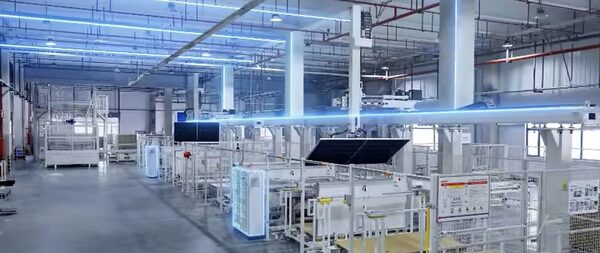
LONGi states that its panels are manufactured across facilities in China and internationally, following quality standards and sustainability practices5. Which? reports that the main manufacturing facilities are based across China, with factories in Kuching, Malaysia and in Vietnam, and that the company is headquartered in Yunnan, China2. The distinction between the maker's general statement and the independent account of specific locations is worth keeping: the maker describes a global footprint, the independent review names the countries.
On sustainability, LONGi states that its work is aligned with the UN Sustainable Development Goals and that it is committed to green manufacturing, low-carbon innovation and social responsibility5. It states that 25 manufacturing sites hold ISO 50001 energy management certification, and that its production bases have received ISO 50001 energy management certifications6. It also states an 18.3% reduction in electricity consumption per produced panel6. It states that its modules are designed with recyclability in mind and that it supports industry programmes enabling responsible end-of-life handling5.
These are maker claims about the maker's own operations, and they should be read as such. The independent fact that bears on the same ground is the government's 2025 statement that China dominates solar PV manufacturing globally9, which is the context in which any Chinese manufacturer's sustainability reporting sits.
For a household, the manufacturing location has two practical consequences. The first is supply chain: a panel made in China, Malaysia or Vietnam reaches a UK installer through a distribution chain that can be disrupted, and lead times for a replacement module depend on it. The second is embodied carbon, which is not offset by the panel's own generation but is part of the system's overall footprint. Neither is a reason to choose one brand over the other on its own, but both are part of what a household is buying into.
Standard panels or custom solutions: which fits which roof
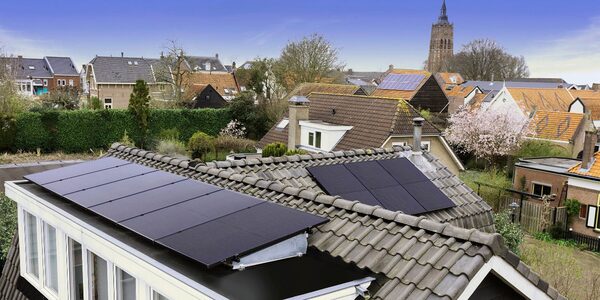
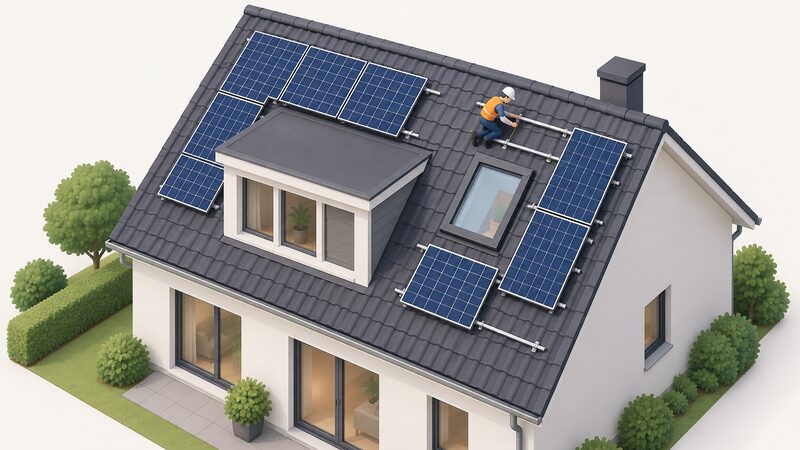
LONGi sells standard solar panel setups for flat and pitched roofs, as well as custom solutions for more complex roofs13. The standard residential range mainly covers flat roofs and pitched roofs, while the custom residential solutions are aimed at villas, flat and sloped roof combinations, roofs with skylights, and other more complicated roofing layouts14. The maker states that its professional design teams match the module to the rooftop, and that its residential solutions are applicable to a wide range of rooftops14.
That split is not unique to LONGi, but it is the point at which a brand comparison stops being about the panel and starts being about the roof. A straightforward pitched roof with clear space takes a standard module. A roof with a dormer, a skylight, a change of pitch or a mix of flat and sloped sections needs a layout designed around the obstructions, and the module dimensions and mounting options matter more than the cell technology.
Building regulations apply to roof-mounted solar in the usual way. Islington Council's guidance states that if you wish to install a solar panel on your roof, building regulations will normally apply15. York Council's guidance identifies the additional loading on the roof structure as the reason16. The Planning Portal notes that existing flat roofs are generally simple in construction, consisting of joists spanning the gap between two walls, covered by panels and then by felting or other coatings17. The Energy Saving Trust describes solar panels as best suited for existing roofs18.
The practical sequence for a household is a structural check, then a layout, then a module choice. LONGi's own support pages advise consulting an installer or LONGi partner to ensure system compatibility, and state that its panels are compatible with most major inverter brands5. For more on how roof shape and shading drive the design, see roof orientation, pitch and shading and solar panel mounting systems.
What LONGi ownership means for household energy independence
A solar panel is the one part of a home energy system that a household owns outright and that has no ongoing relationship with a supplier. LONGi's own framing of its residential offer is energy independence, delivered through a system combining solar, storage and smart energy management19. The maker describes one-stop solar, storage, inverter and management solutions for homes worldwide, and cites lower shading loss as a feature of its eHome system19.
The scale of a typical system is modest against total household demand. LONGi gives an example of a 7.5 kWp system for a family in central Europe7, and describes installed projects including a 10 kW PV system with 10 kWh of storage in Hangzhou and a 9.6 kW PV system in Suzhou19. Those are the maker's own project examples, not UK installations, and they illustrate system size rather than expected output on a British roof.
What remains dependent is the grid. A grid-connected system uses the network as its battery, importing when the panels and any battery cannot meet demand and exporting when they exceed it. Energy flexibility arrangements for homes and small businesses are the mechanism by which that exchange is managed20. The scale of the difference is set out in independent modelling: a net zero household with more UK renewables would use almost 85% less imported energy in 2030 than a home without upgrades, at 3.4MWh a year against more than 20MWh20.
Off-gas households carry a different set of dependencies. LPG tanks are normally owned by the supplying company with an ongoing annual rental charge, and homeowners are usually tied into long contracts that limit their options21. The Resolution Foundation found that the lowest-income households are twice as exposed to energy costs as their richer counterparts23. A solar panel does not remove those exposures, but it reduces the volume of energy a household has to buy, which is the part of independence a module can actually deliver.
For the wider picture, see solar panels and household energy independence and the full guide to solar PV for UK homes.
Sources23 cited
- How we test solar panels, Which?, 2026-08-12
- LONGi solar panels review, Which?, 2026-08-12
- Jinko Solar solar panels review, Which?, 2026-08-12
- Limited warranty, linear bifacial module for EU, JinkoSolar, 2026-09-17
- Frequently asked questions, LONGi, 2026-09-17
- EcoLife residential series, LONGi, 2026-09-17
- For homeowners, LONGi, 2026-09-17
- Best solar panels, Spirit Energy, 2026-07
- Solar carparks and EV charging call for evidence, Department for Energy Security and Net Zero, 2025-05
- Hi-MO S10, LONGi, 2026-09-17
- Introducing LONGi's Hi-MO X10 Artist, LONGi, 2025-08-21
- EcoLife residential series (CZ), LONGi, 2026-09-17
- LONGi solar panels, Which?, 2026-08-12
- Residential solutions, LONGi, 2026-09-17
- Solar panels guidance, Islington Council, 2026-09-17
- Solar panels guidance, City of York Council, 2026-09-17
- Building regulations work to an existing roof, Planning Portal, 2026-09-17
- Solar roof tiles, Energy Saving Trust, 2026-08-13
- eHome, LONGi, 2026-09-17
- Household energy security in 2030, Energy and Climate Intelligence Unit, 2030
- What heating options are available off the grid, OFTEC, 2026-09-20
- Future liquid fuels, UKIFDA, 2026-01-27
- No country for cold homes, Resolution Foundation, 2025-08-07
 Warranties and DegradationHow long do solar panels actually last, and what do the warranties really cover?
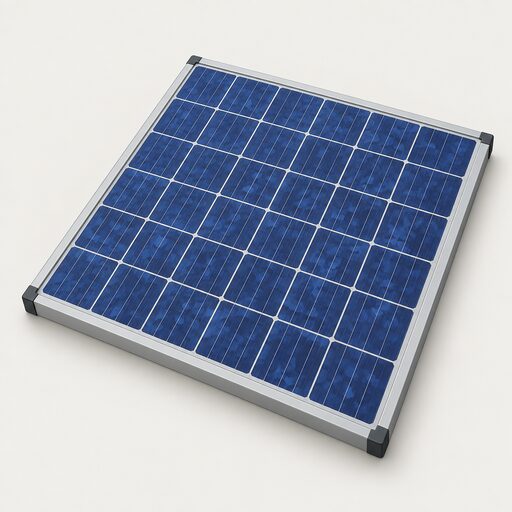 Panel TypesWhich solar panels are best for a UK home, and how much do they cost?
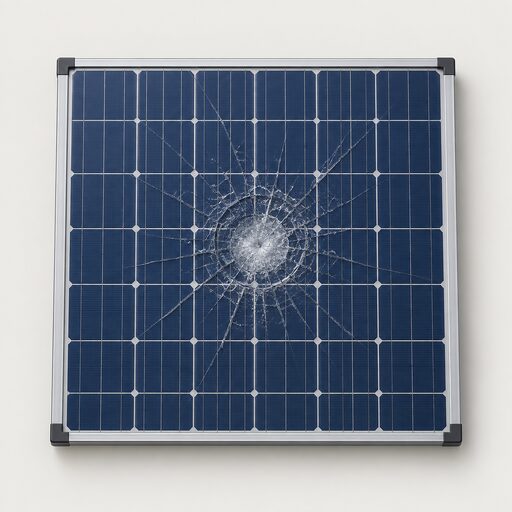 Standards and TestingWhat do the certificates on a solar panel datasheet actually prove, and which ones should you look for in the UK?
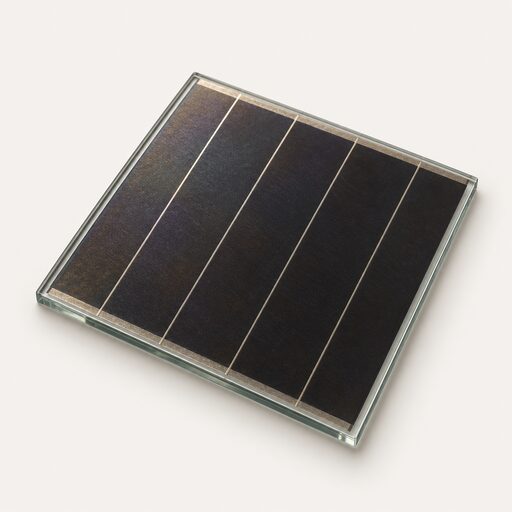 Perovskite Solar CellsPerovskite solar panels are a newer kind of panel that could be cheaper and more efficient than the ones sold today.
 Workmanship WarrantiesIf something goes wrong with your solar panels, who actually fixes it and who pays?
 Solar Panel Manufacturers UKWhich solar panel brands are actually worth buying in the UK, and who really makes them?