In this guide
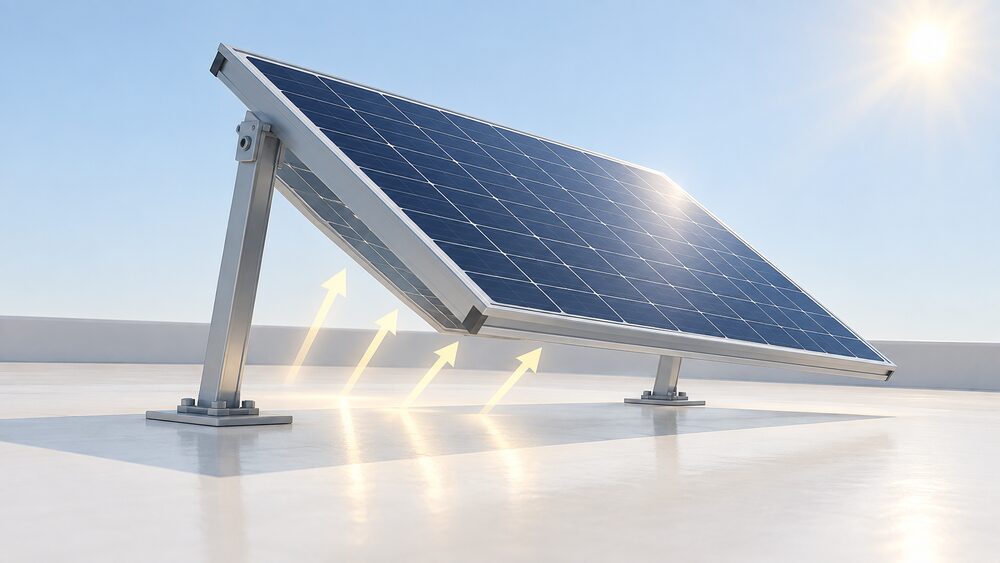
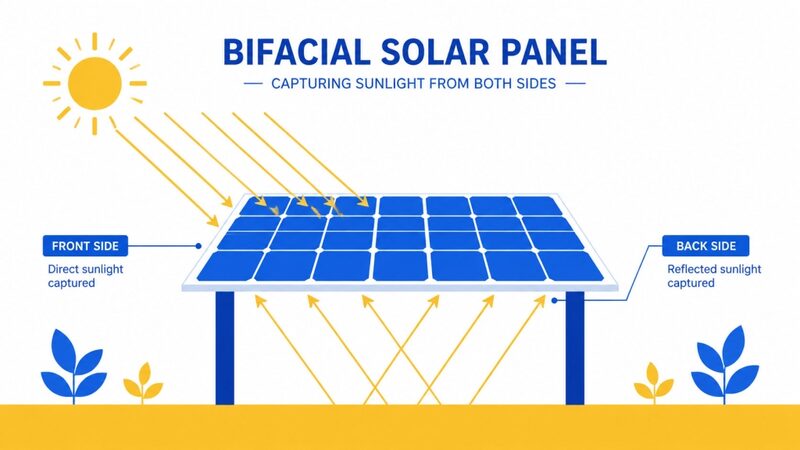
A bifacial solar panel generates electricity from both of its faces. The front works exactly as any photovoltaic panel does, and the rear cells pick up light that has bounced off whatever lies behind the module. Jinko Solar, among others, sells bifacial panels that can generate electricity on both sides1. Glass-glass, or double-glass, is a different idea that usually travels with it: instead of glass at the front and a polymer backsheet behind, the cells are encapsulated on both sides with a robust glass pane2. Bifacial cells need light to reach their rear face, so they are normally built this way, but a glass-glass module can be entirely one-sided.
The honest answer on rear-side gain is that it is a property of the site, not of the panel. Solar PV converts the sun's energy into electricity, and the greater the intensity and duration of the sunlight, the more electricity is produced3; the rear face only sees light that a surface behind the array has reflected upward. A module bolted on rails a short distance above dark roof tiles has very little to collect. The same module tilted over a pale flat-roof membrane, light gravel, or open ground with sky visible behind it has considerably more. Published rear-side ratings are therefore a potential, not a promise: one 220W portable bifacial panel is rated at 155W on its back face, and its maker claims it captures 25% more energy than a traditional solar panel4.
For most UK households considering a conventional pitched-roof installation, bifaciality is close to a non-event, while glass-glass construction is a real and separate question about durability and warranty. The two deserve to be assessed apart.
What a bifacial panel actually is
Solar electricity panels, also known as photovoltaics, turn light into direct current electricity9. In a conventional module the cells are laminated onto an opaque backsheet, and any light that misses a cell is lost. In a bifacial module both cell surfaces are active and the rear layer transmits light, so photons arriving from behind contribute as well.
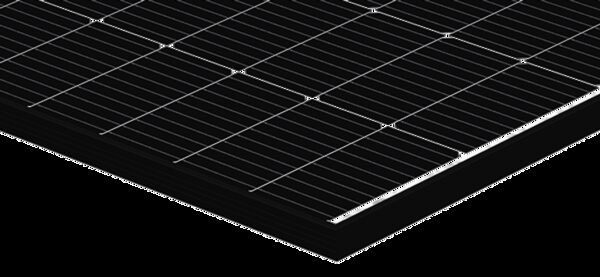
The cells themselves are recognisable silicon. One bifacial module in the UK market uses 96 half-cut bifacial crystalline silicon cells of 182.25 by 105 millimetres, behind 3.2 millimetre anti-reflective coated tempered glass of high transparency and low iron content5. Low-iron glass matters because it transmits more of the spectrum; on a double-glass module the same reasoning applies to the rear pane.
Bifaciality does not change the rest of the system. Direct current from the panels needs to pass through a solar inverter to turn it into alternating current7, and the electricity produced can be used in the building or exported. Nor does it change the basic light requirement: solar PV requires only daylight and not direct sunlight to generate electricity10. What it changes is how sensitive the array is to the surface below it, which is why two identical bifacial arrays on two different structures can perform quite differently. For the cell chemistry behind these modules, see solar cell technology.
Rear-side gain: what it depends on
No independent UK figure in this material puts a single percentage on bifacial gain for a domestic installation, and that absence is itself informative. The manufacturer figures available are product claims: 155W of rear capacity on a 220W panel, and 25% more energy than a traditional panel, both stated by the maker of that portable unit4.
What drives the number is well understood and the same factors that drive front-side output apply with more force behind. Total generation depends on geographical location, the season and therefore hours of daylight, the roof's compass direction and slope, any shading that blocks the panels at certain times of day, and the efficiency of the system11. Add to that list the reflectivity of the surface behind the module, the height of the module above it, and the tilt angle, since a steeper tilt with an open gap lets more sky-reflected and ground-reflected light reach the rear cells.
A practical way to read a bifacial datasheet is to treat the front-side rating as the figure the array can be relied on to deliver and the rear-side rating as a site-dependent bonus. For scale, a typical residential solar panel produces around 250 to 400 watts under ideal conditions, with more efficient panels reaching up to 450 watts12. A rear face contributing a fraction of that only converts into household savings if there is something behind the panel worth reflecting off.
Glass-glass construction and why it changes the warranty
In a double-glass module the cells sit between two panes rather than between a pane and a plastic backsheet2. The backsheet is the component most associated with ageing, moisture ingress and delamination over decades outdoors, so removing it removes a failure mode. Glass is also dimensionally stable and largely impermeable, which is the physical argument behind the longer guarantees these modules attract.
Warranties come in two parts and they are often confused. Solar panels usually come with a 25-year performance warranty and a five to 10-year product warranty6; the performance warranty covers output decline, the product warranty covers the panel itself. The best-known manufacturers offer warranties of 25 to 30 years, which is presented as confidence in longevity13. One bifacial module carries a 25-year product guarantee, a maker's term rather than an independent finding5. Most solar panels come with warranties of up to 20 or 25 years, but inverters are not expected to last as long14, so a long panel guarantee never covers the whole system.
The trade-off is weight and handling. Two panes weigh more than one pane and a backsheet, which feeds directly into roof loading. Building regulations engagement for solar is driven by the additional loading on the roof structure and the associated electrical works15. Toughness claims made by makers should be read as such: one maker describes its thin tempered glass as five times tougher than other panels on the market4. A fuller comparison sits on glass-glass vs standard solar panels and on solar panel warranties and degradation.
Where bifacial modules earn their keep
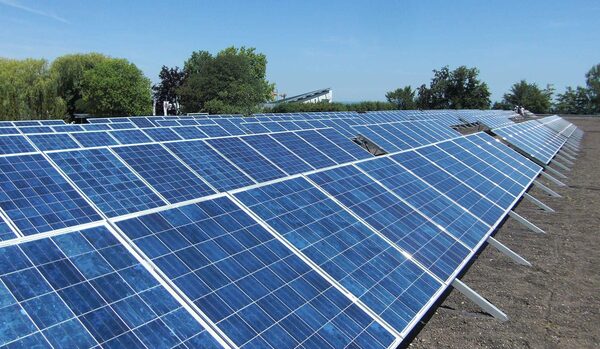
Bifacial gain needs three things: a reflective surface behind the array, a gap between module and surface, and a tilt that lets light in. Domestic situations differ sharply on all three.
| Mounting situation | Rear-face exposure | Notes |
|---|---|---|
| Panels on rails over pitched tiles | Minimal | Panels sit close to the roof covering; on pitched roofs panels should be located to the rear of the property and match the colour of the existing roof covering as closely as possible16 |
| Flat roof, tilted frame | Good | Panels on flat roofs are normally tilted up to help maximise energy production17; installation is possible with more flexibility over angle18 |
| Ground mount | Good | Open ground behind the array, with tilt and spacing set by the frame |
| Fence, balcony or freestanding | Variable | Portable and plug-in panels are commonly around 1 m by 2 m and weigh more than 20 kg19 |
Flat roofs come with their own costs. Installing on a flat roof is more complex, because panels may need additional mounting systems and the roof must support the extra weight, so it might cost more than a pitched roof installation18. On a flat roof the panels also need to be tilted and spaced to avoid shading each other7. Heavier double-glass modules push in the same direction. Flat roof solar permitted development rules and ground-mounted solar cover the siting side in more detail.
Bifacial or monofacial: which suits which home
Orientation dominates the decision on any roof, bifacial or not. An unshaded, south-facing roof is ideal for maximum performance17. A large, un-shaded, predominantly south-facing roof space is the ideal case, and a south-west or west-facing roof is also suitable, though a little less productive20. A pitch angle of 30 to 40 degrees is the usual target. Where a roof has an east-west aspect, panels can be used on both sides21, and real installations on an east-facing low pitched roof still generate significant electricity17. Heavily shaded roofs may make solar unsuitable regardless of panel type15, and north-facing roofs are generally not recommended because there is not enough sunlight to make the installation worthwhile18.
Efficiency at the front face is where monofacial panels remain competitive. The most efficient domestic monofacial panel in one independent test programme is rated 640W at 23.7%22. A bifacial module with a lower front-side efficiency does not overtake that unless the site actually delivers rear-side light.
Broadly, then: conventional pitched roofs with limited space favour the highest front-side efficiency available; flat roofs, ground mounts and open structures are where bifaciality has something to work with; and glass-glass construction is a durability choice that can be made independently of either. See types of solar panel sold in the UK and roof orientation, pitch and shading.
System design: currents, area and standards
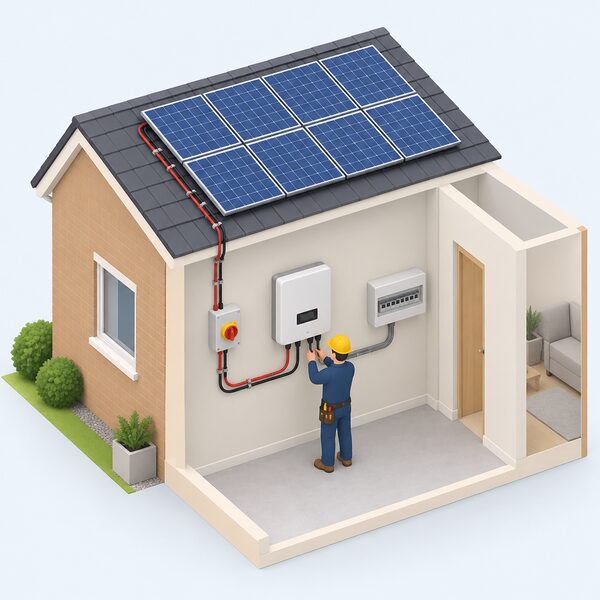
Rear-side generation adds current on the DC side, so string design, cabling and inverter selection have to allow for output above the front-side nameplate. MCS 005, the solar PV product standard, includes additional information on bifacial modules23, which is the route by which bifacial products are handled within certified domestic installations in the UK.
Area is the other design constraint. A 3.5 kWp system typically covers between 10 and 20 square metres of roof surface7, and around 3.5 kWp is a typical domestic system size8. Large-format bifacial modules built on 182 millimetre cell formats5 concentrate that capacity into fewer, heavier panels, which affects handling, rail spacing and roof loading. One maker notes its 220W bifacial panel is 10% smaller than previous models4, a product-level claim about that unit.
Shading needs the same treatment as on any array. Where shading is unavoidable, an installer might recommend microinverters or power optimisers, which let each panel work independently18. Solar panels require installation by a qualified electrician to maximise efficiency and cost savings24, and self-installed panels still need a qualified electrician to connect them to the electrical system18. Related pages: solar DC cabling and connectors, power optimisers and MCS certification for solar PV.
Cost: a premium on an already significant outlay
No published UK price for bifacial or glass-glass modules as a category appears in verified form here, so module prices are installer-quoted and no range is given. What is documented is the cost of the system they sit in. Solar panels have a high upfront cost, on average £6,100 according to the Energy Saving Trust25, and initial costs are reported as typically between £6,000 and £10,00026. Monocrystalline panels are described as very pricey27. The upfront cost of rooftop photovoltaics remains a significant barrier to more widespread adoption by homeowners and businesses alike28.
At the small end, a two-panel plug-in kit for ground mounting is listed from £899.0029. That is a different product class from a roof array, but it shows where entry-level pricing now sits.
Because a bifacial premium buys generation that depends on the surface behind the array, the case for paying it is site-specific in a way that a straightforward efficiency upgrade is not. Solar panel cost and savings and payback set out the wider arithmetic.
UK availability and what this means for independence
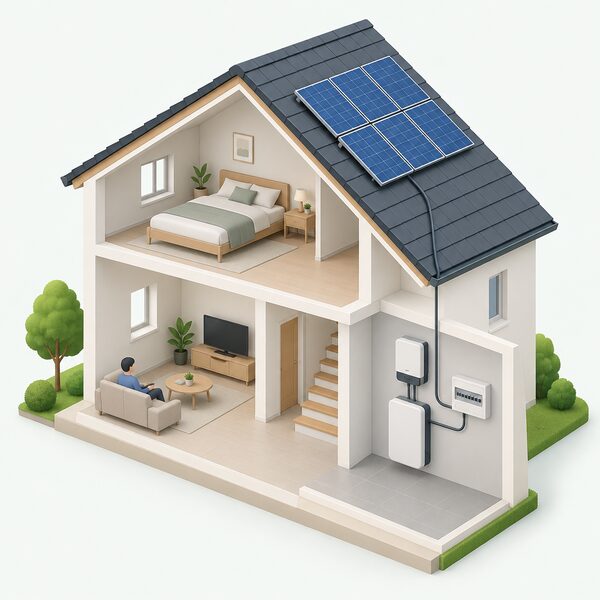
Solar panels are the most common domestic renewable energy source in the UK30 and are suitable across the UK18. Bifacial modules are part of the mainstream offer: Jinko Solar sells them alongside its conventional range1, and glass-glass construction is established in the market, with one glass-glass manufacturer's ten millionth module installed in a UK family home2. Plug-in panels, which include bifacial products and are often around 1 m by 2 m19, have been available to buy in the UK since 27 August 202631. Brand pages include BISOL panels, Solarwatt panels and JinkoSolar panels.
On independence, the lens has to be clear. Generating your own electricity reduces what a household buys from a supplier, and storing it goes further: home battery storage is usually used in combination with solar panels, a smart time of use tariff, or both32, and combining panels with a battery lets a household store renewable electricity to power a heat pump, making it less reliant on grid electricity33. Bifaciality adds, at best, a site-dependent increment to that. It does not alter the underlying dependencies. The array still needs an inverter, and inverters are not expected to last as long as panels14. A grid-connected system remains tied to the network and to a supplier for import and export. The warranty that justifies a glass-glass premium is only as good as the manufacturer still trading in 20 years, and claims may exclude labour and scaffolding14. Maintenance is light: solar panel systems need little maintenance, though the exact upkeep requirements should be confirmed with the installer before installation34.
The practical position is that bifacial modules are a good fit for flat roofs, ground mounts and open structures with a reflective surface behind them, that glass-glass construction is a durability argument worth weighing against added weight on the roof, and that on a standard pitched roof neither changes the answer as much as orientation, pitch and shade do. Solar panels and household energy independence and the main solar PV guide cover the system as a whole.
Sources34 cited
- Jinko Solar panels review, Which?, 2026-08-12
- Solarwatt ten millionth module installed in a UK home, Flexi-Orb, 2023-06-28
- Solar equipment on residential buildings technical advice note, Hart District Council, 2025-01
- EcoFlow 220W bifacial solar panel, EcoFlow, 2025-06-16
- BISOL Bifacial BDO datasheet, BISOL, 2026-09-17
- Buying a house with solar panels, Energy Saving Trust, 2026-08-13
- Solar photovoltaic panels, Hammersmith and Fulham Council, 2026-09-17
- Solar panel myths debunked, Which?, 2026-06-09
- Solar panels retrofit guidance, Oxfordshire County Council, 2026-09-17
- Generating your own energy: solar electricity, Welsh Government, 2026-09-17
- How much electricity can solar panels produce, Which?, 2024-06-27
- Energy glossary, Low Carbon Hub, 2026-08-05
- How long do solar panels last, Uswitch, 2026-07-13
- Solar panel problems and how to solve them, Which?, 2026-03-26
- Solar photovoltaic PV panels, Bromley Council, 2026-09-17
- Solar panels planning permission checklist, Islington Council, 2026-09-17
- Solar panels advice, Energy Saving Trust, 2026-08-27
- Solar panel installation, Energy Saving Trust, 2026-09-07
- Plug-in solar consumer guide, Electrical Safety First, 2026-08
- Advice for consumers, RECC, 2026-09-17
- A complete guide to solar PV, Centre for Sustainable Energy, 2025-11
- Aiko solar panels review, Which?, 2026-08-12
- Consultation on solar PV product standards, MCS, 2022-10-10
- ECA welcomes Future Homes Standard, ECA, 2026-03-25
- Are solar panels worth it, Uswitch, 2026-09-16
- Do solar panels increase home value, CPA, 2026-01-20
- Are solar panels worth it, Which?, 2026-05-15
- The UK is seizing the solar opportunity, Solar Energy UK, 2025-07-01
- Plug-in solar panels, Which?, 2026-09-15
- Generating renewable electricity, Energy Saving Trust, 2025-12-11
- Plug-in solar, Electricity North West, 2026-08-27
- Battery storage advice, Energy Saving Trust, 2026-08-19
- How to ensure a heat pump runs efficiently, Energy Saving Trust, 2026-05-19
- Solar panels, Home Energy Scotland, 2026-09-20
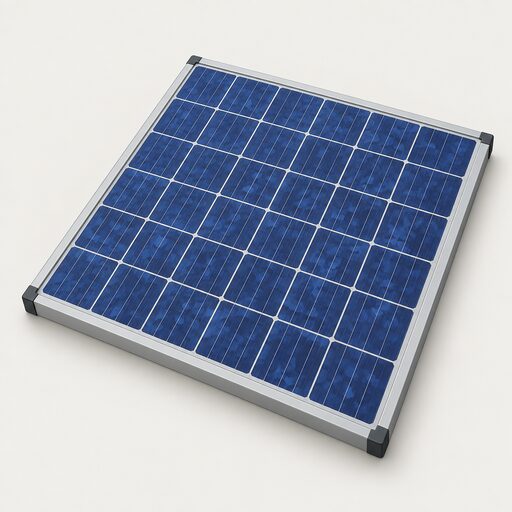 Panel TypesWhich solar panels are best for a UK home, and how much do they cost?
 Solar Mounting SystemsWill your roof take the extra weight of solar panels, and will it still keep the rain out afterwards?
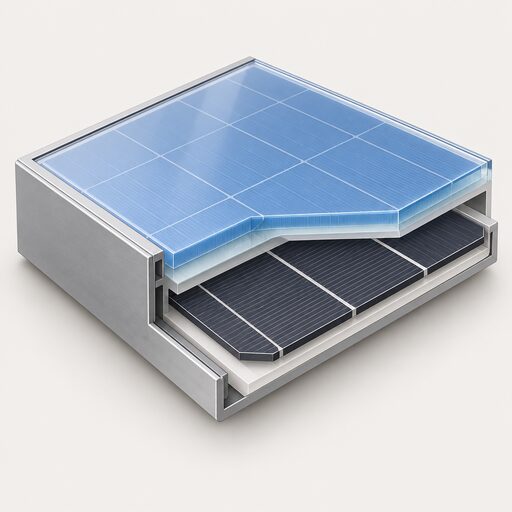 Tandem Perovskite-Silicon PanelsTandem solar panels layer a new material over ordinary silicon so they catch more of the sun's light and make more electricity from the same roof space.
 V2G and V2H ChargingCan your electric car earn money by sending power back to your home or the grid?
 Solar Panel CostsA typical UK home pays somewhere between four and eleven thousand pounds for solar panels fitted, with most landing in the middle.
 PVT Hybrid PanelsA PVT panel makes electricity and heats water from one roof space, so it suits homes without room for two separate systems.