In this guide
Solarwatt is a Dresden manufacturer that built its reputation on glass-glass modules, and it is one of the few European panel brands with a direct UK presence. The company describes itself as "the premium-quality photovoltaic solutions provider and pioneer of glass-glass technology"1. It has sold more than 13 million individual solar panels2.
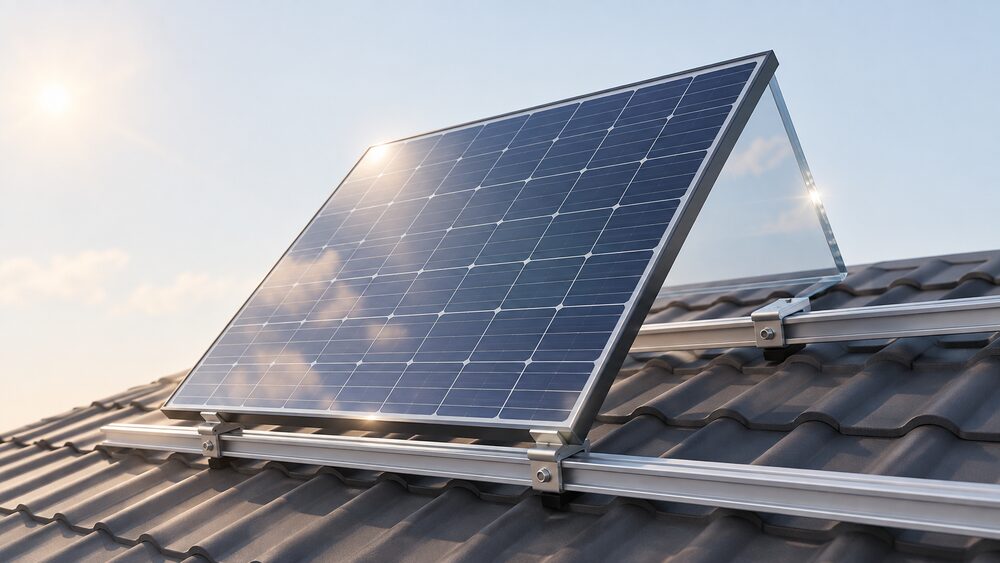
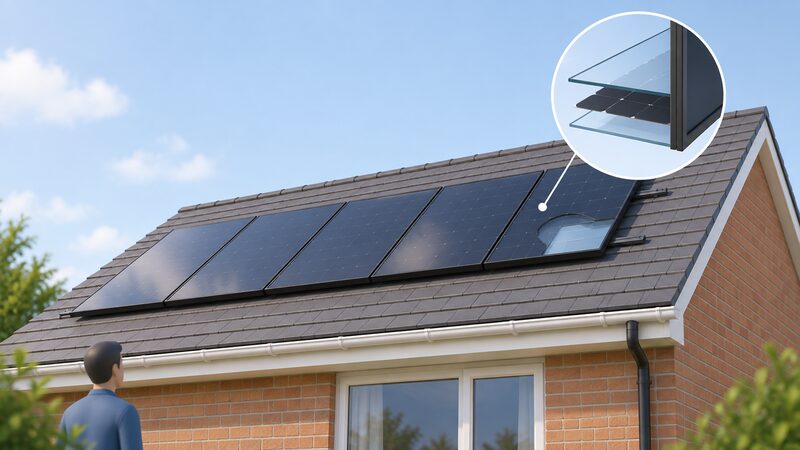
The current module range is the Panel vision and the Panel classic. Panel vision modules carry high power ratings of up to 470 Wp and are encased on both sides in heat-treated glass 2 mm thick on each side, backed by a 30-year product and performance warranty2. The Panel vision M 5.5 datasheet lists performance classes at 460 Wp, 465 Wp and 470 Wp under standard test conditions, with a maximum system voltage of 1,500 V3.
For a household, the appeal is a module built to outlast the roof it sits on, with a warranty term longer than most of the market offers. The dependence is the same as any grid-tied array: an inverter, a connection agreement, and a supply relationship for whatever the panels do not cover.
Who Solarwatt is: a Dresden glass-glass pioneer with a UK presence
Solarwatt's identity is tied to one place and one idea. The company is committed to Dresden as a location, and its module pilot line sits there4. That is unusual in a market where most panels sold in the UK are made in Asia, and it is the basis of the brand's pitch: European engineering, a long product life, and a supply chain that does not cross an ocean.
The glass-glass specialism is not a marketing label bolted onto a conventional module. Solarwatt developed highly efficient glass-glass panels with half-cell technology, a combination that splits each cell in two and reduces the current carried through the module's internal ribbons4. Lower current means lower resistive loss and better tolerance of partial shade, because the cell strings are arranged so that a shadow on one section does not drag the whole module down.
The UK presence is real but narrow. Solarwatt Technologies Ltd. publishes info.uk@solarwatt.com as its UK contact2, and the company runs a UK site carrying product news and software releases, including the September 2026 SOLARWATT Home app update and the September 2026 Manager update. It sells through partner installers rather than a retail channel, and it has linked with named PV specialists as it expands1.
For a household, the practical consequence is that Solarwatt is a system brand, not a box you order. The panel arrives as part of a designed installation, with the inverter, mounting and commissioning chosen by the partner. That is a different buying experience from a commodity module, and it is the main reason the brand appears in whole-system quotes rather than in panel-only price lists.
The range: panels, storage, heat pumps, EV chargers and energy management
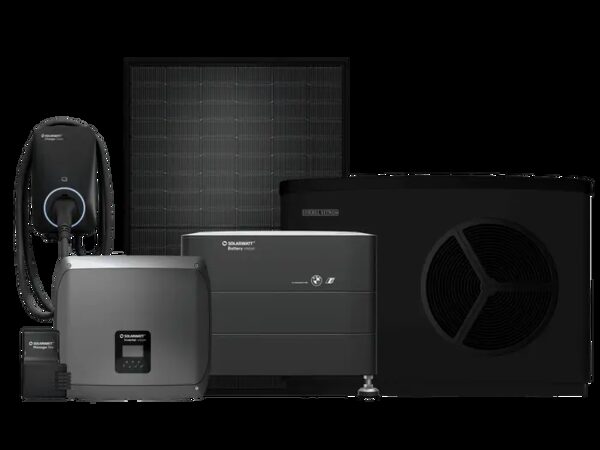
Solarwatt's UK offer extends well past the module. The company announced it would showcase its latest residential energy storage technology, Battery vision 2.0, at Solar & Storage Live UK 2026, held from 22nd to 24th September 2026. It also maintains the SOLARWATT Manager, a system controller whose September 2026 update brought bug fixes and improvements to device discovery with more user control during commissioning.
That combination matters because a solar array on its own is only part of a household's energy position. A PV system in the ordinary sense comprises the panels with cabling, a control panel and an AC/DC inverter5, and the electricity generated can be used to charge an on-site battery storage system6. Battery storage in turn helps a household make the most of renewable electricity from solar panels, wind turbines and hydro turbines7.
The wider equipment set that sits alongside panels in UK homes is well established. Group-buying schemes cover everything from solar panels and battery storage to heat pumps and EV chargers8, and solar panels can generate electricity that helps power a heat pump9. Consumer code coverage for these products spans solar PV, electrical energy storage systems, EV charge points and heat pumps10, and the technologies tracked in home energy surveys include solar panels, battery storage, electric heating, smart heating controls, heat pumps and air conditioning11.
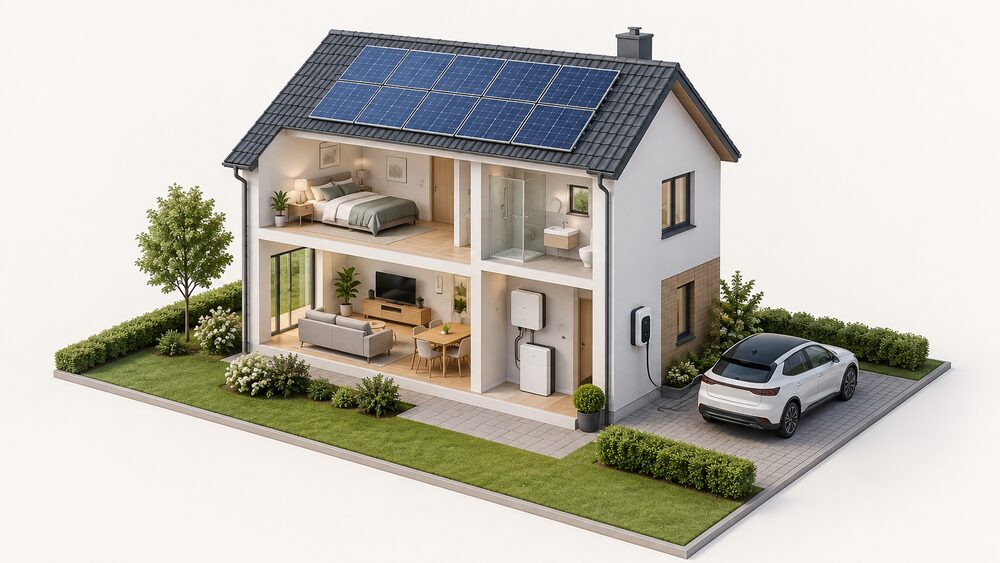
Solarwatt's own range follows that pattern: modules, a battery, a manager that coordinates the system, and an app for monitoring and control. The company's UK site carries the app and manager updates that keep those parts current. What it does not do is remove the household from the grid. A Solarwatt system generates, stores and manages, but the array still needs an inverter, a connection agreement and a fallback supply.
Panel vision and Panel classic: the module range and key figures
The two module families serve different positions. Panel vision is the high-output line, with power ratings up to 470 Wp and the glass-glass construction that carries the 30-year warranty2. Panel classic is the longer-established family, and its published specification is more granular.
The Panel vision M 5.5 datasheet sets out three performance classes at 460 Wp, 465 Wp and 470 Wp under standard test conditions, with a maximum system voltage of 1,500 V and 806 modules per container3. The module is offered in pure and style variants, both using a bifacial module design3. A bifacial module can collect light on its rear face as well as its front, which is why the design appears on higher-output lines.
The Panel classic H style datasheet lists 120 monocrystalline high power PERC solar cells, with 27 modules per pallet12. PERC is the passivated emitter and rear cell architecture, a generation of cell technology that improved on the older full-area aluminium back surface field design. The 120-cell count and half-cell layout are what give the module its shade tolerance.
| Model | Key published figures |
|---|---|
| Panel vision | Up to 470 Wp; 30-year product and performance warranty; glass 2 mm each side2 |
| Panel vision M 5.5 | 460 Wp, 465 Wp, 470 Wp STC; 1,500 V max system voltage; 806 modules per container; bifacial design3 |
| Panel classic H style | 120 monocrystalline high power PERC cells; 27 modules per pallet12 |
For a household comparing quotes, the useful move is to ask which family and which performance class is being specified. Two arrays of the same physical size can differ by a performance class, and the class is set by a flash test rather than by a different manufacturing line. More on how to read those numbers is in reading a solar panel datasheet, and the cell architectures behind them are covered in solar cell technology.
Glass-glass construction: what it delivers, from load rating to 40-year lifetime
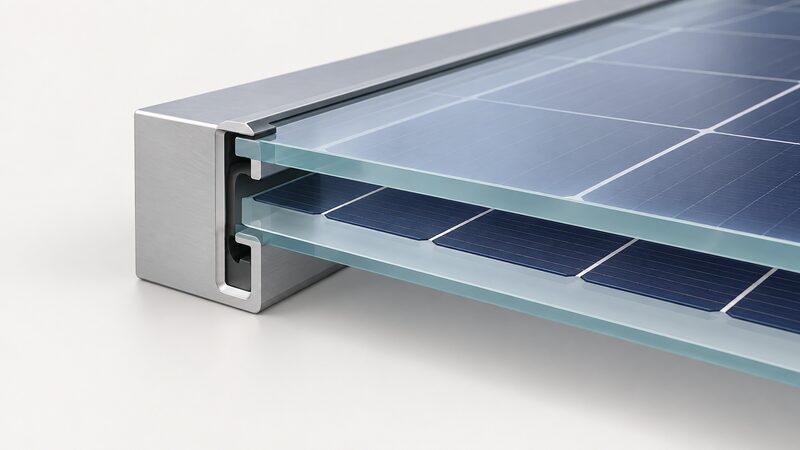
Glass-glass means the module has a glass sheet on the rear face as well as the front, instead of the polymer backsheet used on a conventional panel. Solarwatt's Panel vision modules are encased on both sides in heat-treated glass 2 mm thick on each side2. Heat treatment, or toughening, is what allows the glass to take mechanical load and to break into small blunt fragments rather than sharp shards if it fails.
The practical gains are three. First, the backsheet is removed as a failure point: backsheets can crack, chalk and delaminate over decades of ultraviolet exposure and thermal cycling. Second, the module is stiffer, which reduces micro-cracking in the cells during handling and wind loading. Third, the rear glass allows a bifacial design, so the module can pick up reflected light from a light-coloured roof surface or the ground.
The trade-off is weight. A glass rear sheet adds mass, and roof structure has to carry it. That is a building regulations question as much as a product one, and it is covered in building regulations and roof loading. The comparison with conventional modules is set out in glass-glass vs standard solar panels, and the bifacial behaviour in more detail in bifacial and glass-glass solar panels.
On life expectancy, the wider evidence is consistent. The estimated lifespan of new solar panels is 25 to 30 years, though this varies with environment13. Most last 25 to 30 years, and recycling technology is improving to recover valuable materials14. The average lifespan before significant degradation is about 25 years15, and panels are often described as lasting 25 years or more16. Transparent solar photovoltaic glazing is anticipated to have an operating life of 30 years or more17. Solarwatt's 30-year warranty sits at the top of that range rather than outside it.
Efficiency and yield: 35 to 40% higher over the lifetime, with low degradation
Degradation is the slow loss of output that every panel experiences, and it is the figure that decides how much a module is worth over 30 years rather than 25. A good quality, well-maintained panel with a 0.5% annual degradation rate would still be operating at 87.5% of full capacity after 25 years15. That is the arithmetic behind the warranty terms the market offers.
The market norm is a 25-year performance guarantee on most solar panels18, with a five to 10-year product warranty alongside it19. Most photovoltaic solar panels come with a guarantee that they will still be giving something like 90% of their maximum output after 25 years20. Well-known manufacturers often offer warranties of 25 to 30 years, which is read as a sign of confidence in longevity15. One competitor, Jinko Solar, publishes 30 years at 87.04%21.
Solarwatt's position is a 30-year product and performance warranty on its glass-glass modules2. The distinction between product and performance cover matters: product warranty covers the physical module, its frame, junction box and laminate, while performance warranty covers the output it still delivers. A 30-year term on both is longer than the five to 10-year product cover that is usual19.
On payback, the independent view is that solar panels generally offer a reasonable payback within their lifetime22, and panels are made to last 25 years or more with very little maintenance23. A longer warranted life extends the period over which a system earns, which is the mechanism behind the higher lifetime yield claims made for glass-glass modules. The full arithmetic is in solar panel savings and payback, and the degradation mechanics in solar panel warranties and degradation.
Warranty: 30 years product cover and 87% output guaranteed after 30 years
The headline term is a 30-year product and performance warranty on Solarwatt's glass-glass modules2. Set against the market, that is at the top of the published range: 25 to 30 years from well-known manufacturers15, a 25-year performance guarantee as the norm18, and a five to 10-year product warranty as the usual companion19.
Three things decide whether the term is worth anything in practice. The first is who honours it. A warranty is only as good as the company behind it, and a manufacturer's balance sheet is not something a household can assess from a datasheet. The second is what voids it: installation quality, mounting method, and whether the modules were handled and torqued to the maker's instructions all sit inside the terms. The third is the claims route, which runs through the installer and the manufacturer rather than through a retailer.
The output guarantee sits alongside the product term. Most panels promise something like 90% of maximum output after 25 years20, and Jinko publishes 30 years at 87.04%21. A 30-year performance term on a glass-glass module is a longer commitment than the 25-year norm, and the glass-glass construction is the reason given for it. What the guarantee does not do is cover the inverter, the mounting, the cabling or the labour to remove and refit modules if roof work is needed. Those are separate, and the removal question is covered in removing and refitting solar panels for roof repairs.
Certification and quality: TÜV, Flexi-Orb and Solar Energy UK membership
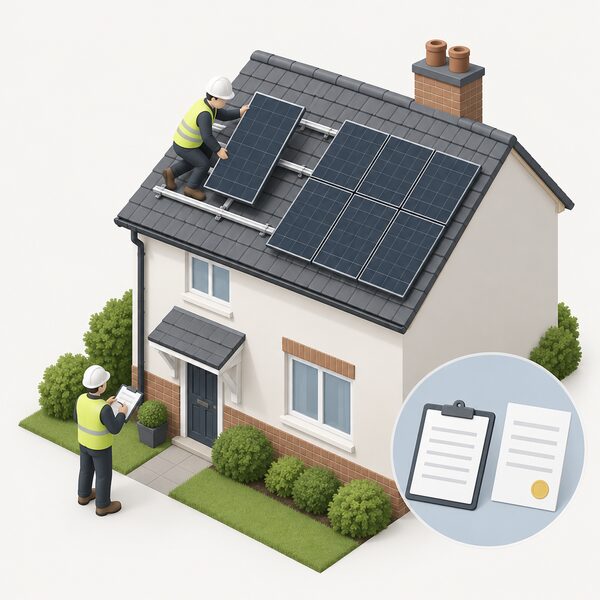
Solarwatt's modules carry third-party certification. TÜV Rheinland (China) Ltd. issued Certificate of Compliance MR 50708519 for the listed SOLARWATT Panel vision photovoltaic modules on 12th January 2026, with an expiry date of 30th May 2030. A separate SOLARWATT Panel vision certificate carries an expiry of 18th April 2028, and Certificate PV 50654080 0003 became valid for the listed SOLARWATT PV modules on 15th January 2026. Solarwatt also issued an EU Declaration of Conformity for specified solar modules on 9th January 2026.
Certification of this kind is a type-approval exercise: it confirms that a design meets the relevant standards, not that any individual module performs as tested. The standards themselves are covered in solar panel standards and testing.
On the installation side, the relevant UK framework is Flexi-Orb, which describes itself as one of only two renewable energy installation certification schemes in the UK24. Its scope covers solar photovoltaics, battery storage and electric vehicle charging in the residential market25, and its installers are certified to carry out and register solar PV, electrical energy storage system and EV charge point installations26. Certified companies adhere to stringent installation and safety standards27, and the scheme's technologies include solar PV, electrical energy storage systems, EV charge points, with heat pumps due to be added in 202524. Flexi-Orb also offers insurance-backed guarantees to homeowners10.
For a household, the certification chain is what makes a warranty claimable. A module certified to the relevant standard and installed by a certified company sits inside a framework; the same module fitted informally does not. The UK certification landscape is set out in MCS certification for solar PV installations.
Buying and owning Solarwatt in the UK: partners, offices and support
Solarwatt sells through partner installers, and its UK contact is info.uk@solarwatt.com2. The company's UK site carries product announcements and software updates, including the Battery vision 2.0 showcase at Solar & Storage Live UK 2026 from 22nd to 24th September 2026, the September 2026 SOLARWATT Home app update adding improved in-app help, battery health information checks and Bluetooth functionality for connecting to devices to edit settings and run firmware updates, and the September 2026 Manager update.
Two administrative points apply to any grid-connected array. A solar installation must be registered with the distribution network operator, usually done by the installer28. And for VAT, HMRC treats the combined installation of solar panels and a battery for storing the power they generate as a single supply of the installation of solar panels29. A PV system for these purposes comprises the panels with cabling, a control panel and an AC/DC inverter5.
Planning is usually straightforward but not automatic. Local authority guidance confirms that solar panels generate electricity that can be used to charge an on-site battery storage system6, and permitted development rules vary by nation, with separate positions in England, Scotland, Wales and Northern Ireland. Some councils offer a free pre-application service where the enquiry relates to promoting sustainable development, which includes installing solar panels30. The national rules are set out in solar panel planning permission in England, Scotland, Wales and Northern Ireland.
If a home with panels changes hands, the ownership paperwork matters. A solicitor can help a buyer understand the documents relating to the solar panels, including any ownership and transfer forms19. That is the point at which a 30-year warranty becomes a document in a conveyancing pack rather than a marketing line.
On independence, the position is plain. A Solarwatt array generates electricity on the roof and, with a battery, stores some of it for evening use. It does not remove the household from the grid: an inverter is required, the connection must be registered, and the array produces nothing at night and little in winter. The 30-year warranty is a long commitment from a European manufacturer, and it is worth exactly as much as the company's ability to honour it three decades from now. The wider picture is in solar panels and household energy independence.
Sources30 cited
- Solarwatt links with PV specialist Robert Hendry as expansion continues, Flexi-Orb, 2023-02-13
- SOLARWATT commercial product document, Solarwatt, 2026-04
- SOLARWATT Panel vision M 5.5 datasheet, Solarwatt, 2026-07-06
- Solarwatt develops highly efficient glass-glass panels with half-cell technology, Flexi-Orb, 2021-05-19
- VAT energy saving materials: VENSAV3060, HM Revenue & Customs, 2026-09-17
- Solar panels, East Herts Council, 2026-09-17
- Storing energy, Energy Saving Trust, 2026-07-15
- Group buying, Switch Together, 2026-09-17
- Heating your home, Energy Saving Trust, 2026-05-19
- Insurance-backed guarantees, Flexi-Orb, 2026-02-25
- Understanding GB energy consumption patterns, Nesta, 2025-08-06
- SOLARWATT Panel classic H style datasheet, Solarwatt, 2022-10-28
- POSTnote 771: Solar photovoltaics, Parliamentary Office of Science and Technology, 2026-06-25
- Mythbusting our most frequently asked questions, Low Carbon Hub, 2025-12-10
- How long do solar panels last?, Uswitch, 2026-07-13
- Are solar panels worth it?, Uswitch, 2026-09-16
- Transparent solar photovoltaic glazing, UK Green Building Council, 2024-05-15
- Solar panels, Uswitch, 2026-09-16
- Buying a house with solar panels, Energy Saving Trust, 2026-08-13
- Solar photovoltaic, Centre for Alternative Technology, 2026-03-10
- Jinko Solar solar panels review, Which?, 2026-08-12
- Supporting households with low carbon technology combinations, Energy Saving Trust, 2026-07-15
- Solar PV panels, AgilityEco, 2026-09-20
- Flexi-Orb consumer guide, Flexi-Orb, 2025-02-17
- Renewable energy installations, Flexi-Orb, 2024-09-10
- Homeowners, Flexi-Orb, 2026-08-13
- How EPVS and Flexi-Orb are improving the standard of renewable energy installations, EPVS, 2026-09-17
- Solar panels, London Borough of Hammersmith & Fulham, 2026-09-17
- VAT energy saving materials: VENSAV3210, HM Revenue & Customs, 2026-09-17
- Solar panels and permitted development, Richmond Council, 2026-07-06
 SOLARWATT EV chargersSOLARWATT's Charger vision works best with the company's own solar battery and panels, so is it worth buying if you already have a different brand?
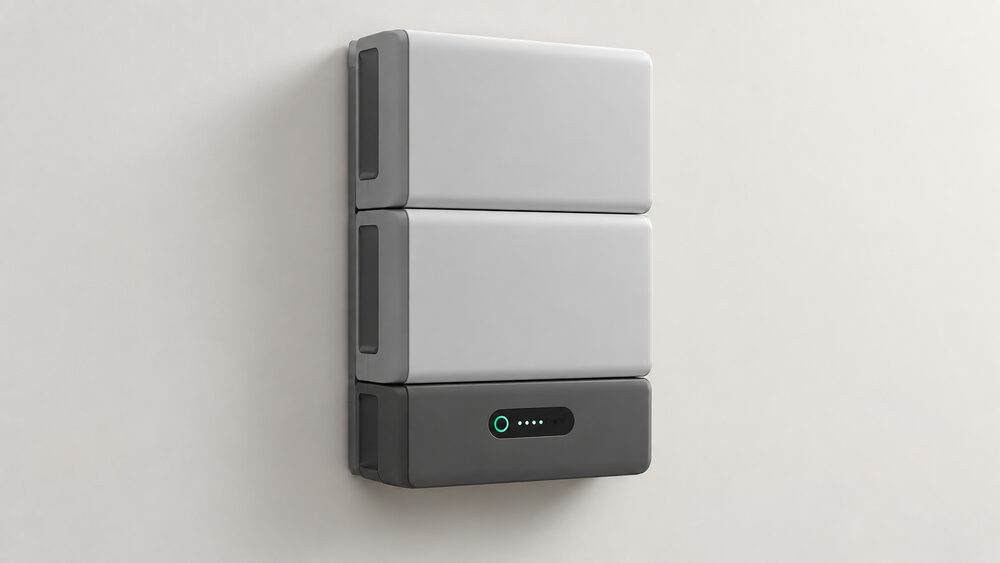 Solarwatt Battery flexThinking about adding a battery to solar panels you already have?
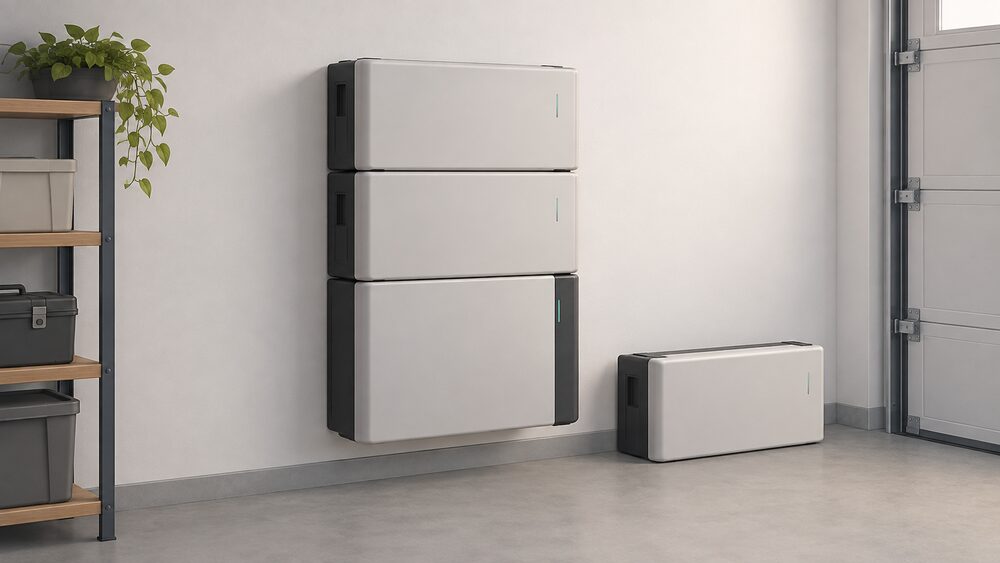 Solarwatt Home BatteriesSolarwatt home batteries suit households wanting to store solar power, including homes with panels already fitted.