
In this guide
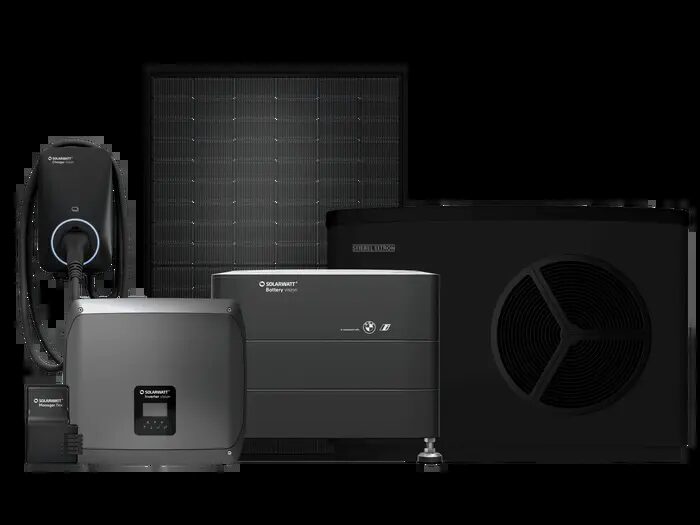
SOLARWATT is a German solar manufacturer, and its home charger, the Charger vision, is built to sit inside the company's own system rather than stand alone. The charger comes in a 7.3 kW version and an 11 kW version, both listed with a shutter, plus an 11 kW variant with a 6m Type 2 cable1. On 9 December 2025 the Department for Transport told SOLARWATT that its eligibility application had succeeded for three residential chargepoint models, which puts the range on the path to the OZEV Eligible Chargepoint List1.
The charger's warranty runs for three years from the date of commissioning at the end customer, is provided voluntarily by Solarwatt GmbH, and requires online activation2. UK and Ireland claims go to support.uk@solarwatt.com2.
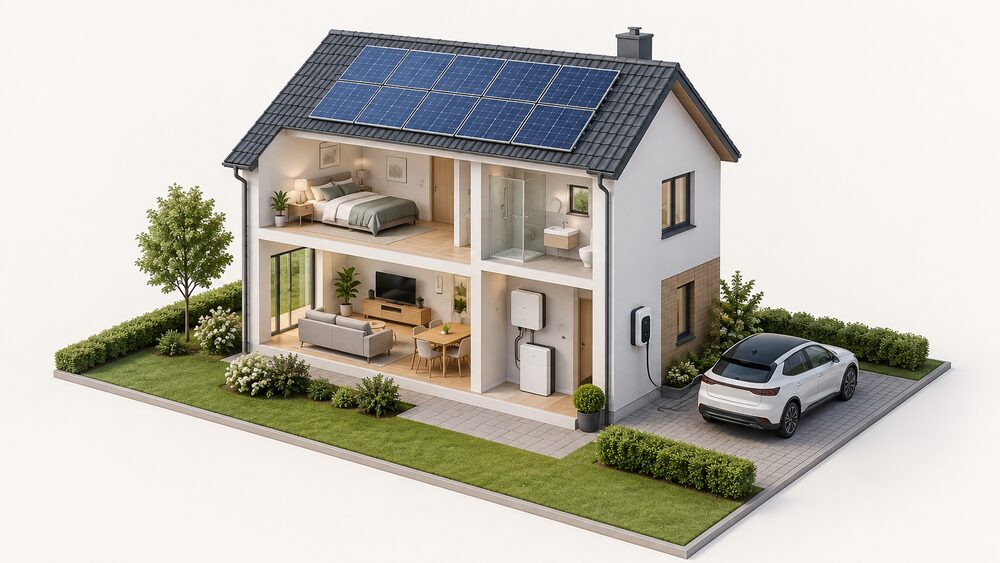
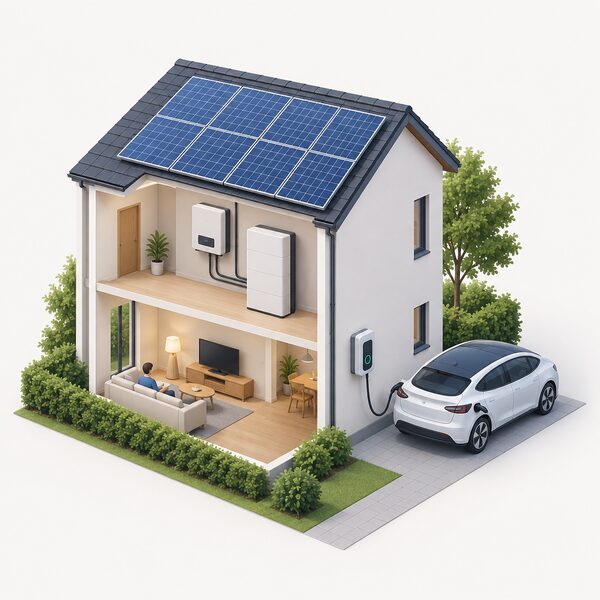
What the charger does for a household depends on what else is on the wall. SOLARWATT's Battery vision storage system accepts an EV charger as a connected device, and the battery can be installed as either a DC or an AC battery4. That is the pairing the range is designed around: solar on the roof, a battery in the house, and the car drawing from both. The dependence that remains is the same one every wallbox carries, plus a manufacturer-specific one: the charger is part of a closed SOLARWATT ecosystem, and the warranty is a voluntary maker's term rather than a statutory right.
What SOLARWATT makes, and where the charger fits
SOLARWATT's own product page counts 130,000 battery systems, heat pumps and EV chargers6. The company is described in independent trade reporting as the European market leader in glass-glass solar modules and a leading supplier of electricity storage systems, and separately as a premium-quality photovoltaic solutions provider and a pioneer of glass-glass technology7. It established a UK subsidiary with an office and warehouse to serve installers and customers, and has linked with a UK PV specialist as its expansion continued9.
The charger is therefore one component in a stack that runs from panels through an inverter and a battery to the car. That matters commercially: a household buying the Charger vision is buying into a system whose parts are designed to talk to each other, not a standalone box that any installer can drop onto any existing solar array.
The earlier generation of the company's hardware shows the same logic. The Battery flex storage system, developed with BMW Group battery components, could be integrated into either the direct current or the alternating current circuit, and the Manager flex energy manager took care of intelligent charging of an electric vehicle11. The vision range is the current expression of that approach, with the Charger vision as the vehicle-facing end of it.
The vision charger: what it is and how it pairs with solar
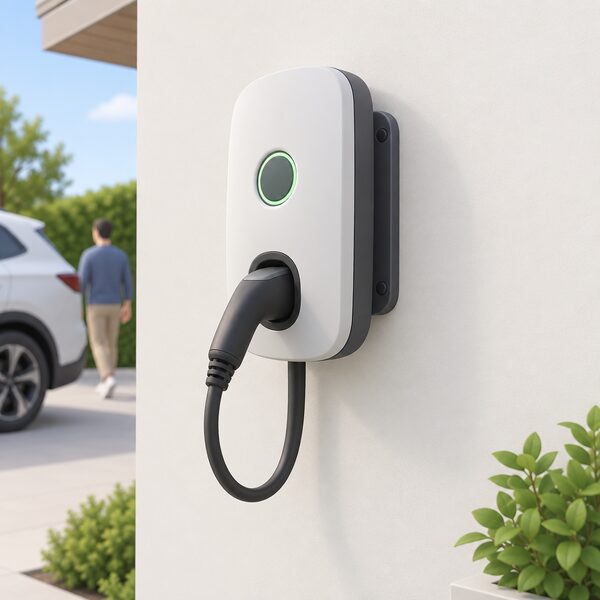
The Charger vision is a wall-mounted AC charge point. The warranty document describes the covered component as the "Charger vision, including wall mount", which confirms it is supplied as a wall unit rather than a floor pedestal2. The three UK-listed variants are the 7.3 kW with shutter, the 11 kW with shutter, and the 11 kW with a 6m Type 2 cable1.
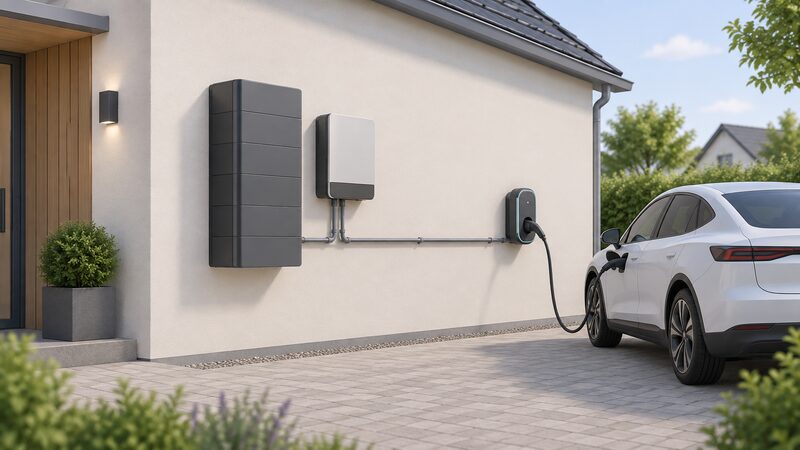
Pairing with solar happens at the system level rather than inside the charger. SOLARWATT's Battery vision documentation states that an EV charger, heat pump or other devices can be easily connected to the system4. The Battery vision one backup booster carries an optional RS485 connection to the Charger vision, which is the physical link between storage and charger in that configuration12. The Battery vision three backup booster is a three-phase automatic switching device, and the clusterbox 1.0 supports the Inverter vision three13.
The practical consequence is that the charger's solar behaviour is governed by the battery and inverter it is attached to. Where the battery is DC-coupled, the solar electricity can flow to the car without a separate AC conversion step; where it is AC-coupled, it cannot. SOLARWATT states the Battery vision can be installed either way5. For a household, that choice is made at system design, not at the charger.
PV linkage charge mode: charging from your own roof
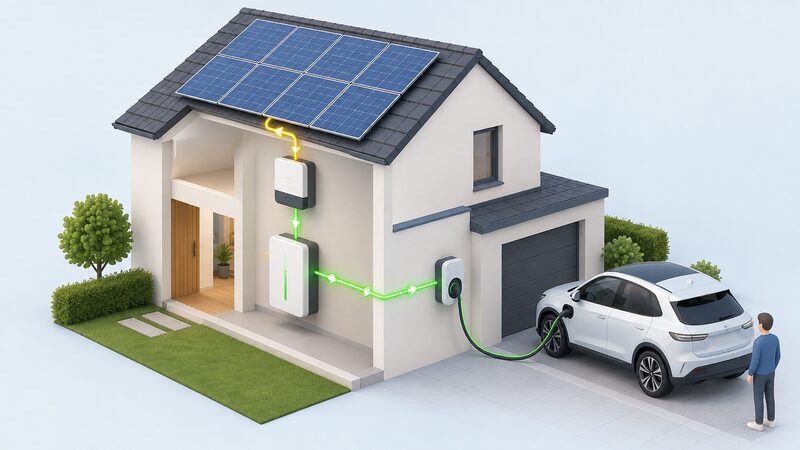
Charging a car from a roof rather than the grid is a mode, not a default. Other makers in this market describe it explicitly: Growatt's smart charger offers a PV linkage charge mode that is driven by solar, alongside fast mode and off-peak mode, and its charger is compatible with different brands of PV15. SolarEdge describes its charger as utilising excess PV to charge the EV from the sun, for reduced homeowner electricity bills17.
SOLARWATT's own material does not use the phrase "PV linkage" for the Charger vision. What it does provide is the system architecture: a battery that accepts an EV charger, an optional RS485 link between the backup booster and the charger, and a battery that can be DC or AC coupled4. In a DC-coupled arrangement the solar electricity reaching the car has not been through an extra conversion, which is where the efficiency of self-consumption is won or lost.
The independent definition of self-consumption is the amount of solar electricity generated by a domestic solar PV system which is subsequently consumed within the property and not exported to the distribution network18. Charging a car from the roof is the largest single lever most households have on that number, because a car battery is far bigger than a home battery. A typical solar setup for EV charging includes the panels, an inverter, often a battery storage system, and a smart EV charger19.
Specifications at a glance: charging voltage and key figures
The published figures for the charger itself are thin. The compatibility list gives three model variants and their power ratings, and nothing more on voltage1. The voltage figures that do exist in SOLARWATT's documentation belong to the battery, not the wallbox, and are worth separating clearly.
| Item | Figure | Source |
|---|---|---|
| Charger vision 1.0, 7.3 kW, shutter | 7.3 kW | 1 |
| Charger vision 1.0, 11 kW, shutter | 11 kW | 1 |
| Charger vision 1.0, 11 kW, 6m Type 2 cable | 11 kW | 1 |
| Battery vision usable capacity, single-phase | 5.2 to 18.2 kWh | 5 |
| Battery vision pack 1.0 nominal voltage | 57.6 VDC | 3 |
| Battery vision pack 1.0 voltage range | 52.2 to 65.7 VDC | 3 |
| Battery vision charging voltage, CV phase | 65.7 V | 21 |
| Battery vision discharging cut-off voltage | 52.5 V | 21 |
| Battery vision scalability | two DC-coupled towers, 36.4 kWh | 4 |
The distinction matters because a householder searching for a charging voltage will find battery voltages, which are internal DC figures for the storage pack, not the AC supply to the car. The charger's own AC output voltage is not stated in the material available here. For comparison, SolarEdge publishes a nominal AC output voltage of 3 x 230 / 400 (±10%) VAC for its three-phase unit, which is the kind of figure a UK installer would expect to see on a charger datasheet22.
The Battery vision carries PAS 63100:2024 (UK) certification, which is the UK standard for fire safety of battery storage installations5. The battery can be installed indoors and outdoors5.
Warranty and registration
The Charger vision warranty is a three-year term running from the date of commissioning at the end customer2. It is granted by Solarwatt GmbH, is described as voluntary, and is additional to and independent from statutory warranty rights2. It covers defects in material and workmanship that affect the functionality of the product, and the covered component is the charger including its wall mount2.
Registration is online. The warranty document names solarwatt.com/activation as the activation address23. The battery documentation is more explicit about the consequence: warranty requires online activation, and installation and removal costs are covered in the event of a claim4.
"The following documents must be submitted via e-mail to assert any warranty claims: Warranty certificate and copy of the original invoice to the End Customer"
Several conditions shape whether a claim succeeds. Obvious warranty claims must be reported immediately, and at the latest within a cut-off period of three months after occurrence2. Claims under the product warranty do not apply if the charger is not installed within six months of delivery by Solarwatt to the installer2. Where a product or component is repaired or replaced, only the remaining time of the original warranty period applies2. The warranty is granted exclusively to the end customer who bought the product for their own use and not for resale, but it may be transferred to a new owner on resale for the remaining period if no exclusion circumstances apply2.
The battery carries longer terms: 12 years performance warranty and 10 years product warranty on the Battery vision pack 1.0, and 10 years product warranty on the inverter and battery packs4. The Inverter vision three 1.0 also carries a 10 year product warranty3. For wider context on how charger warranties compare across brands, see EV charge point warranties and aftercare.
OZEV approval and UK grant eligibility
On 9 December 2025 the Department for Transport informed SOLARWATT GmbH that its eligibility application was successful for three listed chargepoint models: the Charger vision 1.0 at 7.3 kW with shutter, the 11 kW with shutter, and the 11 kW with a 6m Type 2 cable1. The same document states that the approved chargepoint models and SOLARWATT's contact details would be added to the OZEV Eligible Chargepoint List shortly1.
That is an approval of the models, not a guarantee that a household can claim. The grant rules sit separately. The Electric Vehicle Chargepoint Grant for Households with On-Street Parking requires an eligible chargepoint model installed by an OZEV approved installer20. Independent guidance sets out the full conditions: the household must use or own a vehicle on OZEV's list of approved vehicles, use an OZEV-authorised installer, and have permission from the local highways authority and all necessary planning permissions24. For flat owners and renters seeking the residential chargepoint grant, the conditions are that the household uses or owns a vehicle on OZEV's approved list and has the charger installed by an OZEV-approved installer24.
The grant closes in March 202719. Installing a home charger is classified as development, and it is up to the householder to ensure the correct permissions are in place25. More detail on the process is at home EV charge point installation and on the rules at planning permission for a home EV charge point.
How the charger fits a SOLARWATT household system
The Charger vision is designed to be one node in a SOLARWATT installation. The Battery vision accepts an EV charger, heat pump or other devices4. The Battery vision one backup booster offers an optional RS485 connection to the Charger vision and is available as a supplementary product for installation with the Inverter vision one12. The Battery vision three backup booster is a three-phase automatic switching device with no additional communication connection required to the Inverter vision three13. The clusterbox 1.0 supports the Inverter vision three and carries three RS485 meter connections14.
Read together, that is a system with a defined internal wiring and communication scheme. The charger is not described as a universal device that will pair with any inverter; it is described as a device that connects to SOLARWATT's own storage and inverter products. A household with an existing third-party solar system would need to establish compatibility separately, and the material here does not confirm it.
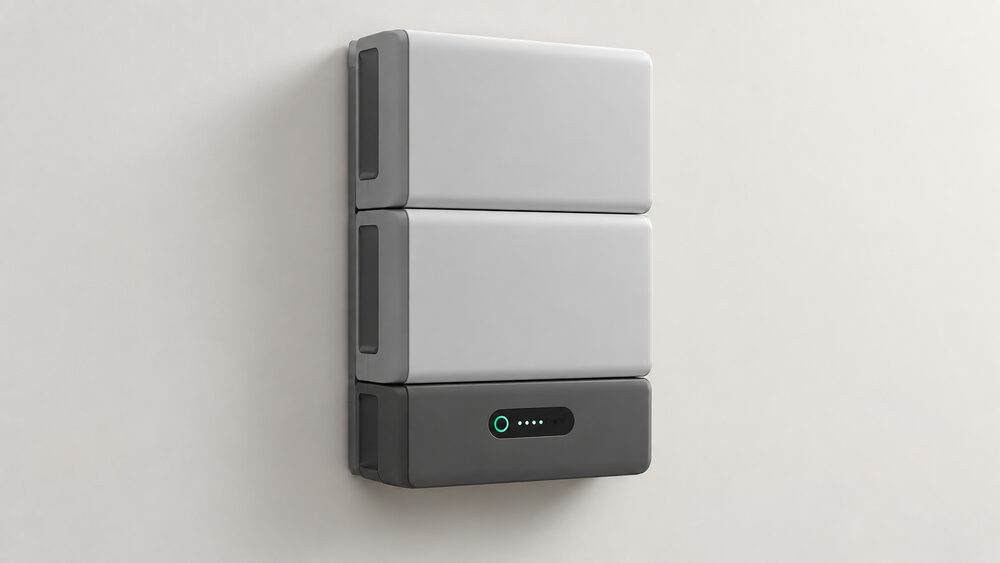
The battery's own flexibility is broader. It can be installed indoors or outdoors, as a DC or AC battery, and scaled to two DC-coupled towers at 36.4 kWh5. That gives a household room to size storage to its consumption, including the car.
What owning one means for energy independence
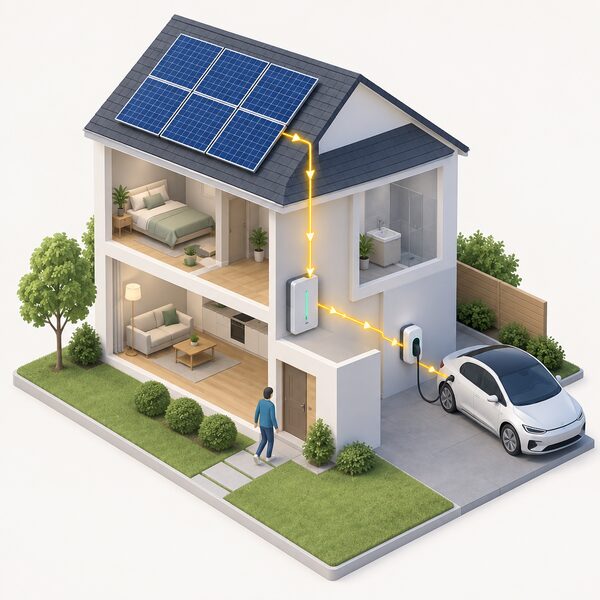
The independence case for a solar-paired charger is straightforward: electricity generated on the roof and stored in a home battery can go into the car instead of being exported, and self-consumption is the measure of how much of a property's annual electricity is met by behind-the-meter solar or storage18. A car charged that way is running on a fuel the household produces.
The dependence that remains is layered. The charger draws from the grid whenever the sun and the battery cannot cover it, and it needs a live supply to operate at all. Independent guidance on charger behaviour is blunt about this: if the voltage goes outside the acceptable range, the charger will stop working and show an error, a safety feature protecting the charger and the vehicle27. Voltage drop or surge is a listed cause of EV charger errors27. The first action for a fault is to speak to the installer or electrician to check there is not a problem with the equipment, and switching the charger off and on at the isolator switch may be needed28.
There is also a manufacturer dependence. The charger's warranty is a voluntary term from Solarwatt GmbH, activated online, and the longest terms in the range belong to the battery and inverter rather than the wallbox2. The system's parts are designed to work together, which is a benefit while the maker supports them and a constraint if a household later wants to mix brands. For the wider picture, see EV charging and household energy independence and charging an EV from solar panels.
Sources28 cited
- OZEV eligibility approval for SOLARWATT chargepoint models, SOLARWATT, 9 December 2025
- Warranty conditions SOLARWATT Charger vision, SOLARWATT, 27 February 2025
- SOLARWATT Battery vision pack 1.0 datasheet, SOLARWATT, 12 May 2026
- SOLARWATT Battery vision datasheet, SOLARWATT, 13 May 2026
- SOLARWATT Battery vision product datasheet, SOLARWATT, 12 May 2026
- SOLARWATT product overview, SOLARWATT, August 2026
- SOLARWATT establishes UK subsidiary, Flexi-Orb, 2 September 2021
- SOLARWATT links with PV specialist Robert Hendry, Flexi-Orb, 13 February 2023
- SOLARWATT Battery flex datasheet, SOLARWATT, 21 July 2023
- SOLARWATT Battery flex and BMW Group partnership, Flexi-Orb, 9 June 2021
- SOLARWATT Battery vision one backup booster datasheet, SOLARWATT, 7 July 2026
- SOLARWATT Battery vision three backup booster datasheet, SOLARWATT, 17 September 2026
- SOLARWATT Battery vision clusterbox 1.0 datasheet, SOLARWATT, 17 September 2026
- Growatt smart EV charger, Growatt, 17 September 2026
- Growatt EV charger solutions, Growatt, 17 September 2026
- SolarEdge EV charger, Midsummer Wholesale, 19 September 2026
- MCS 032 solar PV self-consumption definition, MCS, 1 January 2025
- Solar panels for EV charging, Fuse Energy, 18 April 2026
- Electric Vehicle Chargepoint Grant for households, GOV.UK, 17 September 2026
- Electric Vehicle Chargepoint Grant for Households with On-Street Parking, GOV.UK, 17 September 2026
- SOLARWATT Battery vision warranty conditions, SOLARWATT, 27 February 2025
- SolarEdge ONE EV Charger datasheet, SolarEdge, 17 September 2026
- SOLARWATT Charger vision warranty conditions, SOLARWATT, 27 February 2025
- EV charger installation and maintenance, NICEIC, August 2025
- Planning permission for electric vehicle charging, Planning Portal, 2026
- SOLARWATT Battery vision three backup booster, SOLARWATT, 17 September 2026
- Managing voltage changes in your property, Electricity North West, 19 September 2026
- Voltage changes in your home or business, UK Power Networks, 17 September 2026
 Solarwatt Battery flexThinking about adding a battery to solar panels you already have?
 Solarwatt Home BatteriesSolarwatt home batteries suit households wanting to store solar power, including homes with panels already fitted.
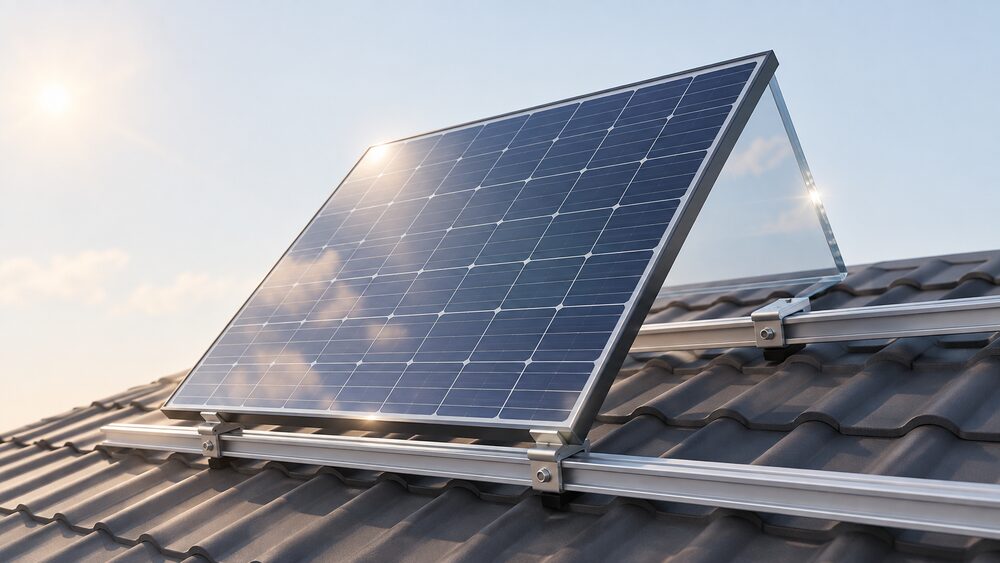 Solarwatt Solar PanelsSolarwatt panels are built with glass on both sides, so what does that mean for how long they last?