
In this guide
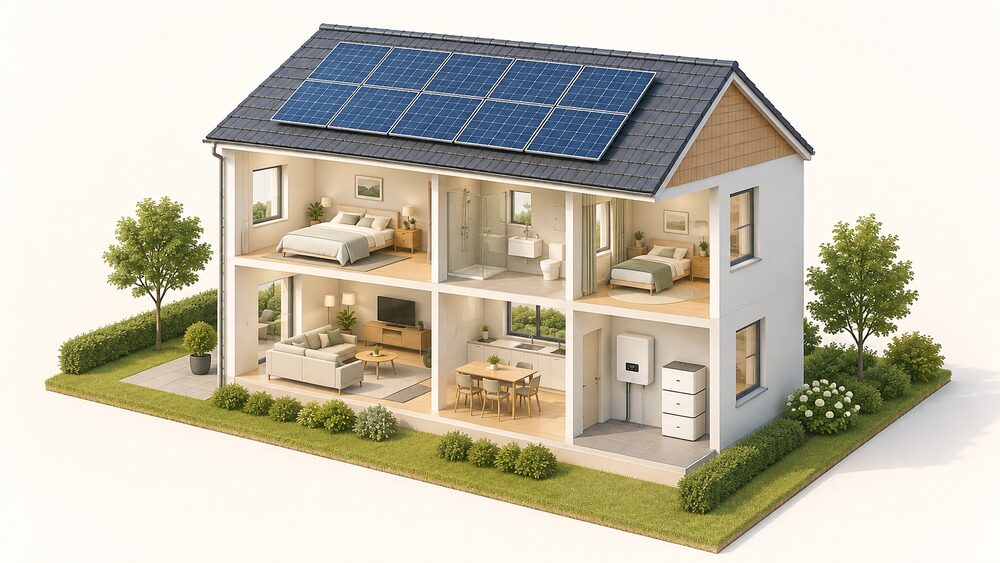
SolaX Power builds string inverters across a stated range from 0.6kW to 150kW, covering single-phase homes, three-phase properties and commercial sites, with a residential battery line running from 2.5kWh to 92.16kWh1. The company's own UK range covers hybrid inverters, string and micro inverter options, home battery storage, solar EV charger integration and all-in-one energy storage choices3.
For a household, the practical shape of the range is three routes. A string inverter takes the solar array and nothing else. A hybrid inverter takes the array and a battery, and is the version most homes with storage end up with. Microinverters sit under individual panels and are listed with AC coupling with battery storage4. Warranty terms are the other thing to know before buying: the standard term is 5 years across the main inverter lines, with free upgrades to 10 or 12 years where the inverter is connected to SolaXCloud and generation data is uploaded5.
What SolaX Power makes: the range from 0.6kW to 150kW
The headline figure is the span. SolaX describes a comprehensive range of string inverters from 0.6kW to 150kW, which runs from a single-panel microinverter through to three-phase commercial plant1. Within that, the residential bands are distinct. The X1-Micro series covers 0.75kW to 2.4kW across four types of microinverter. The X1-Boost G4 covers 2.5kW to 6kW for single-phase residential applications. The X3-MIC G2 covers 3kW to 15kW for three-phase residential systems9.
Above those sit the larger three-phase units. The X3-Ultra is listed at 15 to 30kW with two or three MPPTs10. The X1-VAST hybrid is offered at 5kW, 6kW, 8kW and 10kW11. On the hybrid side, SolaX offers single-phase hybrids up to 7.5kW and a selection of three-phase hybrids12.
The battery side of the catalogue is quoted as a residential product line ranging from 2.5kWh to 92.16kWh2. That is a wider span than most single homes need, and it reflects the fact that the same battery architecture is sold into domestic, commercial and industrial projects. SolaX positions its platform across commercial and industrial solutions as well as home systems, supported by storage inverters, batteries, chargers, accessories and cloud software13.
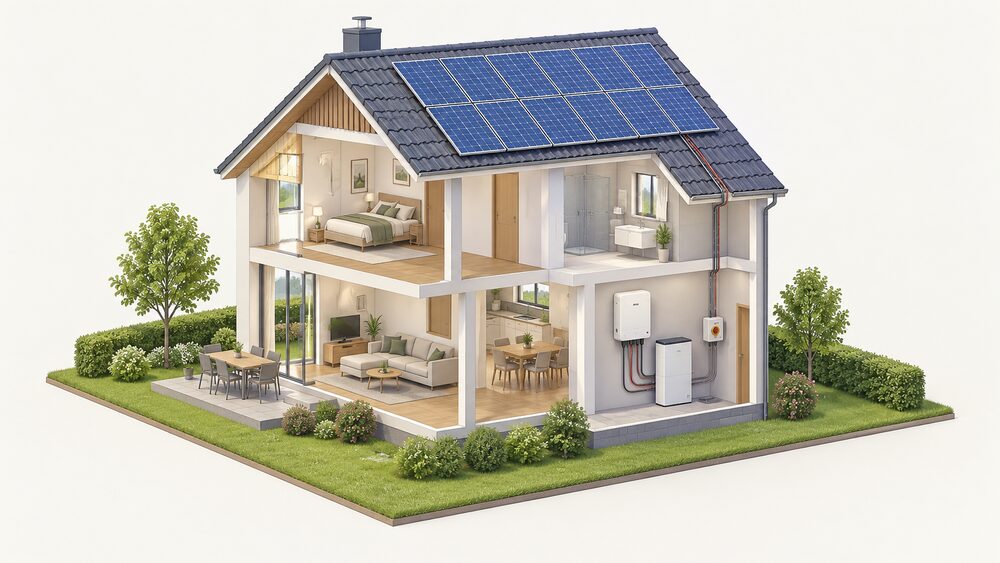
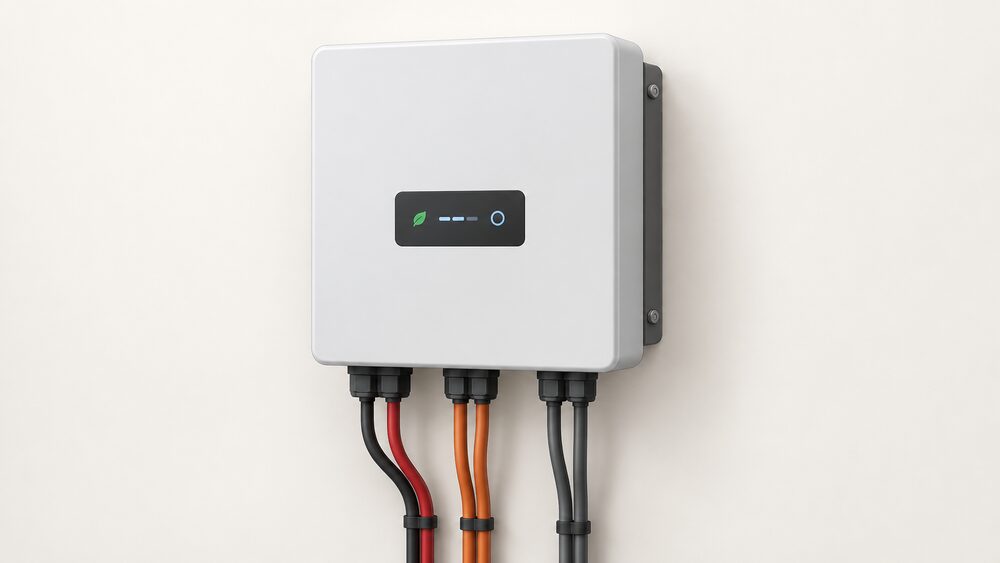
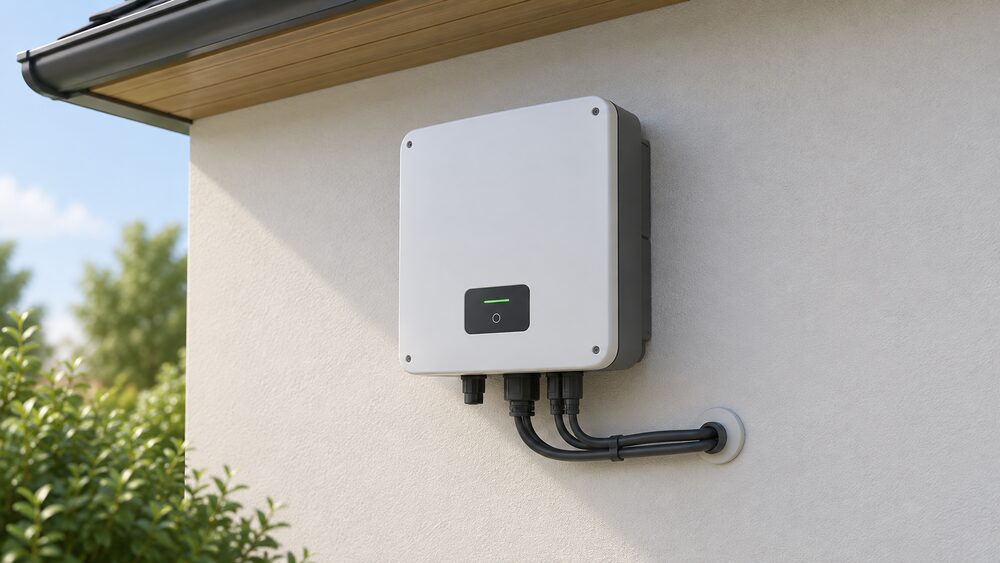
What this means for independence is straightforward. A SolaX inverter is the box that decides whether a household's solar generation is used in the home, stored, exported or drawn from the grid. The wider the range, the more precisely a system can be sized to a particular roof and consumption pattern, which reduces the amount of generation that leaves the property unused. The dependence that remains is the same as for any grid-tied system: the inverter needs a grid reference to operate, and the household remains connected to a supplier for whatever the array and battery cannot cover.
Hybrid, AC-coupled or string: which fits which home
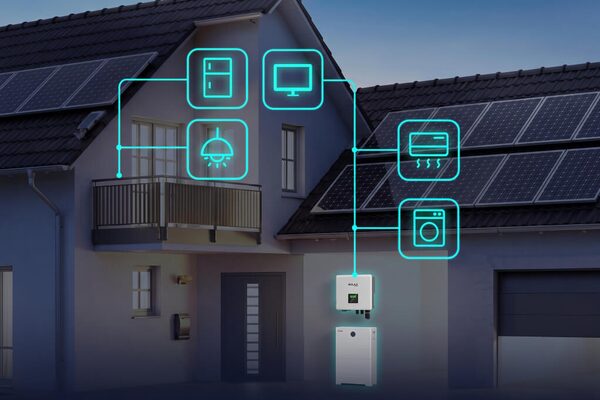
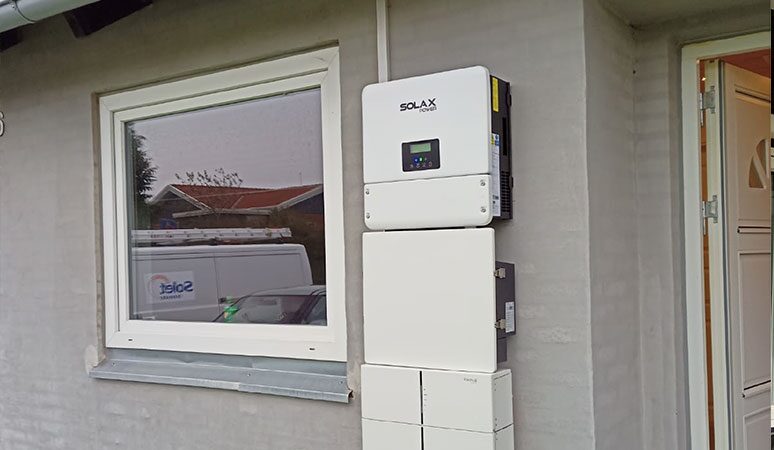
SolaX's own guidance sets out the split plainly. A hybrid inverter is listed with a best use of solar plus battery. A string inverter is listed with a best use of a simple PV array14. That is the decision in one line: if the household wants storage, the hybrid is the intended route; if it wants generation only, the string inverter is the simpler and cheaper box.
The string range is not basic. SolaX residential string inverters support up to 16A input current and are described as engineered to work with high-efficiency monocrystalline modules. They allow 200% DC/AC oversizing, so more PV modules can be connected than the inverter's AC rating would suggest, and they integrate with EV chargers, heat pumps and energy storage15. Earlier SolaX string inverter guidance describes ultra-low start-up voltage for longer daily generation and 150% PV oversizing with 110% AC overload output1.
For a home that already has a solar array and wants to add storage, the options are a hybrid replacement or an AC-coupled addition. SolaX microinverters are listed with AC coupling with battery storage4, and the residential line extends across storage inverters, batteries and all-in-one ESS16. The all-in-one route is presented as a hybrid or all-in-one configuration17.
The X1-Hybrid G4 is described as integrating with a heat pump18, which matters where a household is moving space heating and hot water onto electricity and wants the solar and battery system to serve that load. Peak shaving compatibility is listed across X1-Hybrid-G4, X3-Hybrid-G4, X1-Fit-G4, X3-Fit-G4 and further models19.
The independence question here is about load shifting rather than fuel switching. A hybrid inverter with a battery lets a household store midday generation and use it in the evening, which reduces the electricity bought from a supplier. It does not remove the connection, and it does not remove the need for a certified installer to commission the system.
Pairing SolaX inverters with Triple Power and T-BAT batteries
SolaX inverters can be paired with Triple Power batteries, and the distributor description of the range notes that all of these inverters pair neatly with them for wide flexibility20. The T-BAT line is the other main family. The T-BAT-SYS-LV R25 is a 5.1kWh LFP low voltage battery that pairs with compatible SolaX low voltage hybrid inverter solutions to create an integrated solar-plus-storage system18, and is listed as ideal for use with the X1 HYBRID LV inverter19. The T-BAT-SYS-LV-R36 is described as specifically engineered for integration with the SolaX X1 HYBRID LV inverter2.
The high-voltage T-BAT H 5.8 V3 is listed with scalability of 1 to 5 battery modules7. That module count is the practical limit for that particular unit, and it is a different figure from the port-based expansion limits on the larger inverters.
| Battery family | Chemistry | Coupling | Module or unit limit |
|---|---|---|---|
| T-BAT-SYS-LV R25 (5.1kWh) | LFP18 | Low voltage hybrid, X1 HYBRID LV19 | Up to 16 units in parallel, 5.1kWh to 81.9kWh18 |
| T-BAT-SYS-LV-R36 | Not stated | X1 HYBRID LV2 | Not stated |
| T-BAT H 5.8 V3 | Not stated | High voltage | 1 to 5 battery modules7 |
| Triple Power range | LFP8 | With SolaX inverters20 | 2.5kWh to 92.1kWh across the range21 |
The pairing matters because the inverter and the battery have to agree on voltage and on how the battery management system talks to the inverter. SolaX's own description of its residential ESS covers integration between the hybrid inverter, battery, Battery Management System, EV chargers, heat pumps and SolaXCloud for real-time monitoring, dynamic load management and time-of-use optimisation22. A household buying into the range is buying into that chain, not a single box.
Battery capacity and scalability: 12 units and 69.1kWh per inverter
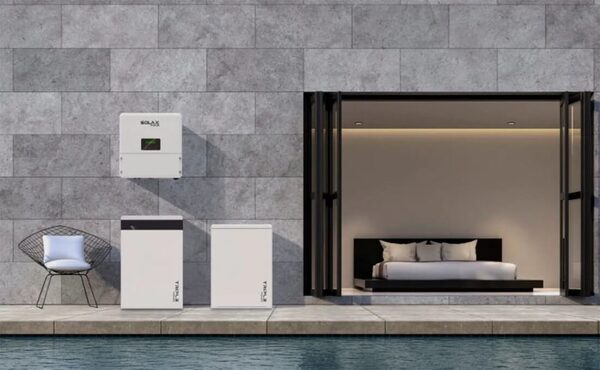
Expansion limits vary by inverter, and the figures are worth reading carefully because they are quoted in different units. SolaX states that inverters with two battery ports can expand to a maximum of 12 units with 69.1kWh capacity, while a single cluster is limited to 6 units with 34.6kWh7. The X1-SPT 10kW and 12kW hybrid inverter is highlighted as having dual battery ports23.
Other models carry their own ceilings. The X1-IES is listed with modular expansion up to 40kWh24. The X3-IES is listed with modular battery expansion from 10kWh to 60kWh2. The A1 Hybrid G2 is quoted as delivering a total storage capacity of up to 80kWh with T-BAT-SYS-HV-5.0 battery modules9. The LD51C low voltage battery supports up to 16 units in parallel, allowing total system capacity to expand from 5.1kWh to 81.9kWh18.
The 69.1kWh figure also appears in a different context: a SolaX commercial and industrial battery model rated at 76.8kWh is listed with 69.1kWh usable capacity25. That is a usable-versus-nominal distinction, not a contradiction, and it is the reason a household should read whether a quoted number is nameplate or usable before comparing systems.
For a household, the practical reading is that most domestic systems sit far below these ceilings. The value of the scalability is that a battery can be added later without replacing the inverter, provided the inverter has spare battery ports and the battery family is still in the channel. That last condition is the one to watch, and it is covered below.
Warranty: 5 years standard across the main inverter lines
The standard term is 5 years on the main inverter lines. The X1-Hybrid-LV, X1-Lite-LV and X3-NEO-LV carry 5 years standard warranty5. The X1/X3-Hybrid-G4, X1/X3-Fit-G4, X1/X3-IES, X3-ultra, X3-HYB-G4 PRO and X1-VAST carry 5 years standard warranty starting from the earlier of the date the product was first installed or 6 months after the date of production6. The X1/X3-IES is listed separately with a 9 month production fallback5.
The cloud upgrade is the significant part. Where an inverter is connected to SolaXCloud and generation data has been successfully uploaded to the SolaX server, the warranty is freely upgraded. For the X1/X3-Hybrid-G4, X1/X3-Fit-G4, X1/X3-IES, X3-ultra, X3-HYB-G4 PRO and X1-VAST, that upgrade is to 10 years standard warranty6. For the X1/X3-IES it is to 12 years5. For the X3-MEGA G2, X3-Forth and X3-GRAND it is to 5 years standard warranty plus 1 year parts warranty5. For the X1 Smart and X1-AC it is to 5 years standard warranty plus 5 year parts warranty5.
Other lines carry different starting points. The X1-MINI G3 and G4, X1-MINI G4 PLUS, X1-Boost G3 and G4, X1-SMART G2, X3-MIC G1 and G2, X3-Pro and X3-Pro G2, X1-Hybrid G3 and X1-Fit G3, X3-Hybrid G2 and X3-Fit G2, X3-MAX, X3-MEGA G1 and G2, X3-Forth and X3-Forth PLUS, and X3-GRAND carry 7 years standard warranty6. The X1-Micro 2 in 1, X1-Micro 2 in 1 G2, X1-Micro 4 in 1 and X1-Micro 4 in 1 G2 carry 7 years6, and SolaX microinverters are described as carrying a 7 year standard warranty extendable to 12 years4. Accessories including the EPS Parallel Box and BMS Parallel Box carry 5 years5.
For context, the Energy Saving Trust states that most inverters have warranties of five years as a minimum, which can often be extended by up to 15 years26. SolaX's own general guidance puts typical hybrid inverter warranties at 5 to 10 years and typical string inverter warranties at 5 to 12 years27.
Registration, deadlines and what voids the term
Registration must be completed online within 90 days of the commissioning date27. If it is not, the warranty period is calculated as the production date plus 6 months27, and for batteries the warranty automatically starts 6 months after the battery left the factory28. Registering inside the window stores a warranty certificate and exact expiration date in the online account28.
Claims must be filed within 4 weeks of the failure date27. The warranty is only valid if the product is purchased from an authorised distributor and installed by a certified professional27. Two conditions void it: using third-party hardware or software to control the inverter without written consent, or altering the product's serial number27. Moving the inverter after its initial installation, or a setup that does not follow the official manual to the letter, typically voids the warranty27.
Where a replacement inverter is supplied, the remaining balance of the original warranty transfers automatically to the replacement device, and if less than 12 months remain, SolaX extends the replacement warranty to a minimum of 1 year27.
LFP chemistry and what it means for household storage
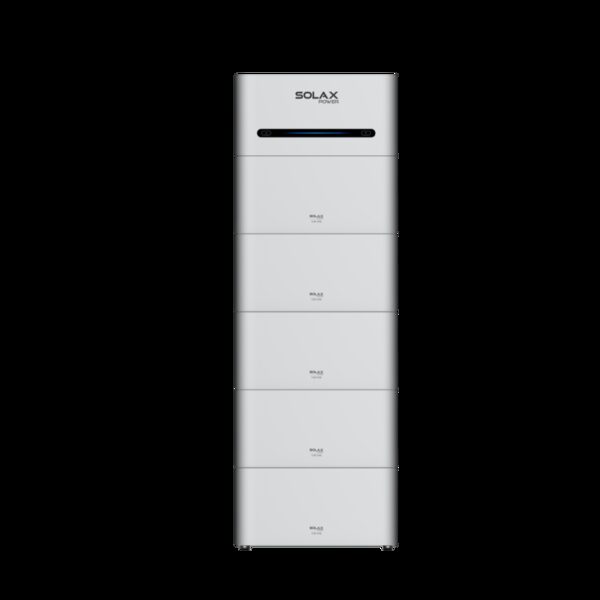
SolaX's home products use lithium iron phosphate (LFP) batteries8, and the residential offer is described as including modular LFP batteries16. The LD51C is a 5.1kWh LFP low voltage battery18. A 5.8kWh residential model is listed with LiFePO4 (LFP) chemistry25, and the X1-IES is listed with LFP chemistry24.
LFP is the chemistry most home storage has settled on, and the reason is cycle life and thermal stability rather than energy density. The practical consequence for a household is that the battery is expected to tolerate daily cycling over a long service life, which is what a solar-plus-storage system asks of it. SolaX's own guidance on depth of discharge sits alongside this, and the usable capacity figures quoted for its commercial models show the gap between nameplate and usable energy25.
The chemistry also shapes what the battery can be paired with. Because the same LFP architecture runs across the low voltage and high voltage families, a household that starts with one battery family and later expands is working within a consistent chemistry, which is what the battery management system is designed around22.
The independence point is that a battery changes when grid electricity is bought, not whether it is bought. A household with an LFP battery and a hybrid inverter can charge from its own array and discharge in the evening, and can charge at cheap rate periods where a tariff offers them. SolaX documentation shows that the inverter executes the charge commands and that time-of-use settings are created in SolaXCloud21. The battery reduces the volume of imported electricity; it does not remove the import connection.
Buying and installing in the UK: via installers, one-person fitting
Solar equipment in the UK is sold through installers rather than direct to consumers, which Which? states plainly in its testing guidance29. That applies to SolaX as much as to any other brand: the warranty is only valid where the product is purchased from an authorised distributor and installed by a certified professional27, so the installer relationship is not optional.
The distributor channel is where UK price and availability sit. SolaX inverters can be paired with Triple Power batteries through that channel20, and the Triple Power range is listed with capacities from 2.5kWh to 92.1kWh on the official category page21. Prices are installer-quoted, and no published list price for a supplied and fitted SolaX system is given here.
Availability of individual battery models is the practical risk. The Triple Power HV 5.8kWh LFP Main Battery MASTER V2 is listed as discontinued, with the reason given as phased out, and the product was marked discontinued on 1 September 202630. The matching SLAVE V2 extension battery is still listed with stock alerts available30. A household planning to expand an existing stack should check what remains available before committing to a particular battery family, because the inverter's expansion ceiling is only useful if the modules can still be bought.
The installation itself is a single-visit job in most cases. SolaX unveiled the Triple Power high-voltage battery as an addition to its energy storage lineup, and the range is designed around wall-mounted inverter and battery stacks that a certified installer commissions in one visit30.
SolaXCloud, EV chargers and heat pumps: the wider ecosystem
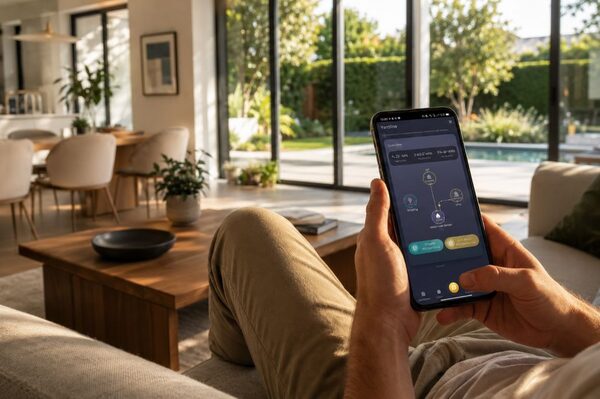
SolaXCloud is the monitoring and management layer. One login can monitor and manage the core solar energy setup in one place, including the solar inverter, battery storage, EV charger and broader smart energy performance13. It is described as being for real-time monitoring and data-driven energy management3, and the string inverter route is listed with a 10 second cloud refresh, with module-level visibility on the microinverter route14.
The platform extends beyond monitoring. Smart Scene conditions can use date and time, weather, inverter and battery status, meter data and electricity price22. SolaX groups batteries, energy storage inverter products, string inverter lines, microinverter offerings, the Smart EV Charger G2, heat pump products and SolaXCloud under one platform architecture23, and the residential lineup allows a household to combine energy storage batteries with hybrid inverter options and later add a Smart EV Charger G223.
The integration scope is stated as covering the hybrid inverter, battery, Battery Management System, EV chargers, heat pumps and SolaXCloud for real-time monitoring, dynamic load management and time-of-use optimisation22. SolaX also presents integration across storage, EV chargers and heat pumps as part of a wider smart energy workflow3, and frames residential smart energy around integrated PV, storage, EV charging, heat pump support and SolaXCloud monitoring13.
This is where the dependence is clearest. Time-of-use settings are created in SolaXCloud and the inverter executes the charge commands21, so the cheap-rate charging behaviour that makes a battery pay depends on a cloud account and a working internet connection. The hardware continues to operate without it, but the scheduling and the monitoring do not. A household weighing independence should treat the cloud platform as a service it relies on, alongside the grid connection and the installer relationship.
Where the range has limits
Two limits are worth stating plainly. The first is the cloud dependency already described: the longest warranty upgrades and the time-of-use scheduling both run through SolaXCloud, so the best terms and the smartest behaviour are conditional on a connection and an account5.
The second is product continuity. The Triple Power HV 5.8kWh MASTER V2 has been discontinued and phased out30, which shows that battery families do not stay in the channel indefinitely. An inverter with a 69.1kWh expansion ceiling is only as expandable as the modules still on sale.
Support routes exist for when something goes wrong. The general contact address for warranty claims is info@solaxpower.com, and where a local distributor or installer cannot be reached, claims can be escalated to the global service team at service.global@solaxpower.com or through the official contact page27. Devices showing a warranty register failure are directed to service.eu@solaxpower.com5. For fault diagnosis, SolaX's technical support centre asks for the inverter serial number and hardware version, and for a clear 10 second video of the fault with the serial number sticker visible21.
For a household, the honest summary is that a SolaX system reduces the electricity bought from a supplier and increases the share of generation used at home. It does not take the home off the grid, and it adds a dependence on a cloud platform, a certified installer and the continuing availability of a battery family. The solar inverter manufacturers guide sets the range against other brands, and home battery manufacturers covers the storage side. Warranty terms across the sector are compared in manufacturer warranties, and the registration process is set out in warranty registration.
Sources30 cited
- What is a string inverter, SolaX Power, 2024-12-11
- Best solar batteries, SolaX Power, 2026-05-12
- Best one-brand solar systems UK, SolaX Power, 2026-09-02
- Best microinverters for solar panels, SolaX Power, 2026-08-11
- UK warranty, SolaX Power, 2026-09-17
- Warranty, SolaX Power, 2026-09-17
- T-BAT-SYS-HV 5.8, SolaX Power, 2026-09-17
- Reliable home battery on a budget, SolaX Power, 2026-08-18
- Best solar inverters, SolaX Power, 2026-05-11
- X3-Ultra case study, SolaX Power, 2026
- X1-VAST, SolaX Power, 2026-09-17
- X1 Hybrid G4, SolaX Power, 2026-09-17
- One app, one login, SolaX Power, 2026-08-07
- Premium vs mid-range inverters, SolaX Power, 2026-09-14
- Residential string inverters, SolaX Power, 2026-09-17
- Whole home energy management, SolaX Power, 2026-07-28
- Residential ESS solutions, SolaX Power, 2026-09-17
- Low voltage battery, SolaX Power, 2026-09-11
- T-BAT-SYS-LV R25, SolaX Power, 2026-09-17
- SolaX at Midsummer Wholesale, Midsummer Wholesale, 2026-09-19
- Which solar batteries charge at cheap electricity times, SolaX Power, 2026-08-24
- Smart load control, SolaX Power, 2026-07-13
- Seamless expansion without balancing issues, SolaX Power, 2026-05-25
- All-in-one solar battery solutions, SolaX Power, 2026-04-20
- Depth of discharge, SolaX Power, 2026-02-04
- Solar panels, Energy Saving Trust, 2026-08-27
- Solar inverter warranty, SolaX Power, 2026-06-18
- Solar battery warranty guide, SolaX Power, 2026-06-23
- How we test solar panels, Which?, 2026-08-12
- Triple Power 5.8kWh, Solar Trade Sales, 2026-09-17
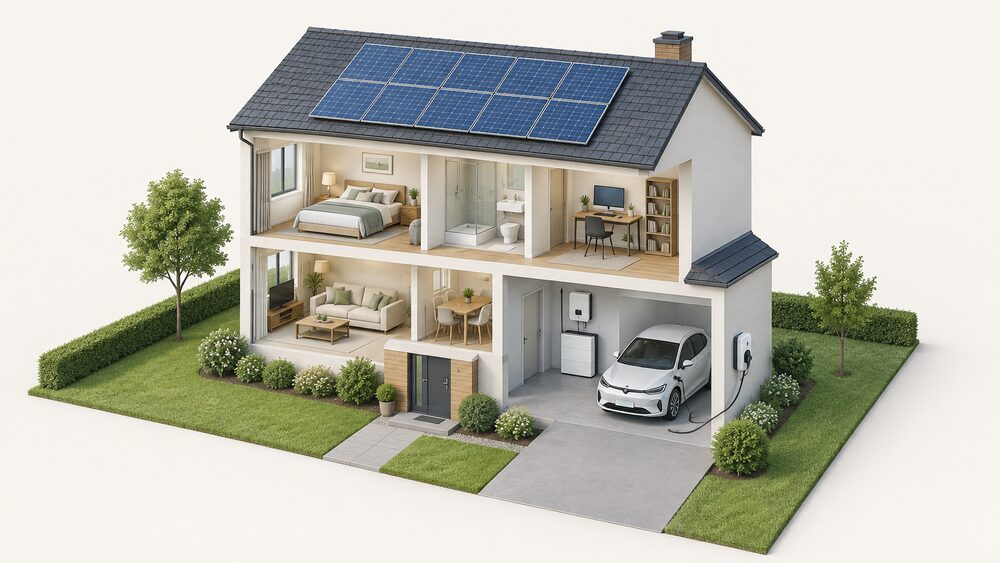 SolaX EV chargersCan a SolaX charger use your spare solar power to fill the car instead of sending it to the grid?
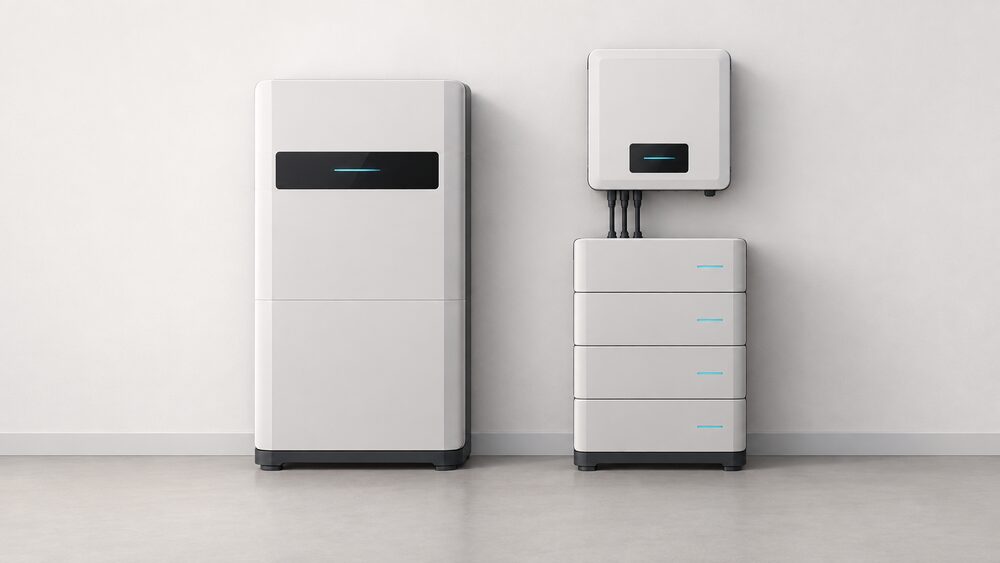 SolaX Home Batteries and Triple Power StorageHow much can a SolaX home battery store, and can you add more later?
 SolaX X3-ULTRAThe SolaX X3-ULTRA is a large three-phase hybrid inverter for big homes and commercial buildings.
 SolaX hybrid inverters for home solarWhich SolaX hybrid inverter suits a typical UK home, and what size do you need?
 SolaX X1 invertersWhich SolaX X1 suits your roof, and do you want battery storage now or later?