

In this guide
The SolaX X3-ULTRA is a three-phase hybrid inverter rated from 15 kW to 30 kW, sold in 15kW, 19.9kW, 20kW, 25kW and 30kW versions with 2 or 3 MPPTs and up to 36A of PV input per MPPT1. It is the largest unit in SolaX's named all-in-one line, and SolaX positions it for large homes, commercial buildings and more advanced energy systems that need higher flexibility2.
It is not a battery. The X3-ULTRA is the inverter and control layer of a storage system: batteries, a changeover arrangement and the loads sit around it. SolaX lists microgrid and generator function for versatile operations, 200% PV oversizing and up to 110% AC output on the product page1. The same page describes it as a hybrid inverter, meaning it manages solar, battery and grid together rather than only converting DC to AC.
For a UK household, the practical question is whether a 15 to 30 kW three-phase machine belongs on the property at all. Most UK homes have a single-phase supply and a load profile that a 5 to 15 kW three-phase unit covers. The X3-ULTRA is aimed at the tier above that: large houses with three-phase cut-outs, farms, and light commercial sites with high simultaneous demand. This page sets out what the unit is, what it can and cannot do, and where the dependence on the grid, a supplier and SolaX's own cloud remains.
What the X3-ULTRA is: an all-in-one three-phase system
SolaX's own case-study listing describes the unit in a single line: "X3-ULTRA 15-30kW | Three Phase | 2/3 MPPTs"3. That is the whole product in three attributes. It is a three-phase hybrid inverter, it spans 15 to 30 kW, and it takes two or three solar strings.
The "all-in-one" label needs care. In SolaX's range, the term is used for systems that combine inverter, battery and backup interface in one enclosure, such as the X3-IES, which SolaX calls a premium three-phase residential All-in-One ESS5. The X3-ULTRA is a hybrid inverter: it is the brain and the power conversion stage, and the battery is a separate purchase. A household or business buying into the X3-ULTRA is buying the inverter, the monitoring and the control logic, and then choosing storage capacity around it.
That distinction matters for how the system is specified. A hybrid inverter of this size has to be matched to the array, the battery voltage and the backup loads together, and the changeover arrangement for off-grid operation is a separate design decision. The X3-ULTRA manual was updated to version 16 in July 2026, with changes to parallel-function support, installation video content, changeover-switch content, wiring diagrams and terminology6. A unit at this power level is a designed system, not a box that is hung on a wall and plugged in.
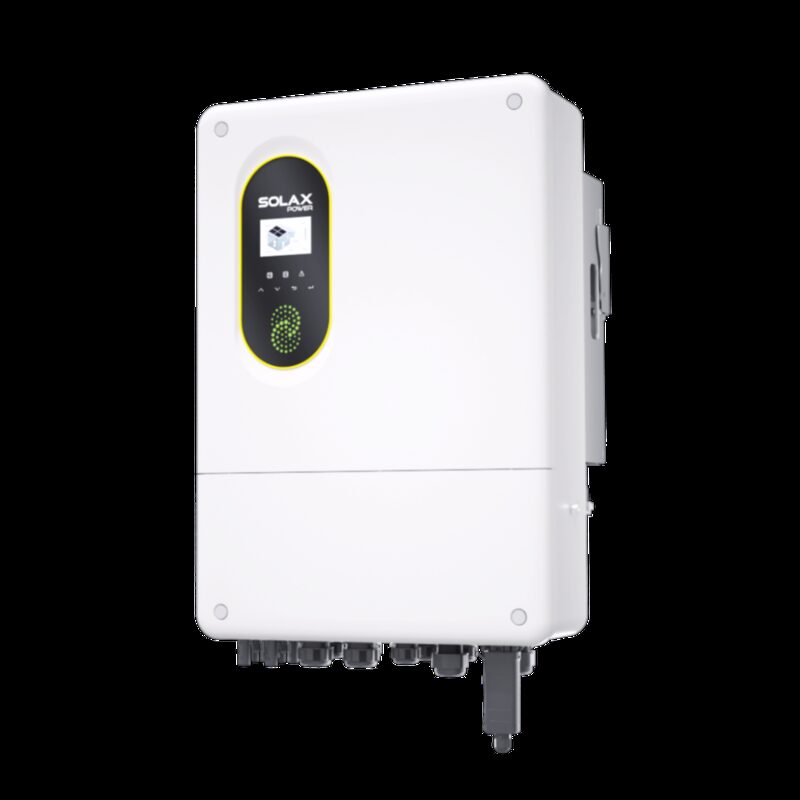
Power range: 15 to 30 kW with 2 or 3 MPPTs
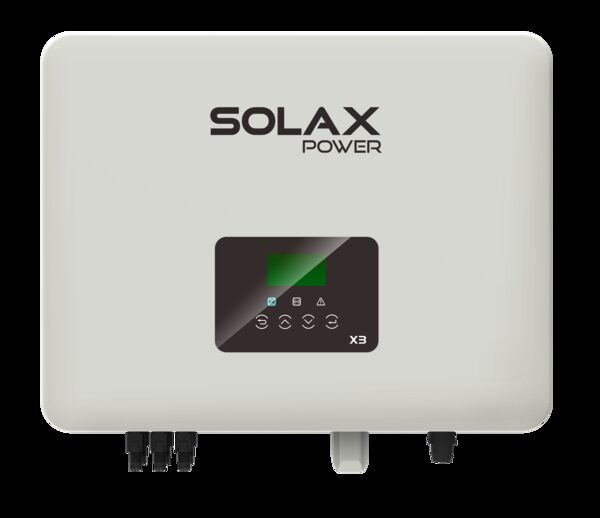
The available ratings are 15kW, 19.9kW, 20kW, 25kW and 30kW1. The 19.9kW figure is a deliberate step: it sits just under a common 20 kW threshold used in network and metering rules, so a site can take close to 20 kW without crossing it. SolaX's own guidance on three-phase selection puts the X3-ULTRA at power ratings from 15kW to 30kW7.
The MPPT count is the other half of the specification. Two or three independent maximum power point trackers, each accepting up to 36A of PV input, allow several strings on different roof aspects to run without one dragging the others down1. On a large or complex roof, that is the difference between a workable design and one that underperforms in the afternoon. For comparison, SolaX's smaller three-phase residential units carry fewer trackers: the X3-NEO-LV takes a maximum of 2 MPPTs8, and the X3-IES-P accepts up to 20A per MPPT9.
| Attribute | X3-ULTRA | X3-NEO-LV | X3-IES-P |
|---|---|---|---|
| Power range | 15 to 30 kW1 | 5 kW to 20 kW10 | 4 kW to 15 kW10 |
| MPPTs | 2 or 31 | Max. 28 | Up to 20A per MPPT9 |
| PV oversizing | 200%1 | Up to 200%8 | Up to 200%9 |
| Phase | Three-phase3 | Three-phase8 | Three-phase9 |
The 36A per MPPT input is generous by residential standards and reflects the high-power PV modules the unit is intended to take. SolaX states the X3-ULTRA supports larger solar arrays and high-power PV modules, and recommends it for projects needing microgrid capability and generator compatibility2. Sizing the array to the inverter is covered in more depth in what size home battery do you need and battery power ratings.
Who it suits: large homes and light commercial sites
SolaX gives two descriptions of the intended market. The X3-ULTRA is for "large homes, commercial buildings, and more advanced energy systems that require higher flexibility"2, and separately it is "designed for commercial and industrial applications"7. Both point the same way: this is not a typical three-bedroom house unit.
The comparison that makes the point is the rest of the three-phase range. SolaX's X3-Hybrid G4 runs from 5 kW to 15 kW and is described as a three-phase MPPT hybrid solar inverter for homes or light commercial properties11. The X3-IES-P spans 4 kW to 15 kW for residential applications9. The X3-ULTRA starts where those end. A household with a single-phase supply cannot use it at all without a supply upgrade, and a household with a three-phase supply and ordinary domestic demand rarely needs 15 kW of continuous inverter capacity.
Where it does fit is a property with high simultaneous load: a large house with electric heating, an EV or two and a heat pump; a farm with pumps and outbuildings; a small workshop or office with three-phase machinery. SolaX's wider guidance on three-phase selection notes that three-phase hybrid inverters support unbalanced output, so a single heavily loaded phase can be served without the other two carrying equal load12. On the X3-Hybrid G4 that unbalanced output is up to 5kW per phase13. The X3-ULTRA's own figures are given at the unit level rather than per phase.

Grid-tied and off-grid: one system for both
SolaX lists microgrid and generator function for versatile operations on the X3-ULTRA1, and describes the unit as designed for both grid-tied and off-grid solar systems2. That is the headline capability: the same inverter can run grid-connected, or islanded with a generator or microgrid as the reference source.
What that means in practice is that the X3-ULTRA is not a grid-tied-only string inverter. It can form part of a system that keeps selected loads running when the grid is down, provided the battery, the changeover switch and the protected loads are designed for it. The manual's version 16 update specifically revised changeover-switch content and parallel-function support6, which are the two areas that determine how a system behaves at the moment of transition.
The limits are worth stating plainly. Off-grid operation is not automatic and not whole-house by default. It depends on the battery being able to supply the surge of the loads connected, on the changeover arrangement isolating the property from the network, and on the generator or microgrid being sized to match. SolaX's own guidance on off-grid and hybrid inverters sets out the difference between a system that can island and one designed to run without a grid at all2. For the general principles, battery backup power and EPS and off-grid battery systems cover the arrangements.
Scalability: 200% PV oversizing and flexible system design
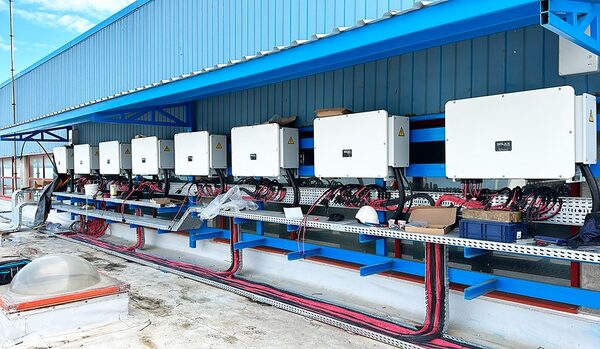
The X3-ULTRA supports 200% PV oversizing and up to 110% AC output1. Oversizing means the array's rated DC capacity can be twice the inverter's AC rating, which raises yield in low-light conditions and on days when the array rarely reaches its nameplate. The 110% AC output allows the inverter to deliver slightly more than its rated AC power for periods, which helps when a large array is producing hard on a cold bright day.
This is a family-wide design choice rather than an X3-ULTRA speciality. SolaX lists 200% PV oversizing across the X3-IES5, the X3-IES-P9, the X3-Hybrid G414, the X3-NEO-LV8, the X-ESS G415 and the X1-VAST16. The X3-ULTRA's contribution is that it applies the same ratio at a much higher power level, so a 30 kW unit can sit behind a 60 kWp array.
The second scalability axis is parallel operation. SolaX's X3-Hybrid G4 datasheet lists on-grid and off-grid parallel function up to 150kW14, and the X3-ULTRA manual's parallel-function revisions point the same way6. Running several inverters in parallel is how a site grows past a single unit's ceiling without replacing what is already installed. For a household, that is mostly relevant where a first phase of work is followed by a second: the design can be extended rather than rebuilt. The general principles of adding capacity later are covered in modular and stackable battery systems and can I add more batteries later.
Monitoring and control through SolaX Cloud
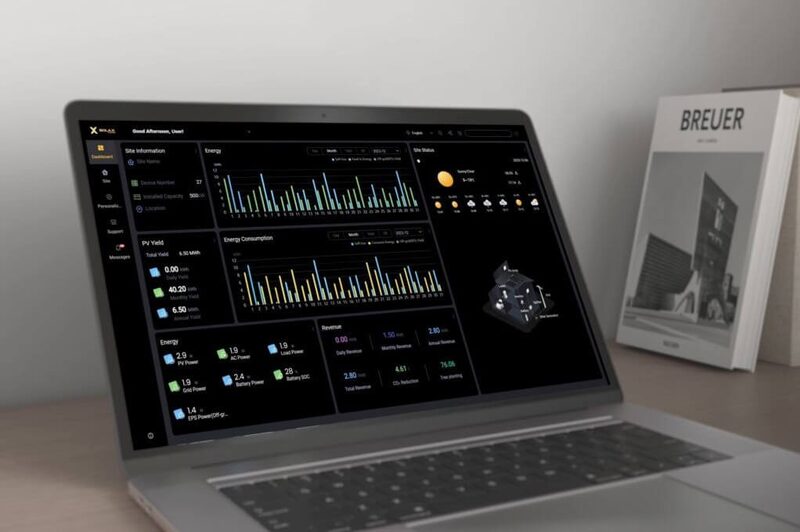
SolaX Cloud is the platform across the range. SolaX describes it as providing real-time monitoring, load management and time-of-use optimisation17, and elsewhere as presenting real-time monitoring, user-friendly control and an intuitive dashboard18. The X-ESS G4 product page lists real-time monitoring via SolaX Cloud15, and the J3-ULT-LV lists 24/7 remote monitoring via the same platform19.
For the X3-ULTRA, the cloud connection is not only a convenience. It is the condition attached to the longest warranty. SolaX's warranty terms state that the inverter warranty is freely upgraded to 10 years where the inverter is connected to SolaX Cloud and generation data has been successfully uploaded to the SolaX server20. The same condition appears in the guidance on the X3-ULTRA and its siblings: "Stay Connected: Connect to SolaX Cloud and ensure data is successfully uploaded to the server"21.
That creates a specific dependence. Local operation of the inverter continues without a broadband connection, but remote monitoring, load management, time-of-use scheduling and the data feed that supports the warranty upgrade all run through SolaX's servers and a SolaX account. SolaX's VPP solution is positioned for cloud-based control and remote monitoring with support for IEEE 2030.5 and OpenADR18, which are the interfaces aggregators use. The wider question of what a battery app does and does not give an owner is covered in monitoring a home battery.
Warranty and support terms
The X3-ULTRA carries a 5 year standard warranty, running from the earlier of the installation date or a set period after production22. SolaX offers a free upgrade to 10 years where the inverter is connected to SolaX Cloud and generating data4. The upgrade is not automatic and not unconditional: it depends on the data connection being established and maintained.
Registration is the step that starts the clock properly. SolaX requires the product to be registered online within 90 days of the commissioning date21. Where that is done, the warranty certificate and exact expiration date are stored in the online account23. Where it is not, the warranty automatically starts six months after the battery left the factory23, which effectively shortens the cover by that period. Extended warranty can be bought directly from an authorised SolaX distributor or through the SolaX Cloud platform after the system is registered21.
Support runs through the SolaX service team. Where a device shows a warranty register failure and is not part of a stolen batch, SolaX directs owners to contact service.eu@solaxpower.com22. The general structure of inverter and battery warranties, including what retained capacity and throughput conditions mean, is set out in home battery warranties and SolaX home batteries.
How it fits into UK energy independence
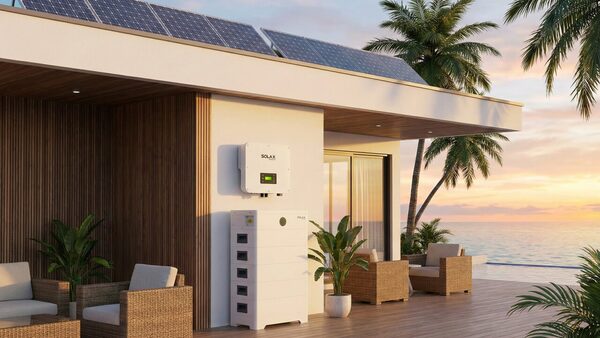
The X3-ULTRA's contribution to a household's independence is real but bounded. On the generation side, 200% PV oversizing and up to 110% AC output mean a large array can be harvested hard, and 2 or 3 MPPTs with 36A input each let a complex roof produce more of what it could1. On the resilience side, microgrid and generator function mean the system can island and keep selected loads running1. Those are the two things a storage system is for: using more of what the roof makes, and staying on when the network goes off.
What remains is dependence. The system is grid-tied by default and needs a network connection for import and export in normal operation. It needs a battery, which is a separate purchase and a separate warranty. It needs a changeover arrangement and a protected-loads design for backup to work. And the longest warranty term depends on a continuing data connection to SolaX's cloud20, which is a manufacturer's service rather than a household asset. Off-grid operation, where it is used, replaces the grid with a generator or microgrid, which is a different dependence rather than none.
For a large property or light commercial site, that trade is often worth making: the alternative to a 15 to 30 kW hybrid inverter is a smaller system that cannot carry the load. For a typical UK house on a single-phase supply, the X3-ULTRA is the wrong size and the wrong phase, and the three-phase residential units in the same range are the ones that fit. The wider picture of what a battery can and cannot deliver for a household is covered in home batteries and household energy independence and the home battery storage guide.
Sources23 cited
- SolaX X3-ULTRA product page, SolaX Power, 2026-09-17
- Off-grid vs hybrid inverter, SolaX Power, 2026-03-13
- SolaX X3-ULTRA case study listing, SolaX Power, 2026
- How long do solar inverters last, SolaX Power, 2026-05-14
- Best solar batteries, SolaX Power, 2026-05-12
- SolaX X3-ULTRA series user manual, version 16, Waxman Energy, 2026-07-30
- Choosing the right three-phase hybrid solar inverter, SolaX Power, 2024-12-16
- SolaX X3-NEO-LV product page, SolaX Power, 2026-09-17
- What size inverter do I need, SolaX Power, 2026-05-13
- Backup power options for remote cabins, SolaX Power, 2026-07-21
- Best value inverters: price, performance, warranty, SolaX Power, 2026-07-24
- Hybrid inverters backup power UK home EPS checklist, SolaX Power, 2026-07-21
- SolaX X3-Hybrid G4 product page, SolaX Power, 2026-09-17
- SolaX X3-Hybrid G4 datasheet, SolaX Power, 2026-09-17
- SolaX X-ESS G4 product page, SolaX Power, 2026-09-17
- SolaX X1-VAST product page, SolaX Power, 2026-09-17
- How to choose an all-in-one home energy system, SolaX Power, 2026-09-10
- Choosing a solar system with the right app, SolaX Power, 2026-08-28
- SolaX J3-ULT-LV product page, SolaX Power, 2026-09-17
- SolaX warranty terms and conditions, SolaX Power, 2026-09-17
- Solar inverter warranty, SolaX Power, 2026-06-18
- SolaX UK warranty, SolaX Power, 2026-09-17
- Solar battery warranty guide, SolaX Power, 2026-06-23
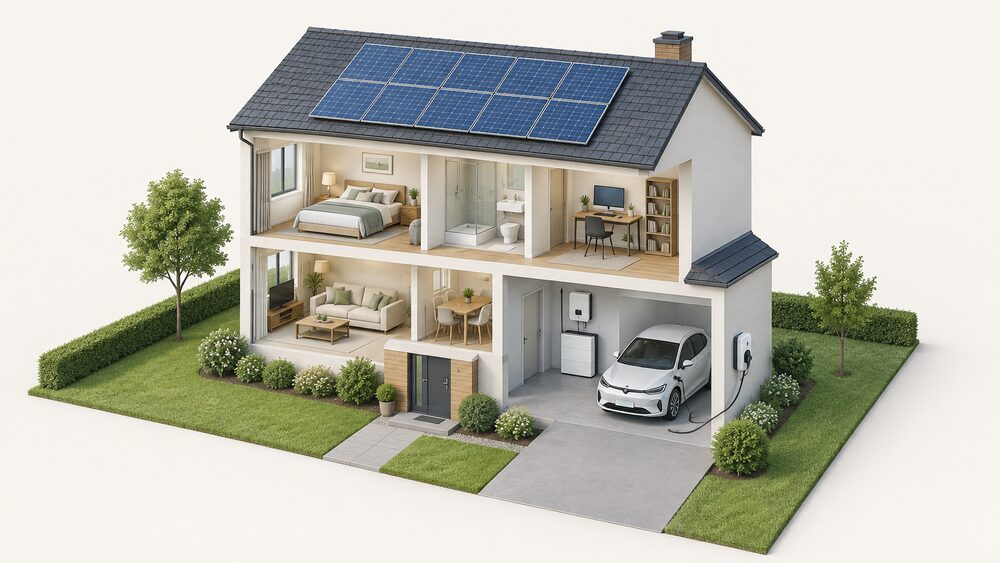 SolaX EV chargersCan a SolaX charger use your spare solar power to fill the car instead of sending it to the grid?
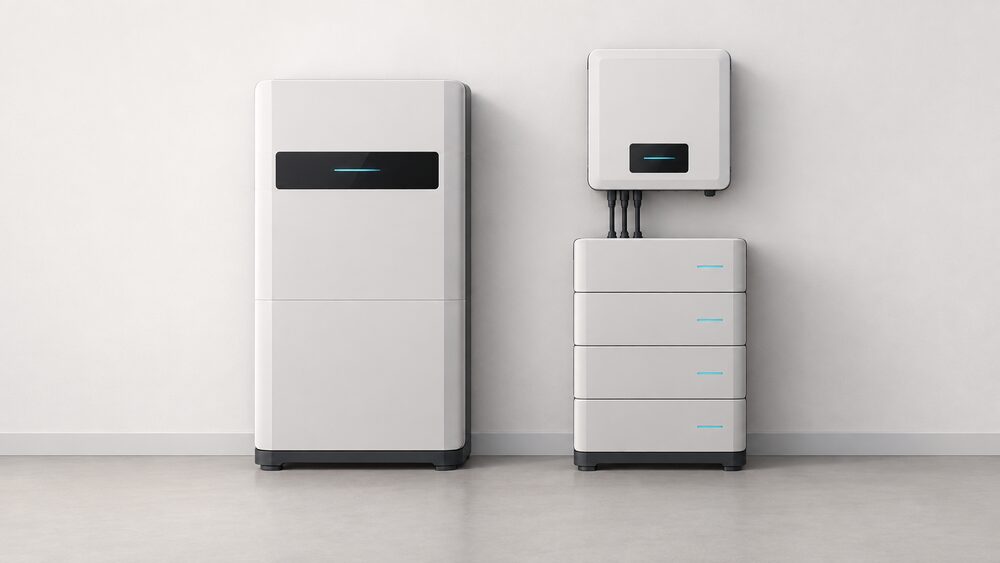 SolaX Home Batteries and Triple Power StorageHow much can a SolaX home battery store, and can you add more later?
 SolaX Power inverters and batteriesSolaX Power inverters and batteries come down to three things for your home: which type fits, how much storage you need, and what the warranty really gives you.
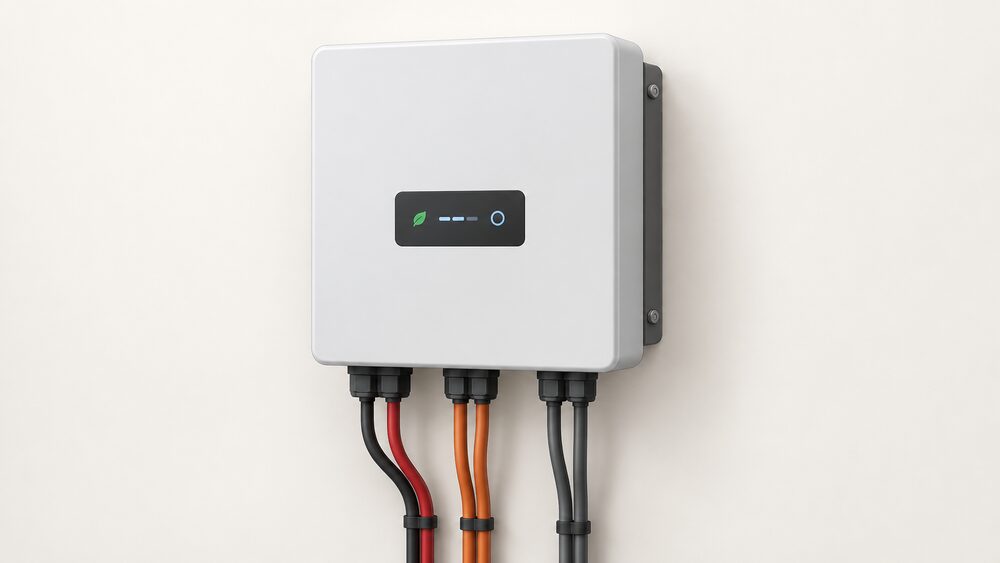 SolaX hybrid inverters for home solarWhich SolaX hybrid inverter suits a typical UK home, and what size do you need?
 SolaX X1 invertersWhich SolaX X1 suits your roof, and do you want battery storage now or later?