
In this answer
Short answer
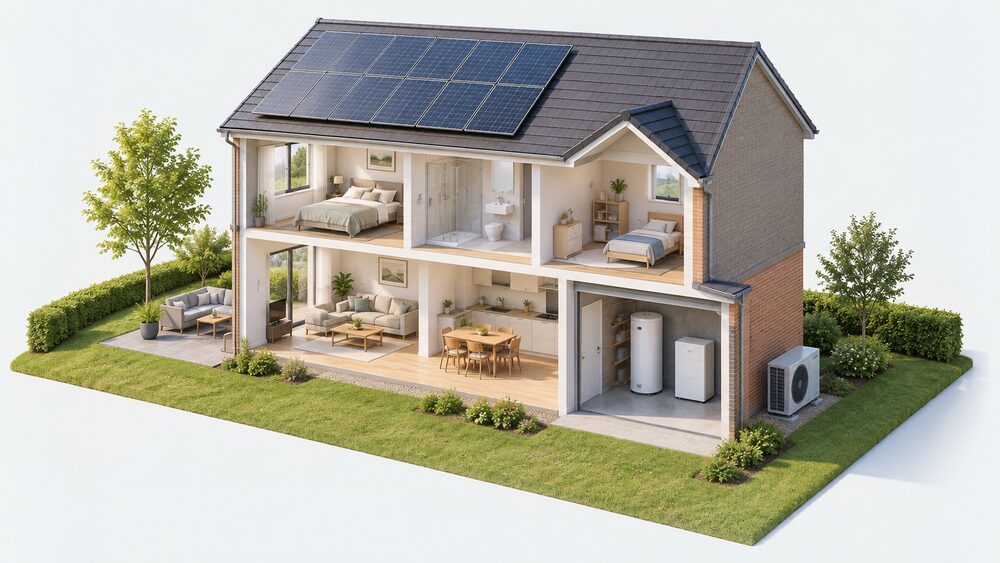
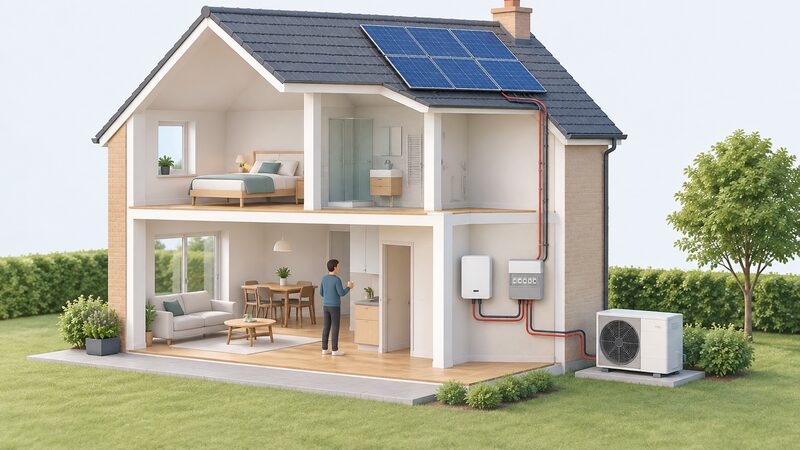
Yes. Solar panels generate electricity that can help power a heat pump, reducing how much electricity the home draws from the grid1. The Energy Saving Trust puts it directly: you can use solar panels to generate electricity that can help power a heat pump2. MCS Certified frames the same point in bill terms, noting that a heat pump transfers heat from outside the home using electricity, and that solar panels can be used to power it, which can lower both electricity and heating bills3.
What solar does not do is change the heat pump's efficiency. A heat pump's performance depends on temperatures, not on where its electricity comes from: heat pumps operate more efficiently when the source temperature is higher and the sink temperature is lower4. Solar generation displaces grid electricity, so the same heat output costs less to run, but the coefficient of performance is set by the system design and the flow temperature it runs at.
The combination is not free of trade-offs. Installing solar panels and a heat pump together will cost more to install than just a heat pump5. The gain is in running costs and in how much of the heat pump's electricity the household supplies itself, which is where the independence argument sits.
What solar panels do and do not do for a heat pump's efficiency
Solar panels do not raise a heat pump's efficiency, and no amount of generation changes that. The efficiency relationship is thermal: heat pumps operate more efficiently when the source temperature is higher and the sink temperature is lower4. On the sink side, heat pumps operate efficiently at lower temperatures, and the higher the flow temperature, the harder they have to work, which means increased energy consumption and lower efficiency11. A well-designed system with larger radiators or underfloor heating running at a lower flow temperature will use less electricity for the same heat, and solar generation then covers a larger share of a smaller demand.
What solar does is change the carbon and cost profile of the electricity the heat pump consumes. Heat pumps are much more efficient than traditional electric heating options, which makes them cheaper to run12, and they are about three times more efficient than standard electric heaters13. That comparison matters most in homes without a gas connection, where the alternative is direct electric heating. Solar panels on the same roof reduce the amount of that electricity bought from a supplier.
The two technologies are complementary in timing as well as in source. A heat pump runs year-round, with the heaviest demand in winter, when solar output is at its lowest. Solar output peaks in summer, when heating demand is minimal. That mismatch is the central practical problem of the pairing, and it is what battery storage and heat pump controls are designed to narrow.
How much of a heat pump's electricity solar can cover
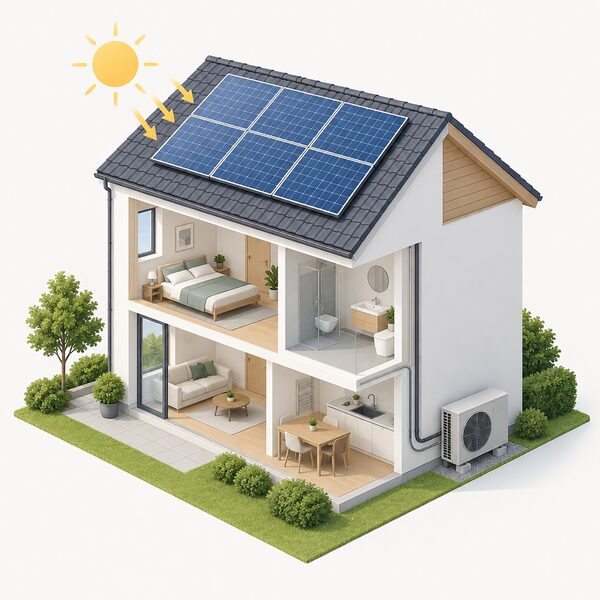
There is no single coverage figure, because it depends on the heat pump's annual electricity use, the size of the solar array, the roof's orientation and how much of the generation is used in the home rather than exported. What the evidence does give is the shape of the demand.
Heat pumps can produce 2.5 to 4 times more heat energy than the electricity needed to run them6. Home Energy Scotland sets out a worked example: if a heat pump used 3,000 kWh of electricity over the year and provided 12,000 kWh of heat, the calculation would give a SCOP of 4, or 400% efficiency7. That 3,000 kWh figure is the annual electricity demand a solar array would be trying to offset, and it is a modest target compared with the output of a typical domestic array over a year.
The seasonal distribution is the harder part. Solar thermal panels, which heat water rather than generate electricity, could provide around 90% of hot water in summer and around 25% in winter9. That pattern illustrates the general problem for any solar technology in the UK: strong summer output, weak winter output, against a heating load that peaks in winter.
In practice a household should expect solar to cover a meaningful share of the heat pump's electricity across the year, with the share concentrated in spring, summer and autumn, and a much smaller contribution in the depths of winter. The rest comes from the grid. That is the dependence that remains: a solar and heat pump home is still a grid-connected home, and the heat pump will not work without power14.
Battery storage and SG Ready heat pumps: using more of your own solar
A battery is the main way to raise the share of solar electricity a heat pump actually uses, because it moves generation from midday to the evening when heating demand is higher. Solar PV can be paired with a battery storage system to store excess electricity that the panels generate for when it is most needed3. Battery storage can also be added to existing solar panels to maximise the benefits of the system, which matters for households that installed solar first and are considering a heat pump later15.
Battery storage has a second use that is independent of solar. It is still useful on a time-of-use tariff without solar panels, especially with a heat pump or particularly high electricity use16. A heat pump tariff that includes a peak rate, using the battery to power the heat pump during expensive periods, is likely to suit a heat pump household well17. That is a grid-dependent strategy: it shifts when electricity is bought rather than removing the need to buy it.
SG Ready is a manufacturer's label for heat pumps that can respond to a signal from the solar system. Heat pumps with the SG Ready label specifically utilise excess power from photovoltaic systems18. In practice the heat pump is told when generation is high and runs then, storing heat in the cylinder or the building fabric rather than exporting the electricity. It is a control feature, not a source of generation, and it depends on the heat pump model and the solar inverter being able to communicate.
Storage heaters offer a related but distinct route for homes with solar panels: solar panel electricity could be used to charge storage heaters during the day so there is warmth in the evening19. That is a direct electric option rather than a heat pump, and it sits alongside the heat pump question rather than replacing it.
Solar thermal panels alongside a heat pump
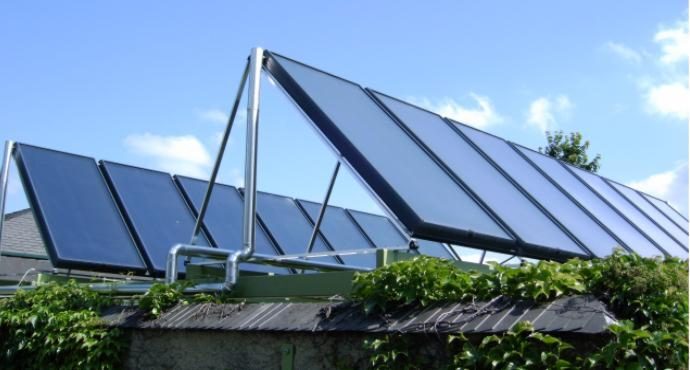
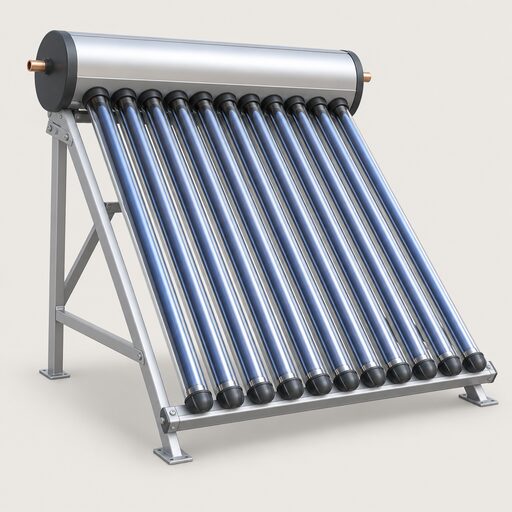
Solar thermal panels are a different technology from solar PV. They harness the power of sunlight to heat hot water, which is stored in a hot water cylinder or thermal store, and they usually only heat water9. They generate no electricity, so they cannot power a heat pump's compressor. What they can do is reduce the amount of water heating the heat pump has to perform.
Solar thermal panels can be installed alongside other renewable or traditional heating systems, although they are not so easy to combine with a combi boiler9. A heat pump system with a cylinder is a more natural pairing than a combi, because the cylinder that solar thermal needs is also the cylinder a heat pump uses for domestic hot water. Coupling a solar collector with a heat pump is an established system integration20.
The contribution is significant in the right season. Solar thermal panels can supply up to 60 per cent of a household's domestic hot water needs over a year21. That is a Northern Ireland government figure, and it is a useful benchmark for what the technology can do across a full year rather than in a single season.
Ground source heat pumps fit the same pattern. They transfer energy from the natural heat stored in the earth to heat the home and domestic hot water22, and they can also be used to augment existing heating systems in the same way as solar panels22. In Northern Ireland the description is similar: ground source heat pumps make use of heat stored in the ground to pre-heat water for the heating system, which is then heated to the required standard using electricity23. Water source heat pumps can likewise augment existing heating systems in the same way as solar panels24.
Permissions, system size and what to check before combining the two

Domestic heat pumps benefit from permitted development rights, which means that in most cases planning permission is not required to install them, subject to certain limitations and conditions25. The same position is set out for Wales25. That covers the heat pump itself. Solar panels have their own permitted development rules, and the two installations are assessed separately.
Listed buildings are the clear exception. Adding renewable energy solutions like solar panels or air and ground source heat pumps might be acceptable but will require listed building consent and possibly planning permission26. A separate local authority source states that planning permission and listed building consent are required for air source heat pumps on listed buildings27. Any household in a listed building, or in a conservation area, should treat the planning position as a live question rather than an assumption.
On the solar side, the process usually includes a survey. Once an offer is accepted under a group-buying scheme, a surveyor visits the property to assess whether the roof is suitable for a solar installation and confirm the number of panels, their location, and other details such as cabling locations and colour28. That survey is where system size is settled, and it is the point at which the household's electricity demand, including the heat pump, should be part of the conversation.
Two further checks are worth knowing. Heat pumps that integrate with solar photovoltaic systems are eligible under the Boiler Upgrade Scheme10, so the grant route is not closed by adding solar. And for solar water heating systems, Approved Document L sets a limit on the primary pump: its maximum electrical input power should be less than the higher of 50W or 2% of the peak thermal power of the collector29. That is a building regulations detail rather than a planning one, and it applies to the solar thermal side of the system.
Where the independence sits, and where it does not
A solar and heat pump combination moves a household part of the way towards energy independence. The heat pump removes the gas connection for heating and hot water, and the solar array supplies some of the electricity that runs it. The carbon case is set out by government: heat pump technology currently offers a carbon saving of up to 65% compared with a gas boiler8, and up to 70% less CO2 over 15 years than a gas boiler with zero emissions at point of use30. An independent body cites the same upper figure of up to 70% of carbon emissions compared with a gas boiler31.
What remains is dependence on the grid, on a supplier, and on the equipment's own controls. The heat pump needs power to run, and in a power cut it stops14. The solar array needs an inverter, and many systems need an app or cloud service to monitor and control them. The household still buys electricity in winter, and still relies on the network to balance supply and demand across the year.
The practical case for combining the two is strongest where the heat pump is already planned or installed, the roof is suitable, and the household can use a battery or a time-of-use tariff to shift when electricity is drawn. The case is weaker where the roof is shaded, the property is listed, or the budget only stretches to one measure. Installing both together will cost more than installing a heat pump alone5, and the running cost benefit depends on how much of the generation is used on site rather than exported.
For households weighing the wider picture, the home energy guide sets out how heating, insulation and generation fit together by home type, and renting and home energy covers what tenants can and cannot change. Households in flats should check energy improvements in flats and apartments before assuming a roof array is available to them.
Sources31 cited
- Renewable heat: your home, Energy Saving Trust, 2026-05-19
- Heating your home, Energy Saving Trust, 2026-05-19
- Solar photovoltaic (PV), MCS Certified, 2026-07-30
- Heat pump methodology, UK Government, 2026-01
- What do people think about energy, Energy Saving Trust, 2026-01-09
- Heat pump myths, Energy Saving Trust, 2025-09-02
- Heating your home with renewable energy, Which?, 2025-09-22
- Heat pump, UK Government, 2026-09-10
- Solar thermal panels, nidirect, 2024-10-22
- Planning permission for heat pumps, Welsh Government, 2026-09-17
- Is now a good time to get a heat pump, Energy Saving Trust, 2025-12-12
- Electric central heating, Which?, 2025-09-22
- Electric heating, Energy Saving Trust, 2026-07-01
- Storage heaters, Which?, 2026-06-01
- Switch Together Birmingham, Birmingham City Council, 2026-01-27
- Integrated electric home case study, Energy Saving Trust, 2026-08-12
- Tariffs for renewable technology, Energy Saving Trust, 2026-08-12
- Boiler Upgrade Scheme guidance for installers, Ofgem, 2026-04-28
- Could you generate your own energy, Energy Saving Trust, 2024-04-12
- Sustainability, Planning Portal, 2026
- Water-to-water heat pumps, Wolf, 2026-09-17
- Approved Document L, Volume 1: Dwellings, UK Government, 2026-09-17
- Heat networks policy guidance, Ofgem, 2026-09-17
- Landlord loan, Home Energy Scotland, 2026-09-20
- Making alterations to a listed building, Bristol City Council, 2026-09-17
- Air and ground source heat pumps, Croydon Council, 2026-09-17
- Installing solar panels at your home, Brighton & Hove City Council, 2026-09-17
- Power cut 105, Energy Networks Association, 2026-09-17
- Coupling a solar collector with a heat pump, Solar Heat Europe, 2026-09-17
- How do heat pumps work, Smart Energy GB, 2026-03-16
- Living with a heat pump, Home Energy Scotland, 2024-02
 Energy IndependenceA heat pump runs your heating on electricity instead of gas or oil, so how much does that really cut what you pay and how exposed you are when fuel prices jump?
 Cooling with Solar PanelsCan solar panels run an air conditioner, and will they cover the whole bill?
 Solar Thermal Water HeatingSolar thermal panels heat your water using the sun, working alongside your boiler rather than replacing it.
 Heat Pump Electricity TariffsA heat pump tariff gives you cheaper electricity for part of the day, so running your heating costs less than on a standard rate.
 Heating and Energy IndependenceCan you heat your home without relying on gas or oil, and what would that take?
 Heat Batteries with Heat PumpsCan a heat battery replace a hot water cylinder if you have no space for one?