
In this answer
Short answer
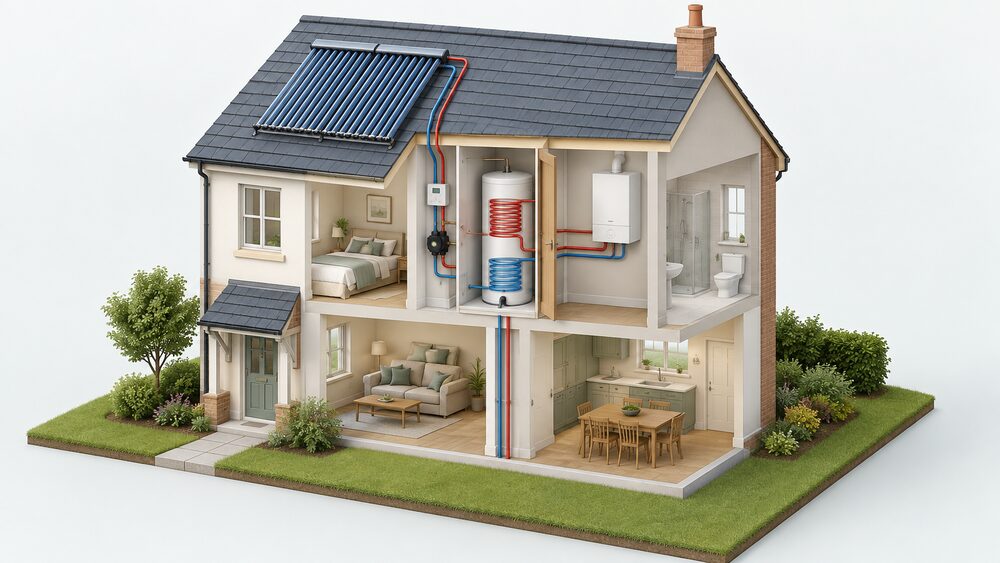
Yes, in most cases a boiler and solar water heating can work together, but the boiler type decides how much work is involved. Conventional boilers and hot water cylinder systems are often compatible with solar water heating, and a regular boiler or immersion heater can be used to make the water hotter or to provide hot water when solar energy is unavailable1. The solar side preheats water in a cylinder; the boiler tops it up.
The exception is the combi. Combi boilers heat water on demand rather than storing it, and few models are compatible with solar thermal systems3. Guidance from the Energy Saving Trust is blunt: a household with a combi will likely need to add a solar hot water cylinder and replace the boiler with a conventional boiler, or a heat pump1. A storage combi, which keeps a small volume of hot water in a tank, is the one combi variant that suits solar thermal4.
What the two systems deliver together is hot water, not heating. Solar water heating cannot replace a traditional gas or liquid fuel central heating installation5. It covers part of the annual hot water demand, with the boiler or an immersion heater making up the rest, and the split shifts sharply between summer and winter.
Which boiler types suit solar: conventional, system, regular and combi
The dividing line is whether the boiler heats water into a cylinder or on demand. Anything that stores hot water in a cylinder can usually be paired with solar thermal; anything that does not, usually cannot.
Conventional boilers with an existing hot water cylinder are often compatible, though the cylinder itself must be replaced with one designed for solar water or a dedicated solar water cylinder3. Regular boilers are compatible with solar water heating systems for a lower carbon footprint and lower energy costs, and are also compatible with solar panels6. System boilers and regular boilers can be set up to work with solar panels, and having a hot water cylinder lets a household store energy from solar panels8. Heat-only boilers are compatible with solar thermal hot water systems that use free energy from the sun to heat the water in the cylinder10.
Combi boilers are the awkward case. They provide hot water on demand as well as heating, which leaves nowhere for solar heat to be stored11. Independent guidance notes that solar water heating is easier to work with system boilers, although combi boilers can be adapted12. Where a combi is adapted, the usual route is adding a solar hot water cylinder to the system13. Storage combis are compatible because they store hot water, so that water can be kept warm with solar thermal4.
Condensing boilers can be installed alongside solar water heaters, providing hot water for the home as well as in-home heating14. The practical question for a household is not the boiler's age but its architecture: a cylinder in the system means solar thermal has somewhere to put its heat.
The twin-coil cylinder: the piece that makes it work
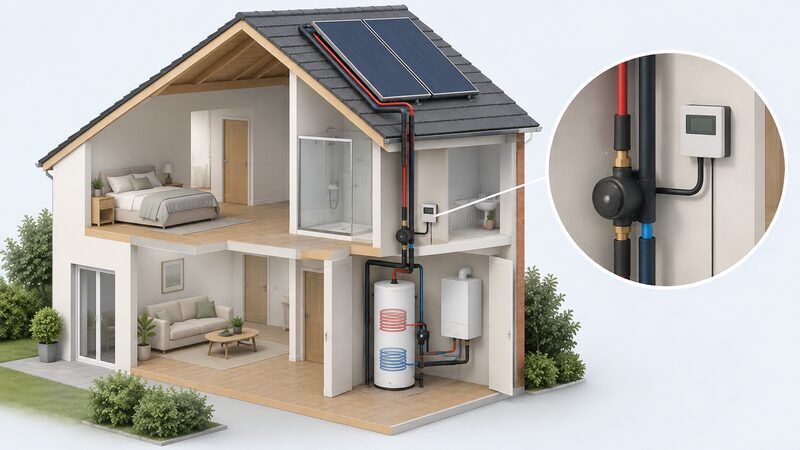
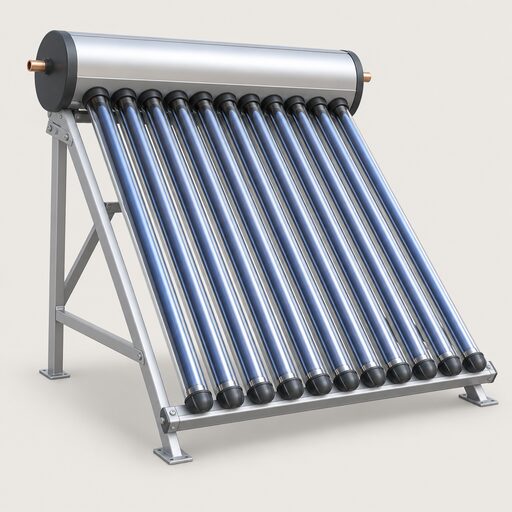
A solar water heating system involves three main parts: solar collectors, usually tubes or panels mounted on the roof; a pump managed by a controller unit; and a hot water cylinder with two heating coils, known as a twin-coil cylinder, or other multiple inputs15.
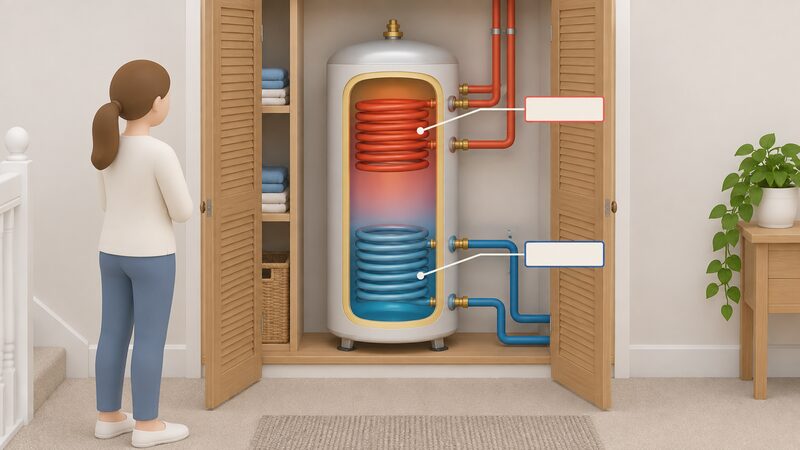
The coil arrangement is what allows two heat sources to share one store. The lower coil connects to the solar circuit, while the upper coil connects to the normal boiler circuit16. Solar cylinders have two heating coils, allowing one to be connected to the boiler central heating system and one to the Greenskies solar thermal system17. Dual and twin coil cylinders can accommodate two heat sources simultaneously, such as a boiler and a solar thermal system, with an immersion heater available as a backup18.
Most systems use a single cylinder, with either an immersion heater or another coil near the top that connects to the boiler3. Some solar thermal systems use two cylinders instead: one dedicated to the solar collectors, and another for the immersion heater3. Solar water heating systems can be combined with a liquid fuel or gas-fired boiler via a compatible hot water cylinder having two heating coils5.
"The lower coil connects to the solar circuit, whilst the upper coil connects to the normal boiler circuit."
How the two systems share the heating
The arrangement is a preheat-and-top-up sequence rather than a competition. Solar water heating systems gather the sun's free energy and convert it into hot water alongside a conventional water heater19. They retain heat from the sun's rays and transfer it to a fluid in order to preheat water19. A boiler or immersion heater can then be used as a back-up to heat the water further to reach the temperature wanted20.
In a Greenskies installation, the heat generated by the panels is pumped directly into a twin-coiled water cylinder and the boiler works alongside this to ensure a constant supply of hot water all year round21. The same principle applies to a solar collector coupled with an existing gas boiler22. A system boiler provides central heating and hot water via a storage cylinder, filled from the mains and often housed in an airing cupboard, which is the store the solar circuit feeds23.
Because the amount of solar energy varies through the year, solar thermal systems are usually used alongside a conventional boiler or immersion heater3. The controller decides when the pump runs and when the boiler takes over; the household does not manage the switch. Solar thermal is designed to complement the hot water output of homes with a boiler fuelled by gas or oil13.
Two limits are worth stating plainly. Solar water heating cannot be used to replace a traditional liquid fuel or gas-fired central heating installation, so radiators remain the boiler's job5. And solar thermal panels can be installed alongside other renewable or traditional heating systems, though they are not so easy to combine with a combi boiler24.
What solar thermal adds to fuel bills and independence

The gain is a reduction in the fuel the boiler burns for hot water, not the removal of the boiler. Solar thermal equipment can generate between 55% and 70% of a home's hot water requirements, reducing a home's carbon footprint25. A well-designed solar heating system can yield an equivalent amount of energy to satisfy up to 70% of a home's annual domestic hot water needs, and in the summer months it may satisfy 100% of that need5.
Independent figures for savings are modest and fuel-dependent. A 4m² panel system replacing oil water heating is put at £100 a year, and one replacing coal water heating at £150 a year4. Those are the only published saving figures here; for other fuels, savings depend on the fuel displaced and the system design.
Coverage figures differ between sources, and the differences are worth understanding rather than averaging. One review gives about 90% of hot water needs in summer and 25% in winter4. The Energy Saving Trust says solar water heating normally provides roughly half of hot water needs on average, and around 90% of requirements in summer3. Official Welsh guidance gives 55% to 70% of hot water requirements25. The spread reflects system size, cylinder volume, household demand and climate, not disagreement about the principle.
For energy independence, the effect is partial. A household with solar thermal and a boiler still depends on gas, oil or electricity for the boiler's share, and on the grid or a tanker for that fuel. What changes is the quantity: the boiler fires less often, and in summer it may barely fire at all for hot water. Solar water heating works well for people with an electric hot water cylinder, and works well with heat pumps because together they provide efficient water and space heating, at a more expensive cost26.
Where a combi falls short, and what to do about it
A combi household that wants solar thermal faces a choice between changing the cylinder arrangement or changing the boiler. Guidance is consistent that a solar hot water cylinder has to be added13. From there, the Energy Saving Trust expects a replacement with a conventional boiler or a heat pump1, while other guidance notes combi boilers can be adapted12. A storage combi avoids the problem entirely4.
Cost is part of the picture. A heat-only boiler can be more expensive to install than a combi boiler if the cold-water feed and expansion tanks are not already present4. Conventional boilers suit homes needing hot water from more than one tap at a time, which is often the same household profile that suits a cylinder-based solar system28.
For households weighing the two solar technologies, solar thermal vs solar PV sets out where each fits, and solar water heating covers collector types. The cylinder and control gear are dealt with in solar thermal cylinders and controls, and households adding electrical generation alongside can read solar diverters and the wider solar PV guide.
Sources28 cited
- Could solar water heating work for you?, Energy Saving Trust, 2026-05-20
- Solar thermal water heating, Planning Portal, 2026-09-17
- Solar water heating, Energy Saving Trust, 2026-05-20
- Solar water heating with solar thermal panels, Which?, 2026-05-15
- Your home guide to solar water heating, OFTEC, 2026-09-20
- Regular boilers, Worcester Bosch, 2026-09-17
- Regular boilers, E.ON Next, 2026-09-17
- Boilers explained, Worcester Bosch, 2026-09-17
- How to choose a boiler, E.ON Next, 2026-09-17
- How does a heat only boiler work?, Baxi, 2026-09-17
- Your home guide to liquid fuel heating, OFTEC, 2026-09-20
- Boilers, Energy Saving Trust, 2026-05-20
- Renewable heating: what are the options for your home?, Energy Saving Trust, 2024-03-01
- Condensing boiler, Netatmo, 2026-09-20
- Solar water heating, CAT, 2025-06-27
- Glossary, Ideal Heating, 2026
- Solar, Worcester Bosch, 2026-09-17
- Vented vs unvented hot water cylinders, Newark Cylinders, 2026-09-04
- Generating your own energy: solar water, Welsh Government, 2026-09-17
- The solar solution, CIPHE, 2020-10-01
- Do I need a boiler, solar panels or heat pumps to heat my home?, Worcester Bosch, 2026-09-20
- Solar heating article, Solar Heat Europe, 2026-09-17
- EcoTec Plus system boiler range, Quiet Mark, 2026-09-17
- Heating your home with renewable energy, Which?, 2025-09-22
- Solar equipment on residential buildings, Hart District Council, 2025-01
- Retrofit, Act on Energy, 2026
- Immersion heaters, Which?, 2026-06-01
- What are the different types of boiler?, Which?, 2025-11-03
 Solar Thermal Water HeatingSolar thermal panels heat your water using the sun, working alongside your boiler rather than replacing it.
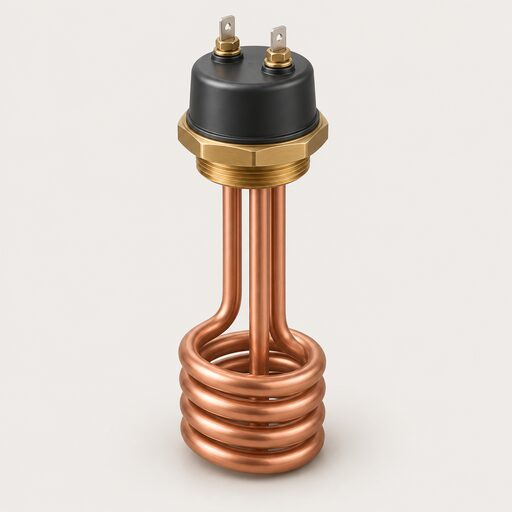 System Boilers ExplainedA system boiler heats your radiators and stores hot water in a separate cylinder, so several taps and showers can run at once.
 Hybrid Heat PumpsHow hybrid systems pair a heat pump with a gas, oil or LPG boiler, what decides which appliance runs, what they cost, how much gas they displace, and why the Boiler Upgrade Scheme will not fund them.
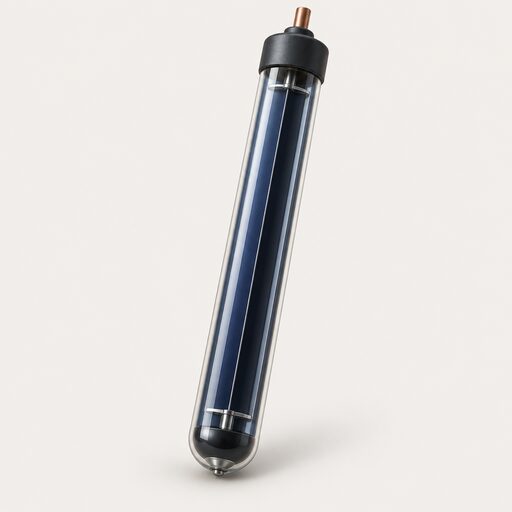 Solar Water Heating CollectorsSolar water heating uses panels on your roof to warm the water in your cylinder, working alongside your boiler rather than replacing it.
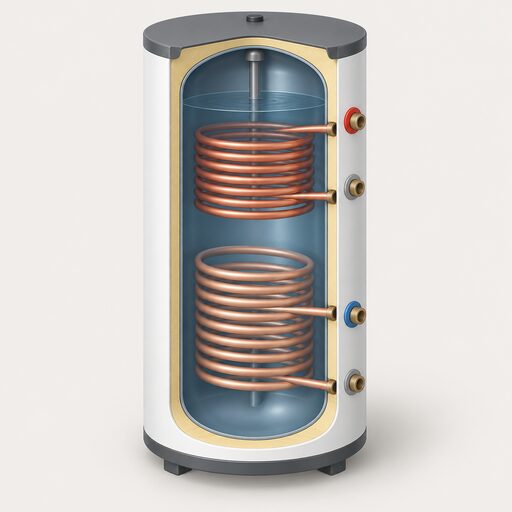 Cylinders and ControlsHow much of the sun's heat can your home actually keep?
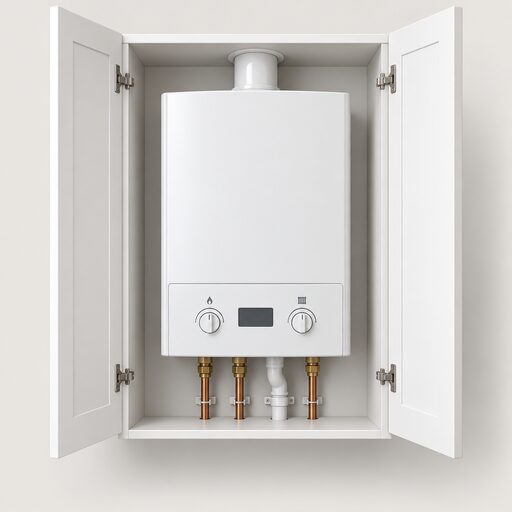 Combi BoilersWhat a combination boiler is, how it produces heating and instantaneous hot water from one unit, and the flow rate and mains pressure it depends on.