In this guide
Home Battery Storage for UK Homes: The Full Guide
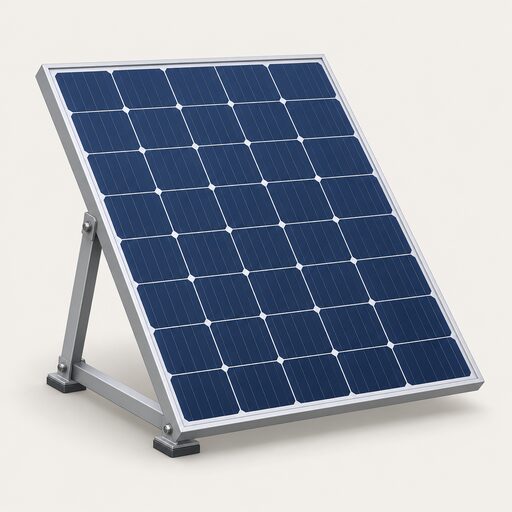
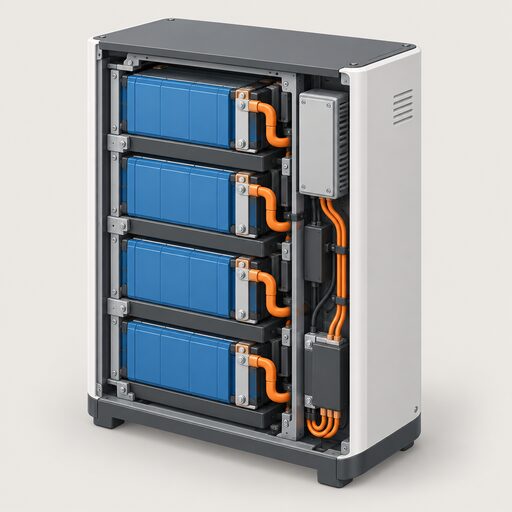
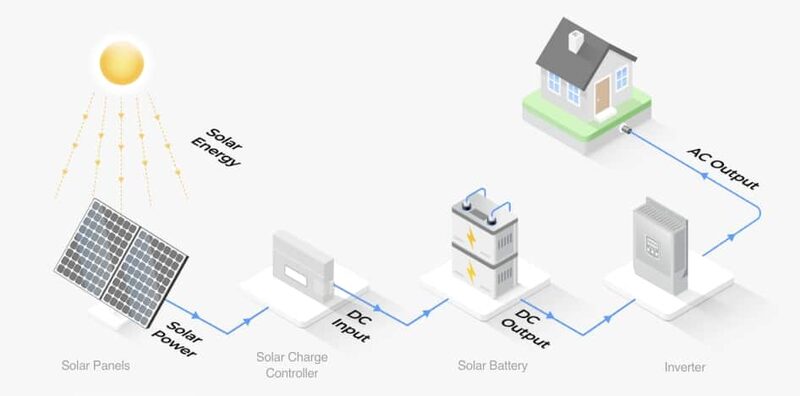
A home battery stores electricity so that it can be used later. In UK homes it is usually paired with solar panels, a smart time-of-use tariff, or both. It stores surplus solar generation, or is charged when the tariff is cheap, and the stored energy is then used at night or when prices are high1. A Parliamentary Office of Science and Technology briefing reports Great British Energy's figures: adding a battery to a solar installation raises self-consumption from 30 to 40% to 70 to 80%, and raises annual savings from about £150 to £450 a year2.
On cost, Energy Saving Trust estimates around £4,600 for a typical 5kWh system and up to £10,000 depending on size2. Published lifespans run from 8 to 15 years depending on the source. The Centre for Sustainable Energy puts payback periods in the region of 8 to 12 years, which it notes is similar to the reported lifespan3.
A battery reduces how much electricity a home buys from the grid. It does not take the home off the grid. A battery storage system also does not normally provide power in a power cut unless additional equipment and configuration is included4. The sections below set out what the evidence says on each of these points and link to the detailed pages.
What home battery storage is and what it does for a household
In its simplest use a battery stores unused energy for later, for example to power the home during the night6. Solar Energy UK describes batteries as a way for homeowners to store excess electricity produced from their solar system, and states that anyone with a home can potentially install a battery system7. Without a battery, solar electricity that is not used at the moment it is generated is exported.
The law defines the product in similar terms. In Scottish planning legislation, battery storage means "equipment and apparatus for the storage of energy which is converted from electricity and is stored for the purpose of its future reconversion into electricity"8. The VAT legislation covers an electrical storage battery that is intended solely for storing energy converted from electricity supplied to the residential accommodation, or generated by a microgeneration system9. Both definitions cover a battery charged from the grid as well as one charged from a roof.
Scale matters. The government's Statutory Security of Supply Report groups domestic and grid-scale batteries together as technologies that store electricity for up to eight hours10. A home battery moves energy across a day. It does not carry summer generation into winter. Within that limit the effect on a solar home is large. The Centre for Sustainable Energy states that a domestic battery system can store as much electricity as a household typically uses in a day, enabling a PV system to provide up to 70% of a household's annual electricity demand11. At that level the remaining share still comes from the grid.
The independence benefit is described in the same way by other bodies. Which? says home storage batteries make "your energy system more independent from the National Grid"12. Energy Saving Trust notes that combining solar panels with a battery lets a household store free, renewable electricity to power a heat pump, making it less reliant on grid electricity13. The trust's modelled energy efficient house of the future uses battery storage and an EV battery to store electricity14. In Wales, the Cosmeston Farm development is to be built with every home powered by photovoltaic panels and batteries15.
The technology is spreading quickly. Ember reports that monthly installations of home batteries doubled between 2024 and 2025, as recorded in the Microgeneration Certification Scheme database16. Some dependence remains whatever the size of battery: the grid connection, an electricity supplier and its tariff, the manufacturer's continued support, and in many systems an app. The page on batteries and energy independence sets out what a battery can and cannot do for self-reliance, and solar battery self-sufficiency covers the percentages in detail.
Cost: from around £4,600 for 5kWh to £10,000
The most widely cited UK figures come from Energy Saving Trust. It gives a range of £1,500 to £10,000 depending on the type and size of battery, with a 5kWh battery system costing around £4,60017. The Parliamentary briefing repeats the trust's estimate as up to £10,000 depending on size, with a typical 5kWh system around £4,6002. None of these sources states whether its figures include VAT. The VAT position is covered in the final section.
Other published figures cluster in the same area but do not match exactly, because they measure different things:
| Source and date | What is priced | Figure |
|---|---|---|
| Energy Saving Trust, August 202617 | Battery system, by type and size | £1,500 to £10,000; 5kWh around £4,600 |
| Energy Saving Trust, solar panels page, August 202618 | Battery storage added to a solar system | around £5,000 to £8,000 |
| Energy Saving Trust, storing energy page, July 202619 | Battery storage systems, typical | around £5,000 to £8,000 |
| ClimateXChange, as at March 202620 | 8 to 10 kWh battery, installed | £4,500 to £7,000 |
| ClimateXChange, as at March 202620 | 8 to 10 kWh battery, battery only | £2,800 to £4,500 |
| Consumer Protection Association, January 202621 | Solar battery, typical range | £2,000 to £12,500 |
| MCS Data Dashboard, 202522 | Average battery storage installation | just around £9,000 |
| Independent Assessors Association, September 202623 | Battery systems, starting price | from around £4,000 |
Several things drive the spread. The ClimateXChange figures show the gap between hardware and fitted price: an 8 to 10 kWh battery at £2,800 to £4,500 for the battery alone becomes £4,500 to £7,000 installed20. The Consumer Protection Association attributes its wide range to capacity, chemistry and lifespan21. The MCS average of just around £9,000 is higher than the guidance figures22. It reflects installations recorded on the MCS Data Dashboard, and residential systems now being fitted are typically in excess of 10kWh24.
In practice there is no list price for an installed battery, because most systems are quoted by installers for the individual home. The figure depends on capacity, whether a new inverter is needed, whether backup capability is included and where the unit is sited. Energy Saving Trust's guidance refers to getting at least three quotes from MCS certified installers1. The page on home battery cost breaks the price down further.
AC-coupled or DC-coupled: which setup fits which home
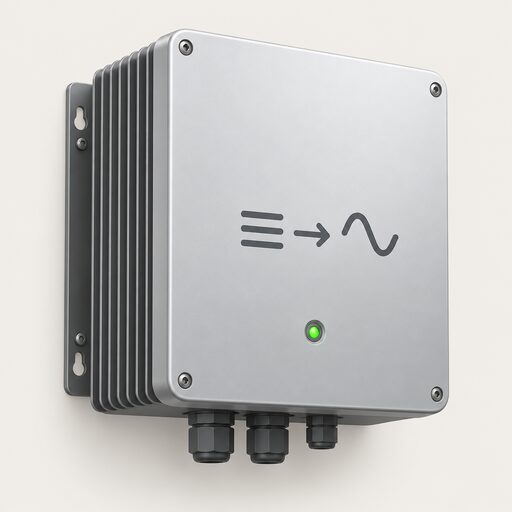
A battery can join a home's electrical system in two ways. An AC-coupled battery has its own inverter and connects on the household (alternating current) side, so it works alongside whatever solar inverter is already there, or with no solar at all. A DC-coupled battery shares a hybrid inverter with the solar panels and sits on the direct current side with them.
Whether panels are already on the roof usually settles the choice. The Centre for Sustainable Energy's guidance is direct on this point:
"In general, AC-coupled batteries are probably better if you already have PV as they are easier to retrofit"
A home with existing solar already has a working solar inverter. An AC-coupled battery leaves it in place, while a DC-coupled design generally means replacing it with a hybrid unit. Where panels and battery are installed together, there is no existing equipment to work around and either arrangement is open. A home with no solar, charging purely from a tariff, is by its nature an AC-side installation.
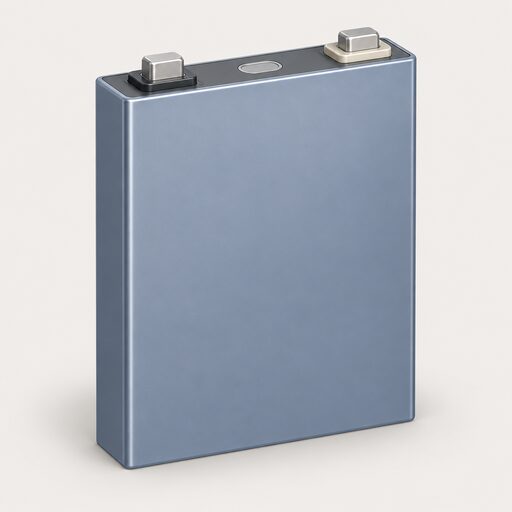
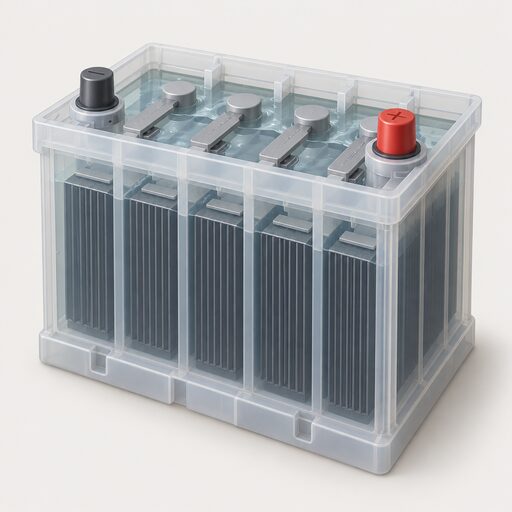
The decision also affects backup capability, how much power the battery can deliver at once, and how easily capacity can be added later. These are covered on the pages for AC and DC coupled battery systems, all-in-one battery systems and modular and stackable battery systems. The cells themselves are covered on home battery chemistries. The Centre for Sustainable Energy notes that the materials in domestic batteries are principally lithium, the most common material used, but also cobalt and nickel3.
Efficiency and lifespan: what to expect over 10 to 15 years
UK sources give overlapping but different figures for how long a battery lasts:
| Source | Stated lifespan |
|---|---|
| Parliamentary Office of Science and Technology, June 20262 | around 10 to 15 years |
| Home Energy Scotland, September 202625 | 10 to 15 years |
| Energy Saving Trust, August 202617 | about 10 to 12 years |
| Centre for Sustainable Energy, October 20253 | 8 to 12 years |
| Independent Assessors Association, September 202623 | about ten years |
The Parliamentary briefing makes the comparison that matters for a solar household: domestic battery storage "has a shorter lifetime of around 10 to 15 years, when compared to solar panels"2. A home keeping its panels for their full life should therefore expect to replace the battery at least once. Replacement in this context means the battery holding noticeably less than it did when new, not sudden failure. Warranties are written on that basis, in terms of retained capacity and energy throughput, as the pages on battery cycle life and degradation and home battery warranties explain.
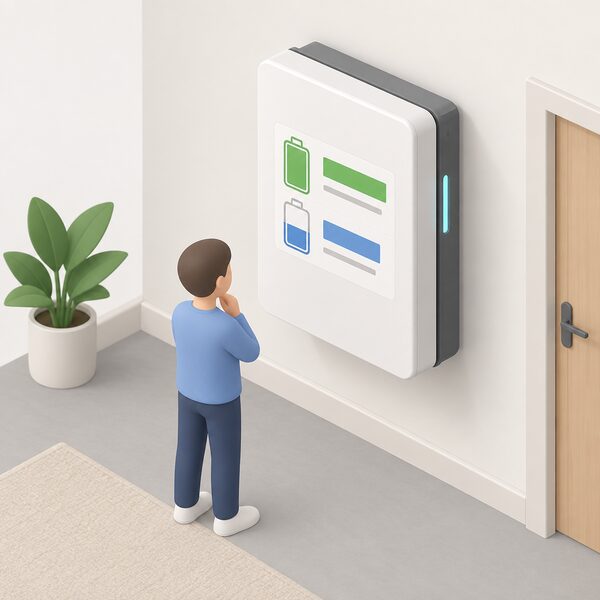
Not all of the rated capacity is available day to day. Energy Saving Trust explains that when the battery gets down to a set level, maybe 20% of the total storage capacity, the system will stop taking electricity from it1. This reserve protects the cells. It is why the capacity on the label and the usable capacity are different numbers, as set out on battery capacity and usable capacity.
Some energy is also lost on each charge and discharge cycle and in standby. The official and independent UK guidance used for this page does not give a percentage for that loss, so none is quoted here. The mechanics are covered on battery round-trip efficiency. For independence, the point is that a battery is a consumable part of the energy system with a finite service life, and its replacement cost belongs in any long-term view.
Whether a battery keeps the lights on in a power cut
Most home batteries, as normally installed, do not keep a home running in a power cut. Energy Saving Trust states this plainly:
"A battery storage system also does not normally provide power in a power cut unless additional equipment and configuration is included"
Other bodies say the same in different words. The Centre for Sustainable Energy says not all batteries can deliver electricity during a power cut3. Which? says that some, but not all, battery storage systems can be set up to provide electricity during a power cut, and that they must be specifically set up to do so26. It adds that the questions for an installer are whether the battery will work in an outage, and for how long12. Electricity North West, a network operator, says storage devices can provide back-up supplies in some cases, but that this is not always possible and is a matter to check with the installer27.
So backup is a feature that has to be specified, and it is not supplied by default. Where a system does have it, what it runs depends on how it is wired (selected circuits or the whole house), how much power the battery can deliver and how much charge it happens to hold when the supply fails. These points are covered on battery backup power and EPS, battery storage during a power cut and backup interface for a home battery.
Network operators treat battery backup for vulnerable customers as a separate matter. SSEN is giving 20,000 home battery packs to customers who need the most support. It states that, subject to approval from the manufacturers of specialist in-home medical equipment, the battery may keep these devices operating for longer during a power cut28. In Northern Ireland, NIE Networks advises that stairlifts often have backup batteries whose expected life should be checked with the manufacturer. It also advises ensuring access to a ground floor exit, a telephone and heating for around three hours29. Its general advice for any household is to keep a torch and batteries in the house30.
Sizing a battery: 5kWh and 10kWh systems for typical homes
Battery storage capacity is measured in kilowatt hours (kWh), and Energy Saving Trust says a typical home system might be 10 kWh1. Its cost example uses a 5kWh system17. An MCS case study of a home with a heat pump describes "a 5kWh battery storage system"31. At the larger end, Solar Energy UK reported in April 2026 that residential battery energy storage systems are typically in excess of 10kWh, which it describes as well over five average washing machine cycles24.
Capacity in kWh is not the same as power in kW. Capacity is how much energy the battery holds. Power is how fast it can deliver that energy, and therefore which appliances it can run at once. Searches for a "5kW" or "10kW" battery usually mean capacity. The distinction is explained on battery power rating and C-rate.
The reference point for sizing is daily use. The Centre for Sustainable Energy notes that domestic battery systems can store as much electricity as a household typically uses in a day11. A battery much smaller than the daily surplus from the panels will fill early and leave the rest to be exported. A battery much larger than the home's evening and overnight demand carries capacity that is rarely cycled. With a time-of-use tariff the calculation changes, because the battery can be filled from the grid whatever the weather. A larger capacity may then be used more fully in winter.
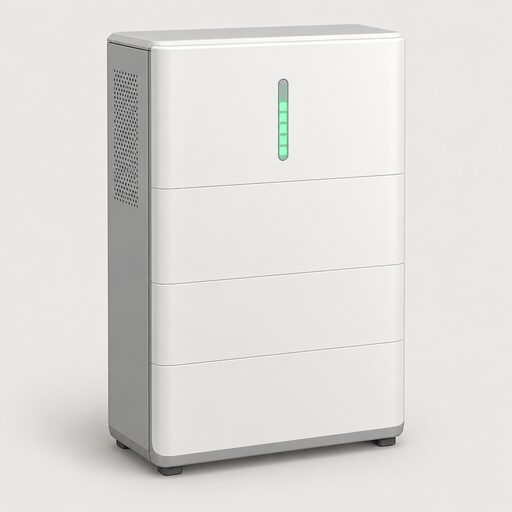
Physical size is modest. Energy Saving Trust gives a typical battery storage system as around 100cm x 60cm x 25cm17. Many current systems are modular, so capacity can be added in blocks. The page on adding more batteries later covers the conditions. Home battery sizing works through the method, and battery, heat pump and EV charging covers the larger loads.
Payback: 8 to 12 years and what the savings depend on
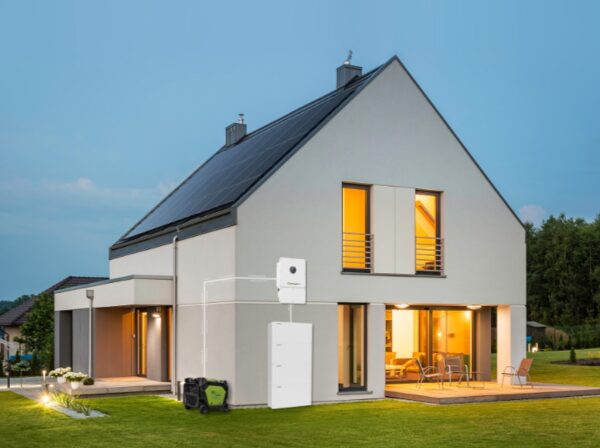
The Centre for Sustainable Energy puts payback periods "in the region of 8 to 12 years, which is similar to their reported lifespan"3. A battery whose payback period matches its expected life only breaks even. One that pays back early in its life returns a surplus. The published range gives no assurance of either outcome.
| Source | Scenario | Figure |
|---|---|---|
| Centre for Sustainable Energy3 | General range | payback 8 to 12 years |
| Centre for Sustainable Energy3 | Time-of-use example, battery costing £4,600 | payback 9 years |
| NICEIC32 | Four-bed London home, solar installation | cost offset within 10 to 12 years |
| Great British Energy, via Parliamentary briefing2 | Battery added to solar | annual savings from about £150 to £450 |
| Energy UK33 | Batteries with a time-of-use tariff | £130 annual saving |
The figures differ because the scenarios differ. The rise from about £150 to £450 a year is a modelled difference of £300 between those two figures. It follows from self-consumption rising from 30 to 40% to 70 to 80%2. Energy UK's £130 is a different case: a battery working with a time-of-use tariff in a report on low-income households33.
Four things drive the result:
- How much solar surplus there is to store. Without a battery, unused solar electricity is wasted or exported to the grid, often at a relatively low rate34.
- The tariff. Home Energy Scotland states that switching to a time-of-use tariff, which lets the battery charge during off-peak times when electricity is cheap, maximises savings25. The stored energy can then be used during peak hours, typically 4pm to 8pm3. Which? reports that several providers offer smart storage battery tariffs, including British Gas, E.ON Next and EDF Energy35.
- Lost export income. Home Energy Scotland says installing battery storage will lower the amount exported, meaning less money from export payments. It says overall savings are greater than relying on export payments alone25.
- The installed price and the battery's actual life, as set out in the two sections above.
The payback calculation depends on tariff prices that a household does not control. A battery moves the household's dependence from the peak price towards the off-peak price and the export rate, and a supplier can change any of these. The detailed working is on battery payback and savings, batteries and smart tariffs and will a home battery pay for itself. The method MCS installers must use to estimate the benefit is on MCS self-consumption calculation.
Where a battery can be installed under UK fire-safety rules
Energy Saving Trust states that a battery can be installed in garages, on external walls or in utility rooms, depending on which battery is chosen17. In practice the choice is narrower than that list suggests, because location is now governed by a dedicated fire-safety specification.
That document is PAS 63100:2024, published by BSI. BSI describes its scope as the specification for protecting electrical battery energy storage systems against fire when they are installed in dwellings36. It deals with where in a home a battery may be located and how it is protected. It sits alongside the wiring regulations and the MCS battery installation standard. How the three fit together is set out on battery installation standards, and the practical consequences for individual rooms are on battery siting and location.
The reason for a dedicated standard is the chemistry. North Wales Fire and Rescue Service notes that the average UK household already has many rechargeable items containing lithium ion batteries, such as laptops, mobile phones, e-scooters, e-cigarettes and mobility vehicles37. A home storage battery is the same family of technology at far greater capacity, fixed permanently to the building. The pages on home battery fire safety, what thermal runaway is and whether home batteries are safe cover the risk and the evidence on how often it arises. Battery ventilation and temperature covers operating conditions, which also affect lifespan.
Siting rules appear in funding schemes too. Ofgem's ECO4 delivery guidance was updated on 7 August 2025 with an added paragraph on battery storage installations38.
Planning permission is a separate question from fire safety, and the rules differ in each nation. They are set out on separate pages for England, Scotland, Wales and Northern Ireland. The duty to notify the network operator is on battery grid connection: G98 and G99. Insurers are a further party with an interest, as set out on home battery and house insurance.
MCS certification: where it is required and where it is recommended
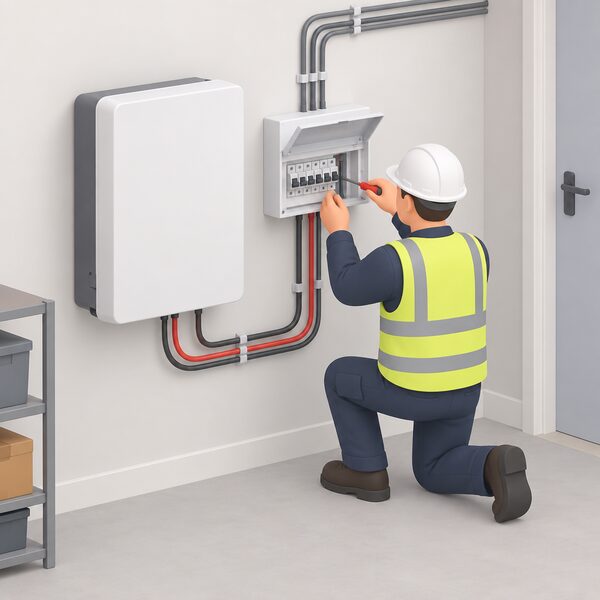
The Microgeneration Certification Scheme (MCS) certifies installers and, for most technologies, products. No general law requires MCS certification for a battery installation. Nesta notes that MCS certification is "only required for installations under the Boiler Upgrade Scheme and the Home Energy Scotland Grant" among heating schemes39. For batteries, the practical effect is that certification is a condition of scheme funding and of export payments:
- Export payments. The Centre for Sustainable Energy states that for a battery to be paid for exporting stored renewable energy, which not all can do, the installation must be MCS certified3. The Consumer Protection Association makes the same point for solar: an installer who is not MCS certified cannot offer access to schemes like the Smart Export Guarantee34.
- Government-funded schemes. Under the Warm Homes: Social Housing Fund, a domestic battery must be installed by an MCS certified installer to the MCS battery installation standard, MIS 301240.
- Consumer guidance. Energy Saving Trust refers to quotes from MCS certified installers1. The Centre for Sustainable Energy says to make sure the installer is MCS certified3. The Consumer Protection Association says MCS certified installers ensure systems comply with UK standards and qualify for financial incentives41.
MCS describes the purpose of certification as ensuring that installers "install renewable technologies to the best possible quality, while also adhering to industry-recognised safety practices"22. Which? adds a second check: that the installer is signed up to the Renewable Energy Consumer Code, which now covers storage, and is certified by MCS or alternatively by Flexi-Orb12.
Battery products are treated differently from other MCS technologies. MCS states that all certified installers delivering certified installations must install an MCS certified product, "except for battery storage"42. The Social Housing Fund guidance notes that the MCS battery installation standard requires UKCA/CE marking on the battery40. An MCS certificate for a battery installation therefore covers the installer's work against the standard. It does not mean the battery itself has been MCS product-certified.
On who may do the work, the Centre for Sustainable Energy states that battery storage systems generally must be hard-wired into the home's circuit by a qualified electrician43. The government publishes statistics on MCS certified retrofit battery installations in domestic properties across the United Kingdom44. The steps from survey to handover are on battery installation process, and self-build routes are on DIY home battery builds.
Battery brands in the UK: warranties, availability and company status
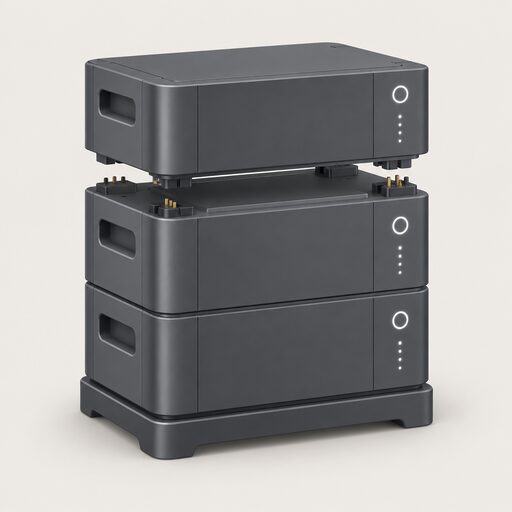
The UK market includes whole-home systems from inverter and battery makers, modular battery stacks that pair with third-party hybrid inverters, and portable or plug-in units. This site has a page for each brand and its main products, describing specifications, warranty terms and the maker's company status. No brand is ranked here. The specific points on brands and suppliers that can be stated from published sources are these:
| Brand or supplier | What is stated | Who states it |
|---|---|---|
| Enphase AC Battery | Available via UK installers | Which?, May 202612 |
| Good Energy | Installs solar panels and batteries in multiple places across the south of England | Which?, August 202646 |
| EcoFlow DELTA Pro 3 | Operation noise as low as 30 decibels | the maker, June 202547 |
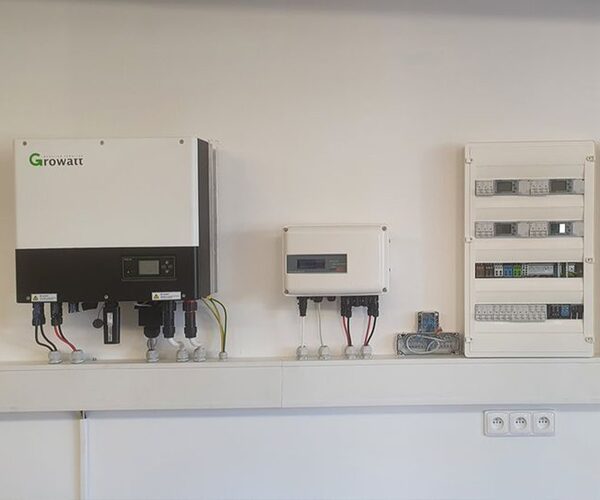
| Growatt storage inverters | Publishes an error code list: 302 no AC connection, 500 BMS communication fault, 502 and 503 battery voltage low and high, 505 battery reversed | the maker, September 202648 |
| British Gas, E.ON Next, EDF Energy | Offer smart storage battery tariffs | Which?, April 202635 |
Brand pages on this site include Tesla, GivEnergy, Enphase, Growatt, Fox ESS, SolaX, Sunsynk, Fogstar, BYD, Pylontech, SolarEdge, Sigenergy, myenergi, Powervault, EcoFlow and Victron. Others are listed within the home batteries section.
Three things about any brand bear on independence. The first is the warranty: a term of years, usually limited by retained capacity and energy throughput, with conditions on registration and installation. It is a promise from a company, and its value depends on that company continuing to trade and to support the product in the UK. The second is the software. Many systems are set up and scheduled through the maker's app and cloud service, a dependence examined on battery monitoring and apps. The third is fault support. The Growatt list shows the kind of information a maker may publish. For error 302 it gives the cause as "The machine has no mains connection", and the remedy as checking whether the wiring between the mains and the machine is correct and reliable48. Battery maintenance and faults and battery recalls and safety notices cover what happens when things go wrong.
Batteries without solar: plug-in and standalone options
A battery does not need solar panels. Home Energy Scotland states that a battery can be charged with cheap electricity from the supplier, typically on certain tariffs at night or in the middle of the day25. The VAT legislation expressly covers batteries storing electricity supplied to the home as well as electricity generated on site9. In this arrangement every unit of electricity is still bought from the grid. The battery changes when it is bought, not how much. The saving is the difference between the peak and off-peak prices, less what is lost in storage. Battery without solar panels and battery on Economy 7 cover the detail.
A standalone battery can be given solar later. EcoFlow, a maker, states that independent battery systems support the retrofitting of solar panels, and that where the system cannot handle solar input directly, "a micro-inverter or hybrid inverter needs to be installed"47.
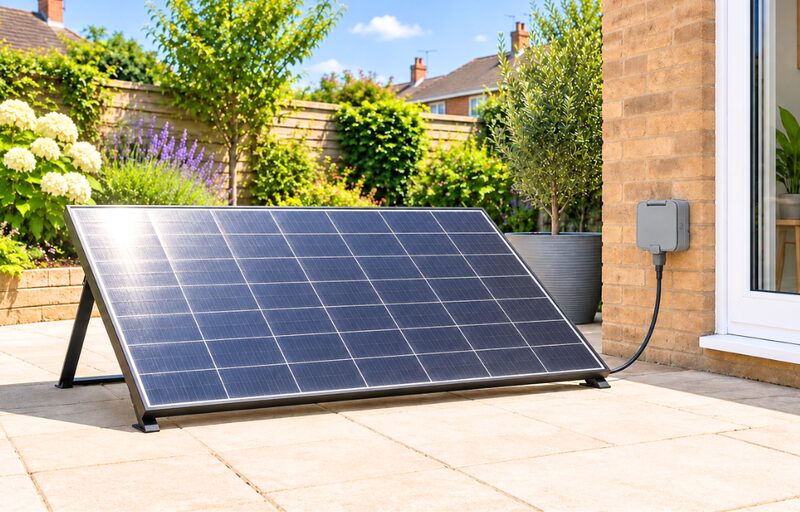
Plug-in products are a separate category, and the position has changed quickly. In December 2025 MCS described plug-in solar as "currently not available to the UK market"49. In June 2026 the government consulted on allowing households to "connect plug-in solar systems (without batteries) directly to a standard mains socket"50. By August 2026 Electrical Safety First stated that plug-in photovoltaic panels, also known as balcony solar, "are now available to buy and self-install in the UK"51.
The pages on plug-in battery storage, whether plug-in batteries are safe and connecting a plug-in battery without an installer follow these rules as they develop.
VAT, funding and the rules that affect the total cost
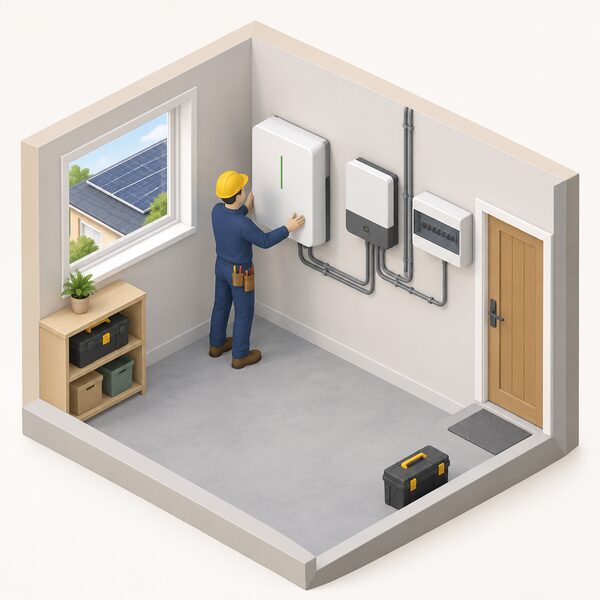
VAT. Solar Energy UK announced in December 2023 that "From 1 February, VAT will no longer apply to domestic BESS", referring to 1 February 2024 and to retrofitted domestic battery energy storage systems53. The MCS Foundation lists VAT on battery storage installed with solar PV at 0%5. ClimateXChange describes the arrangement as a temporary 0% VAT applied to domestic battery storage systems since February 202420. The relief sits within the VAT legislation on energy-saving materials. It covers an electrical storage battery intended solely for storing energy converted from electricity supplied to the home or generated by a microgeneration system9. HMRC's manual confirms that the relief applies to the installation of electrical storage batteries in residential accommodation, or in buildings intended for use solely for a relevant charitable purpose54. Solar Energy UK's policy position is that residential energy storage should qualify for 0% VAT when installed as a standalone measure55. Because the relief is described as temporary, its end date is a live question, and home battery VAT rate tracks it.
Funding. No grant scheme is dedicated to home batteries alone. Batteries appear inside wider schemes:
- The Warm Homes: Social Housing Fund treats domestic batteries as eligible where they are installed by an MCS certified installer to MIS 301240.
- Ofgem's ECO4 delivery guidance was updated with a paragraph on battery storage installations, dated 7 August 202538.
- In Scotland, access to Home Energy Scotland funding requires the installer to be from an MCS certified business39.
- Birmingham's Switch Together group-buying scheme lets households register to have battery storage added to their existing solar panels56.
Other rules with a cost. The network operator must be told about a battery, and larger systems may need approval in advance, as covered on battery grid connection: G98 and G99. Planning rules differ between the four nations, as linked in the siting section above. Disposal at end of life is regulated, as covered on battery recycling and disposal. Income from grid services and virtual power plants can offset cost, but it ties the battery's operation to a third party's platform. Which homes suit battery storage brings these constraints together by property type.
Sources56 cited
- Battery storage advice, Energy Saving Trust, 2026-08-19
- POSTnote 0771, Parliamentary Office of Science and Technology, 2026-06-25
- Battery storage advice, Centre for Sustainable Energy, 2025-10
- Solar power facts, Energy Saving Trust, 2026-08-13
- Zero Carbon, Zero VAT campaign, MCS Foundation, 2026-09-20
- Solar panels: retrofitting your home, Oxfordshire County Council, 2026-09-17
- Batteries in the home, Solar Energy UK, 2026-09-17
- Scottish Statutory Instrument 2024 No. 102, legislation.gov.uk, 2024-05-24
- Value Added Tax Act 1994, Schedule 7A, energy-saving materials, legislation.gov.uk, 2026-09-17
- Statutory Security of Supply Report 2025, GOV.UK, 2025-12-17
- Making the most of your solar PV panels, Centre for Sustainable Energy, 2026-08
- Solar panel battery storage, Which?, 2026-05-14
- How to ensure a heat pump runs efficiently, Energy Saving Trust, 2026-05-19
- The energy efficient house of the future, Energy Saving Trust, 2026-07-15
- UK's largest net zero housing development to be delivered in Wales, Welsh Government, 2025-10-02
- UK solar homes during the heatwave, Ember, 2024
- Battery storage advice, England, Energy Saving Trust, 2026-08-19
- Solar panels advice, Energy Saving Trust, 2026-08-27
- Storing energy, Energy Saving Trust, 2026-07-15
- Balancing investment in clean heat and energy efficiency in Scottish housing retrofit, ClimateXChange, 2026
- Battery storage and solar panels, Consumer Protection Association, 2026-01-06
- Battery storage for consumers, MCS, 2026-09-17
- Solar battery storage guide, Independent Assessors Association, 2026-09-20
- Homes with batteries to cash in from free power offer, Solar Energy UK, 2026-04-14
- Battery storage, Home Energy Scotland, 2026-09-20
- Should you get solar panels?, Which?, 2024-07-03
- Storage, Electricity North West, 2026-09-19
- SSEN gives 20,000 home battery packs to customers who need the most support, SSEN, 2026-02-24
- Emergency power cuts, NIE Networks, 2026-09-19
- Power cut help, NIE Networks, 2026-09-20
- Lucy's journey to a warmer home with a heat pump, MCS, 2024-11-08
- Solar panel installation, maintenance and repair, NICEIC, 2026-09-17
- Clean heat: supporting low-income households, Energy UK, 2026-06-11
- Can solar panels charge electric cars?, Consumer Protection Association, 2026-04-15
- Time-of-use tariffs explained, Which?, 2026-04-23
- PAS 63100: protection against fire of battery energy storage systems, BSI, 2026-09-17
- Lithium ion batteries, North Wales Fire and Rescue Service, 2026
- Summary of updates to ECO4 delivery guidance and measures table, Ofgem, 2025-08-07
- How can I find a trustworthy installer?, Nesta, 2025-01-21
- Warm Homes: Social Housing Fund Wave 3 scheme guidance addendum, GOV.UK, 2026-06
- Energy efficient home improvements, Consumer Protection Association, 2026-05-07
- Certifying your product, MCS, 2026-05-18
- Plug-in solar, Centre for Sustainable Energy, 2026-09
- MCS domestic retrofit battery installations 2025 to 2026, GOV.UK, 2026-05-28
- Barcud solar panel installation scheme specification, Sell2Wales, 2026-06-15
- Solar panel costs, Which?, 2026-08-03
- Home battery storage in the UK without solar, EcoFlow, 2025-06-24
- Storage inverter FAQ, Growatt, 2026-09-17
- Setting the standard: product certification and the future of UK solar, MCS, 2025-12-08
- Plug-in solar consultation, GOV.UK, 2026-06-16
- Plug-in solar consumer guide, Electrical Safety First, 2026-08
- Plug-in solar explained, Low Carbon Hub, 2026-07-09
- Victory for campaign against VAT on home energy storage, Solar Energy UK, 2023-12-11
- VAT energy-saving materials manual, VENSAV3061, HMRC, 2026-09-17
- VAT on solar and battery storage, Solar Energy UK, 2026-09-17
- Switch Together Birmingham, Birmingham City Council, 2026-01-27