
In this guide
Fogstar Energy is the home storage arm of Fogstar, a UK company that has been supplying and designing lithium battery solutions for a decade and marked that milestone in 20261. It sells direct to householders rather than through an installer network, and the range runs from a 10kWh battery at £1,599.99 to a 64.4kWh modular stack at £6,999.992. The entry point for most homes is the 16.1kWh ECO battery at £1,949.99, which the maker prices at £121.12 per kWh3.
The technology is consistent across the range: 48V nominal systems built on LiFePO4 cells, with a 200A PACE battery management system on the 16.1kWh unit and cycle life quoted at up to 8,000 cycles at 91% depth of discharge4. Fire suppression and battery heating appear on the newer models, and the IP65 modular stacks are rated for indoor and outdoor installation6.
What this buys a household is storage it owns outright, bought at a published price with no installer margin built in. What it does not buy is a complete system: these are batteries, and the inverter, the installation and the electrical sign-off sit outside the box. The dependence that remains is on the inverter maker, on the installer who wires it, and on the grid the battery is charged from.
Fogstar Energy: the company behind the batteries
Fogstar was founded by Ben Facer to supply genuine lithium-ion cells to the UK market, and the company describes 2026 as marking a full decade of supplying and designing lithium battery solutions1. That origin in cell supply matters to how the business presents itself: the emphasis throughout its guidance is on cell provenance and traceability rather than on system integration. Fogstar states that it fully controls its manufacturing process, with a directly employed team overseeing component sourcing, assembly and quality control10.
The home storage range sits alongside a leisure battery business, the Drift range, which was launched in 2022 and has since been extended1. Fogstar Energy is the brand under which the storage batteries are sold, and the maker is named as Fogstar Energy on the product pages themselves11. The 16.1kWh battery is described as UK-designed12.
The company sells direct, which is the single most important commercial fact about it. There is no installer network standing between the maker and the buyer, and no published installed price, because installation is not part of what Fogstar sells. A householder buys a battery at a listed price and then arranges an electrician or installer separately. That keeps the hardware cost visible and comparable, and it moves the responsibility for a safe, compliant installation onto the buyer.
Support is UK-based and long-running: the modular stack pages state that the products are backed by ten years of UK-based customer service support7. Wholesale enquiries run through a separate address and a dedicated wholesale site, while general customer service for the batteries runs through customerservice@fogstar.co.uk13.
The range at a glance: ECO, IP65 modular stacks and larger stacks
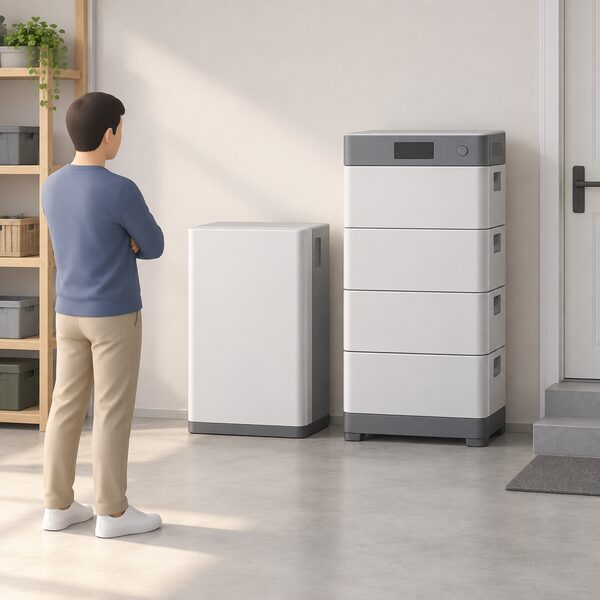
Fogstar Energy's catalogue spans 5.12kWh up to 1.23MWh in size, which covers everything from a single small battery to commercial-scale banks2. For a home, three families matter.
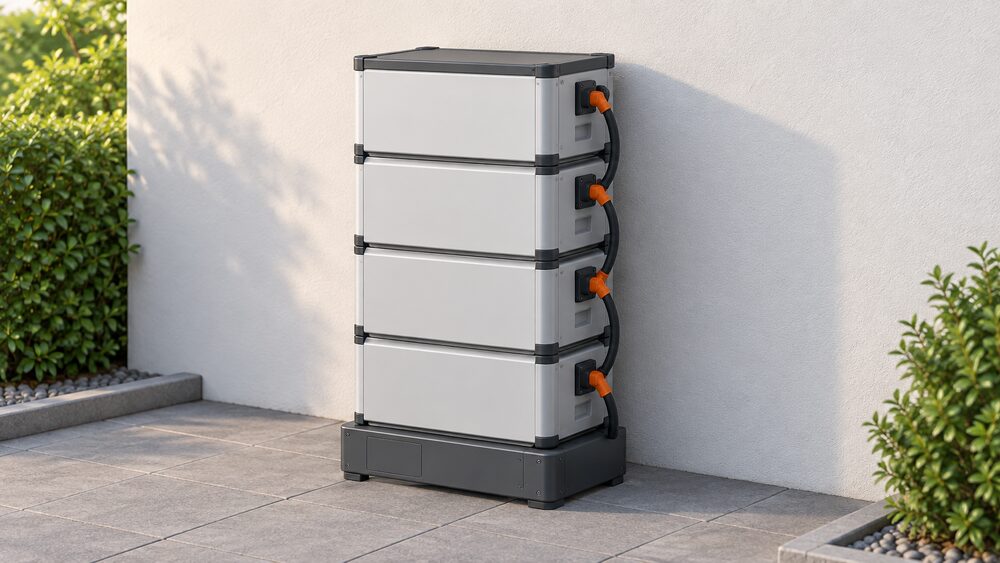
The ECO range is the simplest: a fully assembled, commercial-grade energy storage unit built for homes and small commercial installations, sold as a single box2. The IP65 modular stacks are the expandable option, where each 16.1kWh module forms part of a system that can be configured from a single module up to a 64.4kWh stack7. Above that sit the larger rack and cabinet systems, including a 30kWh rack bundle in a glass cabinet, intended for residential and commercial applications and described as suited to plant rooms, garages and dedicated energy storage spaces14.
| Product | Usable capacity | Price | Notes |
|---|---|---|---|
| 10kWh battery | 10kWh | £1,599.992 | Fire suppression, 6-year warranty15 |
| ECO 16.1kWh | 16.1kWh | £1,949.993 | £121.12 per kWh3 |
| IP65 16.1kWh stack | 16.1kWh | £2,499.997 | Stack control panel and base included7 |
| 32kWh battery | 32kWh | £3,499.995 | Heating and fire suppression5 |
| 32.2kWh stack | 32.2kWh | £3,999.9916 | Expandable to 64.4kWh16 |
| 64.4kWh stack | 64.4kWh | £6,999.996 | Four 16.1kWh modules6 |
Prices are the maker's published figures and the VAT position is not stated on them. Bundles that pair a battery with an inverter are priced separately, from £2,451.79 for a 16.1kWh ECO bundle and from £2,681.79 for an IP65 16.1kWh bundle17. A 16.1kWh battery with an inverter is listed at £2,909.03, reduced from £3,161.994.
The 16.1kWh ECO battery: the entry point at £1,949.99
The ECO 16.1kWh battery is the model most households will meet first. It is a fully assembled, commercial-grade energy storage solution built for homes and small commercial installations, priced at £1,949.99, which the maker works out at £121.12 per kWh3. It carries a six-year manufacturer's warranty backed by ten years of Fogstar customer support3.
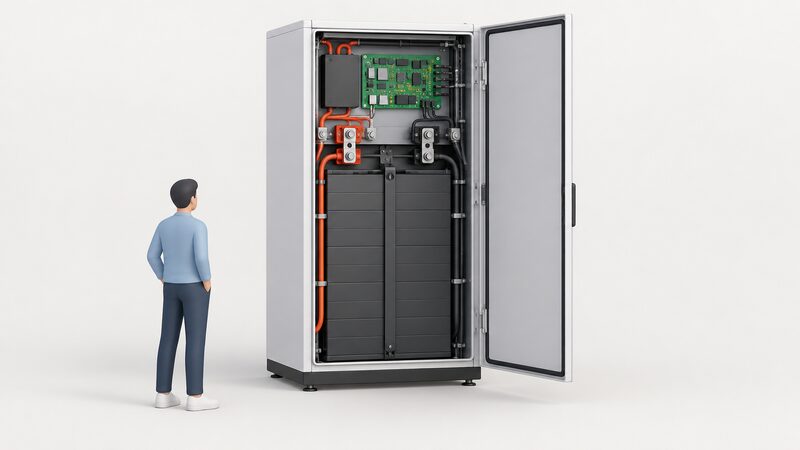
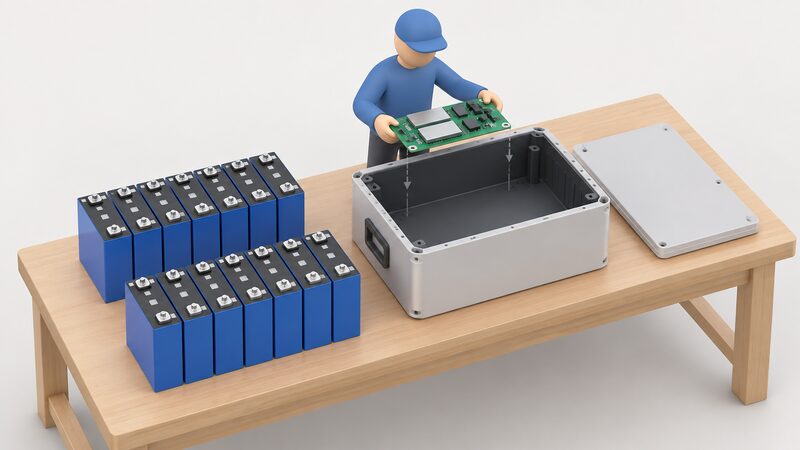
Inside, the maker specifies fully matched and balanced Grade A 314Ah cells, paired with a smart 200A BMS that integrates with Victron, Luxpower and Sunsynk inverters8. Rated charge and discharge current is 200A at 25 degrees C, and cycle life is quoted at 8,000 cycles at 91% depth of discharge, measured at 25 degrees C with a 50A charge and discharge current3. Fire suppression is included: an automatic heat-activated aerosol system provides rapid response protection inside the battery3.
That combination of a published per-kWh figure and named inverter compatibility is what makes the ECO range legible to a householder comparing options. The per-kWh price is the number to hold onto, because it is the only figure in the range expressed that way, and it lets a buyer see how the larger stacks compare without doing the arithmetic themselves.
The limits are worth stating plainly. The ECO is a battery, not a system: no inverter, no changeover for backup, no installation. Inverter compatibility is stated for three brands, and a household with a different inverter would need to check the protocol list rather than assume. The 200A rating sets the power ceiling, which is a separate question from capacity and is covered in battery power ratings.
The IP65 modular stack: 16.1kWh modules that build to 64.4kWh
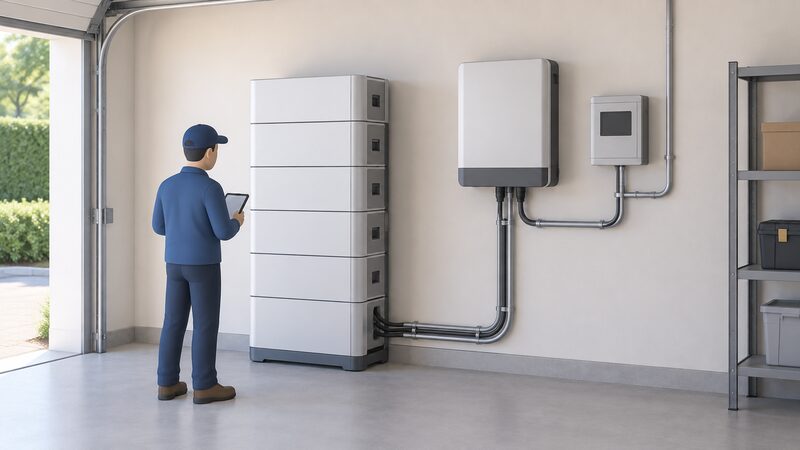
The modular stack is Fogstar's most popular battery to date, and the design logic is straightforward: one 16.1kWh module is the building block, and a stack can be configured from a single module up to 64.4kWh8. The 64.4kWh stack is built from four individual 16.1kWh modules6.
Each module is rated at 16.1kWh with a 314Ah capacity, configured 16S1P, and the enclosure is IP65 rated for indoor and outdoor installation7. A module measures 830mm long, 450mm wide and 449mm high, and weighs 148kg7. The stack version comes with a stack control panel and base, and is supplied with pre-terminated 95 mm² battery power cables, battery-to-battery cables with Amphenol connectors, and a 1.5m communication cable7.
Cycle life is quoted at 8,000 cycles at 91% depth of discharge, and the fire suppression is a built-in, heat-activated aerosol system that the maker describes as needing no ongoing maintenance7. A single 16.1kWh expansion module is sold separately at £2,049.99 for households adding capacity to an existing stack18.
The intermediate sizes are worth knowing because they show how the arithmetic works. A 32.2kWh stack uses two modules and is expandable to 64.4kWh with additional stacks, and a 48.3kWh stack uses three modules with the same expansion ceiling16. The 32.2kWh stack is IP65 rated for indoor and outdoor installation and carries a six-year warranty with ten years of UK customer support16.
Availability is the practical constraint. The 16.1kWh, 32.2kWh and 64.4kWh stacks were all showing a next available batch arriving in December at the time of writing, so a household planning an installation around one of these should expect a lead time rather than next-day delivery7. The expansion path itself is covered in modular and stackable battery systems.
The 32kWh battery and outdoor cabinet options
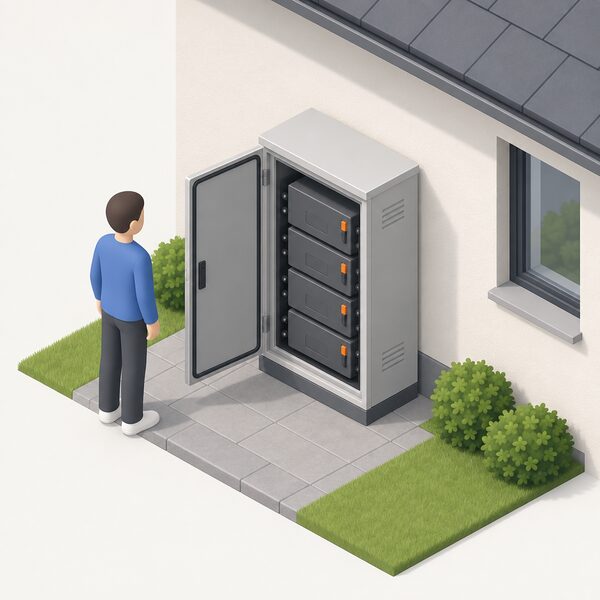
The 32kWh battery is the largest single-box unit in the range, priced at £3,499.995. It is rated at 32kWh nominal and 32kWh usable, and it is expandable up to 16 units, which is the widest scalability figure published for any single Fogstar product5. It carries an integrated automatic fire suppression system and built-in battery heating that enables safe charging down to minus 10 degrees C5. Inverter compatibility is stated for Victron, Luxpower, Solis, Sunsynk and Voltacon, and cell configuration is 16S2P5. A JK 2A active balancer handles cell management20.
The heating is the detail that matters most for UK siting. A battery in an unheated garage or an outdoor cabinet faces winter temperatures that would otherwise block charging, and the maker's stated minus 10 degrees C charging floor is the figure to check against a proposed location. The general principles are set out in ventilation, temperature and operating conditions.
For outdoor siting, Fogstar sells an IP56 outdoor battery cabinet that takes either four 5.12kWh batteries for 20.48kWh or eight for 40.96kWh21. The cabinet is a housing rather than a battery, so the capacity comes from the modules inside it. A 30kWh rack bundle in a glass cabinet is also offered, described as designed in the UK and intended for plant rooms, garages and dedicated energy storage spaces14.
The distinction between IP65 and IP56 is worth noting: the modular stacks are IP65, the outdoor cabinet is IP56, and both are described as suitable for outdoor use. Neither rating is a statement about thermal performance, which is governed by the heating system instead.
Specifications: 48V, 314Ah cells, 200A BMS and 8,000 cycles
The specification pattern across the range is consistent enough to summarise. All Fogstar battery options, both pre-assembled and DIY, use LiFePO4 technology2. The 16.1kWh 48V battery runs at 48V nominal with 16.1kWh usable capacity, an advanced 200A PACE battery management system, and up to 8,000 cycle life4. The ECO 16.1kWh battery uses Grade A 314Ah cells and a smart 200A BMS8. The 5.12kWh rack battery uses Grade A LiFePO4 cells and a PACE 100A BMS14.
| Specification | Figure | Applies to |
|---|---|---|
| Nominal voltage | 48V | 16.1kWh 48V battery4 |
| Cell chemistry | LiFePO4, Grade A EVE MB31 | 16.1kWh 48V battery4 |
| Cell capacity | 314Ah | IP65 16.1kWh module7 |
| BMS | 200A PACE | 16.1kWh 48V battery4 |
| Cycle life | Up to 8,000 cycles | 16.1kWh 48V battery4 |
| Depth of discharge | 91% at 8,000 cycles | 32kWh battery5 |
| Communications | CAN / RS485 | 32.2kWh stack16 |
| Cell configuration | 16S2P | 32kWh battery5 |
The 51.2kWh figure appears in the case study material, where the 16.1kWh battery is described as operating at 48V with a 51.2V nominal voltage23. That is the same pack described two ways, and the product pages use 48V throughout.
The 8,000-cycle figure is the headline durability claim, and it is consistently tied to a depth of discharge rather than quoted bare: 91% on the 32kWh battery, the 64.4kWh stack and the modular stacks5. Cycle life claims of this kind are covered in more detail in battery cycle life and degradation.
Fire suppression, heating and the 95% depth of discharge

Fire suppression is standard across the Fogstar Energy range rather than an optional extra. The 32kWh battery has an automatic, heat-activated aerosol fire suppression system built directly into the battery enclosure5. The 64.4kWh stack and the 16.1kWh IP65 module both use a built-in, heat-activated aerosol system that the maker says provides fast, automatic internal protection with no ongoing maintenance6. The 10kWh battery and the ECO 16.1kWh battery use the same approach, described as an automatic heat-activated aerosol system providing rapid response protection inside the battery15.
Heating appears on the 32kWh battery, which enables safe charging down to minus 10 degrees C, and on the 16.1kWh IP65 battery, where heating is listed alongside fire suppression and a ten-year warranty5.
Depth of discharge is where the published figures diverge, and the divergence is worth understanding. The cycle life ratings are quoted at 91% depth of discharge across the range5. Separately, Fogstar's firmware page states that beta firmware enables increased battery utilisation down to a total of 95% depth of discharge13. That is a firmware-dependent figure rather than a specification of the hardware as shipped, and it applies to beta builds. A household reading 95% should treat it as a capability available through a firmware path, not as the rating the cycle life figures are quoted against. The distinction between nominal and usable capacity is covered in battery capacity and usable capacity.
Warranty, support and what owning one means for energy independence
Warranty terms vary by model, and the variation is real rather than cosmetic. Most Fogstar Energy products carry a six-year warranty with ten years of customer support: the 32kWh battery, the 10kWh battery, the 64.4kWh stack, the 32.2kWh stack, the 16.1kWh expansion module, the IP65 10kWh battery and the stackable 5.12kWh battery all follow this pattern5. The ECO 16.1kWh battery carries a six-year manufacturer's warranty backed by ten years of Fogstar customer support3. The 16.1kWh IP65 battery is the outlier, listed with a ten-year warranty8. The 12V DIY kit is at the other end, with a one-year warranty on all components, BMS and case25.
Support is UK-based across the range, and the modular stack pages state ten years of it7. That is a service commitment rather than a warranty term, and the two should not be read as the same thing.
On independence, the position is mixed and worth stating precisely. A Fogstar battery is bought outright at a published price, with no subscription, no cloud service in the purchase path and no manufacturer lock-in on the hardware itself. The BMS communicates over CAN and RS485, which is an open protocol pair rather than a proprietary one16. That is a genuine degree of independence: the household owns the asset and the data path is standard.
What remains is the rest of the system. The battery needs an inverter, and compatibility is stated for named brands rather than universally5. It needs an installer for the electrical work, and the standards governing that are set out in installation standards. It needs the grid to charge from unless there is on-site generation, and it needs a network operator notification in most cases, covered in G98 and G99. Fogstar's own charger is marked for use with Fogstar products only, which is a small but real tie26.
For a household weighing storage, the Fogstar proposition is a low headline cost per kWh with a long support commitment and a short warranty relative to the cycle life claim. The gap between a six-year warranty and an 8,000-cycle rating is the thing to examine, and home battery warranties explains how those terms are usually structured.
Sources26 cited
- The Fogstar Drift Range Just Got Bigger, Fogstar, 2026-04-07
- Fogstar Energy collection, Fogstar, 2026-09-19
- Fogstar Energy ECO 48V 16.1kWh Solar Battery, Fogstar, 2026-09-19
- Fogstar Energy 16.1kWh 48V Battery Inverter Bundle, Fogstar, 2026-09-19
- Fogstar Energy 48V 32kWh Battery with Heating and Fire Suppression, Fogstar, 2026-09-19
- Fogstar Energy IP65-Rated 48V 64.4kWh Modular Battery Stack, Fogstar, 2026-09-19
- Fogstar Energy IP65-Rated 48V 16.1kWh Modular Battery Stack, Fogstar, 2026-09-19
- Fogstar Energy Battery Showdown, Fogstar, 2026-06-17
- Fogstar FAQs, Fogstar, 2026-09-19
- Unmasking Leisure Batteries: A Comprehensive Buyer's Guide, Fogstar, 2024-03-27
- Fogstar Energy 48V Busbar, Fogstar, 2026-09-19
- Unveiling the Future of Solar Storage: the Fogstar Energy 16.1kWh Battery, Fogstar, 2025-02-28
- Firmware Updates, Fogstar, 2026-09-19
- Fogstar Energy 30kWh 51.2V Rack Glass Cabinet Battery Bundle, Fogstar, 2026-09-19
- Fogstar Energy 48V 10kWh Battery, Fogstar, 2026-09-19
- Fogstar Energy IP65-Rated 48V 32kWh Modular Battery Stack, Fogstar, 2026-09-19
- Battery and Inverter Bundle collection, Fogstar, 2026-09-19
- Fogstar Energy IP65-Rated 48V 16.1kWh Modular Battery Stack Expansion, Fogstar, 2026-09-19
- Fogstar Energy 48.3kWh Modular 51.2V Battery Inverter Bundle, Fogstar, 2026-09-19
- Fogstar Energy 32kWh 48V Battery Inverter Bundle, Fogstar, 2026-09-19
- Fogstar Energy 48V Outdoor Battery Cabinet, Fogstar, 2026-09-19
- Fogstar Energy Server Rack Battery Glass Cabinet 30kWh Capacity, Fogstar, 2026-09-19
- Case Study: Fogstar 48V Batteries for Home Backup and Off-Peak Energy Savings, Fogstar, 2026-03-09
- Fogstar Energy Stackable 48V 5.12kWh Battery, Fogstar, 2026-09-20
- Fogstar Energy 12V DIY Kit Case and JK BMS, Fogstar, 2026-09-19
- Fogstar Energy 48V 35A LiFePO4 Charger, Fogstar, 2026-09-20
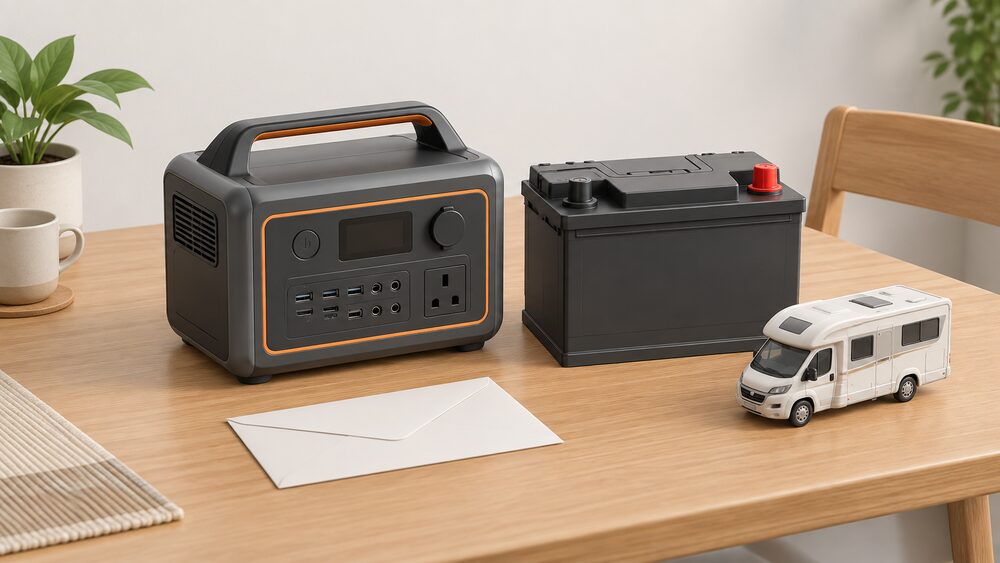 Fogstar power stations and leisure batteriesFogstar sells batteries and power stations direct to UK homes, so what do you actually get for the money?
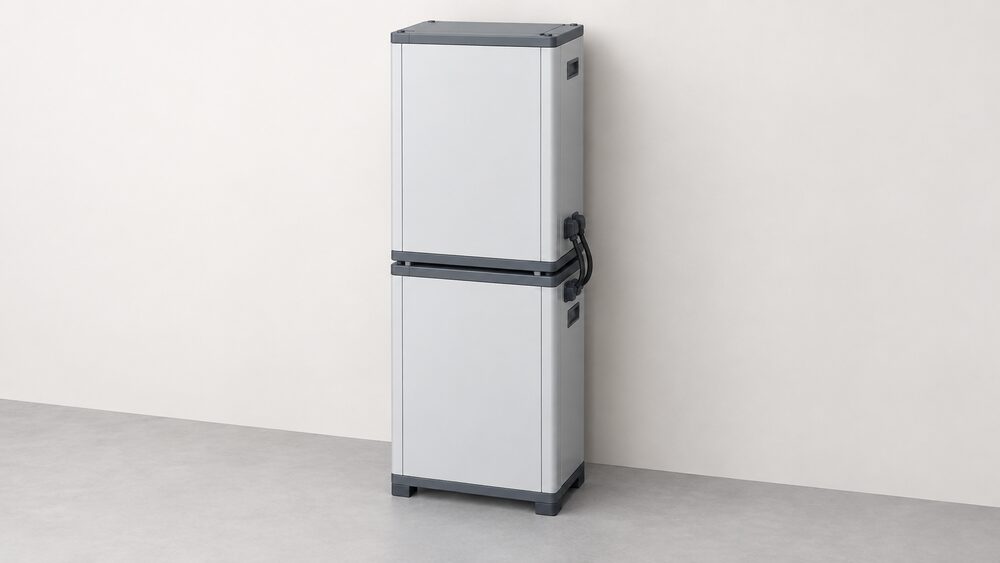 Fogstar Energy 16.1kWh BatteryHow much does the Fogstar Energy 16.1kWh battery cost, and is it good value for the storage you get?