In this guide
LuxPower and LuxPowerTek are the same maker, and it sells hybrid inverters, off-grid inverters, all-in-one energy storage systems and lithium-ion battery packs as a single system rather than as separate parts. A hybrid solar solution integrates solar panels, battery storage and grid connectivity, and the battery stores excess solar power for nighttime or backup use1. The battery packs themselves must be paired with a compatible hybrid inverter solution, which keeps battery communication, protection, certification and service support within one system2.
The warranty ladder is the first thing to understand. Hybrid inverters carry a standard 5 year warranty, while off-grid inverters carry a standard 2 year term3. Pairing an inverter with a LuxPower battery adds a free one to five extra years on top of the original term, for end customers who purchase and install both on or after 23 April 20244. Support commitments run longer than the warranty: firmware updates for a minimum of 5 years from launch, technical support for at least 6 to 7 years from launch, and commonly used spare parts for a minimum of 2 to 3 years after a product is discontinued3.
What LuxPowerTek makes: inverters and batteries as one system
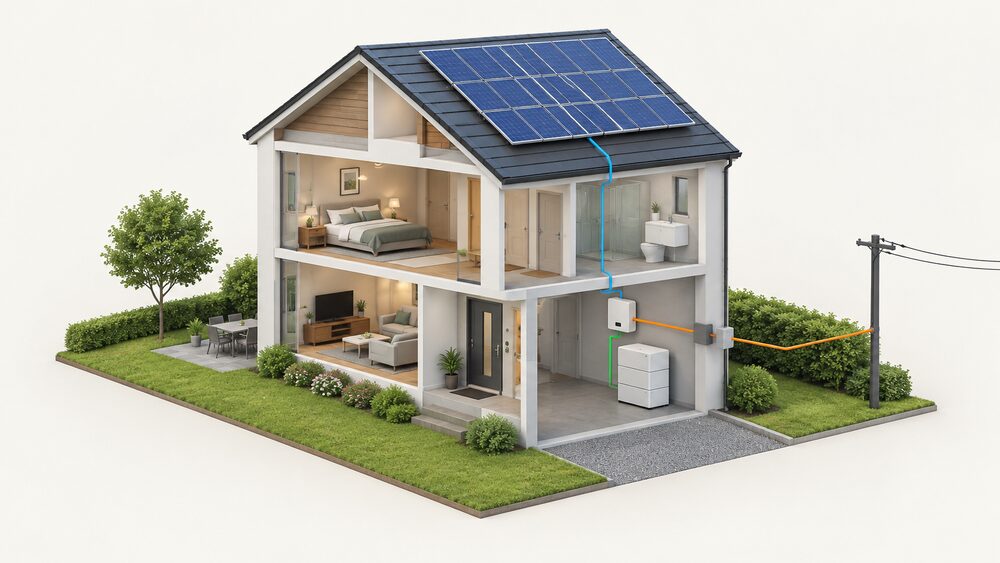
LuxPowerTek's range is built around the hybrid inverter, which sits between solar panels, a battery and the grid. The maker describes a hybrid solar solution as integrating solar panels, battery storage and grid connectivity, with smart energy management allowing seamless switching between solar, battery and grid power1. The grid connection ensures power availability when solar or battery reserves are low, and the system is compatible with both standby and portable generators, activated automatically based on a user-defined battery state of charge or manually through the LuxPowerTek app1.
The hybrid series is available in single-phase, split-phase and three-phase configurations, and the maker positions it for both residential and commercial applications, with robust grid support and a one-key reset function5. The all-in-one series combines everything needed in a single package, simplifying installation and operation5. The off-grid series covers single-phase or split-phase solutions for areas without access to the grid5.
The wider ecosystem matters for how the system behaves in a home. LuxPowerTek states that its hybrid system works with EV chargers, smart home systems and virtual power plants6. It also sells meters and data loggers that feed the monitoring platform, including a meter designed for real-time electricity monitoring that enables load tracking and output power management when used with the Luxpower monitoring platform7.
For a household, the significance is that the inverter is the control point. It decides when the battery charges, when it discharges, when the grid supplies the load and when a generator is called on. That is what makes the battery useful rather than decorative, and it is also what ties the household to one maker's hardware, firmware and monitoring platform. The wider picture of how inverters and batteries divide between AC and DC coupling is set out in AC-coupled and DC-coupled home batteries.
Hybrid, off-grid and all-in-one: which series fits which home
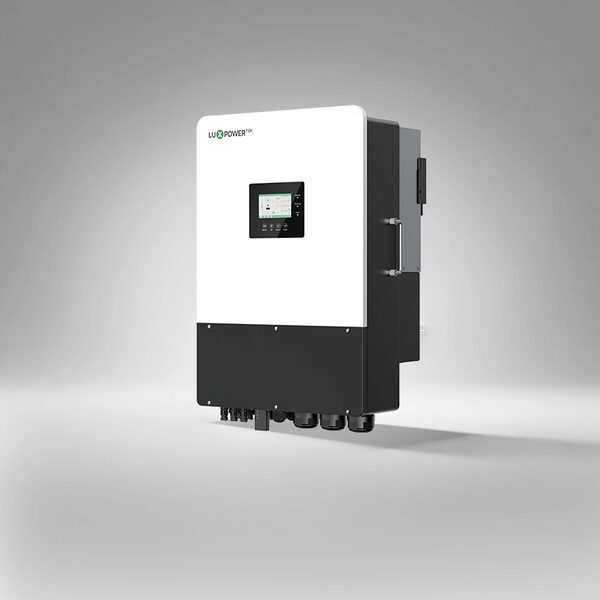
The three families answer different questions. A hybrid inverter is the right starting point where the home has a grid connection and solar, because it can manage solar, battery and grid together and provide backup. LuxPowerTek states that a hybrid inverter supports energy storage and uses battery energy during power outages without portable generators, fuel storage or manual power switching8. Hybrid inverters generally can often operate without batteries, like a grid-tie inverter, or use them for backup9.
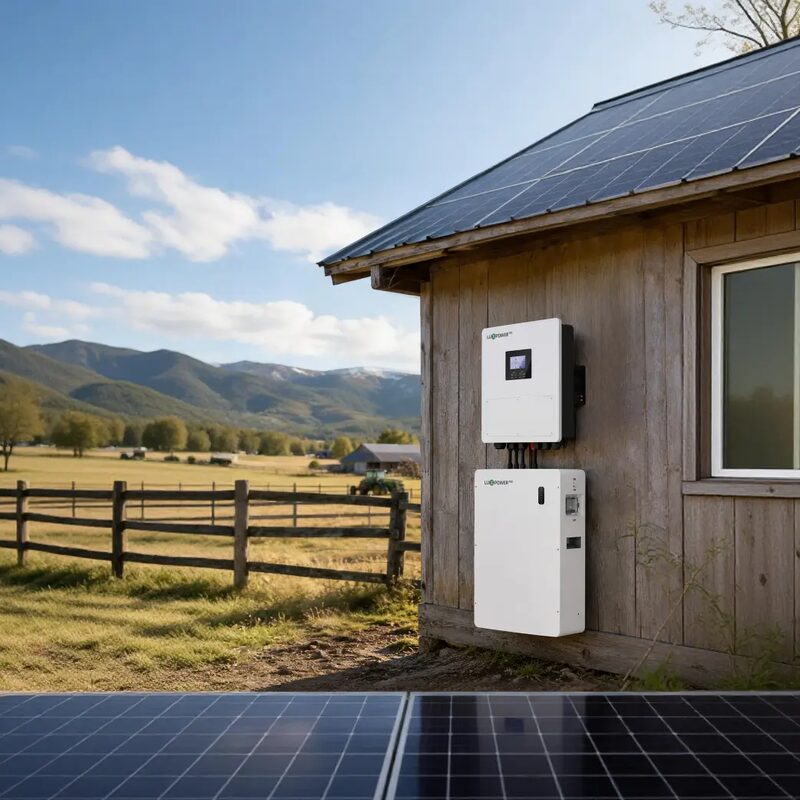
Off-grid inverters suit sites with no grid connection at all. LuxPowerTek states that its off-grid inverters provide reliable power in areas without access to the grid, and the off-grid solar solution offers generator compatibility for extended backup with automatic battery management5. The SNA 12-14K is described as an off-grid hybrid inverter in single-phase form11. The trade-off is the shorter warranty: 2 years rather than 53.
All-in-one systems bundle the parts. LuxPowerTek describes these as combining everything needed in a single package, simplifying installation and operation5. The Eco Beast all-in-one energy storage system is described as featuring the maker's Eco-hybrid inverter and as being coupled with low-voltage batteries12.
| Series | Typical home | Standard warranty |
|---|---|---|
| Hybrid | Grid-connected home with solar and battery | 5 years3 |
| Off-grid | Site with no grid connection, generator backup | 2 years3 |
| All-in-one | Home wanting one packaged unit | Not stated in the material reviewed |
Battery chemistry compatibility is a practical constraint. Common battery types for hybrid inverters are lithium-ion, lithium iron phosphate (LiFePO4) and lead-acid8. Off-grid systems commonly use lithium iron phosphate, lead-acid in AGM, gel or flooded form, and lithium-ion NMC9. LuxPowerTek advises matching the battery chemistry, communication protocol and voltage window against the compatible battery list for that region, and confirming the inverter model, battery model, country version, backup requirement and whether the project needs lithium-ion or lead-acid support before ordering6. The differences between these chemistries are covered in home battery chemistries.
Battery storage: low-voltage and high-voltage lithium-ion packs
LuxPowerTek's battery storage systems are lithium-ion and available in both low-voltage and high-voltage configurations2. The maker describes them as ideal for a wide range of applications, from residential homes to commercial and industrial settings, with a modular design that allows for easy expansion2. The all-in-one Eco Beast is coupled with low-voltage batteries12.
That low-voltage and high-voltage split is not a marketing detail. LuxPowerTek's own pre-order guidance is to match the battery chemistry, communication protocol and voltage window against the compatible battery list for the region, which is the maker's way of saying that not every pack works with every inverter6.
The wider market sells both configurations too. Sunsynk offers LiFePO4 battery storage in low and high voltage configurations13, and Canadian Solar describes a low voltage battery pack with easy installation and upscaling and a built-in intelligent BMS to protect the battery pack14. LuxPowerTek states that advanced safety mechanisms are built into its battery storage systems to protect the home or business2.
For a household, modularity is the point worth checking. A modular design that allows easy expansion means capacity can be added later without replacing the inverter, which is the difference between a system sized for today and one that can grow with a heat pump or an electric vehicle. The mechanics of adding capacity are covered in modular and stackable battery systems, and the difference between nameplate and usable capacity in battery capacity and usable capacity.
Warranty: 5 years on hybrid, 2 years on off-grid
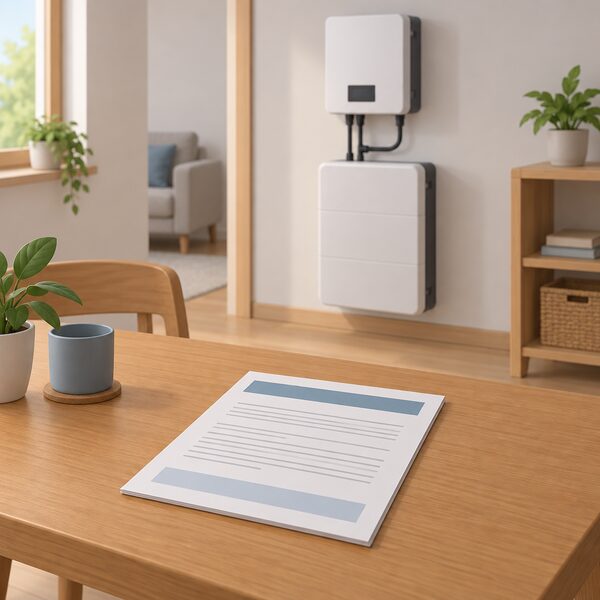
The standard terms are set by product family. LuxPowerTek states that hybrid inverters are backed by a standard 5 year warranty, and that off-grid inverters carry a standard warranty of 2 years3. A separate support article states that the standard warranty time is 5 years, in the context of pure off-grid running15.
The extension is where the value sits. LuxPowerTek's warranty terms state: "Pair with Luxpower Battery, get a free 1-5 extra years warranty on basis of the original LUXPOWER warranty"4. The same document sets the eligibility boundary: the new extended warranty terms apply to end customers who purchase and install LuxPower inverters and its own brand batteries on or after 23 April 20244.
"Pair with Luxpower Battery, get a free 1-5 extra years warranty on basis of the original LUXPOWER warranty."
Two conditions shape whether a claim is honoured. The warranty terms and conditions apply to products installed in all countries where these products can be installed, and they are valid for devices originally purchased through channels authorised by LuxPower4. That second condition is the one that catches households: a unit bought through an unauthorised reseller may fall outside the terms regardless of how it was installed.
For comparison, other makers in the UK market publish different structures. myenergi states five years for the libbi hybrid inverter and controller16, and its product warranty document sets out 10 years for the battery pack, the hybrid inverter and the controller provided the libbi components are connected and operated as a system17. The comparison is not a ranking: it shows that a 5 year inverter term with a conditional extension is a mid-range position, and that the conditions attached to the longest terms are where the differences lie. The general landscape is covered in home battery warranties.
Support after the warranty: parts, firmware and monitoring
LuxPowerTek publishes a lifecycle and support policy that sets out how long it will stand behind a product after the warranty ends. It guarantees the supply of commonly used spare parts for a minimum of 2 to 3 years following product discontinuation3. It guarantees firmware updates for a minimum of 5 years from the product's launch date3. It provides comprehensive technical support for at least 6 to 7 years from the product's launch date3.
Security is handled separately from feature updates. LuxPowerTek states that it will provide necessary patches, even for products that have reached end-of-life status, for critical security vulnerabilities3. That is a meaningful commitment for a device that sits on a home network and reports to a cloud platform.
Monitoring runs through the maker's own hardware and platform. The Luxpower meter is designed for real-time electricity monitoring and enables load tracking and output power management when used with the Luxpower monitoring platform7. The 4G data logger supports remote diagnostics, monitoring and system maintenance18, and the WLAN logger provides fault alarm and real-time monitoring along with fault warning and handling19. Remote firmware upgrades keep the system up to date with the latest features2.
The practical consequence is that local operation and remote operation are different things. The inverter keeps working without a connection, but the app-based visibility, remote diagnostics and firmware delivery depend on the maker's platform and on the household's broadband. That dependence is common to most hybrid systems and is examined in monitoring a home battery.
UK availability and the installer and distributor network
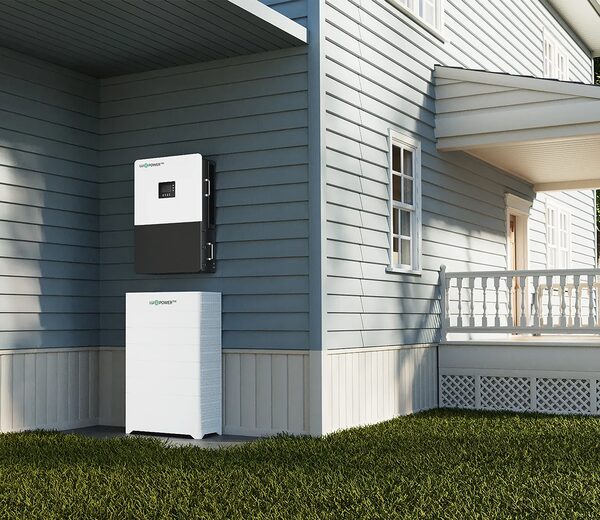
LuxPowerTek sells through installers and distributors rather than direct to householders. The maker's own guidance is aimed at the trade: before ordering, confirm the inverter model, battery model, country version, backup requirement and whether the project needs lithium-ion or lead-acid support, and match the battery chemistry, communication protocol and voltage window against the compatible battery list for that region1.
The UK route has widened since 2024. In November 2024, Infinity Innovations announced a strategic partnership with UK Greentech, making HANCHU ESS and LuxPowerTek products available through UK Greentech's branch network and Edmundson Electrical branches nationwide20. LuxPowerTek also exhibited at Solar & Storage Live UK 2024 at the NEC in Birmingham, where it said its latest SNA 12K off-grid models and features would be unveiled21.
For a householder, the practical question is who holds the warranty relationship. Because the terms are valid only for devices originally purchased through channels authorised by LuxPower4, the supply chain matters as much as the product. A system bought through an authorised distributor and fitted by an installer who understands the compatible battery list is in a different position from one assembled from mixed sources.
The UK market context is one of rapid growth. MCS recorded nearly 20,000 certified battery installations in 2024, a record-breaking year22, and official figures put certified battery installations in the UK at around 82,000 as of April 202623. That scale means more installers have direct experience of hybrid systems, but it does not standardise how any one brand is supported locally. The installation process itself is covered in home battery installation.
Scale and track record: 300,000+ systems across 100+ countries
LuxPowerTek presents itself as a global supplier rather than a UK specialist, and its event calendar supports that. The company reports exhibiting at Solar & Storage Live South Africa 2026, attending RE + Mexico 2026, holding a GEN3 Experience Day in Vietnam in June 2026 and exhibiting at Intersolar Europe 2026 in Germany24. Earlier, it stated it would bring UL certified hybrid 12k inverter, Eco Hybrid SNA 5k and LSP 100 models to SPI USA in September 202324.
Installed examples appear across several markets. A family in Cape Town had a PowerBox Pro system with LuxPower inverters installed to cope with frequent power cuts and coastal weather conditions in December 202424, and a Philippine project used one Powerbox Pro with Luxpower in a PV plus AC application in May 202324.
The relevance to a UK household is narrower than the global footprint suggests. A large installed base across many countries means the hardware is proven in a range of grid conditions and that spare parts and firmware are supported across regions. It does not mean UK-specific support is deep, and it does not mean the product meets UK installation standards automatically. Those are separate questions, covered in the standards governing home battery installation and in telling the network operator about a home battery.
What owning a LuxPower system means for household energy independence
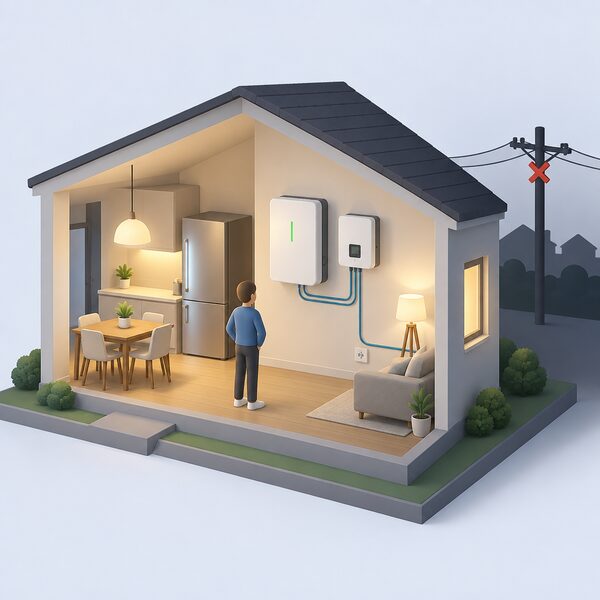
The independence a LuxPower system delivers is real but bounded. LuxPowerTek states that its advanced technology and efficient power management system maximise self-consumption, promoting energy independence25, and that its energy storage system is designed to generate clean electricity for a solar-powered home25. The off-grid series goes further, providing reliable power in areas without access to the grid5.
Backup is the clearest gain. LuxPowerTek states that a certified LuxPowerTek battery storage system can be used for home backup power2, and that its energy storage systems ensure power safety during outages and continuous, stable power supply for various household appliances25. Independent guidance is more cautious: Which? advises that not all systems are suitable for power cuts, and that owners should ask their installer whether their battery will work in a power outage and for how long26. The Centre for Sustainable Energy notes that the more expensive battery systems can also provide electricity during a power cut23. The Climate Change Committee frames home battery technology, vehicle-to-everything and solar as providing households with additional backup options during power outages22.
What remains is dependence. A grid-connected LuxPower system still draws from the grid when solar and battery reserves are low1, so the household keeps its supplier and its connection. The inverter, battery, meter and data loggers come from one maker, and the monitoring platform, remote diagnostics and firmware delivery come from that maker too. The extended warranty depends on pairing the inverter with the maker's own battery and on buying through authorised channels4. Off-grid operation removes the supplier but adds a generator or a larger battery bank, and the off-grid warranty is the shorter of the two3.
The honest summary is that a LuxPower system shifts a household's balance towards self-consumption and gives it a backup capability in the configurations that support it, while leaving the grid connection, the maker's platform and the authorised supply chain in place. The wider argument is set out in home batteries and household energy independence, and the pillar guide is at home battery storage.
Sources26 cited
- Hybrid Solar Solution, LuxPowerTek, 2026-09-07
- Battery Storage, LuxPowerTek, 2026-09-07
- Product Lifecycle and Support Policy, LuxPowerTek, 2025-08-22
- Product Warranty, LuxPowerTek, 2026-03-19
- Energy Storage Inverter, LuxPowerTek, 2024-08-20
- Hybrid Inverter, LuxPowerTek, 2026-09-07
- Product Meter, LuxPowerTek, 2026-09-04
- How Choosing the Right Hybrid Inverter Can Reduce Household Solar Panel Costs, LuxPowerTek, 2026-07-15
- Off-Grid vs Hybrid Inverter, SolaX Power, 2026-03-13
- Off-Grid Solution, LuxPowerTek, 2025-11-07
- Off-Grid Inverter SNA 12-14K, LuxPowerTek, 2026-09-18
- All-in-One ESS Eco Beast, LuxPowerTek, 2026-07-23
- Sunsynk, Sunsynk, 2026-09-17
- Inverter for Residential, Canadian Solar, 2026-09-17
- Support, LuxPowerTek, 2023-07-14
- myenergi libbi System Warranty, myenergi, 2026-09-17
- myenergi Product Warranty v4.1, myenergi, 2026-05
- Inverter Data Logger 4G GPRS Dongle, LuxPowerTek, 2026-09-04
- Product Data Logger WLAN, LuxPowerTek, 2026-09-04
- Certified Battery Installations in the UK, Parliamentary Office of Science and Technology, 2026
- 2024 Was a Record Year for Small-Scale Renewables, MCS Certified, 2024
- Well-Adapted Energy System, Climate Change Committee, 2026-09-19
- Making the Most of Your Solar PV Panels, Centre for Sustainable Energy, 2026-08
- LuxPowerTek News and Events, LuxPowerTek, 2026
- Solution, LuxPowerTek, 2024-08-19
- Solar Panel Battery Storage, Which?, 2026-05-14