
In this guide
Sunsynk designs and develops high-performance solar storage systems, trusted by installers and energy professionals in over 40 countries, and draws on over 20 years of engineering experience1. For a UK household, the company's relevance is specific: it makes hybrid inverters and LiFePO4 batteries that let a home store its own solar generation and shift grid imports to cheaper hours, rather than exporting everything it produces.
The range is broad. Sunsynk hybrid inverters run from 1kW to 80kW in single-phase, three-phase and high-voltage options, designed for residential and commercial energy management1. Battery storage comes in low and high voltage configurations, with IP65-rated protection for indoor and outdoor use1. The all-in-one line covers 3.6kW / 5.1kWh up to 8kW / 15.3kWh, spanning typical UK residential loads2.
What Sunsynk is not is an installer. It is a manufacturer with a UK office at Unit 8, Total Park, Bennetts Lane, Shell Green, Widnes WA8 0GW and a UK phone number of +44 151 832 43001. The system is bought through distributors and fitted by an installer, and the household's independence depends on that chain as much as on the hardware.
What Sunsynk makes and where it fits in a home energy system
Sunsynk's product set divides into three parts: hybrid inverters, battery storage, and the cabinets, enclosures and accessories that house and connect them. The inverter range is described as covering residential, commercial and utility-scale applications5. The battery side is LiFePO4 in low and high voltage configurations, scalable, with IP65-rated protection for indoor and outdoor use1. Cabinets and enclosures provide a clean, compliant home for inverters, batteries, busbars and associated electronics in both indoor and outdoor installations6.
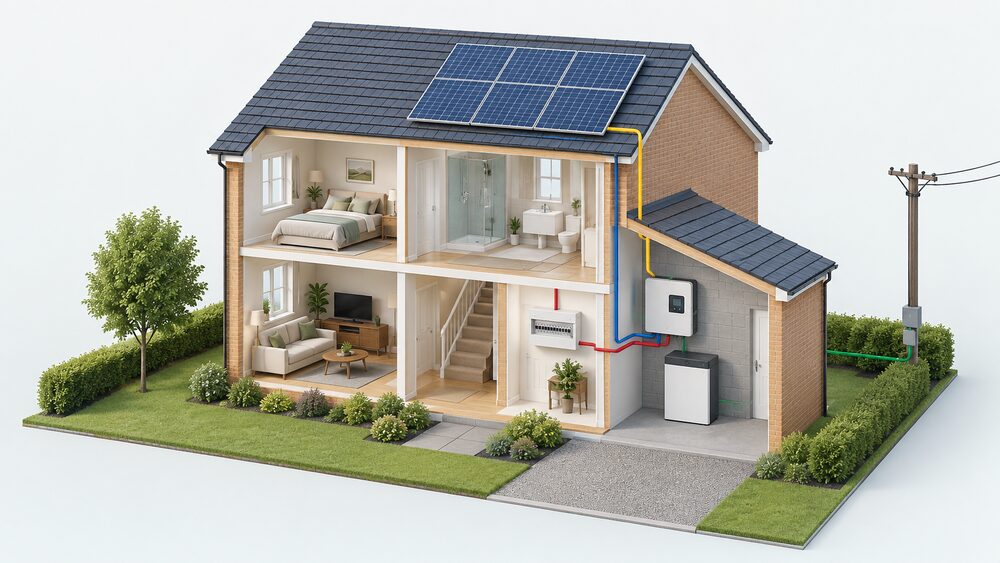
In a home energy system, the hybrid inverter is the control point. It sits between the solar array, the battery, the grid connection and the household circuits, and decides where power flows at any moment. Sunsynk single-phase hybrid inverters manage energy flow between solar panels, a battery bank, the grid and household loads simultaneously7. That simultaneous management is what separates a hybrid inverter from a plain string inverter, which can only convert solar output and push it to the house or the grid.
The household benefit is straightforward: generation that would otherwise be exported at a low rate can be stored and used later. The dependence that remains is equally straightforward. A grid-connected Sunsynk system stays connected to the grid, to a licensed supplier, and to the network operator's connection rules. The battery reduces how much electricity is bought and when, but it does not remove the connection. Households wanting to understand how that trade-off works across the market can read Home Battery Storage for UK Homes and Home Batteries and Household Energy Independence.
Hybrid inverters: storing surplus solar instead of drawing from the grid
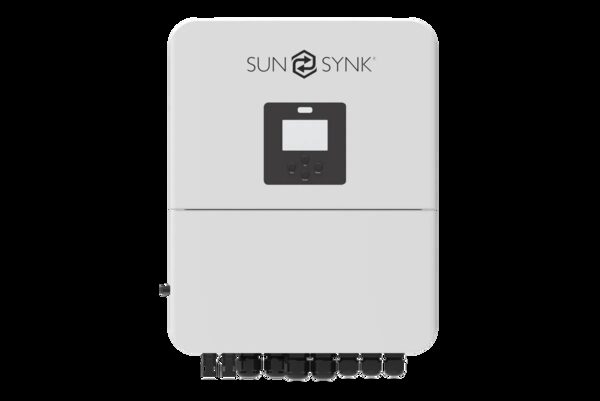
The core function is described plainly by Sunsynk: when you generate more power than you use, your hybrid inverter will store that energy in a battery for later8. The same source notes that hybrid inverters intelligently manage energy, so during the shorter, darker winter days a household is still getting the most out of its system8.
Independent guidance points the same way. The Energy Saving Trust advises considering battery storage if a solar system does not already have it, so that surplus electricity is stored rather than all exported9. That is the financial logic: export rates are typically lower than import rates, so a unit of solar electricity used at home is worth more than the same unit sold to the grid.
Hybrid inverters are not unique to Sunsynk. Other makers describe the same architecture: one manufacturer states that hybrid inverters combine inverter technology with battery storage, enabling photovoltaic energy to be stored and used during periods of low sunlight or at night10, and another describes a hybrid inverter as allowing excess solar energy to be stored in batteries for use during the night or cloudy days11. A third notes that a hybrid inverter supports energy storage and uses battery energy during power outages without portable generators, fuel storage or manual power switching12.
What differs between products is the detail: how many solar strings can be connected, whether the unit can AC couple to an existing system, how fast it charges a battery, and whether it includes an AC charger. Sunsynk's Fusion inverter is listed with two solar strings, AC coupling, fast battery charge, an AC charger and a built-in solar isolator13. Those are the specifications that determine whether a given inverter suits a given roof and battery bank. For the wider distinction between system architectures, see AC-Coupled and DC-Coupled Home Batteries.
All-in-One units: hybrid inverter and LiFePO4 battery in one wall-mounted box
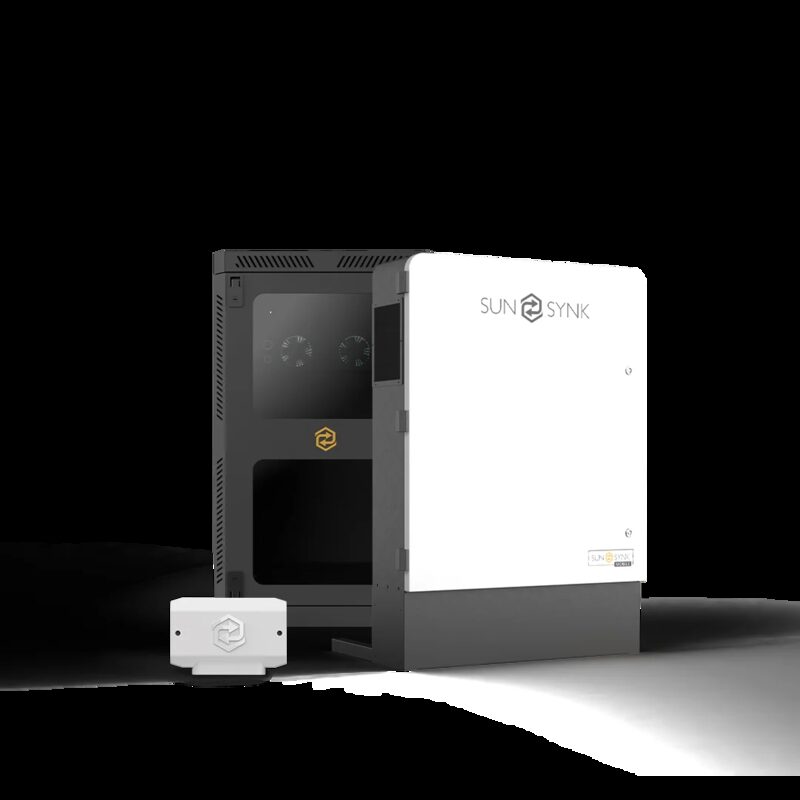
An all-in-one solar storage system integrates a hybrid inverter and LiFePO4 battery into a single wall-mounted unit2. Sunsynk describes its all-in-one systems as using the same LiFePO4 chemistry and hybrid inverter architecture as the standalone product ranges2, so the difference is packaging rather than technology.
The appeal is installation simplicity and space. Fewer separate boxes means less wall space, fewer interconnecting cables and a shorter commissioning process. The trade-off is that the inverter and battery are replaced together at end of life, and capacity expansion is limited to what the unit's design allows.
Sunsynk's smallest all-in-one is the Verlinkt Home Battery Storage System, which combines a 2.048kWh lithium iron phosphate battery with a hybrid inverter and 2kW power output3. Sunsynk describes it as bringing battery storage and intelligent energy management together in one space-saving unit, designed with renters in mind3. It also allows storage of electricity during lower-cost, off-peak periods for use during peak hours, helping to reduce electricity costs on compatible tariffs3.
The Verlinkt's 2.048kWh capacity is small by home battery standards, and its 2kW output limits what can run at once. It is a flat-friendly product rather than a whole-home one. For a household wanting to run heavy loads through an evening, the larger all-in-one units and the separate inverter-and-battery combinations are the relevant options. The general case for combined units is set out in All-in-One Home Battery Systems.
Battery range and capacity: from 2.048kWh mini units to 85kWh systems
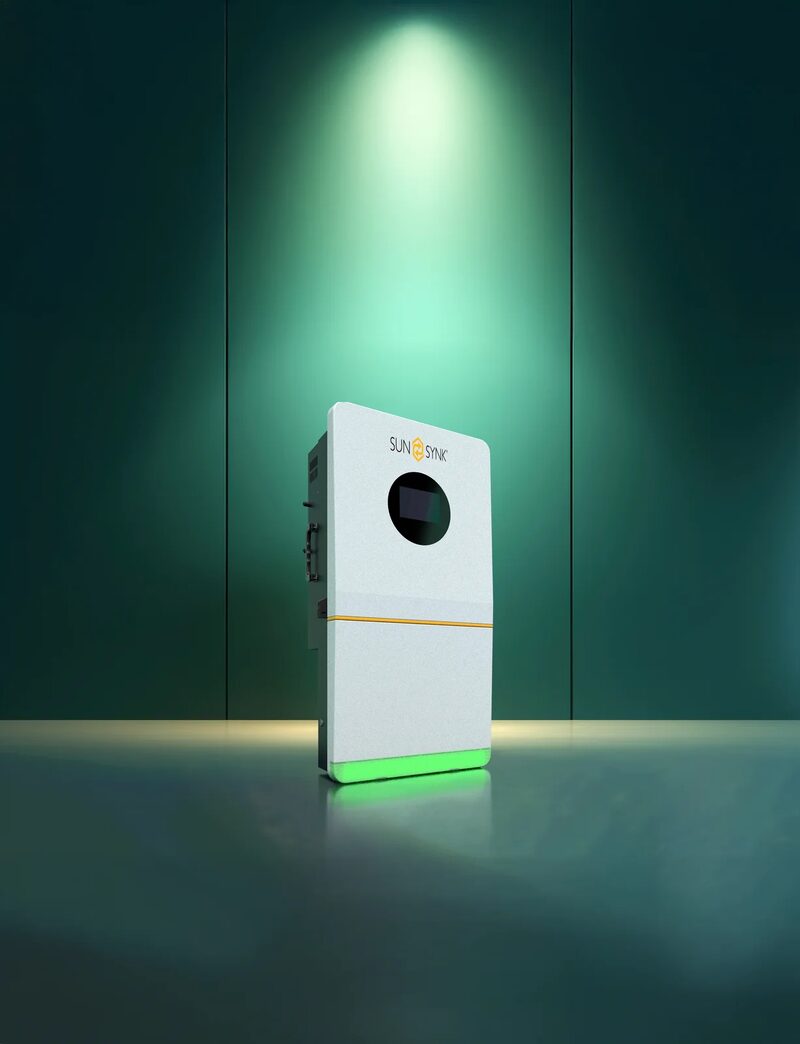
Sunsynk's battery capacity spans a very wide band, and the figures come from different product families rather than one continuous line.
| Product family | Capacity or output | Notes |
|---|---|---|
| Verlinkt all-in-one | 2.048kWh, 2kW output | Designed with renters in mind3 |
| All-in-One range | 3.6kW / 5.1kWh up to 8kW / 15.3kWh | Spans typical UK residential loads2 |
| Elite All-in-One | 5.12kWh LiFePO4 modules | Battery modules at 5.12kWh each14 |
| G Series | 5.12kWh and 5.32kWh | Scalable, expandable without replacement15 |
| X Series | 5.12kWh | Expandable storage capacity16 |
| Maximus | 5.12kWh | Scalable energy storage10 |
| 3.6kW Hybrid Ecco Inverter | up to 85kWh of battery storage | Potential output of 57.6kW when paralleled4 |
The 85kWh figure is the headline number and needs context. It is the maximum battery storage the 3.6kW Hybrid Ecco Inverter is described as allowing4, not the capacity of a single battery. Reaching it means stacking many modules, and the inverter's own 3.6kW continuous rating governs how fast that bank can be charged or discharged. A large bank behind a small inverter is a storage reservoir with a narrow pipe.
Scalability is a consistent theme across the families. The G Series is described as scalable energy storage that can be expanded by adding more batteries without replacement15, and the X Series as having expandable storage capacity that supports growing energy needs and long-term system value16. The Maximus battery is listed with scalable energy storage, reliable backup power and smart monitoring and control10. For households planning to add capacity later, the practical questions are covered in Modular and Stackable Home Batteries and Battery Capacity: Nominal kWh, Usable kWh and Depth of Discharge.
Backup and off-grid capability: how the system behaves in a power cut
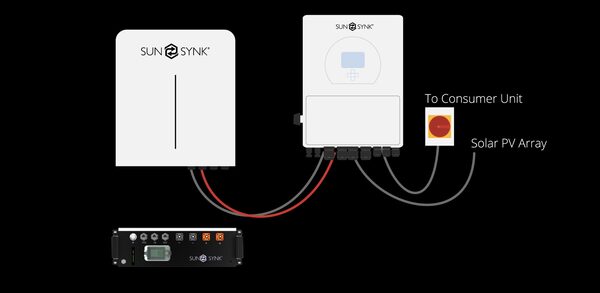
Backup is where marketing language and electrical reality diverge most sharply, so it is worth separating the two.
Sunsynk's own product pages describe backup capability across much of the range. The Verlinkt's built-in uninterruptible power supply function provides backup power for connected devices during power cuts3. The High Voltage collection, the Sunsynk-W high-voltage range, the LP Range and the G Series are each described as keeping the lights on during power cuts with seamless switchover17. The Maximus split-phase unit is listed with seamless backup support10, and the Elite All-in-One with EPS backup support19.
Independent guidance sets the condition. The Energy Saving Trust states that a battery storage system does not normally provide power in a power cut unless additional equipment and configuration is included20. That is the crucial qualifier: backup is not a property of the battery, it is a property of how the system is wired. A backup circuit, an EPS or changeover arrangement and correct configuration are what make the lights stay on.
The distinction between whole-home and partial backup matters too. Most domestic backup arrangements supply a designated set of circuits, not the entire consumer unit, because the inverter's output rating limits total simultaneous load. A 3.6kW inverter cannot run an electric shower, an oven and a heat pump at once. Households weighing this should read Battery Backup in a Power Cut: EPS, Changeover and What Keeps Running and Will a battery storage system work during a power cut?.
Time-of-use optimisation and energy management features
Sunsynk single-phase hybrid inverters include built-in time-of-use optimisation alongside support for both low-voltage and high-voltage battery packs and seamless backup switching7. In practice this means the inverter can be scheduled to charge the battery during cheap tariff windows and discharge it during expensive ones, independently of whether the sun is shining.
The Elite all-in-one system is described as supporting self-consumption, backup power and time-of-use tariff optimisation19, with energy management functions listed as solar self-consumption optimisation, peak shaving and load shifting, scheduled battery charging, grid export limitation, backup load prioritisation and smart tariff optimisation19. Those are the levers a household actually uses: when to charge, when to discharge, how much to export and which circuits get priority.
Sunsynk also sells a separate optimisation product. Sunsynk Saver is described as using patented AI technology to help save on energy use by maximising renewable power use and reducing reliance on grid electricity21. It is compatible with all single-phase Sunsynk Standard and Ecco Hybrid Inverters up to 16kW, and uses AI-powered energy optimisation that continuously learns usage habits, weather predictions and grid trading21.
The dependence this creates is worth naming. Tariff optimisation only pays where a time-of-use tariff exists and the household is on it, and the value depends on the spread between peak and off-peak rates. AI-driven optimisation depends on the manufacturer's platform continuing to operate and on the household's internet connection. The mechanics of stacking a battery with a tariff are covered in Stacking a Home Battery With Smart and Time-of-Use Tariffs.
Compatibility: Sunsynk batteries, third-party packs and existing solar panels
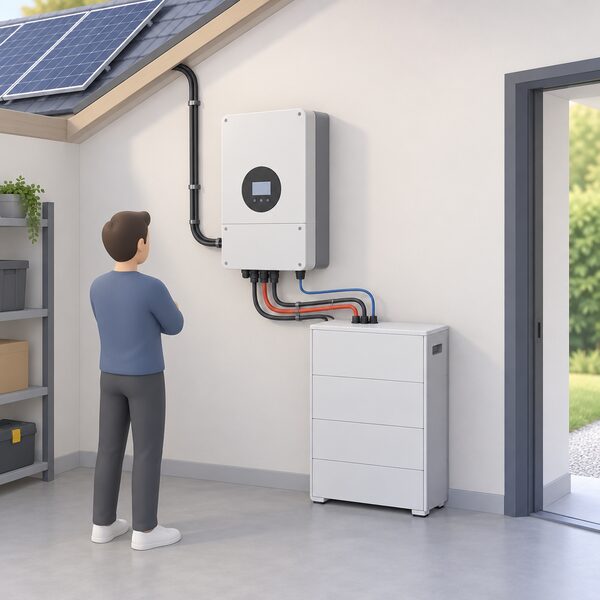
Sunsynk inverters are optimised for use with Sunsynk LiFePO4 batteries and are guaranteed compatible across the entire Sunsynk battery range5. All models include Wi-Fi monitoring and are compatible with Sunsynk LV batteries7. The X Series battery is described as fully compatible with the Sunsynk low-voltage ecosystem for simple, predictable system design16.
Third-party support exists but is conditional. Many Sunsynk hybrid inverter models also support third-party batteries via CAN bus or RS485, and Sunsynk advises checking the specific inverter datasheet for confirmation5. The LP Range is listed with flexible battery compatibility across its IP65 models18. That is a communications statement: the inverter can talk to the battery's management system over a defined protocol. It does not guarantee that any given pack will be supported, and the datasheet is the document that settles it.
On existing solar, the position is favourable. Battery storage can be added to existing solar panels to maximise the benefits of the system22, and solar panels can be used to charge an on-site battery storage system23. Sunsynk's Fusion inverter can AC couple13, which is the route for a home that already has a working solar inverter and wants to add storage without replacing it. Independent guidance is to check that the chosen battery storage is compatible with the existing or potential solar panel setup24.
"make sure to check that your chosen battery storage is compatible with your existing or potential solar panel setup."
For households with an existing array, the relevant reading is AC-Coupled and DC-Coupled Home Batteries and Can I add more batteries to my system later?.
Parallel operation, firmware and support
Parallel operation is supported on some models. The Fusion inverter is listed as able to parallel and able to add extra batteries13. The 3.6kW Hybrid Ecco Inverter is described as giving a potential output of 57.6kW of energy when units are combined4. On the battery side, Sunsynk's parallel busbar kit supports up to 16 LP5.1 or LP10.2 batteries in parallel25. Exact limits are model-specific and belong in the datasheet.
Firmware is part of ownership. Sunsynk states that occasionally, firmware updates are required, to ensure the inverter or battery is running the latest features, improvements and compatibility updates26. Requests are raised as a support ticket26. Single-phase hybrid inverters ship with full remote monitoring via the Sunsynk Connect app and over-the-air firmware updates7, and the data logger range is listed with over-the-air firmware updates27.
A dated example shows why this matters. A firmware release dated 28 September 2024 fixed a Sunsynk issue where the battery would not consistently reach 100 percent state of charge, raised the 15.5kWh Gen 1 charge current limit with Sunsynk from 95A to 195A, and corrected a Growatt communication error28. That is a third-party record of a fix, and it illustrates the general point: a battery system's behaviour can change after installation, and the manufacturer's update channel is how.
The company: global reach, UK base and reputation
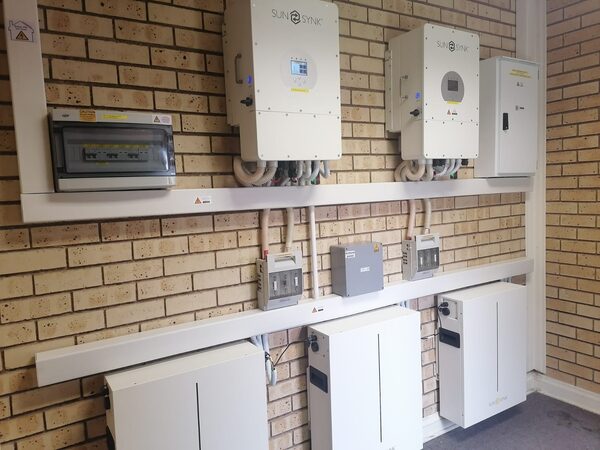
Sunsynk designs and develops high-performance solar storage systems trusted by installers in over 40 countries1, and draws on over 20 years of engineering experience1. Its own site carries a rating of 4.8 out of 5 based on verified reviews1.
The company operates from several locations. The UK office is at Unit 8, Total Park, Bennetts Lane, Shell Green, Widnes WA8 0GW, with the UK phone number +44 151 832 43001. There is a Hong Kong office at Units 702-704, 7/F Texwood Plaza, 6 How Ming Street, Kwun Tong1, an Australian office at Level 1, 982-988 Wellington Street, West Perth WA 600526, and a South African office at Stand 375, Northland Business Park, Angus Crecent Road, Hoogland, Randburg, Johannesburg26.
Certification claims are made across the range. The High Voltage collection, the Sunsynk-W high-voltage range, the LP Range and the data logger range are each described as certified for use in multiple markets worldwide and meeting international standards17. Those are the manufacturer's own statements about market certification, not a UK-specific approval, and the installer is the party who confirms compliance with UK installation standards.
For a household, the practical reading is this. Sunsynk is an established manufacturer with a UK presence, a UK phone number and a support ticket system, which shortens the distance between a fault and a response. It is not a UK manufacturer, and it is not an installer. The warranty, the installation quality and the compliance of the finished system rest with the installer and the maker respectively, and the household's energy independence rests on the hardware plus a continuing grid connection. Wider context on what a battery can and cannot do for independence sits in Home Batteries and Household Energy Independence and Home Battery Storage for UK Homes.
Sources28 cited
- Sunsynk homepage, Sunsynk, 2026-09-17
- Sunsynk all-in-one, Sunsynk, 2026-09-17
- Sunsynk Verlinkt, Sunsynk, 2026-09-17
- 3.6kW Hybrid Ecco Inverter: the mini beast's endless possibilities, Sunsynk, 2023-09-14
- Sunsynk inverters, Sunsynk, 2026-09-17
- Sunsynk cabinets and enclosures, Sunsynk, 2026-09-17
- Sunsynk single-phase hybrid inverters, Sunsynk, 2026-09-17
- Winter warmers maintain energy levels in dark winters, Sunsynk, 2024-11-20
- Buying a house with solar panels, Energy Saving Trust, 2026-08-13
- Sunsynk Maximus, Sunsynk, 2026-09-17
- Sunsynk data loggers, Sunsynk, 2026-09-17
- Sunsynk-W (HV), Sunsynk, 2026-09-17
- Sunsynk Fusion inverter, Sunsynk, 2023-09-23
- Sunsynk All-in-One Elite 5.12kWh battery module, Alternergy, 2026-09-17
- Sunsynk G Series, Sunsynk, 2026-09-17
- Sunsynk X Series 5.12kWh, Sunsynk, 2026-09-17
- Sunsynk High Voltage collection, Sunsynk, 2026-09-17
- Sunsynk LP Range, Sunsynk, 2026-09-17
- Sunsynk 5kW All-in-One Elite hybrid inverter, Alternergy, 2026-09-17
- Solar power facts, Energy Saving Trust, 2026-08-13
- Sunsynk remote monitoring, Sunsynk, 2026-09-08
- Switch Together Birmingham: buying solar panels and battery storage made easy, Birmingham City Council, 2026-01-27
- Solar panels, East Herts Council, 2026-09-17
- Battery storage, MCS Certified, 2026-09-17
- Sunsynk accessories, Sunsynk, 2026-09-17
- Sunsynk support, Sunsynk, 2026-09-17
- Sunsynk data logger, Sunsynk, 2026-09-17
- Firmware updates, Fogstar, 2024-09-28
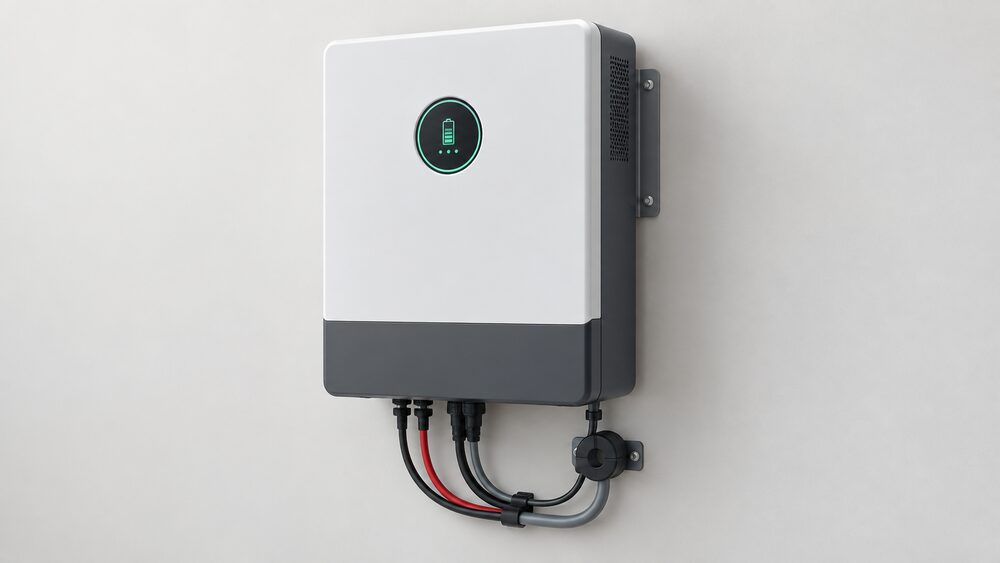
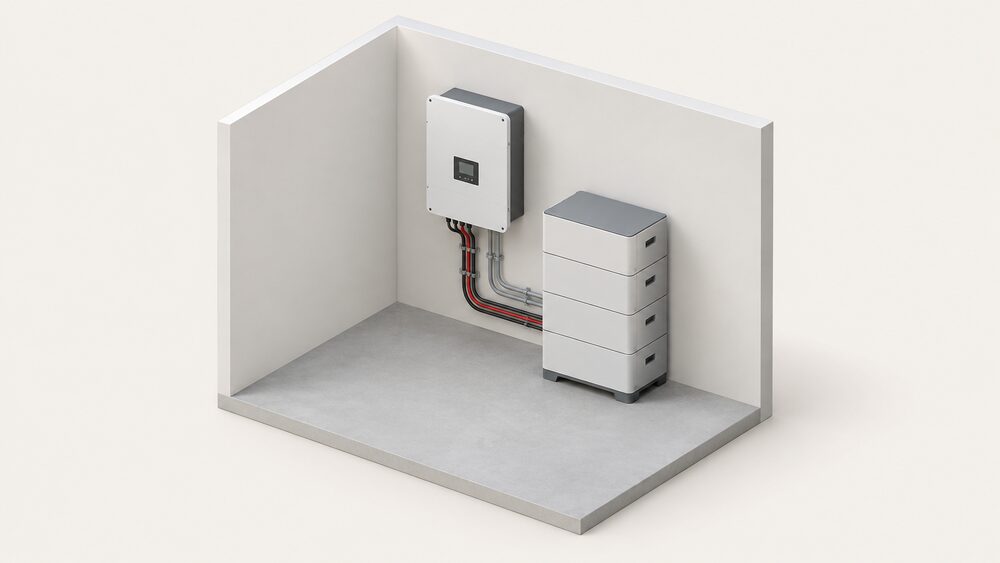 Sunsynk ECCOA Sunsynk ECCO package pairs a hybrid inverter with a battery to store solar power at home.
 Sunsynk hybrid inverters and batteriesWhich Sunsynk inverter suits a typical UK home, and what size do you need?
 Sunsynk hybrid invertersWhich Sunsynk inverter suits your home, and what does it cost to fit?