
In this answer
Short answer
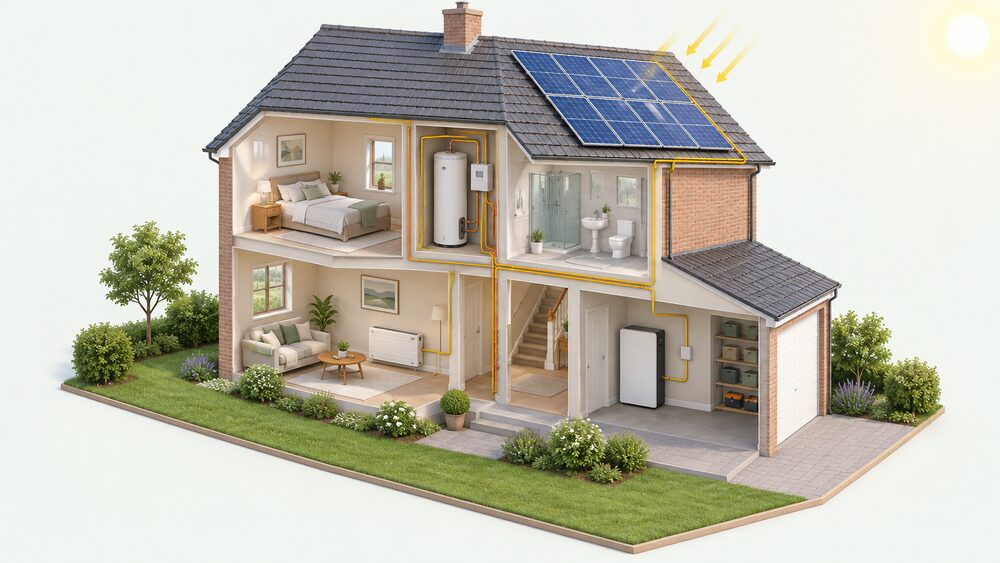
Yes, surplus solar generation can run storage heaters and underfloor heating, but only where the equipment is in place to move that electricity into heat at the right time. A storage heater is wired into the fixed installation and charged from the mains, so it cannot be plugged into a panel or inverter directly. What makes the arrangement work is timing: the heater charges while the panels are generating, and releases warmth later. Independent guidance states that if you have solar panels, you could use the electricity they generate to charge your storage heaters during the day so you still have warmth in the evening1.
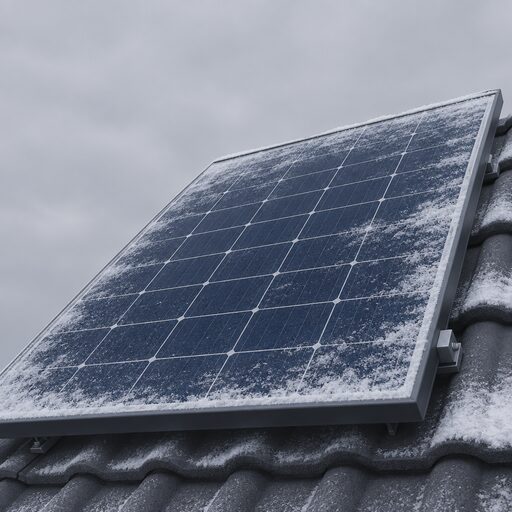
The scale of the surplus is the constraint. On 21 and 22 June 2026 a typical UK rooftop solar installation generated 15 kWh, equivalent to five hours of air conditioning use, and across 1.88 million domestic-scale installations the average was 28.5 GWh per day, or 15.2 kWh per installation2. Those are peak summer days. In winter the same array produces a fraction of that, which is why heating from surplus alone is a summer story unless a battery or a heat store carries the energy across.
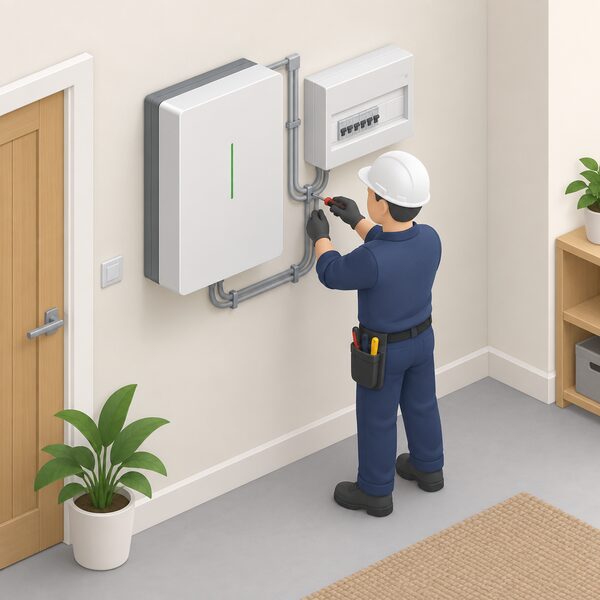
Three routes connect panels to warmth: a battery that shifts midday generation into the evening, a diverter that sends unused electricity to an immersion heater, and a heat battery that stores warmth rather than charge. Each has a different cost, a different loss and a different effect on how independent the household actually is.
Why storage heaters and underfloor heating are a poor direct match for solar panels
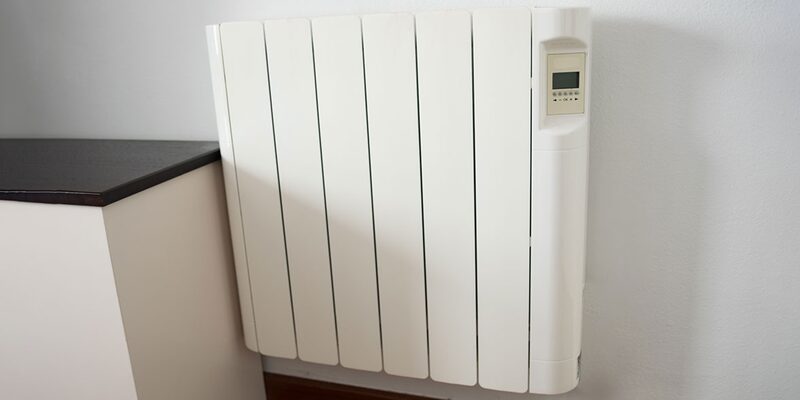
The mismatch is one of timing and control, not of voltage. Storage heaters do not produce heat instantly like a regular electric heater; they rely on the heat stored overnight, so planning ahead is essential6. That design assumes a cheap overnight charging window, not a midday generation peak. A solar array peaks around the middle of the day, which is when a well-insulated home often needs least heat. The result is that a storage heater charged by solar in the morning can leave a home very warm in the morning and struggle to stay warm in the evening7.
Running costs compound the problem. Compared with liquid fuel, night storage heaters have significant disadvantages because they are expensive to use and offer limited control8. That judgement comes from an off-gas-grid heating body, and it applies to the appliance rather than to the fuel feeding it, so surplus solar improves the carbon position more than it improves the cost position.
Underfloor heating has its own constraints. Electric underfloor heating carries higher running costs than the water-based alternative9. It is also incompatible with some floor coverings: thick carpet traps too much heat and solid wood becomes warped by the temperature changes10. Where a wet system is installed, independent guidance notes that solar panels could generate the electricity a heat pump needs, or power a dry electric underfloor heating system, and that a battery to store excess solar electricity would make this more efficient11.
The practical picture is that both technologies can absorb surplus solar, but neither is designed around it. They need controls that can be told when to draw power, and they need the surplus to arrive when the heat is wanted. Where those two conditions are not met, the generation is better used elsewhere or exported.
The role of a battery: turning midday surplus into evening heat
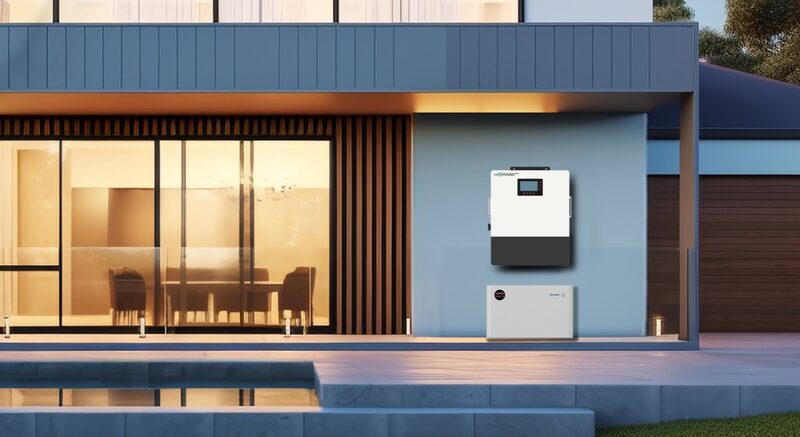
A battery is the most direct answer to the timing problem. Guidance recommends installing battery storage to store the extra energy created during the day, so it can be used at times when the panels are generating less, such as at night12. A home battery captures surplus solar energy for later use, including overnight electric vehicle charging, whereas without it unused solar electricity is wasted or exported to the grid, often at a relatively low rate13.
The same principle applies to heat. Excess power produced during the day can be stored and used when demand is higher14. A battery can also be charged when a tariff is cheap and discharged at night or when prices are high, so it is not limited to solar input15. That flexibility matters for a household trying to reduce what it draws from the grid, because it decouples the moment of generation from the moment of use.
For a household already buying a battery, the guidance is explicit: consider getting battery storage if the system does not already have it, so surplus electricity is stored instead of exported16. A solar PV system can be paired with a battery storage system to store excess electricity for when it is most needed17.
There is a limit worth stating plainly. A battery shifts electricity, not heat, and it holds a finite number of kilowatt hours. A storage heater on a cold evening can draw more than a domestic battery holds, so the battery defers grid import rather than removing it. The household remains connected to the grid and to a supplier, and in winter the heating load will exceed what the array and battery can cover. Battery storage is best paired with heat pumps rather than with solar panels where the aim is savings on an appropriate tariff18, which suggests the heat source itself matters as much as the store behind it.
Smart diverters, immersion elements and heat batteries: the routes from panel to warmth
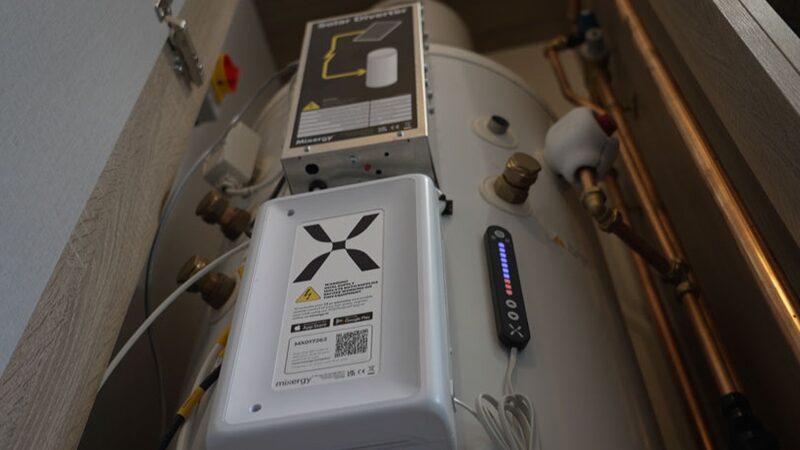
Where a hot water cylinder is present, a diverter is the simplest route. A diverter allows unused electricity to be directed to another appliance, usually a hot water cylinder19. Official guidance describes a solar diverter switch powering the immersion heater in a hot water tank for free, storing hot water for later use20. Independent guidance from Scotland puts it the same way: instead of sending surplus electricity to the grid, a PV diverter switch can power the hot water tank's immersion heater, storing hot water for later use21.
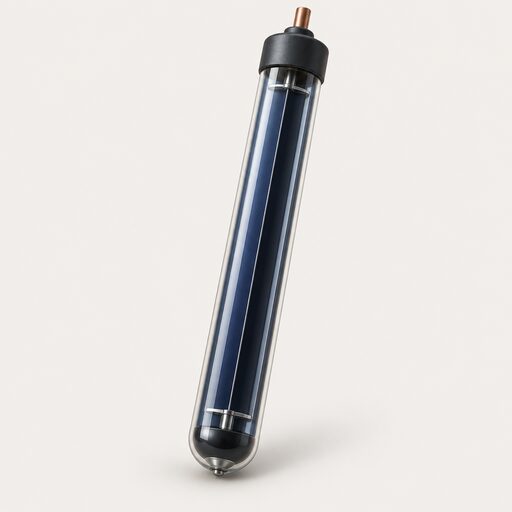
Solar water heating offers a related but separate route. During summer, solar thermal panels can meet all of a household's hot water needs, but a backup system is still needed, especially during winter22. Some solar thermal systems use two cylinders, one dedicated to the solar collectors and another for the immersion heater23. The Welsh Government's guidance caps a solar heated water storage volume at less than 440 litres for indirect systems supplying domestic hot water3, and the same figure appears in Approved Document L4.
Heat batteries take a different approach: they store energy as heat, provided by electricity from the grid or your own renewable source, or by surplus heat from a boiler, heat pump or another heating system5. Some can be used as a thermal store within a central heating system, typically alongside a heat pump5. For a household, the attraction is that heat storage is cheaper per kilowatt hour than battery storage and does not degrade in the same way, but it can only serve heating and hot water, not lighting or appliances.
"A diverter allows you to direct unused electricity to another appliance (usually a hot water cylinder)."
Modern storage heaters use digital controls, while older heaters have manual controls6, and that difference decides whether a heater can be scheduled around generation at all. A heater with only a manual input dial cannot respond to a sunny afternoon.
Costs, savings and payback: what the surplus is actually worth
No published prices exist for diverters, batteries or heat batteries, so any figure here is installer-quoted. What can be stated is what the surplus is worth in energy terms and what the documented savings look like. Storing solar surplus to offset peak-rate imports rather than exporting it at a low SEG rate is put at over £320 a year for a typical household1, and adding battery storage to rooftop solar is worth another £400 to £600 a year2. A pass-through tariff with solar PV and battery storage, where the storage responds to price signals, is modelled at £1,002 a year3.
On the generation side, the summer peak is substantial: 15 kWh for a typical installation on 21 and 22 June 2026, and 15.2 kWh average across 1.88 million domestic-scale installations2. Across the 1.9 million UK homes with rooftop solar, that was equivalent to 10 million solar-powered air conditioning hours per heatwave day2. Those figures describe June, not the heating season, and the winter gap is where the shortfall sits.
On the heating side, high heat-retention storage heaters retain up to 45% of their heat even 24 hours after they were last charged3, which is what makes day charging viable at all. Upgrading to a modern storage heater can help reduce energy bills by about 10%4. For households modelling a wider system, a pass-through tariff with solar PV and battery storage produced an average annual saving of £1,002 per year in modelling where solar PV and battery storage respond to price signals and the heat pump does not5.
Export remains the alternative. Surplus solar electricity can be sold back to an energy supplier through a Smart Export Guarantee tariff when the battery is full15, and the scheme exists to sell surplus solar electricity to the grid20. The same route is described as selling excess energy generated back to the grid via the Smart Export Guarantee24. Whether using surplus for heat beats exporting depends on the export rate and the cost of the fuel displaced, and no rate is given here.
Two conditions shape the practical outcome. First, eligibility rules for some funded measures require solar PV to be installed alongside a hydronic heat pump, an electric storage heater with a SAP responsiveness of 0.8 or above, or an electric heating system with the same responsiveness, or the property to be heated by one of these already25. Second, for park homes, electric storage heaters are only an option where the home has its own electricity supply26. Battery storage added alongside plug-in solar panels must be permanently wired and installed by a qualified electrician27.
For a household, the independence question is straightforward. Surplus solar used for heat reduces the electricity and gas drawn from a supplier, and a diverter or heat battery does so without a cloud service or an app in the loop. What remains is the grid connection, the winter shortfall, and for battery systems the manufacturer's software. The winter gap is the limit that no amount of summer diversion removes, and self-consumption is the measure that decides how much of the surplus is captured rather than exported.
Sources27 cited
- Storage heaters, Which?, 2026-06-01
- UK solar homes power equivalent of five hours of daily air con use during heatwave, Ember, 2026-06-21
- Approved Document L Volume 1 consultation version, Welsh Government, 2026-09-17
- Approved Document L: Conservation of fuel and power, Volume 1: Dwellings, HM Government, 2026-09-17
- Storing energy, Energy Saving Trust, 2026-07-15
- A guide to using electric storage heater controls, Energy Saving Trust, 2026-05-21
- Electric heaters vs storage heaters, Energy Helpline, 2026-09-20
- What heating options are available off the grid?, OFTEC, 2026-09-20
- Electric vs water underfloor heating, Which?, 2026-05-27
- Underfloor heating pros and cons, Which?, 2026-05-27
- Underfloor heating, Centre for Sustainable Energy, 2025-11
- Solar power facts, Energy Saving Trust, 2026-08-13
- Can solar panels charge electric cars?, The CPA, 2026-04-15
- Batteries in the home, Solar Energy UK, 2026-09-17
- Battery storage, Energy Saving Trust, 2026-08-19
- Buying a house with solar panels, Energy Saving Trust, 2026-08-13
- Solar photovoltaic (PV), MCS Certified, 2026-07-30
- Renewable technologies: what really cuts energy bills, Energy Saving Trust, 2026-08-12
- Solar panel installation, maintenance and repair, NICEIC, 2026-09-17
- Solar panels, London Borough of Hammersmith and Fulham, 2026-09-17
- Solar panels, Home Energy Scotland, 2026-09-20
- The best heating for your home, Which?, 2025-09-22
- Solar water heating, Energy Saving Trust, 2026-05-20
- Wind turbines, Uswitch, 2026-01-06
- ECO4 Measures Table v4.0, Ofgem, 2025-07-29
- Park homes, Centre for Sustainable Energy, 2026-07
- Plug-in solar panels, Which?, 2026-09-15
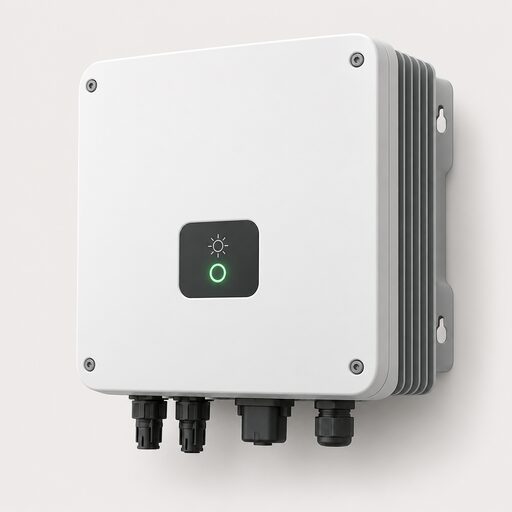 Cooling with Solar PanelsCan solar panels run an air conditioner, and will they cover the whole bill?
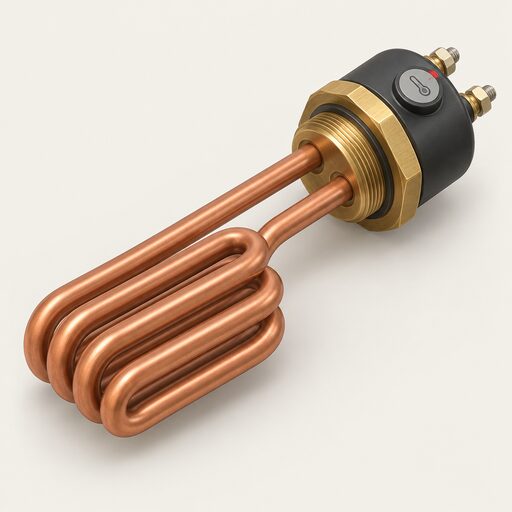 Solar DivertersYour panels often make more electricity than your home needs.
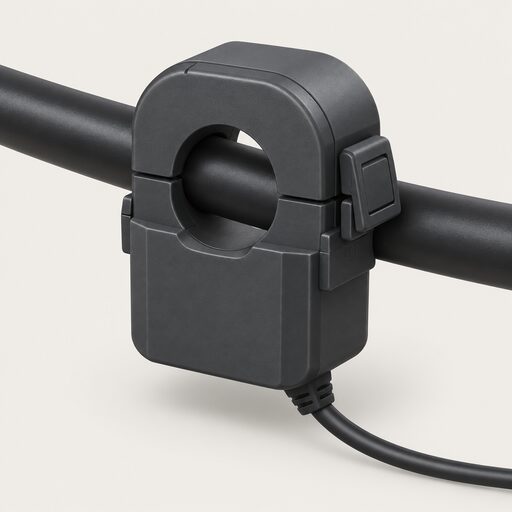 Charging an EV from Solar PanelsCharging your car from solar panels means using the power your roof makes instead of sending it to the grid.
 Solar Water Heating CollectorsSolar water heating uses panels on your roof to warm the water in your cylinder, working alongside your boiler rather than replacing it.
 The Winter GapSolar panels make most of their power in summer, but homes need the most electricity on dark winter mornings and evenings.
 Energy IndependenceA heat pump runs your heating on electricity instead of gas or oil, so how much does that really cut what you pay and how exposed you are when fuel prices jump?