
In this comparison
Direct acting electric heating and storage heaters both turn electricity into heat at the point of use, and both convert one kWh of electricity into roughly one kWh of heat. The difference is timing. Direct acting heaters, such as panel convector heaters, electric radiators, fan heaters and electric underfloor heating, produce heat when they are switched on. Storage heaters charge overnight on cheaper off-peak electricity, store that heat in ceramic or clay blocks, and release it through the following day1.
That timing decides the running cost. Electricity costs around four times as much as gas per kWh, so any resistance heater is an expensive way to heat a home compared with a gas boiler3. Storage heaters soften the blow only where an off-peak tariff is available: they are cheaper to operate than standard electric heaters in a home without a gas mains connection, but electricity is still much more expensive per kWh than gas4. Direct electric panel heaters and night storage heaters are at least three times less efficient than heat pumps, which makes them very expensive to run5.
For a household weighing the two, the practical split is usually a combination rather than a choice: storage heating in the main living areas and hall, and direct acting heating in bedrooms, kitchen and bathrooms1. What follows sets out how each works, what it costs, how the tariffs and grid constraints bear on it, and where building rules now stand.
Direct acting or storage: what each one does
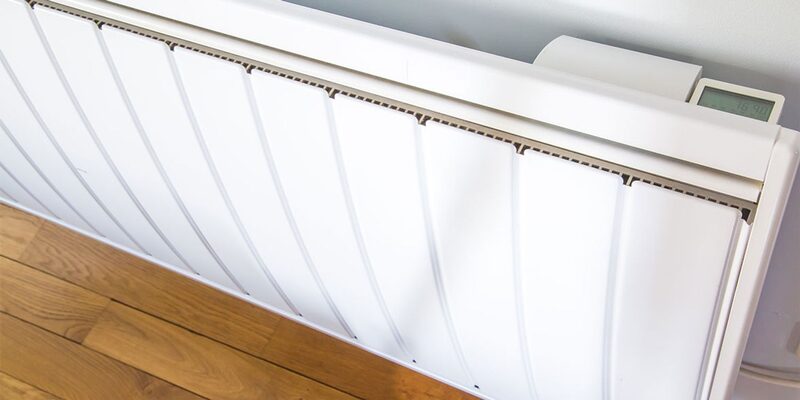
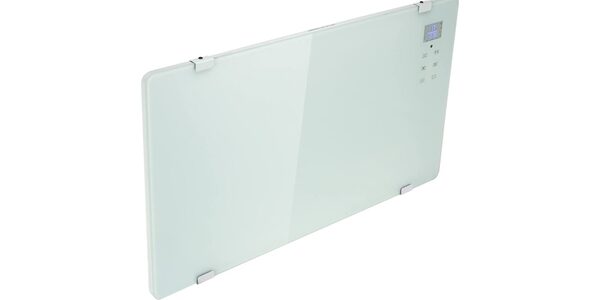
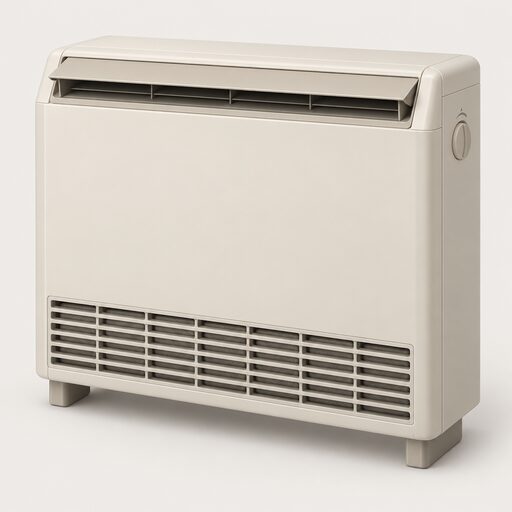
Direct acting heating is the simpler of the two. These are wall-hung units on the main electricity supply that convert electricity into heat using internal tubes or fluid, switched on when needed4. The category covers panel convector heaters, electric radiators, fan heaters and electric underfloor heating1. Because there is no store, there is no planning: the room is warm while the heater runs and cools when it stops. Direct acting systems are arguably the cheapest and simplest heating system to install, since they need no pipes, radiators or wet central heating1.
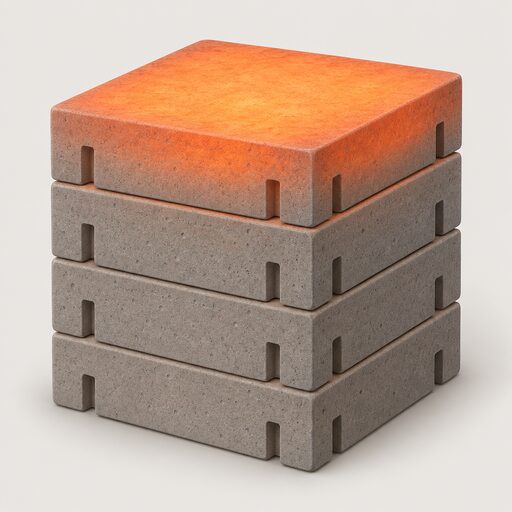
Storage heaters work on the opposite principle. They store thermal energy overnight by heating internal ceramic bricks, and that heat is used to warm the home during the day10. The heat is held inside a core, often made from heavy clay blocks, and released gradually into the room through vents2. Older units have manual controls, where the higher the input setting, the more electricity the heater uses and the more heat it stores; more modern units use digital controls, with thermostats and fans releasing heat when the room temperature falls below the set level2.
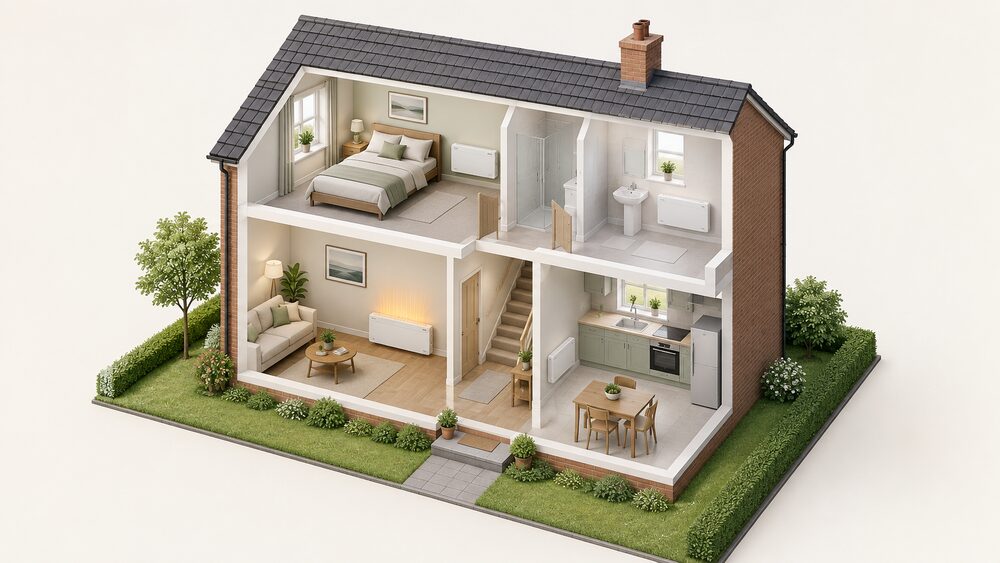
The two are not mutually exclusive, and the standard pattern in electrically heated homes is a mix. Storage heating, static or fan-assisted, provides the base load heat requirement in the main living areas and hall, while direct acting heating covers bedrooms, kitchen and bathrooms1. That arrangement uses the cheap overnight window for the rooms occupied for long periods, and instant heat for rooms used briefly.
Efficiency: both fall well short of heat pumps
Resistance heating has a low efficiency compared with other forms of electric heating, and proportionally converts one kWh of electricity into one kWh of heat12. That is not a defect in the appliance; it is the physics of the technology. It also means the two options sit at the same efficiency, and the choice between them is entirely about when the electricity is bought, not how much heat each unit of electricity yields.
Against a heat pump the gap is large. Heat pumps are around three times more efficient than direct electric heating, and typically over three times more efficient than the most efficient gas boilers or electric heaters5. Direct electric panel heaters and night storage heaters are at least three times less efficient than heat pumps, which makes them very expensive to run5. Heat pumps are much more efficient than traditional electric heating options, which makes them cheaper to run3.
There is a counterpoint worth stating precisely. Electric heaters are more efficient than gas boilers in the sense that all the electricity they use is turned into heat, and electric heating is more efficient than using a boiler3. The problem is not conversion losses but fuel price: the higher cost of electricity more than offsets that efficiency advantage6. A household on resistance heating therefore gets a system that wastes almost nothing at the point of use and still costs more to run than gas.
Storage heaters add one further condition. They are only an efficient form of heating if the home is not on the gas grid, because electricity is more expensive than gas14. Where a gas connection exists, the comparison is settled by fuel price rather than by the heater.
Running costs: why direct electric is expensive to run
Electric heaters tend to be more expensive to operate than storage heaters, and direct electric heating typically has high running costs because standard rate electricity is more expensive than gas or oil4. The scale of the gap is consistent across sources: electricity unit prices are up to four times more costly than gas, and electricity costs around four times as much as gas per kWh15.
The tariff a heater runs on matters as much as the heater itself. Direct acting systems used on a standard electric tariff can be more expensive to operate than a storage heater on an economy tariff1. That is the whole commercial case for storage heating: it moves consumption into a cheaper window rather than reducing it.
| Option | Running cost position | Source |
|---|---|---|
| Direct acting on a standard tariff | Can cost more to run than a storage heater on an economy tariff | 1 |
| Direct electric generally | High running costs; standard rate electricity is more expensive than gas or oil | 6 |
| Storage heater, no gas mains | Cheaper to operate than a standard electric heater | 4 |
| Storage heater vs liquid fuel | Expensive to use and limited control | 16 |
| High heat retention storage heater | Up to 27% cheaper to run than standard storage heaters | 7 |
| Dry electric underfloor heating | More expensive to run, as electricity is considerably more expensive as a heating fuel than gas | 17 |
Installation cost runs the other way. Direct acting systems are arguably the cheapest and simplest heating system to install1, while electric storage heaters typically cost £900 to £1,400 per room6. High heat retention storage heaters are more expensive to buy but lower to run than traditional or integrated models7.
Battery storage changes the arithmetic for direct electric heating, but not favourably on its own. Regular electric heating with battery storage is around three times as expensive as a heat pump setup, because the battery needed would be three times as big18. For a household, the honest summary is that direct electric heating buys low installation cost and high running cost, and storage heating trades a higher purchase price for a cheaper overnight rate.
Storage heaters and off-peak tariffs: how the timing works
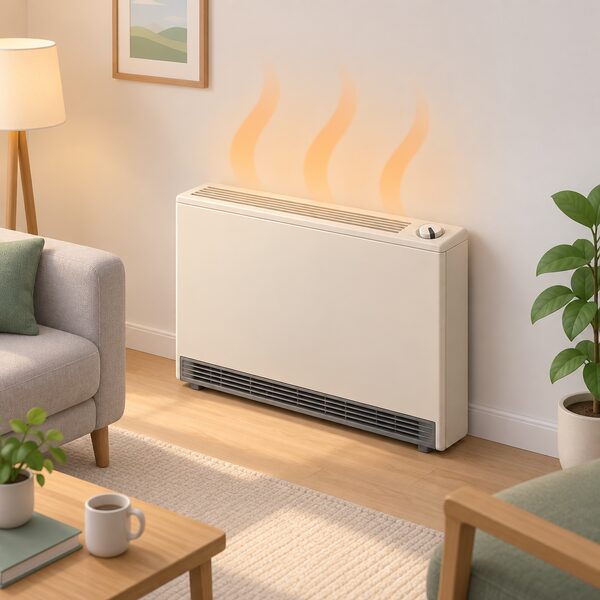
Storage heaters charge during off-peak hours when electricity is cheaper, usually overnight, and release the stored heat the following day2. They are designed to work with Economy 7, a tariff where night-time electricity is much cheaper, typically about half the price, but day-time electricity is more expensive7. Economy 10 works on the same principle, and storage heaters use Economy 7 or Economy 10 tariffs for cheaper energy at night8.
The operating cycle has two phases: a charging phase and a heating phase2. Because the heater relies on heat stored overnight, planning ahead is essential, and it does not produce heat instantly like a regular electric heater2. Some specific models that use particular time of use tariffs may need to be on all the time2.
Not every storage heater suits every tariff. Dynamic storage heaters do not work with Economy 7, and their running costs are still higher than night storage heaters for that reason9. The meters and tariffs designed around storage heating include Total Heat with Total Control, Economy 7 and Comfort Plus11. Most electric showers heat up their own water, so the storage heater does not need to be switched on for a shower19.
For energy independence, this is the central trade-off. A storage heater household is not independent of the grid, but it is unusually exposed to the timing of grid prices, and it can shift a large share of its heating demand into the cheapest hours. That is a real form of control, and it depends entirely on staying on a tariff that rewards it.
Grid impact: the extra stress direct electric heating places on supply
Direct electric heating draws on the network at the moment of use, which is typically the moment of peak demand. Storage heating does the reverse, charging when demand on the grid is low. In the case of electrified heating, thermal stores can be advantageous for generating heat when demand on the grid is low and electricity prices are cheap, reducing operating cost12.
The carbon picture is less favourable than the efficiency argument suggests. Electric heating has a carbon footprint around three times that of gas and twice that of oil-fired central heating, per unit of heat delivered20. That figure reflects the electricity used, not the heater, and it is the reason direct electric heating sits awkwardly in low-carbon policy.
Network capacity is a separate constraint. Very few homes are limited by fuse rating in the implementation of electric storage heating, but a large portion is restricted in other ways21. Storage heaters also need a connection to the correct circuit in your home and are hard-wired to the circuit, so the wiring, not just the heater, is part of the decision11.
The independence question here is blunt. Neither option frees a home from the grid, and both depend on a supplier and a tariff. Storage heating at least aligns demand with supply, which is why it survives in policy while direct electric resistance heating is being squeezed out of new installations.
Where each option fits: panel heaters, storage heaters and electric boilers
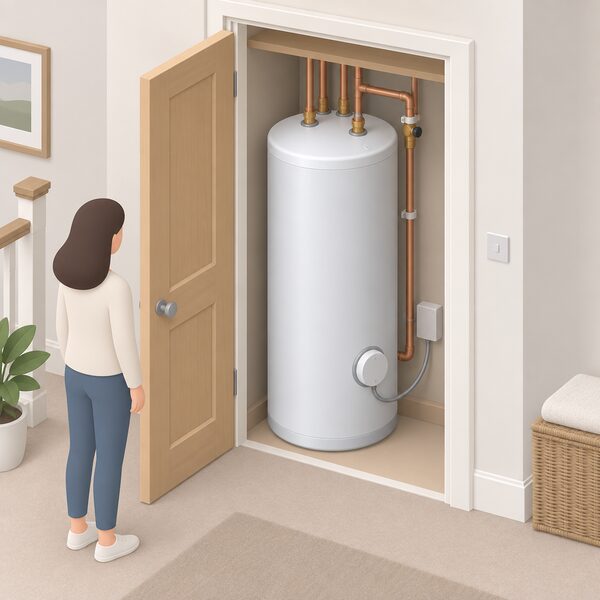
The fit depends on the room and the tariff. Storage heating suits the rooms occupied for long periods, and direct acting heating suits short, intermittent use. That is why the standard arrangement in existing electrically heated dwellings is storage heating in the main living areas and hall, and direct acting heating in bedrooms, kitchen and bathrooms1.
Storage heaters themselves divide into types. Static or fan-assisted storage heating provides the base load heat requirement1. High heat retention models are more expensive to buy but lower to run than traditional or integrated models7. Control type matters too: once set, digital electric storage heater controls are easier to run than manual controls, because they automatically store enough heat for a set routine, and sensors and smart controls store just the right amount of heat2.
Electric boilers are a different proposition from either. Usually these systems include a large hot water tank to store the heat6. That distinguishes them from a combi boiler, which does not use a hot water cylinder because all the heat and hot water comes directly from the boiler itself23. Heat pumps, for comparison, require a water storage cylinder to provide hot water, similar to older generations of gas boiler systems13. Heat-only boilers have two extra header tanks to store cold water, usually installed in the loft if there is one23.
For a household, the practical questions are whether a gas connection exists, whether an off-peak tariff is available, and how each room is used. Where there is no gas mains, storage heaters are cheaper to operate than a standard electric heater4. Where there is gas, the fuel price gap of around four times per kWh is the dominant fact3.
Part L requirements for direct-acting electric heating
Building rules now treat direct electric resistance heating as a last resort rather than a default. Direct electric heating will not be accepted in the majority of cases under the guidance covering energy assessments24. In Northern Ireland, direct electric resistance heating is described as unlikely to be viable due to primary energy, possibly viable for occasional small rooms or in extremely low energy demand dwellings with on-site renewables and battery storage25.
The classification used in Scottish proposals draws a distinction that matters for storage heaters. Direct electric heating and hydrogen are listed as zero direct emissions, while modern electric storage heaters and heat networks are listed as zero direct emissions plus, meaning systems with features to improve efficiency26. Modern, efficient electric storage heaters can perform the same role as heat pumps in the clean heating systems listed for Scotland, as can wet electric heating and other direct electric heating technologies27.
There is also a route by which storage heaters count as renewable. Under ECO4, electric storage heaters and Electric Heating Systems are classed as renewable heating systems when installed in a home which has solar PV or receives solar PV as part of the same project28. Electric storage heaters on an off-peak or Economy 7 tariff also qualify as efficient heating in the Northern Ireland decent homes standard30.
The direction of travel is clear enough. Direct acting resistance heating is being closed out of new and renovated installations on primary energy grounds, while storage heating survives where it is efficient, controllable and paired with a cheap tariff or on-site generation. For a household, that means the choice is less about which heater is better and more about which one the rules and the tariff will still support.
Sources30 cited
- Electric space heating, BEAMA, 2026-09-19
- A guide to using electric storage heater controls, Energy Saving Trust, 2026-05-21
- Electric central heating, Which?, 2025-09-22
- Electric heaters vs storage heaters, Energy Helpline, 2026-09-20
- Bristol Warm Homes Plan, Bristol City Council, 2025-04
- Electric heating, Energy Saving Trust, 2026-07-01
- Night storage heaters, Centre for Sustainable Energy, 2025-10
- Getting the most from Economy 7, National Energy Action, 2026-09-10
- Electric heating, Centre for Sustainable Energy, 2026-06
- History of electrical heating, Electrical Safety First, 2026-09-19
- Electric storage heaters, Energy Saving Trust, 2026-05-20
- Electricity network constraints research, Scottish Government, 2021-10-07
- Heat pumps for domestic heating, GOV.UK, 2023-11-21
- Storage heaters, HIES, 2020-03-17
- Central heating systems, Uswitch, 2022-09-25
- Off gas grid heating options, OFTEC, 2026-09-17
- Underfloor heating, Centre for Sustainable Energy, 2025-11
- Battery storage, Energy Saving Trust, 2026-08-19
- Bristol Warm Homes Plan, Bristol City Council, 2026-09-10
- Heating fuel, Uswitch, 2026-01-27
- Technical feasibility of low carbon heating, Scottish Government, 2020-12-22
- Prepare for a power cut, Citizens Advice, 2023-11-14
- Boilers, Energy Saving Trust, 2026-05-20
- Energy assessment guidance, Greater London Authority, 2022-06
- Building regulations discussion document, Northern Ireland Department of Finance, 2023-10-11
- EPC reform consultation, Scottish Government, 2023-07-25
- Heat in Buildings Bill consultation, Scottish Government, 2023-11
- ECO4 delivery guidance update, Ofgem, 2023-08-14
- ECO4 measures table update, Ofgem, 2023-08-09
- Decent Homes Standard summary table, Northern Ireland Department for Communities, 2025-08-05
 Electric Heating CostsHow to work out what electric radiators, panel heaters, infrared and storage heaters cost to run per hour and per season.
 Heating and Energy IndependenceCan you heat your home without relying on gas or oil, and what would that take?
 Storage Heaters GuideHow night storage heaters charge on off-peak electricity and release heat through the day, and how high heat retention models with fans and controls differ from older bricks.
 Energy IndependenceA heat pump runs your heating on electricity instead of gas or oil, so how much does that really cut what you pay and how exposed you are when fuel prices jump?
 Electric Radiators and PanelsDo electric radiators cost more to run than gas heating, and are they worth it for one room or a whole house?
 Heating Schedules and SetbackIs it cheaper to leave the heating on low all day, or set it to come on only when you need it?