
In this comparison
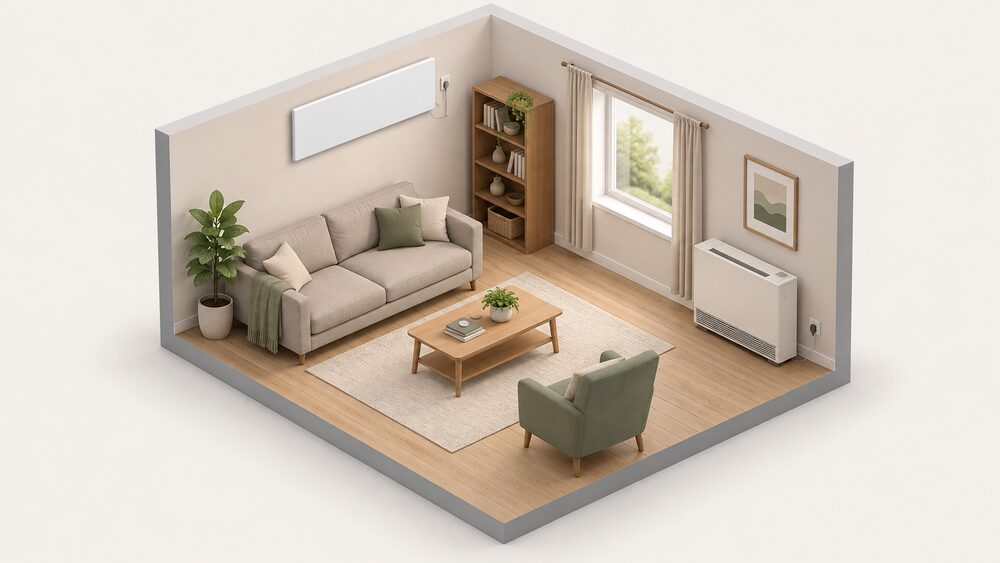
Infrared panels and storage heaters are both electric, both need no gas connection, and both sit at the centre of the same decision: how to heat a home that has no boiler. They work on opposite principles. An infrared panel uses radiant heat to warm people, floors, walls and objects directly rather than heating air1. A storage heater takes electricity overnight, stores it as heat in a high-density core, and releases it through the following day.
The practical difference is control. Infrared panels can be switched on or off in individual rooms as required, and each panel is independently controlled, making it easier to optimise the temperature of each room2. Storage heating cannot be zoned4. That single distinction drives most of the running cost, comfort and installation arguments that follow.
Cost is where the comparison gets difficult. Electricity costs about four times as much as gas for the same amount of energy, so any direct electric system carries a running cost penalty against a gas boiler1. The Energy Saving Trust states that a well-controlled infrared system will probably cost less to run than standard electric panel heaters, and might also be cheaper to run than storage heaters or electric underfloor heating depending on how they are controlled, but notes there is little research available to confirm this1. High heat retention storage heaters, meanwhile, are up to 27% cheaper to run than standard storage heaters5.
Infrared panels vs storage heaters: the core difference
An infrared panel is a radiant emitter. It transmits heat through thermal radiation, emitting infrared rays that directly heat objects and surfaces in a room rather than the air7. The panel surface usually runs at less than 100 degrees Celsius, though it could be hotter than a standard radiator1. Because the heat goes into surfaces rather than air, the temperature gap between the top and bottom of a room is much smaller than with convection heating8.
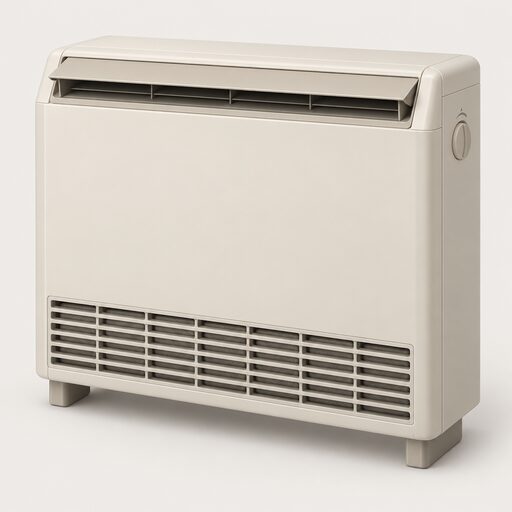
A storage heater is an accumulation device. It charges on off-peak electricity and releases heat slowly, which is why the traditional pairing is a night tariff. The trade-off is that the heat is available when the core is charged, not when the household wants it, and the system cannot be zoned room by room4. Building regulations require all storage heating systems to be accompanied by at least 10% direct-acting heating during the daytime, which is where infrared panels often enter the picture4.
The efficiency claims differ in kind. Infrared panels use electricity through direct transfer of heat energy rather than heating a volume of air9, and radiant heat has a higher rate of heat transfer per kilowatt than convection10. That is a statement about how quickly warmth is felt, not about how much electricity is consumed per unit of heat delivered. Both technologies convert electricity to heat at the point of use; the difference is where that heat lands.
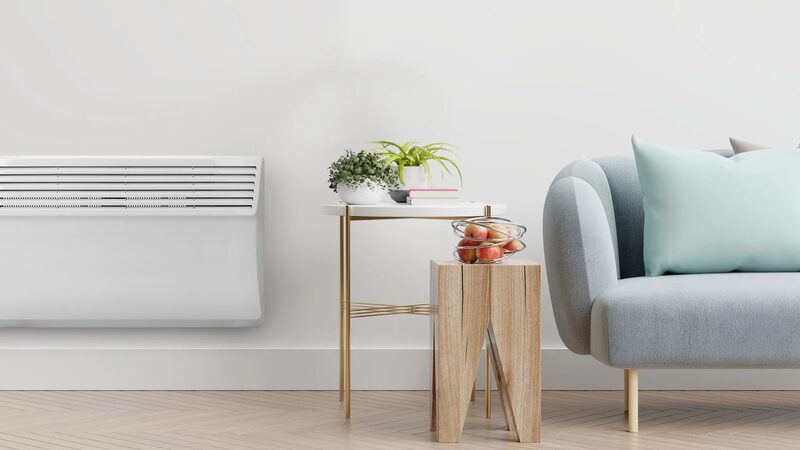
How each heats a room: radiant warmth versus stored heat
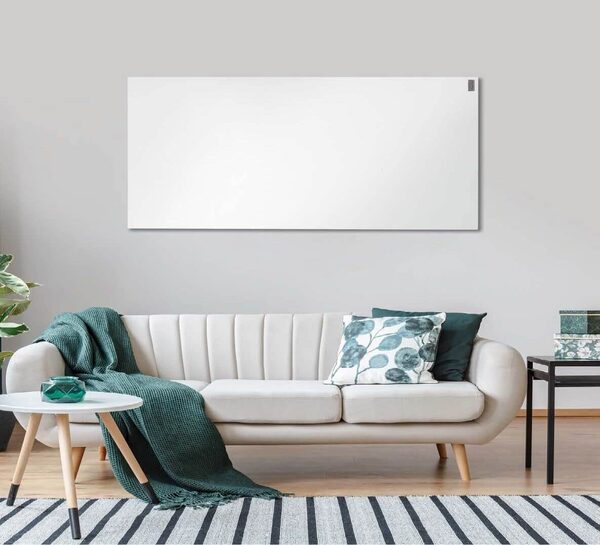
Radiant heating directly warms objects and people in the room, unlike convection heating which warms the air11. Infrared panels use electricity to create 100% radiant heat, which heats surfaces, objects and people directly12. The Energy Saving Trust describes the mechanism plainly: heat radiates outwards from the heater and warms any surfaces it comes into contact with1.
Storage heaters work the other way. They warm the air around them, which then circulates, and the fabric of the building absorbs some of that heat over the discharge period. The consequence is a slower response and a room that cools once the core is spent. Infrared panels generally provide warmth a good deal quicker than most convection systems3, and the warmth is instant because it does not depend on the air's ability to absorb and retain heat8.
There is a secondary effect worth knowing. Infrared heating panels do not create air or dust circulation13, and because there are no convection currents there is less stuffiness in a room8. The absence of moving parts is confirmed independently: infrared panels contain no moving parts and require very little maintenance, described as fit and forget technology2. Storage heaters have no fans in their basic form either, but they do rely on air movement to distribute heat, which is why placement against an external wall matters so much.
"Infrared radiation is safe, just like visible light radiation, even the human body emits infrared radiation."
Running costs and efficiency in practice
The honest position is that direct electric heating is expensive relative to a heat pump or a gas boiler, and both technologies sit inside that constraint. Bristol City Council's warm homes plan states that direct electric heating options including panel heaters, storage heaters and electric boilers are much less efficient, with very high running costs and extra stress on the grid14. The same document notes these types of electric heaters are at least three times less efficient than heat pumps14.
Against that backdrop, the comparison between the two technologies is narrower than marketing suggests. The Energy Saving Trust's assessment is cautious: infrared might be cheaper to run than storage heaters depending on control, but there is little research to confirm it1. High heat retention storage heaters are up to 27% cheaper to run than standard storage heaters5, which means the newest storage models close much of the gap that older units leave open. Storage heaters are also considered more expensive to operate and much less efficient than infrared panels in HIES guidance2, and Herschel Infrared states its panels are cheaper to run than storage heaters4.
Where infrared has a structural advantage is in the cost of the system around it. Installation of infrared heating panels can be a lower cost option than installing an air-source heat pump and wet central heating system when replacing storage heaters15. The savings from the cheaper infrared panel system could be put towards a solar PV and battery system, which can help reduce heating costs particularly in the spring and autumn15. That combination is where the independence argument becomes concrete: a household generating its own electricity and heating rooms directly is buying less from a supplier.
Installation: weight, wiring and cost
Infrared panels are light and simple to fit. Electric infrared panels require no pipework for installation and no fuel storage facilities2, and they can be installed quickly and easily on walls and ceilings without specialist work16. Free-standing panels are usually wired into the electricity supply by an electrician1. Infrared radiant panels cost £100 to £200 per heater to install6.
Storage heaters are heavier and bulkier, and that shows up in the installation bill. Installation costs for storage heaters are greater than for infrared panels because of their greater weight and size4. Herschel Infrared describes its panels as significantly easier and cheaper to install than storage heaters4. Storage heaters themselves cost between £200 and £500 per unit, which overlaps with the price of the infrared panels needed for a similar room4.
For a household replacing an existing storage heating system, the wiring question is the one that decides the job. Storage heaters already run from a dedicated supply, often on an off-peak circuit, so the cable runs exist. Infrared panels draw from the same mains supply and need no special tariff, but the circuit arrangement, the number of panels and the control wiring are matters for a qualified electrician. Electrical safety and supply capacity for electric heating is covered in more detail on our electrical safety for electric heating page.
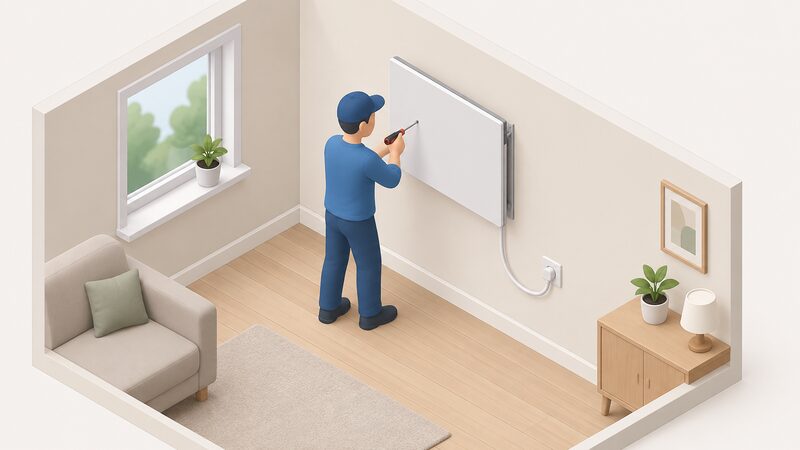
Placement matters: where an infrared panel should go
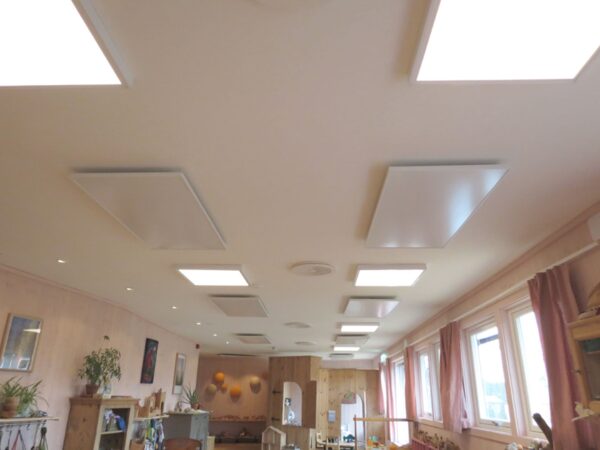
Radiant heat needs something to land on. The most effective place to mount panels is usually higher up on the walls or on the ceiling17, and electric panels can be fitted either high on the wall or on the ceiling2. The optimal placement depends on the size of the room, the layout of the building, the intended use of the room and the type of heater being used7.
The rule that catches people out is the window. Panels are less effective if mounted directly opposite a window or door, because there will be no thermal mass to absorb the energy17. Objects and walls store radiant heat, so a panel should be mounted opposite objects whose material can store heat, and not opposite windows11. In an old building with poor insulation, placing the heater opposite the outer wall is recommended to help prevent mould11. Wall mounting has a specific benefit here: the opposite wall absorbs the infrared rays and is heated, which can dry out outer walls and prevent mould, particularly in older buildings with minimal insulation9.
Ceiling mounting suits rooms where wall space is at a premium. Panels are hardly noticeable, take up no room space, and can be integrated into dropped ceilings like lighting fixtures, allowing heat zoning in large rooms9. The caution is position: a ceiling panel should not sit directly above a spot where someone spends a lot of time, such as a desk9. Panels must also not be blocked by furniture or other objects, so the rays can reach people without obstacles9.
Control and zoning: heating rooms when you actually use them
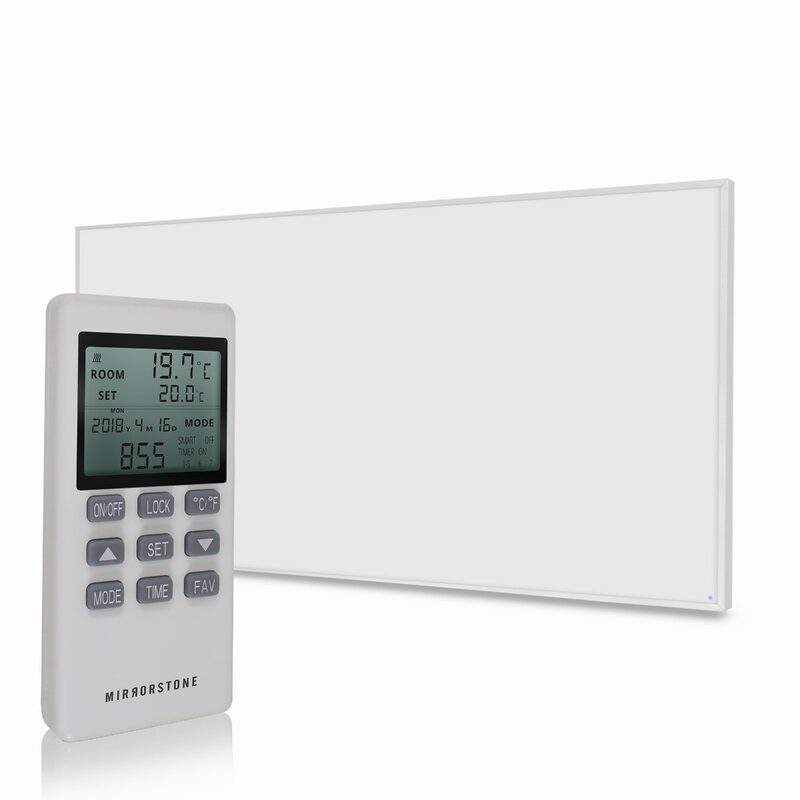
This is the strongest practical argument for infrared in a home that was previously heated by storage heaters. Infrared panels can be switched on or off in individual rooms as required2, and each panel is independently controlled, making it easier to optimise the temperature of each room3. Instead of heating an entire house, panels can be installed in specific rooms where heating is needed, so occupants heat only the areas they use13. The option extends to creating heated zones within a single room18, and to heating specific rooms or specific zones within one room19.
Storage heating cannot be zoned4. A charged core discharges into the room it stands in, and the household has limited say over when. That is why the 10% direct-acting requirement exists: storage systems need a responsive top-up for the hours when stored heat is not enough4.
Zoning only pays if the controls are used properly. Infrared heaters in open or semi-open areas are best paired with thermostat zoning controls to prevent overheating, using a thermostat timer or zone control20. The same logic applies indoors: a panel left on in an empty room is a panel wasting money. For households on a time-of-use tariff, the interaction between when rooms are occupied and when electricity is cheap is the whole game, and it is covered on our Economy 7 and time-of-use tariffs page.
Comfort and how each feels in a room
Radiant warmth feels different from convected warmth. Because the heat lands on skin and surfaces rather than the air, the level of comfort is the same regardless of whether panels are installed on the wall or ceiling7. The heat is described as very dry, with less risk of mould and dampness in walls and no stuffiness from convection currents8. Panels are completely silent21.
Storage heaters produce a gentler, more ambient warmth while the core discharges, then fade. The air is warmed, so the comfort depends on how well the room holds that air, and a poorly insulated room loses it quickly. Infrared does not solve a leaky building either: the rays warm what they hit, and a cold draught still feels like a cold draught.
For households weighing the wider options, the comparison sits inside a larger picture. Our storage heaters page covers how the off-peak charging model works, infrared heating explains panel types and outputs in more detail, and electric heating running costs sets out how tariffs translate into bills. Where a home has no gas connection at all, heating a home off the gas grid covers the alternatives, and home heating and energy independence looks at what self-generation changes.
What each choice means for energy independence
Both technologies keep a household on the electricity grid and dependent on a supplier for every unit consumed. Neither stores fuel on site, and neither removes the standing charge or the network costs that come with a connection. That dependence is the honest baseline.
Infrared panels change the shape of that dependence rather than removing it. Because each panel is independently controlled and rooms can be heated individually2, a household can match consumption to occupancy far more tightly than a storage heating system allows. Where solar PV and a battery are added, the savings from a cheaper infrared installation can be directed towards that generation and storage, reducing the share of heating cost that comes from the grid, particularly in spring and autumn15. A well-insulated home of 120 square metres was modelled over 20 years, and the cheapest solution in that comparison was infrared heaters in conjunction with a photovoltaic system22.
Storage heaters retain one independence advantage: they shift demand to off-peak hours, which suits a night tariff and, in some homes, a dedicated off-peak supply. That is a form of load shifting rather than self-sufficiency, and it depends entirely on the tariff remaining favourable. The Radio Teleswitch Service shutdown affects how some of these legacy off-peak arrangements are switched, which is covered on our Radio Teleswitch Service shutdown page.
The remaining dependence for either system is the same: a grid connection, a supplier, and a meter. What differs is how much control a household has over when the electricity is drawn and which rooms it heats.
Sources22 cited
- Infrared heating explained, Energy Saving Trust, 2026-03-13
- Infrared heating panels, HIES, 2018-07-24
- Is infrared heating a good idea?, Trianco, 2024-12-09
- Storage heaters comparison, Herschel Infrared, 2022-05-19
- Night storage heaters, Centre for Sustainable Energy, 2025-10
- Electric heating, Centre for Sustainable Energy, 2026-06
- Optimal placement of infrared heating panels, Herschel Infrared, 2023-03-28
- How does infrared heating work, Surya Heating, 2026-09-20
- Infrared heating panels: ceiling or wall mounting, Sundirect, 2017-02-13
- Understanding IR heating, Wondrwall, 2026-09-17
- 3 tips: how to install infrared heating panels, Sundirect, 2017-11-29
- Adopting intelligent infrared heating technologies, Nesta, 2023-08-30
- The efficiency of Sundirect infrared heaters, Sundirect, 2026-03-16
- Bristol warm homes plan, Bristol City Council, 2025-04
- Solar PV report, National Energy Action, 2025-02-19
- Replacing storage heaters with infrared heaters, Sundirect, 2017-02-22
- Best place to mount infrared panels, Herschel Infrared, 2014-12-17
- How does an infrared space heater work, Sundirect, 2021-08-19
- Heater at full power but still cold feet, Sundirect, 2017-11-17
- Best infrared heater for garage, balcony, home gym, Sundirect, 2026-01-14
- Advantages of infrared heat panels, Tansun, 2026-06-15
- Infrared heating in new buildings: what are the costs, Sundirect, 2019-05-27
 Infrared Heating and PanelsDo infrared heating panels cost less to run than normal electric heaters, and how much do they add to a bill?
 Electric Heating CostsHow to work out what electric radiators, panel heaters, infrared and storage heaters cost to run per hour and per season.
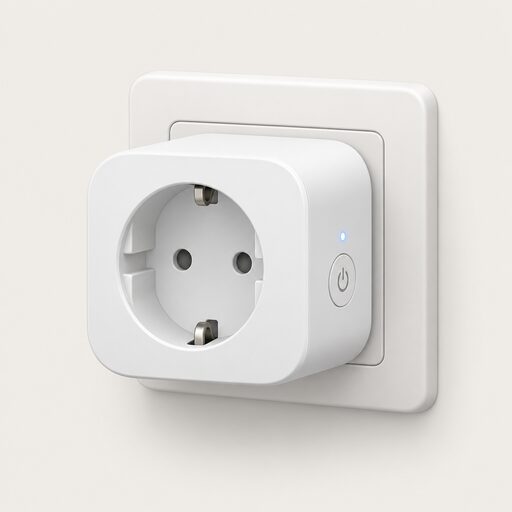 Electric Radiator ControlsElectric heaters cost far more to run than gas, so the controls really matter.
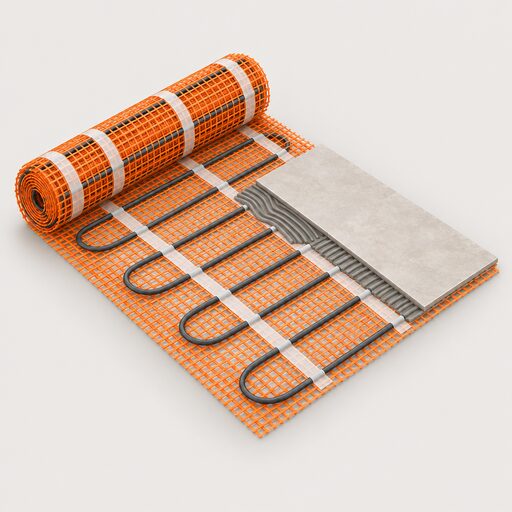 Underfloor Heating SystemsWhich rooms suit electric underfloor heating and which need a wet system?
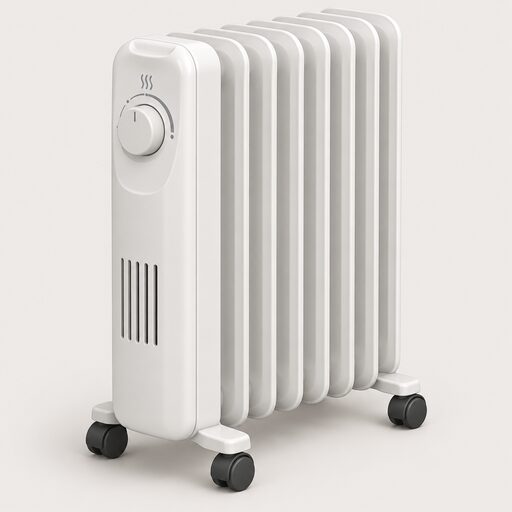 Electric Radiators and PanelsDo electric radiators cost more to run than gas heating, and are they worth it for one room or a whole house?
 Radiators and EmittersWill your radiators still heat the house properly with a heat pump?