
In this guide
A heat pump does not fail because of the box outside. It fails, in most homes, because the emitters cannot give up heat fast enough at the temperature the heat pump wants to run at. That is the whole subject of this page: radiators, underfloor heating and fan-assisted emitters, and how they are matched to a low-temperature heat source.
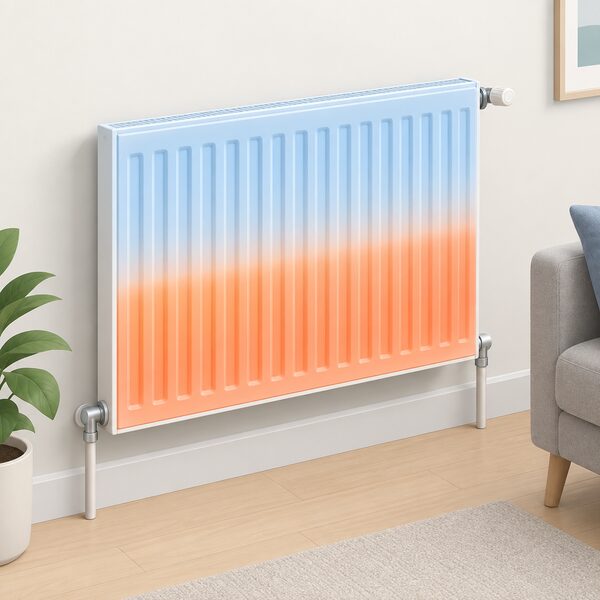
The headline numbers are simple. Heat pumps typically send hot water to radiators at between 35 and 45°C, against the 75°C a boiler usually runs at1. Radiators that were fine at 75°C may not be big enough at 45°C2. The fix is rarely a whole-house replacement: bigger radiators are not mandatory, but they can hugely improve how well a heat pump heats a home1. Underfloor heating takes the opposite approach, turning the floor itself into a large radiator and allowing a lower flow temperature still3.
What follows covers why flow temperature drives everything, how existing radiators are assessed, the choice between larger panels, fan-assisted emitters and underfloor heating, and what each option means for a household's energy independence.
Why flow temperature matters: 35 to 45°C from a heat pump versus 65 to 75°C from a boiler
Everything about emitter choice follows from one number. An air-to-water heat pump typically sends hot water to radiators at between 35 and 45°C1. A boiler, by contrast, typically runs at 75°C2. The same radiator, at the same size, gives out far less heat at the lower figure, so the emitter has to change or the heat pump has to work harder than it should.
The range across official and independent sources is worth knowing, because it explains why two installers can give different advice. One professional body describes heat pumps as running at considerably lower temperatures than traditional boilers, with 55°C as the maximum9. Energy UK gives 55°C as an example in line with Building Regulations10. The Centre for Alternative Technology describes sizing a system to supply flow temperatures of only 40 to 45 degrees to radiators in cold design conditions11. Nesta cites a 45℃ design temperature for heat pump systems12. Scottish building standards guidance states that supply water temperature to radiators should be in the range 40°C to 55°C, with high-efficiency radiators of high water volume13.
Those figures are not contradictory so much as differently framed: some are design temperatures at the coldest outdoor condition, some are typical running temperatures in milder weather. The practical point is that a system designed around 45°C needs roughly twice the emitter surface of one designed around 75°C, and a system designed around 55°C needs less. High-temperature heat pumps change the picture again, running at usually 65 to 80°C, which allows existing radiators to stay in more cases14.
For a household, this is the first real independence question. A heat pump running at a low flow temperature draws less electricity for the same heat, so the emitter decision is also an energy bill decision. It is also a decision about how much of the home's heat comes from a fuel it buys rather than a fuel it imports.
Radiators with a heat pump: bigger surface area, lower flow temperature

The industry position is consistent. Heat pumps run at lower temperatures than gas or oil boilers, so they need longer run times and often larger radiators4. The Renewable Energy Assurance scheme says heat pumps benefit from the use of larger radiators or underfloor heating4. The RECC consumer guidance is blunter: if you use radiators, they need to be large ones, since the heat produced will be low in temperature15.
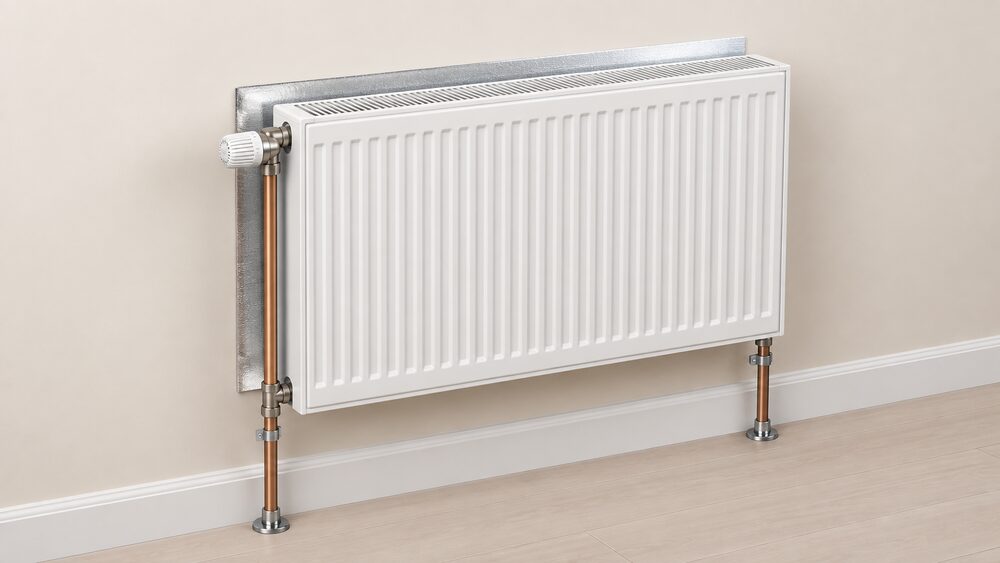
"Bigger" here means more surface area, not necessarily more wall. A double or triple panel radiator gives more surface area in the same footprint2. That is the standard answer for a room where wall space is fixed but output needs to rise.
There is a second lever that costs nothing structural. Radiator reflector panels, fitted behind radiators, help get warmth from radiators into the room and may make the heating more efficient, and they are most effective on radiators mounted on uninsulated external walls16. For a household that cannot or will not change radiators, that is a low-cost adjustment to how much of the existing output reaches the room rather than the wall behind it.
Where insulation is not an option, increasing radiator size is the documented alternative17. That matters for older housing stock, where the fabric cannot easily be improved but the emitters can.
Do your existing radiators need replacing? Often only a few do
The common fear is a whole-house radiator bill. The evidence points the other way. Off-gas grid guidance notes that it is probable radiators will have to be changed for larger ones to produce an equivalent heat output when replacing a boiler, unless a high-temperature output heat pump is installed18. That is a probability, not a certainty, and it is assessed room by room.
A heat loss calculation establishes what each room needs at the design outdoor temperature. Rooms that were already generously radiated, or that have since been insulated, often pass. Rooms with undersized radiators, large glazing or poor fabric usually fail. One household case study describes the outcome plainly: you might need larger radiators and some new pipework19.
Pipework matters as much as panels. A heat pump moves heat with a smaller temperature difference between flow and return, which means it needs a higher flow rate through the same pipes to deliver the same energy. Narrow microbore runs can become the limiting factor, which is why new pipework sometimes appears alongside new radiators19.
The practical sequence for a household is: heat loss survey first, then a room-by-room emitter schedule, then a decision on which rooms to change. That is also where the Boiler Upgrade Scheme sits, since the grant is tied to an air-to-water heat pump installation rather than to radiators. The grant is £7,500 towards an air-to-water heat pump, with the voucher valid for 3 months8. Cumulative figures to July 2026 show 116,832 vouchers issued in England and Wales since May 2022, with 98% of applications for air-to-water heat pumps20.
Double and triple panel radiators, fan-assisted emitters and reflector panels
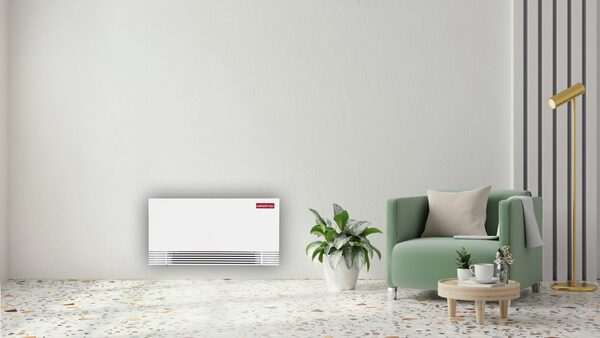
Three routes exist for raising emitter output without changing the room's layout.
Larger panels. Double or triple panel radiators add surface area without taking extra wall space2. They are the least disruptive option and the easiest to specify against a heat loss figure.
Fan-assisted emitters. Low-temperature radiators, such as fan-assisted models, can provide around 3 times as much heat output as a standard radiator of the same size, which allows a low flow temperature to work in a smaller footprint. These require a power supply5. That electrical connection is the trade-off: a fan-assisted emitter needs a nearby socket or a spur, and it has moving parts that a plain panel does not.
Reflector panels. Fitted behind radiators, these help get warmth into the room and may improve efficiency, and are most effective on uninsulated external walls16.
| Emitter option | What it changes | Key figure | Consideration |
|---|---|---|---|
| Double or triple panel radiator | Surface area, same wall space | More surface area than a single panel2 | Larger and heavier unit |
| Fan-assisted low-temperature radiator | Output per unit size | Around 3 times a standard radiator of the same size5 | Requires a power supply5 |
| Radiator reflector panel | Proportion of heat reaching the room | Most effective on uninsulated external walls16 | Low-cost, no system change |
| Underfloor heating | Whole floor becomes the emitter | 80 to 90% floor coverage for sole-source use6 | Slow response, floor build-up |
There is also the option of removing radiators from the equation entirely. Air-to-air heat pumps do not need underfloor heating or radiators21. That is a different system type, covered on the air-to-air heat pumps page, but it is worth naming here because it is the one route where emitter sizing disappears as a problem.
Underfloor heating: how it works and why it suits heat pumps
Underfloor heating warms a home from the ground up by turning the floor into a large radiator22. Because the emitting surface is the whole floor, it can give up the same heat at a much lower water temperature than a small panel, which is exactly what a heat pump wants.
The compatibility case is strong and repeated across sources. Underfloor heating systems work particularly well with heat pumps because they provide consistent warmth at lower temperatures23. Heat pumps are described as ideal for underfloor heating systems18. Air or ground source heat pumps are particularly effective when used with wet underfloor heating, because heat pumps are designed to be left on for longer periods and operate at lower temperatures24. Underfloor heating is often installed in combination with a heat pump and works with all types of heating systems22.
The flow temperature consequence is the key mechanism: with underfloor heating, the flow temperature could be lower compared with radiators, and this should result in the heat pump running much more efficiently3. That is the efficiency argument in one line.
Two caveats belong here. First, underfloor heating is not required with a heat pump: you do not need underfloor heating with a heat pump, but you might need larger radiators and some new pipework19. Second, cost. Heat pumps work best with underfloor heating, so it needs to be factored into the cost15. Water underfloor heating is more expensive than radiators to install, but cheaper to run7.
There is a design benefit beyond efficiency. With no need for wall-mounted radiators, there is greater flexibility in room layouts, glazing design and window placement25. For a household planning a renovation, that is a real gain: the heating system stops dictating where furniture and windows go.
Water or electric underfloor heating: which fits which project
The two systems are not interchangeable, and the cost profile runs in opposite directions depending on what is being measured.
Electric underfloor heating is generally slightly cheaper to install than water underfloor heating7. Its installation costs are lower26. But it is more expensive than radiators both in terms of installation and running costs, with an exception for heating a single room where radiators cannot be zoned7. The reason is fuel: electric underfloor heating is generally more expensive than radiators because gas is cheaper than electric6.
Water underfloor heating is around 25% more expensive to install per m2 than electric underfloor heating26. In return, it is cheaper to run than radiators7, and it will generally always be cheaper to heat a room with water underfloor heating than radiators6.
| Electric underfloor heating | Water underfloor heating | |
|---|---|---|
| Installation cost | Lower26; generally slightly cheaper than water7 | Around 25% more per m2 than electric26 |
| Running cost vs radiators | Generally more expensive, because gas is cheaper than electric6 | Generally always cheaper than radiators6 |
| Best fit | Single rooms, where radiators cannot be zoned7 | Whole-home systems, particularly with a heat pump24 |
| Heat-up speed | Slightly quicker than water6 | Slower, especially embedded in screed24 |
The choice therefore follows the project. A single cold room, a bathroom, or an extension where extending the wet circuit is awkward points to electric. A whole-house retrofit alongside a heat pump points to water, because the running cost advantage compounds over years and the low flow temperature is what the heat pump needs.
For energy independence, the distinction is sharper than it looks. A water system running off a heat pump uses electricity to move heat that is largely drawn from the air or ground. An electric system turns electricity directly into heat, at roughly one unit of heat per unit of electricity. Both reduce reliance on gas, but only one multiplies the heat available per unit of electricity.
Floor finishes, insulation and room coverage: what underfloor heating needs to work
Underfloor heating is only as good as what sits above and below it.
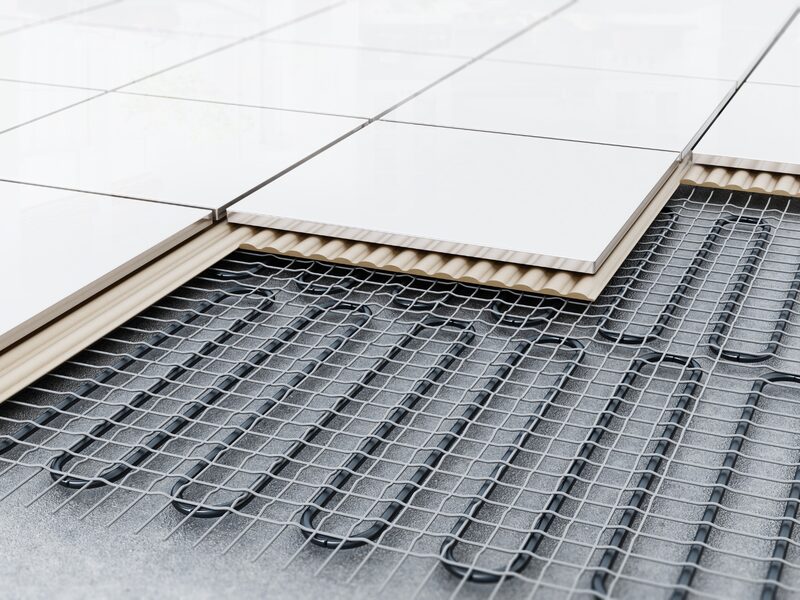
Above: the floor finish. Tiles and stone are the best flooring for underfloor heating, because they conduct heat efficiently6. Most types of thin carpet, engineered wood, vinyl and laminate are also compatible6. Thick carpet should be avoided because it traps too much heat, and solid wood is unsuitable because it becomes warped by the temperature changes6. Carpet can be installed over underfloor heating, but it takes longer to heat a room because it reduces how quickly heat transfers3.
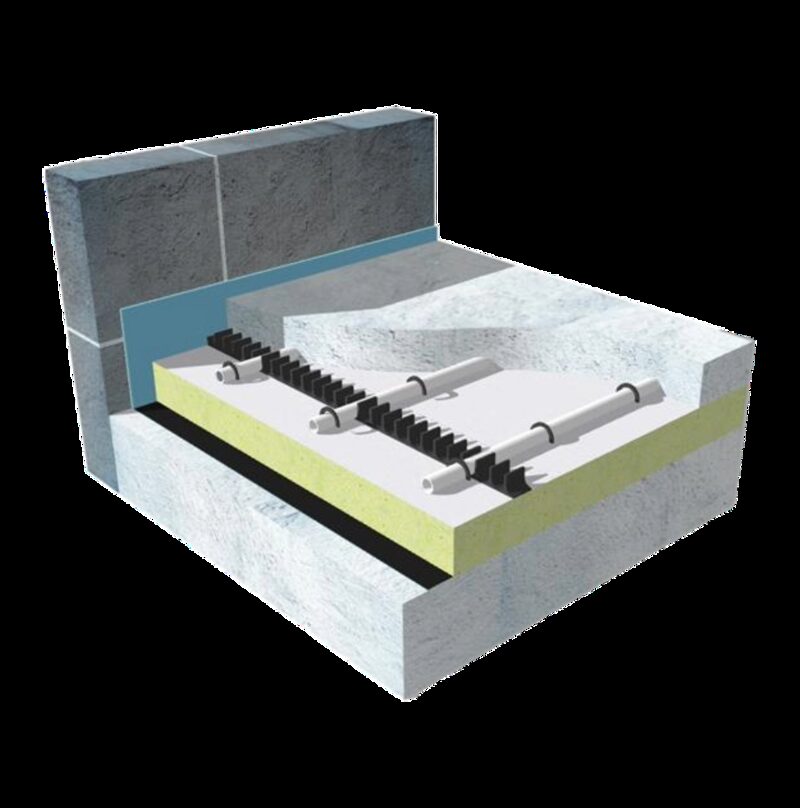
Below: the insulation. Where the floor is the only heat source in a room, insulation boards need to be installed beneath the underfloor heating to reduce the amount of heat being lost downwards6. Without them, a share of the output is spent warming the ground rather than the room.
Coverage. For sole-source use, the system should cover between 80% and 90% of the room's total floor area, wall to wall6. That is a demanding figure in a room full of fitted furniture, and it is the main reason underfloor heating sometimes cannot carry a room alone.
Commissioning. All installed equipment in underfloor heating systems should be commissioned in accordance with BS EN 1264-427. That is the standard the installer works to, and it governs the pressure testing and warm-up sequence before the floor is handed over.
Running costs, response times and control: living with underfloor heating and radiators
The lived experience of underfloor heating differs from radiators in three ways: speed, cost and control.
Speed. Underfloor heating takes between an hour and 90 minutes to heat a room, with electric slightly quicker than water6. Wet systems generally take much longer to heat up and cool down than traditional radiators, partly due to the screed or concrete in which most systems are embedded24. That is not a fault; it is the thermal mass doing its job. It does mean underfloor heating suits a household that runs heating steadily rather than in short bursts, which is also how a heat pump prefers to run.
Cost. One worked example puts a 25m2 room, run three hours a day for roughly six months, at around £140 in total for water underfloor heating7. That figure depends on the tariff and the room, but it illustrates the shape of the running cost: low and steady.
Control. Because the floor responds slowly, zoning and weather compensation matter more than they do with radiators. The controls side of this is covered on the heat pump controls page.
Radiators, by contrast, respond faster and are easier to zone room by room, which is why mixed systems are common: underfloor heating in the rooms being renovated, larger radiators or fan-assisted emitters elsewhere. A mixed system is a legitimate design, not a compromise, provided the heat pump's flow temperature is set by the most demanding emitter on the circuit.
Bleeding radiators: symptoms, frequency and when to call someone
Radiators on a heat pump still need air removed. Bleeding means releasing trapped air so hot water can circulate properly and heat the radiator evenly, and it usually takes only a few minutes per radiator28.
The signs are consistent across sources: a radiator that is cold at the top, slow to warm up or making gurgling noises28. More precisely, if the top of the radiator is cool, or much colder than the bottom, while the heating is on, it is a sign the radiator needs bleeding29.
Frequency guidance varies. One source suggests about once a year, ideally before winter when the heating is used more regularly28. Another suggests at least once a year, but preferably every few months30. A third puts it at every few years29.
Faults under a finished floor
A finished floor is not a sealed mystery. For water underfloor heating, faults can be identified using a thermal camera or a moisture tester6. Specialist engineers can pinpoint faults under a finished floor to within a few millimetres6. That precision is what makes underfloor heating a manageable long-term proposition rather than a one-way installation.
What this means for household energy independence
Every emitter decision on this page moves a home along the same axis: how much heat comes from a fuel the household buys and how much from a heat pump running on electricity, increasingly generated at home or bought on a tariff the household chooses. Larger radiators, fan-assisted emitters and underfloor heating all exist to let the heat pump run at a lower flow temperature, which is where the efficiency, and therefore the running cost, is won.
The dependence that remains is real. A wet system still needs electricity, a grid connection and, in most homes, a supplier. Underfloor heating and radiators are passive, so they add no app, no cloud account and no manufacturer relationship to the household's risk. The heat pump itself is the part with a company behind it, and that is where the heat pump servicing and maintenance question sits.
The grant position is worth stating plainly, because it changes the economics of the whole project. The Boiler Upgrade Scheme offers £7,500 towards an air-to-water heat pump, with a 3-month voucher validity8. Cumulative statistics to July 2026 record 116,832 vouchers issued in England and Wales since May 2022, 98% of applications being for air-to-water heat pumps20. The scheme applies in England and Wales; households in Scotland and Northern Ireland have separate arrangements, covered on the heat pump grants page.
Sources30 cited
- Heat pump fact check, Energy Saving Trust, 2026-07-01
- How to ensure a heat pump runs efficiently, Energy Saving Trust, 2026-05-19
- Underfloor heating, Energy Saving Trust, 2025-10-02
- Heat pumps, Renewable Energy Assurance, 2026-09-17
- My property and heat pumps, Renewables First, 2026-03-23
- Underfloor heating pros and cons, Which?, 2026-05-27
- Underfloor heating costs, Which?, 2026-05-27
- Boiler Upgrade Scheme guidance for installers v5.1, Ofgem, 2026-07-02
- Heat pump systems, CIPHE, 2026-09-17
- Home heating, Energy UK, 2025-04-04
- Heat pumps, Centre for Alternative Technology, 2025-06-27
- Future subsidies for heat pumps, Nesta, 2024-03-14
- Domestic Building Services Compliance Guide 2022, Scottish Government, 2022-06
- An introduction to heat pumps, Which?, 2025-09-22
- Consumers, RECC, 2026-09-17
- Radiator reflector panels, Energy Saving Trust, 2025-10-31
- From flats to terraced houses, heat pumps are suitable for all property types, Energy Saving Trust, 2024-04-05
- Your home guide to heat pumps, OFTEC, 2026-09-17
- Russell and Kate's story: solar panels and a heat pump, Energy Saving Trust, 2026-08-13
- Boiler Upgrade Scheme statistics, July 2026, Department for Energy Security and Net Zero, 2026-08-27
- House of the future, Energy Saving Trust, 2026-07-15
- Underfloor heating system, NICEIC, 2026-09-17
- Is your home suitable for a heat pump?, Consumer Protection Association, 2026-02-18
- Underfloor heating, Centre for Sustainable Energy, 2025-11
- The benefits of underfloor heating, BEAMA, 2026-06-01
- Electric vs water underfloor heating, Which?, 2026-05-27
- Approved Document L Volume 1 consultation version, Welsh Government, 2026-09-17
- How to bleed a radiator, Smart Energy GB, 2026-08-17
- How to bleed your radiators, Which?, 2025-09-16
- How to bleed a radiator, Uswitch, 2026-09-04
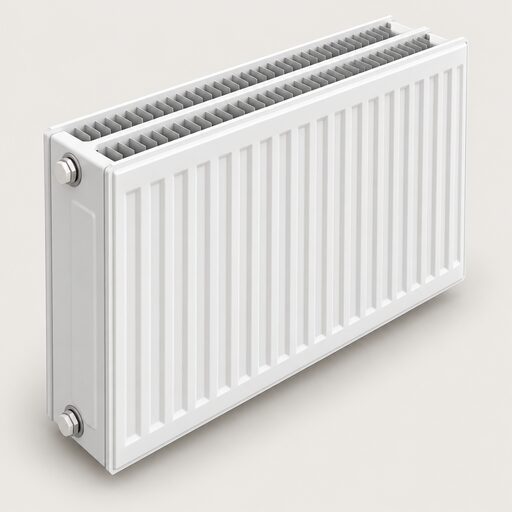 Radiators and Heat EmittersA radiator's real heat output depends on how hot the water inside it is compared with the room, so the figure in a catalogue often overstates what you will actually get.
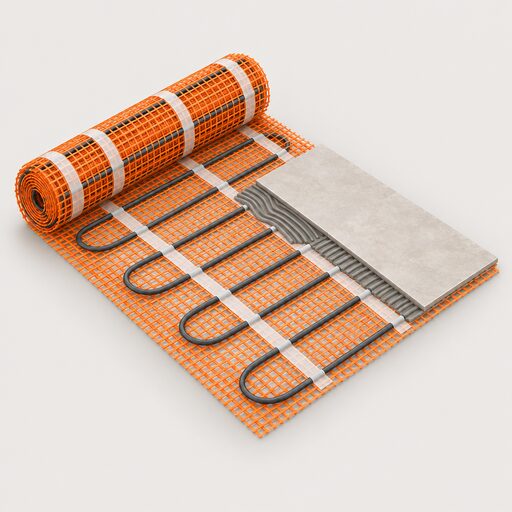 Underfloor Heating SystemsWhich rooms suit electric underfloor heating and which need a wet system?
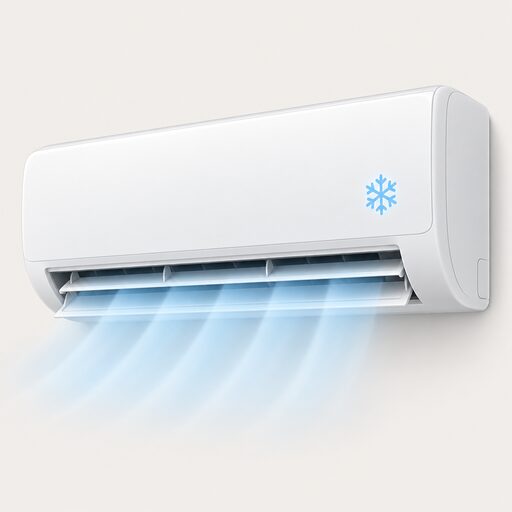 Using a Heat Pump for CoolingCan a heat pump cool your home in summer as well as heat it in winter?
 Heat Pumps vs BoilersWill a heat pump actually cost less to run than my boiler, and does it heat the house as well?
 Which Homes Suit a Heat PumpMost UK homes can have a heat pump fitted, so the real question is whether yours makes it easy or expensive.
 Air-to-Air Heating and CoolingAir-to-air heat pumps deliver warm air through indoor fan units rather than hot water to radiators.