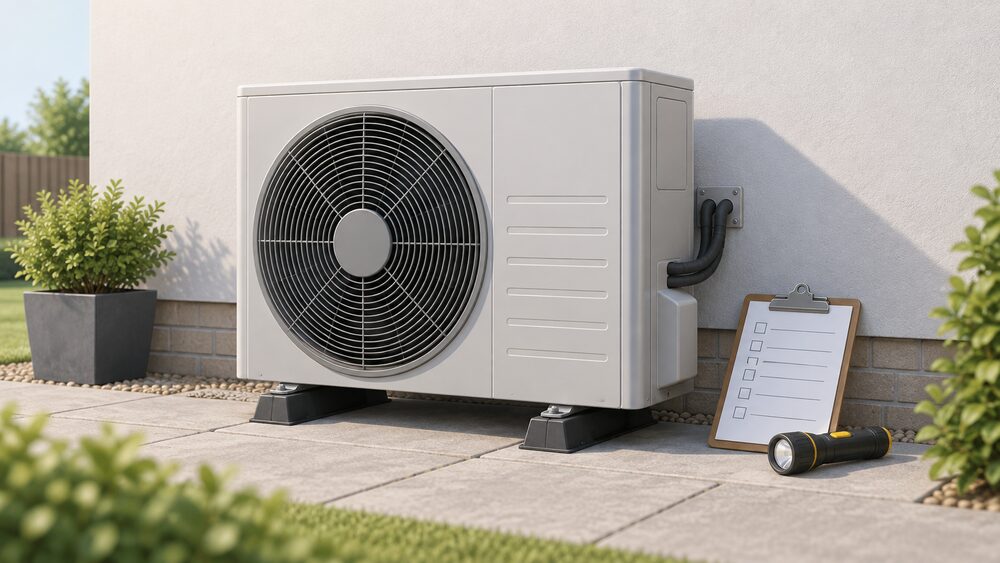
In this guide
A heat pump that has stopped working is usually reporting something specific, and the first useful move is to read what it is saying rather than to assume the worst. Check that the system is running and the house is getting warm, then look at the fault log for recurring fault messages and speak to the installer and manufacturer to find out what they mean1. A common fault is a "heating blocked" message, which might mean the heat pump is running at temperatures that are too high2.
Heat pumps can turn off for several reasons, including power cuts, malfunction, or a prepayment electricity meter running out of credit3. They also work differently from a boiler: heat pumps usually work best if turned on at a lower temperature for a longer period of time, so a system that feels slow to respond is often behaving as designed rather than failing4. Most heat pumps will heat hot water to 50-55°C very efficiently, then the sterilisation cycle raises the temperature further5.
Where a fault is real, the pattern matters more than the single event. Some participants in government-commissioned research reported how their heat pumps had developed major system faults, leading to significant discomfort, with no effective pathway to resolve the issue6. That is the case for a documented fault log, a named installer and a manufacturer contact, not for repeated restarts.
Heat pump not working: first checks before you call anyone
The checks that need no tools come first. Confirm the system is running and the house is getting warm, which separates a genuine failure from a control setting that has drifted1. Confirm the electricity supply has not been interrupted: power cuts, malfunction, or a prepayment electricity meter running out of credit are all recorded causes of a heat pump turning off3. If the property has a prepayment meter, credit is the cheapest thing to rule out before booking an engineer.
Then look at how the system is being asked to run. Heat pumps usually work best if turned on at a lower temperature for a longer period of time, so a household that has set a high flow temperature and short operating windows may be creating the symptom it is trying to cure4. A "heating blocked" message is a common fault and might mean the heat pump is running at temperatures that are too high2. Read the manual and make sure the heating boost is set to come on only when the temperature outside is low enough2.
If the heating boost has to be used regularly, that is itself diagnostic. Speak to the installer, because it might be a sign that the radiators are too small or the heating curve is not set right2. Both are design issues rather than breakdowns, and both are corrected by adjusting the system rather than replacing a part.
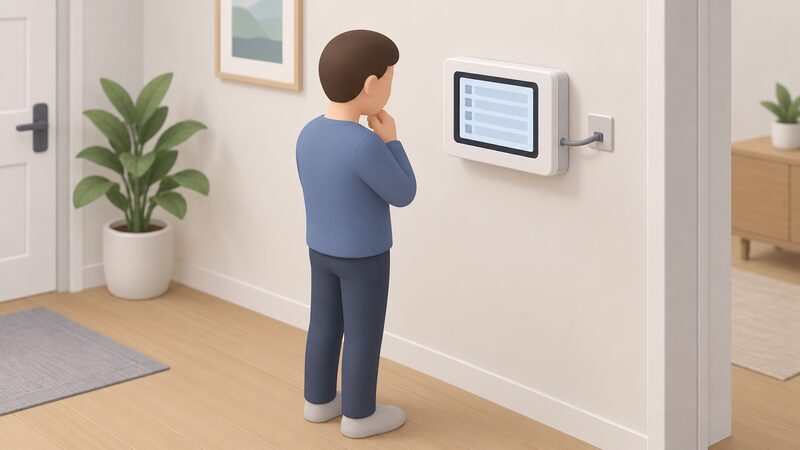
Fault log and recurring messages: what to check and who to speak to
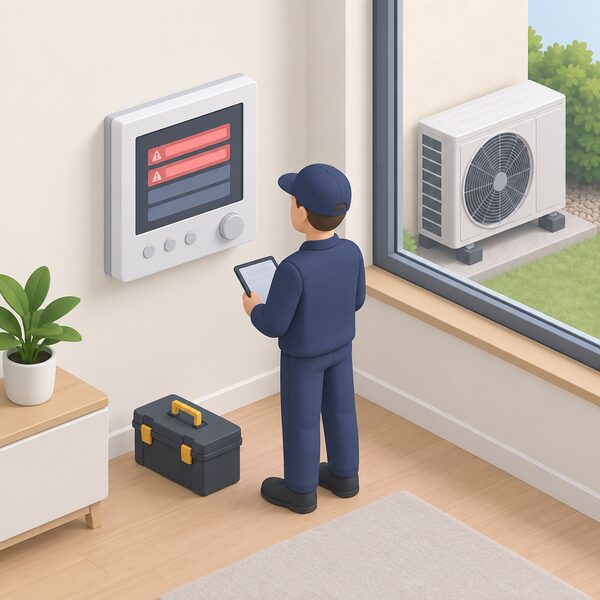
The fault log is the system's own record, and recurring messages in it are the evidence an engineer needs. Check the fault log and see if you get recurring fault messages, then speak to the installer and manufacturer to find out what they mean2. A single message after a power cut is different from the same code appearing weekly, and the difference changes who should attend.
New-build homes have a formal route for this information. The government has chosen to proceed with the proposal to fix operational and maintenance information to heat pumps, visible and accessible to occupants, with the Home User Guide as a secondary reference point11. In Wales, operating and maintenance information provided to the dwelling owner should include the heat loss calculation, design flow temperature, competent person scheme confirmation, size of the emitter circuit and minimum set back temperatures12. Where that documentation exists, it shortens diagnosis considerably, because the design intent is on record.
For existing homes, the equivalent is the handover pack from the original installation. Where a system has changed hands, the fault history may not have travelled with it. The Office for National Statistics publishes data on heat pumps used in central heating in England and Wales, maintained by its Housing Analysis team, which is the national picture rather than a route to an individual fault13.
Response times: why a fix can take more than 30 minutes
A heat pump fault is rarely a thirty-minute visit, and the reasons are structural rather than a matter of engineer competence. The wait time for a heat pump can be several months for installation work, which tells you something about how booked the competent workforce is14. A repair competes for the same diary.
When work does happen, it takes time. The installation itself typically takes around three days, but may take longer depending on the property14. In Wales, the Optimised Retrofit Programme recorded that the heat pump could take between a few days and 10 days excluding weekends15. A fault that requires draining down, replacing an emitter or rebalancing the circuit sits in the same order of magnitude.
There is also a design reason why diagnosis is slow. Heat pumps and any dedicated ancillary products such as integrated hot water storage vessels should be commissioned in accordance with both the manufacturer's instructions and the appropriate system design parameters16. A fault can only be judged against those parameters, so an engineer without the original design figures is working blind.
Set against that, the equipment is expected to last. Contract durations should not exceed the expected lifespan of a heat pump, typically 15 to 20 years9. A system that is fifteen years old and failing is at the end of its design life, not a young unit with a fixable defect, and that distinction changes the sensible response.
Efficiency: always above 100%, but cycling is capped at six starts per hour
Heat pump efficiency figures look strange because of how they are counted. The efficiency of a heat pump system will always be greater than 100%, because source energy is not counted8. Air source heat pumps typically achieve an efficiency rating of 300%, meaning for every unit of electricity they consume, they deliver around three units of heat17. An efficient heat pump will be somewhere between 300% and 400% efficient, with some heat pumps achieving efficiencies of over 400%3.
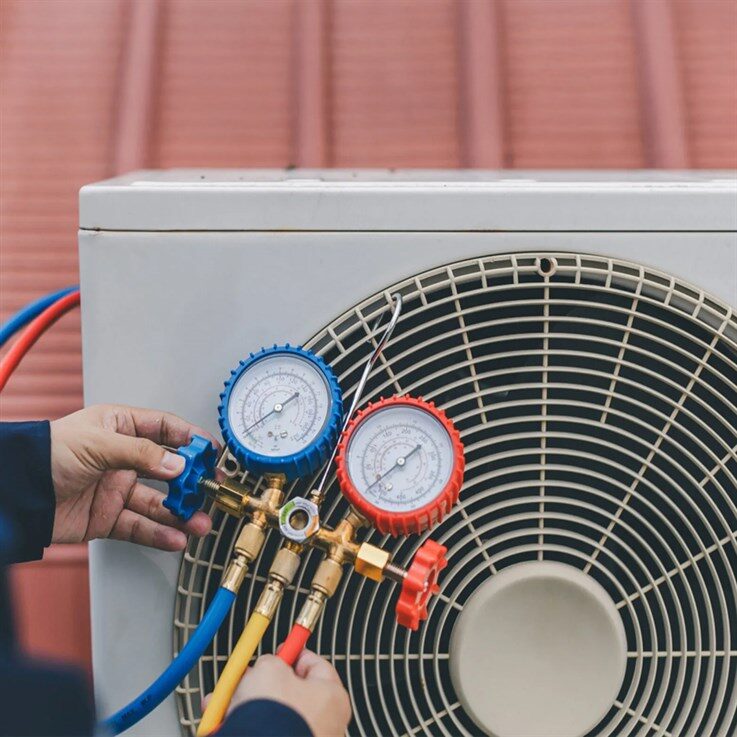
Short cycling is the fault that eats into those figures. The design target is a minimum water content that ensures cycling does not exceed six starts per hour8. In the worked example given, 120 litres is required to keep cycling below six starts per hour, assuming a temperature drop and a specific heat capacity of 4 kJ/°C kg8. A system with too little water volume in the circuit, or a buffer that has been omitted, will start and stop more often than that.
The practical consequence is that a short-cycling heat pump is not necessarily broken. It is running outside its design envelope, and the fix is usually hydraulic rather than electronic: more volume, better balancing, or a corrected heating curve. This is why the fault log and the design documentation matter together.
"the efficiency of a heat pump system will always be greater than 100%"
Space and hot water cylinder: what a heat pump system needs indoors
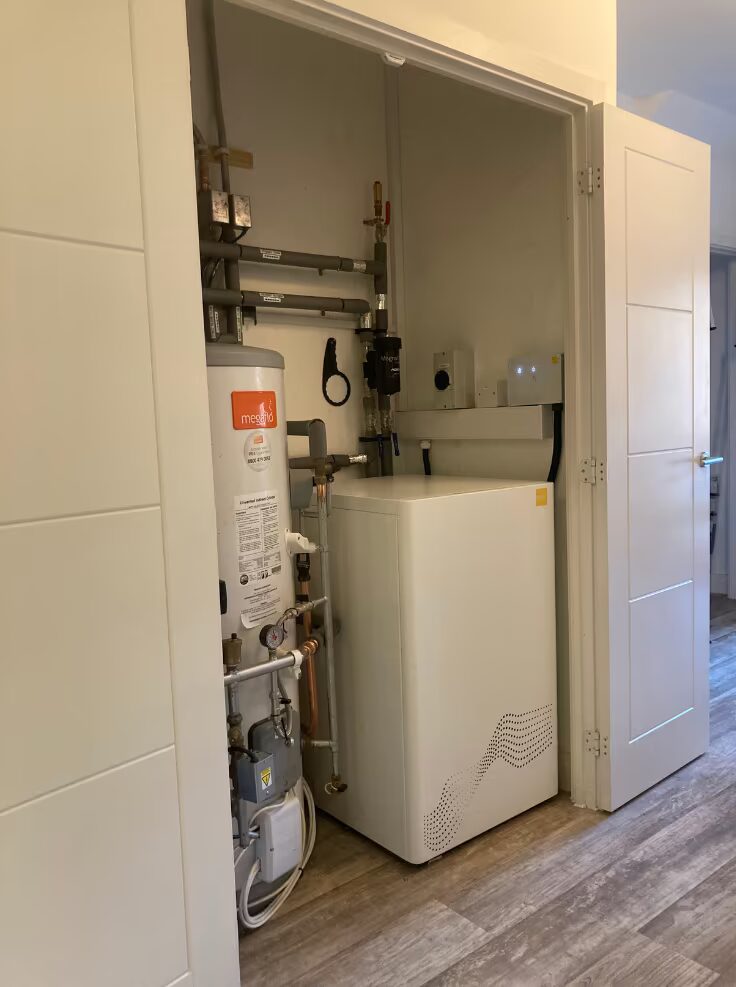
A heat pump is not a like-for-like swap for a combi boiler, and the indoor space requirement is the reason. Indoors, the home will require space for a hot water cylinder if you don't already have one5. Unlike combi-boilers, heat pumps do not provide hot water instantly, so you will need to use a hot water cylinder17. To provide hot water, heat pumps require a water storage cylinder, similar to older generations of gas boiler systems18.
This is not a manufacturer preference that can be designed around. Low-temperature, low-carbon solutions such as heat pumps generally require a hot water cylinder, while many homes with gas combination boilers do not19. Most heat pump manufacturers require the use of a cylinder, as it enables the heat pump to run more efficiently by heating the water over a longer period19.
There is a scheduling consequence too. The heat pump will not provide any space heating until water heating demand is satisfied20. A household that notices radiators going cool while the cylinder reheats is seeing normal priority logic, not a fault.
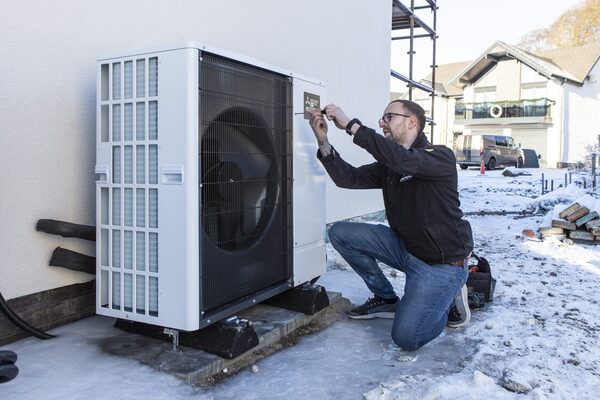
Outdoor units vary in size, and the figures are worth having when planning a siting. The Grant Aerona 290 12kW measures 1155mm x 1365mm x 419mm and weighs 160kg empty21. The LG Therma V R290 Monobloc 3 phase unit measures 1019 x 1320 x 520mm and weighs 130kg22. An air source split system, ground source, and water source heat pump all require space for a compressor and controls, and an internal unit is also needed, often smaller than a standard boiler5.
Custom system design: why each installation is designed from scratch
There is no catalogue heat pump that can be ordered by house type. Heat pumps should be selected to meet the full space heating requirement at the design condition chosen for heat loss calculations23. The same requirement applies to primary heating systems containing heat pumps, covering both heat pump only systems and hybrid systems16. Sizing to the design condition, not to the average, is what makes the difference between a system that copes in a cold snap and one that does not.
Commissioning is equally specific. Heat pumps and any dedicated ancillary products such as integrated hot water storage vessels should be commissioned in accordance with both the manufacturer's instructions and the appropriate system design parameters16. Two identical units in two identical houses can be commissioned differently, and a fault diagnosis that ignores this will misread the system.
The historical record explains why this matters. There have been issues with poor quality installations in UK homes, including where installers don't size systems correctly, upgrade radiators, replace narrow bore pipework, or properly insulate pipework, though these issues are much less common as standards have tightened7. A fault in an older installation may therefore be a design legacy rather than a component failure.
"Historically we've seen issues with poor quality installations in UK homes, including where installers don't:"
Servicing and maintenance: typical cost of £150-250 a year
Servicing is annual and inexpensive relative to the capital cost. Heat pumps should get a service once a year1. An engineer should service the heat pump according to the manufacturer's advice, usually once a year7. Heat pumps are serviced annually by a certified heat pump engineer3.
Costs vary by system type. Costs for heat pump servicing vary depending on the type of heat pump you have, but you can typically expect to pay around £1507. The wider range given is around £150 to £300 per service, depending on heat pump type3. For context, heat pumps in Great Britain regions were estimated at £2,100 to £2,500 annual heating cost for a three-bed semi-detached house in March 202610.
| Item | Figure | Source |
|---|---|---|
| Service frequency | Once a year | 1 |
| Typical service cost | Around £150 | 7 |
| Service cost range | Around £150 to £300 | 3 |
| Annual heating cost, three-bed semi | £2,100 to £2,500 | 10 |
A service is also the point at which a warranty condition is most often tested. Where a guarantee is conditional on annual servicing by a qualified engineer, a missed year is the gap that matters.
Warranty: 3-5 years standard, extendable for a fee
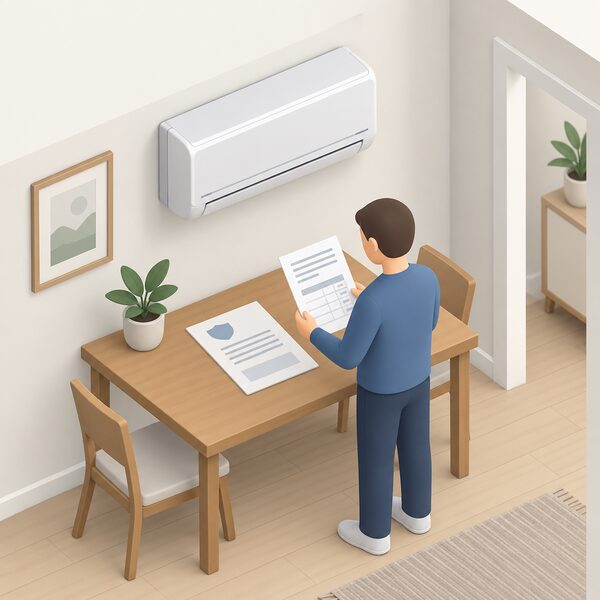
Warranty terms vary more than most buyers expect. Heat pumps usually come with warranties lasting two to three years, which can often be extended for a fee3. Longer cover exists where the manufacturer attaches conditions to the installer. The Grant Aerona 290 12kW comes with a 7 year product guarantee when installed by a Grant G1 Installer, subject to terms and conditions21.
The condition is the substance of the offer. That guarantee is subject to terms and conditions, and installation by a Grant G1 Installer is required21. A household that buys the same unit and has it fitted by someone outside the approved network does not hold the same guarantee, whatever the unit's specification.
| Product | Warranty | Condition |
|---|---|---|
| Heat pumps generally | Two to three years, often extendable for a fee | None stated3 |
| Grant Aerona 290 12kW | 7 year product guarantee | Installed by a Grant G1 Installer, subject to terms and conditions21 |
Registration and servicing records are what make a claim workable. Where a fault arises in year four of a seven-year guarantee, the installer's identity and the service history are the evidence. Heat pump servicing and warranty covers how the two interact.
Refrigerant rules: leak tests, GWP limits and the F-gas phase-down
Refrigerant work is a regulated activity, and that is the practical limit on who can attend a fault. The F-Gas Handler for Stationary Refrigeration, Air-Conditioning and Heat Pump Equipment and Refrigerated Trucks and Trailers is regulated in England and Wales by the Environment Agency, with LCL Awards as a qualifying body24. A householder cannot legally work on the refrigerant circuit, and neither can a general heating engineer without the qualification.
On the equipment side, the direction of travel is towards lower global warming potential. The Heat Pump Ready Programme refers to low-GWP refrigerants below 150 GWP25. R290 is the refrigerant named on the NIBE S2125-12 Heat Pump26. The LG Therma V R290 Monobloc holds 0.9 kg of refrigerant22.
The dates that matter are mostly EU measures rather than UK law, and should be read as such. F-gases are generally prohibited for split systems up to and including 12 kW from 1 January 2035, and split systems above 12 kW face a restriction on F-gases with a GWP of 750 or more from 1 January 203327. Additional F-gas restrictions expand across other system categories and dates through 203527.
HP290 control box: specifications, hybrid and cascade capability
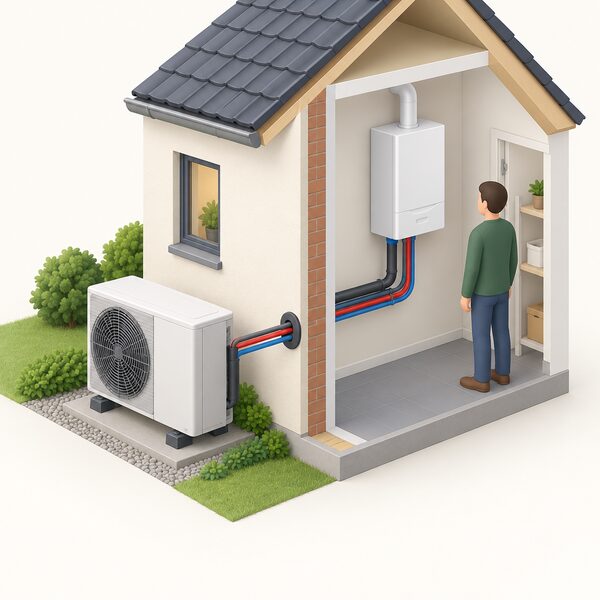
No product called an HP290 control box appears in the UK evidence, and no specifications, dimensions, weight, voltage, current or zone count are published for one. The nearest named product is the Grant Aerona 290 air source heat pump, and its published figures are for the outdoor unit: 1155mm x 1365mm x 419mm, 160kg empty, performing from -25°C to +35°C for heating, with a 7 year product guarantee when installed by a Grant G1 Installer21. The LG Therma V R290 Monobloc range gives a second reference point: the 3 phase unit weighs 130kg, measures 1019 x 1320 x 520mm and holds 0.9 kg of refrigerant, while the 16kW 1 phase unit has an ErP energy label of A+++ / A+++ for space heating at 35°C / 55°C water outlet, and is connectable with 3 type of indoor units22.
| Product | Key figures | Source |
|---|---|---|
| Grant Aerona 290 12kW | 1155 x 1365 x 419mm, 160kg empty, -25°C to +35°C heating, 7 year guarantee with a Grant G1 Installer | 21 |
| LG Therma V R290 Monobloc 3 phase | 1019 x 1320 x 520mm, 130kg, 0.9 kg refrigerant | 22 |
| LG Therma V R290 Monobloc 16kW 1 phase | A+++ / A+++ space heating at 35°C / 55°C, connectable with 3 type of indoor units | 29 |
| NIBE S2125-12 | R290 refrigerant | 26 |
Hybrid operation is the capability most often asked about in this context, and it is well documented. Hybrid heat pumps can work with another heating system in a building, such as a gas boiler4. Heat pump and hybrid controls can be fitted to different heat sources and boiler types such as regular or combination boilers30. A hybrid heat pump is a system that uses a standard heat pump with another heat source, usually a gas, oil or LPG boiler31.
The control logic is what makes a hybrid work. The boiler can run as a top up system when the heat pump can't supply the required heat in cold weather or for hot water based on tariff costs31. Having the hybrid system react to fuel prices should mean the boiler only turns on when it's cheaper to run than the heat pump, lowering overall operating costs compared to running either on its own31. The hybrid heat pump is most efficient when temperatures are above two degrees centigrade while the gas boiler is better below that threshold30. In a combi hybrid, the boiler then provides all of the instantaneous hot water on demand30. The base assumption remains that hybrid heat pumps can operate in heat pump mode up to 80% of the time30.
Grant funding treats hybrids carefully. Heat pumps which have the capability to be installed alongside a fossil fuel boiler may be eligible for the Boiler Upgrade Scheme, but they must be installed independently of a fossil fuel boiler, and installations comprising both a heat pump and a fossil fuel boiler are ineligible32. Hybrid heat pumps covers the configuration in more detail.
What this means for a household's energy independence
A heat pump moves a home's heating off gas and onto electricity, which is the substantive independence gain: no flue, no gas connection required for heat, and no exposure to gas standing charges for the heating load. What remains is dependence on the electricity grid and on a supplier, and on a manufacturer for parts, diagnostic codes and warranty administration. A prepayment meter running out of credit stops the heating entirely, which is a dependence a gas boiler shares but which is worth naming3.
The refrigerant circuit is a second dependence that cannot be worked around. Servicing and any refrigerant work require a certified engineer, and in England and Wales the F-gas handler profession is regulated by the Environment Agency24. A household cannot service its own heat pump in the way it might service a bicycle, and the annual cost of around £150 reflects that7.
Design dependence is the third. Because heat pumps should be selected to meet the full space heating requirement at the design condition chosen for heat loss calculations, and commissioned against both the manufacturer's instructions and the system design parameters, the quality of the original installation sets the ceiling on how well the system can ever run23. A household inheriting a poorly designed system inherits its faults.
Against that, the equipment is durable and the running cost is knowable. Contract durations should not exceed the expected lifespan of a heat pump, typically 15 to 20 years9. Heat pumps in Great Britain regions were estimated at £2,100 to £2,500 annual heating cost for a three-bed semi-detached house in March 202610. Heat pumps and household energy independence sets out the wider picture.
Sources32 cited
- Moving house energy checklist, Energy Saving Trust, 2026-05-01
- How to ensure a heat pump runs efficiently, Energy Saving Trust, 2026-05-19
- Living with a heat pump, Home Energy Scotland, 2024-02
- Heat pumps, nidirect, 2025-02-24
- Heat pump myths, Energy Saving Trust Green Heat Toolkit, 2025-09-02
- Clean heat transition report, Department for Energy Security and Net Zero, 2026-05
- Heat pump questions answered, Energy Saving Trust, 2026-05-27
- Domestic Heat Pump Guide, MCS Certified, 2024-04-02
- Amendments to the Boiler Upgrade Scheme: government response, Department for Energy Security and Net Zero, 2025-11
- Heat pumps and the transition to low carbon heating, House of Commons Library, 2026
- Future Homes and Buildings Standards consultation response, Ministry of Housing, Communities and Local Government, 2026-03
- Approved Document L Volume 1 consultation version, Welsh Government, 2026-09-17
- Heat pumps used in central heating, England and Wales, Office for National Statistics, 2025-10-28
- Heat pump installation: a step by step guide, Energy Saving Trust, 2026-07-15
- Optimised Retrofit Programme case study, Welsh Government, 2024-03
- Approved Document L Volume 1, Dwellings, Ministry of Housing, Communities and Local Government, 2026
- Air and ground source heat pumps, Croydon Council, 2026-09-17
- Eligible heating systems, Ofgem, 2026-09-17
- Domestic Building Services Panel heating and heat pump factsheets, CIBSE, 2026-09-17
- Heat pump methodology, Department for Energy Security and Net Zero, 2026-01
- Grant Aerona 290 12kW HPR29012 air source heat pump, Quiet Mark, 2026-09-17
- LG Therma V R290 Monobloc 7kW 3 phase HM073HF UB40 heat pump, Quiet Mark, 2026-09-17
- Approved Document L, Conservation of fuel and power, Volume 1, Dwellings, Ministry of Housing, Communities and Local Government, 2026-09-17
- F-Gas Handler for Stationary Refrigeration, Air-Conditioning and Heat Pump Equipment, Regulated Professions Register, 2026-09-17
- Heat Pump Ready Programme Stream 2 Wave 2 projects, Department for Energy Security and Net Zero, 2026-05-28
- NIBE S2125-12 heat pump, Quiet Mark, 2026-09-17
- F-gas regulation and natural refrigerants, iDM Energie, 2035-01-01
- Notice of standards, Department for Energy Security and Net Zero, 2026-07-21
- LG Therma V R290 Monobloc 16kW 1 phase HM161HF UB60 heat pump, Quiet Mark, 2026-09-17
- Hybrid heat pump guidance, Heating and Hotwater Industry Council, 2026-09-17
- Hybrid heat pumps, Energy Saving Trust, 2026-07-16
- Boiler Upgrade Scheme guidance, Ofgem, 2023-09-25
 Servicing and MaintenanceHow often does a heat pump need servicing, and what actually happens during the visit?
 Sizing and Heat LossHow do installers work out what size heat pump your home needs, and why can a unit that is too big cost more to run than one that is slightly small?
 Heating Control FaultsWhy is my heating on when the thermostat says it is off, or why does one radiator stay cold?
 The Full Heat Pumps GuideWill a heat pump keep my house warm in winter, and what does one cost to buy and run?
 Standards and CertificationHow do you know a heat pump will really perform as promised?
 Backup Power for HeatingWhy gas boilers, heat pumps and storage heaters stop in a power cut, what a portable power station can and cannot carry, how to size one, and what home battery systems do when the mains fails.