
In this guide
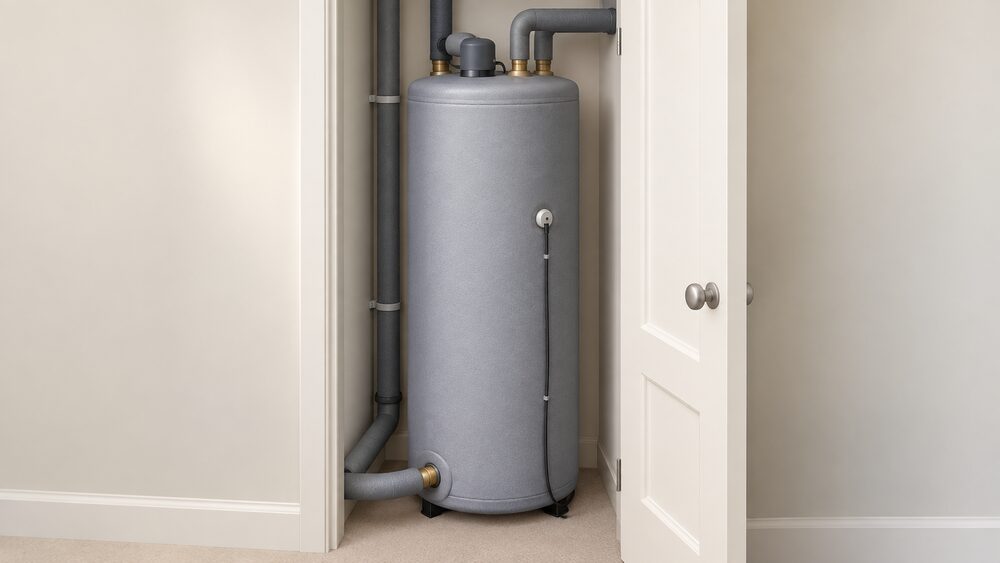
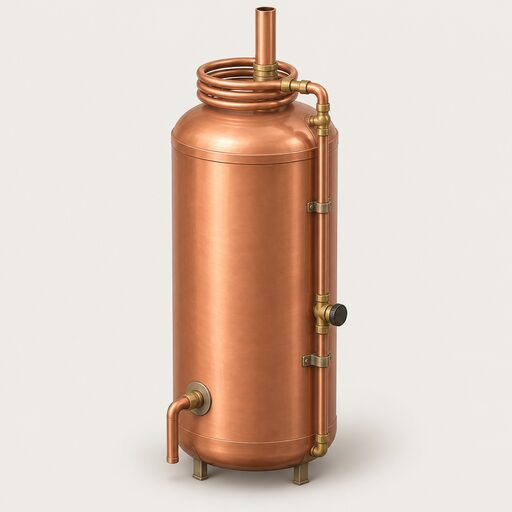
A heat pump does not make hot water the way a combi boiler does. It heats a store of water slowly and efficiently, then holds it until the household draws it off. That store is the hot water cylinder, and for most homes moving from a combi it is the single biggest change the installation brings. Croydon Council's retrofit guidance puts it directly: "Unlike combi-boilers, heat pumps do not provide hot water instantly, so you will need to use a hot water cylinder."1
The cylinder is not an optional extra bolted onto a heating system. Government guidance states that "To provide hot water, heat pumps require a water storage cylinder, similar to older generations of gas boiler systems."2 CIBSE's domestic factsheets go further, noting that most heat pump manufacturers require the use of a cylinder because it lets the heat pump run more efficiently by heating the water over a longer period3.
What follows is the sizing logic, the coil and insulation differences that separate a heat pump cylinder from an ordinary one, the space it needs, the choice between vented, unvented and integrated units, and the legionella cycle that periodically lifts the stored water above 60°C.
Why a heat pump needs a cylinder, and how it differs from a combi setup
A combi boiler fires on demand. Open a tap and it heats water instantly from the mains, with no store. A heat pump cannot do that. It produces heat at a lower temperature and over a longer period, so the water has to be accumulated somewhere and kept warm until it is wanted. That is the whole reason a cylinder exists in a heat pump system.
The practical consequence lands hardest on homes that currently run a combi. Citizens Advice states that "If you have a combi boiler, you'll need to install a hot water cylinder to heat and store your hot water."10 Which? reaches the same conclusion: "If you are replacing a combi boiler with a heat pump, you will probably need to install a hot-water tank or cylinder."11 For ground source systems the requirement is identical, and Which? notes that a household replacing a combi without a tank "will need a suitable space to install a new hot water storage cylinder"12.
There are two established exceptions. A hybrid heat pump coupled with a combination boiler needs no cylinder for domestic hot water, because the combi still delivers it13. And where a combi boiler or instantaneous water heater is used alongside the heat pump, no cylinder is needed either14. Both routes trade a cylinder for continued gas use, which is a different kind of dependence rather than an absence of one.
For a household's energy independence, the cylinder is what makes an all-electric hot water supply possible. It stores heat produced from electricity, including self-generated solar electricity, rather than drawing on gas at the moment of use. The dependence that remains is on the electricity grid and a supplier, plus the heat pump manufacturer for parts and controls.
What makes a heat pump cylinder different: larger coils, better insulation, lower temperatures
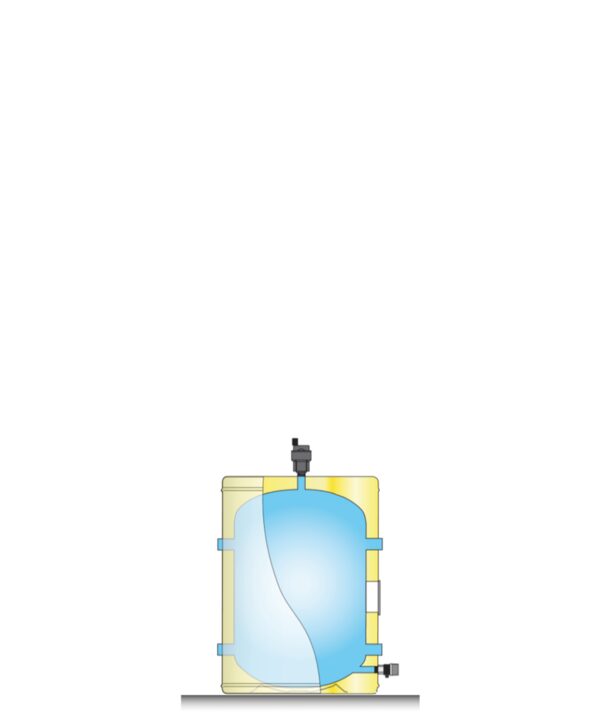
A heat pump cylinder is not simply a bigger version of a boiler cylinder. Three things separate it.
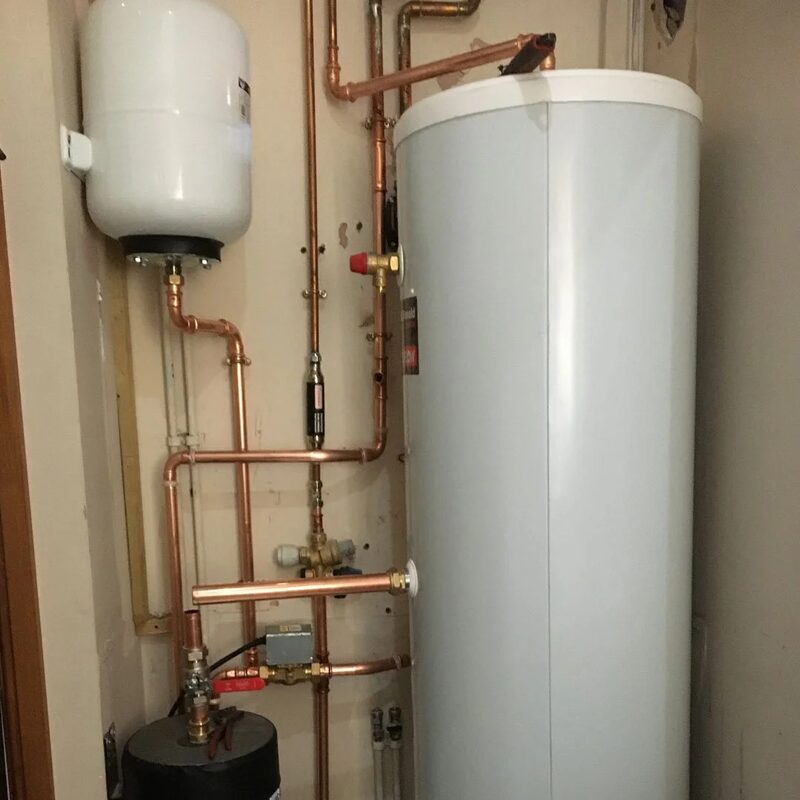
The first is the heat exchange surface. A heat pump delivers heat at a lower flow temperature than a boiler, so the coil inside the cylinder has to present a much larger area to the stored water to transfer the same amount of heat in a reasonable time. A small coil designed for a 70°C boiler flow will not recover quickly at the temperatures a heat pump produces.
The second is insulation. Standing heat loss matters more when the store is large and the water is held for hours. Insulating a hot water cylinder with a cylinder jacket reduces heat loss by up to 75%15. Energy Saving Trust sets a threshold for when that is worth doing: a cylinder with less than 80mm (3 inches) of insulation is one to consider adding to16. A modern heat pump cylinder is factory-insulated well beyond that.
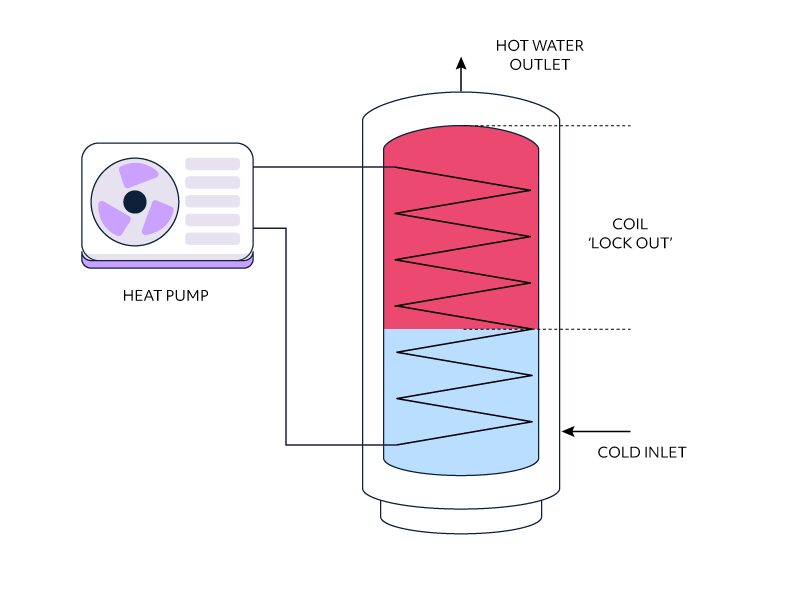
The third is temperature. Most heat pumps heat hot water to 50 to 55°C very efficiently, and the sterilisation cycle then raises the temperature5. Many heat pumps can provide hot water over 60°C consistently, which is the minimum the cylinder needs to reach for sterilisation5. That is a lower and more controlled regime than a boiler cylinder typically sees.
"For instance, most heat pumps will heat hot water to 50-55°C very efficiently then the sterilisation cycle raises the temperature."
The wider system context matters too. Heat pump systems generally run at a lower temperature than a traditional heating system, which is why they suit underfloor heating and well-sized radiators17. The cylinder sits at the end of that same low-temperature design logic.
Sizing: 180 to 300+ litres depending on household
Cylinder sizing for a heat pump is driven by two things: how much hot water the household draws, and how quickly the heat pump can put heat back in. A larger store buys recovery time; a smaller store relies on the heat pump keeping up.
The evidence in UK guidance is thinner than households expect. Standard assessment tables give an indicative cylinder size of 110 litres for a normal dwelling, with up to 130 litres as the indicative figure9. That is a baseline, not a heat pump recommendation. At the other end, one documented household in Which?'s research found it "would have had to store a big tank of about 300 litres"18. The gap between those figures reflects the difference between a minimum standard and a real household with several occupants and more than one bathroom.
The practical sizing variables are the number of bathrooms, the number of occupants, whether a bath or showers dominate, and the recovery rate the heat pump can achieve at the temperatures it runs. A household that draws heavily in the morning needs either a larger store or a heat pump that can reheat quickly, and the two are traded against each other.
For independence, an oversized cylinder is not wasted capacity: it is the buffer that lets a household shift hot water production into cheaper or sunnier hours. A cylinder that is too small forces the heat pump to run whenever hot water is drawn, which ties consumption to the moment of use rather than to the best time to generate.
Space and dimensions: what to allow for
The cylinder has to go somewhere, and for a home converting from a combi there may be no obvious place. Energy Saving Trust gives the reassuring figure: "These cylinders can usually fit inside any cupboard that measures around 80x80cm."4 Solar assisted heat pump guidance repeats the same dimension, noting the cylinder "can usually be fitted inside any cupboard that measures around 80cm x 80cm"20.
That footprint is the cylinder alone. A water source heat pump needs indoor space for the heat pump itself and a hot water cylinder, so both have to be accommodated21. Solar water heating, which shares the storage requirement, notes that "A larger hot water cylinder is likely needed and this will take up extra room"22.
Location matters for pipe runs as well as space. A cylinder placed far from the heat pump loses heat through long pipe runs and slows response. An airing cupboard, a utility room or a dedicated plant space close to the outdoor unit keeps the circuit short. Where no cupboard exists, the cylinder can be sited in a garage or outbuilding if the pipework is insulated, though the heat loss penalty is real.
For a household, the space question is often the deciding one. A home with no cylinder cupboard and no spare floor area may find that a hybrid arrangement, a heat battery or an instantaneous water heater is the only route that avoids building work4.
Buffer tank or no buffer tank: when one helps and when it hurts
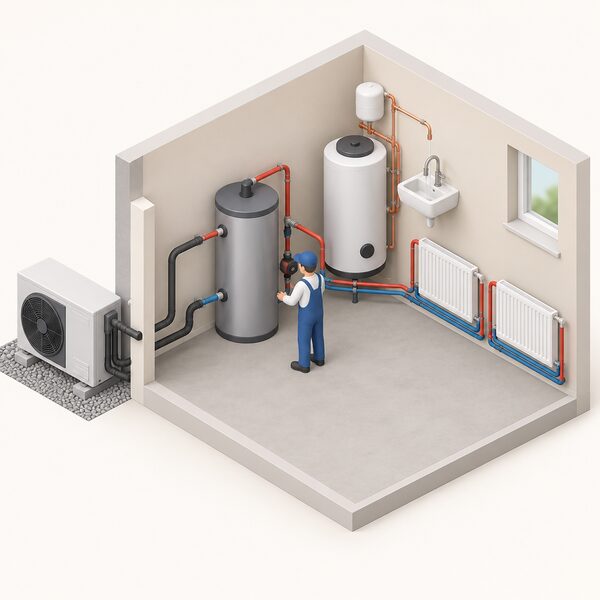
A buffer tank is not a hot water cylinder, and confusing the two leads to bad decisions. Official guidance is explicit: "a buffer tank should not be confused with a domestic hot water cylinder"23. A buffer tank holds heating circuit water to stabilise flow and reduce cycling; a cylinder holds water for taps and showers.
Whether a buffer tank is fitted is a design decision, not a household choice. Energy Saving Trust states that "Your installer, together with the recommendations of the manufacturer, will decide whether a buffer tank linked to your" system is appropriate and what size it should be24. The variables are the volume of water in the system, the number of zones, and whether the heat pump can modulate low enough to avoid short cycling without one.
A buffer tank helps where the system volume is small, where several zones are controlled independently, or where the heat pump would otherwise cycle on and off. It hurts where it adds unnecessary volume, increases standing losses, and lowers the effective flow temperature reaching the emitters. In a well-designed system with adequate volume already, a buffer tank can be a net cost rather than a benefit.
The metering implications are a separate matter. Under the Domestic RHI, whether a meter is installed before or after a buffer tank could make a difference to the metering requirements23. That scheme has closed, but the point stands that a buffer tank changes how a system is measured and controlled.
For independence, a buffer tank adds nothing to a household's self-sufficiency. It is a hydraulic component, not a store of usable heat for the home. The cylinder is the part that matters for energy independence.
Vented, unvented and integrated cylinder options
Three broad arrangements exist, and the choice affects pressure, space and what the household can do during a breakdown.
An unvented cylinder takes its water directly from the mains and delivers it at mains pressure, with no tank in the loft. It is the common pairing with an air source heat pump, and service plans exist that fund "Air-source heat pump, unvented hot water cylinder and installation pipework for both" as a single package25. A separate plan covers "Unvented hot water cylinder and installation pipework in a heat-pump system"25.
A vented cylinder relies on a header tank, usually in a loft, and delivers lower pressure. It is cheaper and simpler but constrains shower performance and requires loft space that many homes no longer have.
An integrated cylinder combines the store with the heat pump's compressor unit in one casing. Solar assisted heat pump guidance notes that "Many solar assisted heat pumps include an integrated hot water cylinder, which means you don't need a separate cylinder"20. That saves space but ties the household to one manufacturer for both the heat pump and the store.
Where no cylinder can be accommodated at all, Energy Saving Trust notes that "If you don't have space for a hot water cylinder, you still have options", listing a hybrid heat pump alongside a heat battery or an instantaneous water heater4. Each of those keeps a dependence: on gas for the hybrid, on the manufacturer for the battery, on instantaneous electrical heating for the water heater.
Installation, controls and installer competence
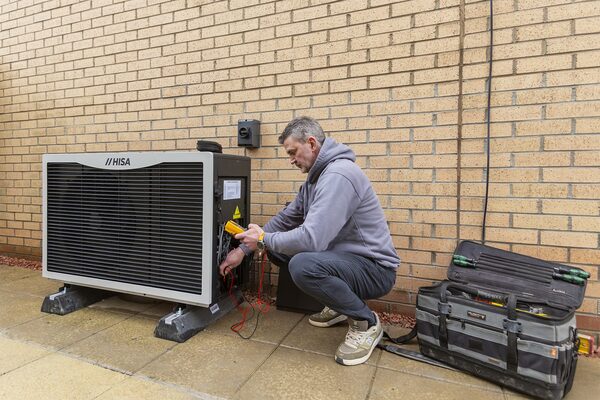
Cylinder installation is regulated work. Approved Document L states that "The person carrying out the work is suitably competent", and that the installer should "Install and commission the system to the standards set out in this approved document"27. Certification runs either through "Self-certification by a registered competent person" or through a building control body27.
The competent person schemes recognised for renewable technologies including heat pumps are APHC, BESCA, Certsure, HETAS, NAPIT and OFTEC19. The Future Homes consultation response sets out "an expectation that the person carrying out the commissioning and testing is a member of an organisation which regularly assesses their competence and performance, including relevant competent person schemes"19.
OFTEC states that "the installation of heat pumps and associated heating systems is work covered by building regulations and should only be undertaken by competent technicians that have undertaken appropriate training and assessment"17. The Flexi-Orb Heat Pump Code of Practice is built around "high quality, professionally designed and compliant installations"28. Where a hybrid system is fitted, installers "will also require skills for both heat pumps and condensing gas boilers"29.
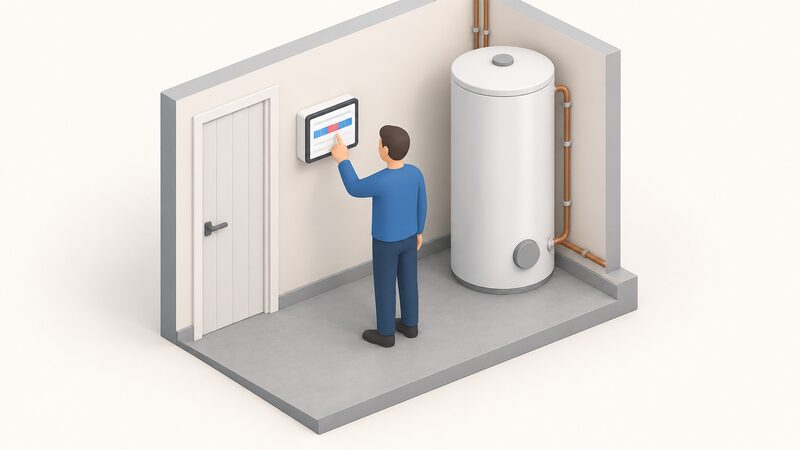
Controls matter as much as the cylinder. Approved Document L requires that "The system has adequate controls" and that "Heat pump systems have been sized appropriately"27. OFTEC notes that heat pump systems "are typically controlled by the end user via weather compensation or internal temperature control, such as a room thermostat, together with a timer or programmer to control space heating"17.
Servicing is annual. Energy Saving Trust recommends "an annual service for heat pumps"4, and its fact check adds that heat pumps should be serviced "once a year, preferably before winter hits"8. Home Energy Scotland advises servicing "annually by a certified heat pump engineer"30, and OFTEC notes systems "require very little maintenance but should still be checked periodically by an OFTEC registered heat pump installer"17.
Legionella cycles and running temperatures explained
Stored water at lukewarm temperatures is a bacterial risk, which is why every cylinder system has a sterilisation routine. Energy Saving Trust explains that a heat pump "may run at a higher temperature from time to time to reduce the risk of legionella bacteria in the hot water cylinder"31. Its questions page states that "Your hot water system will include a sterilisation cycle that periodically heats the cylinder to above 60°C to prevent bacteria"6.
The 60°C threshold is not a heat pump invention. Which? states that "If you have any kind of boiler with a hot water cylinder that stores water for later use, a minimum water temperature of" 60°C applies7. Home Energy Scotland describes the same routine: heat pumps "will also establish a sterilisation cycle to ensure all stored water heats over 60°C periodically to kill harmful bacteria like legionella"30.
The frequency is configurable. Energy Saving Trust notes that "Your heat pump usually has this function to do this either daily, weekly, or permanently"32. The choice trades a small amount of efficiency against a shorter window at intermediate temperatures.
"Many heat pumps can provide hot water over 60°C consistently (the minimum temperature the hot water cylinder will need to reach)."
The efficiency cost of the cycle is real but bounded. Raising a cylinder above 60°C takes the heat pump to the top of its range, where it works hardest. Running the cycle weekly rather than daily reduces that penalty, and the cycle can often be scheduled for a period when electricity is cheapest or when solar generation is available. That scheduling is one of the few genuine independence gains a cylinder offers: the household decides when the heat is made, not the moment a tap is opened.
Sources32 cited
- Air and ground source heat pumps, Croydon Council, 2026-09-17
- What impact can heat pumps have in domestic heating today, GOV.UK, 2023-11-21
- Heating and heat pump factsheets, CIBSE, 2026-09-17
- Is now a good time to get a heat pump, Energy Saving Trust, 2025-12-12
- Heat pump myths, Energy Saving Trust, 2025-09-02
- Heat pump questions answered, Energy Saving Trust, 2026-05-27
- One simple way to adjust your boiler to lower your heating bill, Which?, 2025-09-29
- Heat pump fact check, Energy Saving Trust, 2026-07-01
- SAP 10.2, BRE Group, 2024-02-12
- Deciding if a heat pump is right for you, Citizens Advice, 2025-12-08
- An introduction to heat pumps, Which?, 2025-09-22
- Installing a ground source heat pump, Which?, 2025-09-22
- Hybrid heat pumps, Nesta, 2025-02-03
- Hybrid heat pumps, Energy Saving Trust, 2026-07-16
- Energy savings tips, British Gas Energy Trust, 2026-02-27
- How to insulate your home and save money, Energy Saving Trust, 2025-09-24
- Your home guide to heat pumps, OFTEC, 2026-09-17
- Beyond affordability: why heat pumps feel like a gamble, Which?, 2026-07-02
- Future Homes and Buildings Standards consultation response, GOV.UK, 2026-03
- Solar assisted heat pumps, Energy Saving Trust, 2025-06-13
- Water source heat pumps, Energy Saving Trust, 2024-04-24
- Your home guide to solar water heating, OFTEC, 2026-09-20
- Domestic RHI guide to metering, Ofgem, 2026
- Thermal energy stores, Energy Saving Trust, 2025-05-15
- Homeserve boiler cover, Uswitch, 2026-09-17
- Immersion heaters, Which?, 2026-06-01
- Approved Document L Volume 1: Dwellings, GOV.UK, 2026
- Heat pumps, Flexi-Orb, 2026-09-17
- HHIC guidance, HHIC, 2026-09-17
- Living with a heat pump, Home Energy Scotland, 2024-02
- Heat pump inheritance, Energy Saving Trust, 2025-07-04
- How to ensure a heat pump runs efficiently, Energy Saving Trust, 2026-05-19
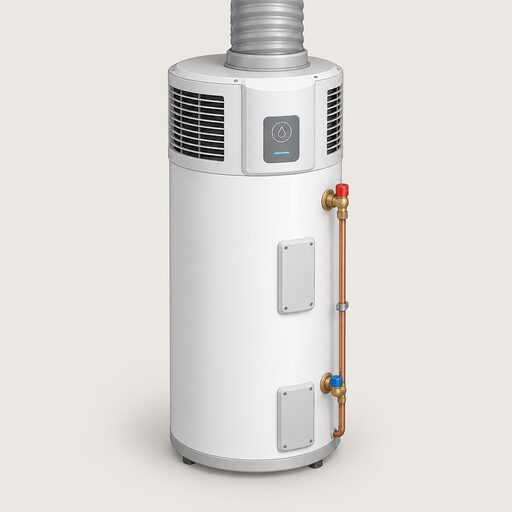 Hot Water Heat PumpsA hot water heat pump heats only the water in your cylinder, using air instead of a boiler flame.
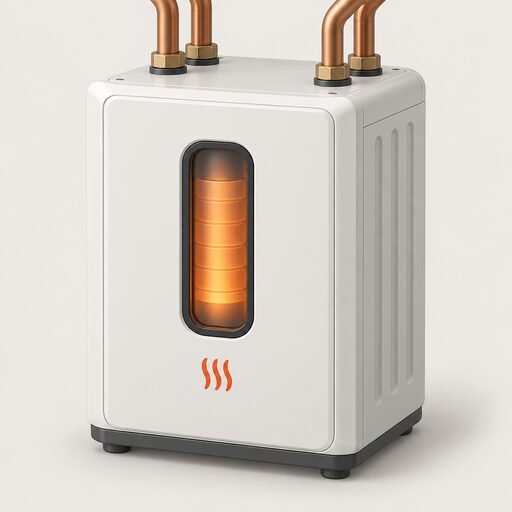 Heat Batteries with Heat PumpsCan a heat battery replace a hot water cylinder if you have no space for one?
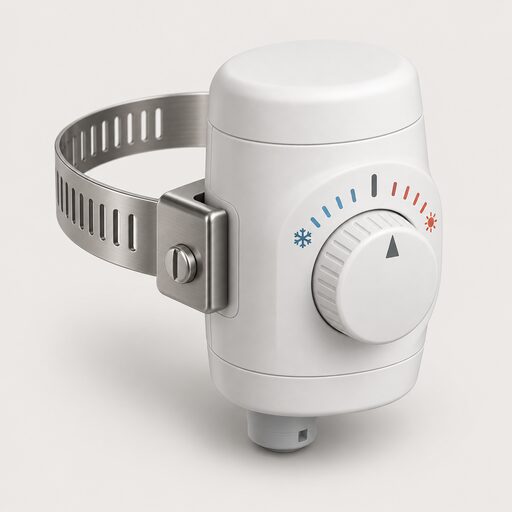 Hot Water Cylinder ControlsWhat temperature should a hot water cylinder thermostat be set to, and does it need its own timer apart from the heating?
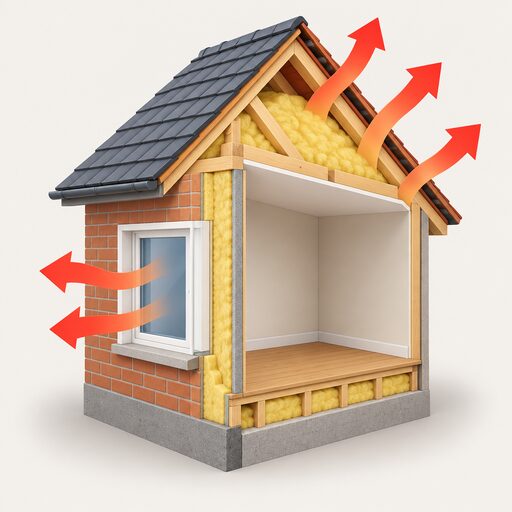 Sizing and Heat LossHow do installers work out what size heat pump your home needs, and why can a unit that is too big cost more to run than one that is slightly small?
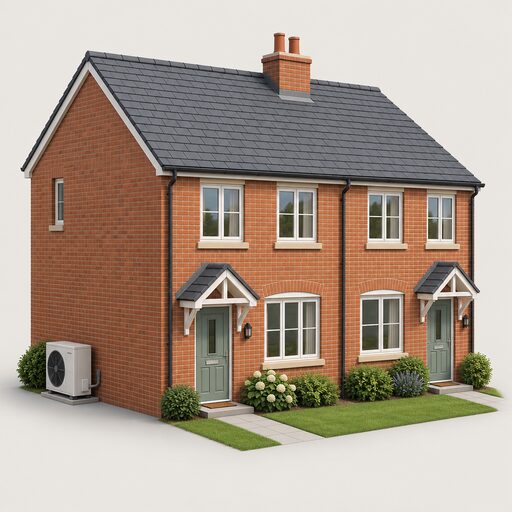 Which Homes Suit a Heat PumpMost UK homes can have a heat pump fitted, so the real question is whether yours makes it easy or expensive.
 Regular and Heat-Only BoilersGot tanks in the loft and a hot water cylinder in the airing cupboard?